Last Updated on November 27, 2025 by Bilal Hasdemir
Understanding Chiari malformation is key for both patients and doctors. This defect in the cerebellum can cause headaches and neurological problems. At places like Liv Hospital, new imaging and treatments help diagnose and treat it.
We’ll look at 12 before-and-after MRI images. They show how surgery can fix the problem and shrink syrinxes. These chiari malformation surgery images show how well the treatment works.
Looking at these chiari malformation photos helps patients understand their options. We aim to give a detailed look, mixing medical knowledge with care and compassion.
Key Takeaways
- Understanding Chiari malformation and its treatment options.
- Exploring the role of MRI images in diagnosis and recovery.
- Insights into the effectiveness of surgery through before-and-after images.
- The importance of advanced protocols in treating Chiari malformation.
- Personal stories of transformation through evidence-based care.
Understanding Arnold Chiari Malformation
Chiari malformation is a complex condition that affects the cerebellum and spinal cord. It’s important to understand its definition, types, and how it impacts patients. We will dive into the details to give you a full picture.
What is Chiari Malformation?
Chiari malformation is a defect in the cerebellum that can press on the brain and spinal cord. It happens when the cerebellum goes into the spinal canal. This can cause many neurological symptoms and discomfort.
Types of Chiari Malformations
Chiari malformations are divided based on their shape and how severe they are. Each type has its own features.
- Type I: The most common, often found in adults. It’s when the cerebellar tonsils go into the spinal canal.
- Type II: More serious, found in kids. It involves a big part of the cerebellum going into the spinal canal, often with spina bifida.
- Type III: Rare and severe. It’s when a big part of the cerebellum and brainstem go through the foramen magnum.
- Type IV: It’s when the cerebellum doesn’t develop right.
| Type | Characteristics | Typical Diagnosis Age |
|---|---|---|
| Type I | Cerebellar tonsils extend into the spinal canal | Adulthood |
| Type II | Larger portion of cerebellum extends into the spinal canal, often with spina bifida | Childhood |
| Type III | Significant portion of cerebellum and brainstem herniate through the foramen magnum | Rare, often diagnosed early |
| Type IV | Incomplete or abnormal development of the cerebellum | Varies |
Common Symptoms and Complications
People with Chiari malformation might have headaches, neck pain, dizziness, and numbness in their hands and feet. In bad cases, it can cause syringomyelia, a fluid-filled cavity in the spinal cord.
Knowing these symptoms and possible problems is key for early diagnosis and treatment. We’ll look at how to diagnose and treat it next.
Diagnostic Imaging for Chiari Malformation
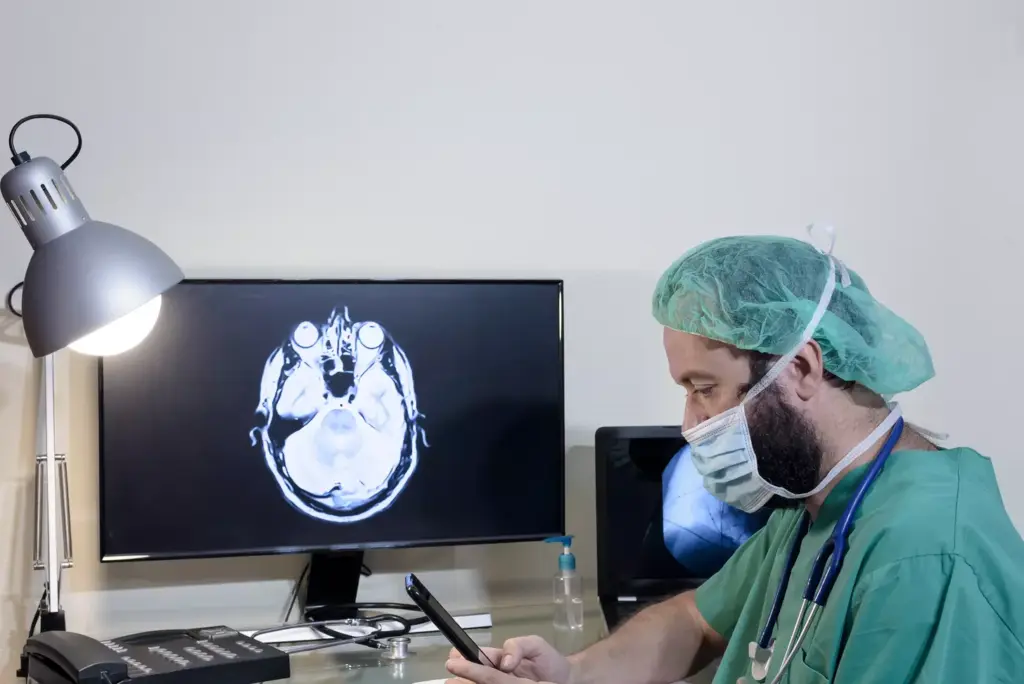
MRI has changed how we diagnose Chiari malformation. It gives detailed pictures of the brain and spinal cord. This helps doctors see the problems caused by Chiari malformation.
The Role of MRI in Diagnosis
MRI is the top choice for finding Chiari malformation. It shows the cerebellar tonsils and where they sit. Chiari MRI images show how bad the problem is and if there are other issues.
Using MRI helps doctors know how serious the Chiari malformation is. They can then decide the best treatment. It’s also great for spotting syringomyelia, a common problem with Chiari malformation.
Key Diagnostic Features on Imaging
When looking at Chiari malformation MRI images, doctors check a few important things:
- The position of the cerebellar tonsils relative to the foramen magnum
- The presence and extent of syringomyelia
- Any associated structural abnormalities, such as hydrocephalus or cranial base anomalies
These details help figure out how bad the Chiari malformation is. They also guide treatment choices.
Cerebrospinal Fluid Flow Studies
Cerebrospinal fluid flow studies are also key in diagnosing Chiari malformation. They look at how cerebrospinal fluid (CSF) moves around the top of the spine. This is important because Chiari malformation can change how CSF flows.
These studies help doctors understand how Chiari malformation affects CSF flow. This information helps plan surgery and predict how well a patient will do.
Normal Brain vs Chiari Malformation: MRI Comparison
It’s important to know how a normal brain differs from one with Chiari malformation. We’ll look at these differences using MRI images. We’ll focus on key features of the brain’s structure.
Anatomical Differences in the Foramen Magnum
The foramen magnum is a key spot where the brain and spinal cord meet. In a normal brain, the cerebellar tonsils sit above this area. But, in Chiari malformation, they drop down into the foramen magnum.
Cerebellar Tonsil Position Comparison
One way to spot Chiari malformation is by looking at the cerebellar tonsils. MRI images show us how these tonsils are positioned in normal brains versus those with Chiari malformation.
In normal brains, the tonsils are above the foramen magnum. But in Chiari malformation, they’re below it.
Associated Structural Abnormalities
Chiari malformation often comes with other brain and spinal cord issues. These include syringomyelia (a fluid-filled cavity in the spinal cord) and hydrocephalus (fluid buildup in the brain). MRI helps us find these problems.
We use MRI to see how big these issues are. Then, we plan the best treatment.
MRI Pictures of Chiari Malformation: 6 Key Diagnostic Images
MRI imaging is key in diagnosing Chiari malformation. It gives us detailed views of the brain and spinal cord. We use MRI pictures to see the structural issues linked to this condition.
Sagittal View Interpretations
The sagittal view is very important for diagnosing Chiari malformation. It helps us see where the cerebellar tonsils are in relation to the foramen magnum. Key features to look for include:
- Cerebellar tonsillar descent below the foramen magnum
- Compression or obstruction of the cerebrospinal fluid (CSF) pathways
- Presence of syringomyelia, a fluid-filled cavity within the spinal cord
Axial View Findings
Axial MRI views give us more info on Chiari malformation’s anatomy. They help us see the shape and size of the cerebellar tonsils and their effect on nearby structures.
Some key axial view findings include:
- Narrowing of the CSF pathways
- Compression of the brainstem or spinal cord
- Asymmetrical or irregular cerebellar tonsillar descent
Syringomyelia Detection and Measurement
Syringomyelia, a fluid-filled cavity in the spinal cord, often goes with Chiari malformation. MRI is key for spotting and measuring syringomyelia. We look for:
- The presence and extent of the syrinx
- The location of the syrinx within the spinal cord
- Any changes in the syrinx size over time
Getting the syrinx’s size right is key for tracking the disease and seeing if treatments work. For more on Chiari malformation and its diagnosis, check out the National Center for Biotechnology Information.
Arnold Chiari Malformation Surgery Pictures
Surgery for Arnold Chiari Malformation is a detailed process. It aims to open up the back of the skull and ease pressure on the brain.
Surgical Approach Visualization
Seeing how surgery is done helps us grasp the treatment for Chiari Malformation. The surgery often involves removing part of the skull to ease pressure. Intraoperative imaging is key for making adjustments during the surgery.
Intraoperative Photography
Photos taken during surgery give us a close look at the techniques used. These images show the careful steps taken to ensure the best results while keeping risks low.
| Surgical Step | Description | Importance |
|---|---|---|
| Suboccipital Decompression | Removal of a portion of the skull to relieve pressure | Critical for reducing cerebellar and hindbrain compression |
| Duraplasty | Expansion or repair of the dura mater | Essential for preventing further constriction |
| Tissue Decompression | Relief of pressure on the cerebellum and hindbrain | Key to alleviating symptoms and improving outcomes |
Tissue Decompression Documentation
Recording tissue decompression is important for checking if the surgery worked. Post-surgery images help see how much decompression was done and plan future care.
Looking at arnold chiari malformation surgery pictures helps patients understand the detailed care they receive.
Before and After Chiari Malformation Surgery: 6 Comparative Cases
We looked at how Chiari malformation surgery changes lives in different groups. Six cases show the surgery’s effects on Chiari malformation. These include kids, adults, and those with syringomyelia.
Case 1-2: Pediatric Patients
A 10-year-old got surgery for Chiari malformation. Before, an MRI showed big problems with their brain. After surgery, they felt much better and enjoyed life more.
A 7-year-old with bad headaches and neck pain also got surgery. After, their brain looked better on scans, and they felt better too.
Case 3-4: Adult Patients
A 35-year-old had chronic pain and numbness. Surgery helped, and scans showed their brain was working better.
A 45-year-old felt better after surgery, no more dizziness. Scans showed their brain was fixed too.
Case 5-6: Complex Cases with Syringomyelia
A patient with Chiari and syringomyelia got surgery. Scans showed their syrinx was smaller, and they felt better.
A complex case with big syringomyelia also got surgery. Scans showed big improvements, and symptoms got better.
| Case | Age | Primary Symptoms | Post-Surgery Outcome |
|---|---|---|---|
| 1 | 10 | Headaches, neck pain | Reduced symptoms |
| 2 | 7 | Severe headaches | Improved quality of life |
| 3 | 35 | Chronic pain, numbness | Reduced syrinx size |
| 4 | 45 | Dizziness, balance issues | Effective decompression |
| 5 | 28 | Syringomyelia, weakness | Decrease in syrinx size |
| 6 | 32 | Extensive syringomyelia | Significant reduction in syrinx size |
These cases show how Chiari malformation surgery can really help. By looking at before and after images and data, we see big improvements.
Surgical Techniques and Outcomes Through Imaging
Surgical methods for Chiari malformation have improved a lot. Imaging is key in their development and success. We use different surgical techniques, and imaging helps us understand how well they work.
Posterior Fossa Decompression Visualization
Posterior fossa decompression is a common surgery for Chiari malformation. Imaging is very important in seeing how the surgery goes and if it works. MRI lets us see how much space is made and its effect on the cerebellar tonsils.
Duraplasty Methods and Materials
Duraplasty makes the dura mater bigger to give more room for the cerebellar tonsils. Many materials are used, like parts from the patient and synthetic ones. Imaging shows if duraplasty works by seeing less herniation and better fluid flow.
- Autografts come from the patient’s own tissue.
- Synthetic grafts are made from materials that are safe for the body.
Minimally Invasive Approaches
Minimally invasive surgeries are becoming more common for Chiari malformation. These methods aim to cause less damage and help patients recover faster. Imaging is very important in planning and doing these surgeries, allowing for precise targeting.
- Preoperative imaging helps plan the surgery.
- Intraoperative imaging guides the surgeon during the surgery.
- Postoperative imaging checks the outcome and healing.
Post-Surgical Recovery and Follow-up Imaging
Recovering from Arnold Chiari Malformation surgery is a complex process. It involves regular imaging checks to ensure the best results. Understanding the recovery stages and the role of imaging is key.
Immediate Post-Operative Changes
Right after surgery, patients go through big changes. Post-operative imaging is vital to check the surgery’s initial success. We usually do an MRI a few days after to see if the cerebellar tonsils are decompressed right.
A study in the Journal of Neurosurgery says, “Early post-operative MRI is essential for assessing the extent of decompression and detecting possible complications early.”
“The use of early post-operative MRI allows for the timely identification of issues that may require further intervention.”
Three-Month Follow-up Findings
At three months, another MRI is done to check on recovery progress. This imaging is key to see if syringomyelia has resolved and if brain structures have improved. We look for signs of reduced spinal cord and cerebellum tension, showing the surgery was successful.
| Follow-up Time | Primary Imaging Findings | Clinical Implications |
|---|---|---|
| Immediate Post-op | Adequacy of decompression, surgical site assessment | Detection of immediate complications |
| Three Months | Resolution of syringomyelia, structural improvements | Assessment of recovery progress |
| Long-term | Stability of decompression, long-term outcomes | Evaluation of surgical success |
Long-Term Structural Improvements
Long-term imaging is vital to see the lasting benefits of Chiari Malformation surgery. We keep checking patients with MRI scans to see if the decompression stays stable and if syringomyelia is fully resolved. Long-term structural improvements show if the surgery was a success.
A neurosurgeon says, “Long-term follow-up is key for Chiari Malformation patients to keep the surgery’s benefits over time.” Advanced imaging helps us track our patients’ progress and make the right care decisions.
Conclusion: Advances in Chiari Malformation Imaging and Treatment
There have been big steps forward in how we see and treat Chiari malformation. New MRI methods help us see the brain and spine better. This makes it easier to find the problem and plan surgery.
Thanks to new treatments, patients with Arnold Chiari malformation are doing better. Doctors now use special surgeries that are less invasive. This means less harm to the body and faster healing.
We must keep working to improve care for Chiari malformation patients. By using the latest in imaging and treatment, we can make their lives better. This is all about giving them the best chance at a good life.
FAQ
What is Chiari malformation and how is it diagnosed?
Chiari malformation is a defect in the cerebellum. It can put pressure on the brain and spinal cord. MRI imaging is used to diagnose it, showing the cerebellar tonsils and cerebrospinal fluid flow.
What are the common symptoms of Chiari malformation?
Symptoms include headaches, fatigue, and muscle weakness. You might also feel numbness or tingling in your hands and feet. Some people experience dizziness, balance issues, or trouble swallowing.
What is the role of MRI in diagnosing Chiari malformation?
MRI is key in diagnosing Chiari malformation. It gives detailed images of the brain and spinal cord. It helps spot the cerebellar tonsils’ position, syringomyelia, and cerebrospinal fluid flow.
What is syringomyelia and how is it related to Chiari malformation?
Syringomyelia is a condition where a fluid-filled cavity forms in the spinal cord. It’s often linked to Chiari malformation. Symptoms include pain, numbness, and weakness in the arms and legs.
What are the surgical options for treating Chiari malformation?
Surgical options include posterior fossa decompression and duraplasty. Minimally invasive approaches are also available. Surgery aims to relieve pressure and improve symptoms.
What can I expect during the post-surgical recovery process?
After surgery, patients may feel pain, swelling, or numbness. Follow-up imaging is done to check the surgery’s success and for any complications.
How effective is surgery in treating Chiari malformation?
Surgery can greatly improve symptoms and quality of life for many. But, the success depends on the condition’s severity and any complications.
What are the benefits of minimally invasive surgical approaches for Chiari malformation?
Minimally invasive approaches offer smaller incisions and less tissue damage. They lead to faster recovery times and lower complication risks. This can improve outcomes.
How are MRI images used in the diagnosis and treatment of Chiari malformation?
MRI images help diagnose Chiari malformation and plan surgery. They provide detailed information about the brain and spinal cord anatomy. This helps identify complications.
What is the difference between a normal brain and one with Chiari malformation on MRI?
A normal brain looks typical on MRI. A brain with Chiari malformation shows abnormalities like herniated cerebellar tonsils, syringomyelia, or structural defects.
References
- “Chiari malformation.” (n.d.). In Wikipedia. Retrieved October 20, 2025, from https://en.wikipedia.org/wiki/Chiari_malformation Wikipedia
- Ono, A., et al. (2007). Cervical spinal motion before and after surgery in patients with Chiari Malformation Type I (CM-I) associated with [sic]. Neurosurgery / Spinal Motion Study. (PMID: 17977187) Retrieved October 20, 2025, from https://pubmed.ncbi.nlm.nih.gov/17977187/ PubMed