

Expectant mothers often wonder when they can confirm their pregnancy through an ultrasound. At 3 weeks, the embryo is too small to be detected. We know how eager you are to start this new journey. But, ultrasound technology has its limits in early pregnancy detection. Find out the limits of medical imaging: how early can an ultrasound detect a 3 week pregnancy? Learn about the earliest possible 3 weeks pregnant ultrasound.
Medical studies show that the gestational sac might be seen around 5 weeks of pregnancy. In this article, we’ll dive into the science of early pregnancy detection. We’ll explain why ultrasounds can’t detect pregnancy at 3 weeks and when they can confirm it.
Key Takeaways
- Ultrasound detection is not possible at 3 weeks due to the early stage of embryonic development.
- The gestational sac may be visible around 5 weeks of pregnancy.
- We will explore the limitations of ultrasound technology in early pregnancy detection.
- Confirmation of pregnancy through ultrasound becomes possible when the embryo is sufficiently developed.
- Understanding the science behind early pregnancy detection can help manage expectations.
Understanding Pregnancy Dating and Terminology
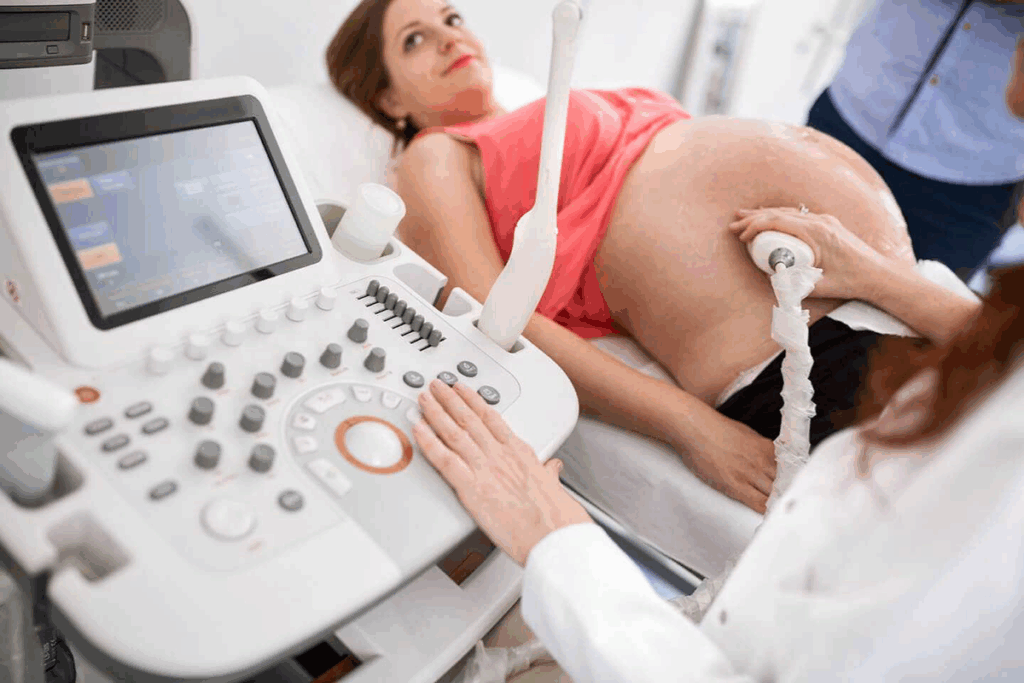
Knowing about pregnancy dating is key for parents-to-be in the early days of pregnancy. Pregnancy is complex, and the terms used can be confusing. Terms like “gestational age” and “conception age” are important for tracking fetal growth and pregnancy progress.
Gestational Age vs. Conception Age
Gestational age and conception age are different ways to measure pregnancy. Gestational age starts from the first day of your last period. It assumes you ovulated and conceived in the middle of a 28-day cycle. Conception age, on the other hand, counts from when the sperm meets the egg.
At 3 weeks pregnant by gestational age, the embryo is really about 1 week old. This difference is important for understanding when the embryo can be seen on an ultrasound. For example, at 3 weeks, an ultrasound can’t yet detect the embryo.
What “3 Weeks Pregnant” Actually Means
Being “3 weeks pregnant” means you’re three weeks from your last period. At this time, the fertilized egg is just starting to attach to the uterine lining. This is a critical time for the embryo’s growth, with fast cell division and the start of organ formation.
Even though it’s early, knowing this timeline helps parents-to-be get ready for what’s ahead. It prepares them for early prenatal care and what to expect.
3 Weeks Pregnant Ultrasound: Why It’s Not Possible
The early stages of pregnancy make it hard to see the embryo at three weeks. At this time, the embryo is a small group of cells starting to attach to the uterus.
The Biological Limitations at 3 Weeks
By the third week, the embryo grows fast but stays very small. It’s about 0.1 to 0.2 millimeters in size. Its tiny size and location in the uterus make it hard for ultrasound to spot.
Size and Development of a 3-Week Embryo
The embryo at 3 weeks is too small to see on an ultrasound. Let’s explore why with a look at its development and size.
Developmental Stage | Size | Ultrasound Visibility |
Implantation | 0.1-0.2 mm | No |
Cell Division | 0.2-0.5 mm | No |
Embryonic Disc Formation | 0.5-1 mm | No |
The table shows the embryo is too small for ultrasound at 3 weeks. Its size and stage of development are beyond what today’s ultrasound can show.
Knowing these limits helps set realistic expectations for early pregnancy ultrasounds. While a 3-week ultrasound is too early, other tests like blood tests can confirm pregnancy.
Early Embryonic Development Timeline
The journey of embryonic development is complex and fascinating. It starts at fertilization. This period is marked by rapid growth and transformation, setting the stage for a healthy pregnancy.
From Fertilization to Implantation
Fertilization happens when a sperm meets an egg, creating a zygote. This zygote then moves down the fallopian tube towards the uterus.
As it moves, the zygote divides into cells, becoming a blastocyst. The blastocyst has two parts: the inner cell mass, which will be the fetus, and the trophoblast, which will become the placenta and other tissues.
Cellular Development in the First 3 Weeks
In the first three weeks, the blastocyst implants in the uterine lining. This is when the blastocyst attaches to the uterine wall, creating a vital link between the mother and the embryo.
During this time, cellular development is fast. The embryo goes through gastrulation, forming the three germ layers: ectoderm, endoderm, and mesoderm. These layers will develop into all body tissues and organs.
Learning about these early stages helps expecting parents understand the amazing process of creating a new life.
Types of Ultrasound Technology in Early Pregnancy
Ultrasound technology is key in tracking early pregnancy. There are two main methods used. We use these to give our patients the best care.
Exploring early pregnancy detection, it’s key to know the differences between these methods. The choice depends on the pregnancy stage and patient needs.
Transvaginal vs. Transabdominal Ultrasound
There are two main ultrasound types in early pregnancy: transvaginal and transabdominal. Transvaginal ultrasound uses a probe in the vagina for clearer views. It’s best in early pregnancy for detailed images.
Transabdominal ultrasound uses a probe on the belly. It’s more common later in pregnancy but can be used early too. It might not show as much detail until the embryo grows, usually after 8 weeks.
A medical expert says, “Transvaginal ultrasound is better for early pregnancy detection. It gives clearer pictures.” This shows why choosing the right ultrasound is important based on pregnancy stage.
“The transvaginal approach allows for earlier detection of pregnancy and its complications, providing a significant advantage in managing early pregnancy.”
Resolution Limitations of Current Technology
Ultrasound tech has improved a lot, but it has limits, mainly in very early pregnancy. The embryo size and equipment quality affect image clarity.
Knowing these limits is vital for healthcare providers and patients. It sets realistic hopes about what can be seen and when.
As medical tech advances, we might see better ultrasound resolution. This could mean detecting pregnancy earlier in the future.
When Ultrasound First Becomes Effective
Many expectant parents wonder when ultrasound can detect early pregnancy. The wait to confirm a pregnancy is filled with excitement and anticipation. Thanks to advanced ultrasound technology, we can now see and monitor fetal development earlier than before.
4.5-5 Weeks: First Signs of Gestational Sac
A gestational sac can be seen on a transvaginal ultrasound at about 4.5 to 5 weeks. This is the first sign of pregnancy that ultrasound can detect. Seeing the gestational sac is a key milestone in tracking fetal growth.
At this early stage, the embryo is tiny, and the sac is the main thing we see on the ultrasound. The early detection of the gestational sac shows how far ultrasound technology has come, thanks to transvaginal ultrasound.
5.5-6 Weeks: Yolk Sac and Fetal Pole Visibility
By 5.5-6 weeks, we can see more important signs of development. The yolk sac, which feeds the embryo before the placenta forms, becomes visible. We also see the fetal pole, the first sign of the embryo. These signs are important for checking if the pregnancy is healthy.
- The yolk sac is usually visible by around 5.5 weeks.
- The fetal pole becomes visible around the same time, showing the embryo’s growth.
- These milestones are key for checking if the pregnancy is viable and healthy.
6-7 Weeks: Detecting the Fetal Heartbeat
By 6-7 weeks, we can hear the fetal heartbeat. This is a big moment for parents, showing a strong and healthy pregnancy. The heartbeat is detected with transvaginal ultrasound and is a sign of fetal health.
Heard by parents and checked by doctors, the fetal heartbeat is a vital sign. It’s used along with other signs to check on the baby’s health.
In summary, ultrasound can detect pregnancy and track fetal development from 4.5 to 7 weeks. Knowing these milestones is important for both parents and healthcare providers.
More Reliable Methods for Detecting 3 Week Pregnancies
Ultrasound technology has its limits in early pregnancy detection. At 3 weeks, it’s hard to see the embryo because it’s so small. But, other methods can confirm pregnancy more accurately.
Blood Tests and hCG Hormone Levels
Blood tests for human chorionic gonadotropin (hCG) hormone are very reliable. hCG is made by the placenta after the embryo attaches. Blood tests can find hCG as early as 6-8 days after ovulation, beating home pregnancy tests in early detection.
There are two blood tests: qualitative and quantitative. Qualitative tests check if hCG is there. Quantitative tests measure how much hCG is in the blood. Quantitative tests are great for tracking the health and growth of the pregnancy.
Type of Test | Detection Time | Information Provided |
Qualitative hCG Test | 6-8 days post-ovulation | Presence of hCG |
Quantitative hCG Test | 6-8 days post-ovulation | Exact hCG levels |
Home Pregnancy Tests: Accuracy and Timing
Home pregnancy tests (HPTs) check for hCG in urine. They’re a good first step for suspected pregnancies. But, their accuracy can vary by brand and hCG levels. It’s best to take an HPT after missing a period for better results.
“The accuracy of home pregnancy tests depends on several factors, including the sensitivity of the test and the time of testing relative to ovulation and implantation.”
– American Pregnancy Association
Clinical Pregnancy Assessment
A clinical pregnancy assessment involves a healthcare provider looking at symptoms and medical history. They might also do a physical exam. While not as clear as blood tests or ultrasounds, these assessments can give insights into pregnancy likelihood.
For women trying to conceive or suspecting pregnancy, knowing about these methods is very helpful. By using these approaches, healthcare providers can give a more detailed look at early pregnancy.
Common Misconceptions About Early Pregnancy Imaging
Early pregnancy ultrasounds often don’t meet the high hopes of expecting parents. At 3 weeks, seeing a detailed embryo image is unlikely. Knowing what ultrasound tech can do at different stages helps manage hopes and reduces worry.
Expectations vs. Reality
Many expecting parents are surprised by early ultrasounds’ unclear images. The embryo is tiny at 3-4 weeks, and tech has limits. It’s key to know that:
- At 3 weeks, the embryo is as small as a fertilized egg, making it hard to spot.
- The first signs of pregnancy on an ultrasound show up around 4.5-5 weeks.
- Early ultrasounds mainly check for a gestational sac, not detailed embryo views.
As one expert says, “The first ultrasound’s excitement can be balanced by what’s really seen early on.” Knowing the developmental stages and what ultrasound tech can show is vital.
Understanding Ultrasound Dating Accuracy
Ultrasound dating accuracy is often misunderstood. Ultrasounds help guess gestational age but aren’t perfect. Accuracy depends on:
- The sonographer’s skill.
- The equipment’s quality.
- The embryo or fetus’s position during the scan.
Ultrasound dating is an estimate, not a precise science. Early pregnancy’s margin of error can be big. For example, a study shows a ±4 day error margin at 6-8 weeks.
Interpreting Early Ultrasound Results
Understanding early ultrasound results needs a deep look. Seeing a gestational sac, yolk sac, and fetal pole is good. But, not seeing them at certain times can worry people.
“The absence of a visible embryo or heartbeat at a certain gestational age doesn’t necessarily indicate a problem; it may simply mean that the pregnancy is earlier than thought.”
— Medical Expert, Obstetrician
We suggest talking to your healthcare provider about your ultrasound results. They can explain what the images mean for you.
Medical Reasons for Early Pregnancy Ultrasounds
We do early pregnancy ultrasounds for important medical reasons. These scans help keep the mother and baby safe and healthy.
Confirming Viable Intrauterine Pregnancy
One key reason for early ultrasounds is to check if the pregnancy is viable. A viable pregnancy means the embryo is growing right in the uterus. It should have a heartbeat and grow normally.
Checking for a viable pregnancy is vital. It lets doctors:
- See how the baby is developing
- Spot any problems early
- Give the right care during pregnancy
Ruling Out Ectopic Pregnancy
Early ultrasounds also help rule out ectopic pregnancies. An ectopic pregnancy happens when the embryo grows outside the uterus, often in a fallopian tube. It’s a serious condition that needs quick attention.
Ultrasounds can spot ectopic pregnancies by:
- Finding the gestational sac
- Seeing if it’s in the uterus
- Finding any oddities
Condition | Ultrasound Finding | Clinical Implication |
Viable Intrauterine Pregnancy | Visible embryo with heartbeat within the uterus | Normal pregnancy progression |
Ectopic Pregnancy | Gestational sac outside the uterus | Potential surgical or medical intervention required |
Monitoring After Fertility Treatments
People who’ve had fertility treatments, like IVF, need early ultrasounds. These scans check if the pregnancy is going well. They help find any early problems.
Monitoring after fertility treatments means:
- Watching the embryo grow
- Seeing if the pregnancy is viable
- Finding any issues
By watching the pregnancy closely, doctors can give better care. This helps ensure the best results for the mother and baby.
What to Expect at Your First Prenatal Ultrasound
Knowing what happens at your first prenatal ultrasound can make you feel more at ease. It’s a key moment in your pregnancy journey. It gives you important info about your baby’s growth and your pregnancy.
Typical Timing of First Ultrasound
The first ultrasound usually happens between 6 to 8 weeks of pregnancy. It helps doctors confirm the pregnancy and check for a heartbeat. It also helps guess when you’ll give birth.
At this time, the embryo grows fast. The ultrasound gives valuable insights into how the pregnancy is going. Always follow your doctor’s advice on when to have your first ultrasound.
Preparation and Procedure
Getting ready for your first ultrasound might depend on the type of ultrasound. For a transabdominal ultrasound, drinking water is often suggested. This helps get clearer images.
The ultrasound itself is quick and simple. You’ll lie on a table, and a sonographer will put gel on your belly. They’ll then move the ultrasound over your belly to see your baby.
What You Might See Based on Gestational Age
At 6 to 8 weeks, you might see the gestational sac, yolk sac, and possibly the fetal pole. How much you can see depends on how far along you are and the ultrasound quality.
Gestational Age | Structures Visible on Ultrasound |
6 weeks | Gestational sac, possibly yolk sac |
7 weeks | Yolk sac, fetal pole, possibly fetal heartbeat |
8 weeks | Fetal heartbeat, more defined fetal pole |
Knowing what to expect at your first ultrasound can make it more special and less scary. It’s a big step in watching your baby grow and keeping your pregnancy healthy.
The Science Behind Ultrasound Detection Limitations
Understanding ultrasound detection limitations is key to knowing its strengths and weaknesses. Ultrasound works by sending sound waves into the body. These waves bounce off internal structures, creating images.
Ultrasound technology sends high-frequency sound waves into the body. The echoes that come back are turned into images. The quality of these images depends on the sound wave frequency and the size of the structures being viewed.
Physical Principles of Ultrasound Imaging
The physical principles of ultrasound show that higher frequency sound waves make images clearer. But, these waves can’t penetrate as deeply, limiting their use for deeper structures.
This balance between image quality and depth is a major challenge for ultrasound. It makes it hard to spot very small embryos or gestational sacs early on.
Minimum Size Requirements for Detection
There’s a minimum size requirement for detection with ultrasound. A gestational sac can usually be seen around 4.5 to 5 weeks, when it’s about 2-3 mm big. Spotting smaller structures, like a 3-week embryo, is tough because of the resolution limits.
- The size of the embryo or gestational sac
- The frequency of the ultrasound waves
- The skill of the operator
These factors greatly affect how early ultrasound can detect pregnancy.
Potential Future Technologies for Earlier Detection
Research into future ultrasound technologies aims to better ultrasound imaging. New transducer tech, signal processing, and contrast agents could help spot smaller structures sooner.
Technology | Potential Benefit |
High-frequency transducers | Improved resolution for early pregnancy detection |
Advanced signal processing | Enhanced image quality and detail |
These advancements are promising. But, we must remember that ultrasound’s basic physics set its limits. Ongoing research is vital to expand ultrasound’s capabilities.
Conclusion
It’s important for expecting parents to know what ultrasound can and can’t do in early pregnancy. We’ve looked at how embryos grow and other ways to find out if you’re pregnant. A 3-week pregnancy is too early to see on an ultrasound.
Ultrasound becomes more accurate around 4.5-6 weeks of pregnancy. You can see the gestational sac, yolk sac, and fetal pole by then. But, blood tests and home pregnancy tests can show pregnancy signs even earlier.
To understand early pregnancy, knowing about all the diagnostic tools is key. Recognizing when and how to confirm pregnancy helps parents-to-be. This knowledge makes the journey to parenthood easier.
FAQ
How early can an ultrasound detect pregnancy?
Around 4.5 to 5 weeks, a gestational sac can be seen on a transvaginal ultrasound. This marks the first sign of pregnancy.
Can a 3-week pregnancy be detected by ultrasound?
No, at 3 weeks, the embryo is too small to be seen by an ultrasound. It’s a microscopic cluster of cells, too small to detect.
What is the difference between gestational age and conception age?
Gestational age starts from the first day of your last period. Conception age is from when the embryo was fertilized. At 3 weeks, the embryo is about 1 week old.
What type of ultrasound is used in early pregnancy?
We use two main types of ultrasound early on: transvaginal and transabdominal. Transvaginal is best early on, while transabdominal works better after 8 weeks.
How do blood tests detect pregnancy?
Blood tests check for human chorionic gonadotropin (hCG) levels. They can show pregnancy before an ultrasound can see a gestational sac.
What can be seen on an ultrasound at 5.5 to 6 weeks?
At 5.5 to 6 weeks, more details like the yolk sac and fetal pole appear, along with the gestational sac.
When can a fetal heartbeat be detected?
A fetal heartbeat is usually seen on an ultrasound around 6 to 7 weeks.
Why are early pregnancy ultrasounds performed?
Early ultrasounds confirm a pregnancy is in the uterus, check for ectopic pregnancies, and track the pregnancy’s progress. They’re important for those who’ve had fertility treatments.
What are the limitations of ultrasound technology?
Ultrasound’s resolution depends on sound wave frequency and structure size. It can’t detect very small embryos or gestational sacs.
How should I prepare for my first prenatal ultrasound?
Knowing what to expect for your first ultrasound can reduce anxiety. It’s usually done between 6 to 8 weeks.
References
National Center for Biotechnology Information. Ultrasound Detection of Pregnancy: Limitations at Three Weeks. Retrieved from https://pubmed.ncbi.nlm.nih.gov/29790240/