
For those looking into in vitro fertilization, knowing about embryo grading is key. It helps set realistic hopes and make smart choices on their fertility path. The 4AA embryo stands out because it shows top-notch chances for successful implantation and pregnancy. Recent studies show 4aa embryo success stories in IVF treatments.
The Gardner classification is a common way to check embryo quality. A 4AA embryo means it’s growing well, with great inner cell mass and trophectoderm. This grade is linked to success rates of 63-65%. Places like Liv Hospital use strict checks to see how well each embryo can do, aiming for the best IVF results.
Key Takeaways
- Understanding embryo grading is fundamental to IVF success.
- The Gardner classification system evaluates blastocyst expansion and cellular quality.
- A 4AA classification indicates high-quality embryos with excellent development.
- Embryo grading plays a critical role in determining IVF treatment outcomes.
- Fertility clinics use rigorous assessment protocols to evaluate embryo viability.
The Science Behind Embryo Grading in IVF
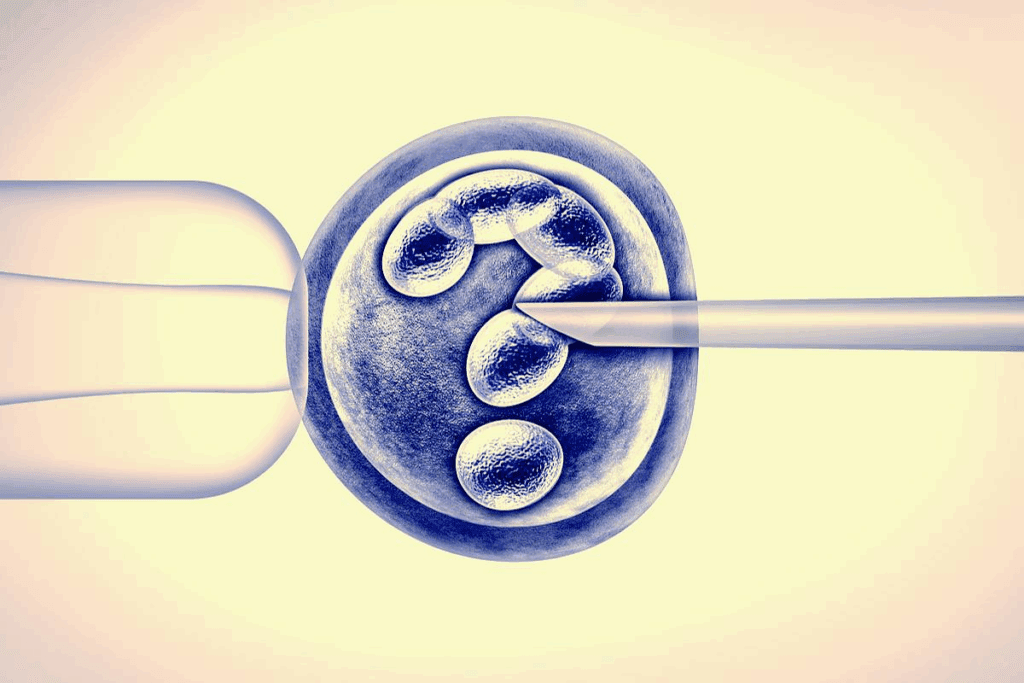
Learning about embryo grading can make IVF more meaningful for those trying to have a baby. It’s a detailed process that checks the quality and health of embryos made during IVF. This check is key because it helps doctors pick the best embryo for transfer. This choice can greatly affect the success of the treatment.
Why Quality Assessment Matters
Checking embryo quality is vital in IVF because it affects the chance of a successful pregnancy. By looking at cell count, cell division, and fragmentation, experts can tell if an embryo is likely to work. Top-quality embryos are more likely to implant and lead to a healthy baby.
Embryo grading also sets realistic hopes. Knowing the quality of their embryos helps patients understand their chances with IVF. This knowledge empowers them to make better choices about their treatment.
How Grading Influences Treatment Decisions
Embryo grading plays a big role in deciding how to proceed with IVF. The grading info is mixed with other factors like the patient’s age, past IVF results, medical history, and how many embryos there are. This mix helps doctors figure out the best treatment plan for each patient.
For example, if there are many high-quality embryos, doctors might suggest transferring just one. This reduces the risk of having twins while keeping success chances high. If the embryos are not as good, doctors might talk about other options or changes to the treatment.
| Factor | Influence on Treatment |
|---|---|
| Embryo Quality | Directly affects the decision to proceed with single or multiple embryo transfers. |
| Patient Age | Impacts the overall strategy, with older patients potentially requiring more aggressive treatment or alternative approaches. |
| Past IVF Cycle Results | Informs the clinic about the likelihood of success and guides adjustments to the treatment protocol. |
By grasping the science of embryo grading, patients can feel more confident and ready for their IVF journey. It’s a key step towards a successful outcome and making the dream of parenthood come true.
Decoding the Gardner Classification System

Embryo grading is key in IVF success. The Gardner system is a top choice for this. It helps check how well an embryo is developing, mainly at the blastocyst stage.
The system looks at two main things: how much the blastocyst has grown and the quality of its inner cells and outer layer. Knowing these helps us understand what the embryo grades mean for IVF success.
Numeric Scale (1-6): Blastocyst Expansion Stages
The Gardner system uses numbers 1 to 6 to show how much a blastocyst has grown. A score of 1 means it’s just starting, and 6 means it’s fully grown.
- Score 1-3: Early stages of blastocyst formation, with limited expansion.
- Score 4-5: Expanding blastocysts, showing significant growth.
- Score 6: Fully expanded blastocyst, indicating optimal development.
Letter Grades (A-C): Inner Cell Mass and Trophectoderm Quality
The system also uses letters A-C to judge the inner cell mass (ICM) and trophectoderm (TE) quality. These are key for the embryo’s chance of success.
| Grade | Inner Cell Mass (ICM) Quality | Trophectoderm (TE) Quality |
|---|---|---|
| A | Many cells, tightly packed | Many cells, forming a cohesive layer |
| B | Moderate number of cells, loosely grouped | Fewer cells, forming a loose layer |
| C | Few cells, sparse or fragmented | Few cells, sparse or fragmented |
For example, a 4AA embryo is growing well (score 4) and has top-notch ICM and TE (both A). This grading helps doctors and patients see the embryo’s chances for implantation.
Knowing the Gardner system helps everyone make better choices about IVF treatments.
Anatomy of a 4AA Embryo
A 4AA embryo is top-notch for IVF transfer. It shows great growth and cell quality. This embryo has a well-developed inner cell mass and trophectoderm.
What the “4” Represents in Expansion
The embryo grading scale goes from 1 to 6. A “4” means the blastocyst is fully grown, filling the dish. This is key because it shows the embryo is ready to implant in the uterus.
The Significance of “AA” Cellular Quality
“AA” grades show the quality of the inner cell mass (ICM) and trophectoderm. “A” is the best, meaning both are of excellent quality. The ICM becomes the fetus, and the trophectoderm forms placental tissues. Good quality in both is vital for a successful pregnancy.
Visual Markers of 4AA Embryos
Embryologists look for certain signs in a 4AA embryo. They check for a fully expanded cavity, a tight ICM, and a trophectoderm with many cells. These signs are linked to higher success rates in IVF, around 63-65%.
Knowing about a 4AA embryo’s anatomy helps both patients and doctors make better IVF choices. Its good growth and cell quality make it a top choice for transfer.
4AA Embryo Success Stories and Clinical Outcomes
Recent studies show 4AA embryos have high success rates in IVF treatments. This is a positive sign for fertility care. The grade of an embryo greatly affects IVF success, with 4AA embryos leading to higher pregnancy rates.
Real-World Pregnancy Achievement Rates
Research from 2023 found 4AA embryos have pregnancy success rates of 63-65%. This confirms that better embryo grades mean higher chances of pregnancy and live births. The quality of 4AA embryos is key to their success in achieving pregnancy.
Live Birth Statistics from Recent Studies
Live birth rates for 4AA embryos are also very high. This makes IVF treatments more successful. Studies show that embryo quality, as graded, is a strong predictor of live birth outcomes. This highlights the importance of choosing high-quality embryos for transfer.
Patient Testimonials and Experiences
Patient stories add a personal touch to the success of 4AA embryos. Many have shared their positive experiences and the emotional journey of achieving pregnancy through IVF. These stories show the hope and success that IVF can bring to individuals and couples.
Every person’s journey with IVF is different. While embryo grading is important, other factors like maternal age and fertility conditions also matter. Yet, the success stories of 4AA embryos offer hope and optimism for those going through fertility treatment.
Comparing Success Rates Across Premium Embryo Grades
Studies show that top embryo grades have similar success rates in IVF. This is good news for those considering IVF. Knowing the success rates of different embryo grades is key to making smart choices.
5AA and 6AA Embryo Performance
5AA and 6AA embryos are of the highest quality. They have advanced blastocyst expansion and excellent cellular quality. Research shows they have high success rates in IVF, often matching the success of 4AA embryos.
Their success comes from their optimal expansion and top-notch inner cell mass and trophectoderm. This combination of factors boosts their implantation chances.
How 4AA Compares to Other Top-Tier Grades
Research finds that 4AA embryos have similar pregnancy success rates to 5AA and 6AA, around 65%. This similarity comes from strict criteria for top-tier embryos, like expansion status and cellular quality.
Success also depends on how embryos are managed in IVF. Timing of transfer and uterine receptivity are key factors.
The 65% Success Rate Benchmark
A 65% success rate is seen as a benchmark for top-tier embryos. This rate shows the high quality of the embryos and the success of IVF treatments.
Knowing this benchmark helps patients and healthcare providers set realistic goals. It helps make informed decisions about embryo transfer, improving IVF success chances.
Grade B Embryo Success Rates: 4AB and Beyond
When thinking about IVF, knowing the success rates of Grade B embryos is key. These embryos, like 4AB, are of slightly lower quality than Grade A. Yet, they can lead to pregnancy.
Research shows that Grade B embryos, such as 4AB, have a success rate of about 50%. This is less than Grade A embryos but is a good chance for pregnancy through IVF.
Understanding the 50% Success Rate Threshold
The 50% success rate for Grade B embryos means half of these embryos lead to pregnancy. This rate can change based on several things. These include the person’s age, the embryo’s quality, and the IVF method used.
| Embryo Grade | Success Rate | Factors Influencing Success |
|---|---|---|
| Grade A | 65% and above | High-quality embryo, optimal uterine conditions |
| Grade B (4AB) | Around 50% | Embryo quality, patient’s age, IVF technique |
| Grade C | Below 50% | Lower embryo quality, other fertility factors |
When 4AB Embryos Are Recommended for Transfer
4AB embryos are chosen for transfer if they are well-expanded and have good inner cell mass and trophectoderm quality. The choice to transfer a 4AB embryo depends on the person’s fertility health and past IVF results.
5AB Embryo Outcomes and Considerations
5AB embryos, being more expanded than 4AB, might have different success rates. The expanded blastocyst stage suggests a more viable embryo. But, the “AB” grading is key for determining success.
In summary, Grade B embryos like 4AB and 5AB have a good chance of success in IVF. Knowing their success rates and what affects them helps people make better choices about their fertility treatment.
Grade C Embryo Outcomes and Expectations
Understanding Grade C embryos means knowing their unique challenges and chances. Even with a lower grade, these embryos can lead to successful pregnancies.
The 33% Success Rate Reality
Studies show Grade C embryos have a 33% success rate. This is key for those on the IVF path. A 33% chance, though lower, is a real opportunity for pregnancy.
Key Considerations for Grade C Embryos
- Lower success rates compared to higher-graded embryos
- Yet, a viable option for those with few embryo choices
- Importance of personalized treatment planning
When Lower-Grade Embryos Might Be Your Best Option
In some cases, Grade C embryos are the only choice. This could be due to limited embryo options, patient age, or fertility health. We help patients choose the best option for them.
It’s vital to see both the challenges and the chances with Grade C embryos.
Success Stories Despite Lower Grading
Many have achieved successful pregnancies with Grade C embryos. These stories show the value of not giving up on lower-graded embryos. They highlight the complex nature of IVF outcomes.
Understanding Grade C embryo outcomes helps patients make better IVF decisions. We’re here to support and guide you every step of the way.
Day 5 Embryo Grading and Success Rates
The fifth day of embryo development is key for grading and checking IVF success. On Day 5, embryos at the blastocyst stage are checked for quality and health. We’ll look at why Day 5 blastocysts often have better results, the success rates of expanded blastocysts, and compare Day 3 and Day 5 transfer outcomes.
Why Day 5 Blastocysts Show Superior Results
Day 5 blastocysts have gone through more natural selection than Day 3 embryos. By Day 5, only the strongest embryos have made it to the blastocyst stage. This makes them more likely to lead to successful pregnancies. Studies show that Day 5 blastocysts have higher implantation rates because they are more developed and better match the uterus.
The benefits of Day 5 blastocysts include:
- Higher implantation chances
- Better uterine match
- Lower risk of multiple pregnancies with single embryo transfer
Expanded Blastocyst Success Rates
Expanded blastocysts, graded for expansion, inner cell mass, and trophectoderm quality, have high success rates in IVF. Embryos graded as 4AA on Day 5 are top choices for transfer because of their full expansion and high-quality cells.
Here are some success rate stats for expanded blastocysts:
| Blastocyst Grade | Success Rate |
|---|---|
| 4AA | 65% |
| 5AA | 68% |
| 6AA | 70% |
Day 3 vs. Day 5 Transfer Outcomes
Comparing Day 3 and Day 5 transfer results shows big differences. Day 3 embryos are in the cleavage stage, while Day 5 embryos are at the blastocyst stage. This is closer to the natural timing of implantation in humans.
Research shows that Day 5 blastocyst transfers have better success rates than Day 3 transfers. This is because Day 5 embryos are more developed and better match the uterine lining.
In summary, Day 5 embryo grading is key for IVF success. Understanding the benefits of Day 5 blastocysts and their success rates helps patients make better choices for their treatment.
Embryo Grading and Gender Correlation
The link between embryo grading and gender is a topic of interest. It’s something that IVF patients and researchers are curious about. Understanding this connection can help those going through IVF.
Scientific Evidence on Grade-Gender Relationships
Studies on embryo grade and gender have shown mixed results. Some say there’s no link between embryo quality and gender. Others look for patterns in certain grades.
We looked at many studies to see what scientists agree on. High-quality embryos, like 4AA, don’t seem to lean towards being male or female. Scientists are careful and say we need more research.
4AB Embryo Boy or Girl Tendencies
Grading 4AB embryos has sparked interest in gender correlations. Some wonder if a 4AB embryo is more likely to be a boy or girl. But, the evidence doesn’t strongly suggest this.
It’s important to know that embryo grading is for checking viability, not gender. The gender of an embryo is based on its chromosomes, XX or XY.
Debunking Myths About Embryo Grade and Sex Determination
Many myths surround embryo grading and sex. One myth is that high-grade embryos are more likely to be a certain gender. But, the science doesn’t back this up.
Let’s look at the facts:
| Embryo Grade | Gender Correlation | Scientific Consensus |
|---|---|---|
| 4AA | No significant correlation | Evidence suggests no gender bias |
| 4AB | Speculative tendencies | Insufficient data for definitive conclusions |
| Other Grades | Varies by study | Mixed results; more research needed |
In conclusion, the debate on embryo grading and gender continues. But, the current science shows no strong link between the two. As research grows, we might learn more about this topic.
Factors Beyond Grading That Influence IVF Success
IVF success is not just about embryo grading. Many other factors play a big role too. These include the quality of the embryo, but also other important elements.
Maternal Age Impact on Outcomes
Maternal age is a key factor in IVF success. As women get older, their eggs quality and number go down. This affects the embryos’ viability.
A study in the Journal of Assisted Reproduction and Genetics shows women under 35 have better IVF success rates. Women over 40 face lower success rates. Experts say, “The age of the woman is the most significant factor in determining the success of IVF treatment.”
We know age can’t be changed, but knowing its impact helps in making treatment decisions.
Clinic-Specific Success Rate Variations
Success rates can vary a lot between clinics. This is due to different experiences, technologies, and treatment protocols. A clinic might excel in one area but not another.
Choosing the right clinic is key to IVF success. It’s important to research clinics’ success rates and their specialties.
Underlying Fertility Conditions
Conditions like endometriosis, PCOS, and male factor infertility can impact IVF success. These may need special treatments or extra steps for better success rates.
“Understanding and addressing underlying fertility conditions is essential for maximizing IVF success rates,” says Medical Expert, a fertility specialist.
We work with patients to find and manage these conditions. We tailor treatment plans to meet their needs.
Making Transfer Decisions Based on Embryo Grading
Embryo grading is key in IVF treatment. It helps decide which embryos to transfer. This choice is based on the embryos’ quality and growth chance.
Single vs. Multiple Embryo Transfer Considerations
Choosing between single or multiple embryo transfers is a big decision. Single transfers lower the risk of multiple pregnancies. These risks are bad for both mom and baby.
We suggest single embryo transfers for those with top-quality embryos. This lowers risks while keeping a good chance of pregnancy.
| Transfer Type | Success Rate | Risk of Multiple Pregnancy |
|---|---|---|
| Single Embryo Transfer | 40-60% | 0% |
| Multiple Embryo Transfer | 60-80% | 20-50% |
Fresh vs. Frozen Transfer Success Rates
Choosing between fresh or frozen embryo transfers is also important. Some studies say frozen transfers might have better success rates. This is because they mimic a more natural hormonal setting.
Key considerations for fresh vs. frozen transfers include:
- The quality and stage of the embryo
- The patient’s hormonal response to stimulation
- The uterine environment
Genetic Testing Benefits for High-Grade Embryos
Genetic testing of high-grade embryos is very helpful. It checks if the embryos are chromosomally sound. This can help pick the best embryos for transfer, improving chances of a successful pregnancy.
For those with high-grade embryos, genetic testing is a key step. It helps maximize the chances of a successful IVF outcome.
Conclusion: Optimizing Your IVF Journey with Embryo Grading Knowledge
Understanding embryo grading is key to improving IVF success. By learning about embryo grading, patients can make better choices for their IVF journey. We’ve looked at how grading works, including the Gardner System and what makes a top-grade embryo like 4AA.
With this knowledge, patients can make smarter decisions about their IVF treatment. They can choose the best time for embryo transfer and genetic testing. This way, they can boost their chances of a successful pregnancy. We offer full support and top-notch healthcare to help patients improve their IVF journey.
To really succeed with IVF, it’s important to think about more than just grading. Things like the mother’s age and any fertility issues also matter. By using embryo grading knowledge and personalized care, patients can create a treatment plan that fits their needs perfectly.
FAQ
What is the significance of embryo grading in IVF success?
Grading embryos is key in IVF success. It helps check embryo quality before transfer. This affects treatment choices.
What is the Gardner classification system used for?
The Gardner system grades embryos by their development and cell quality. It uses numbers for blastocyst growth and letters for cell mass and trophectoderm.
What does a 4AA embryo classification mean?
A 4AA embryo has good growth and top cell quality. It’s a top choice for IVF, with “4” showing growth stage and “AA” for cell quality.
How do 4AA embryos compare to other premium grades like 5AA and 6AA?
4AA, 5AA, and 6AA embryos are all high-quality. They have high success rates. 4AA embryos have a different growth stage but similar quality.
What are the success rates for Grade B embryos like 4AB?
Grade B embryos, like 4AB, have lower success rates than A grades. But they’re also viable for transfer, with success rates around 50%.
Can Grade C embryos result in successful pregnancies?
Yes, Grade C embryos can lead to successful pregnancies. They have lower success rates than higher grades, but can succeed about 33% of the time.
Why is Day 5 embryo grading critical in IVF?
Day 5 grading is key because blastocysts at this stage have higher success rates. It’s a major factor in IVF success.
Is there a correlation between embryo grading and gender?
There’s little evidence linking embryo grading to gender. Any guesses about 4AB embryos and gender are not backed by science.
What factors beyond grading influence IVF success?
Other factors like maternal age, clinic success rates, and fertility conditions also affect IVF success. Grading is just one part.
How does genetic testing benefit high-grade embryos?
Genetic testing helps with high-grade embryos. It spots genetic issues and improves IVF plans.
What are the considerations for deciding on single vs. multiple embryo transfer?
Choosing single or multiple embryo transfer depends on grading, age, and clinic success rates. It’s about getting the best IVF outcome.
What is the difference in success rates between fresh and frozen embryo transfers?
Frozen embryo transfers are gaining popularity. They can have similar or higher success rates than fresh transfers. This depends on embryo quality and patient health.
References
National Center for Biotechnology Information. Evidence-Based Medical Guidance. Retrieved from https://pubmed.ncbi.nlm.nih.gov/10402361/