Last Updated on November 13, 2025 by

Rehabilitation is a structured and evidence-based process for recovery from injuries or surgery. It can be tough to understand the journey, but knowing the steps helps achieve better results. What are the 5 phases of rehab? Learn stages of recovery, from acute care to long-term community reintegration, for an amazing outcome.
The rehab process has five key phases. Each phase has its own goals. These include managing pain, improving mobility, gaining strength, balancing, and returning to activities.
Studies show early pain control can cut complications by up to 30%. Getting mobility back in the first two weeks can also reduce joint stiffness by 25%. Knowing these phases helps guide the recovery path.
Key Takeaways
- Rehabilitation is a structured, evidence-based process.
- The process is typically organized into five key phases.
- Early pain control can reduce complications.
- Regaining mobility early can decrease chronic joint stiffness.
- Understanding the phases helps navigate the recovery journey.
The Fundamentals of Rehabilitation Medicine
Effective rehabilitation starts with a plan made just for you. It’s about getting back to normal safely and quickly. Rehabilitation medicine helps with the physical, emotional, and mental sides of healing.
Picture background
Early pain and swelling control is key to avoiding problems. This shows how important a good rehab plan is. Following structured rehabilitation protocols helps people get back to their activities faster. Some athletes can even return to play sooner than expected.
The Importance of Structured Rehabilitation Protocols
Following a structured plan is vital for injury rehabilitation. It makes sure every part of recovery is covered. This includes controlling pain and swelling first, then strengthening and returning to activities.
Rehabilitation for injury needs to be customized. Different injuries need different approaches. A structured plan allows for this customization. It includes various therapies and exercises for a full recovery.
Structured rehabilitation protocols offer many benefits. They help people get back to normal faster. They also lower the chance of getting hurt again by preparing the individual for their activities.
Understanding the 5 Phases of Rehab: A Scientific Approach
The rehab process is complex and involves several stages. Each stage is based on scientific principles. These principles help guide the recovery journey.
Getting mobility back early can reduce chronic joint stiffness by 25%. This shows how important early and structured rehab is. Knowing the science behind each phase helps people understand their recovery better.
“A well-structured rehabilitation program is key for the best results and getting back to full function.”
The 5 phases of rehab are built on science. They help in recovering and getting back to normal. We’ll look at each phase, from managing pain to getting back to sports.
Picture background
Using science in rehab ensures the best care for each person. This is very important in sport rehabilitation. The goal is to safely and efficiently get athletes back to their sport.
It’s vital for both healthcare professionals and individuals to know about the 5 phases of rehab. This knowledge helps in creating and following effective rehab plans. It leads to better results and fewer complications.
Phase 1: Pain and Inflammation Control
Phase 1 focuses on managing pain and swelling. It’s the first step towards a successful recovery. The RICE method is often used to control these issues.
Progressive Range of Motion Exercises
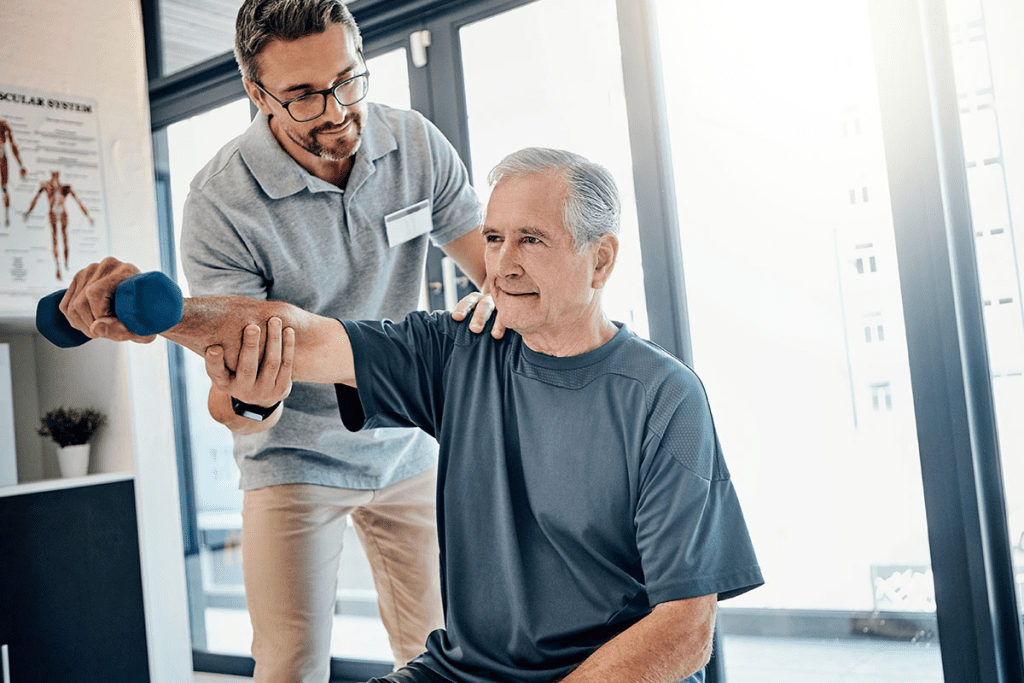
After pain and swelling are managed, we start with a progressive range of motion exercise. These exercises help improve joint mobility slowly. Early mobilization can reduce chronic stiffness and improve sports injury rehabilitation outcomes.
- Gentle stretching to maintain or improve flexibility
- Low-intensity aerobic exercises to promote blood flow
- Specific exercises tailored to the injured area
Preventing Chronic Joint Stiffness
Preventing chronic stiffness is a main goal in Phase 1. We use controlled exercises and manual therapies to keep joints mobile. This helps avoid adhesions and scar tissue that can cause stiffness.
- Manual therapy techniques to improve joint mobility
- Controlled exercises to strengthen the surrounding muscles
- Education on proper movement techniques to avoid exacerbating the injury
Measuring and Tracking Mobility Improvements
We regularly check how well patients are doing. We look at range of motion, strength, and function. This helps us adjust our plans to help patients recover better.
Studies show that structured strength training can boost muscle recovery by over 20%. This highlights the value of a well-planned rehab program.
Progressive Resistance Training Protocols
As patients move forward, we add progressive resistance training protocols. These are customized to meet each patient’s needs. They help build strength gradually without risking injury.
Understanding Phase 1 and using these strategies helps individuals recover better. It ensures they get the best results in the 5 phases of rehab.
Phase 5: Progressive Return to Sport or Function
Phase 5 is the last step in rehabilitation. It helps people safely go back to their activities. This phase is key to avoiding injuries and making sure they perform well.
In Phase 5, we use sport-specific or function-specific training protocols. These are made to match the demands of the person’s sport or daily life. They are customized to meet the individual’s goals and needs.
Sport-Specific or Function-Specific Training Protocols
Sport-specific training looks at the movements and skills needed for a sport. For example, a soccer player might do drills that mimic game conditions. Function-specific training focuses on improving balance and strength for daily activities.
Proprioceptive phase interventions are key in sport-specific training. They help lower injury risk by 30-40%. These interventions improve how the body responds to different movements.
Measuring Readiness for Return
Checking if someone is ready to return to their sport or activities is complex. It looks at strength, flexibility, balance, and endurance. It also checks how well someone performs in their sport or daily activities.
A detailed check might include:
- Strength and endurance tests to see muscle function and physical capacity.
- Flexibility and range of motion checks for mobility.
- Balance and proprioception tests for neuromuscular control.
- Sport-specific or function-specific drills to assess readiness.
By using these checks in Phase 5, we make sure people are ready to go back to their activities. This reduces the chance of injury and helps them perform better.
Sports Injury Rehabilitation: Special Considerations
Sports injury rehab isn’t a one-size-fits-all deal. It needs to fit the unique needs of each sport and athlete. With the right approach, up to 87% of athletes can return to their sport successfully.
When rehabbing sports injuries, special considerations are key for the best recovery. The rehab process must match the sport’s demands and the athlete’s skill level.
Adapting the 5 Phases for Different Sports
Different sports have their own rehab needs. For example:
- High-impact sports like football or basketball need intense rehab to handle the sport’s demands.
- Endurance sports like distance running or cycling focus on getting the heart and stamina back.
- Precision sports like golf or archery focus on improving fine motor skills and coordination.
By tailoring the 5 phases of rehab to the athlete’s sport, we can help them recover better. Sports medicine experts say, “A rehab program that matches the athlete’s sport is more likely to lead to a successful return to competition.”
“A well-structured rehabilitation program is key to an athlete’s successful return to their sport.”
Elite Athlete vs. Recreational Athlete Approaches
Rehab for elite athletes and recreational athletes differs. Elite athletes need:
- More intense and specialized rehab programs.
- A focus on quick recovery to get back to competition fast.
- Advanced methods and tech to boost performance.
Recreational athletes might focus on a slower return to activity. They aim for long-term health and injury prevention. Knowing these differences helps us tailor rehab plans for each athlete’s unique needs.
By understanding the special needs of sports injury rehab, we can create better treatment plans. These plans will meet the diverse needs of athletes in various sports and at different skill levels.
The Multidisciplinary Team in Rehabilitation
The rehabilitation process brings together many healthcare professionals as a multidisciplinary team. This team is key to giving full care during the rehab process. We think a team effort is vital for the best results in rehab.
Roles of Different Healthcare Professionals
A rehabilitation team has many healthcare experts. These include physical therapists, occupational therapists, speech therapists, psychologists, and doctors. Each one adds their special skills to help with all parts of recovery.
Physical therapists help patients get back their strength and mobility. Occupational therapists help with daily tasks. Speech therapists work on communication and swallowing issues. Psychologists support the emotional and mental sides of recovery.
Coordinated Care Approaches
Coordinated care is key to good rehab. Healthcare professionals work together to make sure their efforts match up. This way, patients get consistent, top-notch care. We stress the need for regular team meetings and clear talks to keep care coordinated.
Good coordinated care also means teaching patients and their families about rehab. It involves them in setting goals. This teamwork makes sure rehab goals match what the patient needs and wants.
Using a multidisciplinary team and coordinated care helps rehab programs support patients well. This approach boosts patients’ chances of getting the best results. We follow international standards to make sure care is based on solid evidence and is of the highest quality.
Having healthcare professionals from different fields makes rehab fit each patient’s needs. This personal touch is key to tackling the tough challenges patients face during recovery.
Overcoming Challenges in the Rehabilitation Process
Overcoming the challenges in the rehabilitation process is key to a successful recovery. This process is structured and based on evidence. It can be tough, with many obstacles along the way.
Addressing Recovery Plateaus
One big challenge is hitting a recovery plateau, where progress stops. To get past this, it’s important to review and change the rehab plan. This might mean adding new exercises, making therapy more intense, or trying different treatments.
Using progressive resistance training and training that’s specific to sports or functions can help. It’s also vital to talk openly with your healthcare team to find the best ways to move forward.
The Psychological Aspects of Rehabilitation
The mental side of rehab is just as important as the physical. People may feel frustrated, anxious, or depressed. A team of experts can help with these feelings, giving support and advice.
Recognizing the mental impact of rehab and focusing on mental health is key. This approach is vital for the best results and getting back to full function or sport.
Rehab challenges are complex and need a detailed and flexible plan to beat them. By tackling these challenges, people can improve their recovery and reach their goals.
Conclusion: Achieving Optimal Outcomes Through Complete Rehabilitation
The path to recovery can be tough, but a well-planned approach helps. The 5 phases of rehabilitation offer a detailed plan for healing. This ensures patients get the right care and support every step of the way.
Getting back to normal activities is key, and complete rehabilitation is vital. Knowing the importance of each phase helps people manage their recovery better. This knowledge is essential for a successful journey back to health.
We at our institution are all about top-notch healthcare for international patients. Our team works together to give patients the best care. This ensures they get the best results possible.
Following the 5 phases of rehabilitation leads to a successful recovery. We believe in the power of complete rehabilitation for the best outcomes. We’re here to support our patients every step of the way.
FAQ
What are the 5 phases of rehabilitation?
The 5 phases of rehabilitation are a structured process. They help people recover from injuries or surgery. These phases include controlling pain and inflammation, doing exercises to improve the range of motion, and preventing joint stiffness.They also involve progressive resistance training and gradually returning to sports or daily activities.
Why is controlling pain and inflammation important in rehabilitation?
It’s key in the early stages of rehab. It can cut down complications by up to 30%. It also helps in recovering better.
How can I prevent chronic joint stiffness during rehabilitation?
Moving well in the first 2 weeks can reduce joint stiffness by 25%. Doing exercises to improve the range of motion and early mobilization can help.
What is the role of a multidisciplinary team in rehabilitation?
A team of healthcare professionals is vital in rehab. They work together to provide complete care. This team includes physical therapists, occupational therapists, and doctors.
How can I overcome challenges during the rehabilitation process?
Challenges like hitting a recovery plateau and dealing with the mental side of rehab are common. A good approach is to adjust rehab plans and offer support for the mind.
What is the importance of sport-specific or function-specific training protocols?
These training plans are key in the later stages of rehab. They help people gradually get back to their usual activities and check if they’re ready to return.
How do the 5 phases of rehabilitation differ for elite athletes and recreational athletes?
The rehab process can be tailored for different needs. Elite athletes might need more intense and specialized care.
What is the scientific basis of the 5 phases of rehabilitation?
The 5 phases are based on science. They aim to help people recover and get back to their normal lives. Understanding the science behind rehab can help individuals better manage their recovery.
How can I measure readiness for return to sport or function?
Checking if someone is ready to return involves looking at their progress and abilities. This can be done with tests like functional movement assessments and strength tests.
What is the importance of rehabilitation in sports injury recovery?
Rehab is essential for recovering from sports injuries. It helps people get back to their usual activities. A well-planned rehab program can lower the risk of complications and improve outcomes.
References
- JAG Physical Therapy. (2023, October 10). What are the 5 stages of rehabilitation in sports? Retrieved from https://www.jagpt.com/blog/5-stages-of-sports-rehab/
- Isokinetic. (2024, September 2). The 5 phases of rehabilitation. https://isokinetic.com/en/the-5-phases-of-rehabilitation/
- Sara, L. K. (2023). Rehabilitation phases, precautions, and mobility goals: Postoperative total hip arthroplasty. Journal of Orthopaedic & Sports Physical Therapy, 53(8), 579-589. https://pmc.ncbi.nlm.nih.gov/articles/PMC10626929/
Integrated Therapy Practice. (n.d.). The 5 phases of recovery. https://www.integratedtherapypractice.com/the-5-phases-of-recovery/