Last Updated on November 27, 2025 by Bilal Hasdemir

Heart attacks are a serious condition that needs quick and accurate diagnosis. At Liv Hospital, we know how vital timely detection and treatment are. This ensures the best results for our patients.
Diagnosing heart attacks involves a mix of methods. These include ECG readings, blood tests, and clinical checks. These tools help us spot the various heart attack types and create a solid treatment plan.
We have many diagnostic methods at our disposal. So, we can offer care that fits each patient’s needs. Our aim is to provide top-notch healthcare with full support. We want to make sure our patients get the best treatment and care.
Key Takeaways
- Heart attacks need quick and accurate diagnosis.
- ECG readings, blood tests, and clinical evaluation are used to diagnose heart attacks.
- Liv Hospital provides personalized care for patients with heart attacks.
- Timely detection and treatment are key for the best outcomes.
- Our diagnostic techniques help identify different types of heart attacks.
Understanding Myocardial Infarction and Its Impact
Myocardial infarction is a serious condition where quick medical help can greatly change a patient’s outcome. We will look into how heart muscle damage happens, the number of heart attacks in the U.S., and why fast diagnosis and treatment are key.
The Pathophysiology of Heart Muscle Damage
Myocardial infarction happens when blood flow to the heart stops. This causes the heart muscle to get damaged. It usually happens when a plaque in the artery bursts, blocking the artery.
The lack of oxygen and nutrients to heart muscle cells leads to cell injury and death. This process involves inflammation, platelet activation, and the release of biochemical markers. Knowing these steps is important for finding good treatments and tests.
Prevalence and Mortality Statistics in the United States
Heart attacks are a big health issue in the U.S., with high rates of occurrence and death. Recent numbers show that over 790,000 Americans have a heart attack each year. About 1 in 5 of these are silent, without symptoms.
- Myocardial infarction is a leading cause of death in the United States.
- The condition results in significant healthcare costs and resource utilization.
- Rapid diagnosis and treatment are critical in improving outcomes.
The Importance of Rapid Diagnosis and Treatment
Quick diagnosis and treatment of myocardial infarction are key to lessening heart muscle damage and better patient results. Electrocardiograms (ECG) and cardiac biomarkers like troponin are vital for early heart attack detection. Fast actions, like PCI and thrombolysis, can greatly lower death and illness rates.
We stress the need for quick medical care for anyone showing heart attack symptoms. Early action can greatly improve patient results. This shows the importance of spreading awareness about heart attack signs and symptoms.
The 5 Types of Heart Attacks: Clinical Classification

Doctors use clinical classification to figure out the cause of heart attacks. They look at the symptoms, ECG findings, and lab results to categorize them.
Type 1: Spontaneous MI Due to Atherosclerotic Plaque Rupture
Type 1 myocardial infarction happens when a plaque in the artery bursts. This causes a blockage and is the most common type. Doctors use an ECG during a heart attack to check for signs of damage.
Type 2: MI from Supply-Demand Imbalance
Type 2 MI is when the heart doesn’t get enough oxygen. This can be due to severe anemia or other issues. Doctors use ECG and blood tests to diagnose this type.
Type 3: Sudden Cardiac Death with Presumed MI
Type 3 MI is when someone suddenly dies with signs of heart damage. But, there are no blood tests or ECGs to confirm. This is often found after death.
Type 4: MI Associated with Percutaneous Coronary Intervention
Type 4 MI happens during or after a heart procedure. Doctors check for signs of heart attack by looking at ECGs and measuring biomarkers.
| Type of MI | Common Causes | Diagnostic Approaches |
|---|---|---|
| Type 1 | Atherosclerotic plaque rupture | ECG, cardiac biomarkers |
| Type 2 | Supply-demand imbalance | Clinical assessment, ECG, blood tests |
| Type 3 | Sudden cardiac death | Clinical history, post-mortem examination |
| Type 4 | PCI-related | ECG, cardiac biomarkers post-PCI |
Knowing these types helps doctors treat heart attacks better. They use ECGs and blood tests to find the right treatment.
ECG During a Heart Attack: Recognizing Critical Patterns
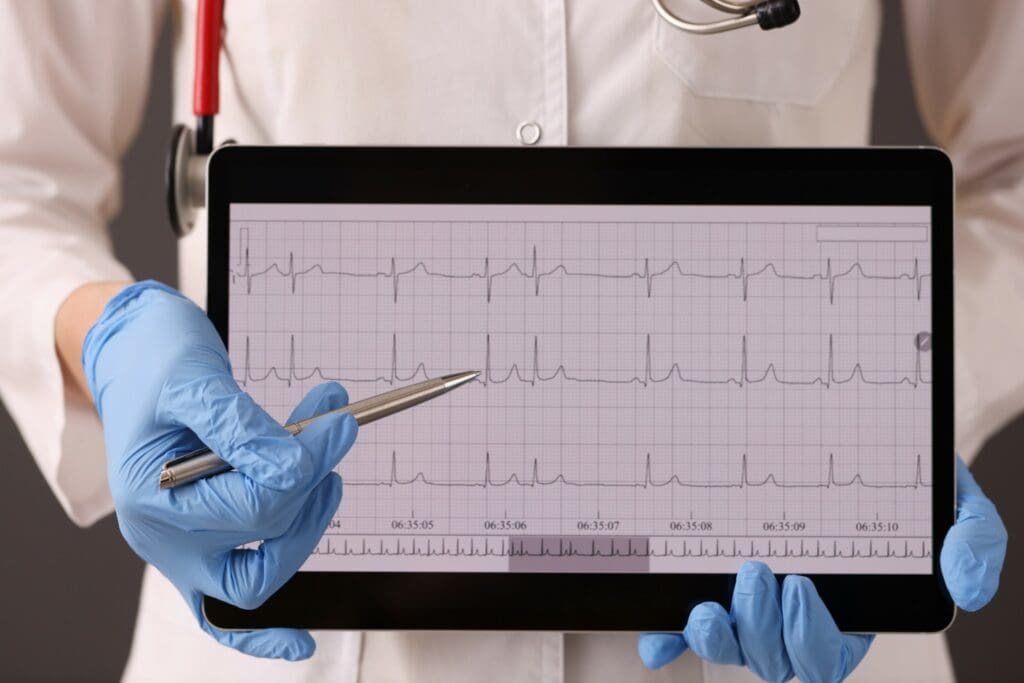
When a heart attack happens, doctors use an electrocardiogram (ECG) to help diagnose it. An ECG is a simple test that shows the heart’s electrical activity. It helps doctors see how well the heart is working.
How Electrocardiograms Work in Cardiac Assessment
An ECG detects the heart’s electrical signals as it beats. These signals are picked up by electrodes on the skin, usually on the chest, arms, and legs. The ECG tracing shows the heart’s electrical activity, helping doctors check its function and spot any problems.
The ECG is key in diagnosing heart attacks. It can quickly spot patterns that show heart damage or lack of blood flow. Doctors use this info to decide on the best treatment right away.
STEMI: Characteristic ST-Segment Elevations
A STEMI (ST-Elevation Myocardial Infarction) heart attack shows a specific ECG pattern: ST-segment elevation. This happens when a major artery is blocked, causing heart muscle damage. The ECG shows this as a raised section between the QRS complex and the T wave.
STEMI is a medical emergency needing quick action. Doctors usually do percutaneous coronary intervention (PCI) or thrombolysis to fix the blockage and save the heart muscle.
NSTEMI: Subtle ECG Changes and Interpretation
NSTEMI (Non-ST-Elevation Myocardial Infarction) shows different ECG changes. Instead of ST-segment elevation, NSTEMI might have ST-segment depression, T-wave inversion, or other small changes. These signs point to heart damage or lack of blood flow without a complete blockage.
Reading NSTEMI on an ECG needs careful attention. The changes can be small and not always easy to spot. Doctors must look at the whole picture, including symptoms and lab results, to make a correct diagnosis.
Knowing the difference between STEMI and NSTEMI on an ECG is vital. It helps doctors make the right treatment choices and improve patient care.
Does an ECG Always Detect Heart Attack? Sensitivity and Limitations
ECG is key in diagnosing heart attacks. Yet, it doesn’t always show the whole story. Sometimes, it can’t give a clear diagnosis.
Accuracy Rates of ECG in Different Heart Attack Types
ECG’s accuracy changes with the heart attack type. For STEMI (ST-Elevation Myocardial Infarction), it’s quite reliable, showing clear ST-segment elevations. But for NSTEMI (Non-ST-Elevation Myocardial Infarction), the signs can be subtle and hard to spot.
In some cases, ECG might look normal or show vague changes. This makes diagnosing harder, like in type 2 myocardial infarctions. Here, the ECG signs might be less clear or mistaken for other issues.
False Negatives and Their Clinical Implications
False negatives, where ECG misses a heart attack, are serious. They can lead to patients being sent home too soon or getting late treatment.
Doctors need to know these limits. They should not just rely on ECG for diagnosis, mainly for high-risk patients or those showing heart attack signs.
When Additional Diagnostic Methods Are Necessary
If ECG results are unclear or negative but symptoms suggest a heart attack, more tests are needed. Blood tests for cardiac biomarkers, like troponin, are vital in confirming or ruling out a heart attack.
Other tests, like echocardiography and coronary angiography, might also be used. The goal is to use ECG, lab results, and clinical findings together for accurate and timely diagnosis.
Blood Tests for Heart Attack: Cardiac Biomarkers
Blood tests are key in finding heart attacks. They show important signs of heart damage. When a heart attack happens, special enzymes and proteins leak into the blood. These can tell us how much damage there is.
Troponin: The Definitive Marker of Myocardial Injury
Troponin is a protein in heart muscle cells. When these cells get hurt, troponin goes into the blood. This makes troponin a clear sign of heart damage.
Guidelines say troponin levels show heart damage well. We test for troponin because it’s very good at finding even small heart problems. Troponin levels go up a few hours after a heart attack. They stay high for days, helping doctors diagnose.
CK-MB and Other Enzymatic Indicators
CK-MB (creatine kinase-myocardial band) is another enzyme used to spot heart attacks. It’s not as precise as troponin but can help when used together.
Other enzymes like total creatine kinase and lactate dehydrogenase were used before. But they’re not as good at showing heart damage as troponin and CK-MB.
Timing of Blood Tests After Symptom Onset
When blood tests are done is very important for a correct diagnosis. Troponin levels start to rise 2-3 hours after a heart attack. They reach their highest within 24 hours.
Knowing when and how to read these biomarkers is key for doctors. As cardiology gets better, blood tests will keep being a big part of checking patients.
Can Blood Tests Definitively Show Heart Attack?
Blood tests are often used to spot heart attacks. But, can they really tell for sure? We look into how cardiac biomarkers help diagnose heart attacks.
Sensitivity and Specificity of Cardiac Biomarkers
Cardiac biomarkers, like troponin, are key in spotting heart attacks. Troponin levels are very sensitive to heart damage. This makes them a great tool for doctors.
- Troponin T and Troponin I are specific markers for cardiac damage.
- Elevated levels show a heart attack, but the level can vary.
Troponin tests have gotten better at catching heart attacks early. But, other things like kidney problems or muscle damage can mess with the results.
Interpreting Elevated Troponin Levels
When troponin levels go up, doctors need to think about the whole picture. Troponin elevation isn’t just for heart attacks. It can also show up in heart failure, pulmonary embolism, and myocarditis.
| Condition | Troponin Level Interpretation |
|---|---|
| Acute Myocardial Infarction | Significantly elevated, often with a rising pattern |
| Chronic Heart Failure | Mildly elevated, often stable |
| Pulmonary Embolism | Elevated in severe cases, related to right ventricular strain |
Conditions That May Cause False Positive Results
Some conditions can make troponin results look wrong. These include:
- Renal failure, where reduced clearance can elevate troponin levels.
- Skeletal muscle injury or rhabdomyolysis.
- Sepsis or severe systemic illness.
In conclusion, blood tests, like troponin levels, are very important in diagnosing heart attacks. But, they must be looked at with the whole clinical picture and other tests, like ECG results.
Clinical Signs: How Doctors Check for Heart Attack
Doctors use many methods to find heart attacks. They look at symptoms, do physical exams, and use risk scores. Finding heart attacks is key to treating them right.
Classic and Atypical Symptom Presentation
Heart attack symptoms can be different for everyone. Some feel chest pain or tightness that spreads to arms or neck. Others might just feel tired or have stomach pain.
Women, diabetics, and the elderly often have different symptoms. They might feel nauseous, dizzy, or have irregular heartbeats. Doctors need to be careful to catch these signs early.
Physical Examination Findings
Doctors check for heart problems during exams. They look for heart rate issues, murmurs, or signs of heart failure. These signs can mean a lot.
They also look for signs of heart disease risk, like yellow patches on the skin. Checking blood pressure and feeling pulses helps understand heart health.
Risk Assessment Scoring Systems
Doctors use scores to guess the chance of a heart attack. These scores help decide how to test and treat patients. They help doctors make better choices.
The HEART score is one tool. It looks at history, ECG, age, risk factors, and blood tests. This score helps doctors predict heart attack risks.
| Scoring System | Components | Clinical Utility |
|---|---|---|
| HEART Score | History, ECG, Age, Risk factors, Troponin | Predicts risk of major adverse cardiac events |
| TIMI Score | Age, Risk factors, CAD history, Symptoms, ECG, Biomarkers | Assesses risk of cardiac events in ACS patients |
| GRACE Score | Age, Heart rate, Systolic BP, Creatinine, Killip class, Cardiac arrest, ST-segment deviation, Troponin | Predicts in-hospital and long-term mortality in ACS patients |
In summary, doctors check for heart attacks by looking at symptoms, doing exams, and using scores. By combining these with ECG and lab results, they can make the right diagnosis and treatment plan.
Comprehensive Diagnostic Approach to the 5 Types of Heart Attacks
Identifying different heart attacks requires a detailed strategy. We use a mix of clinical checks, ECG readings, and lab tests to spot myocardial infarction (MI) well.
Initial Emergency Department Assessment
When someone with heart attack symptoms comes to the emergency room, we act fast. We look at their medical history, symptoms, and physical check-ups to see if they might have MI. This first step helps us decide what tests to do next.
ECG is key in the early stages. We wonder, “Will an ECG show a heart attack?” It can give us important clues, but it’s not always clear-cut. An ECG might show signs of MI, like ST-segment elevations in STEMI or slight changes in NSTEMI.
Integrating Clinical, ECG, and Laboratory Findings
We mix the patient’s symptoms, ECG results, and lab tests, like troponin, to make a correct diagnosis. The question “Does a heart attack show up on an ECG?” is important here. ECG findings are a big part of figuring out the diagnosis.
Troponin levels are key in diagnosing MI. High troponin means heart muscle damage, which, with the right symptoms, means a heart attack.
Advanced Imaging in Heart Attack Diagnosis
Sometimes, we use advanced tests like echocardiography or coronary angiography. These help us see how well the heart is working and the state of the coronary arteries. They give us more info to help decide treatment.
By using clinical checks, ECG, lab tests, and advanced imaging when needed, we can accurately find out what kind of heart attack someone has. This lets us manage it the right way.
Treatment Strategies Based on Heart Attack Classification
Dealing with heart attacks needs a detailed plan based on the type of infarction. We know that different heart attacks need different treatments. Our approach follows the latest medical guidelines and studies.
Emergency Interventions for Different MI Types
Quick actions are key in treating heart attacks. For Type 1: Spontaneous MI Due to Atherosclerotic Plaque Rupture, we might use thrombolysis or primary PCI to get blood flowing again. On the other hand, Type 2: MI from Supply-Demand Imbalance focuses on fixing the imbalance, like managing high blood pressure or fast heart rate.
For Type 3: Sudden Cardiac Death with Presumed MI and Type 4: MI Associated with Percutaneous Coronary Intervention, we have different plans. Type 3 needs quick CPR and finding and treating the cause. Type 4 aims to manage any problems from the PCI.
Medication Protocols and Timing
Medicines are very important in treating heart attacks. We follow guidelines that suggest using antiplatelets, anticoagulants, beta-blockers, and statins early on. Giving these medicines quickly is key.
For example, aspirin is given right away to MI patients. Then, we add more antiplatelets like clopidogrel or ticagrelor. We also start anticoagulants like heparin or bivalirudin quickly to stop more clots.
Revascularization Procedures and Their Indications
Procedures like PCI and CABG are vital for some heart attacks. The choice depends on the patient’s situation, heart anatomy, and other factors.
Here’s a table showing when to use these procedures:
| Procedure | Indication | Clinical Context |
|---|---|---|
| Primary PCI | STEMI, large area of ischemia | Emergency setting, timely intervention critical |
| CABG | Complex coronary disease, failed PCI | Elective or urgent, based on clinical stability |
| Thrombolysis | STEMI, when primary PCI not available | Emergency setting, time-sensitive |
By matching treatments to the heart attack type, we can improve patient results and lower risks of heart attack problems.
Conclusion: Advances in Heart Attack Diagnosis and Future Directions
We’ve looked into how we diagnose heart attacks, including the different types and tools used. These advances have greatly helped patients. We’re seeing even more new ideas in this area.
Using electrocardiograms, blood tests, and clinical signs helps doctors diagnose heart attacks well. Looking ahead, we’ll see more use of advanced analytics and care plans made just for each patient. This will help doctors give better treatment.
New technologies like remote patient monitoring are changing how we manage heart health. They let us catch problems early and manage heart disease better. By using these new tools and focusing on full care, we can help patients more and lessen the impact of heart disease.
FAQ
Does an ECG show a heart attack?
An electrocardiogram (ECG) can show signs of a heart attack. But, it’s not always clear. We look for patterns like ST-segment elevations, which are signs of STEMI. We also look for other subtle changes seen in NSTEMI.
Can a blood test show a heart attack?
Yes, blood tests can show evidence of a heart attack. They detect cardiac biomarkers like troponin and CK-MB. These biomarkers are released when heart muscle is damaged.
How do doctors check for a heart attack?
Doctors use several ways to check for a heart attack. They look at symptoms, do a physical exam, and use risk scores. They also use ECG and blood tests.
What is the role of ECG in diagnosing heart attacks?
ECG is key in diagnosing heart attacks, mainly STEMI. It helps us quickly find patients who need immediate help.
Are there different types of heart attacks?
Yes, there are five types of heart attacks. They are classified by cause and symptoms. Knowing these differences helps us treat them right.
Can blood tests definitively show a heart attack?
Blood tests are very good at showing heart attacks. They work best when used with ECG and clinical findings. High troponin levels mean heart muscle damage.
What are the classic and atypical symptoms of a heart attack?
Classic symptoms include chest pain and shortness of breath. Atypical symptoms are fatigue, nausea, and back pain. We know how to spot both.
How are blood tests used in diagnosing heart attacks?
Blood tests look for cardiac biomarkers. These are proteins released when heart muscle is damaged. We check troponin and CK-MB levels to confirm damage.
What is the importance of rapid diagnosis and treatment of heart attacks?
Quick diagnosis and treatment are key. They help protect the heart muscle and improve outcomes. Fast action can greatly reduce harm and death.
How do treatment strategies vary based on the type of heart attack?
Treatment plans vary by heart attack type. We use emergency care, medicines, and procedures to treat different types of heart attacks.
What is the role of advanced imaging in heart attack diagnosis?
Advanced imaging, like echocardiography and coronary angiography, help diagnose heart attacks. They help us evaluate patients and make treatment plans.
Will an ECG always detect a heart attack?
No, an ECG won’t always show a heart attack. It’s a useful tool, but it has limits. We use ECG, blood tests, and clinical findings to accurately diagnose heart attacks.
References
- Heart Attack. Retrieved from: https://www.nhs.uk/conditions/heart-attack/
- Heart Attack. Retrieved from: https://www.heart.org/en/health-topics/heart-attack
- About Heart Attack Symptoms, Risk, and Recovery. Retrieved from: https://www.cdc.gov/heart-disease/about/heart-attack.html