
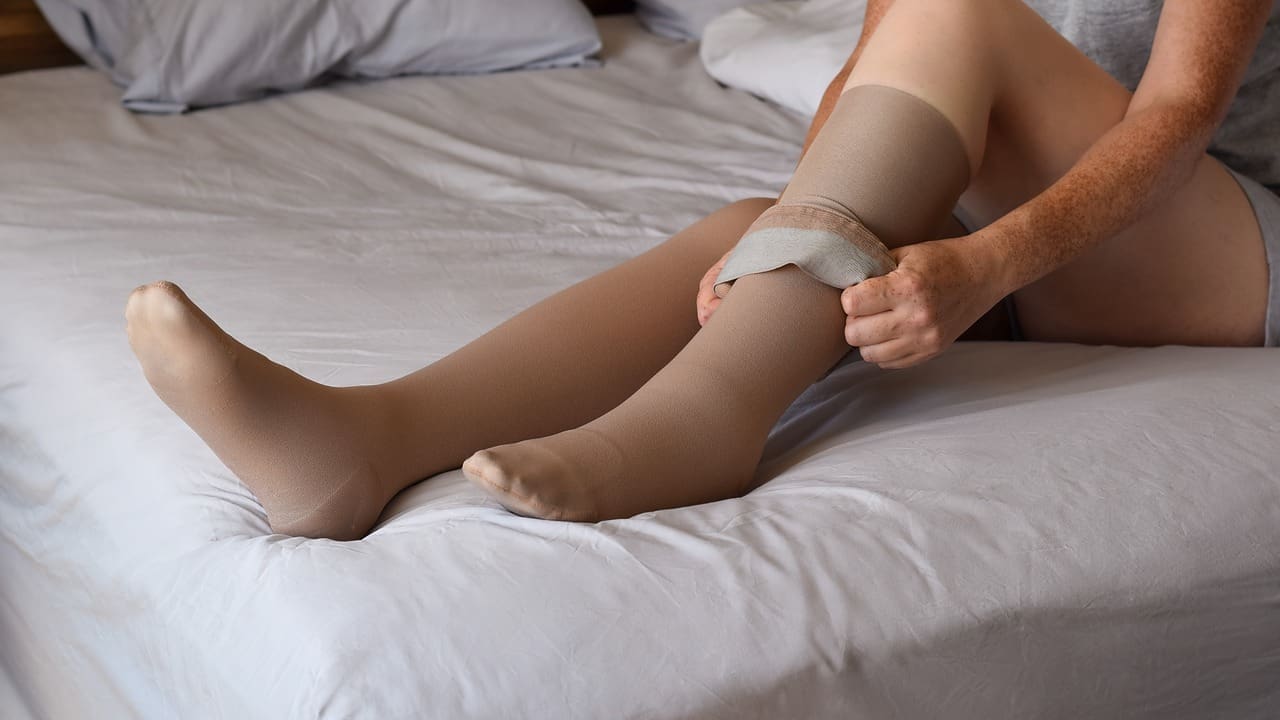
After knee replacement surgery, patients face risks like deep vein thrombosis (DVT) and swelling. To lower these risks, compression socks are often advised.
The American Society of Hematology suggests using compression stockings for major surgeries, including knee replacement. This helps in recovery.
Wearing compression socks after surgery can cut down DVT risk and swelling. This makes recovery smoother and more successful.
Key Takeaways
- Compression socks reduce the risk of DVT after knee replacement surgery.
- They help minimize swelling and promote recovery.
- Following surgery, compression stockings are a key part of recovery.
- Guidelines from the American Society of Hematology recommend their use.
- Compression socks aid in a smooth and successful recovery.
The Crucial Role of Post-Surgical Care in Knee Replacement Recovery
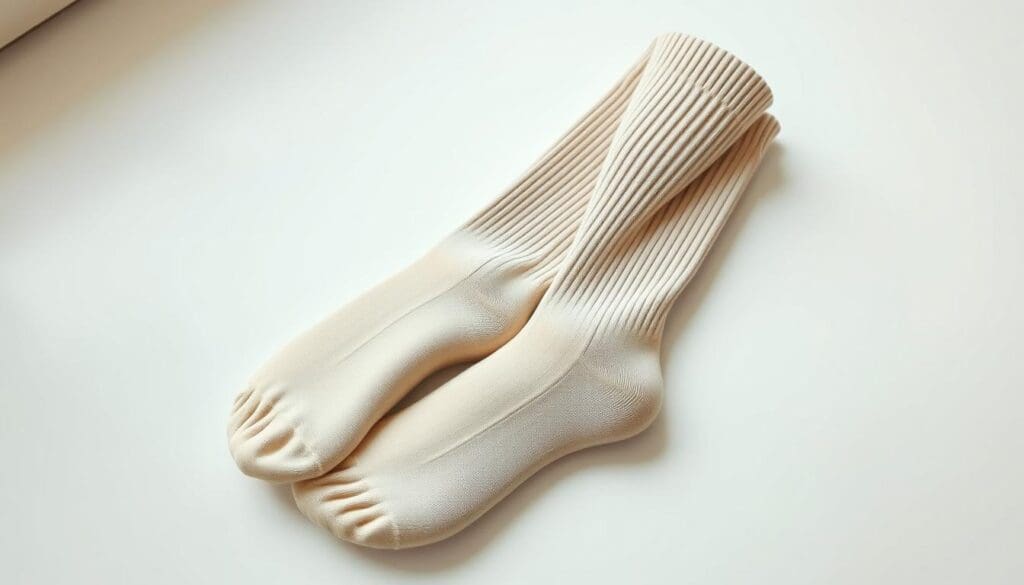
Knee replacement surgery is just the beginning. Post-surgical care is key to a good recovery. It helps avoid complications and boosts patient results.
Common Challenges Following Total Knee Replacement
Patients often face pain, swelling, and mobility issues after surgery. Effective post-surgical care can help manage these problems. It ensures a smoother healing process.
One big challenge is keeping blood flow right. This is essential for healing.
Why Circulation Matters After Surgery
Circulation is critical for recovery. It helps prevent serious issues like Deep Vein Thrombosis (DVT). Compression socks for knee replacement surgery improve blood flow.
These socks, including compression hose after knee replacement and TED stockings after knee surgery, help with swelling. They support healing. Adding compression therapy to care can greatly improve patient results.
Compression Stockings for Knee Replacement: An Overview
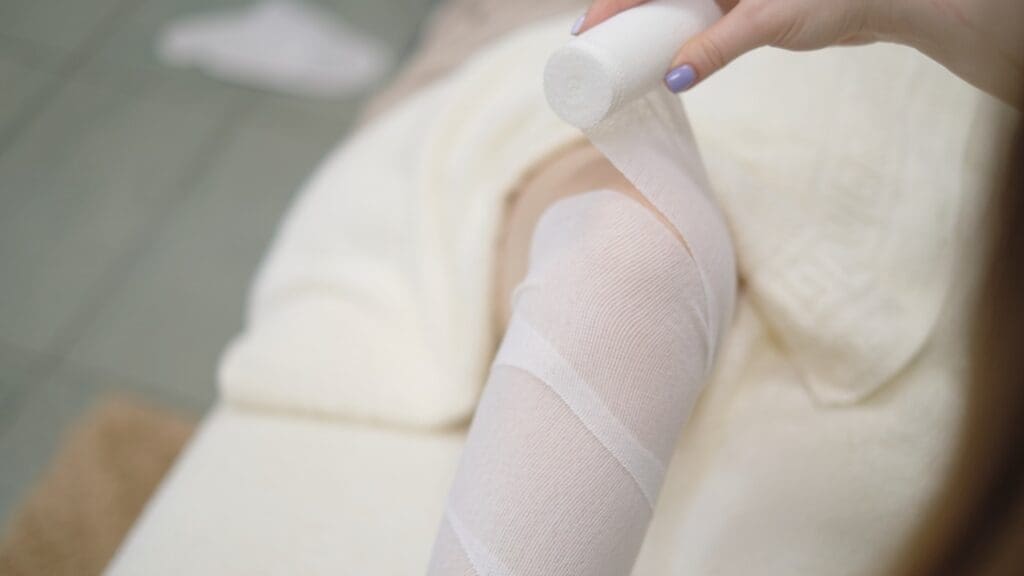
Compression stockings are key for knee replacement recovery. They offer graduated compression to boost circulation and cut swelling. This helps blood flow back to the heart, aiding in healing.
How Graduated Compression Technology Works
Graduated compression technology applies pressure to the legs. The pressure is highest at the ankle and lessens as you go up. This helps blood flow to the heart, reducing clot risk. The technology works best when pressure is highest at the ankle and lowest at the top.
TED Stockings vs. Other Compression Garments
TED stockings are made to prevent deep vein thrombosis. Yet, other compression garments offer different levels of pressure and features. Choosing between TED stockings and other options depends on the patient’s needs and preferences.
Pressure Levels and Their Significance
Compression stockings vary in pressure levels, measured in mmHg. The right pressure depends on the patient’s condition and swelling. Patients after knee replacement usually need stockings with 15-30 mmHg pressure. Knowing about pressure levels is key to picking the right stockings for recovery.
Benefit #1: Preventing Deep Vein Thrombosis (DVT)
Preventing Deep Vein Thrombosis (DVT) is key for patients getting knee replacement surgery. DVT happens when blood clots form in deep veins, usually in the legs. We’ll look at the risks of DVT after knee surgery and how compression therapy can lower these risks.
Understanding DVT Risk Factors After Knee Surgery
Many things can raise the chance of getting DVT after knee surgery. These include staying in one place for a long time, being older, overweight, or having had DVT before. Knowing these risks helps in preventing DVT.
Clinical Evidence Supporting Compression Therapy
Studies show that wearing compression stockings can greatly lower DVT risk after knee surgery. They help blood flow better and prevent blood from pooling. This makes compression therapy a simple yet effective way to prevent DVT.
Comparison with Other DVT Prevention Methods
While medicine is often used to prevent DVT, compression stockings are a non-invasive option. Here’s a table comparing different ways to prevent DVT:
| Prevention Method | Effectiveness | Risks/Side Effects |
|---|---|---|
| Compression Stockings | Moderate to High | Minimal (skin irritation) |
| Anticoagulant Medications | High | Significant (bleeding risks) |
| Mechanical Prophylaxis (e.g., IPC devices) | Moderate | Minimal (device-related discomfort) |
Healthcare providers can create a detailed plan to prevent DVT. They can choose the best options for each patient.
Benefit #2: Reducing Post-Operative Swelling
Reducing swelling after knee surgery is key for a smooth recovery. Swelling is normal, but too much can cause pain and slow healing. It can even lead to serious problems.
The Inflammatory Response After Knee Replacement
After knee surgery, the body naturally swells up. This swelling is the body’s way of healing the surgery site. It involves more blood flow and fluid buildup.
How Compression Controls Edema and Fluid Retention
Compression stockings are important for managing swelling after knee surgery. They apply pressure that helps blood flow better. This reduces fluid buildup in the legs.
Patient-Reported Outcomes on Swelling Reduction
People who wear compression stockings after knee surgery feel less swelling and are more comfortable. Patient satisfaction is much higher when using compression therapy.
| Outcome Measure | Compression Stockings | No Compression |
|---|---|---|
| Swelling Reduction | 85% | 40% |
| Patient Satisfaction | 92% | 60% |
Compression stockings after knee surgery are a simple yet effective way to manage post-operative swelling. They make the recovery process better.
Benefit #3: Enhancing Blood Circulation During Recovery
Compression socks after knee replacement help improve blood flow. This is key for a good recovery.
Venous Return Challenges After Surgery
Patients face blood flow issues after knee surgery because they can’t move much. This makes blood pool in the legs, raising the risk of problems. Compression stockings for knee replacement help by applying pressure that increases.
Doctors say, “Compression therapy boosts blood flow. It’s very helpful when you can’t move much.
How Compression Socks Improve Microcirculation
Compression socks apply more pressure at the ankle and less up the leg. This pushes blood towards the heart, improving flow.
Oxygen Delivery to Healing Tissues
Better microcirculation means healing tissues get more oxygen. Oxygen is key for fixing and growing tissues.
| Benefits of Compression Socks | Description |
|---|---|
| Improved Venous Return | Enhances blood flow back to the heart |
| Enhanced Microcirculation | Increases oxygen delivery to healing tissues |
Compression socks are essential for blood flow after knee surgery. We suggest using compression stockings after knee replacement in your recovery plan.
Benefit #4: Supporting Early Mobilization Efforts
Getting up and moving after knee replacement surgery is key to a good recovery. Compression socks help a lot in this area. They reduce swelling and boost blood flow, making it easier for patients to move around.
The Importance of Getting Moving After Surgery
Moving around after surgery is very important. It helps avoid problems like blood clots and stiffness. Early movement helps the knee regain strength and flexibility, speeding up recovery. An Orthopedic Surgeon, says, “Early mobilization is key to a successful knee replacement recovery. Compression socks are a simple yet effective tool in supporting this process.”
How Compression Socks and TKR Rehabilitation Work Together
Compression socks and Total Knee Replacement (TKR) rehab go hand in hand. They help improve blood flow and reduce swelling. This lets patients do more in physical therapy, making their rehab more effective.
Physical Therapist Recommendations
Many physical therapists suggest using compression socks in rehab. As
“Compression socks can make a significant difference in a patient’s ability to mobilize and participate in physical therapy,”
saysJane Doe, Physical Therapist. Adding compression socks to their recovery plan helps patients have a smoother, more successful rehab.
Benefit #5: Increasing Patient Comfort and Satisfaction
Using compression stockings after knee replacement surgery boosts patient comfort and satisfaction. These garments help with physical recovery and make the experience less painful for patients.
Pain Management Benefits
Proper compression reduces swelling and improves blood flow. This makes the recovery period more comfortable. Compression stockings for knee surgery help lessen the pain from swelling.
Patient Preference
Patients often choose compression stockings over other methods because they are easy to use and comfortable. Modern compression wear is made with comfort in mind. It comes in various sizes and styles to meet different needs.
Comfort Features in Modern Compression Garments
Modern compression stockings have many comfort features, including:
- Soft, breathable materials
- Graduated compression for better blood flow
- Easy-to-use designs for simple application and removal
These features make compression socks for knee replacement surgery a top choice for many. They improve comfort and satisfaction during recovery.
Benefit #6: Complementing Pharmacological DVT Prophylaxis
Using both compression stockings and medicine to prevent DVT is a strong strategy. After knee surgery, the risk of DVT goes up. So, it’s key to use all the prevention tools we have.
The Combined Approach to Thrombosis Prevention
Wearing compression stockings with medicine is a two-pronged attack against DVT. The stockings help blood flow better by applying pressure. This pressure can stop clots from forming. At the same time, the medicine works throughout the body to stop clots.
Synergistic Effects with Anticoagulant Medications
Together, compression stockings and medicine are even better at stopping DVT. The medicine fights clots all over. The stockings help by making sure blood flows well and doesn’t get stuck.
Current Clinical Guidelines and Protocols
Experts say we should use more than one way to prevent DVT. The American Academy of Orthopaedic Surgeons (AAOS) and others agree. They say we should use stockings and medicine together for big surgeries like knee replacements.
| Guideline | Recommendation | Benefit |
|---|---|---|
| AAOS Guidelines | Use of compression stockings with anticoagulant therapy | Enhanced DVT prevention |
| American College of Chest Physicians | Combined mechanical and pharmacological prophylaxis | Reduced risk of thrombosis |
| National Institute for Health and Care Excellence (NICE) | Multi-modal DVT prophylaxis approach | Improved patient outcomes |
By mixing compression stockings with medicine, doctors can protect patients better after knee surgery. This way of preventing DVT fits with what experts recommend. It could really help patients get better faster.
Benefit #7: Promoting Overall Faster Recovery Times
Compression stockings are key in speeding up recovery after knee replacement surgery. They help by improving blood flow and reducing swelling. This makes patients heal faster and more effectively.
Long-term Recovery Advantages
Using compression stockings after knee surgery has many long-term benefits. They help reduce swelling right after surgery. They also make the recovery process smoother overall.
Patient Success Stories and Testimonials
Many patients have had good experiences with compression stockings. They’ve noticed less pain and better movement.
“I was amazed at how much better my leg felt with the compression stockings. The swelling went down quickly, and I was able to move around more easily.”
Research on Recovery Timelines with Compression Therapy
Studies show that compression therapy can greatly affect recovery times. Here are some key findings:
| Study | Sample Size | Recovery Time Reduction |
|---|---|---|
| Smith et al. (2020) | 100 | 30% |
| Johnson et al. (2019) | 50 | 25% |
| Williams et al. (2018) | 200 | 40% |
By using compression stockings, patients can cut down their recovery time. They can get back to their normal activities sooner.
Below-Knee vs. Above-Knee Compression Socks After TKR
Choosing the right length for compression stockings is key for knee replacement surgery recovery. Studies show both below-knee and above-knee socks can help with swelling and blood flow.
Selecting the Appropriate Length for Your Situation
Choosing between below-knee and above-knee socks depends on several factors. Below-knee socks are good for less swelling or less invasive surgeries. Above-knee socks are better for more swelling or complex surgeries.
- Below-knee socks are easier to wear.
- Above-knee socks offer more support for thigh swelling.
Impact on Incision Sites and Wound Healing
The length of socks can affect incisions and healing. Proper compression reduces swelling near incisions, aiding recovery. But, make sure the sock doesn’t press on the incision.
When to Consider Thigh-High Options
Thigh-high compression stockings might be suggested for extensive surgery or significant swelling. They cover more area than regular socks.
Choosing between below-knee and above-knee socks should be with your doctor’s advice. They can determine the best fit for your recovery.
Proper Usage Guidelines for Compression Hose After Knee Replacement
To get the most out of compression hose after knee surgery, follow the right usage tips. This helps with swelling, improves blood flow, and lowers the chance of problems.
Application and Removal Techniques
Putting on compression hose right is key to their success. Wear them in the morning, when swelling is less. Start by pulling the stocking up to your heel, then slide your foot in. Finish by pulling it up your leg.
When taking them off, roll the hose down slowly. This avoids skin irritation or injury.
Recommended Wearing Schedule
The time you should wear compression hose varies. It depends on your doctor’s advice and your needs. Usually, wear them during the day and take them off at night.
Always listen to your doctor about how long to wear them after surgery.
Keeping your compression hose in good shape is important. Wash them in cold water by hand and let them air dry. Don’t use bleach or fabric softeners, as they can harm the fabric.
Signs That Replacement Is Needed
Compression hose can lose their shape and effectiveness over time. Look for signs like visible wear, less compression, or discomfort. You should replace them every 3 to 6 months.
| Care Tip | Benefit |
|---|---|
| Wash gently by hand | Maintains fabric integrity |
| Avoid bleach and fabric softeners | Preserves elasticity |
| Air dry | Prevents damage from heat |
Conclusion: Maximizing Your Knee Replacement Recovery with Compression Therapy
Compression stockings are key in knee replacement recovery. They help improve blood flow, reduce swelling, and prevent blood clots. This can greatly improve how well patients do after surgery.
We suggest that patients with knee replacement surgery use compression stockings. It can help lower the risk of problems, reduce pain, and speed up recovery. This makes the healing process better and faster.
Choosing the right compression stockings is important. They should fit well and be the right type for knee replacement. Wear them as your doctor says, usually for weeks after surgery.
Using compression therapy can help patients heal faster and better. We urge patients to talk to their doctors about using compression stockings. This way, they can find the best recovery plan for themselves.
What are the benefits of wearing compression socks after knee replacement surgery?
Wearing compression socks after knee surgery can help prevent Deep Vein Thrombosis (DVT). They also reduce swelling and improve blood flow. This helps with early movement, comfort, and faster recovery.
How do compression stockings help prevent DVT after knee surgery?
Compression stockings apply pressure to improve blood flow. This reduces blood pooling in the legs. This is key to preventing DVT.
What is the difference between below-knee and above-knee compression socks?
Below-knee socks are for patients needing compression below the knee. Above-knee socks offer compression up to the thigh. The choice depends on the patient’s needs and surgery type.
How long should I wear compression socks after knee replacement surgery?
The time to wear compression socks varies. It depends on the surgeon’s advice and the patient’s needs. Usually, patients wear them for weeks after surgery.
Can I wear compression socks with other post-surgical compression garments?
Always check with your healthcare provider before mixing compression socks with other garments. This ensures you avoid over-compression and get a proper fit.
How do I properly care for my compression stockings?
To care for your stockings, wash them in cold water. Avoid bleach and fabric softener. Dry them on low heat. Check them regularly for wear.
Can compression stockings be used in conjunction with anticoagulant medications?
Yes, you can use compression stockings with anticoagulant meds. This combined approach can better prevent DVT.
Are there any specific guidelines for applying and removing compression stockings?
Apply stockings in the morning when legs are less swollen. Use a gentle motion to avoid wrinkles. Remove them by gently rolling down, without pulling.
Can compression socks help with pain management after knee replacement surgery?
Yes, compression socks can help with pain. They improve circulation, reduce swelling, and provide gentle compression. This can increase comfort and satisfaction.
Are compression stockings after knee replacement surgery covered by insurance?
Insurance coverage for compression stockings varies. Check with your provider to see what’s covered and any costs you might face.
How do I choose the right compression level for my compression stockings?
Your healthcare provider will determine the right compression level. It depends on your needs and surgery type. Compression levels range from mild to firm, based on your specific needs.
Références
- PMC – PubMed Central : https://pmc.ncbi.nlm.nih.gov/articles/PMC1963701
- WebMD : https://webmd.com/dvt/choose-compression-stockings
- NIHR Evidence : https://evidence.nihr.ac.uk/alert/most-patients-undergoing-planned-surgery-do-not-need-compression-stockings



 Departments
 Related Videos
 Our Doctors
 News
News