Last Updated on November 18, 2025 by Ugurkan Demir
At Liv Hospital, we aim to offer top-notch healthcare to international patients. Anterior and posterior spinal fusion is a key surgery for spondylolisthesis and severe disc degeneration at L5-S1.
This 360 spine surgery uses both front and back approaches. It gives a strong fix for complex spine problems. Knowing about this surgery helps patients make better choices for their care.
Key Takeaways
- Anterior and posterior spinal fusion is a surgical technique for treating L5-S1 conditions.
- This 360 spine surgery offers complete spine stabilization.
- Conditions like spondylolisthesis and severe disc degeneration can be effectively treated.
- Liv Hospital provides international-quality outcomes and innovative multidisciplinary care.
- Patients benefit from advanced, patient-centered surgical techniques.
The L5-S1 Junction: Why This Spinal Segment Often Requires Fusion
The L5-S1 junction is a key area where the lumbar spine meets the sacrum. It faces a lot of stress, making it prone to wear and tear. This area is special because of its anatomy and how it moves, which makes it more likely to get hurt.
Knowing about the L5-S1 junction’s anatomy and how it works is key. We’ll look at what makes this area special and why it often needs surgery. We’ll also talk about the common problems that can happen here.
Anatomy and Biomechanical Significance
The L5-S1 junction is between the fifth lumbar vertebra (L5) and the first sacral vertebra (S1). It’s a spot where the spine changes from being more mobile to being more stable. This area has important parts like the disc, joints, and muscles that help keep the spine stable.
Biomechanically, the L5-S1 junction faces a lot of stress from activities like lifting and bending. This stress can wear down the spine over time, leading to problems.
Common Pathologies Affecting the Lumbosacral Junction
Many problems can affect the L5-S1 junction, sometimes needing surgery. These include:
- Spondylolisthesis: When a vertebra slips forward over the one below it.
- Disc degeneration: Wear and tear on the disc, which can cause pain or herniation.
- Spinal stenosis: When the spinal canal gets too narrow, putting pressure on nerves.
- Degenerative disc disease: When the disc wears down, leading to chronic back pain.
| Pathology | Characteristics | Symptoms |
|---|---|---|
| Spondylolisthesis | Vertebral slippage | Lower back pain, radiculopathy |
| Disc Degeneration | Disc height loss, herniation | Back pain, radiating pain |
| Spinal Stenosis | Narrowing of spinal canal | Neurogenic claudication, pain |
These issues often come from the stress and wear and tear at the L5-S1 junction. When other treatments don’t work, surgery like fusion might be needed. This helps stabilize the area and relieve pain.
What is Anterior and Posterior Spinal Fusion?
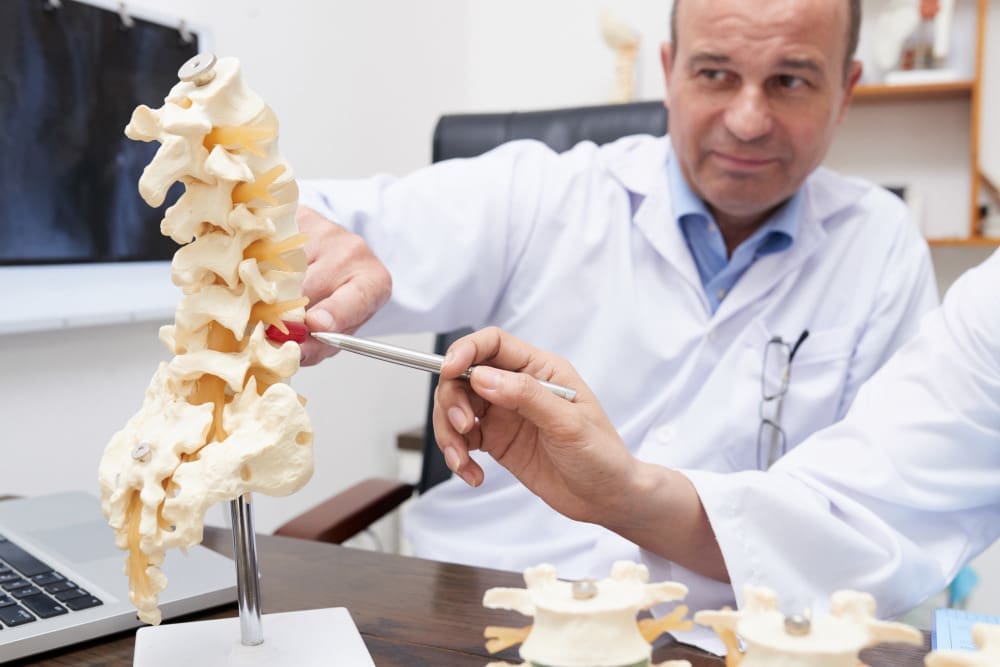
Anterior and posterior spinal fusion is a new way to treat spinal problems. It’s called 360-degree spine surgery. This method uses two surgical ways to make the spine stable and fused.
We’ll dive into how this method works, its history, and why both sides are needed for the best results.
Definition and Overview of 360 Spine Surgery
360-degree spine surgery is when surgeons do both front and back spinal fusion. This way, they can tackle tough spinal problems from all sides. It helps make the spine more stable and fused better.
The front approach lets surgeons get to the disc space easily. They can remove the disc and make it taller again. The back approach lets them put in tools to stabilize and fix any curves.
Evolution of Combined Approach Techniques
Using both front and back approaches in spinal surgery has grown a lot. At first, spinal fusion was hard because of old technology and not knowing much about the spine. But, new tools, better understanding of the spine, and better pictures have made 360-degree fusion a strong and effective choice.
| Decade | Advancements in Spinal Fusion | Impact on 360 Surgery |
|---|---|---|
| 1980s | Introduction of pedicle screw systems | Improved posterior stabilization |
| 1990s | Advances in anterior approach techniques | Enhanced disc space access and fusion |
| 2000s | Minimally invasive techniques developed | Reduced morbidity in combined approaches |
Why Both Approaches May Be Necessary
For some spinal problems, one surgery might be enough. But, for more complex issues, a mix of front and back surgeries is better. This way, surgeons can:
- Get better fusion rates
- Make the spine more stable
- Fix deformities better
- Free up nerves more fully
This two-step method makes a stronger fix. It might lower the chance of hardware problems and improve how well the spine works long-term.
ALIF and PLIF: The Two Components of 360 Fusion
Understanding 360 fusion surgery means looking at its two main parts: Anterior Lumbar Interbody Fusion (ALIF) and Posterior Lumbar Interbody Fusion (PLIF). These methods, used together, treat complex spinal issues, like those at the L5-S1 junction.
Anterior Lumbar Interbody Fusion (ALIF) Technique
ALIF is a surgery that gets to the spine from the front. It fuses the vertebrae. This method lets the surgeon remove bad discs and put in a fusion device or cage. It’s great for fixing disc height and helping bones fuse.
To do an ALIF, we make an incision in the belly. The surgeon then takes out the bad disc and gets ready for fusion. A bone graft or fusion device is put in to help the vertebrae fuse together.
Posterior Lumbar Interbody Fusion (PLIF) Procedure
PLIF is a surgery that gets to the spine from the back. It helps by removing bad discs and stabilizing the spine with screws and rods. It also removes the bad disc and puts in a fusion device or bone graft from the back.
The PLIF procedure is good for getting to the nerves and stabilizing the spine. It’s great for fixing the back part of the spine and helping bones fuse all around.
Can ALIF and PLIF Be Performed in the Same Surgical Session?
Yes, ALIF and PLIF can be done in one surgery, called a 360-degree fusion. Doing both together has many benefits. It makes the spine more stable, helps bones fuse better, and fixes both front and back spinal problems.
When we do ALIF and PLIF together, it fixes spinal deformities better and makes the spine more stable. But, it needs careful patient choice and detailed planning to avoid problems.
| Procedure | Approach | Key Benefits |
|---|---|---|
| ALIF | Anterior | Direct access to disc space, restoration of disc height, promotion of fusion |
| PLIF | Posterior | Neural decompression, posterior stabilization, circumferential fusion |
| 360 Fusion | Combined Anterior and Posterior | Enhanced stability, improved fusion rates, complete problem solving |
Primary Indications for Anterior Posterior Lumbar Fusion at L5-S1
Choosing anterior posterior lumbar fusion at L5-S1 is based on several key factors. We carefully assess each patient’s condition. This helps us decide if this surgery is the right choice.
Spondylolisthesis and Spinal Instability
Spondylolisthesis is when a vertebra slips over another. It often causes spinal instability. This can lead to a lot of pain and other symptoms. By using both anterior and posterior fusion, we can make the spine more stable and improve healing.
Severe Disc Degeneration and Collapse
Severe disc problems at L5-S1 can cause a lot of pain and loss of function. Anterior posterior lumbar fusion can help restore disc height and improve spinal alignment. This approach also helps alleviate symptoms by stabilizing and decompressing the affected area.
Failed Back Surgery Syndrome
Failed back surgery syndrome (FBSS) is when pain or symptoms persist after spinal surgery. In some cases, we may consider anterior posterior lumbar fusion at L5-S1 as a revision surgery. This can help stabilize the spine and reduce pain.
When Single-Approach Surgeries Are Insufficient
Some spinal conditions are too complex for a single surgery. Anterior posterior lumbar fusion offers a more complete solution. By combining both approaches, we can achieve better stability, higher fusion rates, and overall better results.
The following table summarizes the primary indications for anterior posterior lumbar fusion at L5-S1:
| Indication | Description | Benefits of Anterior Posterior Lumbar Fusion |
|---|---|---|
| Spondylolisthesis | Vertebral slippage causing instability | Improved stability, higher fusion rates |
| Severe Disc Degeneration | Disc collapse leading to pain and loss of function | Restored disc height, improved alignment |
| Failed Back Surgery Syndrome | Persistent pain after previous spinal surgery | Stabilization of the spine, pain reduction |
| Complex Spinal Conditions | Conditions requiring a complete surgical approach | Greater stability, improved fusion rates, better outcomes |
The Surgical Process: How Anterior and Posterior Lumbar Fusion Works
Anterior and posterior lumbar fusion surgery is a detailed process. It starts with a thorough check-up and planning. A team of experts works together to help patients with L5-S1 fusion.
Preoperative Assessment and Planning
The first step is key to success. Detailed imaging studies like MRI and CT scans are used. They help see the L5-S1 segment’s anatomy and any problems.
We also look at the patient’s health, past surgeries, and medical history. This helps us create a plan that fits their needs.
A leading spine surgeon says, “Preoperative planning is not just about identifying the pathology; it’s about understanding the patient’s overall condition and how it impacts the surgical strategy.”
“The more you know about the patient’s condition before surgery, the better equipped you’ll be to handle any complexities that arise during the procedure.”
The Anterior Approach: Direct Disc Space Visualization
The anterior approach means going in through the front. It lets us see and work on the disc space directly. This method is great for fixing disc height and improving the spine’s curve.
The Posterior Approach: Enhanced Fixation Methods
The posterior approach is through the back. It lets us see the back parts of the spine. We can then put in screws and rods for stability.
This approach helps control the back part of the spine. It makes the fusion stronger.
Single-Stage vs. Two-Stage Procedures
There are two ways to do the surgery: single-stage or two-stage. A single-stage means doing both parts at once. This can make recovery faster.
But, it needs a well-coordinated team. It might make the surgery more complex.
A two-stage procedure does each part separately. This might be easier on the patient right away. But, it could make recovery longer.
We decide based on each patient’s needs. We weigh the good and bad of each option.
Advantages of 360 Fusion Surgery for L5-S1
360 fusion surgery is a top choice for L5-S1 spinal fusion. It combines both anterior and posterior lumbar interbody fusion. This makes it a strong solution for complex spinal issues. Let’s look at the main benefits that make 360 fusion surgery a good option for patients needing L5-S1 fusion.
Higher Fusion Rates and Mechanical Strength
360 fusion surgery has a big advantage: higher fusion rates than single-approach surgeries. By using both anterior and posterior fusion, surgeons create a stable and strong fusion. This leads to better long-term results.
The increased strength helps prevent pseudoarthrosis, where the fusion doesn’t heal right. The stability also helps the spine heal naturally. Studies show patients with 360 fusion surgery have higher fusion rates. This means better clinical outcomes and patient satisfaction.
Improved Decompression Capabilities
360 fusion surgery also offers improved decompression capabilities. The anterior approach lets surgeons directly access the disc space. This allows for thorough disc removal and effective decompression of the neural structures.
The posterior approach adds more opportunities for decompression. This ensures the spine is fully decompressed. Patients often see big improvements in symptoms and quality of life.
Biomechanical Advantages of Circumferential Fusion
The 360-degree fusion of 360 fusion surgery has big biomechanical advantages. It stabilizes the spine both front and back. This creates a fusion that closely mimics the natural stability of the spine.
This stability helps restore the spine’s normal biomechanics. It reduces abnormal motion and stress on tissues. The improved stability also means patients can return to normal activities faster. It also lowers the risk of complications like adjacent segment disease.
Reduced Risk of Hardware Failure
Another big plus of 360 fusion surgery is the reduced risk of hardware failure. The circumferential stabilization reduces stress on any single piece of hardware. This even distribution of forces minimizes the risk of hardware loosening or failure.
This reduces the chance of hardware-related complications. It ensures the fusion lasts long-term. It also lowers the need for revision surgeries, which are often more complex.
Potential Risks and Complications of Combined Approaches
360-degree spinal fusion offers many benefits, but it also has risks and complications. This approach combines anterior and posterior spinal fusion techniques. It’s important to understand the challenges of this complex procedure.
Anterior Approach-Specific Risks
The anterior approach to spinal fusion has its own risks. These include vascular complications and visceral injuries. Surgeons use careful planning and techniques to protect vital structures.
Posterior Approach-Specific Risks
The posterior approach also has risks. The main risk is neural complications, like nerve root injuries. Surgeons use careful positioning and precise techniques to avoid these risks.
Cumulative Risks of Combined Procedures
Combining anterior and posterior approaches increases risks. These include more operative time, blood loss, and postoperative morbidity. There’s also a higher risk of surgical site infections and hardware-related complications. Surgeons use strategies like staged procedures and careful patient selection to manage these risks.
Risk Mitigation Strategies
To reduce risks in 360-degree spinal fusion, we use several strategies. These include:
- Thorough preoperative planning and patient evaluation
- Intraoperative neuromonitoring and careful surgical technique
- Optimized perioperative care, including pain management and early mobilization
- Use of advanced imaging and navigation technologies
- Multidisciplinary team approach to patient care
The following table summarizes the key risks and mitigation strategies for 360-degree spinal fusion:
| Approach | Specific Risks | Mitigation Strategies |
|---|---|---|
| Anterior | Vascular complications, Visceral injuries | Preoperative planning, Meticulous dissection, Use of retractors |
| Posterior | Neural complications | Careful patient positioning, Intraoperative neuromonitoring, Precise surgical technique |
| Combined | Increased operative time, Blood loss, Postoperative morbidity, Surgical site infections, Hardware-related complications | Staged procedures, Careful patient selection, Optimized perioperative care |
Recovery Timeline After Anterior Posterior Spinal Fusion at L5-S1
Recovering from anterior posterior spinal fusion at L5-S1 is a long process. It needs careful planning, patience, and good postoperative care. The journey to full recovery has several phases, each with its own challenges and milestones.
Immediate Post-Operative Phase (0-2 Weeks)
The first recovery phase starts right after surgery and lasts two weeks. During this time, patients are watched closely for any problems. They get specific instructions for caring for themselves after surgery.
Pain management is a top priority. Patients are given medicines to help with pain. It’s very important to follow the doctor’s advice on rest, movement, and wound care.
Early Recovery Phase (2-6 Weeks)
In the early recovery phase, patients start to feel better. They are told to slowly increase their activity, starting with small movements and short walks. Physical therapy may start to help regain strength and flexibility.
Patients are also watched for any signs of complications, like infection or hardware failure.
Intermediate Recovery (6 Weeks-3 Months)
In the intermediate recovery phase, patients see big improvements in their symptoms and abilities. They are encouraged to keep up with physical therapy, focusing on strengthening the core and improving range of motion.
It’s important to have follow-up appointments with the surgeon to check on the fusion’s progress and address any concerns.
Long-term Recovery and Return to Activities (3-12 Months)
The long-term recovery phase is marked by continued improvement and a gradual return to normal activities. Patients are advised to avoid heavy lifting, bending, or twisting to protect the fusion.
Most patients can go back to their normal activities, including work, in 3 to 6 months. This depends on their job and overall health. Full recovery and stabilization of the fusion can take up to a year.
| Recovery Phase | Duration | Key Activities | Expected Outcomes |
|---|---|---|---|
| Immediate Post-Operative | 0-2 Weeks | Rest, pain management, wound care | Initial healing, pain reduction |
| Early Recovery | 2-6 Weeks | Gentle exercises, short walks, physical therapy | Improved mobility, strength |
| Intermediate Recovery | 6 Weeks-3 Months | Continued physical therapy, core strengthening | Significant symptom improvement |
| Long-term Recovery | 3-12 Months | Gradual return to normal activities, avoiding heavy lifting | Full recovery, return to work |
Knowing the recovery timeline after anterior posterior spinal fusion at L5-S1 helps patients prepare for what’s ahead. By following the recommended care and rehabilitation, patients can achieve the best outcomes and improve their quality of life.
Comparing Outcomes: Why Anterior and Posterior Lumbar Fusion Offers Better Results for Some Patients
Anterior and posterior lumbar fusion is a top choice for some patients. It beats single-approach surgeries in many ways. This method tackles complex spinal issues better, leading to higher success rates and better results for patients.
Fusion Success Rates Compared to Single-Approach Surgeries
Research shows that 360-degree fusion works better than single-approach surgeries. A circumferential fusion gives more stability, which is key for successful fusion. This is true for patients with big instability or past failed surgeries.
A study in the Spine Journal found that 360-degree fusion has a much higher success rate than single-approach surgeries.
“Circumferential fusion provides a more robust and biomechanically stable construct, leading to higher fusion rates and improved clinical outcomes.”
Pain Relief and Functional Improvement Metrics
Pain relief and better function are key signs of success in spinal fusion. Studies show that those who get anterior and posterior lumbar fusion see big improvements. More decompression and stability help achieve these results.
- Significant pain score drops as seen on Visual Analog Scale (VAS)
- Big boosts in function, as shown by Oswestry Disability Index (ODI)
- Higher patient happiness rates than single-approach surgeries
Patient Selection: Who Benefits Most from 360 Fusion
Choosing the right patient is key for 360-degree fusion success. Those with complex spinal issues, like severe disc wear, spondylolisthesis, or past failed surgeries, see the most benefits.
Long-term Outcomes and Adjacent Segment Disease
Long-term, 360-degree fusion usually keeps pain and function improvements going. But, there’s a chance for problems at other segments. Good planning and choosing the right patient can lower this risk.
In summary, anterior and posterior lumbar fusion is a better choice for some patients, mainly those with complex spinal problems. Knowing the benefits and risks helps doctors make the best decisions for their patients.
Conclusion: Making an Informed Decision About 360 Spine Surgery
As we wrap up our talk on anterior and posterior spinal fusion for the L5-S1 segment, it’s clear 360 spine surgery is complex. It offers big benefits for those with certain spinal issues. Knowing the details of this combined method is key to making a smart choice about surgery.
We’ve looked at the L5-S1 junction’s anatomy and how it affects the spine. We’ve also covered what 360 spine surgery is and when it’s used. The good points, like better fusion rates and more effective decompression, were pointed out. But, we also talked about the possible downsides of this method.
Recovery times and how well patients do after surgery were also discussed. It’s all about picking the right patient and doing a full check before surgery. To decide on 360 spine surgery, patients need to think about the pros and cons. They should talk to doctors to see if it’s right for them.
By understanding and talking to healthcare experts, patients can get the best care for their needs. This leads to better results and a better life. We stress the need for a deep understanding and professional advice before choosing anterior and posterior spinal fusion.
FAQ
What is anterior and posterior spinal fusion, also known as 360 spine surgery?
Anterior and posterior spinal fusion, or 360 spine surgery, is a detailed surgical method. It fuses the spine from both the front and back. This is done to achieve maximum stability, mainly for the L5-S1 segment.
Why is the L5-S1 junction significant in spinal surgery?
The L5-S1 junction is key in spinal surgery. It’s very mobile and stressed, making it prone to problems like spondylolisthesis and severe disc degeneration. Often, it needs fusion.
What are ALIF and PLIF techniques used in 360 fusion surgery?
ALIF (Anterior Lumbar Interbody Fusion) is done from the front to fuse the disc space. PLIF (Posterior Lumbar Interbody Fusion) is done from the back. Together, they provide complete stabilization in 360 fusion surgery.
Can ALIF and PLIF be performed during the same surgical session?
Yes, ALIF and PLIF can be done in one session. This is called a single-stage procedure. It can lead to quicker recovery and better results.
What are the primary indications for anterior posterior lumbar fusion at L5-S1?
Main reasons include spondylolisthesis, severe disc degeneration, and failed back surgery syndrome. Single surgeries may not be enough for these complex conditions.
What are the advantages of 360 fusion surgery for L5-S1?
Benefits include higher fusion rates and better decompression. It also offers biomechanical advantages and reduces hardware failure risk. It’s a strong solution for complex spinal issues.
What are the possible risks and complications of combined anterior and posterior approaches?
Risks include vascular and visceral complications from the front approach. The back approach can have neural risks. Combining both increases risks, so careful planning is essential.
What is the typical recovery timeline after anterior posterior spinal fusion at L5-S1?
Recovery starts immediately after surgery (0-2 weeks). Then, there’s early recovery (2-6 weeks), followed by intermediate recovery (6 weeks-3 months). Long-term recovery (3-12 months) involves gradual improvement and activity return.
How do outcomes of anterior and posterior lumbar fusion compare to single-approach surgeries?
Anterior and posterior lumbar fusion often leads to better fusion success, pain relief, and function improvement. This is true for patients with complex spinal conditions.
Who benefits most from 360 fusion surgery?
Those with complex spinal conditions like severe spondylolisthesis, significant disc degeneration, or previous unsuccessful surgery benefit most. This is decided by healthcare professionals.
What is anterior and posterior spinal fusion, also known as 360 spine surgery?
Anterior and posterior spinal fusion, or 360 spine surgery, is a detailed surgical method. It fuses the spine from both the front and back. This is done to achieve maximum stability, mainly for the L5-S1 segment.
Why is the L5-S1 junction significant in spinal surgery?
The L5-S1 junction is key in spinal surgery. It’s very mobile and stressed, making it prone to problems like spondylolisthesis and severe disc degeneration. Often, it needs fusion.
What are ALIF and PLIF techniques used in 360 fusion surgery?
ALIF (Anterior Lumbar Interbody Fusion) is done from the front to fuse the disc space. PLIF (Posterior Lumbar Interbody Fusion) is done from the back. Together, they provide complete stabilization in 360 fusion surgery.
Can ALIF and PLIF be performed during the same surgical session?
Yes, ALIF and PLIF can be done in one session. This is called a single-stage procedure. It can lead to quicker recovery and better results.
What are the primary indications for anterior posterior lumbar fusion at L5-S1?
Main reasons include spondylolisthesis, severe disc degeneration, and failed back surgery syndrome. Single surgeries may not be enough for these complex conditions.
What are the advantages of 360 fusion surgery for L5-S1?
Benefits include higher fusion rates and better decompression. It also offers biomechanical advantages and reduces hardware failure risk. It’s a strong solution for complex spinal issues.
What are the possible risks and complications of combined anterior and posterior approaches?
Risks include vascular and visceral complications from the front approach. The back approach can have neural risks. Combining both increases risks, so careful planning is essential.
What is the typical recovery timeline after anterior posterior spinal fusion at L5-S1?
Recovery starts immediately after surgery (0-2 weeks). Then, there’s early recovery (2-6 weeks), followed by intermediate recovery (6 weeks-3 months). Long-term recovery (3-12 months) involves gradual improvement and activity return.
How do outcomes of anterior and posterior lumbar fusion compare to single-approach surgeries?
Anterior and posterior lumbar fusion often leads to better fusion success, pain relief, and function improvement. This is true for patients with complex spinal conditions.
Who benefits most from 360 fusion surgery?
Those with complex spinal conditions like severe spondylolisthesis, significant disc degeneration, or previous unsuccessful surgery benefit most. This is decided by healthcare professionals.
References
AAOS. Orthopaedic Video Theater. https://www.aaos.org/videos
National Center for Biotechnology Information (NCBI). L5/S1 anterior lumbar interbody fusion technique. https://pmc.ncbi.nlm.nih.gov/articles/PMC5637186
Spine‑Health. Anterior and Posterior Lumbar Fusion Surgery. https://www.spine-health.com/treatment/spinal-fusion/anterior-and-posterior-lumbar-fusion-surgery
Hospital for Special Surgery (HSS). ALIF Surgery: Anterior Lumbar Interbody Fusion. https://www.hss.edu/health-library/conditions-and-treatments/alif-surgery