Last Updated on November 27, 2025 by Bilal Hasdemir
Patients looking for new ways to fight prostate cancer are checking out laser therapy. Studies show that focal laser ablation might be a good choice for some. It could mean fewer side effects than old-school surgery.
Liv Hospital’s teams believe in this advanced prostate cancer treatment. They say it’s a top-notch, low-risk option. Knowing the basics about this therapy is key for those weighing their choices.
Key Takeaways
- Laser therapy is a modern technique for treating prostate cancer.
- Focal laser ablation shows promise for low- and intermediate-risk cases.
- This approach may offer fewer side effects compared to traditional surgery.
- Liv Hospital’s teams recommend this advanced treatment option.
- Understanding key facts is important for patients considering their options.
- Minimally invasive results are a big plus of this therapy.
The Growing Significance of Advanced Prostate Cancer Treatments

Advanced prostate cancer treatments are very important. This is because prostate cancer is very common among men in the United States. It has a big impact on public health.
Prostate cancer affects a substantial number of men. The American Cancer Society says there will be about 288,300 new cases in 2023. Also, around 34,700 men will die from it. This shows we really need good treatment options.
The Prevalence and Impact of Prostate Cancer in the United States
Prostate cancer is not just common. It also greatly affects the lives of those who get it. The National Cancer Institute says it’s the second leading cause of cancer death in men, after lung cancer. It can grow slowly or quickly, so we need to treat it fast and well.
This shows how important advanced treatment options are. Including laser prostatectomy for cancer. These treatments help patients live better lives and avoid serious problems.
The Evolution of Treatment Approaches
Treatments for prostate cancer have changed a lot over time. We now have options like laser ablation, not just old methods like surgery and radiation. “The evolution of prostate cancer treatment is driven by the need for more precise, less invasive, and more effective therapies,” says a top urologist.
Now, we’re moving towards treatments that are more personal and less invasive. As we keep learning, we’ll see even more new ways to fight prostate cancer.
“The future of prostate cancer treatment lies in its ability to balance efficacy with quality of life, and advanced treatments are at the forefront of this effort.”
What Is Laser Treatment for Prostate Cancer?
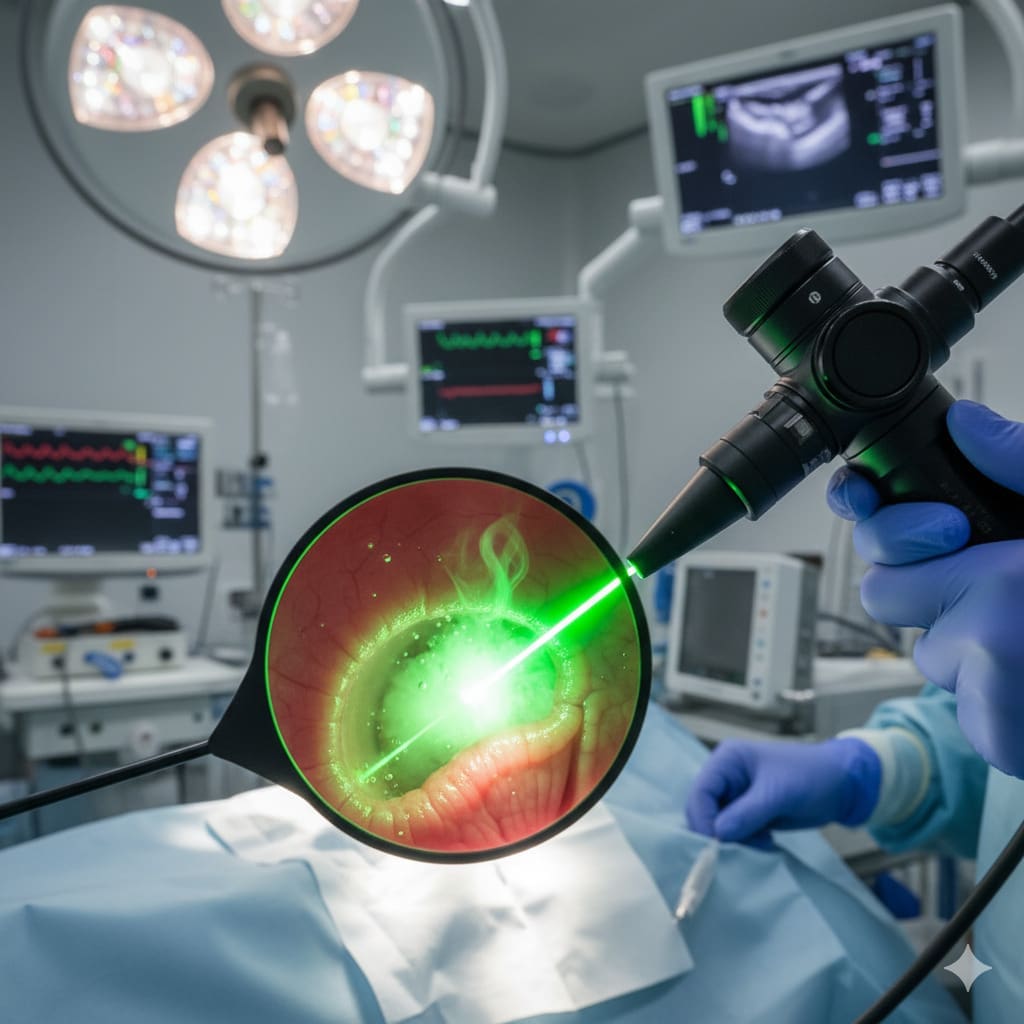
Laser treatment for prostate cancer uses laser energy to kill cancer cells while keeping healthy tissue safe. It’s a new method that’s getting a lot of attention. It’s seen as a less invasive and effective way to treat prostate cancer.
Defining Focal Laser Ablation and Laser Therapy
Focal laser ablation is a technique used in laser treatment for prostate cancer. It uses laser energy to target and destroy cancer cells. Laser therapy benefits include less damage to healthy tissue and fewer complications than traditional surgery.
Laser therapy for prostate cancer uses laser energy to kill cancer cells. It’s called focal because it only treats the area with cancer, not the whole prostate.
The Science Behind Laser Energy for Cancer Treatment
Laser energy works by heating the tumor to kill cancer cells. When laser energy hits the tumor, it raises the temperature. This causes the cancer cells to die.
“The use of laser-induced thermotherapy for prostate cancer has shown promising results, with studies indicating a significant reduction in tumor size and a low incidence of side effects.”
A comparison of different laser treatment approaches is provided in the table below:
| Treatment Approach | Method | Benefits |
|---|---|---|
| Focal Laser Ablation | Precise delivery of laser energy to tumor site | Minimal damage to surrounding tissue |
| Laser Therapy | Ablation of cancerous tissue using laser energy | Reduced risk of complications |
Understanding laser treatment for prostate cancer helps patients make better choices. As research grows, laser therapy’s role in treating prostate cancer will likely increase. This offers hope for both patients and healthcare providers.
Key Fact #1: Minimally Invasive Approach with Precise Targeting
Minimally invasive laser treatment is changing prostate cancer care. It offers a precise and effective way to treat the disease. This method is getting a lot of attention for its ability to reduce recovery time and lessen side effects compared to traditional surgery.
Advantages of Minimally Invasive Procedures
Procedures like laser treatment for prostate cancer have many benefits. These include:
- Reduced Recovery Time: Patients can get back to their daily lives sooner.
- Less Damage to Surrounding Tissue: The laser’s precision helps avoid harming healthy tissue.
- Fewer Side Effects: The risk of problems like urinary incontinence and erectile dysfunction goes down.
MRI-Guided Precision for Accurate Cancer Targeting
Using MRI with laser therapy makes the treatment even more precise. This combo allows for:
- Accurate Tumor Targeting: MRI helps pinpoint the tumor’s exact location and size.
- Real-Time Monitoring: The procedure can be watched in real-time, ensuring the laser hits the right spot.
This precision is key in treating prostate cancer well while keeping healthy tissue safe.
The use of MRI-guided precision in laser treatment for prostate cancer is a big step forward in oncology. It combines the benefits of minimally invasive procedures with MRI accuracy. This means patients get effective treatment with fewer side effects.
Key Fact #2: Reduced Risk of Side Effects Compared to Traditional Surgery
Laser treatment for prostate cancer has big advantages. It can lower the risk of side effects from traditional surgery. This method offers many benefits that improve patient outcomes and quality of life.
Lower Incidence of Urinary Incontinence
Laser treatment for prostate cancer has a lower risk of urinary incontinence.
The precision of laser treatment targets cancer cells while saving healthy tissue. This is key for keeping urinary continence.
Decreased Risk of Erectile Dysfunction
Erectile dysfunction is a worry for many with prostate cancer. But, laser treatment can lower this risk. The procedure’s minimally invasive nature and nerve-sparing techniques help maintain erectile function.
Other Quality of Life Benefits
Laser treatment for prostate cancer also brings other quality of life benefits. It offers shorter recovery times and less postoperative pain than traditional surgery.
Patients often report a faster return to their normal activities. This is a big plus for their overall well-being and quality of life.
Key Fact #3: Ideal Candidates for Laser Treatment for Prostate Cancer
Not all men with prostate cancer can get laser treatment. Some are better suited than others. The choice to use laser treatment depends on the cancer’s stage and how aggressive it is. It also depends on the patient’s health overall.
Low and Intermediate-Risk Prostate Cancer Patients
Men with low to intermediate-risk prostate cancer are often good candidates for laser treatment. This includes those whose cancer is only in the prostate. The precision of laser ablation helps target the cancer without harming nearby tissues.
Research shows that laser treatment works well for those with low-risk cancer. It leads to fewer side effects than other treatments. For intermediate-risk cancer, the choice to use laser treatment depends on many factors. These include the patient’s age, health, and the cancer’s details.
Factors That Determine Treatment Eligibility
Several important factors decide if a patient can get laser treatment for prostate cancer. These include:
- The stage and grade of the cancer
- The patient’s overall health and medical history
- Previous treatments for prostate cancer or other conditions
- The presence of any urinary or sexual dysfunction
To see if a patient is eligible, doctors do a detailed check. This includes diagnostic imaging and biopsy results. This careful evaluation helps doctors choose the best treatment for each patient.
By picking the right candidates for laser treatment, doctors can make this therapy work better. This improves the lives of men with prostate cancer.
Key Fact #4: The Procedure Experience and Recovery Timeline
It’s important for patients to know about the laser treatment for prostate cancer. This info helps set realistic hopes and lowers worry about the treatment.
What to Expect During the Outpatient Procedure
The laser treatment for prostate cancer is done on an outpatient basis. This means patients can go home the same day. The treatment uses MRI guidance to target the cancer area accurately.
Precision is key to destroy cancer cells without harming nearby tissue.
During the treatment, local anesthesia numbs the area. Some patients also get sedation to relax. The whole process takes a few hours, including time to recover from the anesthesia.
Typical Recovery and Return to Normal Activities
Laser treatment for prostate cancer has a quick recovery time. Most patients can get back to normal in a few days. It’s key to follow the doctor’s post-procedure care to ensure a smooth recovery.
Some common post-procedure tips include:
- Avoiding strenuous activities for a short period
- Monitoring for any signs of complications
- Attending follow-up appointments to check on the treatment’s effectiveness
A leading urologist notes, “The recovery from laser treatment is generally very straightforward, with most men experiencing minimal side effects.” This highlights the benefits of laser treatment for prostate cancer.
| Activity | Expected Recovery Time |
|---|---|
| Return to work | 1-3 days |
| Resume normal activities | 3-7 days |
| Full recovery | 1-2 weeks |
In summary, laser treatment for prostate cancer is a promising option. It has a straightforward procedure and recovery, making it appealing to many patients.
Key Fact #5: Effectiveness and Survival Rates
Laser treatment for prostate cancer is showing great promise. It has high effectiveness and survival rates. As research grows, more evidence supports using laser therapy for this cancer.
“The use of laser ablation in treating prostate cancer represents a significant advancement in our ability to manage this disease effectively,” notes a recent study published in a leading medical journal.
Current Research on Cancer Control Rates
Research shows laser treatment can control cancer well, mainly in low to intermediate-risk cases. For example, a clinical trial found a big drop in PSA levels after laser ablation. This suggests the treatment works well.
The precision of laser treatment is key. It can target and destroy cancer cells while keeping healthy tissue safe. This precision makes the treatment effective.
Comparing Outcomes with Traditional Treatments
Laser treatment is compared to traditional methods like surgery or radiation. Studies show laser therapy can match or beat these methods for some patients. It’s good for cancer control and survival rates.
- Laser treatment has fewer side effects than surgery.
- Survival rates for laser therapy patients are high, with many studies showing they stay disease-free.
- The non-invasive nature of laser treatment makes it appealing. It’s a good option for patients who can’t have more invasive treatments.
A leading oncologist says, “Laser ablation is a valuable treatment for prostate cancer. It balances being effective with improving quality of life.”
In summary, laser treatment for prostate cancer looks promising. Ongoing research will help us understand its benefits and any limitations better.
Key Fact #6: Improvements in Urinary Symptoms and Quality of Life
Laser treatment for prostate cancer greatly improves urinary symptoms and quality of life. This is a key benefit of the treatment. It makes a big difference in patients’ daily lives and well-being.
Impact on Urinary Function Post-Treatment
Studies show laser therapy reduces urinary symptoms like frequency, urgency, and weak stream. This is because the treatment targets cancer cells carefully, without harming nearby tissue.
Key benefits include:
- Reduced urinary frequency and urgency
- Improved urine flow
- Lessened risk of urinary incontinence
Patient-Reported Outcomes and Satisfaction
Patient feedback shows high satisfaction with laser treatment for prostate cancer. Patients report better urinary symptoms and overall quality of life.
Notable aspects of patient satisfaction include:
- Minimal downtime and quick recovery
- Reduced risk of complications compared to traditional surgery
- Effective management of cancer with fewer side effects
These factors make laser therapy a good choice for prostate cancer patients.
Key Fact #7: Availability and Access to Laser Therapy
The seventh key fact about laser treatment for prostate cancer is about its availability. It’s important to know where and how to get this therapy. As more people learn about its benefits, finding out how to access it becomes key for patients.
Leading Medical Centers Offer the Procedure
Laser therapy for prostate cancer is found in top medical centers across the U.S. These places are leaders in medical research and technology. They offer the latest care to patients.
Insurance Coverage and Cost Considerations
Even though laser therapy is getting more common, insurance and cost are big concerns. Insurance coverage can differ a lot. Some plans cover it, while others don’t or need extra approvals.
Patients should:
- Check with their insurance to see what’s covered
- Ask about any costs they’ll have to pay
- Talk about payment plans with the treatment center
The cost of laser therapy depends on several things. These include how complex the procedure is, the doctor’s experience, and the center’s facilities.
It’s vital for patients to talk with their healthcare provider and insurance about the costs of laser therapy.
As laser therapy for prostate cancer becomes more common, getting it will likely get easier. Patients should keep up with new information. They should also talk to their doctors to see if laser therapy is right for them.
Potential Limitations and Ongoing Research in Laser Ablation
Laser ablation for prostate cancer shows great promise. Yet, there are challenges to overcome. It’s vital for patients and doctors to know about these limitations and the ongoing research.
Current Limitations of Laser Treatment Approaches
One big challenge is hitting the tumor with precision. Accurate imaging and guidance systems are key. They help make sure the laser targets the cancer without harming nearby healthy tissue. Also, not all prostate cancers can be treated with this method, mainly aggressive or widespread ones.
Ongoing research aims to make laser ablation better. New imaging tech like MRI and ultrasound could improve precision. Researchers are also looking into the best ways to use laser ablation and who should get it.
Future Developments in the Field
The future of laser ablation for prostate cancer is bright. Researchers are working on new laser tech and combining it with other treatments. This could lead to even better results for patients.
Knowing about laser ablation’s current limits and research helps everyone make better choices. As the field grows, laser ablation will likely become a key treatment for prostate cancer.
Making an Informed Decision About Prostate Cancer Treatment
Understanding your prostate cancer treatment options is key. This includes knowing about laser treatment’s benefits. Patients face many choices, each with its own pros and cons.
Talking to your healthcare provider is vital. They can help you understand laser treatment for prostate cancer.
Questions to Ask Your Doctor About Laser Treatment Options
When thinking about laser treatment, ask your doctor these questions:
- What are the expected outcomes of laser treatment for my specific case?
- How does laser treatment compare to other prostate cancer treatment options?
- What are the possible side effects, and how can they be managed?
- What is the recovery time, and how will it affect my daily life?
- Are there any new developments in laser treatment that I should know about?
These questions can help you understand if laser treatment is right for you.
Balancing Benefits and Risks for Your Specific Case
Every case is different. Your cancer stage, health, and personal choices are important. They help decide the best treatment for you.
| Treatment Option | Benefits | Risks/Side Effects |
|---|---|---|
| Laser Treatment | Minimally invasive, precise, fewer side effects | Potential for not removing all cancer, limited long-term data |
| Traditional Surgery | Effective, well-established outcomes | Higher risk of urinary and erectile problems |
| Active Surveillance | Avoids immediate side effects, preserves quality of life | Risk of cancer growing, needs regular checks |
By weighing these factors and talking to your doctor, you can choose the best option for you.
Choosing laser treatment or another option should be based on understanding your choices. Consider the benefits and risks of each carefully.
Conclusion
Laser treatment for prostate cancer is a big step forward. It’s a less invasive way to fight the disease. This method targets cancer cells well, keeping healthy tissue safe.
This approach could lead to better results and a better life for patients. The article highlighted its benefits, like being less invasive and having fewer side effects. It’s also good for treating certain types of prostate cancer.
For men with prostate cancer, knowing their options is key. Laser treatment is a new hope. It offers a chance for better outcomes and a better life. As this field grows, staying updated on laser treatment is important.
FAQ
What is laser treatment for prostate cancer?
Laser treatment for prostate cancer is a new way to fight cancer. It uses laser energy to kill cancer cells in the prostate. This method is less invasive than traditional surgery.
How does laser treatment for prostate cancer work?
This treatment uses MRI to find and target the cancer in the prostate. Then, it uses laser energy to kill the cancer cells. This way, it tries to avoid harming the healthy tissue around it.
What are the benefits of laser treatment for prostate cancer compared to traditional surgery?
Laser treatment has fewer side effects like incontinence and erectile issues. It also means a quicker recovery time compared to surgery.
Who is a good candidate for laser treatment for prostate cancer?
People with low to intermediate-risk prostate cancer are usually good candidates. This depends on their PSA level, Gleason score, and cancer stage.
What can I expect during the laser treatment procedure?
The procedure is done on an outpatient basis. You’ll get local anesthesia or sedation. MRI guidance is used to target and treat the cancer area.
How long does it take to recover from laser treatment for prostate cancer?
Most people can get back to normal in a few days to a week. Some might feel some discomfort or need to urinate more often.
Is laser treatment for prostate cancer effective in controlling cancer?
Research shows laser treatment can control cancer in low to intermediate-risk patients. Its effectiveness is similar to traditional treatments.
Will laser treatment improve my urinary symptoms?
Yes, many patients see better urinary symptoms and quality of life after treatment. Studies show a big drop in urinary frequency and urgency.
Is laser treatment for prostate cancer covered by insurance?
Insurance coverage varies. Some providers might cover it for certain patients. Always check with your insurance.
What are the limitations of laser treatment for prostate cancer?
More research is needed on long-term cancer control. It might not work for larger or more aggressive tumors.
What questions should I ask my doctor about laser treatment options?
Ask about your risk profile, treatment success chances, possible side effects, and what to expect during and after the treatment.
References
PubMed Central (NCBI): MRI-guided Focal Laser Ablation for Prostate Cancer (Specific PMC ID)
Healthline: Laser Prostate Cancer Treatment
Cancer Research UK (News): Prostate Cancer Laser Treatment: What You Need to Know