
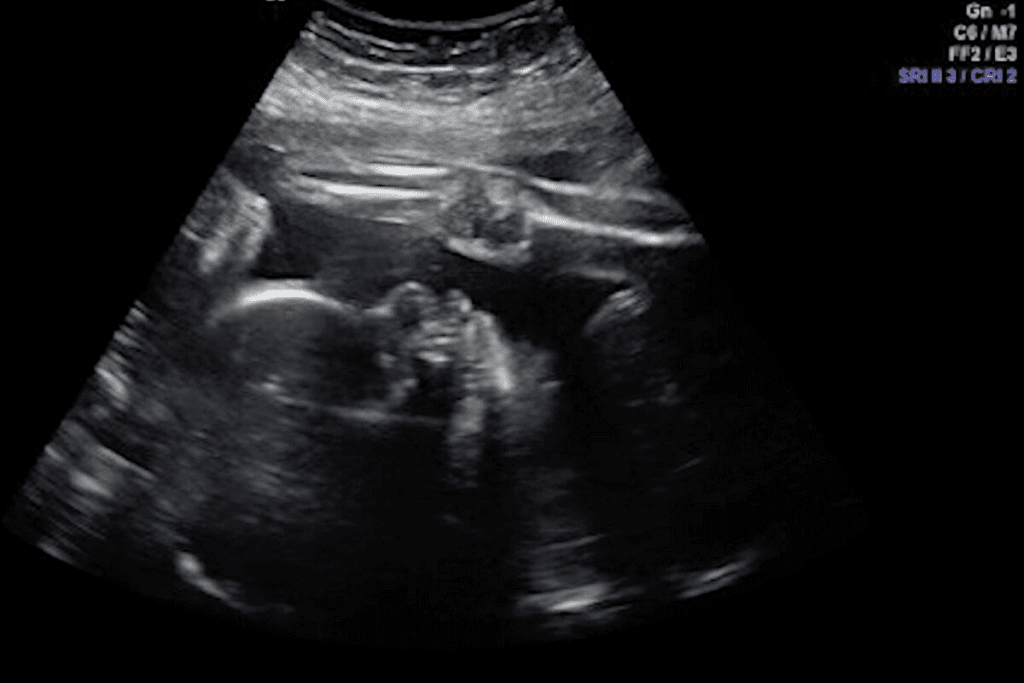
At 8 weeks pregnant, you’re at a big milestone. An ultrasound at this time is both thrilling and a bit scary. Your baby is as small as a raspberry, about 1.6 cm long.Guide on the fetal structures visible in an 8 week sonogram what to expect from the procedure. Prepare for your 8 week sonogram what to expect.
This scan shows important parts like the gestational sac, yolk sac, amniotic sac, and the embryo. Seeing the fetal heartbeat is a good sign, showing your baby is doing well.
At Liv Hospital, we use the latest technology and care deeply about our patients. We make sure you get the best care and support during your pregnancy.
Key Takeaways
- An 8 week ultrasound confirms the presence of a viable pregnancy.
- The scan visualizes key structures including the embryo, gestational sac, and yolk sac.
- Detection of the fetal heartbeat is a reassuring indicator of a healthy pregnancy.
- Accurate due dates are established during this critical scan.
- Liv Hospital provides comprehensive support and care throughout your pregnancy.
The Importance of Your 8 Weeks Pregnant Sonogram

The 8-week ultrasound scan is more than a check-up; it’s a big moment for parents-to-be. It’s important both medically and emotionally. It marks a key point in the pregnancy journey.
Medical Significance of Early Pregnancy Scans
At 8 weeks, the ultrasound checks if the pregnancy is viable. It also gives an accurate gestational age, which is key for tracking the baby’s growth. Medical Expert, “Eight weeks is a great time for confirming dating and viability.”
The scan’s medical importance includes several key points:
- Confirming the pregnancy is viable and reducing the risk of miscarriage
- Accurately dating the pregnancy for proper prenatal care
- Identifying any possible complications early on
Medical Significance | Description |
Viability Confirmation | The ultrasound confirms if the pregnancy is viable. |
Gestational Age | Accurate dating ensures proper prenatal care. |
Cardiac Activity | Visibility of the heartbeat reduces miscarriage risk. |
Emotional Milestone for Expectant Parents
Emotionally, the 8-week sonogram is a big moment for expectant parents. It gives them their first look at the baby and reassures them of the pregnancy’s progress. Seeing the baby’s heartbeat on the screen is a deeply emotional experience. It strengthens the bond between parents and their unborn child.
The emotional impact of this scan is significant. It makes the pregnancy feel more real to parents. It’s a chance for them to start connecting with their baby. They can understand the pregnancy’s progress and prepare for what’s to come.
Preparing for Your 8 Week Ultrasound Appointment
Knowing what to expect and how to prepare for your 8-week ultrasound can greatly enhance your overall experience. As you approach this significant milestone in your pregnancy journey, being informed is key to reducing anxiety and ensuring a successful scan.
What to Bring and Wear
When attending your 8-week ultrasound, it’s essential to wear comfortable clothing that allows easy access to your lower abdomen. While the ultrasound is typically performed transvaginally at this stage, wearing loose-fitting clothes can make you feel more at ease during the procedure.
You should also bring any relevant medical records, insurance information, and a list of any questions or concerns you have for your healthcare provider. Having a support person accompany you can provide emotional comfort, but we’ll discuss that in more detail later.
Item to Bring | Purpose |
Medical Records | To provide your healthcare provider with your medical history |
Insurance Information | For billing and insurance purposes |
List of Questions | To address any concerns or queries you have |
Full Bladder vs. Empty Bladder Requirements
For an 8-week ultrasound, which is often performed transvaginally, you may be advised to arrive with an empty bladder. This is because a transvaginal ultrasound doesn’t require a full bladder, unlike some other types of ultrasounds. It’s important to follow the specific instructions provided by your healthcare provider, as requirements can vary based on individual circumstances or if a transabdominal ultrasound is also planned.
“Having an empty bladder can make the transvaginal ultrasound more comfortable and help achieve clearer images.”
A healthcare professional’s advice on ultrasound preparation
Who Can Accompany You
Having a support person with you during the ultrasound can be very comforting. Typically, partners, family members, or close friends are allowed to be present during the procedure. It’s a good idea to check with your healthcare provider in advance to confirm their policy on accompaniment.
Benefits of having a support person include:
- Emotional support during the procedure
- Sharing the experience and excitement
- Having someone to ask questions and take notes
Types of Ultrasound Technology Used at 8 Weeks
Ultrasound technology is key in tracking fetal growth, very important at 8 weeks. At this time, parents might have a transvaginal or transabdominal ultrasound, or both.
Transvaginal Ultrasound Procedure
A transvaginal ultrasound is often used at 8 weeks. It gives a clearer view of the embryo. A special probe is inserted into the vagina to get closer to the uterus.
This ultrasound is great for early pregnancy. It confirms the pregnancy’s spot, checks for a heartbeat, and measures the embryo’s size.
Benefits of transvaginal ultrasound at 8 weeks include:
- Higher resolution images of the embryo
- Earlier detection of the heartbeat
- More accurate dating of the pregnancy
Transabdominal Ultrasound Procedure
Transabdominal ultrasounds are less common at 8 weeks. They use a probe on the abdomen. This method is more common later in pregnancy but can be used earlier if the embryo is big enough.
The choice between transvaginal and transabdominal ultrasound depends on several factors, including the clarity needed for the scan and patient comfort.
2D vs. 3D Imaging Capabilities
Ultrasound technology has 2D and 3D options. 2D ultrasounds show a flat, two-dimensional image. They are standard for most pregnancy scans, including the 8-week ultrasound. They are great for measuring the embryo and finding the heartbeat.
3D ultrasounds create a three-dimensional image. They offer a detailed view of the embryo’s features. While not as common at 8 weeks, 3D ultrasounds can give important info, like fetal anatomy.
Knowing the differences between these technologies helps expectant parents understand their 8-week ultrasound. It shows the level of detail captured during the scan.
Key Structures Visible on an 8 Week Ultrasound
The 8-week ultrasound shows important structures for the baby’s growth and the pregnancy’s health. It gives parents a peek into their baby’s development during this key time.
Gestational Sac Measurements and Appearance
The gestational sac is seen first on an ultrasound. It’s where the embryo starts and shows if the pregnancy is healthy. Doctors use its size to check how the pregnancy is going and guess the baby’s age.
Yolk Sac Function and Significance
The yolk sac is key for the baby’s early nutrition before the placenta is ready. Seeing it on the ultrasound tells doctors about the baby’s health. It shows how well the baby is getting the nutrients it needs.
Amniotic Sac Development
The amniotic sac wraps the embryo in a safe, fluid-filled space. It protects the baby from outside pressures and keeps the environment stable. Seeing the amniotic sac on the ultrasound is a good sign for the baby’s growth.
Early Placental Formation
Early placental formation is also seen at 8 weeks. The placenta starts to grow, helping to exchange nutrients and waste between mom and baby. Watching the placenta’s growth helps doctors check the pregnancy’s health and spot any problems early.
Fetal Development Visible at 8 Weeks
At 8 weeks, an ultrasound shows how much your baby has grown. Your baby is now about 1.6 cm long and looks like a raspberry.
Size and Appearance of Your Baby
Your baby’s size and look tell a lot about their growth. The embryo is about 1.6 cm long and their features are getting clearer. Their curled shape and early limbs give them a raspberry-like look.
Crown-Rump Length Measurement
The crown-rump length (CRL) is a key measurement at 8 weeks. It checks your baby’s age and growth. The CRL goes from the top of the head to the bottom, giving a precise age estimate.
Understanding Growth Percentiles
Growth percentiles are vital for tracking your baby’s growth. They compare your baby’s size to others at the same age. This helps spot if your baby is growing as they should. Your doctor will use this info to watch for any issues.
Important things to know about growth percentiles include:
- Comparing your baby’s size to the average size of babies at the same gestational age
- Monitoring changes in percentiles over time to assess growth patterns
- Identifying any possible growth restrictions or concerns
By watching your baby’s growth with CRL and percentiles, your doctor can make sure your pregnancy is going well.
Detecting and Measuring the Heartbeat
The 8-week ultrasound is a big moment for expectant parents. It’s when they first hear the fetal heartbeat. This is a key sign that the pregnancy is going well.
When Cardiac Activity Becomes Visible
By 6 weeks, you can start to see the heartbeat. By 8 weeks, it’s a clear sign of a healthy baby. The early detection of the heartbeat is a reassuring sign for expectant parents.
Normal Heart Rate Range at 8 Weeks
The heart rate of a fetus at 8 weeks is between 150-170 beats per minute. This fast rate shows the baby is growing well. Knowing this range can ease worries about the baby’s health.
How Heartbeat Is Measured and Displayed
The ultrasound uses Doppler technology to measure the heartbeat. It shows the heartbeat on the screen. This visual confirmation is a powerful moment for many parents.
What If No Heartbeat Is Detected
Sometimes, no heartbeat is seen at 8 weeks. This could mean a miscarriage or an error in pregnancy dating. It’s important to talk to your doctor about your concerns and what to do next.
Early Organ and Body Development on Ultrasound
At 8 weeks, your baby’s major organs and body structures are growing fast. An ultrasound can give you a peek into this growth. It shows how your baby’s body is shaping up.
Neural Tube and Brain Formation
The neural tube is key to your baby’s brain and spinal cord. This is a critical step for your baby’s nervous system. By 8 weeks, the neural tube usually closes, a big step in your baby’s growth.
Limb Buds and Early Extremities
Limb buds start to show up and grow, becoming your baby’s arms and legs. This is a big moment for parents during the ultrasound. As they grow, they start to look like tiny arms and legs.
Facial Feature Development
Facial features start to form at 8 weeks. The face forms through the merging of tissues. An ultrasound can show the start of facial features, giving a sneak peek of your baby’s look.
These early signs are important for a healthy pregnancy. An 8-week ultrasound lets doctors check on these developments. It helps them spot any issues early.
What Your Doctor Is Evaluating During the Scan
At 8 weeks, your ultrasound scan is a key check-up. Your doctor checks if your pregnancy is healthy and viable. This scan is a big moment in your pregnancy, giving insights into your baby’s growth and spotting any early issues.
Confirming a Viable Pregnancy
The main goal of the 8-week ultrasound is to confirm a viable pregnancy. Your doctor looks for a gestational sac and checks if the embryo is growing right. They look for a yolk sac and an early heartbeat in the embryo.
Dating the Pregnancy Accurately
Getting your pregnancy’s due date right is key. During the 8-week scan, your doctor measures the crown-rump length (CRL) of your embryo. This helps set a more accurate due date and is important for your prenatal care.
Checking for Multiple Pregnancies
Another important thing checked at 8 weeks is if you’re carrying twins or more. Your doctor looks for how many gestational sacs and embryos there are. Knowing this is important for managing your pregnancy and getting ready for your babies’ arrival.
Identifying Potencial Concerns
The 8-week ultrasound also helps spot any early pregnancy issues. Your doctor checks for any problems with the gestational sac, yolk sac, or embryo. They also look for risks of miscarriage or other pregnancy problems. Finding these early means they can help sooner.
In short, the 8-week ultrasound is a detailed check-up. It confirms your pregnancy’s health, dates it accurately, checks for twins, and spots early concerns. Your doctor can then give you the best care and advice for your pregnancy.
Conclusion
As we wrap up our look at the 8-week ultrasound, it’s clear this milestone is key. It gives a detailed look at how the fetus is growing. It’s also important for keeping track of the pregnancy’s progress.
The 8-week ultrasound gives parents their first peek at their baby’s growth. It lets doctors spot any issues early. This is very important for the baby’s health.
We’ve covered everything about the 8-week ultrasound, from getting ready to what you can see during the scan. It’s more than just a check-up. It’s a special moment for parents to connect with their baby.
The 8-week ultrasound is a big moment in pregnancy. It shows how the fetus is doing and helps plan for more prenatal care.
FAQ
What can you see on an 8-week ultrasound?
At 8 weeks, the ultrasound shows your baby’s early stages. You’ll see the gestational sac, yolk sac, and amniotic sac. The embryo is about 1.6 cm long and looks like a raspberry.
What is the importance of an 8-week ultrasound?
This ultrasound is key. It checks if the pregnancy is viable, sets the due date, and finds the fetal heartbeat. A heartbeat means the baby is healthy.
How should I prepare for my 8-week ultrasound appointment?
Wear comfy clothes and go with an empty bladder for transvaginal ultrasounds. Bringing a support person can also help.
What type of ultrasound technology is used at 8 weeks?
Transvaginal ultrasounds are common at 8 weeks. They give clearer images. Knowing about 2D and 3D imaging helps understand the scan’s detail.
Can you hear a heartbeat at 8 weeks?
Yes, you can hear the heartbeat by 6 weeks. By 8 weeks, it’s a strong sign of a healthy pregnancy. The heart rate is usually between 150-170 beats per minute.
What if no heartbeat is detected during the 8-week ultrasound?
No heartbeat might mean issues. More tests will be needed to find out why and what to do next.
What are the key structures visible on an 8-week ultrasound?
You’ll see the gestational sac, yolk sac, amniotic sac, and the start of the placenta. These signs show a healthy pregnancy and your baby’s growth.
How is the fetal heartbeat measured and displayed during the ultrasound?
Ultrasound tech measures the heartbeat. The heart rate shows on the screen, giving a visual of the baby’s heart activity.
What is the crown-rump length measurement, and why is it important?
The crown-rump length (CRL) is a key measurement. It helps determine the gestational age and track growth. It shows if your baby is developing as expected.
What developmental milestones are visible at 8 weeks?
At 8 weeks, your baby’s neural tube, limb buds, and facial features start to form. These signs indicate a healthy pregnancy and show your baby’s growth.
References
National Center for Biotechnology Information. Ultrasound at 8 Weeks: Assessing Early Pregnancy Viability. Retrieved from https://www.ncbi.nlm.nih.gov/books/NBK573070/