

Millions of people deal with chronic back pain. This pain often comes from irritated or compressed spinal nerves. Epidural steroid injections (ESIs), which answer the question “what is ESI in medical terms,” are a common way to treat this.
At Liv Hospital, we use ESIs to reduce inflammation and ease pain. We inject steroids into the epidural space around the spinal cord. This helps treat problems like herniated discs and spinal stenosis, giving relief from back pain.
We focus on safety, innovation, and international care standards. This ensures patients get the latest and most effective treatments for their pain.
Key Takeaways
- Epidural steroid injections are a common treatment for chronic back pain caused by nerve irritation.
- ESIs are a minimally invasive procedure that reduces inflammation and alleviates discomfort.
- Conditions such as herniated discs and spinal stenosis can be effectively treated with ESIs.
- Liv Hospital prioritizes safety, innovation, and international standards of care.
- Our multidisciplinary approach ensures patients receive the most up-to-date and effective treatment.
Understanding Back Pain and Its Impact
Chronic back pain is more than just physical pain. It also affects your emotions and mind. This pain can change many parts of your life.
Common Causes of Chronic Back Pain
There are many reasons for chronic back pain. Herniated discs, spinal stenosis, and degenerative disc disease are common ones. These can cause pain by pressing on nerves or changing the spine’s shape.
Poor posture, muscle strain, and previous injuries also play a role. Knowing these causes helps doctors find the right treatment.
“Chronic back pain affects millions of Americans every year, impacting mobility, productivity, and quality of life.”
The Physical and Emotional Toll of Persistent Pain
Chronic back pain makes everyday tasks hard. It can make you less productive and less independent. It also affects your mental health, leading to depression and anxiety.
The emotional side of chronic pain is just as important. It can make you feel frustrated, alone, and hopeless. Treating the emotional side is as key as treating the physical.
Understanding chronic back pain helps us see why we need good treatments. It shows the importance of getting help from doctors who can offer the right care.
What Is ESI in Medical Terms?

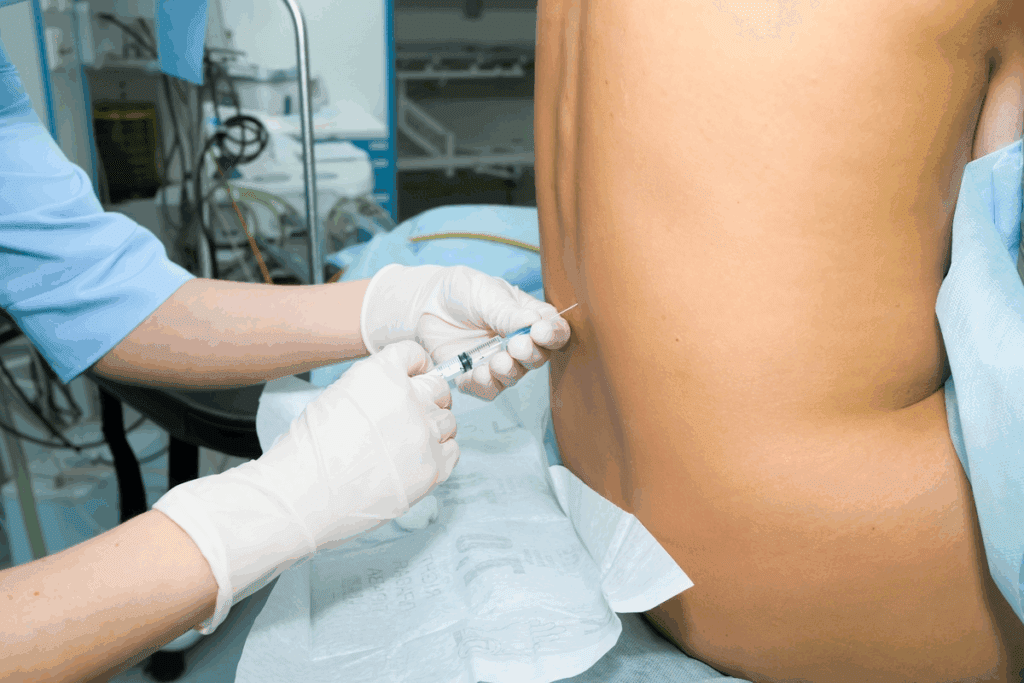
For those with severe back pain, Epidural Steroid Injections (ESI) are a hopeful solution. They inject steroids into the epidural space. This method is key in treating long-term pain from spinal issues.
Definition and Basic Concept
An Epidural Steroid Injection involves putting corticosteroid medicine into the space around the spinal cord and nerves. This method is used to cut down inflammation and ease pain.
Components of an Epidural Steroid Injection
An ESI includes corticosteroid medicine and a local anesthetic. The corticosteroid fights inflammation, while the local anesthetic numbs the area right away. Together, they help reduce pain and swelling.
The corticosteroid in ESIs is key to their success. It lessens swelling that causes pain. By injecting it directly, the treatment hits the pain source better than pills.
It’s important for patients to understand ESI’s parts and how it works. Knowing what ESI is helps people see its possible benefits and risks. This knowledge aids in making informed choices about treatment.
The Anatomy of the Spine and Epidural Space
Knowing the spine’s anatomy is key to understanding many medical issues. This is true, mainly for treatments like epidural steroid injections (ESI).
The spine, or vertebral column, is a complex structure. It supports, flexes, and protects the body. It has 33 vertebrae divided into five regions: cervical, thoracic, lumbar, sacrum, and coccyx.
Spinal Structure and Nerve Pathways
The spinal cord is a vital part of the central nervous system. It runs through the spinal canal, a passage made by the vertebrae. The vertebrae are cushioned by intervertebral discs, which absorb shock and help with flexibility. Nerve pathways branch out from the spinal cord through the intervertebral foramina, sending signals between the brain and the body.
The spinal anatomy is complex, with many structures working together:
- Vertebral bodies: The main weight-bearing part of the vertebrae.
- Pedicles and laminae: Form the posterior wall of the spinal canal.
- Spinous processes: Provide attachment points for muscles and ligaments.
- Nerve roots: Emerge from the spinal cord and travel through the intervertebral foramina.
The Epidural Space: Location and Function
The epidural space is outside the dura mater, a protective membrane around the spinal cord. It contains fat, blood vessels, and nerve roots. This space is important for pain management because it allows for epidural steroid injections. These injections can reduce inflammation and relieve pain.
Epidural steroid injections target the epidural space to:
- Reduce inflammation around irritated nerves.
- Relieve pain associated with various spinal conditions.
- Improve mobility and quality of life for patients.
Understanding the spine and epidural space helps healthcare providers better diagnose and treat back and neck conditions.
Medical Conditions Treated with Epidural Steroid Injections
Epidural Steroid Injections (ESIs) are a key treatment for many spinal problems. They help with chronic pain and discomfort. These injections are great for conditions that cause inflammation and nerve pressure.
Herniated Discs and Nerve Compression
A herniated disc happens when the soft center of the disc leaks out. This can cause pain, numbness, and weakness in the back and legs. ESIs can ease these symptoms by reducing inflammation around the nerves.
Spinal Stenosis
Spinal stenosis is when the spinal canal narrows. This puts pressure on the spinal cord and nerves. ESIs can help by reducing swelling in the spinal canal, easing nerve pressure.
Degenerative Disc Disease and Arthritis
Degenerative disc disease and arthritis can cause spine pain and stiffness. As discs wear out, they can irritate nearby nerves. ESIs can manage this pain by delivering anti-inflammatory medication to the area.
In conclusion, Epidural Steroid Injections are a versatile treatment for spinal issues. They help with herniated discs, spinal stenosis, and degenerative disc disease. By reducing inflammation and nerve pressure, ESIs can greatly improve patients’ lives.
How Epidural Injections Work to Relieve Pain
It’s important to know how epidural injections work for back pain relief. Epidural steroid injections (ESI) are a common treatment for chronic back pain. They help when pain is caused by inflammation or irritation of the spinal nerves.
Anti-inflammatory Mechanism of Steroids
The corticosteroid medication in ESI is key in reducing inflammation around the spinal nerves. Corticosteroids are potent anti-inflammatory agents that ease pressure on nerves, reducing pain. They help in healing and provide pain relief by decreasing inflammation.
Local Anesthetic Components and Their Effects
Local anesthetics are also used in epidural injections, along with steroids. Local anesthetics numb the area around the nerves, giving immediate pain relief. This numbing effect helps in reducing pain and can help find the pain source by temporarily blocking it.
Duration of Pain Relief
The time pain relief lasts from epidural steroid injections varies. Several factors affect this, like the condition’s severity, the patient’s health, and the injection technique. Generally, relief can last from weeks to months.
| Factors Influencing Pain Relief Duration | Description |
| Severity of Condition | More severe conditions may result in shorter duration of pain relief. |
| Patient’s Overall Health | Patients with better overall health may experience longer pain relief. |
| Injection Technique | The precision of the injection technique can impact the effectiveness and duration of pain relief. |
Understanding epidural steroid injections helps patients make better treatment choices. The mix of anti-inflammatory steroids and local anesthetics offers a powerful pain management strategy. It brings significant relief to many with chronic back pain.
Types of Epidural Steroid Injections
There are several ways to do an ESI to treat back pain. The method used depends on where the pain is and what’s causing it, as UPMC explains.
Interlaminar Approach
The interlaminar approach injects steroids between two vertebrae. It’s often used for pain in the lower back and legs.
Advantages: It’s a simple method that works well for some back problems, like herniated discs.
Considerations: How well the injection works can depend on the doctor’s skill and if they use imaging.
Transforaminal Approach
The transforaminal approach targets the nerve root causing pain. It injects steroids through the foramen, where the nerve exits. This is great for treating radicular pain.
“The transforaminal epidural injection is considered one of the most effective methods for delivering corticosteroids directly to the site of inflammation.”
Benefits: It delivers the medication right to the nerve root, which can lead to better pain relief.
Caudal Approach
The caudal approach injects steroids through the sacral hiatus at the bottom of the sacrum. It’s used for chronic pain in the lower back and legs.
Advantages: It’s less complex and has fewer risks compared to other methods.
Each ESI type has its own use, benefits, and risks. The right choice depends on the patient’s condition, pain location, and overall health.
The Procedure: What to Expect During an ESI
Thinking about an epidural steroid injection (ESI)? Knowing what happens can ease your worries. We’ll guide you through the steps, from getting ready to aftercare. This way, you’ll know what to expect during your treatment.
Pre-procedure Preparation
Before your ESI, some steps are needed to keep you safe and the treatment effective. You might need to:
- Stop certain medicines that could affect the procedure or your healing
- Bring someone with you to the appointment, as driving might not be safe right away
- Sign a consent form after talking about risks, benefits, and other options with your doctor
It’s very important to follow your doctor’s advice to avoid problems and get the best results.
Step-by-Step Process
The ESI procedure is short, usually under 30 minutes. Here’s what happens during it:
- You lie on your stomach on an X-ray table.
- The area for the injection is cleaned and made ready.
- A local anesthetic numbs your skin and the tissue below.
- The doctor uses imaging to guide the needle into the epidural space.
- After the needle is in the right spot, the steroid is injected.
Imaging guidance is key for placing the needle correctly, making the procedure safer and more effective.
Imaging Guidance Techniques
During the ESI, imaging like fluoroscopy is used. It gives a clear view of your spine and the area around it. This helps the doctor:
- Find the epidural space accurately
- Place the needle exactly where it needs to be
- See how the contrast material spreads, if used, to check the needle’s position
Post-procedure Care
After the procedure, you’ll be watched for a bit to see if there are any immediate issues. We suggest:
- Resting for the rest of the day and avoiding hard activities
- Watching your pain and telling your doctor if anything feels off
- Following any specific instructions from your doctor
Some people feel better right away, but it might take a few days for the steroid to fully work.
Is Getting an Epidural Injection Painful?
Many people think about the pain of epidural steroid injections (ESI) for back pain. It’s a natural worry, given the treatment’s invasive nature. We aim to clear up what you can expect during and after the procedure.
Patient Experiences During the Procedure
Some discomfort is possible during the procedure, but it’s usually managed. Local anesthesia and mild sedation help. The UPMC says most patients find it tolerable, with only a few feeling a bit of pain.
Using imaging like fluoroscopy ensures the injection is placed right. This lowers the risk of problems and makes the process less uncomfortable.
Pain Management Techniques
We use several ways to manage pain during the procedure. Local anesthesia numbs the skin and tissues at the injection site. Some patients get mild sedation to relax.
Our team is skilled in giving epidural steroid injections. We take all steps to reduce discomfort. We watch patients closely to ensure their comfort and safety.
Recovery and Post-Injection Sensations
After the procedure, some soreness at the injection site is common. It’s usually mild and short-lived. Over-the-counter pain meds can help manage it.
Some might feel a temporary increase in pain or discomfort as the steroids work. But this is usually brief. Many start feeling relief from chronic back pain within a few days.
Following post-procedure instructions is key for a smooth recovery. This includes avoiding hard activities for a bit and seeing your healthcare provider as advised.
Effectiveness of Epidural Injections for Back Pain
Clinical studies show that epidural steroid injections help a lot with back pain. It’s key to look at the research and evidence for this treatment.
Clinical Research and Evidence
Many studies have looked into how well epidural steroid injections work for back pain. The Delaware Valley Pain & Spine Institute found they give a lot of relief to those with chronic back pain. The steroids in these injections reduce swelling and irritation around the spinal nerves, which helps ease pain.
A review of clinical trials found that these injections greatly improve pain and function for patients with lumbar radiculopathy. A leading pain management specialist said,
“Epidural steroid injections are a key part of our treatment for chronic back pain. They offer patients a good alternative to surgery.”
Short-term vs. Long-term Relief
How long pain relief lasts after an epidural injection varies. Some feel better right away, while others take a few days. Research shows that ESI can help both in the short and long term.
In the short term, these injections can quickly reduce pain, letting patients get back to their usual activities. For longer relief, patients might need more injections, spaced out over months. Studies have found that a series of ESIs can lead to lasting pain reduction and better quality of life for many.
Factors Affecting Treatment Success
How well epidural steroid injections work depends on several things. These include the cause of back pain, how severe it is, and the patient’s health. For example, patients with herniated discs or spinal stenosis often do well with ESI. Also, how accurately the injection is placed, using imaging like fluoroscopy, is very important.
It’s also important to remember that these injections are often part of a bigger treatment plan. This plan might include physical therapy, making lifestyle changes, and other treatments. By using all these approaches together, doctors can make ESI work even better and help patients more.
Potential Risks and Side Effects
It’s important to know the risks and side effects of epidural steroid injections. This knowledge helps you make smart choices about treating your back pain. Even though these injections are usually safe, there are possible risks and complications.
Common Minor Side Effects
Most people do well with epidural steroid injections. But, some might feel minor side effects. These can include pain or discomfort where the injection was given, flushing, sweating, trouble sleeping, and higher blood sugar levels, which is a big concern for diabetics.
Some patients might also feel anxious or have mood swings because of the steroid. These effects are usually short-lived.
Rare but Serious Complications
Even though they’re rare, serious problems can happen. These include infection, nerve damage, and spinal cord injury. There’s also a chance of getting a dural puncture headache if the protective membrane around the spinal cord is accidentally poked during the procedure.
In very rare cases, an allergic reaction to the medications used in the injection can occur.
Contraindications for ESI
Some conditions make epidural steroid injections not recommended. These include active infections, bleeding disorders, or taking blood-thinning medications. People with uncontrolled diabetes, severe mental health issues, or who are pregnant should talk to their doctor first.
Also, those with known allergies to the injection’s medications should avoid it. It’s key to share your full medical history with your doctor to see if ESIs are right for you.
Insurance Coverage and Costs of Epidural Injections in the US
It’s important for patients to know the costs of epidural steroid injections (ESI) for back pain. The price can change a lot because of where you are, who you see, and your insurance.
Typical Costs Without Insurance
Without insurance, the price for an epidural steroid injection can vary a lot. UPMC says it depends on where you are and who you see. On average, you might pay $1,000 to $3,000 per shot, including the shot and any imaging needed.
“The cost for epidural steroid injections without insurance can be high,” a healthcare expert notes. “So, it’s key to know your insurance options.”
Medicare and Private Insurance Coverage
Medicare and private insurance usually cover epidural steroid injections. But how much they cover can differ. Medicare Part B pays for it if it’s needed for your health. Private insurance coverage depends on your plan.
- Find out if your insurance covers ESI for your condition.
- Know the copayment or coinsurance for the procedure.
- Check if you need pre-authorization.
Questions to Ask Your Insurance Provider
To understand the costs better, ask your insurance these questions:
- Does my plan cover epidural steroid injections for my condition?
- What will I have to pay out of pocket for the procedure?
- Are there any special rules or limits for coverage?
Knowing the costs and what insurance covers helps patients make better choices about their treatment.
Conclusion
Epidural Steroid Injections (ESI) are a helpful treatment for chronic back pain. They involve injecting steroids around the spinal cord to lessen inflammation and pain.
ESI helps with many back pain issues, like herniated discs and spinal stenosis. Knowing how the spine and epidural space work helps patients understand ESI’s benefits.
Even though ESI is mostly safe, it’s important to know the possible risks and side effects. Talking to a healthcare professional is key to see if ESI is right for you. The Delaware Valley Pain & Spine Institute says ESI is effective for chronic back pain.
In summary, ESI is a good option for back pain relief. By considering the benefits and risks, patients can make smart choices. We suggest talking to a healthcare expert to see if ESI could help with your back pain.
FAQ
What is an epidural steroid injection (ESI) for back pain?
An epidural steroid injection is a treatment for back pain. It involves injecting a medication into the space around the spinal cord. This helps reduce inflammation and relieve pain caused by irritated or compressed nerves.
Is getting an epidural injection painful?
Getting an epidural injection might be uncomfortable, but it’s usually done under local anesthesia. This makes the procedure less painful. We also use imaging to ensure the needle is placed correctly, reducing risks.
What are the common causes of chronic back pain treated with ESI?
ESI treats back pain caused by herniated discs, spinal stenosis, and degenerative disc disease. These conditions compress or inflame the nerves, leading to chronic pain.
How do epidural steroid injections work to relieve pain?
The medication in ESI reduces inflammation and numbs the area. This combination provides immediate relief from pain. It helps improve your quality of life.
What are the different types of epidural steroid injections?
There are three main types of ESI: interlaminar, transforaminal, and caudal. Each is used for different conditions, based on the pain’s location and severity.
Reference
- Manchikanti, L., Kaye, A. D., Falco, F. J. E., Hirsch, J. A., & Benyamin, R. M. (2015). Epidural injections for lumbar radiculopathy and spinal stenosis: A comparative systematic review and meta-analysis. Pain Physician, 18(3), E239–E265. https://pubmed.ncbi.nlm.nih.gov/26000688



 Departments
 Related Videos
 Our Doctors
 News
News