Last Updated on November 25, 2025 by
Bladder problems in men become more common with age. They affect a lot of men. Issues like male incontinence and overactive bladder get more common as men get older. Learning how to stop male urine leakage is key to improving quality of life for many.

By age 40, men see a big jump in bladder control problems. The Urology Care Foundation says about 25 percent of men deal with urinary incontinence. Also, benign prostatic hyperplasia (BPH) affects about 50% of men by age 60. By age 85, it affects up to 90%.
Knowing who’s at risk helps men and their families make better health choices. We’ll look at what causes these problems and how to fix them.
Key Takeaways
- Bladder problems increase significantly with age in men.
- About 25% of men experience urinary incontinence.
- BPH affects 50% of men by age 60 and 90% by age 85.
- Understanding risk factors can inform healthcare decisions.
- Addressing bladder issues can improve quality of life.
The Age-Related Timeline of Male Bladder Problems
Understanding how male bladder issues change with age is key. As men get older, their bodies go through changes that affect bladder control.
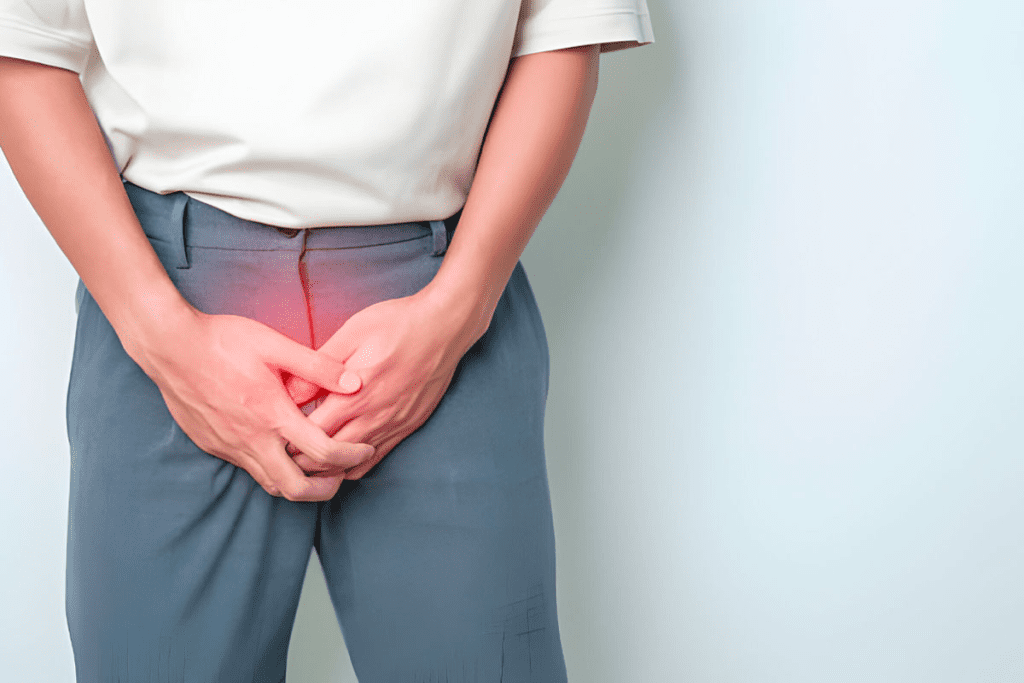
First Signs: What to Expect in Your 40s
In their 40s, men may notice the first signs of bladder problems. The prostate grows throughout life, and by 40, men start to feel changes. About 14.5% of US men in this age group are affected by overactive bladder, leading to urgency, frequency, or needing to pee at night.
Middle Age Progression: 50-65 Years
Men in their 50s and 60s see more bladder issues. By age 50, about 50% of men have big symptoms of Benign Prostatic Hyperplasia (BPH). This can cause trouble peeing, a weak stream, and more.
Senior Years: 65+ and Increasing Prevalence
For men 65 and older, bladder problems are even more common. Aging, possible brain changes, and other health issues make bladder control harder. Male leakage of urine is a big worry in this age group, affecting daily life and needing good management.
Men should know about these age-related changes to manage their bladder health. Regular doctor visits and talking to healthcare providers can help lessen the effects of bladder problems.
5 Primary Causes of Bladder Issues in Aging Men
As men get older, their bladder health often declines. This can lead to problems like involuntary urination in males and dribbling urine. Knowing what causes these issues is key to managing and treating them.

Benign Prostatic Hyperplasia (BPH): The 50% by Age 60 Factor
Benign Prostatic Hyperplasia (BPH) is a major cause of bladder problems in older men. By age 60, about 50% of men have BPH. It makes urination weak and frequent because the prostate gland gets too big.
“BPH is a significant contributor to urinary symptoms in older men, and its prevalence increases with age.” “ A Urologist
Weakening Pelvic Floor Muscles
The pelvic floor muscles are important for bladder control. As men age, these muscles get weaker. This can cause men’s urinary incontinence and other bladder issues. Doing Kegel exercises can help strengthen these muscles.
Medication Side Effects Common in Older Men
Older men often take many medications. Some of these can harm the bladder. Certain drugs can make involuntary urination in males worse. It’s important to talk to a doctor about any medications and how they might affect the bladder.
Neurological Changes with Age
As we age, our nerves can change, affecting the bladder. Conditions like diabetes, Parkinson’s disease, and stroke can harm bladder nerves. This can cause frequent and urgent urination. Treating these conditions is important for better bladder health.
Understanding the main causes of bladder problems in older men helps us manage and treat them. This knowledge lets men get the right medical care and make lifestyle changes to improve their bladder health.
Recognizing Male Bladder Problem Symptoms at Every Age
As men get older, it’s key to spot bladder problem signs early. These issues can mess with daily life, sleep, and happiness. We’ll look at symptoms men might face at different ages.
Early Warning Signs: Nocturia and Frequency
Nocturia is when you need to pee a lot at night. It can ruin your sleep and make you tired. Urinary frequency means needing to pee more during the day than usual.
These signs might point to big issues like an enlarged prostate or bladder problems. It’s vital for men to notice these changes and talk to their doctor.
Mid-Stage Symptoms: Weak Stream and Incomplete Emptying
Later on, men might have a weak urinary stream or feel like they can’t empty their bladder fully. This can make peeing hard and feel like it’s not done.
These signs might mean the prostate is getting too big and blocking urine flow. Men with these symptoms should see a doctor to find out why.
Advanced Indicators: When Incontinence Develops
In the worst cases, bladder problems can cause urinary incontinence. This means losing control over when you pee. It can happen due to weak muscles, nerve issues, or other reasons.
Urinary incontinence can really hurt a man’s life, making him feel ashamed and limiting his activities. It’s important to talk to a doctor to find ways to treat it.
Impact on Quality of Life and Mental Health
Bladder problems can really affect a man’s life and mind. They can make him less active, sad, and anxious. For older men, these issues might even lead to living in a care facility.
It’s important to remember that bladder problems are not just a normal part of aging. They can be treated. By knowing the signs and getting help, men can live better and stay independent.
How to Stop Male Urine Leakage: 7 Effective Solutions
Male urine leakage can be upsetting, but there are ways to help. Men with this issue can find relief through various treatments and lifestyle changes.
Kegel Exercises for Strengthening Bladder Control
Kegel exercises are a simple yet effective way to strengthen the pelvic floor muscles. These muscles are key for bladder control. By contracting and releasing these muscles, men can better hold urine and reduce leakage.
To perform Kegel exercises correctly:
- Identify the correct muscles by stopping the flow of urine mid-stream.
- Contract these muscles for 5-10 seconds, then release for the same duration.
- Repeat this process 10-15 times, three times a day.
Bladder Training Techniques
Bladder training involves gradually increasing the intervals between urinations. This improves bladder capacity and reduces frequency. It’s a helpful technique for men with incontinence to train their bladder to hold urine longer.
To start bladder training:
- Keep a bladder diary to track urination patterns.
- Gradually increase the time between trips to the bathroom.
- Practice relaxation techniques to help manage urgency.
Dietary Modifications That Reduce Symptoms
Diet is key in managing male incontinence. Some foods and drinks can irritate the bladder, making symptoms worse.
Consider these dietary adjustments:
- Avoid caffeine and alcohol, which can irritate the bladder.
- Reduce spicy foods and citrus fruits.
- Increase fiber-rich foods to prevent constipation.
Medication Options by Age Group
For some men, medication is needed to manage their bladder incontinence. The right medication depends on the cause of incontinence and the patient’s age.
It’s important to talk to a healthcare provider to find the best treatment plan.
Conclusion: Taking Control of Your Bladder Health at Any Age
It’s important to know about the risks of bladder problems as we age. Issues like male incontinence can happen at different times in life. They are often caused by things like an enlarged prostate and weak pelvic muscles.
Starting early with health care can stop bladder problems from getting worse. Men can improve their bladder control by making healthy choices and learning about treatments. This includes doing exercises like Kegels, changing your lifestyle, and sometimes using medicine or surgery.
We stress the need for men to be aware and take action on their bladder health. This way, they can lessen the effects of bladder issues on their life and mental health. With the right medical advice and a commitment to health, men can manage their bladder control effectively.
FAQ
Why can’t I hold my pee all of a sudden?
There are many reasons you might suddenly not be able to hold your urine. These include urinary tract infections, side effects from medication, or neurological conditions. It’s best to see a healthcare professional for a proper check-up.
What are the primary causes of male incontinence?
Male incontinence can stem from several sources. These include Benign Prostatic Hyperplasia (BPH), weakened pelvic floor muscles, side effects from medication, and neurological changes. Knowing the cause is key to finding the right treatment.
How common is urinary incontinence in elderly men?
Urinary incontinence is more common as men get older. Studies show that many men over 65 face this issue, affecting their quality of life.
What are the symptoms of male bladder problems?
Symptoms can vary. Early signs include needing to urinate often and at night. As it progresses, you might notice a weak stream or not feel like you’ve fully emptied your bladder. Advanced symptoms include incontinence. Spotting these signs early can help manage the problem.
How can Kegel exercises help with bladder control?
Kegel exercises strengthen the muscles around your bladder. This can improve bladder control and reduce the chance of urine leakage. Regular practice can greatly improve how you manage your bladder.
Are there dietary changes that can help reduce male bladder problem symptoms?
Yes, making some dietary changes can help. Cutting down on caffeine and alcohol, managing how much you drink, and avoiding foods that irritate your bladder can help manage bladder issues.
What medication options are available for treating male urinary incontinence?
The right medication depends on your age and the cause of incontinence. We offer different treatments, including medications, tailored to your specific needs.
Can bladder training techniques really help stop male urine leakage?
Yes, bladder training can help improve bladder control. By gradually increasing the time between bathroom visits, you can increase your bladder’s capacity and reduce leakage.
At what age do men typically start experiencing bladder problems?
Men may start experiencing bladder problems as early as their 40s. But the problem becomes more common after 50. Catching it early and getting treatment can make a big difference.
How does BPH contribute to male bladder problems?
BPH is a major cause of bladder problems in men, mainly as they age. An enlarged prostate gland can block urine flow, leading to various bladder issues.
References
Jackson, S. A., et al. (2001). An epidemiological study of men aged 45 to 99 years: prevalence of urinary incontinence. Journal of Urology, 166(3), 858“862. https://www.auajournals.org/doi/10.1016/S0022-5347(01)64113-2
Coyne, K., et al. (2024). Prevalence trends in overactive bladder among men in the United States. Scientific Reports. https://www.nature.com/articles/s41598-024-66758-8
Irwin, D. E., et al. (2017). The global, regional, and national burden of lower urinary tract symptoms suggestive of benign prostatic hyperplasia: a systematic review and meta-analysis. Scientific Reports. https://www.nature.com/articles/s41598-017-06628-8