Last Updated on November 25, 2025 by Ugurkan Demir

The aorta is the biggest artery in our body. It’s key for carrying oxygen-rich blood from the heart to the rest of us. It splits into smaller arteries that feed blood to different parts of our body. At Liv Hospital, we know how important the aorta is for our heart health. Explore arteries aorta structure, location, and how it branches into major arteries in the human body.
The aorta starts in the chest, coming out of the left ventricle of the heart. It goes down to the belly, where it splits into smaller branches. Knowing how the aorta works helps us find and treat heart problems. We’ll look at how it keeps blood flowing well and why it’s so important for our health.
Key Takeaways
- The aorta is the largest artery, originating from the left ventricle of the heart.
- It plays a vital role in delivering oxygenated blood to the body.
- The aorta branches into smaller arteries that supply blood to various organs and tissues.
- Understanding the aorta’s structure and function is vital for cardiovascular health.
- Liv Hospital is committed to providing expert care for cardiovascular conditions.
The:: entire = = unga\helper\outputFileName = output_[random number].txt
The aorta is the biggest artery in the body. It carries oxygen-rich blood to all parts of the body. It starts from the left ventricle of the heart and is key to the circulatory system.
The aorta is built to handle the heart’s strong pressure. It has three layers: the tunica intima, tunica media, and tunica externa. Each layer helps keep the aorta strong and flexible.
Aorta’s Branches and Their Significance
The aorta splits into many arteries that reach different body areas. Knowing these branches is vital for finding and treating blood vessel diseases.
| Aortic Segment | Branches | Supply Region |
| Aortic Arch | Brachiocephalic trunk, Left common carotid artery, Left subclavian artery | Head, Neck, Upper Limbs |
| Descending Thoracic Aorta | Posterior intercostal arteries, Superior phrenic arteries | Thoracic wall, Diaphragm |
| Abdominal Aorta | Celiac trunk, Superior and inferior mesenteric arteries | Abdominal organs |
The Aorta: Definition and Significance
The aorta is the biggest artery that comes out of the heart. It’s key for sending oxygen-rich blood to the body. Keeping the aorta healthy is vital, and at Liv Hospital, we’re here to help.
It’s important to know how the aorta works and its role in health. We aim to guide our patients through the world of heart health.
Key Takeaways
- The aorta is the largest artery that originates from the heart.
- It plays a vital role in distributing oxygenated blood throughout the body.
- Maintaining a healthy aorta is essential for overall cardiovascular well-being.
- Our team at Liv Hospital is committed to providing expert care and guidance.
- Understanding the aorta’s function can help prevent and manage cardiovascular diseases.
The Largest Artery in the Human Body
The aorta is the biggest artery in our body. It makes sure oxygen-rich blood gets to all parts of our body. It starts in the left ventricle of the heart and goes down to the belly, where it splits into smaller arteries.
Role in Blood Circulation
The aorta is key in the circulatory system. It’s the main artery that gets blood straight from the heart. Then, it sends this blood to different parts of the body through its branches.
Let’s look at the table below to see how important the aorta is in blood circulation.
| Aspect | Description |
| Blood Distribution | The aorta is responsible for distributing oxygen-rich blood to the entire body. |
| Circulation Pathway | It acts as the main pathway for blood circulation, starting from the heart and branching out to various arteries. |
| Pressure Regulation | The aorta helps in regulating blood pressure by expanding and recoiling with each heartbeat. |
Oxygen-Rich Blood Supply
The aorta is vital for getting oxygen-rich blood to the body. It gets oxygenated blood from the heart and sends it to different parts of the body through its branches.
A medical expert says, “The aorta is more than just a blood channel. It’s a critical part that makes sure the body’s tissues and organs get the oxygen they need to work right.”
“The aorta is a vital artery that not only serves as a channel for blood but also plays a significant role in maintaining the overall health of the cardiovascular system.”
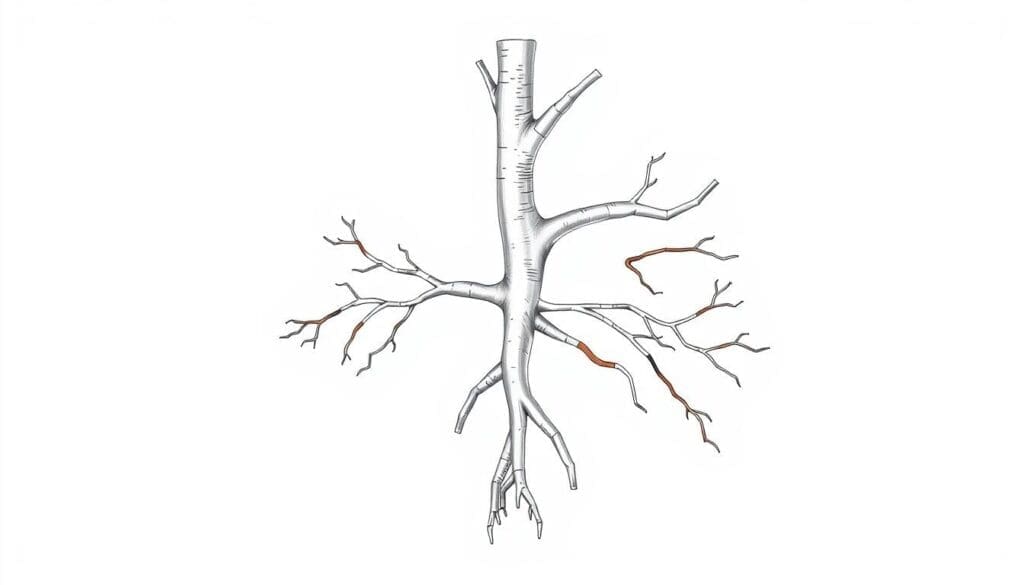
To show its importance, look at the image below. It shows the aorta’s structure and its connection to the heart.
In conclusion, the aorta is essential for our body’s circulatory needs. It makes sure oxygen-rich blood is delivered efficiently to all parts of the body.
Anatomy of the Aorta
Understanding the aorta’s anatomy is key to knowing how it supplies blood to the body. The aorta is a complex organ with a unique structure. This structure allows it to perform its vital function in the circulatory system.
Structure and Function
The aorta has several layers, each with a critical role. The innermost layer, the tunica intima, is in direct contact with the blood. The middle layer, or tunica media, has smooth muscle and elastic fibers. These allow the aorta to stretch and recoil with each heartbeat.
The outermost layer, the tunica externa, provides support and connects the aorta to surrounding tissues. This layered structure helps the aorta withstand high pressures from the heart. It also ensures a smooth, continuous flow of blood throughout the body.
| Layer | Description | Function |
| Tunica Intima | Innermost layer | In direct contact with blood |
| Tunica Media | Middle layer with smooth muscle and elastic fibers | Allows stretching and recoiling |
| Tunica Externa | Outermost layer | Provides support and connection to surrounding tissues |
Location and Path of the Aorta
The aorta is a vital artery that starts from the left ventricle of the heart. It plays a key role in the circulatory system. We will look at its path and how it relates to other organs.
Relation to Other Organs
The aorta is closely tied to many organs as it moves through the thoracic and abdominal cavities. Its branches carry blood to the head, upper limbs, and abdominal organs.
- Ascending Aorta: The ascending aorta is related to the pulmonary artery and the pericardium.
- Aortic Arch: The aortic arch gives off branches that supply the head and upper limbs.
- Descending Aorta: The descending aorta is related to the esophagus, lungs, and abdominal organs.
Knowing the aorta’s path and its connection to other organs is key for diagnosing and treating heart diseases.
Clinical Significance of the Aorta
Understanding the aorta’s role is key for diagnosing and treating heart conditions. It keeps blood flowing smoothly, making it a focus in heart health.
Blood Pressure Regulation
The aorta is vital for blood pressure regulation. It expands and contracts to handle blood from the heart. This helps keep blood pressure stable.
The aorta’s elasticity is important for blood pressure control. Problems like atherosclerosis can make blood pressure unstable, causing heart stress.
Disease Association
The aorta is linked to many heart diseases. Aortic aneurysms are serious, causing the aorta to bulge and potentially rupture. Aortic dissection is another issue, where blood leaks into the aorta’s layers.
There’s also a connection between aortic diseases and genetic conditions like Marfan syndrome. Knowing this helps us diagnose and treat aortic diseases early, improving health outcomes.
By understanding the aorta’s importance, we can better manage heart conditions. This improves overall heart health.
Branches of the Aorta
It’s important to know about the aorta’s branches to understand how blood spreads across the body. The aorta splits into arteries that carry oxygen-rich blood to various body parts. This ensures all organs and tissues get the nutrients they need to work well.
Aortic Arch Branches
The aortic arch has three main branches. These supply blood to the head and upper limbs. Here are the details:
- Brachiocephalic trunk: This branch splits into the right common carotid artery and the right subclavian artery.
- Left common carotid artery: It supplies blood to the left side of the head and neck.
- Left subclavian artery: This artery goes to the left arm.
Descending Aorta Branches
The descending aorta has branches for the thoracic and abdominal organs. Some key ones are:
- Intercostal arteries: These arteries feed the intercostal spaces.
- Bronchial arteries: They supply blood to the lungs.
- Esophageal arteries: These arteries go to the esophagus.
Let’s look at the aorta’s branches in a table for better understanding:
| Aortic Segment | Branches | Supply Region |
| Aortic Arch | Brachiocephalic trunk, Left common carotid artery, Left subclavian artery | Head, Neck, Upper Limbs |
| Descending Thoracic Aorta | Intercostal arteries, Bronchial arteries, Esophageal arteries | Thoracic organs, Intercostal spaces |
The aorta’s branches are key for delivering oxygen-rich blood to the body. Knowing about these branches helps in diagnosing and treating vascular diseases.
Aorta and Heart Connection
The aorta and heart work together to move blood efficiently. This teamwork is key for the heart’s success.
Left Ventricle Connection
The aorta starts from the left ventricle, the heart’s main pumping area. This link lets oxygen-rich blood flow from the heart to the aorta. The aorta then spreads it across the body.
The left ventricle’s muscles contract to push blood into the aorta. This starts the blood flow around the body.
Aortic Valve Function
The aortic valve sits between the left ventricle and the aorta. It makes sure blood only goes one way – from the heart to the aorta. The valve opens when the ventricle pumps and closes when it relaxes.
This keeps blood flowing right and stops it from going back to the heart. A working aortic valve is vital for good blood flow and avoiding heart problems.
Ascending Aorta and Coronary Arteries
The aorta’s ascending segment is key in sending blood to the heart through the coronary arteries. It’s important to know its role and how it connects to the coronary arteries. These arteries are essential for the heart’s work.
Left and Right Coronary Arteries
The ascending aorta leads to the left and right coronary arteries. These arteries carry oxygen-rich blood to the heart muscle.
The left coronary artery splits into the left anterior descending artery and the circumflex artery. They supply blood to the left ventricle and left atrium. The right coronary artery sends blood to the right ventricle, right atrium, and in most cases, the sinoatrial and atrioventricular nodes.
Coronary Circulation Importance
The coronary circulation is vital for the heart’s health. It ensures the heart gets the oxygen and nutrients it needs. Any blockage in the coronary arteries can cause serious heart problems.
Knowing how important coronary circulation is helps us see why we need to keep the coronary arteries healthy. This can be done through good lifestyle choices and medical care when needed.
Aortic Arch and Its Branches
The aortic arch is key in the aortic anatomy. It’s important for sending oxygenated blood to the body. It has branches that help the head and upper limbs.
Branches of the Aortic Arch
The aortic arch has three main branches. These are the brachiocephalic trunk, the left common carotid artery, and the left subclavian artery. They are essential for blood supply to the head and upper limbs.
- The brachiocephalic trunk splits into the right common carotid artery and the right subclavian artery. They supply the right side of the head, neck, and right upper limb.
- The left common carotid artery goes to the left side of the head and neck.
- The left subclavian artery supplies the left upper limb.
Significance of the Aortic Arch Branches
The aortic arch branches are vital for blood flow to the head and upper limbs. They help with thinking, moving limbs, and keeping blood flowing.
| Branch | Supply Area |
| Brachiocephalic trunk | Right common carotid artery and right subclavian artery |
| Left common carotid artery | Left side of the head and neck |
| Left subclavian artery | Left upper limb |
Descending Thoracic Aorta and Branches
We’re now exploring the descending thoracic aorta, a key part of the aorta. It carries blood to the lower body. This segment starts after the aortic arch and goes through the thoracic cavity.
Branches of the Descending Thoracic Aorta
The descending thoracic aorta has several branches. These branches are important for the health of organs in the thoracic cavity. They help with nourishment and oxygenation.
- Posterior intercostal arteries
- Superior phrenic arteries
- Bronchial arteries
- Esophageal arteries
- Mediastinal arteries
Blood Supply to Lower Body
When the descending thoracic aorta reaches the abdomen, it turns into the abdominal aorta. This aorta then branches out to the lower body. The health of the descending thoracic aorta is key for the lower body’s blood supply.
| Branch | Supply Area |
| Posterior Intercostal Arteries | Intercostal spaces, spinal cord, and vertebrae |
| Superior Phrenic Arteries | Diaphragm |
| Bronchial Arteries | Bronchi and lungs |
| Esophageal Arteries | Esophagus |
| Mediastinal Arteries | Mediastinum |
“The aorta is the lifeline of the body, and its branches are critical for distributing oxygenated blood to various organs.”
This highlights the aorta and its branches’ vital role in our health.
Abdominal Aorta and Its Branches
We’re exploring the aorta’s path, focusing on its abdominal segment now. The abdominal aorta is key, extending from the diaphragm through the abdominal cavity. It supplies vital branches to the abdominal organs.
Celiac Trunk and Its Branches
The celiac trunk is the first major branch of the abdominal aorta. It splits into the left gastric, common hepatic, and splenic arteries. These arteries feed the stomach, liver, and spleen.
Superior and Inferior Mesenteric Arteries
The superior mesenteric artery comes from the abdominal aorta. It supplies blood to the small intestine and parts of the large intestine. The inferior mesenteric artery, also from the abdominal aorta, feeds the lower colon and rectum.
| Artery | Supply Region |
| Celiac Trunk | Stomach, Liver, Spleen |
| Superior Mesenteric Artery | Small intestine, parts of the large intestine |
| Inferior Mesenteric Artery | Lower parts of the colon, rectum |
Functions and Importance of the Aorta
The aorta is a key artery in our circulatory system. It’s vital for our health. It delivers oxygen-rich blood to our body’s tissues and organs.
Blood Pressure Regulation
The aorta helps control blood pressure with its elastic properties. It expands and contracts to keep blood pressure steady. This is thanks to the Windkessel effect, where it acts as a pressure reservoir.
- The aorta’s elastic walls stretch to hold the blood from the heart.
- This elasticity reduces pressure changes, ensuring steady blood flow to tissues.
- It’s essential for the proper blood flow to vital organs.
Oxygen Distribution and Systemic Circulation
The aorta sends oxygen-rich blood to our body’s tissues and organs. It branches into major arteries for the head, neck, upper limbs, and more.
The aorta’s branches supply oxygenated blood to our body. The brachiocephalic trunk, left common carotid artery, and left subclavian artery are key. They divide into smaller arteries, reaching our capillaries for oxygen and nutrient exchange.
In summary, the aorta is vital for our heart health. It regulates blood pressure and distributes oxygenated blood. Its functions are key for our overall well-being.
Conclusion
The aorta is key to our circulatory system. It starts at the heart and spreads oxygen-rich blood across the body. Knowing how it works helps us see its role in keeping our heart healthy.
The aorta controls blood pressure and sends oxygen to organs and tissues. Its detailed branches make sure every part of us gets what it needs to work well.
Keeping the aorta healthy is vital for our well-being. Eating right, exercising, and seeing doctors regularly can help. These actions support our aorta and heart health.
By learning about the aorta and caring for it, we can avoid heart diseases. This helps us live a long, healthy life.
FAQ
What’s an aorta, and what is its function in the heart?
The aorta is the biggest artery in our body. It carries oxygen-rich blood from the heart to the rest of us. It starts from the left ventricle and is key to our circulatory system.
Where is the aorta located in the body?
You can find the aorta in the chest area. It begins at the left ventricle of the heart. Then, it goes down through the chest and into the belly, splitting into smaller arteries.
What are the branches of the aorta, and what do they supply?
The aorta splits into arteries that feed different parts of our body. The top part, the aortic arch, supplies blood to the head and arms. The lower part, the descending aorta, feeds the lower body.
What is the significance of the aorta in blood circulation?
The aorta is vital for blood circulation. It brings oxygen-rich blood to the body. It’s key for keeping blood pressure right and making sure organs get the oxygen they need.
What is the relation between the aorta and blood pressure regulation?
The aorta helps control blood pressure. It acts as a reservoir and a pathway for blood. Its elastic nature helps keep blood pressure steady by expanding and contracting with each heartbeat.
What diseases are associated with the aorta?
Diseases like aneurysms, atherosclerosis, and aortic dissection can affect the aorta. These conditions can be serious if not treated. So, early diagnosis and treatment are critical.
How does the aorta connect to the heart?
The aorta connects to the heart through the aortic valve. This valve makes sure blood only flows one way, from the heart to the aorta.
What is the role of the aortic valve in the circulatory system?
The aortic valve is vital for blood flow. It stops blood from flowing back into the heart. Its proper function is essential for efficient circulation and avoiding problems.
References
- Lansakara, M., Sun, W., & Barker, A. J. (2023). An overview of aortic valve anatomy. Cardiovascular Diagnosis and Therapy. Retrieved from https://www.ncbi.nlm.nih.gov/pmc/articles/PMC10713916/
- Patel, D. R., & Nath, J. (2023). Anatomy, Abdomen and Pelvis: Aorta. In StatPearls. StatPearls Publishing. Retrieved from https://www.ncbi.nlm.nih.gov/books/NBK537319/