Last Updated on November 25, 2025 by Ugurkan Demir

It’s vital to know about the major arteries in the body for good health. The artery map of the body shows how these arteries carry blood to different parts of the body.
The aorta is the biggest artery in the body. It starts from the left ventricle and goes down to the belly. There, it splits into the two common iliac arteries.
At Liv Hospital, we focus on the artery chart and diagram for better care. Our patient-centered approach means we give each person the best care possible. We use the latest in medical science to help our patients.
Key Takeaways
- The aorta is the largest artery, arising from the left ventricle and supplying blood to the entire body.
- The seven major arteries play a vital role in distributing blood to important organs and limbs.
- An accurate artery map is key for diagnosis and treatment.
- Knowing the artery chart and diagram helps in giving full care.
- Liv Hospital’s expertise in patient-centred care ensures effective treatment and support.
The Vital Role of Arteries in the Body

Arteries are vital for our health, carrying oxygenated blood to all parts of the body. Problems with arteries can cause serious health issues. Let’s look at how arteries keep us healthy.
Function and Importance of Arteries
Arteries carry oxygenated blood from the heart to the rest of the body. They are key in delivering oxygen and nutrients to our tissues and organs. The role of arteries is essential for our body’s proper functioning.
Arteries do more than just carry blood. They also help control blood pressure. The flexibility of their walls keeps blood pressure steady throughout the body.
Structure of Arterial Walls
The walls of arteries have three layers: the tunica intima, tunica media, and tunica externa. The tunica intima is the innermost layer, touching the blood. The tunica media has smooth muscle and elastic fibers, allowing the artery to change size. The tunica externa provides extra support and structure.
Difference Between Arteries and Veins
Arteries and veins are both blood vessels but differ in structure and function. Arteries handle high blood pressure, carrying oxygenated blood away from the heart. Veins, carrying deoxygenated blood back to the heart, have one-way valves to stop backflow.
| Characteristics | Arteries | Veins |
| Direction of Blood Flow | Away from the heart | Towards the heart |
| Blood Pressure | High pressure | Low pressure |
| Wall Thickness | Thicker walls | Thinner walls |
| Valves | No valves | One-way valves |
Knowing the differences between arteries and veins helps us understand the circulatory system’s complexity.
Major Arteries in the Human Body
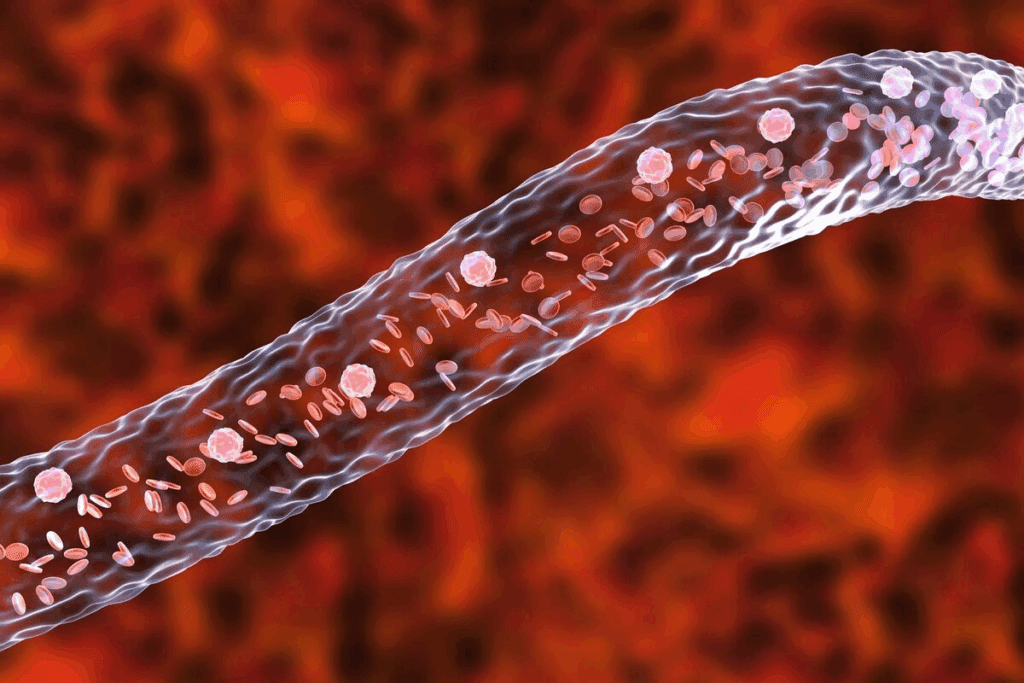
It’s important to know about the major arteries to understand how blood circulates. These arteries carry oxygen-rich blood to different parts of our body.
Aorta and Its Branches
The aorta is the biggest artery that starts from the heart’s left side. It splits into parts like the ascending aorta and the descending aorta. The aortic arch has branches like the brachiocephalic trunk, left common carotid artery, and left subclavian artery.
These branches split into smaller arteries. They send blood to the brain, neck, and arms.
Carotid Arteries and Their Significance
The carotid arteries are two big arteries in the neck. They carry blood to the brain. The common carotid artery splits into the internal carotid artery and the external carotid artery.
The internal carotid artery goes to the brain. The external carotid artery goes to the face and neck.
Other Major Arteries: Brachial, Iliac, and Femoral
The brachial arteries supply blood to the arms. The iliac arteries supply the pelvic area. The femoral arteries supply the legs.
The brachial artery comes from the axillary artery and goes down the arm. It splits into the radial and ulnar arteries.
- The iliac arteries start from the aorta and split into the internal and external iliac arteries. They supply the pelvic area and lower limbs.
- The femoral artery comes from the external iliac artery and goes down the thigh. It becomes the popliteal artery behind the knee.
These major arteries are key to the circulatory system. Knowing about them helps in diagnosing and treating vascular diseases.
The Aorta: The Biggest Artery
The aorta is a key artery that starts from the left ventricle. It carries oxygen-rich blood to the whole body. We will look at its structure, main parts, and why it’s important.
Anatomy of the Aorta
The aorta starts from the left ventricle and goes down to the belly. There, it splits into smaller arteries. It has three main parts: the ascending aorta, the aortic arch, and the descending aorta.
The ascending aorta is the first part that comes from the left ventricle. The aortic arch then curves back and to the left. It gives off branches for the head and upper limbs. The descending aorta goes from the arch down through the chest and belly.
Major Sections: Ascending, Arch, and Descending
The aorta is divided into three main parts based on its path.
- Ascending Aorta: Starts at the aortic valve and goes up to the sternal angle. It then turns into the aortic arch.
- Aortic Arch: It has three main branches: the brachiocephalic trunk, the left common carotid artery, and the left subclavian artery.
- Descending Aorta: It continues from the arch down through the chest and belly. It splits into the common iliac arteries.
| Section of Aorta | Function | Clinical Significance |
| Ascending Aorta | Arises from the left ventricle, begins the distribution of oxygenated blood | Aneurysms or dissections can lead to life-threatening complications |
| Aortic Arch | Gives off branches to the head and upper limbs | Lesions or stenosis in the branches can cause cerebral or upper limb ischemia |
| Descending Aorta | Continues through the thorax and abdomen | Aneurysms or trauma can lead to significant morbidity and mortality |
In conclusion, the aorta is a vital artery that plays a central role in the circulatory system. Understanding its anatomy, major sections, and clinical significance is essential for diagnosing and managing related diseases.
Carotid Arteries and Their Role
The carotid arteries are key for getting blood to the brain. They help keep the brain well-circulated. They split into the common carotid artery, then into the internal and external carotid arteries.
Common, Internal, and External Carotid Arteries
The common carotid arteries start from the brachiocephalic trunk on the right and the aortic arch on the left. They go up the neck and split into the internal and external carotid arteries. The internal carotid artery mainly feeds the brain. The external carotid artery goes to the face and neck.
The internal carotid artery has important branches. These include the ophthalmic artery, posterior communicating artery, and anterior choroidal artery. These branches are vital for the brain’s blood supply.
Path and Distribution Network
The internal carotid artery goes through the neck and skull, then into the brain. The external carotid artery splits into arteries for the face, scalp, and neck.
Importance in Cerebral Circulation
The carotid arteries are vital for cerebral circulation. Problems with these arteries can cause serious brain issues or stroke. Knowing how the carotid arteries work is key for treating brain-related problems.
- The carotid arteries supply blood to the brain.
- Diseases affecting the carotid arteries can lead to stroke.
- Understanding carotid artery anatomy is essential for diagnosis and treatment.
Other Significant Arteries
There are many arteries in the body, aside from the aorta and carotid arteries. These arteries are key for delivering blood to different parts of the body. They help supply blood to the limbs and organs.
Subclavian Arteries and Their Branches
The subclavian arteries are big arteries in the body. They start from the aortic arch on the left and the brachiocephalic trunk on the right. These arteries are vital for the arms and are a big part of the circulatory system.
The subclavian arteries have several important branches. These include the vertebral arteries, which go to the brain, and the internal thoracic arteries, which go to the chest.
Brachial Arteries and Their Distribution
The brachial arteries start from the subclavian arteries and go into the upper arms. They carry oxygenated blood to the muscles and tissues of the upper limbs.
The brachial artery is very important. It runs down the arm and splits into the radial and ulnar arteries near the elbow. These arteries then send blood to the forearm and hand.
Femoral Arteries and Their Clinical Importance
The femoral arteries are major arteries in the lower limbs. They start from the external iliac arteries. They are key for blood supply to the thighs and legs.
As a medical expert said,
“The femoral arteries are a key part of lower limb circulation. Their disease can cause a lot of problems.”
The femoral arteries turn into the popliteal arteries behind the knee. They then branch into smaller arteries that supply the lower leg and foot.
Artery Map and Charts: Understanding the Circulatory System
Artery maps and charts are key for grasping the circulatory system. They show the complex network of arteries across the body.
Systemic Circulation Overview
The systemic circulation is vital. It carries oxygen-rich blood to the body and deoxygenated blood back to the heart. This keeps us healthy.
This system uses arteries like the aorta and its branches. They supply blood to organs and tissues. Knowing this network helps in treating heart diseases.
| Arterial Branch | Origin | Distribution |
| Aorta | Left ventricle | Entire body |
| Coronary Arteries | Aorta | Myocardium |
| Carotid Arteries | Aortic arch | Head and neck |
Major Arterial Trunks and Branches
The aorta is the largest artery. It starts from the left ventricle and goes down to the abdomen. There, it splits into the common iliac arteries.
Other big branches include the coronary, carotid, and subclavian arteries. Each one feeds different parts of the body.
Regional Arterial Networks
Regional arterial networks are specific arteries for different body parts. For instance, the carotid arteries go to the head and neck. The subclavian arteries supply the upper limbs.
It’s important to know these networks. They help in diagnosing and treating vascular diseases in specific areas.
Clinical Significance of Major Arteries
Major arteries are key because they often face diseases like atherosclerosis and aneurysms. Knowing about these arteries and their diseases is vital for good diagnosis and treatment.
Atherosclerosis and Arterial Disease
Atherosclerosis is when plaque builds up in artery walls, causing them to narrow and harden. This can cut down blood flow to important organs and tissues, leading to serious health problems.
- Atherosclerosis can cause heart attacks by blocking the coronary arteries.
- It can also lead to strokes by affecting the carotid arteries.
- Peripheral artery disease is another complication, resulting from reduced blood flow to the limbs.
Aneurysms
An aneurysm happens when a part of an artery weakens and bulges outward. If not treated, aneurysms can burst, causing severe bleeding that can be deadly.
The impact of aneurysms is big, as they need quick diagnosis and treatment to avoid rupture.
Peripheral Artery Disease
Peripheral artery disease (PAD) is when peripheral arteries narrow due to atherosclerosis, reducing blood flow to the limbs.
Diagnostic Tools and Techniques
To check on our arteries’ health, we use many tools and techniques. Accurate diagnosis of arterial diseases is key for good treatment. We use different methods to see and check the arteries, making sure patients get the best care.
Imaging Techniques for Arterial Visualization
Imaging is very important for finding arterial diseases. Ultrasound uses sound waves to show artery images. It’s great for checking blood flow and finding blockages. Computed Tomography (CT) scans and Magnetic Resonance Imaging (MRI) also help see the arteries in detail.
These tools help spot problems like stenosis, aneurysms, and peripheral artery disease. They let doctors see how bad the disease is and plan the right treatment.
Angiography and Its Role in Diagnosis
Angiography involves putting contrast material into the arteries to see them. It shows the inside of the arteries, helping find blockages and other issues. There are different types, like coronary angiography for heart arteries and cerebral angiography for brain blood vessels.
- Angiography gives clear images of the arteries, helping diagnose diseases.
- It’s great for planning treatments like angioplasty and stenting.
- It also checks if previous treatments worked.
Other Diagnostic Methods
There are more ways to check artery health. Ankle-Brachial Index (ABI) is a simple test that compares ankle and arm blood pressure. It’s used to find peripheral artery disease.
“The Ankle-Brachial Index is a valuable tool for diagnosing peripheral artery disease, as it provides a quick and non-invasive assessment of blood flow to the lower limbs.”
Other tests include pulse volume recording and exercise stress testing. They help check how arteries work and find any problems.
Arterial Health and Disease Prevention
## Arterial Health and Disease Prevention
Keeping your arteries healthy is key to feeling good. A healthy lifestyle can lower your risk of artery diseases. We’ll look at how lifestyle affects your arteries, the risks of artery disease, and how to prevent it.
### Lifestyle Factors and Arterial Health
Your diet, exercise, and quitting smoking are big for artery health. Eating lots of fruits, veggies, and whole grains helps. They fight inflammation and improve blood fats.
Regular exercise, like walking, boosts circulation and lowers blood pressure. We suggest adding colorful fruits and veggies to your meals. A healthy diet and exercise can really help your arteries.
Quitting smoking is also vital. Smoking harms artery linings, making them more likely to clog. Stopping can greatly lower your risk of artery diseases.
### Risk Factors for Arterial Disease
Some things increase your chance of getting artery disease. These include high blood pressure, high cholesterol, diabetes, and being overweight. Knowing these risks helps you take steps to prevent them.
- High blood pressure can damage artery walls, making them more likely to narrow or block.
- High cholesterol can cause plaque buildup in arteries, raising disease risk.
- Diabetes can harm blood vessels and nerves, affecting artery health.
- Being overweight can increase the risk of conditions that lead to artery disease.
### Preventive Measures
Preventive steps can greatly lower artery disease risk. This includes keeping a healthy weight, managing stress, and checking blood pressure and cholesterol often.
“Prevention is better than cure,” and this is true for artery health. By choosing healthy lifestyles and knowing your risks, you can protect your arteries.
Treatment Options for Arterial Diseases
Managing arterial diseases requires a variety of treatments. Each option is chosen based on the patient’s specific needs. We will look at the different ways to handle these diseases.
Medical Management
Medical management is key in treating arterial diseases. It aims to control symptoms, slow disease growth, and prevent complications. Medications are used to manage blood pressure, cholesterol, and prevent blood clots.
Patients often need a mix of medications. Changing diet, exercising more, and quitting smoking are also important. These lifestyle changes help a lot.
Interventional Procedures
Interventional procedures are a less invasive choice. Angioplasty and stenting help widen narrowed arteries. Angioplasty uses a balloon to improve blood flow. Stenting places a small device to keep the artery open.
These procedures are done under local anesthesia. The choice between angioplasty and stenting depends on the blockage’s location and severity.
Surgical Options
Surgery is needed for severe or complex cases. Bypass grafting is a common surgery. It uses a graft to bypass a blocked or damaged artery, improving blood flow.
Knowing the different treatments helps doctors create a plan for each patient. This plan addresses the patient’s unique needs for arterial disease.
Conclusion
We’ve looked at the major arteries in our body and why they’re so important. They carry oxygen-rich blood to all parts of our body. Knowing how they work helps us understand the circulatory system better.
The circulatory system needs the major arteries to keep blood flowing. Keeping these arteries healthy is key to avoiding vascular diseases. Knowing the risks and taking steps to prevent them can help a lot.
Learning about the major arteries helps us see why keeping them healthy is so vital. This knowledge can also help doctors diagnose and treat vascular diseases. It leads to better health for everyone.
In short, the major arteries are a critical part of our health. We should keep learning about them and how to keep them healthy. This way, we can all stay healthy and avoid vascular diseases.
FAQ
What is the biggest artery in the human body?
The biggest artery is the aorta. It is key in sending oxygen-rich blood all over the body.
What are the major arteries in the body and their functions?
Major arteries include the aorta, carotid, subclavian, brachial, and femoral arteries. Each supplies blood to different areas and organs.
How are arteries mapped and charted for diagnostic purposes?
Arteries are mapped with imaging like angiography, ultrasound, and CT scans. These methods help see their structure and diagnose diseases.
What is the significance of the carotid arteries in cerebral circulation?
The carotid arteries are essential for brain blood supply. Their problems can cause stroke or brain ischemia, affecting brain health.
What are the common conditions affecting major arteries?
Major artery conditions include atherosclerosis, aneurysms, and peripheral artery disease. These can cause serious health issues if not treated.
How can arterial health be maintained and disease prevented?
Keeping arteries healthy involves a healthy diet, exercise, not smoking, and managing risks like high blood pressure and diabetes.
What are the treatment options for arterial diseases?
Treatments include medical care, procedures like angioplasty and stenting, and surgery like bypass grafting.
What is the role of artery maps and charts in understanding the circulatory system?
Artery maps and charts help professionals and students understand the arterial system’s complex anatomy. They aid in diagnosis and treatment.
How do arteries differ from veins in terms of structure and function?
Arteries have thicker walls to handle high pressures and carry oxygenated blood. Veins, with thinner walls, return deoxygenated blood to the heart.
What diagnostic tools are used to visualize and assess the arterial system?
Tools like angiography, ultrasound, CT scans, and MRI are used. They provide important info on arterial anatomy and function.
References:
- StatPearls. (2023). Anatomy, Head and Neck: Carotid Arteries. In StatPearls https://www.ncbi.nlm.nih.gov/books/NBK545238/
- Jones, O. (2023, February). Major arteries of the head and neck. TeachMeAnatomy. https://teachmeanatomy.info/neck/vessels/arterial-supply/
- Foran, P., & Co-authors. (2023). Clinical basis for the knowledge of anatomy of the carotid artery: A review article. Yenagoa Medical Journal, 5(2), 24-29. https://yenagoamedicaljournal.net/clinical-basis-for-the-knowledge-of-anatomy-of-the-carotid-artery-a-review-article/
- Omotoso, B. R., et al. (2021). Radiological anatomy of the intracranial vertebral artery in [population studied]. Scientific Reports. https://www.nature.com/articles/s41598-021-91744-9/