Last Updated on November 27, 2025 by Ugurkan Demir
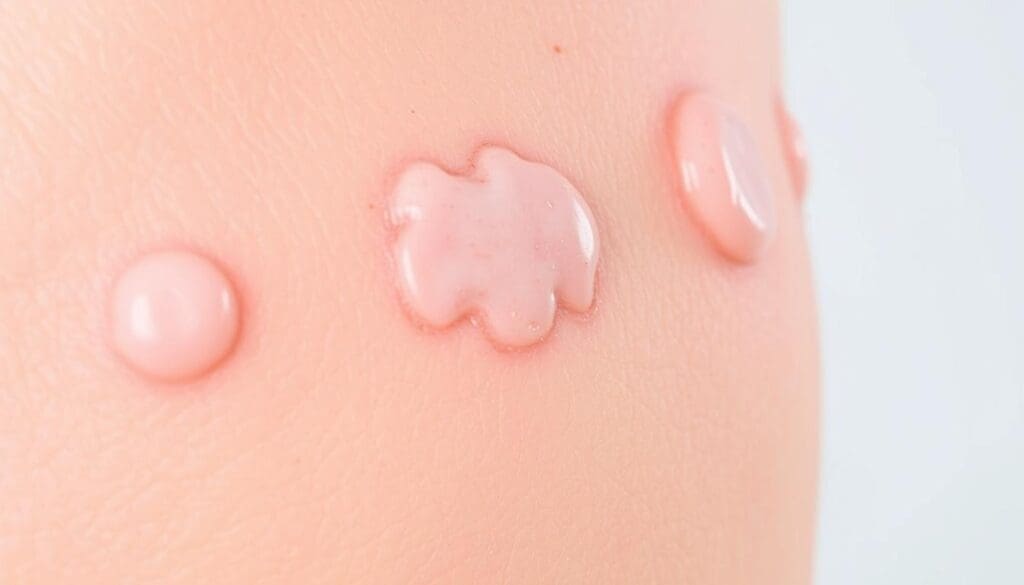
Basal cell carcinoma (BCC) is the most common skin cancer. It affects about one in five Americans. It makes up nearly 80% of all nonmelanoma skin cancers. It starts in the basal cells, the lowest layer of the skin.
It’s important to catch BCC early. At stage one, it can be treated with little harm. Knowing the early signs of BCC is key. Look for sores that won’t heal, pearly bumps, or scaly patches on sun-exposed skin.
Key Takeaways
- Early stage BCC typically presents as a pearly, shiny, or translucent bump.
- BCC is the most common type of skin cancer, affecting one in five Americans.
- It accounts for nearly 80% of all nonmelanoma skin cancers.
- Early detection is key for effective treatment.
- Spotting early signs like non-healing sores or scaly patches is vital.
Understanding Basal Cell Carcinoma
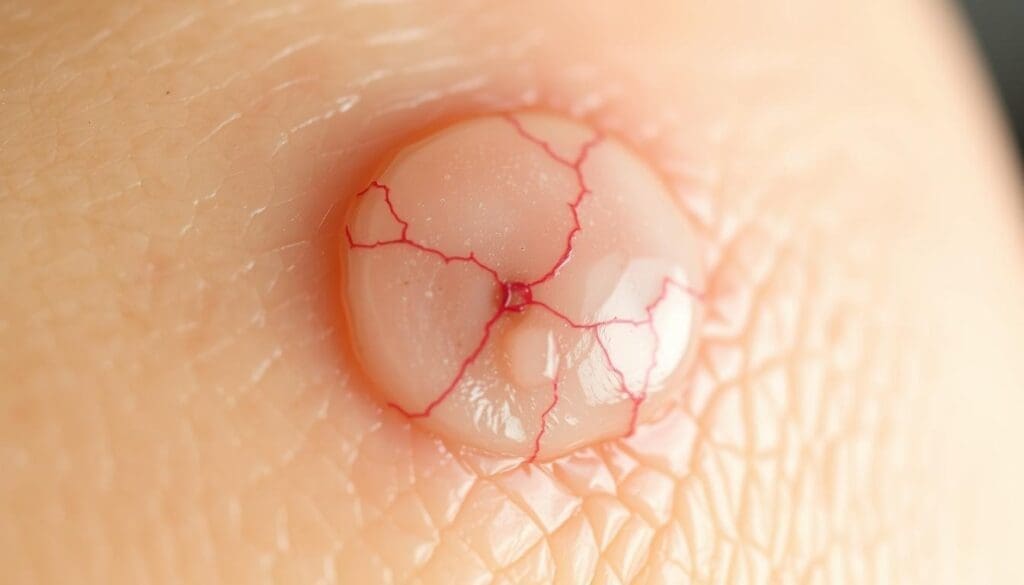
Basal cell carcinoma is the most common skin cancer. It’s important to understand it well to get medical help early. This cancer starts in the basal cell layer of the skin.
What is Basal Cell Carcinoma?
Basal cell carcinoma happens when basal cells grow out of control. These cells are in the lower layer of the skin. UV light can damage these cells’ DNA, causing cancer.
UV exposure is a big risk for BCC. People who spend a lot of time outside, mainly during the day, are more at risk.
Prevalence and Statistics
Basal cell carcinoma is the most common skin cancer. It affects over 4 million people in the United States every year. This shows how important it is to know about it and take steps to prevent it.
Recent stats say cumulative UV exposure is a top cause of BCC. This means we need to protect our skin from the sun and get regular skin checks.
Why Early Detection Matters
Finding BCC early is key to better treatment. Spotting its signs and symptoms early can stop it from getting worse. This makes it easier to treat.
Getting medical help quickly can also avoid disfigurement. It lowers the chance of serious problems. So, finding BCC early is very important for managing it well.
Common Locations for Basal Cell Carcinoma

Basal cell carcinoma (BCC) often shows up on sun-exposed parts of the body. It’s more common in areas that get a lot of sunlight. Knowing these spots is key to catching it early.
Face and Scalp
The face and scalp are top spots for BCC because they get a lot of UV rays. Spotting it early here can really help with treatment. Keep an eye out for any new growths or changes.
Nose and Ears
The nose and ears are also at risk because they’re exposed to the sun. Watch these areas for signs like pearly bumps or sores that won’t heal.
Neck and Shoulders
The neck and shoulders are also common places for BCC, mainly for people who spend a lot of time outside. Being careful about any changes here is important for catching it early.
Other Sun-Exposed Areas
Other sun-exposed spots like the arms and hands can also get BCC. It’s important to protect these areas from the sun and check them often.
| Body Region | Commonality of BCC | Prevention Tips |
| Face and Scalp | High | Regularly check for unusual growths |
| Nose and Ears | High | Monitor for pearly bumps or sores |
| Neck and Shoulders | Moderate to High | Be vigilant about changes |
| Other Sun-Exposed Areas | Moderate | Protect from sun, monitor regularly |
Knowing where BCC often appears is important for catching it early and treating it well. By being aware of these areas and taking steps to prevent it, you can lower your risk.
Risk Factors for Developing BCC
Several factors can increase your chance of getting Basal Cell Carcinoma. These include how much sun you get and your skin type. Knowing these risks helps prevent and catch BCC early.
Sun Exposure and UV Damage
Too much sun and UV damage raise your BCC risk. UV rays from the sun or tanning beds harm your skin. To protect yourself, use sunscreen with a high SPF, wear protective clothes, and stay in the shade when it’s sunny.
Skin Type and Genetics
If you have fair skin, light eyes, and red or blonde hair, you’re more at risk. People who got sunburned as kids are also more likely to get BCC. Your genes play a big part, so knowing your skin type and history helps prevent it.
Age and Gender Considerations
BCC often hits older adults, mostly those over 50. Men tend to get it more than women, likely because they get more sun.
Previous Skin Cancer History
If you’ve had skin cancer before, like BCC, you’re more likely to get it again. It’s key to see a dermatologist regularly if you’ve had skin cancer.
| Risk Factor | Description |
| Sun Exposure | Prolonged exposure to UV radiation from the sun or tanning beds |
| Skin Type | Fair skin, light eyes, and red or blonde hair increase susceptibility |
| Age | Majority of cases diagnosed in people over 50 |
| Gender | Men are more likely to develop BCC than women |
| Previous Skin Cancer | History of skin cancer increases the risk of developing BCC again |
Early Warning Signs of Basal Cell Carcinoma
It’s important to know the early signs of basal cell carcinoma (BCC) for quick treatment. We’ll talk about the signs that show BCC might be present. This helps people get medical help fast.
Pearly or Translucent Bumps
Pearly or translucent bumps are a common sign of BCC. They often show up on areas that get a lot of sun. These bumps can be shiny and might bleed or crust over.
These bumps can look like harmless skin issues. But, it’s key to get a doctor’s check-up to be sure.
Flat, Scaly Patches
BCC can also look like flat, scaly patches. These patches might look like eczema or dermatitis. They can be red or pink and won’t heal right away.
Watching for any skin changes is important. If these patches don’t go away or get bigger, see a doctor.
Non-Healing Sores
Non-healing sores can be a sign of BCC. These sores might bleed, ooze, or crust over. They could mean there’s skin cancer underneath.
If a sore doesn’t heal in a few weeks, get it checked by a dermatologist.
BCC Appearance in Different Skin Tones
BCC looks different on different skin tones. On lighter skin, it’s often a shiny bump. On darker skin, it might look brown or glossy black.
Basal Cell Carcinoma Pics: Nodular BCC Presentation
Basal cell carcinoma shows up in different ways, with nodular BCC being very common. It looks like a bump or nodule, often on sun-exposed areas like the face and scalp.
Example 1: Early Nodular BCC on the Face
Early nodular BCC on the face looks like a small, shiny bump. It might seem harmless but can grow if not treated. Early detection is key to stop it from getting bigger and to avoid disfigurement.
Example 2: Nodular BCC on the Scalp
Nodular BCC on the scalp is hard to spot because of the hair. It feels firm and doesn’t hurt. It’s important to check your scalp often for early signs.
| Characteristics | Nodular BCC on Face | Nodular BCC on Scalp |
| Appearance | Shiny bump | Firm, painless nodule |
| Commonality | Common | Less common than on face |
| Difficulty in Detection | Moderate | High due to hair coverage |
Example 3: Pearly Nodular BCC on Light Skin
On lighter skin, nodular BCC looks like a pearly or clear nodule. This makes it easier to spot, but seeing a dermatologist is always best.
Example 4: Nodular BCC on Darker Skin
Nodular BCC can also happen on darker skin, but it’s harder to find. It might look like a pigmented bump or just a weird spot on the skin.
In summary, nodular BCC looks different based on skin color and where it is. Regular skin checks and knowing the signs are key to catching it early and treating it right.
Superficial Basal Cell Carcinoma Images
Superficial basal cell carcinoma (BCC) is a type of skin cancer. It looks like a scaly patch or plaque. It often shows up on the trunk and limbs, making it hard to tell apart from other skin issues like eczema or psoriasis.
Knowing how superficial BCC looks is key for the right diagnosis and treatment.
Example 5: Superficial BCC on the Chest
On the chest, superficial BCC looks like a flat, reddish patch that might be a bit scaly. Early detection is very important to stop it from getting worse. Here’s what a typical case of superficial BCC on the chest looks like.
Example 6: Reddish Patch Presentation
The reddish patch look of superficial BCC can be confused with other skin problems. Careful examination is needed to tell it apart from harmless conditions. We’ll look at the key signs that help spot superficial BCC.
Example 7: Superficial BCC on Darker Skin
Superficial BCC can happen on darker skin, though it’s not as common. Its look can vary, so it’s important to know the different ways it can show up. Recognizing superficial BCC in all skin tones is essential for good dermatology care for everyone.
Morpheaform and Infiltrative BCC Examples
Spotting morpheaform and infiltrative basal cell carcinoma (BCC) needs a sharp eye. They look like scars or other harmless skin issues. This makes them hard to spot, so it’s key for doctors and patients to know what to look for.
Example 8: Early Morpheaform BCC
Morpheaform BCC looks like a scar-like plaque that’s firm. It’s often mistaken for a scar or a harmless skin spot. This can lead to a late start on treatment. It’s important to watch for any new or changing skin spots closely.
- Firm to the touch
- Poorly defined borders
- May resemble a scar
- Can be mistaken for other benign conditions
Example 9: Scar-Like Appearance
Infiltrative BCC is another aggressive type that’s hard to spot because it looks like a scar. It grows deep into the skin, making it tough to treat if not caught early. Its scar-like look makes it hard to tell apart from other skin issues, showing the need for a detailed skin check.
Key traits of infiltrative BCC include:
- Deep growth into the skin
- Aggressive behavior
- Potential for delayed diagnosis due to its resemblance to scars or benign lesions
Knowing how to spot morpheaform and infiltrative BCC early is key for good treatment. Spotting these aggressive types early helps patients get the right care. This can lead to better results and lower risks of problems.
Pigmented Basal Cell Carcinoma Identification
Pigmented basal cell carcinoma looks darker because of melanin. It’s more common in people with darker skin. Knowing how to spot it is key to not confuse it with other conditions.
Example 10: Pigmented BCC on Light Skin
On lighter skin, pigmented BCC looks like a darkened patch or lesion. It has irregular edges. It’s important to tell it apart from melanoma, which looks similar.
Example 11: Brown/Black BCC on Darker Skin
In darker skin, pigmented BCC shows up as a brown or black lesion. The melanin makes it hard to tell from harmless spots. A close look by a dermatologist is needed.
Example 12: Mixed Pigmentation Patterns
Some pigmented BCCs have mixed colors, making them tricky to diagnose. A detailed look and possibly a biopsy are needed for a correct diagnosis.
| Characteristics | Pigmented BCC on Light Skin | Pigmented BCC on Dark Skin |
| Appearance | Darkened patch or lesion | Brown or black lesion |
| Border | Irregular | Variable |
| Diagnostic Challenge | Differentiation from melanoma | Distinguishing from benign lesions |
Spotting pigmented basal cell carcinoma right needs knowing its many looks. Healthcare pros can then treat it properly.
Diagnosing Basal Cell Carcinoma
Dermatologists use a mix of clinical checks and lab tests to find basal cell carcinoma. This method helps them spot the problem and plan the right treatment.
When to See a Dermatologist
Notice any odd skin changes? Like a new growth or a sore that won’t heal? You should talk to a dermatologist. They can check your skin and see if you need more tests.
Here are signs you should visit a dermatologist:
- A sore that won’t heal
- A mole that’s changing
- A shiny, pearly, or clear bump
- A flat, scaly, or crusty spot
Biopsy Procedures
A biopsy is the best way to confirm basal cell carcinoma. A dermatologist takes a small skin sample. Then, they look at it under a microscope for cancer cells.
| Biopsy Type | Description | Use in BCC Diagnosis |
| Shave Biopsy | Removes the top layers of skin | Often used for superficial lesions |
| Punch Biopsy | Removes a deeper, circular sample of skin | Used for lesions that are deeper or suspected to be invasive |
| Excisional Biopsy | Removes the entire lesion with a margin of normal skin | Used when the diagnosis is uncertain or the lesion is large |
Differentiating BCC from Other Skin Conditions
Dermatologists have to tell basal cell carcinoma apart from other skin issues. This is important for picking the right treatment.
To do this, they use:
- Clinical examination
- Biopsy results
- Sometimes, more tests like dermoscopy
By using these tools, dermatologists can accurately find basal cell carcinoma. Then, they can plan a good treatment.
Treatment Options for Early Stage BCC
Early-stage BCC can be treated effectively with several options. These treatments help manage the condition with minimal intervention. We will look at both surgical and non-surgical methods to help patients understand their choices.
Surgical Excision
Surgical excision is a common and effective treatment for early-stage BCC. It involves removing the tumor and some healthy tissue around it. This ensures all cancer cells are removed. The wound is then closed with stitches.
This method is best for tumors in areas where saving tissue is not a big concern.
Mohs Micrographic Surgery
Mohs micrographic surgery is a specialized technique for BCC, great for sensitive areas like the face. The surgeon removes the tumor layer by layer, checking each under a microscope. This way, as much healthy tissue as possible is saved.
Non-Surgical Treatments
Not all early-stage BCCs need surgery. Non-surgical treatments are effective for some patients. These include:
- Topical creams: Certain creams, such as imiquimod or 5-fluorouracil, can be applied directly to the skin to treat superficial BCCs.
- Photodynamic therapy: This involves applying a light-sensitive medication to the affected area, followed by exposure to a specific wavelength of light that destroys cancer cells.
- Cryotherapy: Freezing the tumor with liquid nitrogen can be an option for very superficial BCCs.
Recovery and Follow-Up Care
After treatment, follow-up care is key. Patients must watch the treated area for any signs of recurrence. Protecting the skin from further sun damage is also important. Regular visits to a dermatologist are essential to catch any recurrence early.
Understanding the treatment options for early-stage BCC empowers patients. By choosing the right treatment, patients can achieve the best outcomes and reduce the risk of recurrence.
Conclusion: Prevention and Regular Skin Checks
Prevention and early detection are key in managing Basal Cell Carcinoma (BCC). By taking preventive steps and watching for skin changes, we can lower our risk of BCC.
Regular self-exams and yearly visits to a dermatologist are important. They help catch BCC early. Protecting your skin from the sun and avoiding tanning beds are also key steps.
Combining sun protection with avoiding too much UV exposure is vital. Regular skin checks are also critical for catching BCC early.
By focusing on skin health and being proactive, we can lower BCC rates. This ensures we get treatment quickly if needed.
FAQ
What is basal cell carcinoma (BCC)?
Basal cell carcinoma is a common skin cancer. It starts in the basal cell layer of the skin. It’s often caused by UV radiation.
What are the early signs of basal cell carcinoma?
Early signs include pearly or translucent bumps and flat, scaly patches. Non-healing sores are also a sign. The look can change based on your skin tone.
Where does basal cell carcinoma typically occur?
It usually happens on sun-exposed areas. This includes the face, scalp, nose, ears, neck, and shoulders.
What are the risk factors for developing basal cell carcinoma?
Risk factors include sun exposure and UV damage. Fair skin, age, gender, and a history of skin cancer also increase risk.
How is basal cell carcinoma diagnosed?
A dermatologist will check you. They might do a biopsy to confirm BCC and rule out other skin issues.
What are the treatment options for early stage basal cell carcinoma?
Early stage BCC can be treated with surgery or Mohs surgery. Non-surgical options include topical creams or photodynamic therapy.
Can basal cell carcinoma be prevented?
Yes, by protecting your skin from UV radiation. Use sunscreen, wear clothing, and seek shade. Regular skin checks also help.
What is the prognosis for basal cell carcinoma if detected early?
Early detection leads to a high cure rate. This means minimal treatment is needed.
How can I identify pigmented basal cell carcinoma?
It looks like brown or black lesions. It can be hard to tell from melanoma. A dermatologist’s check is needed.
What is the difference between nodular and superficial basal cell carcinoma?
Nodular BCC looks like a bump or nodule. Superficial BCC is a flat, scaly patch. Both looks can change based on skin tone.
Are there different types of basal cell carcinoma?
Yes, there are several types. These include nodular, superficial, morpheaform, infiltrative, and pigmented BCC. Each has its own look.
How often should I have a skin check?
You should get regular skin checks. This is more important if you’ve had skin cancer or get a lot of sun. A healthcare professional can tell you how often.
References
National Center for Biotechnology Information. (2025). 12 Early Stage Basal Cell Carcinoma Pictures Recognize. Retrieved from https://www.ncbi.nlm.nih.gov/pmc/articles/PMC7571110