Last Updated on November 27, 2025 by Bilal Hasdemir
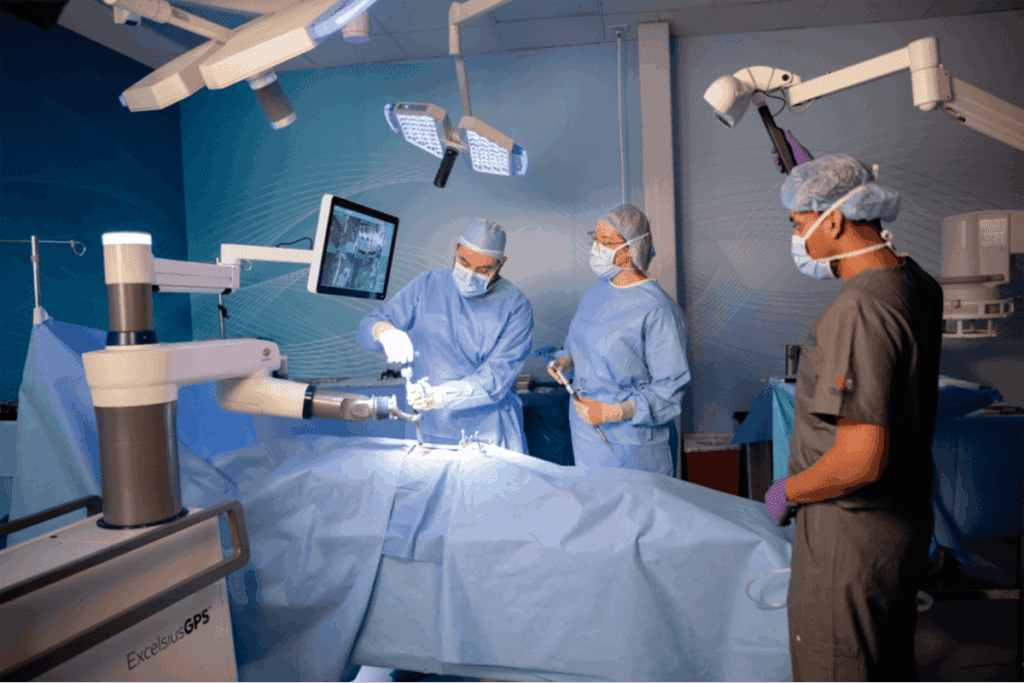
Robotic-assisted surgery has changed the way we do surgery. Over 6 million surgical procedures have been performed using robotic systems worldwide. This shows it’s widely accepted and successful in medicine. Discover the top Benefits of Robotic Surgery, including 5 amazing facts about faster recovery and better positive patient outcomes.
This technology is key to better patient care. It lets surgeons do complex tasks with enhanced precision, flexibility, and control. This means smaller cuts, less blood loss, and quicker healing.
Looking into its benefits, we see robotic surgery is a game-changer. It’s good for patients, surgeons, and the healthcare system.
Key Takeaways
- Robotic surgery offers enhanced precision and control for complex procedures.
- Smaller incisions result in reduced blood loss and faster healing.
- Improved flexibility for surgeons during operations.
- Advantages for patients include less trauma and quicker recovery.
- Robotic surgery benefits the healthcare system through improved outcomes.
The Evolution of Modern Surgical Technology
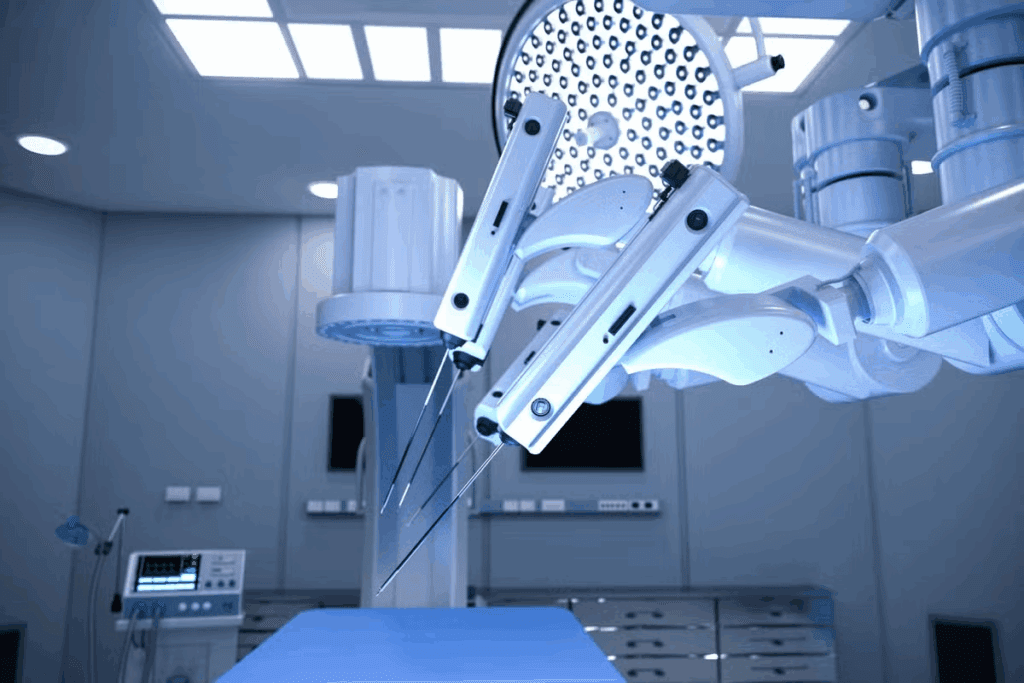
Surgical technology has changed a lot over the years. It has changed how surgeries are done and made them better for patients. We’ve moved from big cuts to small ones and now to robotic surgery.
Old surgeries had big cuts, which meant longer healing times and more risks. But, new tech has brought minimally invasive surgery. This uses small cuts, heals faster, and is safer.
From Traditional to Minimally Invasive Approaches
Switching to small cuts was a big step forward. Laparoscopy lets surgeons do big jobs through tiny holes. This makes patients heal quicker, with less scarring and fewer infections.
- Smaller incisions result in less tissue damage
- Less risk of infection and complications
- Patients recover faster and stay in the hospital less
But, small cuts had their limits. Surgeons needed better tools and clearer views. That’s when robotic surgery came along.
The Emergence of Robotic-Assisted Surgery
Robotic surgery is the newest big thing. It uses NVIDIA’s professional GPUs for better control and safety. This makes surgeries more precise.
Robotic surgery lets surgeons do more complex jobs. It gives them better control and clearer views. This means better results for patients.
Robotic surgery is getting even better. It will keep changing how we do surgeries. This will help both doctors and patients more and more.
How Advanced Robotic Surgical Systems Work
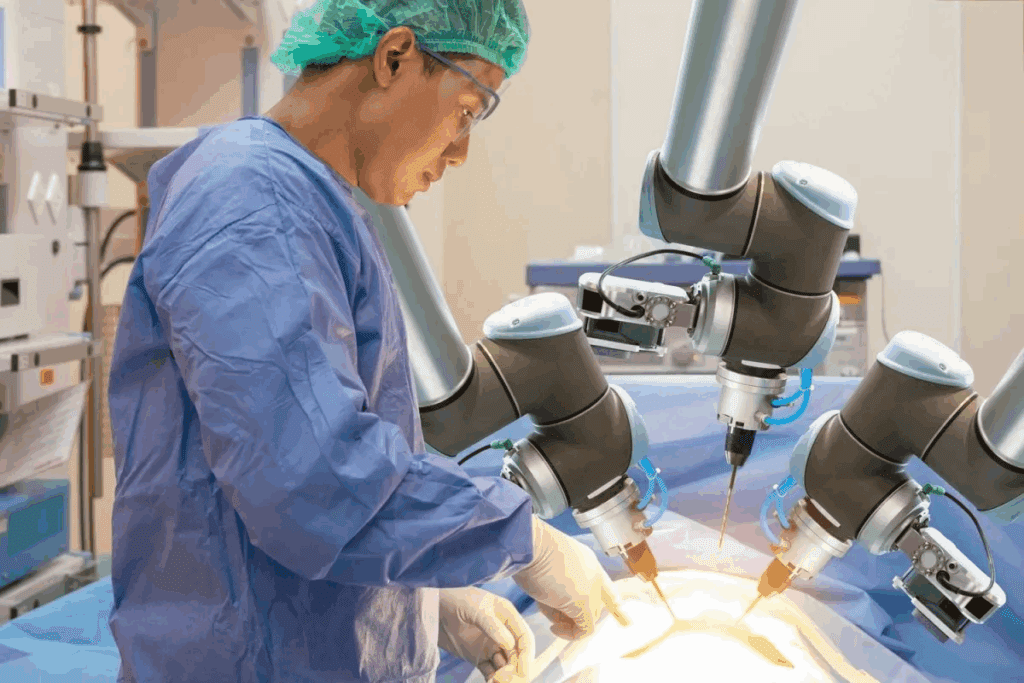
Robotic surgical systems are leading the way in surgery today. They offer unmatched accuracy and control. These systems have changed surgery, making complex procedures more precise and less invasive.
Components of Robotic Surgical Platforms
Advanced robotic systems have several key parts that work together. These parts include:
- A high-definition 3D visualization system for a clear view of the surgical site.
- Robotic arms with surgical tools for precise movements.
- A control system that turns the surgeon’s actions into exact movements.
Companies like UFP Technologies help make these systems safer. They design protective drapes for robotic surgery.
| Component | Function | Benefit |
| 3D Visualization System | Provides high-definition view of the surgical site | Enhanced clarity for the surgeon |
| Robotic Arms | Manipulates surgical instruments with precision | Increased accuracy in surgical procedures |
| Control System | Translates surgeon’s movements into precise actions | Improved control and dexterity |
Surgeon Control and Interface Technology
The control and interface tech in these systems make surgery easier for surgeons. The surgeon control console has high-resolution displays and controls. This lets surgeons move the robotic arms with great precision.
The interface tech also has features like:
- Motion scaling for tiny movements.
- Tremor filtration for steady hands during delicate tasks.
These technologies help surgeons do complex surgeries with enhanced precision and control. This leads to better results for patients.
Benefits of Robotic Surgery: A Complete Overview
Robotic surgery has changed the medical world, bringing many benefits. It improves patient care and makes surgeries better. Understanding these advantages is key as we keep improving medical tech.
Robotic surgery helps patients in many ways. It means smaller cuts, less blood loss, and quicker healing. These points make surgeries more comfortable and less invasive.
Primary Advantages for Patients
The main benefits for patients include:
- Reduced pain from smaller cuts and less damage to tissue
- Less scarring thanks to precise surgery
- Quicker recovery times, so patients can get back to their lives faster
These benefits greatly improve patient outcomes and quality of life after surgery.
Advantages for Surgical Teams
Robotic surgery also benefits surgical teams. It offers better precision, clearer views, and more control. This means surgeons can do complex surgeries with more accuracy and confidence.
The advanced tech of robotic systems makes surgery easier for surgeons. It reduces fatigue and boosts performance.
With robotic surgery, teams can give top-notch care and get the best results for patients.
Enhanced Precision and Control in Robotic Procedures
Robotic surgery brings a new level of precision and control to the operating room. We use cutting-edge tech to help surgeons perform with unmatched accuracy.
The precision of robotic surgery far surpasses traditional methods. Thanks to tremor filtration and motion scaling, surgeons can do delicate work with better results. This means fewer complications and better care for patients.
Tremor Filtration Technology
Tremor filtration is a key part of robotic surgery. It removes the natural tremors from a surgeon’s hands. This makes movements smoother and more precise, which is vital for detailed surgeries.
- Eliminates hand tremors for more precise movements
- Enhances control during complex surgical procedures
- Reduces the risk of complications due to human error
Motion Scaling for Microscopic Movements
Motion scaling is another important feature. It lets surgeons make big movements that are scaled down to fit inside the body. This is essential for surgeries that need extreme precision.
- Enables precise movements that are scaled down from larger hand motions
- Facilitates detailed dissections and suturing
- Improves overall surgical accuracy and control
By combining tremor filtration and motion scaling, robotic surgery reaches new heights of precision. As we keep improving robotic tech, we’ll see even better results in surgery.
Superior Visualization in Robotic-Assisted Surgery
Robotic surgery offers a big advantage: enhanced visualization during operations. This clear view is key for surgeons to work with complex body parts accurately.
3D High-Definition Imaging Systems
Robotic surgery uses 3D high-definition imaging. This gives surgeons a clear view of what they’re doing. It’s important for spotting small details and making precise cuts.
The 3D visualization helps surgeons understand how different body parts fit together. This makes their work more accurate.
Magnification Capabilities for Complex Procedures
Robotic surgery also has magnification capabilities. Surgeons can zoom in on areas they need to focus on. This is really helpful for tricky operations.
With magnification and high-definition images, surgeons can be very precise. This is great for surgeries that need a lot of care, like brain or reconstructive surgery.
Minimally Invasive Robotic Surgery Advantages
Minimally invasive robotic surgery is a big step forward in surgery. It offers many benefits for both patients and surgical teams. This method combines the accuracy of robots with the benefits of small incisions, leading to better results and quicker recovery.
Smaller Incisions and Reduced Tissue Trauma
One key benefit is the use of smaller incisions. This means less tissue damage because the tools fit through tiny openings. The advantages include:
- Less post-operative pain
- Lower risk of infection
- Less scarring
The robots help surgeons work in tight spots with great care. This is very helpful in delicate surgeries where old methods might be riskier.
Access to Hard-to-Reach Anatomical Areas
Robotic surgery also lets surgeons reach areas that were hard to get to before. The flexibility and dexterity of the tools make it easier to work in tight spaces. This is great for surgeries in tricky or small areas.
The benefits of reaching these areas include:
- More precise and complex procedures
- Better view of the surgery site
- Lower risk of complications
By using robotic technology, surgeons can offer safer and more effective treatments. This leads to better health outcomes for patients.
Reduced Pain with Robotic Surgery
Robotic surgery is precise and minimally invasive. This leads to less pain after surgery. Patients often report less pain, making their recovery better.
Pain Reduction Mechanisms
Several factors help reduce pain with robotic surgery. Smaller incisions mean less damage to tissues. This is a big reason for less pain after surgery.
The enhanced precision of robots also helps. They allow for more accurate cuts and less blood loss. This means patients feel less pain and discomfort.
- Minimally invasive techniques reduce tissue damage
- Precise movements minimize unnecessary trauma
- Reduced blood loss contributes to less post-operative pain
Patient-Reported Pain Outcomes
Studies show patients with robotic surgery feel less pain. A
“study published in a leading medical journal found that patients who underwent robotic surgery experienced a significant reduction in pain levels during their recovery”
. This shows how robotic surgery improves recovery.
Patient feedback is key to understanding robotic surgery’s benefits. Advanced robotic systems help surgeons make patients more comfortable. This improves recovery experiences.
Faster Recovery with Robotic Surgery
Robotic surgery offers a big advantage: it helps patients recover faster. These surgeries are done with small incisions, causing less damage to the body. This leads to quicker healing and fewer complications.
Patients who have robotic surgery often leave the hospital sooner. They also get back to their daily lives faster. The robotic system’s precision lets surgeons do complex tasks with less harm to the body.
Reduced Hospital Stay Duration
Robotic surgery is less invasive, which means fewer complications. This results in shorter hospital stays. Studies show that robotic surgery patients stay in the hospital less than those with open surgery.
- Less invasive procedures result in fewer complications.
- Robotic surgery often leads to less post-operative pain.
- Patients can be discharged sooner, reducing healthcare costs.
Quicker Return to Normal Activities
Robotic surgery also means patients can get back to their lives faster. The precision of these surgeries causes less damage. This allows patients to heal quicker and get back to their routines sooner.
- Robotic surgery enables precise dissection and suturing.
- Minimally invasive techniques reduce tissue trauma.
- Patients experience less post-operative pain and discomfort.
Using robotic surgical systems, we offer patients a safer and more efficient surgery. This supports faster recovery and better outcomes.
Less Scarring from Robotic Surgery
Robotic surgery has made a big change in how we heal. It uses smaller cuts than old-school surgery. This means less damage to the body and less scarring.
Cosmetic Outcomes Comparison
Robotic surgery leaves smaller, less visible scars. This is a big plus for surgeries in places you can see. It’s also great for areas that are very personal.
| Surgical Method | Average Scar Length | Patient Satisfaction with Cosmetic Outcome |
| Robotic Surgery | Less than 1 cm | High |
| Traditional Open Surgery | 10-30 cm | Low to Moderate |
| Laparoscopic Surgery | Several small incisions, total length around 5 cm | Moderate to High |
Psychological Benefits of Minimal Scarring
Scarring affects our minds as much as our bodies. Less visible scarring makes patients happier and more confident. They feel better about themselves, which helps them heal faster.
Also, the good feelings from less scarring last long after you’re healed. People who get robotic surgery often feel better about themselves. This can help their mental health for a long time.
Robotic Surgery Risk Reduction
Robotic surgery gives surgeons better precision and control. This technology has shown to improve patient safety and outcomes after surgery.
Lower Infection Rates
Robotic surgery is linked to lower infection rates. Its minimally invasive approach means smaller cuts, lowering infection risks. The precision of robotic systems also reduces tissue damage, lowering infection chances even more.
Research shows robotic surgery patients have fewer infections than those with open or laparoscopic surgery.
Decreased Blood Loss and Transfusion Requirements
Robotic surgery leads to decreased blood loss during operations. The advanced vision and precision of robotic systems help surgeons work more accurately. This reduces the chance of major bleeding.
As a result, patients need fewer blood transfusions. This lowers the risk of complications from transfusions and speeds up recovery.
We understand that cutting down on surgical risks is key to better patient outcomes. Robotic surgery’s advanced features help us achieve this goal, improving care quality.
Robotic Surgery for Cancer Treatment
Robotic surgery in oncology has changed the game. It brings more precise and less invasive treatments. This method is used for many cancers, allowing for the removal of tumors with little harm to nearby tissues.
In prostate cancer treatment, robotic surgery stands out. It’s a top choice for many doctors because it’s so precise and patients recover faster. The robotic system helps surgeons carefully work around the prostate, saving nerves and lowering the chance of problems.
Robotic Surgery for Prostate Cancer
Robotic surgery for prostate cancer uses advanced robotic systems to remove the prostate gland. It cuts down on blood loss, reduces pain after surgery, and shortens hospital stays. The robotic systems’ better view and precision help surgeons do complex tasks more accurately.
- Reduced risk of complications
- Less postoperative pain
- Shorter hospital stay
- Quicker return to normal activities
A leading oncologist says, “Robotic surgery has changed how we treat prostate cancer. It gives patients a precise and less invasive option with faster recovery times.”
“The precision and flexibility of robotic systems have significantly improved our ability to treat prostate cancer effectively while minimizing side effects.”
Applications in Other Oncological Procedures
Robotic surgery is also used for other cancers like kidney, bladder, and some gynecological cancers. The robotic systems’ versatility makes complex tumor removals easier and more precise.
The future of robotic surgery in oncology is bright. With new tech coming, we’ll see even more ways to treat cancer. This will help cancer patients even more.
Robotic Surgery for Heart Surgery
Robotic surgery is changing heart surgery for the better. It offers new ways to do surgery without the big cuts of old. This means patients can heal faster and with less scarring.
The precision and dexterity offered by robotic systems are transforming the landscape of cardiac surgery, a renowned cardiothoracic surgeon. “We’re able to perform complex procedures with greater accuracy and less trauma to the patient.”
Mitral Valve Repair Advancements
Robotic surgery is making a big difference in mitral valve repair. Surgeons can now do these delicate repairs through tiny cuts. This cuts down on risks and speeds up healing.
The benefits of robotic mitral valve repair include:
- Smaller incisions, resulting in less tissue trauma
- Reduced risk of infection and bleeding
- Shorter hospital stays and quicker recovery times
Coronary Artery Bypass Grafting Innovations
Robotic surgery is also changing coronary artery bypass grafting (CABG). This surgery helps get blood flowing again by bypassing blocked arteries. The robotic system helps surgeons do this with more precision, which could lead to better results for patients.
The benefits of robotic CABG include:
- Enhanced precision in grafting procedures
- Reduced trauma and stress on the patient’s body
- Potential for improved long-term graft patency rates
As robotic technology keeps getting better, we’ll see even more improvements in heart surgery. This will lead to better care and results for patients.
Robotic Surgery in Orthopedic Procedures
Robotic surgery is changing orthopedic procedures for the better. It brings more precision and better results for those getting knee and hip replacements. This new technology makes these surgeries more accurate and effective.
Precision in Knee Replacement
Robotic-assisted surgery for knee replacements allows for precise alignment and balancing of the joint. This is key for the implant’s long-term success. Advanced imaging and robotic tech help surgeons fit and align implants more accurately. This can help reduce wear and tear on the implant.
The use of robotic systems in knee replacement surgery is a big step forward, a top orthopedic surgeon. “Robotic tech offers unmatched precision. It lets us create custom surgical plans that fit each patient’s unique anatomy.”
Advancements in Hip Replacement
In hip replacement surgery, robotic systems help surgeons place implants with greater precision. This can lead to better function and fewer complications. Robotic tech gives surgeons a clearer view of the patient’s anatomy. This helps them tailor the surgery to each patient.
The benefits of robotic surgery in orthopedic procedures include:
- Enhanced precision and accuracy
- Improved patient outcomes
- Reduced risk of complications
- Personalized surgical plans
As robotic tech keeps improving, we’ll see more advancements in orthopedic surgery. This will lead to even better results for patients going through these complex procedures.
the Future of Robotic Surgical Technology
Robotic surgery is a big step forward in medical tech. It offers many benefits over old surgical methods. These benefits are not just compared to open surgery but also beyond traditional laparoscopy.
Advantages Over Open Surgical Techniques
Robotic surgery is great because it causes less harm to patients. It uses small cuts, unlike open surgery’s big incisions. This means less damage to tissues and faster healing.
Studies show robotic surgery cuts down on blood loss and transfusions. This is a big plus because it lowers the chance of infections and other blood transfusion risks.
| Surgical Method | Blood Loss | Transfusion Requirements |
| Robotic Surgery | Significantly Reduced | Lower |
| Open Surgery | Higher | Higher |
Benefits Beyond Conventional Laparoscopy
Robotic surgery also has perks beyond laparoscopy. It gives surgeons better views and control. This means they can do more complex surgeries with better results.
Robotic tools also let surgeons do delicate tasks that are hard or impossible with old laparoscopic tools.
Robotic surgery has revolutionized the way we perform complex surgical procedures, providing unmatched precision and control.The future of robotic surgery is bright. With new tech coming, we’ll see even better results for patients. This technology is always getting better, leading to more innovative surgeries.
Robotic Surgery Cost-Effectiveness
Robotic surgery has a big impact on healthcare costs. It offers both direct and indirect savings. We need to look at the cost of starting up and the long-term savings.
Initial Investment vs. Long-term Healthcare Savings
The start-up costs for robotic surgery are high. This includes the price of the system, training for staff, and upkeep. But, these costs can be balanced by long-term savings.
Research shows robotic surgery can cut down hospital stays and complications. It also leads to faster recovery times. For example, a study found robotic surgery cut hospital stays by 2.5 days, saving a lot of money.
| Cost Component | Robotic Surgery | Traditional Surgery |
| Hospital Stay | $8,000 | $10,000 |
| Surgical Supplies | $2,500 | $3,000 |
| Post-operative Care | $1,500 | $2,000 |
| Total Cost | $12,000 | $15,000 |
Economic Benefits for Patients and Healthcare Systems
Robotic surgery benefits both patients and healthcare systems. Patients get back to work faster, saving on lost wages. Healthcare systems save money on shorter stays and fewer complications.
Economic Benefits Summary:
- Reduced hospital stay durations
- Fewer complications and readmissions
- Quicker return to productivity for patients
- Cost savings for healthcare systems
In conclusion, robotic surgery may seem expensive at first. But, the long-term savings and benefits for patients and healthcare systems make it worth it. As technology improves, we’ll see even more savings in the future.
Conclusion: The Future of Robotic Surgical Technology
Robotic surgical technology is set to change the medical world even more. New advancements will make it safer, more precise, and more effective. We expect these changes to lead to better patient results and more procedures done with robots.
The future looks bright for robotic surgery, with big steps in artificial intelligence and machine learning. These will make robotic systems smarter and better at complex tasks. We’re excited to see how this technology will improve healthcare for people everywhere.
We’re sure robotic surgery will become a key part of healthcare’s future. Our goal is to keep making it better for patients. We’re all about using robotic technology to improve care and results.
FAQ
What are the primary benefits of robotic surgery for patients?
Robotic surgery brings many benefits to patients. It reduces pain and scarring, and speeds up recovery. This is because it uses small incisions, causing less damage to tissues.
How does robotic surgery enhance precision and control during procedures?
Robotic surgery improves precision and control with advanced tech. Features like tremor filtration and motion scaling help surgeons make precise moves. This reduces the chance of complications and improves results.
What are the advantages of robotic-assisted surgery in terms of visualization?
Robotic-assisted surgery offers better visualization. It uses 3D high-definition imaging and magnification. These tools help surgeons see the surgical site clearly, making dissection and suturing more precise.
Can robotic surgery reduce the risk of surgical complications?
Yes, robotic surgery can lower the risk of complications. It has lower infection rates and less blood loss. The precision and control of robotic systems help surgeons avoid disrupting surrounding tissues.
How does robotic surgery compare to traditional open surgery in terms of recovery time?
Robotic surgery leads to faster recovery times than traditional open surgery. Its minimally invasive nature causes less tissue trauma. This results in shorter hospital stays and quicker returns to normal activities.
Is robotic surgery cost-effective in the long run?
While robotic surgery starts with a big investment, it can save money in the long run. It leads to shorter hospital stays, fewer complications, and quicker returns to work. This can benefit both patients and healthcare systems financially.
What are the applications of robotic surgery in cancer treatment?
Robotic surgery is used in various cancer treatments, including prostate cancer. Its precision helps improve outcomes, like better tissue preservation and potentially higher survival rates.
Can robotic surgery be used for heart surgery and orthopedic procedures?
Yes, robotic surgery is used for heart surgery and orthopedic procedures. It offers the chance for less invasive procedures. This reduces trauma compared to traditional open-heart and orthopedic surgeries.
What is the future of robotic surgical technology?
The future of robotic surgical technology looks bright. It will see more advancements in precision, visualization, and safety. These innovations will shape the future of healthcare, leading to more effective and efficient surgeries.
References
- Rivero-Moreno, Y., et al. (2023). Robotic surgery: A comprehensive review. Journal of Surgical Research, 289, 15-27. https://pmc.ncbi.nlm.nih.gov/articles/PMC10445506/