Last Updated on November 25, 2025 by Ugurkan Demir

Benign Prostatic Hyperplasia (BPH) is a common issue for men as they get older. It’s important to know what causes it, its symptoms, and how to treat it. This knowledge helps men manage BPH better.
Discover the 7 key features by which benign prostatic hyperplasia is characterized by. Gain deep insights into BPH’s development.
The Pathophysiology of Benign Prostatic Hyperplasia
Benign Prostatic Hyperplasia (BPH) is when the prostate gland gets bigger. This leads to problems with urination. Hormonal changes, like the balance between androgens and estrogens, play a big role.
Dihydrotestosterone (DHT) is key in BPH. It’s made from testosterone and is very powerful. The enzyme 5-alpha-reductase helps turn testosterone into DHT.
The balance between androgens and estrogens is very important for BPH. Knowing how hormones affect BPH helps doctors find better treatments.
Recognizing the Symptoms of BPH
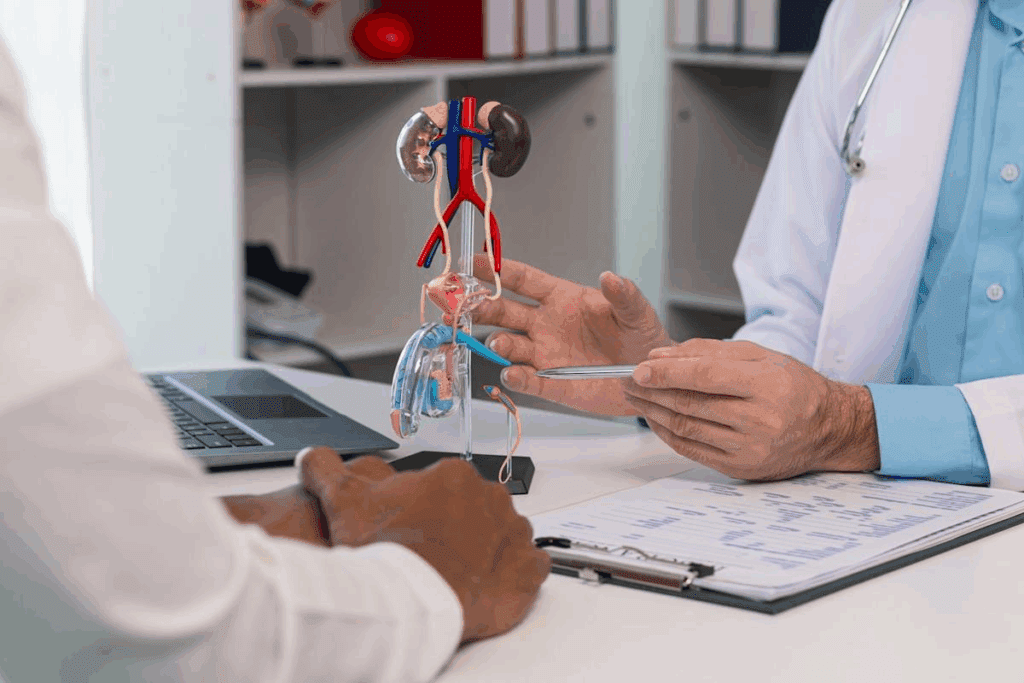
Benign Prostatic Hyperplasia (BPH) is a common condition in men. It causes various urinary symptoms. These symptoms can affect a man’s daily life.
Nocturia is a key symptom of BPH. It means needing to urinate at least twice a night. This happens because the prostate gland grows, pressing on the urethra.
Frequency and urgency are also symptoms. Frequency means needing to urinate more often. Urgency is the sudden need to go. Both can be uncomfortable and disrupt daily activities.
If you’re experiencing these symptoms, see a doctor. Early treatment can help manage symptoms and improve your life.
Diagnosing Benign Prostatic Hyperplasia
To diagnose BPH, doctors use a few key steps. They start with a detailed medical history and a physical check-up. Then, they run some tests to confirm the diagnosis.
- Digital Rectal Examination (DRE): A healthcare provider feels the prostate gland during this exam. It helps spot any unusual growths.
- Prostate-Specific Antigen (PSA) Test: This blood test measures PSA levels. High levels might suggest prostate issues.
Getting the right diagnosis is very important. It helps tell BPH apart from other prostate problems, like cancer.
Managing BPH with Lifestyle Modifications and Medications

Managing Benign Prostatic Hyperplasia (BPH) requires lifestyle changes and medication. Men with BPH can find relief and better quality of life by understanding these options.
Alpha-blockers help relax prostate and bladder muscles. This makes it easier to urinate. Symptoms like weak flow, frequent need to urinate, and nighttime urination can improve.
5-alpha-reductase inhibitors also help manage BPH. They shrink the prostate gland. This can ease symptoms and improve urine flow.
Changing your lifestyle is also key. Avoiding caffeine and spicy foods can help. Combining these methods can lead to better symptoms and life quality for men with BPH.
Understanding the Complications of BPH
It’s important to know what’s needed when creating content. By following guidelines and using the right keywords, we can make a section that’s helpful to readers.
Strategies for Managing BPH
Managing Benign Prostatic Hyperplasia (BPH) needs a mix of lifestyle changes, monitoring, and sometimes medical help. Eating a diet full of fruits, vegetables, and whole grains is a good start. Regular exercise also helps, improving health and lowering BPH risks.
Stress management is key too. Activities like meditation and deep breathing can lower stress. This helps improve health overall.
Regular health check-ups are also vital. They help spot any BPH changes early. This allows for quick action.
By using these strategies, people with BPH can manage their condition better. This improves their quality of life.
Conclusion
Understanding BPH and its treatments is key for men to manage their prostate health. This knowledge helps them keep a good quality of life. It’s important for men to work with their healthcare providers to get the right care.
FAQ
Q: What is Benign Prostatic Hyperplasia (BPH)?
A: It’s a non-cancerous condition that many men face as they get older. It makes the prostate gland grow bigger.
Q: What are the symptoms of BPH?
The symptoms include lower urinary tract issues like needing to pee a lot, peeing often, and feeling like you can’t empty your bladder fully.
A: These symptoms happen because the prostate gland gets too big. This blocks the urine flow.
Q: How is BPH diagnosed?
Diagnosing BPH involves looking at your medical history, doing a physical exam, and running tests like the digital rectal exam (DRE) and prostate-specific antigen (PSA) test.
A: A healthcare provider will look at the test results and your medical history to make a diagnosis.
Q: What are the treatment options for BPH?
There are several ways to treat BPH, including making lifestyle changes, taking medication, and surgery.
A: You can try changing your diet and being more active. Medications like alpha-blockers and 5-alpha-reductase inhibitors can also help. Sometimes, surgery is needed to fix the urinary blockage.
Q: What are the complications of BPH if left untreated?
If BPH is not treated, it can cause problems like not being able to pee, bladder damage, and kidney damage.
Q: Can BPH be managed without surgery?
Yes, many cases of BPH can be managed with lifestyle changes and medications. This can avoid the need for surgery.
Q: How can I prevent BPH?
While we don’t know the exact cause of BPH, living a healthy lifestyle can help. This includes eating well and staying active.
Q: What are the benefits of seeking medical attention for BPH?
Seeing a doctor can help ease symptoms, prevent serious problems, and improve your quality of life.
Q: How often should I have check-ups if I have BPH?
It’s important to have regular check-ups with your healthcare provider. This helps monitor your condition and adjust your treatment as needed.
References
National Center for Biotechnology Information. (2025). Benign Prostatic Hyperplasia is Characterized by 7 Key. Retrieved from https://pmc.ncbi.nlm.nih.gov/articles/PMC1477609/