Last Updated on November 26, 2025 by Bilal Hasdemir
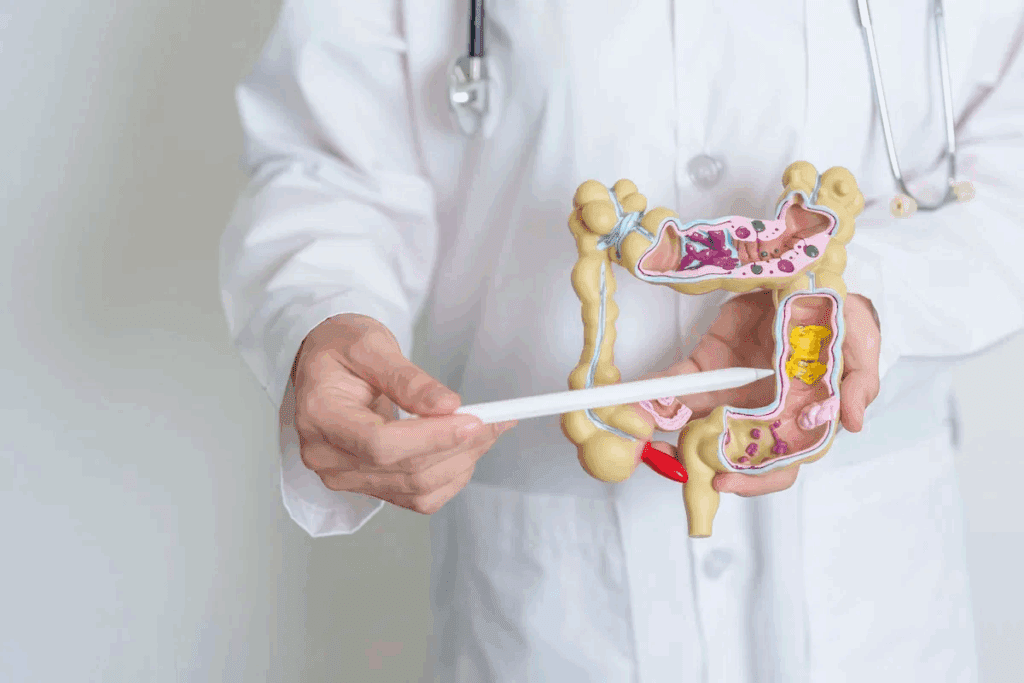
Colonic lipoma is a rare, non-cancerous growth in the large intestine. It’s made of fat tissue. At Liv Hospital, we focus on giving accurate information and care for those with GI issues.
These growths are not common, making up 0.2-4.4% of colon tumors. They are often found in people aged 50 to 70, with women slightly more affected. While many don’t show symptoms, some may feel pain, have trouble with bowel movements, or bleed rectally.
Key Takeaways
- Colonic lipoma is a rare, benign growth in the large intestine.
- It is more commonly diagnosed in patients aged 50-70.
- Symptoms may include abdominal pain, constipation, and rectal bleeding.
- Many cases of colonic lipoma are asymptomatic.
- Accurate diagnosis and treatment are key to patient care.
Benign Tumor in Large Intestine: An Overview

Benign tumors in the large intestine, like colonic lipoma, need to be correctly identified. This is to tell them apart from cancerous growths. Knowing about these tumors is key for doctors to give the right care.
Definition and Classification of Intestinal Tumors
Intestinal tumors are mainly divided into two types: benign and malignant. Benign tumors are not cancerous and don’t spread. A colonic lipoma is a type of benign tumor made of fat. It’s important to know how to classify these tumors to manage them well.
Importance of Recognizing Benign vs. Malignant Growths
Determining if a tumor is benign or malignant is key to treatment. Benign tumors, like a lipoma in the bowel, might not need aggressive treatment. But cancerous tumors need quick and often more serious treatments. Getting the diagnosis right helps avoid unnecessary surgeries and lowers patient stress.
We stress the need to distinguish between benign from malignant tumors. This is to ensure the best care for patients with lipoma in the large intestine.
Fact 1: What is a Colonic Lipoma?

A lipoma in the colon, also known as a colonic lipoma, is a condition that needs careful checking. It’s important to tell it apart from other intestinal issues. We will look into what it is, its makeup, and how it looks under a microscope.
Definition and Composition of Lipoma in the Colon
A colonic lipoma is a harmless tumor made of adipose tissue. It’s found in the submucosa of the colon. These tumors are usually alone and can be different sizes. They are mostly made of fat cells, which are normal in our bodies.
Histological Characteristics of Fatty Tumor in the Colon
A colonic lipoma is made of adipose tissue with a thin layer around it. It’s well-defined and can be told apart from the colon’s lining. Knowing how it looks under a microscope is key to diagnosing it correctly.
| Characteristics | Description |
| Composition | Mature adipose tissue |
| Location | Submucosa of the colon |
| Histological Features | Well-circumscribed, thin capsule |
In short, a colonic lipoma or lipoma of the colon is a harmless fatty tumor in the large intestine. Knowing what it is, its makeup, and how it looks is key to the right diagnosis and treatment.
Fact 2: Prevalence and Demographics
Knowing about colonic lipoma’s prevalence and demographics helps healthcare providers make better decisions. We’ll look at how common it is, who gets it, and what increases the risk.
Frequency Among Intestinal Tumors
Colonic lipoma is a rare but common benign tumor in the GI tract. It makes up about 0.2-0.3% of all colonic tumors. Even though it’s rare, it can cause serious symptoms.
Many cases of colonic lipoma go unnoticed because they don’t show symptoms. But better diagnostic tools like CT scans and colonoscopy are helping doctors find more of them.
Age and Gender Distribution
Studies show colonic lipoma mostly affects people between 50-70 years old. It seems to be linked to aging or long-term factors. Women are slightly more likely to get it, but why isn’t fully understood.
Knowing this helps doctors suspect colonic lipoma in middle-aged women with abdominal issues. It’s one of many possible causes they should consider.
Risk Factors for Developing Lipoma Intestinal
The exact reasons for colonic lipoma aren’t known, but some risk factors have been found. These include genetics, obesity, and diet. These factors aren’t just for colonic lipoma but can also affect other GI issues.
Our knowledge of these risk factors is growing. More research is needed to understand colonic lipoma better. For now, knowing these factors helps doctors diagnose and treat it.
In summary, understanding colonic lipoma’s prevalence and demographics is key. By knowing who gets it, how common it is, and what increases the risk, we can better diagnose and treat it.
Fact 3: Anatomical Distribution of Lipoma in the Bowel
Colonic lipomas can appear in different parts of the large intestine. Some spots are more common than others. Let’s look at where these fatty tumors usually show up.
Lipoma in the Ascending Colon: Most Common Site
The ascending colon is where most colonic lipomas are found. About 45-52% of cases are here. This is a big number, and knowing why helps us understand how they grow.
Research suggests the anatomy and function of the ascending colon might help lipomas grow here. Its bigger size and stable environment might be reasons why.
Other Locations of Lipoma in the Large Intestine
Lipomas can also appear in other parts of the large intestine. They can be found in the transverse, descending, sigmoid colon, and even the rectum. Each area has its own share of lipomas.
A study looked at where colonic lipomas are found in the large intestine. Here’s what they found:
| Location | Percentage |
| Ascending Colon | 45-52% |
| Transverse Colon | 15-20% |
| Descending Colon | 10-15% |
| Sigmoid Colon | 10-12% |
| Rectum | 5-8% |
The table shows that the ascending colon is the main spot, but other areas also have lipomas. This shows why it’s key to check thoroughly when symptoms appear.
“The anatomical distribution of colonic lipomas highlights the need for thorough diagnostic approaches to identify and manage these benign tumors effectively.”
Expert Opinion
Knowing where colonic lipomas usually appear is key for doctors. It helps in diagnosing and treating these tumors. By understanding where they often show up, doctors can better care for patients.
Fact 4: Clinical Presentation and Symptoms of Lipoma in the Colon
It’s important to know the symptoms of colonic lipoma for accurate diagnosis and treatment. We will look at how colonic lipomas show up clinically. This includes cases where there are no symptoms and those with noticeable ones.
Asymptomatic Presentations of Colon Lipoma
Many colonic lipomas are found by accident during tests for other issues. These lipomas don’t cause symptoms and might not be found unless tests are done.
Common Symptoms: Pain, Bleeding, and Constipation
Symptoms can include mild to moderate abdominal pain, chronic constipation, and rectal bleeding. The pain is usually not too bad and might come and go. Bleeding can be hidden or sometimes obvious.
Constipation is also common. It happens because the lipoma is in the colon and might block it a bit.
When Lipoma Bowel Becomes Symptomatic
A colonic lipoma becomes a problem when it’s big enough to block the colon or when it gets complicated. The bigger the lipoma, the more likely it is to cause trouble.
We need to think about these things when we’re dealing with colonic lipomas. This helps us manage them right and avoid serious problems.
Fact 5: Diagnostic Approaches for Lipoma Colon
To accurately diagnose lipoma in the colon, healthcare providers use different methods. Finding out if you have a lipoma in your colon is key. It helps doctors tell it apart from other issues and plan the right treatment.
Imaging Techniques: CT, MRI, and Ultrasound
Imaging is a big help in finding colonic lipoma. Computed Tomography (CT) scans are good at showing the fatty nature of lipomas. Magnetic Resonance Imaging (MRI) gives detailed pictures that help spot lipomas. Ultrasound is also used to check the size and where the lipoma.
The choice of imaging depends on the lipoma’s size, location, and the patient’s health.
Endoscopic Evaluation and Biopsy
Endoscopic evaluation is also key in diagnosing colonic lipoma. An endoscopy lets doctors see inside the colon with a camera tube. They can see the lipoma and check its size and location. Sometimes, a biopsy is done to confirm by looking at a tissue sample.
Differential Diagnosis from Other Intestinal Lesions
It’s important to tell colonic lipoma apart from other intestinal issues. Conditions like adenomatous polyps, gastrointestinal stromal tumors (GISTs), and liposarcomas might look similar. Doctors use imaging, endoscopy, and biopsy to make sure they have the right diagnosis. This helps them plan the best treatment.
Fact 6: Treatment Options for Lipoma of the Colon
There are many ways to treat colonic lipoma, from watching it closely to surgery. The right treatment depends on the lipoma’s size, where it is, and if it’s causing problems.
Conservative Management for Asymptomatic Cases
For lipomas that don’t cause symptoms, watching them closely is often best. This means regular checks with imaging to see if the lipoma grows or causes issues. Watching small lipomas closely is good because it avoids the risks of surgery.
Endoscopic Removal Techniques
For lipomas that do cause symptoms or are big, removing them through an endoscope is a good choice. This method uses a special camera to see and remove the lipoma. Endoscopic removal is less scary than surgery and can be done without staying in the hospital.
Surgical Interventions for Large or Complicated Lipomas
If the lipoma is huge, causing a lot of trouble, or has caused serious problems, surgery might be needed. Taking out the lipoma and sometimes part of the colon can fix the problem. Surgery is usually for the toughest cases where other methods don’t work.
Knowing about the different ways to treat colonic lipoma is key for doctors and patients. By looking at the lipoma’s size, location, and symptoms, doctors can pick the best treatment.
Fact 7: Complications and Prognosis of Lipoma in the Intestine
Colonic lipomas are usually harmless but can cause serious problems if ignored. We will look at the possible complications and what the future holds for those with this condition.
Potential Complications: Intussusception and Obstruction
Colonic lipomas can lead to serious issues like intussusception and obstruction. Intussusception happens when the lipoma causes the intestine to fold in on itself. This can lead to serious problems like bowel ischemia and even death if not treated quickly. Obstruction occurs when a big lipoma blocks the intestine, causing pain, constipation, and vomiting.
“The presence of a lipoma can lead to intussusception, a condition where the intestine telescopes into itself, potentially causing bowel ischemia.” Sometimes, intussusception can be treated without surgery. But often, surgery is needed to fix the problem and prevent it from happening again.
Long-term Outlook and Recurrence Rates
The outlook for people with colonic lipoma is usually good, as long as the tumor is removed. Recurrence rates are low after successful removal, whether it’s done through endoscopy or surgery. It’s important to watch for any signs of the tumor coming back or other problems, as they can affect overall health.
In summary, even though colonic lipomas are not cancerous, they can cause serious issues. Knowing about these problems and the long-term outlook is key to giving the best care. Early diagnosis and treatment are the best ways to manage colonic lipomas and ensure good outcomes for patients.
Conclusion
We’ve looked into colonic lipoma, a benign tumor in the large intestine. This summary aims to give a full view of the condition. It shows why it’s important and why proper diagnosis and treatment are needed.
A colonic lipoma, or lipoma of the colon, is a rare, non-cancerous growth in the bowel. It’s made of fat tissue and can be found in different parts of the large intestine, like the ascending colon. Knowing about lipoma in the bowel is key to correct diagnosis and treatment.
To diagnose lipoma in the colon, doctors use imaging like CT scans, MRI, and ultrasound, along with endoscopic evaluation. Treatment varies from watching and waiting for small, symptom-free cases to removing it endoscopically or surgically for bigger or more complex ones.
It’s important to know the possible complications of lipoma in the intestine, like intussusception and obstruction. This knowledge helps in giving the right care. We stress the need for awareness and proper handling of colonic lipoma for the best results for patients.
In short, a benign tumor in the large intestine, like a colonic lipoma, needs careful thought and management. By knowing the facts about lipoma of the colon, healthcare providers can offer top-notch care to those affected by it.
FAQ
What is a colonic lipoma?
A colonic lipoma is a rare, benign tumor made of fat. It happens in the large intestine, or colon.
What are the symptoms of a lipoma in the bowel?
Symptoms can include abdominal pain, bleeding, and constipation. Sometimes, it can cause intussusception or obstruction. But many cases don’t show symptoms.
How is a lipoma in the colon diagnosed?
Doctors use CT or MRI scans and endoscopy to find a lipoma in the colon. They might also take a biopsy to confirm it’s a tumor.
What are the treatment options for colonic lipoma?
Treatment depends on the size and symptoms of the lipoma. Small ones might be removed endoscopically. Larger ones might need surgery.
Can a lipoma in the ascending colon cause complications?
Yes, a large lipoma in the ascending colon can cause problems. It might lead to intussusception or obstruction.
Are lipomas in the large intestine common?
Lipomas in the large intestine are rare. They are more common in some groups and are often found by accident during other tests.
What is the long-term outlook for someone with a colonic lipoma?
The outlook is usually good, with a low chance of it coming back after removal. But it depends on the size, location, and whether complications have happened.
How is a lipoma in the colon differentiated from other intestinal lesions?
Doctors use imaging, endoscopy, and sometimes biopsy to tell a lipoma from other lesions. This helps rule out cancer.
What are the risk factors for developing a lipoma in the intestine?
The exact reasons for getting a lipoma in the intestine are not known. But age and certain traits might increase the risk.
Reference:
Moizé, V., Andreu, A., Flores, L., Torres, F., Ibarzabal, A., Delgado, S., & Vidal, J. (2013). Protein intake and lean tissue mass retention following bariatric surgery. Nutrients, 5(12), 5282–5293. https://pmc.ncbi.nlm.nih.gov/articles/PMC5347111/