Last Updated on November 26, 2025 by Bilal Hasdemir
Discovering a lung nodule can be scary. But, modern medicine has many biopsy techniques to quickly find out what it is. At Liv Hospital, we use top technology, a team approach, and care that puts patients first.
Knowing your options for a lung nodule biopsy helps you make smart choices. A biopsy takes tissue from the nodule to check its makeup. This helps doctors figure out or check how serious lung conditions are.
Key Takeaways
- Biopsy techniques for lung nodules are key for accurate diagnosis.
- Liv Hospital offers advanced diagnostics with individualized attention.
- Understanding the biopsy process empowers patients to make informed decisions.
- A biopsy involves examining tissue under a microscope to diagnose lung conditions.
- Modern medicine provides a range of options for biopsying lung nodules.
Understanding Lung Nodules and the Need for Biopsy
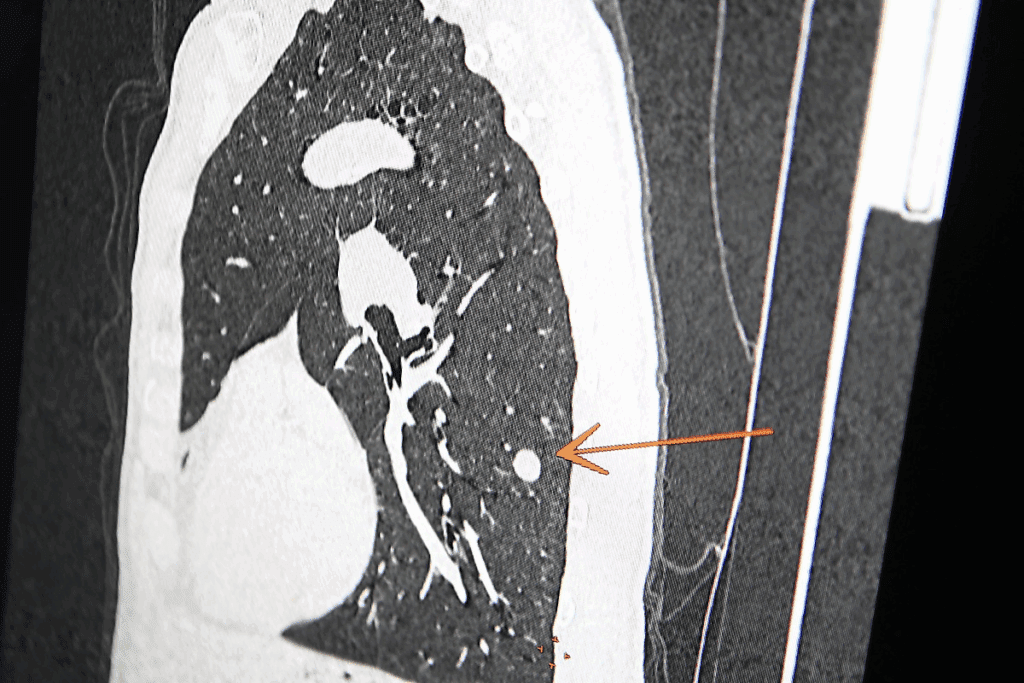
Lung nodules are often seen in chest scans. Knowing what they are helps doctors decide what to do next. They can be found with CT scans, X-rays, and MRIs.
What Are Lung Nodules?
Lung nodules are small growths in the lung. They can be harmless or cancerous. Most are not cancer, but they can come from infections or scars.
The American Cancer Society says many things affect if a nodule is cancer. Size, location, and smoking history are important. A detailed check is needed to know what the nodule is.
When Is a Biopsy Necessary?
A biopsy is needed when a nodule’s nature is unclear. Doctors look at size, shape, and location. They also consider the patient’s health and history. Big or fast-growing nodules might need a biopsy.
“The decision to biopsy a lung nodule should be made on a case-by-case basis, taking into account the risks and benefits of the procedure.”
Dr. Jane Smith, Pulmonologist
Risk Assessment for Malignancy
Doctors check several things to see if a nodule might be cancer. Age, smoking, and exposure to harmful substances matter. The nodule’s size and look on scans also help.
| Risk Factor | Description | Impact on Malignancy Risk |
| Age | Older age increases the risk | High |
| Smoking History | History of smoking or current smoking | High |
| Nodule Size | Larger nodules are more likely to be malignant | High |
| Nodule Appearance | Speculated or irregular margins | Moderate to High |
Understanding these factors helps doctors figure out the risk of cancer. A detailed risk assessment is key to managing lung nodules effectively.
Pre-Biopsy Evaluation and Planning
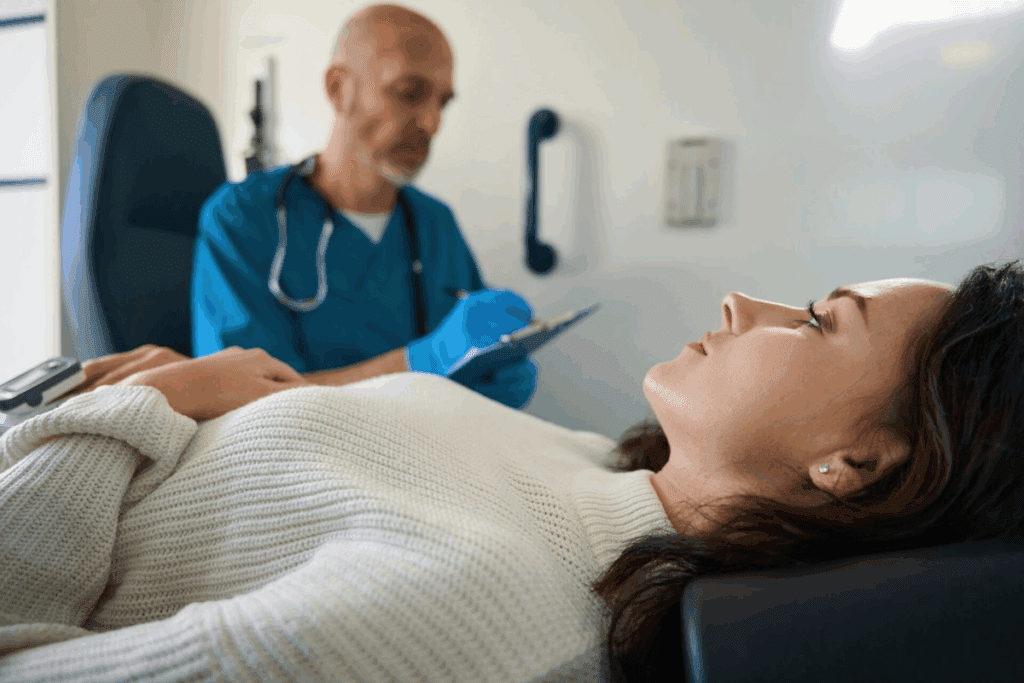
Before a lung nodule biopsy, we do a lot of planning. This includes checking the patient’s health and the nodule’s details. It’s all about making sure the biopsy goes smoothly and safely.
Imaging Studies Required
CT scans are key in this planning. They show us the nodule’s size, where it is, and if it might be cancer. These images help us decide the best way to do the biopsy.
Patient Risk Assessment
We also look at the patient’s health risks. This includes their overall health, lung function, and risk of bleeding. This helps us choose the right biopsy method for them.
Selecting the Appropriate Biopsy Method
Choosing the right biopsy method is important. We consider the nodule’s location, the patient’s health, and what’s available locally. This ensures the best results for the patient.
By carefully planning, we reduce risks and improve the chances of getting a good sample.
Biopsy of Lung Nodule: Percutaneous Transthoracic Approach
The percutaneous transthoracic approach is a minimally invasive technique for lung nodule biopsies. It involves inserting a needle through the chest wall into the lung nodule. This is done under imaging guidance to collect tissue samples for diagnosis.
Fine Needle Aspiration Technique
Fine needle aspiration (FNA) is a technique used in lung nodule biopsies. FNA uses a thin needle to aspirate cells for examination. It’s useful for nodules that are hard to reach.
Core Needle Biopsy Procedure
Core needle biopsy (CNB) uses a slightly larger needle to get a tissue core. This gives more tissue for detailed examination. It helps in diagnosing tumor architecture and subtype.
CT and Ultrasound Guidance Methods
Both CT and ultrasound guidance help place the needle accurately during biopsy. CT guidance is great for nodules hard to see with ultrasound. It provides detailed images. Ultrasound guidance offers real-time imaging without radiation, making it a good alternative for some cases.
| Biopsy Method | Needle Size | Tissue Sample | Guidance |
| Fine Needle Aspiration | Thin (22-25G) | Cellular material | CT/Ultrasound |
| Core Needle Biopsy | Larger (18-20G) | Tissue core | CT/Ultrasound |
Percutaneous transthoracic needle biopsy is a key diagnostic tool. It balances diagnostic yield with procedural risk. Despite risks like pneumothorax, better imaging and needle technology have made it safer and more effective.
Bronchoscopic Biopsy Techniques
New advancements in bronchoscopic biopsy have made diagnosing lung nodules more accurate. These procedures allow us to take tissue samples from both central and peripheral nodules. This is very helpful for diagnosing nodules near the airways.
Conventional Bronchoscopy
Conventional bronchoscopy is a common method for diagnosing lung nodules. It involves using a bronchoscope to look inside the lungs. This method is good for nodules that are easy to reach through the airways.
Endobronchial Ultrasound (EBUS)
Endobronchial Ultrasound (EBUS) is a more advanced technique. It combines ultrasound with bronchoscopy to see the airway wall and surrounding areas. EBUS-guided biopsy helps in getting samples from lymph nodes and lesions outside the airway wall, making diagnoses more accurate.
Navigational Bronchoscopy
Navigational bronchoscopy is a complex technique. It helps doctors reach lung nodules that are hard to get to with regular bronchoscopy. This method uses advanced navigation systems to accurately diagnose nodules in the outer parts of the lungs.
Robotic-Assisted Bronchoscopy
Robotic-assisted bronchoscopy is the newest technology in bronchoscopy. It offers better precision and control during biopsies. This technique helps in more accurate sampling of lung nodules, which can lead to better diagnoses and fewer complications.
| Technique | Description | Advantages |
| Conventional Bronchoscopy | Direct visualization and sampling of airways | Wide availability, straightforward procedure |
| Endobronchial Ultrasound (EBUS) | Ultrasound-guided sampling of lymph nodes and lesions | Enhanced diagnostic accuracy for lesions outside airway walls |
| Navigational Bronchoscopy | Advanced navigation to reach peripheral lung nodules | Improved access to peripheral nodules, higher diagnostic yield |
| Robotic-Assisted Bronchoscopy | Precision and control during biopsy procedures | Enhanced accuracy, potentially reduced complications |
Using these bronchoscopic biopsy techniques, we can better diagnose and manage lung nodules. Each method has its own benefits. The choice depends on the nodule’s location, size, and the patient’s condition.
Surgical Biopsy Approaches
Surgical biopsy methods, like Video-Assisted Thoracic Surgery (VATS) and open surgical biopsy, are key for tough cases or when other tests don’t work. They involve taking tissue from the lung nodule, usually under general anesthesia, to get a clear diagnosis.
Video-Assisted Thoracic Surgery (VATS)
VATS is a less invasive surgery that lets doctors check lung tissue with less harm than open surgery. It has smaller cuts, less pain, and faster healing. It’s great for checking lung nodules that can’t be reached by other ways.
- Reduced risk of complications
- Less postoperative pain
- Shorter hospital stays
Open Surgical Biopsy
Open surgical biopsy, or thoracotomy, uses a bigger cut to get to the lung tissue. It’s more invasive but often used for complex cases. It’s chosen when the benefits are greater than the risks of a bigger procedure.
When Surgical Approaches Are Indicated
Surgical biopsies are needed when other tests can’t find the cause, or if the nodule might be cancer. The choice to do a biopsy depends on the patient’s health, the nodule’s details, and the risks and benefits of the surgery.
We look at several things to decide if a biopsy is right, including:
- The size and location of the lung nodule
- The patient’s overall health and surgical risk
- The results of previous diagnostic tests
Medical Professionals Who Perform Lung Biopsies
Several medical experts are key in diagnosing lung nodules through biopsies. The type of biopsy needed often decides who does it. Let’s look at the roles of different specialists in lung biopsy procedures.
Interventional Radiologists
Interventional radiologists are doctors who use imaging to guide procedures. They do percutaneous transthoracic needle biopsies. They use CT or ultrasound to find lung nodules accurately.
These experts are great at navigating the body’s complex parts. They can get samples with little risk to the patient.
Pulmonologists
Pulmonologists are specialists in respiratory medicine. They perform bronchoscopic biopsies. They use scopes to reach the airways and get tissue from lung nodules.
New tech in bronchoscopy, like endobronchial ultrasound (EBUS), helps pulmonologists more. It lets them diagnose lung nodules better.
Thoracic Surgeons
Thoracic surgeons are needed for surgical biopsies. They do Video-Assisted Thoracic Surgery (VATS) and open biopsies. These get tissue from lung nodules.
These surgeons are good at both finding out what’s wrong and fixing it. They can often diagnose and treat in one go.
Multidisciplinary Team Approach
A multidisciplinary team approach is key for lung nodule patients. This team includes interventional radiologists, pulmonologists, thoracic surgeons, and more.
They talk about patient cases, pick the best biopsy method, and plan treatment. They work together for the best care.
By teaming up, these doctors make sure patients get the right diagnosis and treatment for their lung nodules.
Patient Preparation for Lung Nodule Biopsy
Getting ready for a lung nodule biopsy is key to its success and safety. We know it can be scary, so we’re here to help. We’ll guide you through each step with clear instructions and support.
Pre-Procedure Instructions
Before your biopsy, we’ll give you specific instructions. These might include:
- Fasting for a certain period before the procedure
- Avoiding certain medications that could interfere with the biopsy
- Arranging for someone to drive you home after the procedure
Following these instructions carefully is important. It helps reduce risks and ensures the best results.
Medication Management
We’ll check your medications to see which ones to keep taking and which to stop. Some medications, like blood thinners, might need to be paused. This is to lower the risk of bleeding during and after the procedure.
Telling us about all your medications, including over-the-counter drugs and supplements, is very important.
Informed Consent Process
We’ll also help you understand the informed consent process. This involves talking about the risks, benefits, and other options. We want you to know what to expect and be comfortable with your decision to have the biopsy.
“Informed consent is not just a legal requirement; it’s an opportunity for patients to understand their care and make informed decisions about their health.”
By following the instructions, managing your medications, and understanding informed consent, you’re key to a successful biopsy. Your role is vital to the success and safety of your lung nodule biopsy.
Potential Complications and Risk Management
It’s important to know the risks of lung nodule biopsy for good patient care. The procedure is usually safe, but there are risks that doctors need to be ready for.
Pneumothorax: Prevention and Management
Pneumothorax, or air in the pleural space, is a possible complication. This risk can be lowered with careful planning and technique. CT guidance during the procedure helps place the needle accurately.
If pneumothorax happens, doctors have different ways to manage it. They might just watch it if it’s small and not causing symptoms. But for bigger or symptomatic cases, they might need to insert a chest tube.
Pulmonary Hemorrhage
Pulmonary hemorrhage is another risk, from mild bleeding to serious. Risk factors include the nodule’s location and size, and the patient’s health. This includes things like bleeding disorders.
Dealing with pulmonary hemorrhage means acting fast. This might mean stopping the procedure and taking steps to stop the bleeding.
Air Embolism
Air embolism is rare but serious. It happens when air gets into the blood during the biopsy. This can be very dangerous.
To avoid air embolism, doctors use careful techniques and avoid unnecessary needle moves. If it happens, they need to act quickly. This includes giving 100% oxygen and putting the patient in a left lateral decubitus position.
Post-Procedure Monitoring
Watching the patient after the procedure is key. This helps catch and manage any complications early. Patients are usually kept under observation for signs of problems.
| Complication | Risk Factors | Management Strategies |
| Pneumothorax | Nodule location, needle size | Conservative monitoring, chest tube insertion |
| Pulmonary Hemorrhage | Nodule size, coagulopathy | Abort procedure, control bleeding |
| Air Embolism | Needle manipulation, patient positioning | 100% oxygen, left lateral decubitus position |
Specimen Handling and Processing
The accuracy of lung biopsy results depends a lot on how well the specimen handling and processing are done. When a lung biopsy is done, how the specimen is handled after that is key for a correct diagnosis.
Tissue Preservation Techniques
Keeping the biopsy specimen in good condition is essential. This is done through techniques like fixing it in formalin or freezing it quickly. These methods help keep the cells intact for further examination.
The choice of how to preserve the tissue depends on what the doctors think might be wrong and what the lab needs. For example, if they think they might need to do tests on the genes, they might use special methods to keep those genes intact.
Rapid On-Site Evaluation (ROSE)
Rapid On-Site Evaluation (ROSE) is a quick way to check the biopsy specimen during some procedures. A cytopathologist looks at the specimen right away to see if it’s enough for a diagnosis. This can sometimes mean you don’t have to do the biopsy again.
During ROSE, the cytopathologist can give early feedback on what they see. This is really helpful in cases like fine-needle aspiration or core needle biopsy.
Laboratory Processing Methods
When the specimen gets to the lab, it goes through several steps. This includes embedding it in wax, cutting it into thin slices, and staining them. Then, pathologists look at these slices under a microscope to make a diagnosis.
They might also do more tests like looking at the tissue with special stains or checking the genes. We work with the lab team to make sure all the tests are done right and quickly.
Interpreting Lung Biopsy Results
Understanding lung biopsy results is key to knowing about lung nodules. A pathologist examines the biopsy sample to create a detailed report.
Understanding Pathology Reports
A pathology report gives a detailed look at the biopsy sample. It includes the diagnosis and tissue characteristics. It’s not just a diagnosis but a detailed guide for treatment.
“The pathology report is a vital link between the biopsy and treatment,” says Dr. Jane Smith, a top pulmonologist. “It offers essential details for making informed patient care decisions.”
Benign vs. Malignant Findings
A lung biopsy aims to find out if a nodule is benign or malignant. Benign findings might include infections or benign tumors. Malignant findings mean lung cancer, which can be classified further.
Molecular and Genetic Testing
When malignancy is found, molecular and genetic tests provide more details. They help find specific genetic mutations for targeted therapies. These tests are key in personalized medicine, leading to more precise treatments.
- Molecular testing identifies specific genetic mutations.
- Genetic testing shows the cancer’s aggressiveness.
- These tests help decide on targeted therapies.
Why Results Take Time
Lung biopsy results can take days to weeks. This delay is due to the detailed process of examining the biopsy. The time ensures a thorough diagnosis and a well-planned treatment.
Knowing why results take time helps manage patient anxiety. This waiting period is critical for accurate diagnosis and tailored treatment.
Conclusion
Biopsying a lung nodule is key to figuring out what a dark spot on the lung means. We’ve looked at different biopsy methods in this article. These include percutaneous transthoracic, bronchoscopic, and surgical approaches.
It’s important for healthcare pros to know these methods well. This helps them pick the best biopsy technique for each patient. The right choice depends on the nodule’s location, size, patient’s risk, and what it might be.
In short, diagnosing lung nodules through biopsy is complex. We’ve covered the main biopsy methods and when to use them. Our goal is to help you understand the process better.
FAQ
What is a lung nodule biopsy?
A lung nodule biopsy is a procedure to take tissue from a lung nodule. It’s done to see if it’s cancer or not.
Why is a lung nodule biopsy necessary?
A lung nodule biopsy is needed to find out if a lung nodule is cancer or not. It helps decide the next steps in treatment.
What are the methods used for biopsying a lung nodule?
There are several ways to biopsy a lung nodule. These include needle biopsy, bronchoscopic biopsy, and surgery like VATS or open biopsy.
How is a percutaneous transthoracic needle biopsy performed?
A percutaneous transthoracic needle biopsy uses a needle to get tissue from the nodule. It’s guided by CT or ultrasound.
What is the role of imaging studies before a lung nodule biopsy?
Imaging studies like CT scans are key before a biopsy. They help find the nodule, check its size, and plan the biopsy.
Who performs a lung biopsy?
Lung biopsies are done by doctors like radiologists, pulmonologists, and thoracic surgeons. They work together as a team.
What are the possible complications of a lung biopsy?
Complications can include a collapsed lung, bleeding, air in the blood, and infection. These are serious issues.
How are biopsy specimens handled and processed?
Specimens are handled carefully. This includes preserving tissue, using ROSE, and special lab methods for accurate diagnosis.
How long does it take to get the results of a lung biopsy?
Results can take days to a week or more. It depends on the case, biopsy type, and lab work.
What do benign and malignant findings mean in a lung biopsy?
Benign means it’s not cancer. Malignant means it is. Knowing the type of cancer helps plan treatment.
What is the significance of molecular and genetic testing in lung biopsy results?
Molecular and genetic testing gives more info on the cancer. It helps plan targeted treatments.
How is a dark spot on the lung diagnosed?
A dark spot on the lung is diagnosed with CT scans. A biopsy might be needed to confirm its nature.
What is the difference between fine needle aspiration and core needle biopsy?
Fine needle aspiration uses a thin needle for cells. Core needle biopsy uses a larger needle for tissue. More tissue means better tests.
References
Bicket, M. C., et al. (2013). Epidural injections for spinal pain: A systematic review and meta-analysis. Pain Physician, 16(5), E453-E470. https://pubmed.ncbi.nlm.nih.gov/24195874/