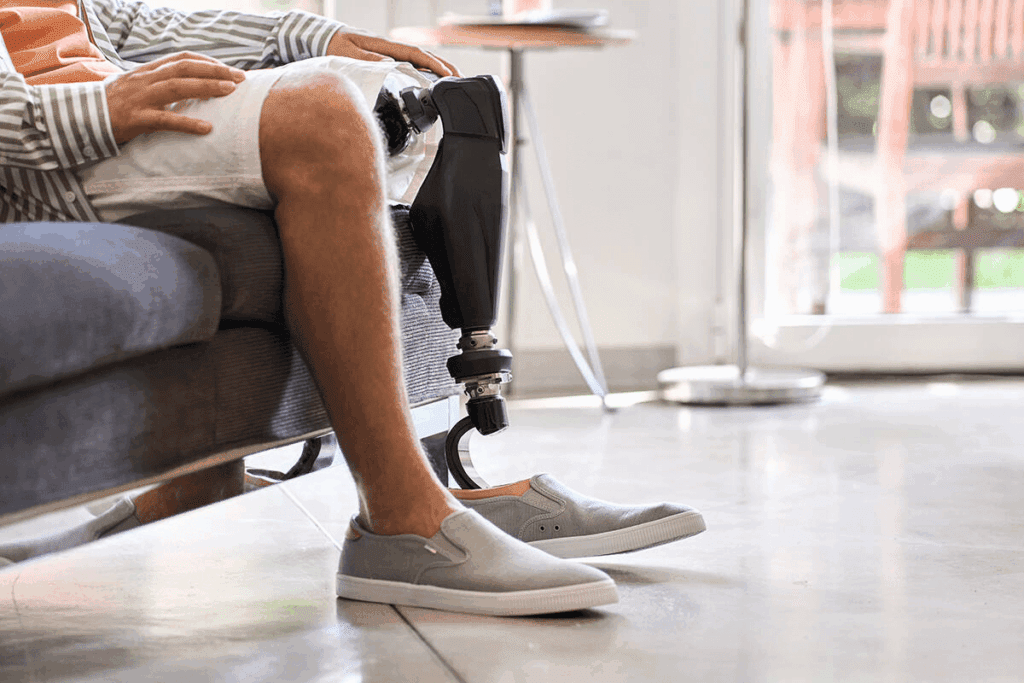
Listing five common types of BKA prosthetic legs and their features for different user needs. Losing a limb can change your life. But, with the right support and rehab, many people get their independence back. Below knee prosthetics, or transtibial prosthetics, replace a missing foot and ankle. They keep the knee joint, making walking easier and more stable.
Finding the right prosthetic leg is key for moving around well and living better. The market for below knee prosthetics is expanding fast. This is thanks to new tech and more people wanting better prosthetics.
Key Takeaways
- Knowing the different types of below knee prosthetics is important for making a good choice.
- The right prosthetic leg can really help with moving around, being independent, and enjoying life more.
- New tech is making the below knee prosthetics market grow.
- Rehab and physical therapy are vital for getting your independence back.
- Choosing the right prosthetic leg means thinking about your lifestyle and what you want to do.
Understanding Below Knee Amputations and Prosthetics

Below knee amputations need a deep understanding for the right prosthetic choice. A BKA removes the lower leg but keeps the knee joint. This helps in walking naturally and saves energy, making prosthetic use easier.
What Defines a Below Knee Amputation
A below knee amputation removes the leg below the knee but keeps the knee joint. It’s often needed due to injury, infection, or poor blood flow. The aim is to make a leg that can hold a prosthetic, helping patients move and live independently.
Studies show, “Keeping the knee joint is key for BKA success. It greatly helps patients walk and do daily tasks.”
The Importance of Proper Prosthetic Selection
Choosing the right prosthetic is critical for below knee amputees. The right one depends on many things like activity level, weight, and budget. A good prosthetic can greatly improve a person’s life, making daily tasks easier and more confident.
Key considerations in prosthetic selection include:
- The patient’s overall health and residual limb condition
- The level of activity and mobility desired
- The type of prosthetic components that best suit the patient’s needs
Healthcare experts carefully look at these factors. They help patients pick the best prosthetic, leading to better recovery.
The Evolution and Market Growth of BKA Prosthetics

Below knee amputation (BKA) prosthetics have seen big changes thanks to new tech. This has greatly improved life for those with below knee amputations.
The market for below knee prosthetics is changing fast. Now, there’s a focus on prosthetics that fit each person’s needs. This change comes from new materials, robotics, and computer design.
Historical Development of Below Knee Prosthetics
Below knee prosthetics have a long history. Early ones were simple and hard to use. But, new materials and tech have made them better.
- Early prosthetics were made from wood and metal, and they didn’t work well.
- Plastic and carbon fiber have made them last longer and feel better.
- Now, prosthetics have smart parts that make them easier to use.
Current Market Trends and Future Projections
The global market for below knee prosthetics is growing fast. This is because more people need them and want better ones. The prosthetics and orthotics market was worth $6.56 billion in 2024. It’s expected to hit $8.48 billion by 2030, growing 4.4 percent each year.
The below knee prosthetics part of the market will play a big role in this growth. It’s expected to reach $3.2 billion by 2033. This will be thanks to new tech and more older people needing them.
Key trends shaping the market include:
- More people are choosing smart prosthetic limbs.
- There’s a big demand for prosthetics that fit each person’s needs.
- New materials and ways to make prosthetics, like 3D printing, are coming.
As the market keeps changing, we’ll see even more improvements. These will make BKA prosthetics better for looks, feel, and function. This will greatly help those with below knee amputations.
Key Components of a Below Knee Prosthetic Leg
Knowing the parts of a below knee prosthetic leg is key for both makers and users. It helps ensure the prosthetic works well and feels comfortable. These prosthetics replace the foot and ankle but keep the knee joint.
Socket Design and Fit
The socket is a vital part of a below knee prosthetic leg. It connects the prosthetic to the remaining leg. A good socket design means comfort, a proper fit, and better function.
Each socket is made to match the user’s leg perfectly. This includes the leg’s unique shape and size. Advanced materials and methods, like 3D printing, help make sockets that are both strong and comfy.
Suspension Systems
The suspension system keeps the prosthetic leg in place. There are many types, like straps, sleeves, and vacuum systems. The right one depends on the user’s lifestyle and what they like.
We help users pick the best suspension system. For example, vacuum systems are great for active people. They offer a secure fit and help with control.
Prosthetic Feet and Ankle Mechanisms
The prosthetic foot and ankle are made to move like a real foot and ankle. They’re key for a natural walk and for doing things like walking or climbing stairs.
We use the latest prosthetic feet and ankles. They adjust to different surfaces and activities. For instance, some can change how stiff they are and how they move. This gives users more stability and confidence.
Type 1: Traditional Socket BKA Prosthetic Systems
Traditional socket BKA prosthetic systems are key for those with below knee amputations. They help users feel comfortable and function well. This lets them do many things on their own.
Design Features and Materials
The design of these prosthetics focuses on a snug fit over the residual limb. They use materials like carbon fiber or silicone. These materials are strong yet light, making them comfortable.
The prosthetic foot and ankle are made to move like a real foot. Key design features include a custom fit, adjustable systems, and various prosthetic feet. The materials are picked for their strength, lightness, and ability to fit the user’s limb.
Advantages and Limitations
One big advantage is their wide availability and the experience of prosthetists. They fit many users, from the very active to those needing a simple prosthetic.
But, there are limitations. Some may feel discomfort or skin issues from the socket. Also, these systems might not offer the stability or control of newer prosthetics.
Ideal Candidates for Traditional Systems
These systems are good for many people. They’re great for those wanting a dependable, affordable option. They might not need the latest prosthetic tech.
Choosing the right prosthesis depends on several things. This includes activity level, weight, budget, and lifestyle. It’s important to work with a healthcare team to find the best fit.
Type 2: Vacuum Suspension Below Knee Prosthetics
Below knee amputees can greatly benefit from vacuum suspension prosthetics. These prosthetics use a vacuum system for a secure fit. This technology has changed prosthetics, making them more comfortable and stable.
How Vacuum Suspension Works
Vacuum suspension prosthetics work by creating a vacuum in the socket. This is done with a pump or valve system that removes air. This makes the prosthetic fit tightly to the residual limb.
The process involves several key components:
- A sealed socket system to maintain the vacuum.
- A pump or valve to create and regulate the negative pressure.
- A liner or interface that ensures comfort and helps maintain the seal.
Benefits for Activity and Comfort
The vacuum suspension system has many benefits for those with below knee amputations. These include:
Enhanced Comfort: Vacuum suspension reduces volume changes in the residual limb. This provides a consistent fit, making users more comfortable.
Benefits | Description |
Increased Stability | The secure fit reduces the risk of the prosthetic shifting during activity. |
Improved Activity Levels | Users can do more activities because of the stability and comfort. |
Reduced Skin Irritation | The consistent fit reduces friction and pressure points, lowering skin irritation risk. |
Considerations Before Choosing Vacuum Systems
Vacuum suspension prosthetics have many benefits but also some considerations. They need regular maintenance and can be more expensive than traditional prosthetics. They also require a certain level of residual limb health.
It’s important for those thinking about vacuum suspension prosthetics to talk to their healthcare provider or prosthetist. They can help decide if this technology is right for their needs.
Type 3: Microprocessor-Controlled Prosthetic Feet for BKA Prosthetic Users
Microprocessor-controlled prosthetic feet have changed the game for BKA users. They offer more confidence and flexibility in walking. These feet use advanced sensors and algorithms to adjust to different terrains and activities.
Smart Technology in Below Knee Prosthetics
These prosthetic feet use smart tech to analyze your gait and adjust on the fly. They have sensors that detect terrain, inclination, and speed. This allows for real-time adjustments for a more stable and natural walk.
Key Features of Microprocessor-Controlled Prosthetic Feet:
- Advanced sensors for terrain detection
- Real-time adjustments for a natural gait
- Improved stability on various surfaces
- Enhanced user confidence
Adaptive Capabilities and Performance
Microprocessor-controlled prosthetic feet adapt to different walking conditions. This makes it easier for users to move around with confidence. They can handle various environments with ease.
Feature | Description | Benefit |
Terrain Adaptation | Adjusts to different surfaces and inclinations | Improved stability and natural gait |
Real-Time Processing | Analyzes user gait and adjusts prosthetic movement | Enhanced mobility and confidence |
User Customization | Allows for personalized settings and adjustments | Better fit and comfort |
Cost Factors and Insurance Coverage
The cost of these prosthetic feet is high, and insurance coverage varies. It’s important for BKA users to talk to their healthcare providers and insurance companies. They need to understand the costs and coverage options.
Insurance coverage for these prosthetic feet depends on several factors. These include the user’s specific needs, the prosthetist’s recommendations, and the insurance provider’s policies.
Type 4: Osseointegrated Below Knee Prosthesis
The osseointegrated below knee prosthesis is a cutting-edge prosthetic solution. It directly connects with the user’s skeletal system. This method does away with the need for a traditional socket. Instead, it uses surgery to attach the prosthetic to the bone.
The Surgical Process of Osseointegration
Osseointegration is a complex surgery. A metal implant is inserted into the bone. This implant acts as an anchor for the prosthetic limb, providing a stable connection.
Key steps in the osseointegration process include:
- Pre-surgical evaluation to determine candidacy
- Surgical implantation of the osseointegrated implant
- A healing period allowing the bone to integrate with the implant
- Attachment of the prosthetic limb to the implant
Functional Advantages Over Socket Prosthetics
Osseointegrated prosthetics have several advantages over traditional socket prosthetics. They improve mobility and proprioception. They also increase comfort by removing socket-related pressure and friction.
Patients with osseointegrated prosthetics often report:
- Greater control over the prosthetic limb
- Reduced discomfort and pain
- Improved ability to perform various activities
Candidacy Requirements and Considerations
Not everyone is a good candidate for osseointegrated below knee prosthetics. The decision to have surgery involves looking at several factors. These include the patient’s health, bone density, and the condition of the residual limb.
Potential candidates should:
- Consult with a qualified healthcare professional to assess their suitability
- Understand the risks and benefits associated with the procedure
- Be prepared for the rehabilitation process following surgery
Type 5: Sports and Activity-Specific Below Knee Prosthetic Designs
Prosthetic designs for sports and activities have changed how people with below knee amputations play sports. These prosthetics are made to perform well and move freely. They are designed for different sports and activities.
Running Blades and Athletic Prosthetics
Running blades are made for running and other high-impact sports. They are light and strong, often made of carbon fiber. These prosthetics store energy when compressed and release it when pushing off, like a real foot.
Key Features of Running Blades:
- Lightweight construction for enhanced mobility
- Energy storage and return for improved performance
- Customizable to fit individual user needs
Water-Resistant and Specialty Designs
For those who love water sports or need prosthetics for wet conditions, there are water-resistant designs. These prosthetics are made to withstand water, keeping them durable and functional.
Prosthetic Type | Water Resistance | Activity Suitability |
Water-Resistant Prosthetic | High | Swimming, Surfing |
Running Blade | Low | Running, Sprinting |
Specialty Prosthetic | Variable | Cycling, Hiking |
Transitioning Between Daily and Activity Prosthetics
Many people with below knee amputations use different prosthetics for daily life and sports. Switching between them needs careful planning and expert advice for a smooth transition.
Tips for Transitioning:
- Consult with a prosthetist to determine the best prosthetic for each activity
- Practice transitioning between prosthetics to build confidence and muscle memory
- Ensure proper fit and adjustment of each prosthetic
Caring for Your Below Knee Prosthetic
Looking after your below knee prosthetic is key to its lasting performance. Keeping it in good shape means it will work well and let you stay active. This is important for your prosthetic’s life and how well it works.
Daily Maintenance Routines
Every day, your prosthetic needs some care to last longer. Clean the socket and liner with mild soap and water. Make sure to dry it well, where it touches your skin, to avoid irritation and infection.
Key daily maintenance tasks include:
- Inspecting the prosthetic for any signs of wear or damage
- Cleaning the prosthetic socket and liner
- Drying the prosthetic thoroughly
- Checking the suspension system for proper fit and function
Troubleshooting Common Issues
Even with regular care, problems can happen with your prosthetic. You might feel uncomfortable, get skin irritation, or have mechanical issues. Fixing these problems quickly can stop them from getting worse.
Issue | Possible Cause | Solution |
Discomfort | Poor socket fit, skin irritation | Adjust socket, treat skin irritation |
Skin Irritation | Friction, allergic reactions | Adjust prosthetic fit, use hypoallergenic materials |
Mechanical Issues | Wear and tear, misalignment | Consult a prosthetist for adjustments or repairs |
When to Seek Professional Adjustments
While you can handle many issues yourself, sometimes you need a pro. If you’re always uncomfortable, see wear or damage, or your life changes, see your prosthetist.
Regular visits to your prosthetist can catch problems early. This keeps your prosthetic working well for you.
How to Choose the Right BKA Prosthetic for Your Lifestyle
Choosing the right BKA prosthetic is more than just picking a device. It’s about finding one that fits your daily life and personal style. It’s important to think about how you live and what you need from your prosthetic.
Assessment of Daily Activities and Needs
Start by thinking about your daily life and what you need from a prosthetic. Consider the activities you do most, how you move, and any challenges you face because of your amputation.
Key factors to consider include:
- Your activity level: Are you highly active, or do you have a more sedentary lifestyle?
- Your occupation: Does your job require standing, walking, or other physical activities?
- Your hobbies and interests: Do you enjoy sports or other activities that require specific prosthetic features?
Working with Your Prosthetist and Healthcare Team
It’s important to work with your prosthetist and healthcare team. They can offer valuable advice based on their experience and your needs.
During your consultations, be prepared to discuss:
- Your lifestyle and activity level
- Your goals for using the prosthetic
- Any challenges or discomfort you’ve experienced with previous prosthetics
Trial Periods and Adjustment Processes
After choosing a prosthetic, try it out to see if it works for you. This lets you test it in real life and make any needed changes.
Adjustment Criteria | Description | Importance Level |
Comfort | How comfortable the prosthetic feels during use | High |
Functionality | How well the prosthetic performs during daily activities | High |
Aesthetics | The appearance of the prosthetic and how it aligns with your personal preferences | Medium |
By carefully considering your needs, working with your healthcare team, and trying out different prosthetics, you can find one that fits your lifestyle perfectly.
Conclusion: Embracing Life with Your Below Knee Prosthetic
With the right below knee prosthetic, people can live active and fulfilling lives. Many with below knee amputations can walk again, go back to work, and enjoy activities. The right bka prosthetic makes all the difference.
It’s important to know about the different prosthetic legs below the knee. Working with a prosthetist and healthcare team helps choose the right one. This ensures it fits your needs and lifestyle.
Advances in below knee prosthetics have greatly improved life for many. There are many options, from traditional to sports-specific designs. Each one is tailored to meet different needs.
Living with a below knee prosthetic is more than just adapting. It’s about discovering new abilities and opportunities. With the right support and prosthetic, overcoming challenges and achieving goals becomes possible.
FAQ
What is a below knee prosthetic?
A below knee prosthetic is a device for those missing a foot and ankle. It keeps the knee joint, making walking easier and more stable.
What are the benefits of preserving the knee joint during amputation?
Keeping the knee joint helps in using a prosthetic better. It also keeps walking natural, boosting mobility and independence.
What are the key components of a below knee prosthetic leg?
The main parts are the socket, suspension system, and prosthetic foot. Together, they help in walking naturally.
What is vacuum suspension in below knee prosthetics?
Vacuum suspension creates a seal between the socket and the limb. It keeps the prosthetic in place, improving comfort and activity levels.
What are microprocessor-controlled prosthetic feet?
These feet use advanced tech to adjust to different terrains. They offer a natural and responsive walking experience.
What is osseointegrated below knee prosthesis?
This is a surgical method attaching the prosthetic to the bone. It improves mobility and proprioception.
How do I choose the right BKA prosthetic for my lifestyle?
To pick the right BKA prosthetic, consider your daily activities and needs. Work with a prosthetist and healthcare team. Try different options and make adjustments as needed.
How do I care for my below knee prosthetic?
Daily care is key for your prosthetic. Follow maintenance routines, solve common issues, and get professional adjustments for longevity and function.
What are sports and activity-specific below knee prosthetic designs?
These designs are made for high performance and mobility. They cater to active lifestyles and specific activities.
What are the different types of below knee prosthetics available?
There are many types, including traditional socket systems and vacuum suspension prosthetics. Also, microprocessor-controlled feet, osseointegrated prosthetics, and sports designs are available.
How do I know if I’m a candidate for osseointegrated prosthesis?
To see if you’re a candidate, talk to a healthcare professional. They’ll assess your needs and health status.