Last Updated on November 25, 2025 by Ugurkan Demir
Finding bladder cancer early is very important for treatment success. New medical imaging like ultrasound and CT scans have made diagnosis better. Early detection helps patients get better faster. We’ll look into how these tools help find bladder cancer.
How accurate are ultrasound and CT scans? Find out if these bladder cancer images can reliably detect and diagnose bladder cancer.
Understanding Bladder Cancer and the Need for Accurate Detection
Bladder cancer is a major health issue that affects many people globally. It starts in the bladder, where urine is stored. Knowing the basics of bladder cancer is key for early detection and treatment.
Symptoms of bladder cancer include blood in the urine, needing to urinate often, and pelvic pain. Finding it early can greatly improve treatment results.
Things that increase your risk of bladder cancer include smoking, being exposed to certain chemicals, and having a family history. Knowing these risk factors can help you take steps to prevent it.
Overview of Imaging Techniques for Bladder Cancer
Bladder cancer detection uses different imaging methods to see the bladder and find issues. Ultrasound, CT scans, and MRI are key tools. Each has its own benefits and drawbacks.
Ultrasound is a non-invasive first step. It’s easy to find and safe for checking the bladder.
CT scans give detailed views from different angles. They help figure out how far the cancer has spread.
MRI offers clear images of the bladder and nearby areas. This helps doctors get a precise view of the situation.
Choosing the right imaging method depends on several things. This includes the patient’s health history and the skill of the medical team.
Ultrasound Technology in Bladder Cancer Detection
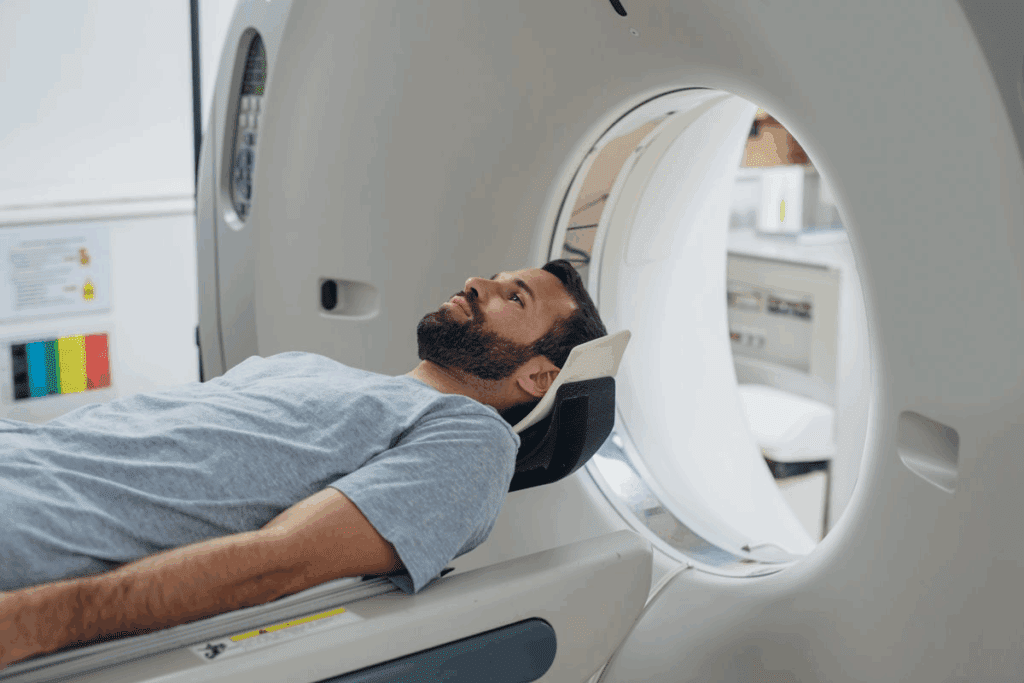
Ultrasound technology is key in finding and diagnosing bladder cancer. It’s a non-invasive method that uses sound waves to show detailed images of the bladder.
How Ultrasound Works for Bladder Cancer Detection
Ultrasound helps see the bladder and spot any issues. A probe sends out sound waves, which bounce back to create an image of the bladder.
Ultrasound is safe and quick, giving fast results. It’s a non-invasive way to check for bladder cancer.
Types of Ultrasound Used
There are several ultrasound types for bladder cancer detection. These include transabdominal and transrectal ultrasound.
Transabdominal ultrasound is the most common. It uses a probe on the abdomen to see the bladder.
Transrectal ultrasound involves a probe in the rectum for a closer look at the bladder and nearby tissues.
Each type has its benefits. The choice depends on the patient’s needs and the doctor’s preference.
Accuracy of Ultrasound for Bladder Cancer
Ultrasound is key in spotting bladder cancer. It has a sensitivity rate of 87% to 93.2%. This makes it a vital tool in finding bladder cancer. But, its accuracy can change based on who is using it and the equipment’s quality.
Using ultrasound with other tests can help doctors get a clearer picture. This way, they can give better diagnoses and treatment plans. It’s all about making sure patients get the best care possible.
Ultrasound is a key tool in diagnosing bladder cancer. It’s non-invasive and shows real-time images. Yet, it has its downsides, like needing skilled operators and not seeing deep into the body.
Advantages
- Non-invasive procedure
- Real-time imaging
- Cost-effective
Limitations
- Operator dependence
- Limited depth penetration
CT Scan Technology in Bladder Cancer Detection
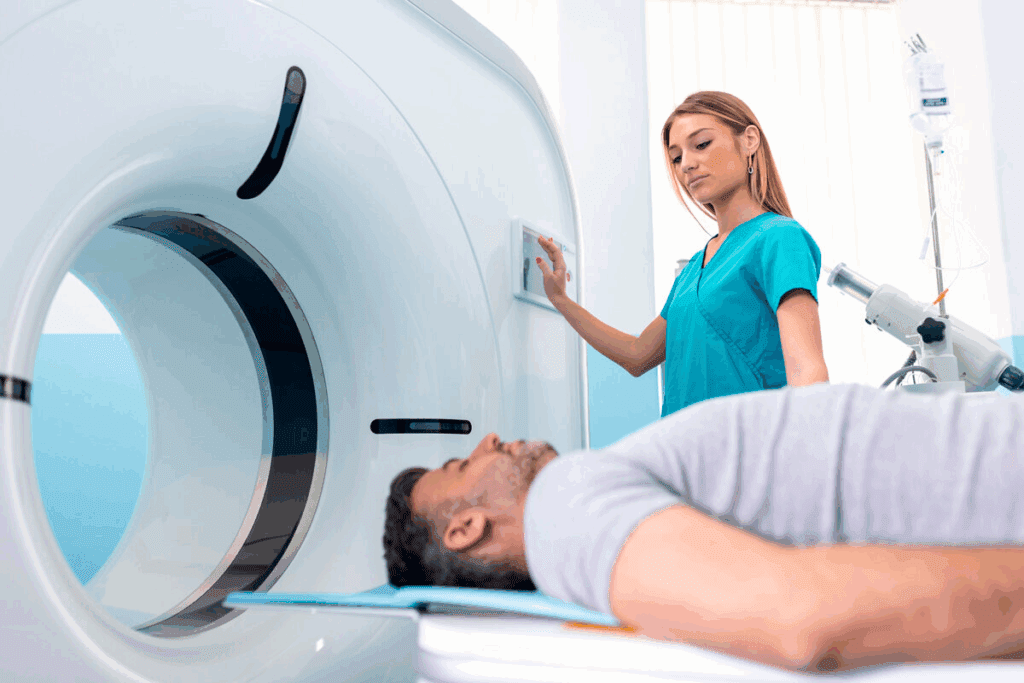
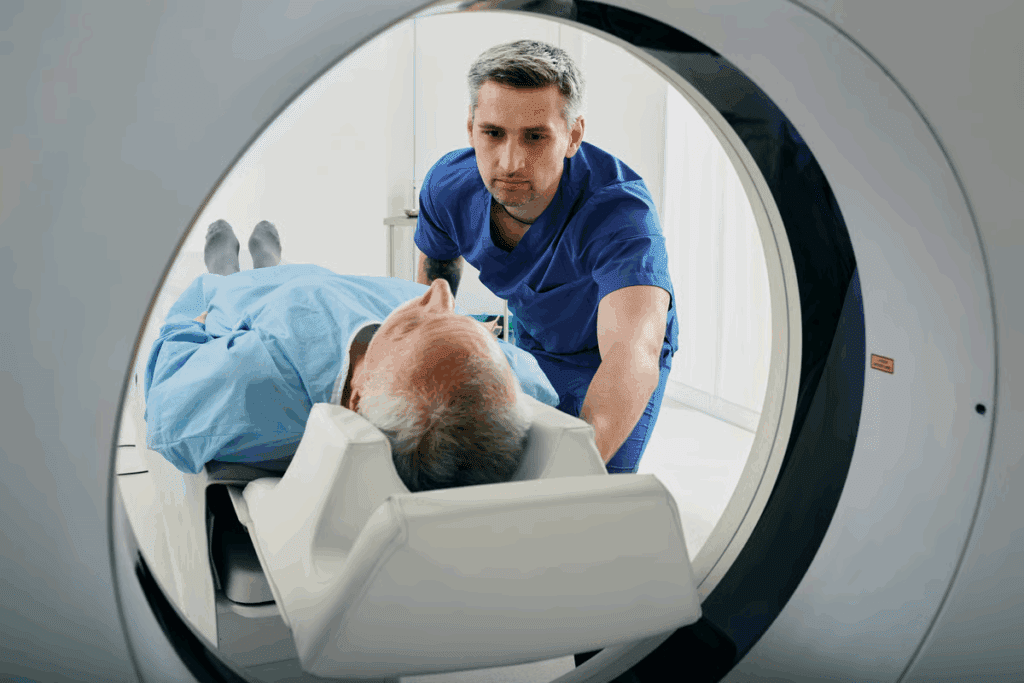
Computed Tomography (CT) scans are key in finding bladder cancer. They use X-rays and computers to show detailed body images. This helps doctors see tumors and understand how far the disease has spread.
How CT Scans Work
CT scans use a moving X-ray machine to take pictures from different angles. These pictures are then put together to show a clear image of the bladder and nearby areas.
CT scans are great for bladder cancer because they give clear images. They help doctors decide on treatments and keep track of how the disease changes over time.
Analyzing Bladder Cancer Images from Diagnostic Scans
Spotting bladder cancer relies on detailed image analysis from scans. This step is key to finding tumors and understanding their size and type.
What Radiologists Look For
Radiologists search for signs of bladder cancer in images. They look for tumors, thickened bladder walls, and any odd shapes. Radiologists are trained to spot these signs and guess if they’re cancerous.
Common Findings in Bladder Cancer
Bladder cancer shows up in specific ways on scans. You might see tumors, thickened walls, or signs of growth into nearby tissues. The size, where it is, and how many there are matter a lot.
Differentiating Malignant from Benign Findings
Telling cancerous from non-cancerous findings is a big deal. Radiologists look at many things to make this call. For example, cancer tumors often have odd shapes and invade nearby areas. Getting this right is key for choosing the right treatment.
In short, looking at scan images is vital for bladder cancer diagnosis and treatment. Radiologists’ careful analysis helps guide patient care.
Accuracy of CT Scans for Bladder Cancer
CT scans are key in finding bladder cancer. They give detailed images that doctors use to spot tumors and see how big they are.
Sensitivity and Specificity Rates
Research shows CT scans can spot bladder cancer 46 to 86.7 percent of the time. This range changes based on the tumor’s size, where it is, and the scanner’s tech. CT scans are very good at saying who doesn’t have cancer.
“The sensitivity of CT scans in detecting bladder cancer can vary significantly based on the tumor’s characteristics,” says Medical Expert, a renowned radiologist. “It’s important to think about these things when looking at CT scan results.”
Factors Affecting CT Scan Accuracy
Many things can change how well CT scans find bladder cancer. These include:
- Tumor size: Smaller tumors are harder to see.
- Tumor location: Some spots are tougher to spot.
- Patient preparation: How well the bladder is filled and the patient’s position matter.
- Scanner technology: Newer scanners with better detail help find more tumors.
Research and Clinical Evidence
Many studies have looked into how well CT scans find bladder cancer. A study in the Journal of Urology found CT scans are very good at saying who has cancer, but not always at finding it. Another study said using contrast-enhanced CT scans helps find more tumors.
Medical Expert, a top urologist, says, “CT scans are very useful for finding bladder cancer. But, we must look at the whole picture of the patient.”
In conclusion, CT scans are very helpful for finding bladder cancer. But, their accuracy can change based on several things. By knowing these factors and using the latest tech, doctors can make better choices.
Role of Imaging in Bladder Cancer Staging and Treatment Planning
Role of Imaging in Bladder Cancer Staging and Treatment Planning
Imaging tools like ultrasound and CT scans are key in bladder cancer care. They help figure out how far the cancer has spread. This is important for planning treatment.
Importance of Accurate Staging
Getting the cancer stage right is critical. It affects how well treatment works. Imaging helps find out the tumor size, if cancer has spread to lymph nodes, and how far it has gone.
Imaging Modalities
Ultrasound and CT scans are often used to diagnose and stage bladder cancer. They give important details about the tumor and how far it has spread.
Treatment Planning
Imaging results guide treatment choices. Knowing the cancer stage helps doctors decide if surgery, chemotherapy, or both are needed.
Conclusion
In summary, imaging is very important in bladder cancer care. It helps doctors plan the best treatment. Tools like ultrasound and CT scans are essential for this.
Comparing Ultrasound and CT Scans for Bladder Cancer Detection
Diagnosing bladder cancer uses different imaging methods, like ultrasound and CT scans. Each has its own benefits and drawbacks. The right choice depends on what the doctor needs and the patient’s health.
Ultrasound is a safe, affordable way to start checking for bladder cancer. It doesn’t use harmful radiation. But, how well it works can depend on the person doing the scan.
CT scans, on the other hand, give detailed pictures. They help doctors see how big the tumor is and if it has spread. This info is key for planning treatment.
So, ultrasound is often the first choice for checking bladder cancer because it’s safe and cheap. But, CT scans are better for seeing how far the cancer has spread.
In summary, both ultrasound and CT scans are important for finding and treating bladder cancer. The choice between them depends on the patient’s needs and the cancer’s stage.
Conclusion: The Future of Bladder Cancer Imaging and Detection
The future of bladder cancer diagnosis is closely tied to new imaging technologies. Improvements in ultrasound and CT scans will greatly benefit patients. Research and development are key to making these improvements.
Healthcare providers can give better care to bladder cancer patients by using new technologies. The outlook for managing bladder cancer is bright, with new discoveries coming.
FAQ
Can ultrasound detect bladder cancer?
Yes, ultrasound can detect bladder cancer. It’s a non-invasive method that can spot tumors in the bladder.
How accurate is ultrasound in detecting bladder cancer?
Ultrasound’s accuracy in finding bladder cancer varies. Its success depends on the tumor’s size, location, and the operator’s skill.
Will bladder cancer show up on a CT scan?
Yes, bladder cancer can be seen on a CT scan. CT scans are great for checking how far the cancer has spread.
What is the difference between ultrasound and CT scans for bladder cancer detection?
Ultrasound is quick, non-invasive, and cheaper. It’s good for first checks. CT scans give more detailed images and are used for planning treatments.
Can a CT scan show bladder cancer?
Yes, a CT scan can show bladder cancer. It’s useful for finding tumors, checking their size, and seeing if the cancer has spread.
Is ultrasound or CT scan better for detecting bladder cancer?
Both ultrasound and CT scans are useful for finding bladder cancer. Ultrasound is good for initial checks, while CT scans are better for detailed evaluations.
Can bladder cancer be detected by ultrasound?
Yes, bladder cancer can be detected by ultrasound. But, how well it’s detected depends on the tumor’s size and location.
Does bladder cancer show on CT scan?
Yes, bladder cancer can be seen on a CT scan. CT scans are great for seeing how far the cancer has spread and planning treatments.
What are the benefits of using ultrasound for bladder cancer diagnosis?
Ultrasound is non-invasive, doesn’t use radiation, and is affordable. It’s also quick and easy to do.
What are the limitations of ultrasound in bladder cancer diagnosis?
Ultrasound’s limitations include needing skilled operators and sometimes having trouble seeing certain bladder areas.
How do CT scans help in staging bladder cancer?
CT scans help stage bladder cancer by showing detailed images of the bladder and nearby tissues. They help assess the tumor’s size and spread to other areas.
References
National Center for Biotechnology Information. (2025). Can Ultrasound or CT Scans Accurately Detect Bladder. Retrieved from https://pmc.ncbi.nlm.nih.gov/articles/PMC3473820/