Last Updated on November 25, 2025 by
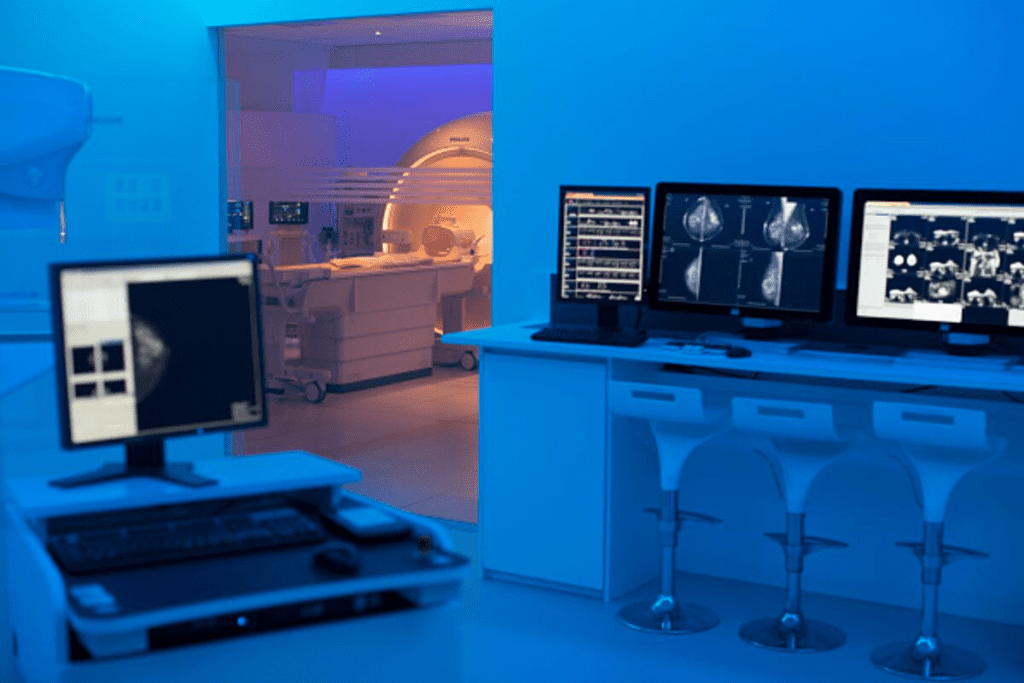
Getting a correct diagnosis is key to treating bladder issues. We’re seeing a big move towards using advanced imaging, like MRI, to improve how we diagnose.
Multiparametric MRI, including the VI-RADS system, is a top tool for spotting and grading urinary system problems. It gives a clearer view than bladder ultrasound or bladder sonogram. This helps doctors make better treatment plans.
At Liv Hospital, we use the newest MRI tech to offer top-notch care. With multiparametric MRI, we can find bladder issues more accurately. This fits our goal to support and guide international patients fully.
Key Takeaways
- Multiparametric MRI boosts how well we can diagnose bladder problems.
- The VI-RADS system is a big step forward in finding bladder cancer.
- Using advanced imaging helps doctors plan better treatments.
- Liv Hospital uses the latest MRI tech for patient care.
- Getting a correct diagnosis is vital for treating bladder conditions well.
How MRI Technology Visualizes the Bladder
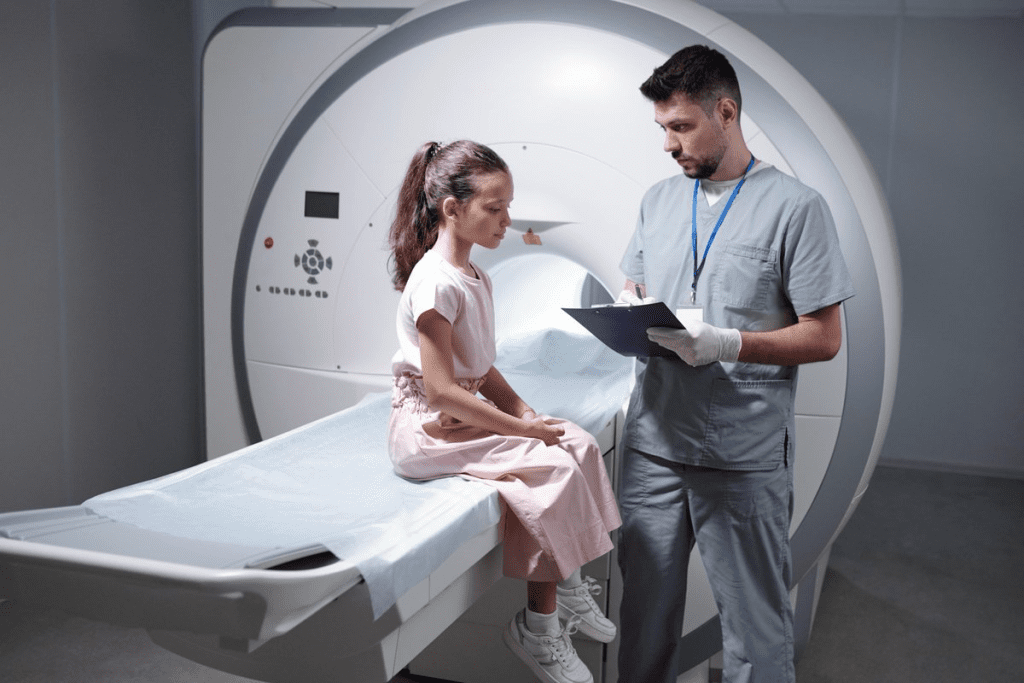
MRI technology has changed how we see and diagnose bladder problems. It gives us clear and detailed images. At its heart, MRI technology uses a strong magnet and radio waves. These create detailed pictures of the body’s inside, like the bladder.
Basic Principles of Magnetic Resonance Imaging
MRI works by using a strong magnetic field. This field makes hydrogen atoms in the body line up. Then, radio waves disturb these atoms, sending signals to the MRI machine. These signals help make detailed images.
This method is great for seeing soft tissues. It’s perfect for checking bladder health. Unlike CT scans, MRI doesn’t use harmful radiation. This makes it safer for patients needing many scans.
Multiparametric MRI and the VI-RADS System
Multiparametric MRI is a big step forward. It combines different imaging methods for a full view of the bladder. The Vesical Imaging-Reporting and Data System (VI-RADS) is used with it. VI-RADS helps accurately stage bladder cancer and plan treatments.
Using multiparametric MRI and VI-RADS improves diagnosis. It’s great for spotting and staging bladder cancer. This method helps see how big the tumor is and where it is in relation to other parts of the body. It’s very helpful for planning surgery.
Common Bladder Issues Detectable Through MRI
Advanced MRI techniques help find many bladder problems. They give a full view of bladder health. We use MRI to spot both cancerous and non-cancerous issues.
Bladder Cancer Detection and Staging
MRI is key in finding and staging bladder cancer. It shows the tumor’s size, where it is, and how deep it goes. This info is key for knowing the cancer’s stage.
Using MRI with other methods makes finding cancer more accurate. This helps doctors plan the best treatment.
- Identification of tumor size and location
- Assessment of tumor invasion depth
- Evaluation of lymph node involvement
Knowing the cancer’s stage is important for treatment planning. MRI gives doctors the info they need. Sometimes, a bladder ct scan or ct scan bladder is used too for a full check.
Non-Cancerous Bladder Conditions Visible on MRI
MRI is also good for spotting non-cancerous bladder issues. These include:
- Bladder diverticula
- Bladder stones
- Inflammatory conditions like cystitis
By seeing these problems, MRI helps find the cause of symptoms. It guides the right treatment.
Clinical Indications for Bladder MRI
We suggest a bladder MRI for patients with symptoms like blood in urine or frequent infections. MRI is great when ultrasound doesn’t give clear results.
In some cases, a ct scan for bladder might be considered. But MRI is better because it shows soft tissues well and doesn’t use radiation.
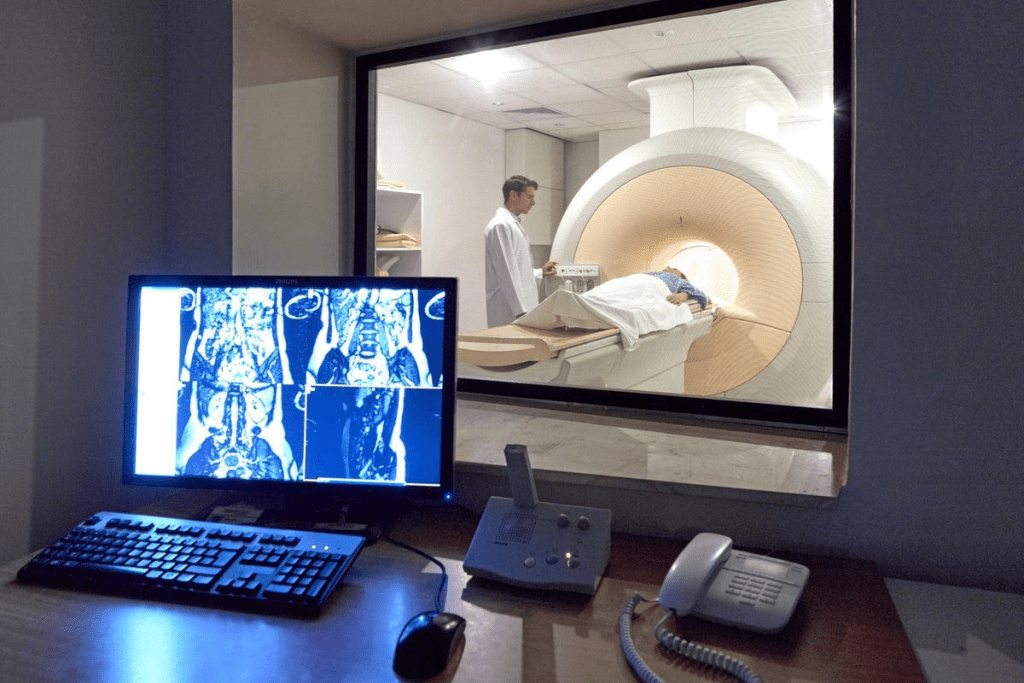
Information from an MRI is very important for bladder cancer detection. It helps plan surgeries or other treatments. MRI gives clear images of the bladder and nearby areas. This helps doctors diagnose and manage bladder problems accurately.
Diagnostic Accuracy of MRI for Bladder Conditions
Advanced MRI techniques have greatly improved in detecting and staging bladder cancer. We use MRI for its high accuracy in checking bladder conditions. This is key for planning effective treatments.
Statistical Evidence from Clinical Studies
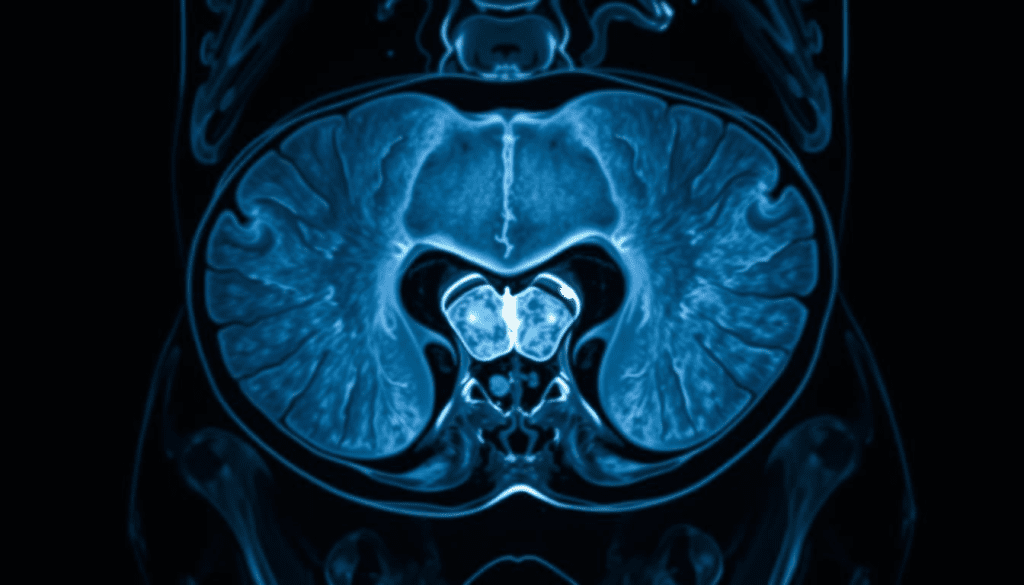
Research shows MRI, with the VI-RADS system, is very accurate in checking muscle invasion in bladder cancer. The VI-RADS system has been validated in many clinical studies. It’s reliable in telling the difference between non-muscle-invasive and muscle-invasive bladder cancer.
A study in a top radiology journal found the VI-RADS system’s accuracy is over 90% in spotting muscle invasion. Such high accuracy is key for picking the right treatment. This could be conservative management or more aggressive surgery.
Inter-Reader Consistency in MRI Interpretation
How well MRI scans are read by different doctors is very important. Studies show experienced radiologists agree a lot when using the VI-RADS system. This agreement is vital for making sure patients get correct diagnoses, no matter who reads their MRI scans.
A study on how much doctors agree found using VI-RADS makes them more consistent. This improved consistency means better patient results. It lowers the chance of wrong diagnoses or misreads.
Preoperative Planning Benefits
MRI’s high accuracy and detailed images make it a top tool for planning surgeries. It gives precise info on how far bladder cancer has spread. This helps surgeons plan the best surgery.
For example, if bladder cancer might be muscle-invasive, MRI shows how far the tumor has grown. This important info is key for planning surgeries like radical cystectomy. It also helps in talking about possible outcomes with patients.
Bladder Ultrasound and Its Role in Urinary Diagnostics
Bladder ultrasound is key in checking urinary health. It’s a safe way to see inside the bladder. This helps doctors find and treat problems.
How Bladder Ultrasound Works
Bladder ultrasound, or bladder sonogram or USG bladder, uses sound waves to make images. It shows the bladder’s size, shape, and what’s inside. It can spot tumors, stones, or swelling.
To do it, a gel is applied to the belly. Then, a transducer sends and gets sound waves. A doctor looks at the images to find urinary issues.
Conditions Best Diagnosed with Ultrasound
Ultrasound is great for finding:
- Urinary retention
- Bladder stones
- Tumors or masses in the bladder
- Bladder wall thickening
It also helps with some procedures, like bladder biopsies or draining urine.
Comparing Ultrasound to MRI for Bladder Assessment
Ultrasound and MRI both check bladder health, but differently. Bladder ultrasound is faster, cheaper, and easier to get. But MRI gives clearer pictures and is better for some things, like bladder cancer.
We often start with ultrasound because it’s safe and doesn’t use radiation. But for detailed views, MRI might be better.
Alternative Imaging Methods for Bladder and Urinary System
While MRI is a powerful tool, other methods like CT scans and X-rays are also key for bladder and urinary health checks. These alternatives offer unique benefits and are chosen based on the condition being diagnosed.
CT Scans for Bladder and Kidney Assessment
CT scans, with contrast agents, give detailed images of the bladder and kidneys. A renal CT scan is great for checking kidney structure and function. It helps find issues like kidney stones, cysts, and tumors.
When looking at the kidneys, a CT scan kidney protocol is used. It captures images at different contrast levels. This gives a full view of kidney anatomy and problems.
The kidney CT scan is good at spotting many kidney and urinary tract issues. It’s very useful in emergencies, like suspected kidney stones or severe injuries.
X-ray Based Techniques
X-ray imaging, including plain radiography and contrast studies like IVU, are used to check the urinary system. An X-ray for kidneys can find kidney stones, calcifications, and some structural issues.
- Plain X-rays are quick and simple, often used first.
- Contrast-enhanced X-ray studies give more detailed info about the urinary tract.
Choosing the Right Imaging Method for Specific Conditions
The right imaging technique depends on the patient’s symptoms, medical history, and suspected condition. For complex kidney evaluations, a CT scan kidney protocol might be best. An ultrasound might be the first choice for bladder issues.
- For acute injuries or suspected kidney stones, a CT scan is often the best choice because of its speed and sensitivity.
- In cases needing detailed soft tissue characterization, MRI might be chosen over CT or X-ray.
- For patients with certain MRI or CT contrast contraindications, X-ray based techniques or ultrasound may be better.
Understanding each imaging modality’s strengths and limitations helps healthcare providers choose the best diagnostic approach for their patients.
Conclusion: Advances in Bladder Imaging Technology
Recent improvements in MRI technology have greatly helped in diagnosing and understanding bladder issues. The use of multiparametric MRI and the VI-RADS system has made it easier to spot and stage bladder cancer. This leads to better treatment plans for patients.
At Liv Hospital, we’re dedicated to top-notch patient care. We’ve combined bladder ultrasound and MRI technology to improve our diagnostic tools. This allows us to offer complete care for those with urinary system problems.
As imaging technology gets better, so will the care we give our patients. We’re committed to using the newest bladder imaging tech. This ensures our patients get the best care available.
FAQ
What is the role of MRI in detecting bladder issues?
MRI is key in spotting bladder problems like cancer. It uses special images to see the bladder and nearby areas.
How does MRI technology visualize the bladder?
MRI uses magnetic fields and radio waves. These create detailed images of the bladder and its surroundings. This helps doctors check for different bladder issues.
What are the clinical indications for performing a bladder MRI?
Doctors use MRI for bladder cancer, bleeding in the urine, and other bladder problems. It’s also for checking how cancer has spread and growing.
How does bladder ultrasound work?
Ultrasound sends sound waves to the bladder. These waves create images of the bladder. Doctors use these images to check the bladder’s size, thickness, and for any growths.
What are the advantages of using MRI over ultrasound for bladder assessment?
MRI gives clearer images of the bladder and its surroundings than ultrasound. This makes MRI better for finding and checking bladder cancer. Ultrasound is better for measuring bladder size and thickness.
What is the VI-RADS system used for?
The VI-RADS system helps doctors understand MRI images of the bladder. It’s mainly for finding and checking bladder cancer.
Can CT scans be used for bladder assessment?
Yes, CT scans can check the bladder. They’re good for looking at the bladder and urinary system. They can spot problems like kidney stones or tumors.
What is the difference between a renal CT scan and a bladder CT scan?
A renal CT scan looks at the kidneys. A bladder CT scan looks at the bladder. Both help check different parts of the urinary system.
How does a kidney ureter bladder X-ray work?
A kidney ureter bladder X-ray uses X-rays to see the kidneys, ureters, and bladder. It helps find problems like kidney stones or other issues.
What is the role of the USG bladder in urinary diagnostics?
Ultrasound of the bladder, or USG bladder, helps in urinary diagnostics. It shows images of the bladder. Doctors use it to check the bladder’s size, thickness, and for any growths.
Why would a doctor order a kidney ultrasound?
Doctors might order a kidney ultrasound to check for kidney stones, cysts, or tumors. It also helps evaluate kidney function.
What is a kidney CT scan used for?
A kidney CT scan checks the kidneys for problems like stones, cysts, or tumors. It also helps check kidney function.
References
- Cornelissen, S. W. E., Veenboer, P. W., Wessels, F. J., & Meijer, R. P. (2020). Diagnostic accuracy of multiparametric MRI for local staging of bladder cancer: A systematic review and meta-analysis. Urology, 145, 22-29. https://pubmed.ncbi.nlm.nih.gov/32721515/
- Islam, N. U., et al. (2023). Diagnostic performance of multiparametric MRI based Vesical Imaging-Reporting and Data System (VI-RADS) for bladder cancer: A systematic review and meta-analysis. Clinical Radiology. https://pubmed.ncbi.nlm.nih.gov/37701172/