Last Updated on December 3, 2025 by Bilal Hasdemir
The urinary system is vital but often overlooked. It has seven life-sustaining functions. At Liv Hospital, we focus on advanced urinary care.
The urinary system, also known as the excretory system, filters blood. It creates urine as a waste by-product. Knowing its functions is key to staying healthy.
We understand the kidney location in body and its role in human anatomy organs. The urinary system’s seven functions help keep us healthy. These include the regulation of fluids, removal of waste, and proper bladder function, which plays a critical role in urine storage and release. They affect our overall health and the need for a urinal in medical settings.
Key Takeaways
- The urinary system performs seven key functions essential for health.
- Liv Hospital is dedicated to international healthcare and advanced urinary care.
- The urinary system filters blood and creates urine as a waste by-product.
- Understanding the urinary system is vital for maintaining overall health.
- The kidney’s location in the body is critical in human anatomy.
The Urinary System: An Overview of Structure and Function
The urinary system is key to our health. It filters waste from the blood. This system removes waste, controls electrolytes, and keeps acid-base balance.
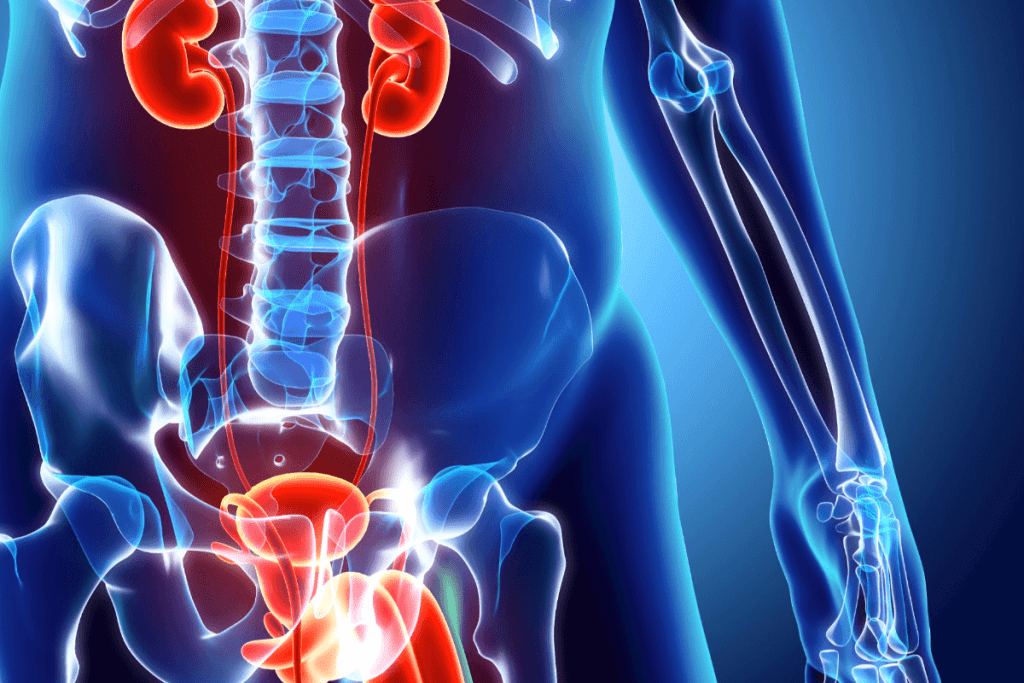
The system includes the kidneys, renal pelvis, ureters, bladder, and urethra. The kidneys are in the lower back. They filter about 200 liters of blood every day.
Key Components: Kidneys, Ureters, Bladder, and Urethra
The kidneys filter waste, excess water, and impurities from the blood. The filtered waste goes through the ureters. These are muscular tubes that move urine to the bladder through muscle contractions.
The bladder is a muscular organ that holds urine. It waits until it’s full to trigger the urge to urinate. Then, urine is excreted through the urethra.
The Journey of Urine Formation and Excretion
Urine starts in the kidneys. Tiny units called nephrons filter the blood. The waste and excess substances form urine, which collects in the renal pelvis.
Then, the ureters carry urine to the bladder. The bladder muscle relaxes to let in the urine. When it’s full, the muscle contracts, and urine is expelled through the urethra during urination.
Function 1: Excreting Metabolic Waste from the Blood
The urinary system’s first key function is to get rid of metabolic waste from the blood. The kidneys, found in the lower back, do most of this work. They filter the blood to remove waste, extra ions, and water, keeping the body balanced.
Filtering Urea and Other Nitrogenous Wastes
The kidneys filter out urea, a waste from protein breakdown, through tiny units called nephrons. Urea can harm the body if it builds up. The nephrons filter it and other waste, sending it to the urine.
Urine is made in the kidneys and goes down the ureters to the bladder. It waits there until we pee it out through the urethra.
The Nephron’s Role in Waste Removal
The nephron is the kidney’s main unit for filtering blood. It has a glomerulus for filtration and a renal tubule for processing. This setup helps the nephron remove waste like urea while keeping important nutrients and ions.
In short, the kidneys are key to our health by removing waste from the blood. They do this through the nephrons. This is important to stop harmful waste from building up in our bodies.
Function 2: Regulating Water Balance in the Body
The urinary system is key to keeping our water balance right. This balance is vital for our health. It’s managed through complex systems that adjust urine water levels, keeping our body hydrated.
Antidiuretic Hormone (ADH) Mechanisms
Antidiuretic hormone (ADH), or vasopressin, is a major player in water balance. It’s made in the hypothalamus and released by the posterior pituitary gland. ADH helps the kidneys keep more water, making urine more concentrated and reducing water loss.
Mechanism of ADH: ADH works by binding to receptors on collecting duct cells. This starts a chain of signals that brings aquaporin-2 water channels to the surface. These channels make the ducts more permeable to water, letting more water go back into the blood.
Responding to Dehydration and Overhydration
The body has ways to handle changes in how much water it has. When it’s dehydrated, ADH levels go up, helping the body hold onto water. On the other hand, when it’s too full of water, ADH levels drop, leading to more urine to get rid of the extra water.
Dehydration Response: When the body is dehydrated, osmoreceptors in the hypothalamus notice. They send a signal for ADH release. This makes the body hold onto water and produce more concentrated urine, helping to get back to normal hydration.
Overhydration Response: When the body has too much water, osmolality goes down. This lowers ADH release, causing less water to be reabsorbed. As a result, more urine is made to get rid of the excess water.
The urinary system keeps our water balance in check. This is important for our body’s functions to work well.
Function 3: Maintaining Electrolyte Balance
The urinary system is key in keeping electrolyte balance right. This balance is vital for nerve and muscle health. Electrolytes like sodium, potassium, and calcium are important for many body functions.
The kidneys, a major part of the urinary system, manage these electrolytes. They make sure the body has the right amounts for proper function.
Regulation of Sodium, Potassium, and Calcium Levels
The kidneys control sodium, potassium, and calcium levels in our bodies. Sodium helps manage water in the body and is important for nerve and muscle health. Potassium keeps the heart beating right and helps muscles work. Calcium is essential for strong bones and muscles.
The kidneys adjust how much of these electrolytes we lose. They do this based on what our body needs. This keeps their levels healthy.
Electrolyte Balance and Neuromuscular Activity
Keeping the electrolyte balance right is key for muscle and nerve activity. If it’s off, we might feel weak, get muscle cramps, or have heart rhythm problems. The urinary system, mainly the kidneys, keeps electrolyte levels just right.
This helps our body work well and stay healthy. By controlling sodium, potassium, and calcium, the kidneys help our nerves and muscles function properly.
The Bladder and Its Role in the Renin-Angiotensin-Aldosterone System
We will explore how the bladder and kidneys work together to regulate blood pressure. The renin-angiotensin-aldosterone system (RAAS) is key in controlling blood pressure. It greatly affects the bladder’s function.
Regulating Blood Pressure through the Urinary System
The kidneys are vital in regulating blood pressure through the RAAS. When blood pressure falls, the kidneys release renin. This enzyme starts a chain of reactions that constrict blood vessels and retain sodium and water. This increases blood pressure.
The RAAS pathway involves several key components:
- Renin release by the kidneys
- Conversion of angiotensinogen to angiotensin I
- Conversion of angiotensin I to angiotensin II by angiotensin-converting enzyme (ACE)
- Angiotensin II causes vasoconstriction and stimulates aldosterone release
- Aldosterone promotes sodium retention, leading to water retention and increased blood pressure
Kidney-Bladder Coordination in Pressure Management
The kidneys and bladder must work together to keep blood pressure healthy. The kidneys control urine production, which affects blood volume and pressure. The bladder stores urine until it is expelled.
Effective kidney-bladder coordination ensures:
- Proper urine storage and elimination
- Regulation of blood volume and pressure
- Maintenance of electrolyte balance
Understanding the RAAS and kidney-bladder coordination helps us see how blood pressure is regulated. It’s important for overall cardiovascular health.
Function 5: Producing Erythropoietin for Red Blood Cell Synthesis
The kidneys make erythropoietin, a hormone that controls red blood cell production. This is key for keeping red blood cell counts healthy. It ensures tissues and organs get enough oxygen.
The Kidney’s Role in Blood Cell Production
Erythropoietin is a hormone that tells the bone marrow to make more red blood cells. When the body needs more oxygen, the kidneys release erythropoietin. This hormone then goes to the bone marrow to start making more red blood cells.
This shows how the urinary system helps keep the body balanced. By controlling red blood cell production, the kidneys help tissues get the oxygen they need to work properly.
Erythropoietin Deficiency in Chronic Kidney Disease
People with chronic kidney disease often don’t make enough erythropoietin. This can cause anemia, with symptoms like fatigue and shortness of breath. Anemia can really affect their quality of life and may need treatment.
This shows how important the kidneys are for making red blood cells. Helping manage anemia in those with chronic kidney disease is key to their health and happiness.
In short, the kidneys’ role in making erythropoietin is vital for the body’s red blood cell needs. Understanding this helps us see how different parts of the body work together.
Function 6: Activating Vitamin D for Calcium Absorption
Vitamin D activation is a key process carried out by the kidneys. It influences bone health by improving calcium absorption. The urinary system, mainly the kidneys, is vital for bone health. It helps regulate calcium and phosphorus levels.
Converting Vitamin D to Its Active Form
The kidneys convert vitamin D into its active form, calcitriol. This active form is key for better calcium absorption in the intestines. This process is essential for strong bones and good skeletal health.
For more detailed information on vitamin D, visit the Office of Dietary Supplements website.
Impact on Calcium Homeostasis and Bone Health
The activation of vitamin D greatly affects calcium homeostasis and bone health. Here are some key points to consider:
- Calcium absorption is significantly enhanced by the active form of vitamin D.
- Maintaining adequate calcium levels is vital for bone density and strength.
- Vitamin D deficiency can lead to conditions such as rickets in children and osteomalacia in adults.
- The kidneys’ ability to activate vitamin D is vital for preventing bone-related disorders.
In conclusion, the urinary system’s role in activating vitamin D is indispensable for calcium absorption and maintaining bone health. By understanding this process, we can better appreciate the complex mechanisms that support our overall well-being.
Function 7: Controlling Acid-Base Balance
The kidneys are key in the seventh function of the urinary system. They help keep acid-base balance in check. This is vital for our health, keeping our body’s functions running properly.
Maintaining Blood pH Between 7.35 and 7.45
The body keeps blood pH between 7.35 and 7.45. The kidneys adjust bicarbonate and hydrogen ions to do this. If blood pH drops, they add more bicarbonate to balance it out. If pH rises, they remove more bicarbonate.
This balance is critical. Too much acidity can cause fatigue, confusion, and even coma. Too much alkalinity can lead to muscle weakness and spasms.
Compensating for Metabolic and Respiratory Imbalances
The body has ways to handle imbalances in acid-base balance. Metabolic imbalances happen when there’s too much or too little bicarbonate. This can be due to diabetes or vomiting. The kidneys adjust by changing how much bicarbonate and hydrogen ions they excrete.
Respiratory imbalances are caused by changes in carbon dioxide levels. This usually happens due to respiratory issues. The kidneys help by adjusting bicarbonate and hydrogen ion levels in the blood.
For instance, if there’s too much CO2 (respiratory acidosis), the kidneys hold onto more bicarbonate. This helps counteract the excess hydrogen ions. When there’s too little CO2 (respiratory alkalosis), the kidneys get rid of more bicarbonate to lower alkalinity.
By managing acid-base balance, the urinary system”including the bladder”is essential for our body’s homeostasis. The bladder plays a supporting role by storing urine, which is part of the system’s efficient waste elimination. Together, these organs ensure our body functions work well and efficiently.
Conclusion: Preserving Urinary System Health for Overall Wellbeing
Keeping our urinary system healthy is key to feeling our best. It helps our body work right by removing waste and keeping the right balance of electrolytes. It also helps control blood pressure.
At Liv Hospital, we focus on you. Our team works hard to give you the best care for your urinary system. We aim to help you feel your best.
Knowing how important your urinary system is can help you stay healthy. If you notice any issues, get help right away. Liv Hospital follows international standards to ensure you get the care you need.
It’s important to take care of your urinary system for your overall health. We encourage you to be proactive about your health. Visit Liv Hospital for top-notch care that puts you first.
FAQ
What is the primary function of the urinary system?
The urinary system removes waste from the body. It also regulates bodily functions and keeps us healthy.
Where are the kidneys located in the body?
The kidneys are in the back of the abdomen. They are on each side of the spine. They filter waste from the blood.
What is the role of the nephrons in the kidneys?
Nephrons are the kidneys’ functional units. They filter waste, like urea, from the blood.
How does the urinary system regulate water balance in the body?
The kidneys control water in urine to keep us hydrated. They work with antidiuretic hormone (ADH) to do this.
What is the significance of maintaining electrolyte balance in the body?
Electrolytes like sodium, potassium, and calcium are vital. They help with nerve signals and muscle contractions.
How does the urinary system regulate blood pressure?
The kidneys help control blood pressure. They release hormones that affect blood vessels and fluid balance.
What is the role of erythropoietin in the body?
Erythropoietin makes red blood cells. These cells carry oxygen to tissues.
How does the urinary system contribute to bone health?
The kidneys turn vitamin D into its active form. This helps with calcium absorption and strong bones.
What is the importance of maintaining acid-base balance in the body?
The kidneys keep the acid-base balance in the body. They regulate blood pH and handle imbalances.
What is the genitourinary system, and how is it related to the urinary system?
The genitourinary system includes the urinary and reproductive systems. The urinary system is a key part of it.
How does the excretory system relate to the urinary system?
The excretory system is broader. It includes the urinary system and other systems that remove waste.
References
- I Ogobuiro & Tuma, F. (2023). Physiology, Renal. In StatPearls. Treasure Island, FL: StatPearls Publishing. Retrieved from https://www.ncbi.nlm.nih.gov/books/NBK538339/
- Flores, J. L. (2023). Physiology, Urination. In StatPearls. Treasure Island, FL: StatPearls Publishing. Retrieved from https://www.ncbi.nlm.nih.gov/books/NBK562181/
- Hickling, D. R., et al. (2015). Anatomy and physiology of the urinary tract: relation to host defense. Microbiology Spectrum, 3(5). https://doi.org/10.1128/microbiolspec.uti-0016-2012