For those facing infertility, knowing the cause is key. A hysterosalpingogram (HSG) is a special X-ray test. It checks if the fallopian tubes are open and finds blockages, a big reason for infertility.Understanding the limitations and interpretation when you have a blocked tube normal hsg test result.
At our healthcare network, we use the HSG to check if the tubes are open. This quick test helps find any problems that might stop you from getting pregnant. It’s done in under 5 minutes, and you can go home the same day.
We know how important it is to find the right diagnosis for fertility issues. The HSG test is a big help in checking the health of the fallopian tubes. It gives us important information to help plan your next steps.
Key Takeaways
- A hysterosalpingogram is a diagnostic X-ray used to assess fallopian tube patency.
- It helps diagnose blocked fallopian tubes, a common cause of infertility.
- The procedure is minimally invasive and typically takes less than 5 minutes.
- Accurate diagnosis is critical for planning fertility treatment.
- Our healthcare network is dedicated to providing top-notch care and support.
Understanding the HSG Test
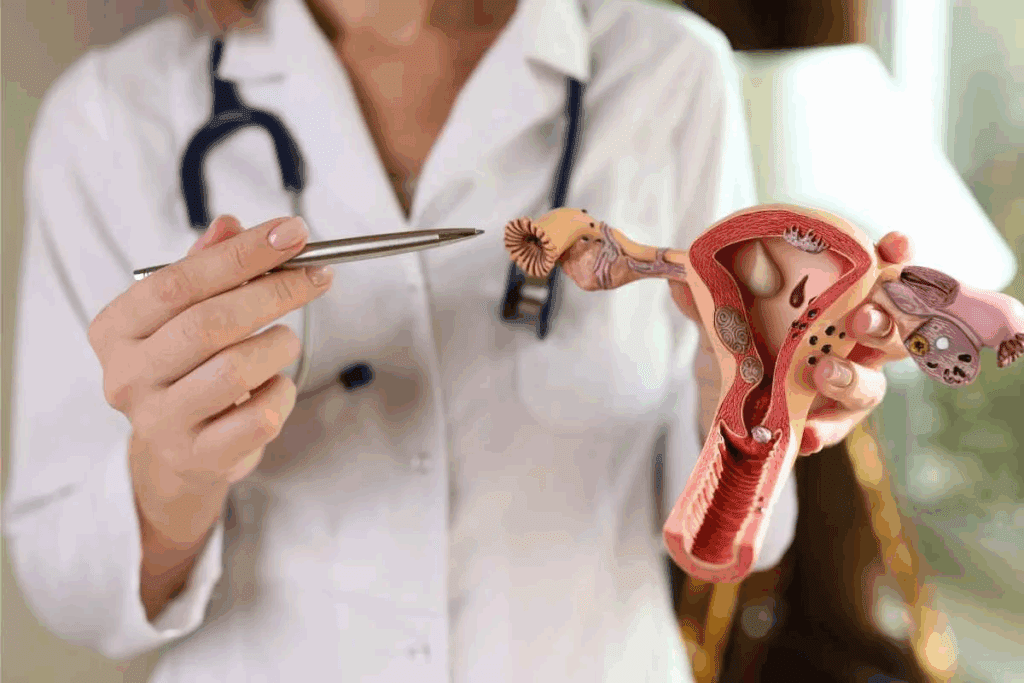
An HSG test, or hysterosalpingogram, is a special imaging procedure. It helps doctors check a woman’s reproductive organs. This test is key for looking at the fallopian tubes and uterus, helping find why some women can’t get pregnant.
Definition and Purpose of Hysterosalpingogram
A hysterosalpingogram is an X-ray that uses dye to see inside the fallopian tubes and uterus. It’s used to find blockages or problems in these areas. This helps doctors find and fix issues that might cause infertility or other health problems.
This test is great because it’s quick and easy to see if the fallopian tubes are open. It’s more accurate than some other tests, showing 72-85 percent sensitivity and 68-89 percent specificity. This makes it a good first step in diagnosing problems.
When Is an HSG Test Recommended?
Doctors suggest an HSG test for women who can’t get pregnant or have had problems like pelvic inflammatory disease. The test is done after a woman’s period but before she ovulates. This is usually between days 1 and 14 of her cycle.
Some reasons for an HSG test include:
- Looking into why a woman can’t get pregnant
- Checking for blockages or problems in the fallopian tubes
- Examining the shape and health of the uterus
- Checking if the tubes are open before some fertility treatments
Key Considerations for an HSG test include knowing its benefits and risks. While it’s usually safe, it might cause some pain or cramping. It’s important to talk to a doctor about any worries or questions before the test.
How an HSG Test Is Performed

An HSG test needs careful preparation and follows several steps for accurate results. We’ll walk you through the process. This includes the use of contrast dye, the procedure steps, and what to expect during the test.
Step-by-Step Procedure
The HSG test is done in a gynecologist’s office or clinic. Here’s what happens:
- The patient lies on an examination table, ready for X-ray imaging.
- A speculum is used to see the cervix.
- A catheter is inserted through the cervix into the uterine cavity.
- Contrast dye is introduced through the catheter to show the uterus and fallopian tubes.
- X-ray images are taken as the dye flows through the reproductive structures.
- The dye’s flow is watched to see if it spills out of the fallopian tube ends, showing they are open.
The Role of Contrast Dye in HSG
Contrast dye is key in the HSG test. It helps see the inside of the uterus and fallopian tubes on X-ray images. There are oil-based and water-based contrast media, each with its own benefits.
Key characteristics of contrast dye:
| Type of Contrast | Characteristics | Advantages |
|---|---|---|
| Oil-based | Thicker, more viscous | Clearer images, possibly therapeutic effect |
| Water-based | Less viscous, absorbed quickly | Faster procedure, less risk of complications |
Duration and Setting
The HSG test is quick, lasting 15 to 30 minutes. It’s done in a hospital or clinic with X-ray technology. After, you can usually go back to normal activities, but you might feel some discomfort or spotting.
It’s a good idea to have someone with you for support after the test. Your healthcare provider will tell you how to care for yourself and any follow-up you need.
Preparing for Your HSG Test
Being well-prepared is key for a successful HSG test. We’re here to help you get ready. Proper preparation makes the procedure smooth and successful.
Timing Within Your Menstrual Cycle
The timing of your HSG test is very important. It’s usually done in the first half of your menstrual cycle. This is after your period but before you ovulate.
This timing helps avoid early pregnancy and ensures the test’s accuracy. It’s important to tell your doctor about your cycle and any pregnancy concerns. Studies show that about 10-20 percent of HSG tests find tubal obstructions. The right timing helps diagnose these issues accurately.
Pre-Procedure Instructions
Your doctor will give you specific instructions before the HSG test. These might include:
- Arriving at the clinic with a light meal to prevent nausea
- Avoiding sexual intercourse for a specified period before the test
- Informing your doctor about any allergies or sensitivities
Following these instructions carefully ensures the test goes smoothly.
Medications and Pain Management
Your doctor might suggest taking an over-the-counter pain medication an hour before the test. This helps manage any discomfort. You might also be given an antibiotic to prevent infection.
| Medication | Purpose | Timing |
|---|---|---|
| Over-the-counter pain reliever | Manage discomfort during and after the test | 1 hour before the test |
| Antibiotic | Prevent infection | As prescribed by your doctor |
By following these preparation steps, you can make your HSG test as comfortable and successful as possible.
What to Expect During an HSG Test
Knowing what happens during an HSG test can make you feel less anxious. An HSG test checks the shape of your uterus and if your fallopian tubes are open.
Sensations and Discomfort Levels
You might feel some cramping, like menstrual cramps, during the test. How much discomfort you feel can differ. Some women might feel only a little pain, while others might find it more uncomfortable. If the pain is too much, tell your doctor right away.
Tips to manage discomfort:
- Take ibuprofen about an hour before the test to help reduce cramping.
- Practice relaxation techniques, such as deep breathing or meditation, to help calm your nerves.
- Discuss your concerns with your doctor or nurse; they can provide guidance and support.
Common Concerns Addressed
Many women worry about pain or complications from the HSG test. While some discomfort is normal, serious problems are rare. It’s also common to have some vaginal spotting for a few days after.
“The HSG test is generally well-tolerated, and most women can resume their normal activities shortly after the procedure.”
Medical Expert, Radiologist
Real-Time Imaging Process
The HSG test uses X-ray technology for real-time imaging. As dye is injected into your uterus and tubes, X-ray images are taken. This lets your doctor see how your tubes are doing and if there are any blockages.
The imaging takes just a few minutes. After reviewing the images, the cannula is removed, and you can get dressed and leave.
By knowing what happens during an HSG test, you can prepare better and feel less anxious.
Blocked Tube Normal HSG Test: Is It Possible?
Understanding HSG tests is key when it comes to finding blocked fallopian tubes. A normal HSG test doesn’t always mean there’s no blockage. This is a big worry for both patients and doctors.
Accuracy Statistics of HSG Testing
Research shows HSG tests are 72-85 percent sensitive and 68-89 percent specific. This means they’re good but not perfect. They can miss some blockages.
| Diagnostic Measure | Percentage Range |
|---|---|
| Sensitivity | 72-85% |
| Specificity | 68-89% |
Sensitivity and Specificity
HSG’s sensitivity and specificity show how well it spots blockages and normal tubes. It can catch 72-85 percent of blockages. But it’s not perfect.
Factors Affecting Test Reliability
Many things can change how reliable an HSG test is. The skill of the person doing the test, the dye quality, and how comfortable the patient are all matter.
Key factors influencing HSG reliability:
- Practitioner expertise
- Quality of contrast dye
- Patient comfort during the procedure
False Negative Results Explained
False negatives happen when HSG says tubes are fine but they’re not. This can be due to test issues or conditions like endometriosis.
Talking to your doctor about your situation and worries is very important.
Interpreting HSG Test Results
Understanding HSG test results means looking closely at the images taken during the test. A radiologist will study these X-ray images. Then, they send a detailed report to your doctor. Your doctor will talk to you about the findings.
We’ll help you understand your HSG test results. We’ll cover what normal fallopian tubes look like. We’ll also explain how to spot blockages and abnormalities. Plus, we’ll discuss the differences between proximal and distal tubal blockages.
What Normal Fallopian Tubes Look Like on HSG
A normal HSG test shows open fallopian tubes with dye flowing freely. “A normal HSG result means the dye moves smoothly through the tubes,” says Medical Expert, a top fertility expert.
On an HSG image, normal tubes look smooth and continuous. The dye flows well from the uterus into the tubes. It then spills out at the fimbrial ends.
Identifying Blockages and Abnormalities
On an HSG test, blockages or abnormalities show up as filling defects or no dye spillage. Common issues include tubal blockages, damage, or anatomical problems.
We look for signs of blockage or abnormality when interpreting HSG results. These include:
- Dye not flowing through the whole tube
- No spillage at the fimbrial end
- Filling defects in the tube
- Anatomical issues, like hydrosalpinx
Proximal vs. Distal Tubal Blockages
Tubal blockages can be proximal or distal, depending on their location.
Proximal blockages are near the uterus. Distal blockages are at the fimbrial end. Knowing where the blockage is helps decide the best treatment.
Medical Expert, “Knowing if a blockage is proximal or distal is key. It helps choose between surgery or assisted reproductive technologies.”
HSG Images of Blocked Tubes
HSG images help spot blockages in the fallopian tubes. By looking at these images, doctors can diagnose issues like tubal occlusion or damage.
In summary, understanding HSG test results means studying the images and looking for abnormalities. By knowing what normal tubes look like and spotting blockages, we can make accurate diagnoses. Then, we can plan effective treatments.
Common Causes of Blocked Fallopian Tubes
Blocked fallopian tubes can make it hard to get pregnant. Knowing why they get blocked is key to fixing the problem. The fallopian tubes are important for reproduction. If they get blocked, it can cause infertility or an ectopic pregnancy.
Many things can cause fallopian tubes to get blocked. We’ll look at the main reasons, like endometriosis, infections, pelvic inflammatory disease, and surgery problems.
Endometriosis and Tubal Blockage
Endometriosis is when tissue like the uterus lining grows outside the uterus. It often affects the fallopian tubes. This condition can cause inflammation, scarring, and adhesions that block the tubes.
Infections (Chlamydia and Other STIs)
Infections, like Chlamydia and other STIs, can block the fallopian tubes. These infections can cause PID, which damages the tubes. It’s important to treat these infections quickly to avoid lasting damage.
Pelvic Inflammatory Disease
Pelvic inflammatory disease (PID) is inflammation of the female reproductive organs. It’s often caused by bacterial infections, including STIs. PID can cause scarring and adhesions in the tubes, leading to blockage. Treating PID quickly is key to avoiding tubal damage.
Surgical Complications and Scarring
Surgeries, like cesarean sections or tubal ligations, can cause scarring and adhesions. These can block the fallopian tubes. While rare, these complications are a big worry for women having surgery in the pelvic area.
In summary, blocked fallopian tubes can come from many sources, like endometriosis, infections, PID, and surgery problems. Knowing these causes helps us find better ways to treat them and improve fertility.
Key Causes of Blocked Fallopian Tubes:
- Endometriosis
- Infections (Chlamydia and Other STIs)
- Pelvic Inflammatory Disease
- Surgical Complications and Scarring
After Your HSG Test: Recovery and Care
Recovering from an HSG test involves managing symptoms and knowing when to get medical help. We’ll help you understand what to expect during this time.
Normal Post-Procedure Symptoms
After an HSG test, you might see some vaginal spotting or light bleeding for a few days. This is usually normal. Some women also feel cramps, dizziness, or stomach discomfort. These symptoms are usually mild and short-lived.
Everyone reacts differently to the procedure. While some might not feel any discomfort, others might experience more severe symptoms.
When Bleeding After HSG Is Normal vs. Concerning
Bleeding after an HSG test can vary. Light spotting that goes away in a few days is normal. But, if you have heavy bleeding that soaks through a pad or tampon in an hour, or if it lasts more than a week, call your healthcare provider.
Severe abdominal pain, fever, or foul-smelling discharge are concerning symptoms. If you have any of these, get medical help right away.
Sexual Activity Restrictions After HSG
We usually advise avoiding sex for 24 to 48 hours after an HSG test. This helps your cervix close and lowers infection risk. But, always follow your healthcare provider’s specific instructions, as they may have additional advice based on your situation.
Follow-up Recommendations
Your healthcare provider will schedule a follow-up appointment after your HSG test. It’s important to attend this appointment to discuss your results and any next steps.
In some cases, you might need more testing or procedures. Your healthcare provider will explain what to expect and how to prepare.
| Symptom | Normal Duration | When to Seek Help |
|---|---|---|
| Light Bleeding/Spotting | 1-3 days | If heavy or lasts >7 days |
| Cramps | A few hours to 1 day | If severe or persistent |
| Dizziness | A few hours | If persists or is severe |
Knowing what to expect after an HSG test can make your recovery better. If you have any concerns or questions, reach out to your healthcare provider for help and support.
Alternative and Complementary Tests for Diagnosing Tubal Issues
There are more ways to check tubal health than just the HSG test. While HSG is good for starting, other tests might be needed to confirm or find other problems.
Laparoscopy: The Gold Standard
Laparoscopy is the top choice for checking tubal issues. It’s a small surgery that lets doctors see the fallopian tubes and other areas. A thin, lighted tube with a camera is used to look inside.
Key benefits of laparoscopy include:
- Direct visualization of tubal anatomy and surrounding structures
- Ability to diagnose conditions like endometriosis and adhesions
- Potential for therapeutic intervention during the same procedure
The American Society for Reproductive Medicine says laparoscopy is great. It helps diagnose and can even treat some problems.
“Laparoscopy allows us to directly observe the fallopian tubes and other pelvic structures, providing a more accurate diagnosis than some other tests.” – Dr. [Last Name], Fertility Specialist
Sonohysterography (SHG)
Sonohysterography, or SHG, is another important test. It fills the uterus with saline during an ultrasound. This gives a clear view of the inside of the uterus and the fallopian tube openings.
| Test | Primary Use | Key Benefits |
|---|---|---|
| Laparoscopy | Direct visualization of tubal anatomy and surrounding structures | Diagnostic and therapeutic capabilities |
| Sonohysterography (SHG) | Evaluation of uterine cavity and tubal patency | Less invasive than laparoscopy, detailed uterine cavity assessment |
| Hysteroscopy | Examination of the uterine cavity | Direct visualization of uterine abnormalities |
Hysteroscopy
Hysteroscopy lets doctors see inside the uterus. It’s not for checking the tubes, but it can find problems inside the uterus that might cause infertility or symptoms.
When Multiple Tests Are Needed
Sometimes, one test isn’t enough to understand tubal health. We might suggest more tests to get a full picture. For example, after an HSG, laparoscopy might be needed if there’s a strong chance of tubal damage.
Using these tests together helps us make a better diagnosis. Then, we can plan a treatment that fits your needs.
Conclusion
The HSG test is a key tool for checking the health of the fallopian tubes and uterus. It helps patients understand their fertility better. Knowing how the test works, its benefits, and its limits is important.
We’ve talked about how the HSG test helps find blocked fallopian tubes, a big reason for infertility. Even though it’s not 100% accurate, it gives vital info. This info helps doctors decide on the next steps.
To wrap up, the HSG test is essential for spotting blocked fallopian tubes. It’s a must-have for diagnosing these issues. It gives doctors the info they need to create good treatment plans.
FAQ
What is an HSG test, and what is its purpose?
An HSG (Hysterosalpingogram) test is a special X-ray that checks the fallopian tubes. It helps find blockages and can explain why some women can’t get pregnant.
How is an HSG test performed?
To do an HSG test, a doctor puts dye through the cervix. This dye shows the uterus and fallopian tubes on X-rays. It helps see if the tubes are open.
Is it possible to have a normal HSG test with blocked tubes?
Yes, it’s possible. The test might miss some blockages. It’s about 72-85% accurate in finding blockages.
What are the common causes of blocked fallopian tubes?
Blocked tubes can happen for many reasons. These include endometriosis, infections like Chlamydia, and scarring from surgery.
What can I expect during an HSG test?
You might feel some pain or cramping during the test. But most people find it okay. You’ll get to see right away if the tubes are open.
How should I prepare for an HSG test?
Get ready by planning the test for the right time in your cycle. Follow any instructions your doctor gives. Talk about pain relief options too.
What are the normal post-procedure symptoms after an HSG test?
You might feel a bit crampy or spot a little after the test. These feelings usually go away in a few hours or days.
When should I be concerned about bleeding after an HSG test?
If you’re bleeding a lot or for a long time, or if it hurts a lot, you should worry. Also, if you have a fever, see a doctor right away.
Are there alternative tests for diagnosing tubal issues?
Yes, there are other tests like laparoscopy and sonohysterography (SHG). Your doctor might suggest these based on your situation.
Can HSG detect endometriosis?
HSG can hint at endometriosis by showing blockages or adhesions. But it’s not the main way to diagnose it. Other tests are needed too.
Why is there a restriction on sexual activity after an HSG test?
Doctors tell you to wait to avoid infection. Always follow their advice on what to do after the test.
How are HSG test results interpreted?
Doctors look at the X-rays to see if the tubes are normal. They check for blockages and understand where they are. This helps figure out what’s going on.
References
National Center for Biotechnology Information. Evidence-Based Medical Guidance. Retrieved from https://pmc.ncbi.nlm.nih.gov/articles/PMC8428328/