Last Updated on November 27, 2025 by Bilal Hasdemir
Getting a clear diagnosis of bone diseases is essential for effective treatment and long-term health. At Liv Hospital, we focus on patient trust and the latest diagnostic care. Understanding the difference between bone scan vs CT scan is vital to ensure you receive the most suitable test for your condition.
A bone scan uses a small amount of radioactive tracer to detect bone abnormalities such as cancer, fractures, and infections. In contrast, a CT scan provides detailed cross-sectional images of bones and surrounding tissues, helping doctors assess structural and internal changes more precisely.
Knowing the distinctions between bone scan vs CT scan enables more informed decisions and helps create the right treatment plan. In this article, we’ll explore the 7 major differences between these two imaging methods to guide you toward better health choices.
Key Takeaways
- Understand the basic principles of bone scans and CT scans.
- Learn the key differences between these two imaging techniques.
- Discover when to use each imaging method for accurate diagnosis.
- Gain insights into the benefits and limitations of bone scans and CT scans.
- Make informed decisions about your healthcare with the right imaging choice.
The Critical Role of Skeletal Imaging in Diagnosis
Skeletal imaging is key in modern healthcare for diagnosing bone disorders. It uses advanced imaging to give accurate diagnoses and guide treatments. This helps in monitoring patient progress.
Why Bone Imaging Matters in Modern Medicine
Bone imaging is essential in modern medicine. It helps doctors diagnose and treat bone-related issues well. Bone scan and CT scan technologies are vital for detecting and managing bone disorders like osteoporosis and fractures.
These imaging tools give insights into bone health. They help spot problems early and plan treatments. For example, a bone scan can find cancer or other issues by showing active bone areas.
Overview of Available Diagnostic Technologies
There are many diagnostic technologies for skeletal imaging. Each has its own strengths and uses. CT scans show detailed bone images, helping assess bone density. On the other hand, bone scans reveal how bones are working, spotting abnormal activity.
Choosing the right imaging depends on the case, patient, and suspected condition. Knowing each technology’s strengths helps us make better diagnoses.
What is a Bone Scan? Understanding the Basics

Bone scans are key in modern medicine for spotting bone disorders. They are a diagnostic test that shows doctors where bones might be damaged or healing. This helps in finding and treating bone diseases and injuries early.
By using bone scans, we can see how well our patients’ bones are doing. This lets us catch and treat problems before they get worse.
How Nuclear Medicine Bone Scans Work
A bone scan uses a tiny bit of radioactive material, called a tracer, injected into the blood. This tracer goes to bones that are busy repairing or growing.
The tracer sends out signals that a special camera, called a gamma camera, picks up. This camera makes detailed pictures of the skeleton.
The Role of Radioactive Tracers in Detection
The tracer in bone scans is usually a special compound labeled with technetium-99m (Tc-99m). It sticks to bones that are changing a lot, like when they’re healing or diseased.
This makes it a great tool for finding things like bone cancer, infections, and broken bones.
Nuclear Bone Scan Machine Technology
The tech behind bone scan machines is cool. It uses gamma cameras to catch the signals from the radioactive tracer. These cameras are super sensitive and make clear pictures of the skeleton.
Some machines can even do Single Photon Emission Computed Tomography (SPECT). This lets them make cross-section images and pinpoint where problems are.
What is a CT Scan? Exploring Computed Tomography
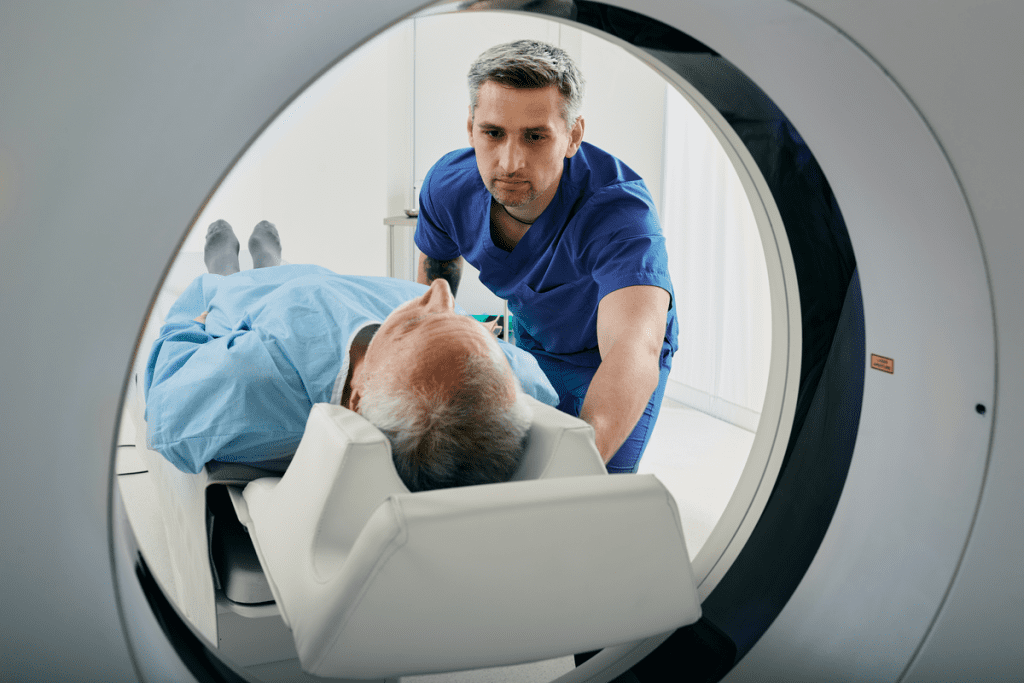
Computed Tomography, or CT scan, is a high-tech medical imaging method. It gives detailed pictures of the body’s inside. We use CT scans to find many health issues, from simple injuries to complex diseases.
The Technology Behind CT Imaging
CT scans combine many X-ray measurements from different angles. This makes detailed pictures of the body’s inside.
The tech has a moving X-ray tube and detectors. They go around the patient, gathering data. A computer then turns this data into images.
Cross-Sectional Imaging Capabilities
CT scans are great at showing detailed cross-sections of the body. This is key for spotting complex health issues.
For example, CT scans can spot bone fractures, bone cancers, and other bone problems very accurately.
Does a CT Scan Show Bones Effectively?
Yes, CT scans are very good at showing bones. They give clear pictures of bone structures. This is very helpful for diagnosing bone-related health issues.
Studies show CT scans are very good at finding bone problems.
Bone Scan vs CT Scan: 7 Key Differences
It’s important to know how bone scans and CT scans differ for accurate diagnosis. Both are key in medical diagnostics, but serve different needs and have unique features.
Difference 1: Underlying Technology and Physics
Bone scans use nuclear medicine, injecting a radioactive tracer into the blood. This tracer builds up in bones, helping spot bone issues. CT scans, by contrast, use X-rays to create detailed body images.
Key difference: Bone scans use radioactive tracers, while CT scans use X-rays.
Difference 2: Radiation Exposure Levels
Both scans involve radiation, but in different ways. Bone scans expose patients to a small amount of radiation from the tracer. CT scans expose patients to X-rays. The dose from a bone scan can change based on the tracer and the scan’s details.
- Bone scans: Radiation exposure from radioactive tracers
- CT scans: Exposure to X-rays, with the dose depending on the scan parameters
Difference 3: Duration and Procedural Steps
The time and steps for bone scans and CT scans are quite different. Bone scans take longer, with a wait after the tracer injection and scanning hours later. CT scans are much quicker, scanning in just a few minutes.
Procedural steps for bone scans: Tracer injection, waiting period, and then scanning.
Procedural steps for CT scans: Patient positioning, scanning.
Difference 4: Diagnostic Sensitivity and Specificity
Both scans have their own strengths in diagnosing. Bone scans are great at finding active bone areas, which can signal many conditions. CT scans, with their detailed images, are better at showing bone structure and finding fractures or bone issues.
- Bone scans: High sensitivity for detecting bone activity
- CT scans: High specificity for anatomical detail
Cancer Detection: Bone Scans vs CT Scans
Understanding the differences between bone scans and CT scans is key for accurate cancer diagnosis. These imaging techniques help find where and how much cancer has spread.
Bone Scan for Cancer: Detection Capabilities
Bone scans are great at finding bone metastases. This happens when cancer cells move to the bones from other parts of the body. They work well because they can spot changes in bone activity.
“Bone scans have been a cornerstone in detecting bone metastases, providing a whole-body assessment that is critical for staging cancer,” says a renowned oncologist.
Does a Bone Scan Show Cancer in Organs?
Bone scans are not the best for finding cancer in organs. They mainly focus on bone health. They might not give much detail about soft tissues or organs.
CT Scan Bone Cancer Visualization
CT scans, though, give detailed images of bone cancer and nearby tissues and organs. This makes them useful for seeing how big the cancer is and where it is. It helps doctors plan the best treatment.
Using CT scans for bone cancer lets doctors measure tumors accurately. This is important for choosing the right treatment.
Complementary Use in Cancer Staging
Bone scans and CT scans are both used in cancer staging. They work together. Bone scans give a broad view, while CT scans show detailed images. Together, they help doctors understand the cancer fully.
In conclusion, both bone scans and CT scans are important for finding and staging cancer. Knowing their strengths and weaknesses helps choose the best test.
Fracture Assessment and Bone Trauma
Getting a bone fracture diagnosed right is key to proper treatment. Imaging tools like CT scans and bone scans are vital in this process. The right imaging choice can greatly affect diagnosis and treatment.
CT Scan for Bone Fracture: Advantages
CT scans are top for finding bone fractures, mainly in urgent cases. They give clear images of bones, helping doctors spot even tiny fractures.
Key benefits of CT scans in fracture assessment include:
- High sensitivity for detecting fractures
- Rapid imaging process, key in emergencies
- Ability to see complex bone structures
- Detailed info for surgery planning
Bone Scan’s Role in Detecting Stress Fractures
CT scans are great for acute fractures, but bone scans are best for stress fractures and hidden injuries. They show bone metabolism changes, spotting stress fractures early.
“Bone scans are sensitive to changes in bone metabolism, making them ideal for detecting stress fractures and other overuse injuries.”
Comparative Sensitivity in Trauma Cases
When looking at CT scans and bone scans in trauma, the fracture type and situation matter. Here’s a table comparing their sensitivity:
| Imaging Modality | Acute Fractures | Stress Fractures |
| CT Scan | High sensitivity | Moderate sensitivity |
| Bone Scan | Moderate sensitivity | High sensitivity |
The table shows CT scans are best for acute fractures, and bone scans for stress fractures. This shows the need to pick the right imaging based on the case.
Bone Infections and Inflammatory Conditions
Diagnosing bone infections, like osteomyelitis, needs advanced imaging. Bone scans and CT scans are key tools. Each has its own benefits.
How Bone Scans Detect Osteomyelitis
Bone scans are great at finding osteomyelitis. They show areas where bone is more active, which often means infection. A radioactive tracer helps spot these areas early.
Osteomyelitis detection is key for quick treatment. Bone scans are a sensitive diagnostic tool. They help doctors start the right treatment.
CT Imaging of Bone Infections
CT scans, on the other hand, give detailed pictures of bone infections. They show structural changes like bone damage or abscesses. This info is important for planning treatment.
Differential Diagnosis Capabilities
Bone scans and CT scans help figure out bone infections. Together, they give a clear picture of what’s going on. This helps doctors make accurate diagnoses and treatments.
In summary, bone scans and CT scans are a strong team against bone infections. They help doctors give better diagnoses and treatments.
Osteoporosis and Bone Density Assessment
Checking bone density is key in diagnosing and treating osteoporosis. CT scans give detailed insights into this.
Osteoporosis weakens bones, making them more likely to break. It’s important to diagnose and assess bone density well for effective treatment.
CT Bone Scans vs DEXA for Osteoporosis
Dual-Energy X-ray Absorptiometry (DEXA) scans have long been the go-to for bone density checks. But, CT scans are gaining recognition for their role in assessing bone density too.
CT scans have several benefits. They can check bone density in specific areas and give detailed images.
| Characteristics | CT Bone Scan | DEXA Scan |
| Technology | Uses X-rays to create detailed cross-sectional images | Uses low-level X-rays to measure bone density |
| Bone Density Assessment | Can assess bone density in specific regions | Provides a general measurement of bone density |
| Image Detail | Offers detailed cross-sectional images | Limited to 2D images |
Research Findings on Diagnostic Accuracy
Studies show CT scans can be as good as DEXA scans in checking bone density and diagnosing osteoporosis. They offer more detailed info on bone structure and density.
A key study published in a leading medical journal found that CT scans are very accurate in diagnosing osteoporosis, even in complex spinal cases.
Clinical Implications for Treatment Planning
CT scans provide detailed information that can change treatment plans. They help healthcare providers target treatments better.
For example, CT scans can spot who needs certain treatments or lifestyle changes to boost bone density and lower fracture risk.
Advanced Bone Scan Technologies
Advanced bone scan technologies have changed nuclear medicine a lot. They help us find problems in bones better. This is great for diagnosing and treating bone issues.
Whole Body Bone Scan Machine Capabilities
Whole body bone scan machines are a big step forward. They can take pictures of the whole skeleton at once. This lets us find many problems in one go, which is key for cancer and bone diseases.
Studies show these scans are very good at finding bone problems. “Whole body bone scans are key for cancer patients,” say experts. They help doctors plan treatments better.
Bone Scan with Contrast: Enhanced Detection
Bone scans with contrast use a special dye to show bone activity. Adding contrast makes some problems easier to see. This is great for finding infections, tumors, and other issues.
SPECT and SPECT/CT Fusion Imaging
SPECT and SPECT/CT fusion imaging are advanced tools. They mix functional and anatomical data. SPECT/CT fusion gives a clear view of bone problems by combining SPECT data with CT scans. This makes diagnosing more accurate.
A leading researcher says, “SPECT/CT is a game-changer in nuclear medicine.” It helps us understand bone health better. This leads to better treatment plans.
CT and Bone Scan in Comparison to MRI
The world of diagnosing bone problems is complex. MRI, CT scans, and bone scans each have their own benefits. Knowing what each can do well is key to making the right diagnosis and treatment plan.
Bone Scan vs MRI: Sensitivity Comparison
Bone scans and MRI are both good at finding bone issues. But they work in different ways. Bone scans are great for seeing all over the body at once. MRI is better for looking closely at specific areas, like the spine or joints.
Bone scans are top-notch for finding bone metastases all over the body. But they don’t show much about soft tissue.
MRI shines when it comes to detailed views of bone and soft tissue, like tumors or infections. But it’s not as good at finding bone metastases everywhere.
| Diagnostic Modality | Sensitivity for Bone Metastasis | Soft Tissue Contrast |
| Bone Scan | High | Low |
| MRI | Moderate | High |
| CT Scan | Moderate | Moderate |
CT vs MRI for Bone Pathology
CT scans and MRI are both great for checking bone health. CT scans are best for looking at the outer layer of bone and finding small pieces of bone or calcium. MRI is better for seeing inside the bone and soft tissues.
When picking between CT and MRI, think about what you need to see and where. CT scans are good for complex fractures or bone injuries. MRI is best for soft tissue and bone marrow issues.
When Each Modality is Preferred
Choosing the right test depends on what you’re looking for, the patient’s situation, and the suspected problem. Bone scans are great for finding bone metastases all over. MRI is best for detailed soft tissue and bone marrow checks. CT scans are useful for looking at the outer bone and finding small bone pieces or calcium.
In the end, picking the right test should be based on knowing what each can do well and the specific situation of the patient.
Clinical Decision Making: Choosing the Right Test
Choosing the right imaging test is key in clinical decision-making. We must think about what test is best for a patient’s condition. This means deciding between a bone scan or a CT scan based on several factors.
Patient-Specific Factors in Test Selection
When picking between a bone scan and a CT scan, the patient’s needs are important. Some patients may have conditions or allergies that make one scan better than the other. We look at the patient’s medical history, age, and any risks from the scan.
Disease-Specific Imaging Protocols
Different diseases need different imaging tests. For example, bone scans are great for finding bone cancer, while CT scans are better for checking injuries or complex fractures. Knowing what each disease needs helps us pick the right test.
Combined Approaches for Comprehensive Diagnosis
At times, using more than one imaging test gives a clearer diagnosis. For example, combining bone scans with CT scans can give both functional and detailed images. This can improve how well we can diagnose.
| Imaging Modality | Primary Use | Advantages |
| Bone Scan | Detecting bone metastases, infections | High sensitivity for bone pathology, whole-body imaging |
| CT Scan | Assessing bone fractures, complex anatomy | High-resolution images, quick scanning time |
To better understand, let’s look at an image that shows how these tests work:
By looking at the patient’s needs, the disease, and the benefits of combining tests, we can choose the best imaging test. This careful approach helps ensure patients get the right diagnosis and treatment.
Conclusion: Optimizing Diagnostic Accuracy in Bone Imaging
Choosing the right imaging test is key to accurate diagnosis and treatment planning. We’ve looked at the differences between bone scans and CT scans. Each has its own strengths and weaknesses.
Healthcare professionals must think about the patient’s needs and the clinical situation when deciding. Bone scans are great for finding metabolic activity in bones. This makes them perfect for spotting cancer and infections.
CT scans, on the other hand, give detailed views of bones. They’re best for checking bone fractures and structural issues. Knowing these differences helps us improve diagnosis and patient care.
As medical imaging gets better, staying up-to-date with each technology’s abilities is vital. This knowledge helps us make better choices for our patients.
FAQ
What is the difference between a bone scan and a CT scan?
A bone scan uses a tiny amount of radioactive material to show active bone areas. A CT scan, on the other hand, uses X-rays to create detailed images of bones and tissues around them.
Does a CT scan show bones effectively?
Yes, CT scans are very good at showing bones. They are great for finding bone fractures, bone cancer, and other bone issues.
Can a bone scan detect cancer in organs?
While bone scans mainly look for cancer in bones, they can sometimes find cancer in organs by accident. But finding cancer in organs is not their main job.
How does a bone scan detect osteomyelitis?
Bone scans find osteomyelitis by showing areas of bone that are more active than usual. This means there’s an infection or inflammation.
What is the role of CT scans in assessing bone density?
CT scans can check bone density, but they’re not the best tool for this. DEXA scans are usually used to diagnose osteoporosis.
What are the advantages of whole body bone scan machines?
Whole body bone scan machines can scan the whole skeleton at once. This is helpful for finding many areas of bone activity or disease.
How do bone scans compare to MRI in terms of sensitivity?
Bone scans are very good at finding bone activity. MRI is better for soft tissue and marrow problems. The right choice depends on what you’re looking for.
Can a CT scan be used to detect stress fractures?
Yes, CT scans can spot stress fractures, even where X-rays might miss them. Bone scans are also very good at finding these.
What are the benefits of using a combined approach for diagnosis?
Using different imaging methods like bone scans, CT scans, and MRI can give a clearer picture of bone problems. This helps doctors make more accurate diagnoses and treatments.
How does radiation exposure differ between bone scans and CT scans?
Both bone scans and CT scans use radiation, but in different ways. CT scans use X-rays, while bone scans use tiny amounts of radioactive tracers.
Are bone scans or CT scans more suitable for detecting bone cancer?
Both bone scans and CT scans can find bone cancer. Bone scans are good at showing bone activity, while CT scans give detailed images of bone anatomy and possible lesions.
References:
- Ueda, C. E., et al. (2020). Comparison of 18F-NaF PET/CT with other imaging modalities in detection of skeletal metastases. Radiologia Brasileira, 53(5), 394-399. https://www.ncbi.nlm.nih.gov/pmc/articles/PMC7704988/