Last Updated on November 25, 2025 by Ugurkan Demir
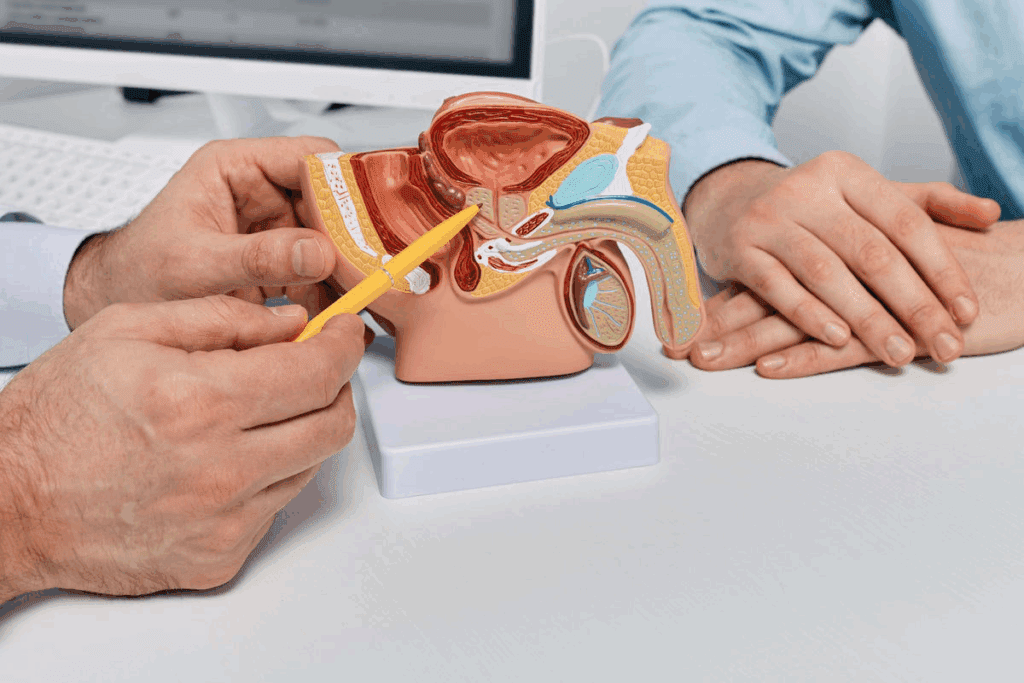
Benign Prostatic Hyperplasia (BPH), or enlarged prostate, is common in older men. Knowing how it’s diagnosed is key to managing it well. How is a BPH diagnosis made? Understand the complete detection process, from initial symptoms and exams to the specific tests used by doctors.
To diagnose BPH, doctors take a detailed medical history and perform a physical exam. This includes a digital rectal examination (DRE).
What Is Benign Prostatic Hyperplasia? Understanding the Basics
Benign Prostatic Hyperplasia (BPH) is when the prostate gland gets bigger. This can cause trouble with urination because the urethra gets squeezed. Knowing about BPH helps manage its symptoms and avoid serious problems.
The word “hyperplasia” means the prostate gland has more cells. As men get older, the chance of getting BPH goes up. So, it’s a common issue for older men.
Signs of BPH include trouble starting to pee, a weak urine flow, needing to pee a lot, and waking up to pee at night. Spotting these symptoms early and getting the right treatment can really help improve life for those with BPH.
Learning about BPH’s causes and symptoms helps people take care of themselves. This way, they can avoid serious issues.
Recognizing the Symptoms of BPH
Benign Prostatic Hyperplasia (BPH) is a common issue for men as they get older. It happens when the prostate gland grows too big. This can lead to several urinary problems that really affect how well you live.
The most common symptoms include:
- Frequent urination, often at night
- A weak urine flow
- Hard time starting to pee
- Leaking a little at the end of peeing
If you notice any of these signs, seeing a doctor is key. They can check you out and find the right treatment.
The BPH Diagnosis Process: Initial Evaluation
The journey to diagnose BPH starts with a detailed look at the patient’s medical history. This helps doctors understand the symptoms and how they affect daily life. The International Prostate Symptom Score (IPSS) is key in measuring how bad the urinary symptoms are.
At the beginning, doctors do a full check-up and look over the patient’s health history. This is the first step in figuring out if someone has BPH.
Physical Examination Techniques for BPH Diagnosis
Diagnosing Benign Prostatic Hyperplasia (BPH) starts with a physical check-up. This includes a Digital Rectal Examination (DRE).
Significance of DRE
The DRE is a key tool in diagnosing BPH. It helps doctors check the prostate’s size, texture, and if it’s tender. This info is vital for making a BPH diagnosis.
Laboratory Tests Essential for BPH Diagnosis
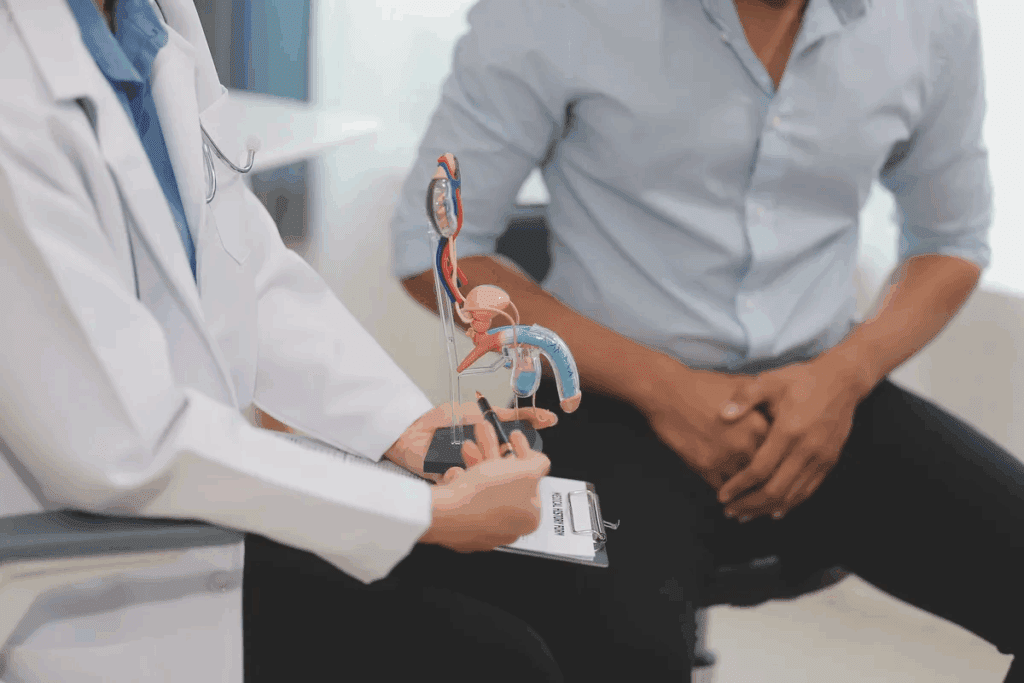
Lab tests are key in diagnosing BPH. They check for infections, kidney function, and prostate-specific antigen (PSA) levels. These tests help doctors make the right diagnosis and treatment plan.
Urinalysis and Urine Culture
Urinalysis is a vital test for BPH diagnosis. It looks for signs of infection, blood, or other issues in urine. A urine culture checks for bacteria and finds the right antibiotic if needed.
Key findings from urinalysis may include:
- Hematuria (blood in the urine)
- Pyuria (pus in the urine)
- Bacteriuria (bacteria in the urine)
- Proteinuria (protein in the urine)
Blood Tests for Kidney Function
Blood tests check kidney function, which BPH can affect. They look at serum creatinine and blood urea nitrogen (BUN) levels. These tests show if there’s kidney damage or impairment.
Elevated creatinine or BUN levels may indicate:
- Kidney damage or disease
- Urinary retention
- Other underlying health issues
PSA Testing: Interpretation and Considerations
PSA testing measures prostate-specific antigen in the blood. High PSA levels can mean BPH, prostate cancer, or other issues. While PSA testing isn’t diagnostic for BPH, it’s important for prostate health.
Interpretation of PSA test results involves considering:
- PSA level: Normal, elevated, or significantly elevated
- PSA velocity: Rate of change in PSA levels over time
- Free-to-total PSA ratio: Helps differentiate between BPH and prostate cancer
Doctors must talk to patients about PSA test results. This includes the need for further testing or monitoring.
Advanced Imaging in BPH Diagnosis

We use advanced imaging to improve BPH diagnosis accuracy. These methods give detailed views of the prostate and surrounding tissues. They help in diagnosing and planning treatment for Benign Prostatic Hyperplasia.
Transrectal Ultrasound (TRUS)
Transrectal Ultrasound (TRUS) is key in BPH diagnosis. It uses an ultrasound probe in the rectum to see the prostate gland clearly. TRUS is great for checking the prostate’s size and shape.
Key benefits of TRUS include:
- Accurate measurement of prostate volume
- Assessment of prostate configuration and any abnormalities
- Guiding biopsies when necessary
Measuring Prostate Volume and Configuration
Measuring the prostate’s volume and shape is vital in BPH diagnosis. TRUS helps measure prostate volume accurately. This is key for figuring out BPH severity and treatment plans.
MRI and Newer Imaging Technologies
Magnetic Resonance Imaging (MRI) and newer technologies offer detailed prostate views. MRI shows prostate anatomy clearly. It helps tell BPH apart from other issues like prostate cancer.
Advantages of MRI in BPH diagnosis include:
- High-resolution imaging of the prostate and adjacent structures
- Ability to detect and characterize prostate lesions
- Useful in planning surgical interventions
Functional and Urodynamic Testing for BPH
To understand BPH’s impact on urination, healthcare providers use special tests. These tests give important details about how BPH affects urination.
Uroflowmetry: Measuring Urine Flow Rate
Uroflowmetry is a test that checks urine flow strength and amount. It shows how much BPH blocks urine flow. Patients urinate into a device that records flow rate. A lower flow rate means there’s a blockage, a common BPH symptom.
Post-Void Residual Volume Assessment
This test checks if the bladder empties fully after urination. It’s key because not emptying the bladder can cause infections. Healthcare providers use ultrasound or catheterization to measure urine left in the bladder after urination.
| Test | Purpose | Method |
| Uroflowmetry | Measures urine flow rate | Special device records urine flow |
| Post-Void Residual Volume | Assesses bladder emptying | Ultrasound or catheterization |
| Pressure-Flow Studies | Evaluates bladder function and obstruction | Catheter measures pressure during urination |
Pressure-Flow Studies
Pressure-flow studies give deep insights into bladder function and blockages. A catheter measures bladder pressure during urination. This helps doctors understand the blockage and plan treatment.
By combining uroflowmetry, post-void residual volume, and pressure-flow studies, doctors get a full picture of BPH’s impact. This info is key for creating a good treatment plan.
Differential Diagnosis: Distinguishing BPH from Other Conditions
Differential diagnosis is key in spotting BPH and excluding other prostate issues. When patients show signs of lower urinary tract problems, we must look at many possible causes. This includes more than just Benign Prostatic Hyperplasia (BPH).
BPH vs. Prostate Cancer
Distinguishing BPH from prostate cancer is a big challenge. Both can cause similar urinary symptoms. Prostate-specific antigen (PSA) testing helps a lot. But, high PSA levels can mean either BPH or cancer, so we need to dig deeper.
To tell them apart, we look at:
- PSA level and how it’s changing
- What the Digital Rectal Examination (DRE) shows
- The patient’s age and family history
- Any other symptoms, like blood in the urine
| Characteristic | BPH | Prostate Cancer |
| PSA Level | May be elevated, but typically | Often elevated, can be >10 ng/mL |
| DRE Findings | Enlarged prostate, smooth surface | Irregular surface, hard nodules |
| Symptoms | LUTS, typically gradual onset | May be asymptomatic, or LUTS, hematuria |
BPH vs. Prostatitis and UTIs
Prostatitis and UTIs can also show symptoms like BPH. But, prostatitis usually causes pain, which BPH doesn’t. UTIs often bring symptoms like painful urination and needing to pee a lot.
We tell these apart by:
- Doing urinalysis and urine cultures
- Looking at how long and how bad the symptoms are
- Checking for pain or discomfort
Neurogenic Bladder Considerations
Neurogenic bladder, caused by nerve problems, can look like BPH. It’s linked to conditions like diabetes, Parkinson’s disease, and spinal cord injuries.
Key differences include:
- Having a nerve disorder
- Urodynamic test results
- How the urine symptoms come and go
When Prostate Biopsy May Be Necessary
A prostate biopsy is needed when we think there might be prostate cancer. This is based on PSA levels, DRE findings, or imaging. It’s also used to check for other conditions.
In conclusion, figuring out what’s causing LUTS is very important. By using a mix of clinical checks, lab tests, and imaging, we can find out if it’s BPH or something else. This helps us treat the right condition.
Conclusion: From Diagnosis to Treatment Planning
Managing BPH well means getting a correct diagnosis and a treatment plan that fits you. Knowing about BPH and its treatments helps men control their symptoms. This improves their life quality. If symptoms don’t get better or get worse, it’s key to see a doctor.
FAQ
What is Benign Prostatic Hyperplasia?
Benign Prostatic Hyperplasia (BPH) is when the prostate gland gets bigger. This can cause problems with urination in men.### Symptoms and Diagnosis
What are the common symptoms of BPH?
Common symptoms include a weak urine flow and needing to urinate often. You might also wake up to use the bathroom at night. Starting or stopping urination can be hard too.
How is BPH diagnosed?
To diagnose BPH, doctors look at your medical history and do a physical exam. They might also run lab tests and imaging studies.### Diagnostic Tests
What tests are used to diagnose BPH?
Tests for BPH include urinalysis and blood tests like PSA. A digital rectal exam (DRE) and uroflowmetry are also used. Imaging studies like ultrasound or MRI might be needed too.### Differentiating BPH from Other Conditions
How is BPH differentiated from other prostate conditions?
To tell BPH apart from other prostate issues, doctors use a mix of tests and medical checks. This helps figure out what’s going on.### Treatment and Management
How is BPH treated?
Treatment for BPH depends on how bad your symptoms are. Options include changing your lifestyle, taking medicine, or surgery.### Lifestyle Changes
What lifestyle changes can help manage BPH symptoms?
Changes like drinking less before bed and avoiding caffeine and spicy foods can help. Good bladder habits are important too.### Complications of Untreated BPH
What are the possible complications of untreated BPH?
Not treating BPH can lead to urinary retention and kidney damage. It also raises the risk of urinary tract infections.### Importance of Seeking Medical Attention
Why is it essential to seek medical attention for BPH symptoms?
Seeing a doctor is key to getting the right treatment. This can ease your symptoms and prevent bigger problems.### When to Consult a Healthcare Provider
When should I consult a healthcare provider about my symptoms?
If you’re having trouble with urination, like a weak flow or needing to go often, see a doctor. They can help figure out what’s wrong and treat it.