Last Updated on November 26, 2025 by Bilal Hasdemir
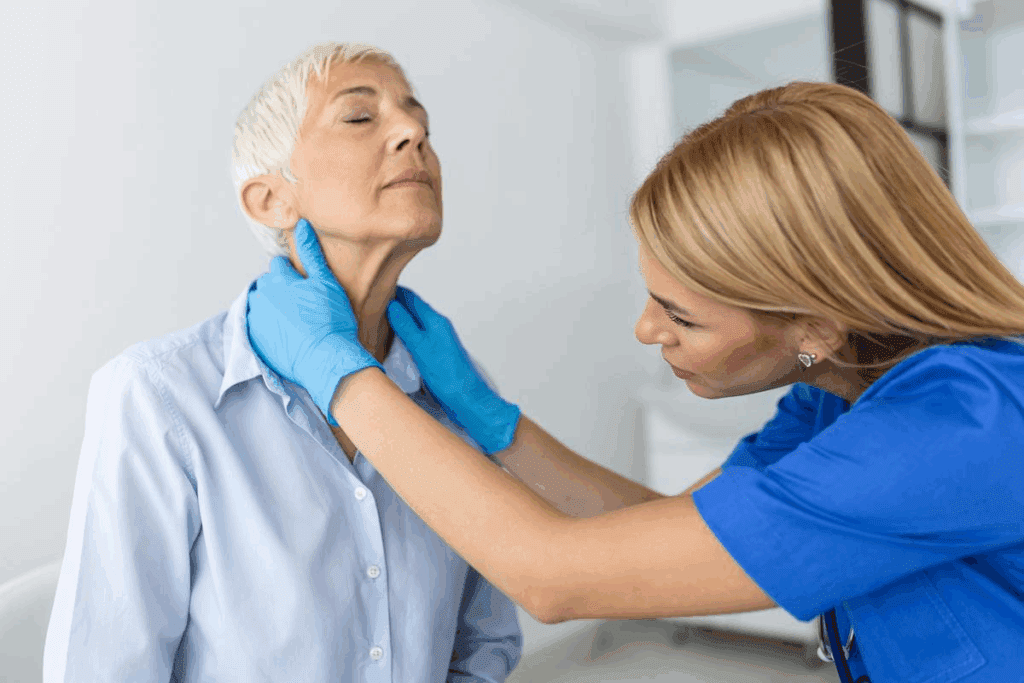
Calcified thyroid nodules are areas in the thyroid gland with calcium deposits. They are often found during tests like ultrasound or x-ray. The thyroid gland is at the neck’s base and can have solid or fluid lumps called thyroid nodules.
It’s important to know about calcification on thyroid for thyroid health checks. Most thyroid nodules are harmless, but some signs, like calcification, mean you might need more tests. Medical organization says family history and radiation can raise thyroid cancer risk.
Key Takeaways
- Calcified thyroid nodules involve calcium deposits within the thyroid gland.
- Thyroid nodules can be solid or fluid-filled and are relatively common.
- Most thyroid nodules are not cancerous, but certain features may require further investigation.
- Family history and radiation exposure are risk factors for thyroid cancer.
- Understanding the causes, symptoms, and diagnosis of calcified thyroid nodules is essential for thyroid health.
Understanding Thyroid Nodules and Calcification

Thyroid nodules are common and linked to thyroid issues. Knowing about them is key for the right treatment. These nodules grow in the thyroid gland, a vital organ in the neck.
What Are Thyroid Nodules?
Thyroid nodules can be solid or filled with fluid and vary in size. They are common, more so in people over 60. Most are harmless, but a few can be cancerous.
Several things can cause thyroid nodules, like iodine lack, radiation, and genes. It’s vital to watch these nodules for any signs of trouble.
The Process of Calcification
Calcification in thyroid nodules means calcium builds up in the tissue. This happens in both harmless and cancerous nodules. The exact reason is complex, involving many cell and chemical actions.
- Microcalcifications are small, often linked to a specific type of thyroid cancer.
- Macrocalcifications are bigger and can be seen in both harmless and cancerous nodules.
Prevalence of Calcified Thyroid Nodules
Calcified thyroid nodules are common, mainly in older adults. Research shows they become more common with age.
It’s important to understand these nodules well for better diagnosis and treatment.
Key Fact #1: What Are Calcified Thyroid Nodules?

Thyroid nodules with calcium deposits, or calcified thyroid nodules, are areas of abnormal calcium buildup in the thyroid gland. They are common and can be found through imaging techniques.
Definition and Formation
Calcified thyroid nodules have calcium salts in the thyroid tissue. This happens for many reasons, like chronic inflammation, aging, and tissue injury. The calcium buildup makes the nodule hard, making it easier to see on images.
How Calcium Deposits Develop
The growth of calcium deposits in thyroid nodules is complex. It involves calcium salts, like calcium phosphate and calcium oxalate, building up in the nodule. This can happen for a few reasons:
- Dystrophic calcification, where calcium builds up in damaged or dead tissue.
- Metastatic calcification, where there’s a problem with calcium metabolism.
Detection Through Imaging
Calcified thyroid nodules can be found through different imaging methods, including:
- Ultrasound Imaging: This is a common way to find thyroid nodules and check if they have calcium.
- X-Ray: Can spot larger calcium deposits in the thyroid gland.
Finding calcium in thyroid nodules is key for diagnosing and treating thyroid issues. It helps figure out the risk of cancer and what treatment is best.
Key Fact #2: Types of Thyroid Calcifications
Thyroid calcifications come in different types, each with its own look and importance. Knowing these types helps doctors diagnose and treat thyroid nodules better.
Microcalcifications (Less Than 1mm)
Microcalcifications are tiny calcium spots, smaller than 1mm. They are often linked to papillary thyroid carcinoma. Finding microcalcifications in a nodule means it needs more checking.
Macrocalcifications (Coarse Calcifications)
Macrocalcifications are big calcium spots in the thyroid. They usually show up in harmless nodules. They are less worrying than microcalcifications.
Eggshell or Peripheral Calcifications
Eggshell calcifications are calcium spots around a nodule’s edge. They can be in both good and bad nodules. But, a full eggshell usually means it’s benign.
Dystrophic Calcifications
Dystrophic calcifications happen in damaged thyroid tissue. They show up in dead or bleeding areas of a nodule. They can be in both harmless and cancerous nodules.
In summary, the type of calcification in a thyroid nodule tells a lot about it. Knowing this helps doctors figure out what it is and how to treat it.
Key Fact #3: Calcified Thyroid Nodules and Cancer Risk
Calcification in thyroid nodules can mean different things. It can show up in both harmless and cancerous conditions. Microcalcifications, in particular, are linked to a higher risk of thyroid cancer, like papillary thyroid carcinoma.
Microcalcifications and Papillary Thyroid Carcinoma
Microcalcifications are tiny calcium spots, smaller than 1mm. They are often seen in papillary thyroid carcinoma, a type of thyroid cancer. Research shows that microcalcifications in nodules raise the chance of cancer.
Benign vs. Malignant Calcification Patterns
It’s important to tell apart benign and malignant calcification patterns. Macrocalcifications are usually harmless, but microcalcifications suggest cancer. The way and where calcification appears can help figure out what the nodule is.
Risk Assessment Based on Calcification Type
The type of calcification in thyroid nodules affects the risk level. Here’s a table showing the risk levels for different calcification types:
| Calcification Type | Cancer Risk |
| Microcalcifications | High |
| Macrocalcifications | Low |
| Eggshell/Peripheral Calcifications | Variable |
Knowing how calcified thyroid nodules relate to cancer risk is key for diagnosis and treatment. By looking at the type and pattern of calcification, doctors can guess the chance of cancer. This helps in choosing the right treatment plan.
Key Fact #4: Common Causes of Calcified Thyroid Nodules
Several factors contribute to the formation of calcified thyroid nodules. These include chronic inflammation and the aging process. Knowing these causes is key to managing thyroid health.
Chronic Inflammation
Chronic inflammation of the thyroid gland, known as thyroiditis, can cause calcified nodules. This inflammation often comes from autoimmune disorders. For example, Hashimoto’s thyroiditis, where the immune system attacks the thyroid gland.
Aging Process
The aging process also plays a big role. As we get older, the chance of calcium deposits in the thyroid gland grows. This can lead to calcification.
Radiation Exposure
Being exposed to radiation, mainly in the head and neck, raises the risk of thyroid nodules. This includes calcified ones. Radiation can harm thyroid cells, causing abnormal growth and calcification.
Previous Tissue Injury
Previous injury to the thyroid gland or nearby tissue can also cause calcified nodules. The body’s response to injury may include calcium deposition. This leads to calcification over time.
As “The development of calcified thyroid nodules is a complex process influenced by various factors”, it’s vital to consider these causes when evaluating thyroid health. Medical experts agree that
“Understanding the underlying causes of calcified thyroid nodules is key to effective management and treatment.”
Key Fact #5: Symptoms of Calcified Thyroid Nodules
Many people with calcified thyroid nodules don’t show symptoms. But, some may feel different things. These feelings can depend on how big the nodule is and where it is.
Asymptomatic Presentations
Most thyroid nodules, even the calcified ones, don’t cause any symptoms. They are often found by accident during tests for other things. These small nodules usually don’t press on anything nearby.
Physical Symptoms in Larger Nodules
Bigger calcified thyroid nodules can cause physical symptoms. You might feel swelling, discomfort, or a lump in your neck. Sometimes, these nodules can make it hard to swallow or breathe if they press on the esophagus or trachea.
Voice Changes and Swallowing Difficulties
Big nodules or those near important areas can cause voice changes or swallowing problems. Voice changes might happen if the nodule presses on the nerve that controls your voice. Here’s a table of possible symptoms:
| Symptom | Description |
| Neck Swelling | Visible or palpable enlargement in the neck area |
| Difficulty Swallowing | Feeling of obstruction or discomfort while swallowing |
| Voice Changes | Hoarseness, changes in pitch, or vocal fatigue |
| Breathing Difficulties | Shortness of breath or feeling of tracheal compression |
Everyone’s experience with calcified thyroid nodules is different. That’s why it’s key to get checked and monitored by a doctor.
Diagnostic Methods for Calcified Thyroid Nodules
Identifying and managing calcified thyroid nodules is key. Different methods are used to spot calcification in these nodules. Each method has its own benefits and drawbacks.
Ultrasound Imaging
Ultrasound is a top choice for checking thyroid nodules, including those with calcification. It’s non-invasive and shows detailed images of the nodule. Studies show ultrasound is great for finding microcalcifications, which might mean the nodule is cancerous.
X-Ray Detection
X-rays can spot calcified thyroid nodules, mainly those with big calcifications. Though not as good as ultrasound, X-rays can show if there’s calcification.
CT Scans and MRI
CT scans and MRI are also used to look at thyroid nodules. They give detailed views and help see how big the calcification is and its effect on nearby areas.
Fine Needle Aspiration Biopsy
Fine Needle Aspiration Biopsy (FNAB) is vital for figuring out what thyroid nodules are, including those with calcification. FNAB takes cells from the nodule for lab tests. This helps tell if the nodule is cancerous or not.
In summary, a mix of these methods is usually used to fully check calcified thyroid nodules. This ensures a correct diagnosis and the right treatment plan.
Differentiating Thyroid Gland Calcifications from Thyroid Cartilage Calcifications
Thyroid gland calcifications and thyroid cartilage calcifications are two different conditions. They need to be diagnosed correctly. It’s important to tell them apart for the right medical care.
Anatomical Differences
The thyroid gland and thyroid cartilage are not the same. The thyroid gland is shaped like a butterfly and is in the neck. The thyroid cartilage is part of the larynx. Calcifications in these areas mean different things for health.
Clinical Significance
Thyroid gland calcifications might mean thyroid nodules or cancer. But thyroid cartilage calcifications are usually from aging or wear and tear. Knowing this helps doctors diagnose and treat better.
Diagnostic Challenges
It’s hard to tell thyroid gland and thyroid cartilage calcifications apart because they’re close. Doctors use ultrasound and CT scans to figure it out. They look at where and what the calcifications are like.
It’s key to tell thyroid gland and thyroid cartilage calcifications apart for good care. Doctors need to know the differences to make the right choices for patients.
Risk Factors for Developing Calcified Thyroid Nodules
It’s important to know the risk factors for calcified thyroid nodules. This helps us spot who might get them. Several things can make someone more likely to get these nodules.
Age and Gender Considerations
Age is a big factor, as thyroid nodules become more common with age. Women are also more likely to get them than men.
Family History
Having a family history of thyroid disease can up your risk. This means if your family has had thyroid issues, you might too.
Environmental Factors
Being exposed to radiation, like in childhood, can also increase your risk. This is because radiation can harm the thyroid gland.
Medical Conditions
Some medical conditions, like Hashimoto’s thyroiditis, can also raise your risk. These conditions affect the thyroid and can lead to nodules.
| Risk Factor | Description |
| Age | Increased prevalence with age |
| Gender | Higher risk in women |
| Family History | Increased risk with family history of thyroid disease |
| Environmental Factors | Radiation exposure, specially in childhood |
| Medical Conditions | Conditions like Hashimoto’s thyroiditis |
Treatment Options for Calcified Thyroid Nodules
Treatment for calcified thyroid nodules can vary. It can range from just watching them to surgery. The choice depends on the nodule’s size, symptoms, and if it’s cancerous.
Watchful Waiting Approach
For small, harmless nodules, doctors might suggest just watching them. They will use ultrasound to check if the nodule changes size or shape.
Surgical Interventions
If the nodule is big or might be cancer, surgery is considered. The surgery can be to remove just the affected lobe or the whole thyroid, depending on the case.
Radioactive Iodine Therapy
Radioactive iodine therapy is used for some nodules, like those causing too much thyroid hormone. It kills thyroid tissue, including nodules.
Medication Management
Medication is given for thyroid hormone imbalances or related issues. It helps manage symptoms and keeps thyroid function stable.
| Treatment Option | Indications | Benefits |
| Watchful Waiting | Small, benign nodules | Avoids unnecessary intervention |
| Surgical Interventions | Suspected malignancy, large nodules | Definitive diagnosis and treatment |
| Radioactive Iodine Therapy | Hyperthyroidism, certain thyroid cancers | Effective in reducing thyroid tissue |
| Medication Management | Thyroid hormone imbalances | Manages symptoms and thyroid function |
When to See a Doctor About Calcified Thyroid Nodules
It’s important to know when to see a doctor if you have calcified thyroid nodules. Many of these nodules are harmless. But, some signs need medical attention.
Warning Signs and Symptoms
If you notice any of these, see a healthcare provider:
- Difficulty swallowing or breathing
- Voice changes or hoarseness
- Pain in the neck or throat
- A noticeable increase in the size of the nodule
Follow-up Recommendations
Regular check-ups with your doctor are key for watching calcified thyroid nodules. How often you need to go depends on the nodule’s size, your health, and other factors your doctor will consider.
Questions to Ask Your Healthcare Provider
Ask questions to get a better understanding of your situation. Here are some ideas:
- What are the risks associated with my calcified thyroid nodule?
- What are the available treatment options?
- How often should I have follow-up appointments?
Conclusion: Living with Calcified Thyroid Nodules
Understanding calcified thyroid nodules is key to managing thyroid health. Proper management and follow-up care are essential for individuals with these nodules.
Living with calcified thyroid nodules requires a thorough approach to thyroid health. Regular check-ups and monitoring are important. They help spot any changes in the nodules, ensuring timely action if needed.
Managing thyroid health means knowing the symptoms and risk factors of calcified thyroid nodules. By staying informed and working closely with healthcare providers, individuals can manage their condition well. This helps maintain overall well-being.
Effective management of calcified thyroid nodules also involves understanding diagnostic methods and treatment options. Being proactive about thyroid health can reduce the risk of complications. It also improves quality of life.
FAQ
What are calcified thyroid nodules?
Calcified thyroid nodules are thyroid nodules with calcium deposits. They can be seen with imaging like ultrasound.
What is the significance of microcalcifications in thyroid nodules?
Microcalcifications hint at a higher risk of thyroid cancer. They are a key marker for malignancy.
How are calcified thyroid nodules diagnosed?
Imaging like ultrasound, x-ray, CT scans, or MRI helps diagnose them. Fine needle aspiration biopsy confirms the diagnosis.
What are the symptoms of calcified thyroid nodules?
Symptoms vary. They can be nothing at all or include neck swelling, trouble swallowing, and voice changes.
What are the treatment options for calcified thyroid nodules?
Treatment depends on the nodule’s size, symptoms, and cancer risk. Options include watchful waiting, surgery, radioactive iodine therapy, and medication.
Are calcified thyroid nodules always cancerous?
No, not all are cancerous. The type of calcification and other factors determine cancer risk.
Can calcified thyroid nodules be benign?
Yes, many are benign. Calcification doesn’t always mean cancer.
How do calcifications in the thyroid gland differ from those in the thyroid cartilage?
Thyroid gland calcifications are linked to nodules or disease. Thyroid cartilage calcifications are a separate issue related to cartilage.
What are the risk factors for developing calcified thyroid nodules?
Risk factors include age, gender, family history, environmental factors, and certain medical conditions.
Is thyroid calcification serious?
Its seriousness depends on the cause and symptoms or cancer risk.
Can calcification of the thyroid gland be seen on x-ray?
Yes, it can be seen on x-ray. But ultrasound is more sensitive.
What is the difference between microcalcification and macrocalcification in thyroid nodules?
Microcalcifications are small and linked to cancer risk. Macrocalcifications are larger and usually benign.
References
ShrEstha, G. (2023). Spigelian hernia: A rare case presentation and review of literature. Journal of Surgical Case Reports. Retrieved from https://www.sciencedirect.com/science/article/pii/S2210261223002079