Last Updated on November 26, 2025 by Bilal Hasdemir
At Liv Hospital, we use ultrasound technology for top-notch care.can an ultrasound detect a herniaPowerful Child Hernias: Revealing the Prevalence Among Hernia Types This safe, painless method helps find many health issues, like hernias. It works by sending sound waves into the body to make images.
Ultrasound is very good at spotting hernias. But, how well it works can depend on the doctor’s skill and the size of the hernia. Our team is trained to use this tech to give you the right diagnosis and treatment.
Key Takeaways
- Ultrasound technology is used to diagnose hernias and other health conditions.
- Operator experience and hernia size can affect the accuracy of ultrasound diagnoses.
- Liv Hospital utilizes advanced ultrasound technology for high-quality patient care.
- Ultrasound imaging is a safe and painless diagnostic procedure.
- Our healthcare professionals provide accurate diagnoses and effective treatment plans.
Understanding Hernias: Types and Symptoms

It’s important to know about the different types of hernias for quick diagnosis and treatment. Hernias can be classified into several types, like inguinal, femoral, umbilical, and hiatal hernias. Each type has its own symptoms and characteristics. We’ll cover the common types and their symptoms to help you know when to see a doctor.
Common Types of Hernias: Inguinal, Femoral, and Umbilical
Inguinal hernias are the most common, happening when tissue bulges through a weak spot in the abdominal muscles. Femoral hernias happen just below the inguinal ligament, near the femoral artery, and are more common in women. Umbilical hernias appear around the belly button and are often seen in newborns.
Femoral hernias are less common but can be more dangerous because of their higher strangulation risk. Umbilical hernias, while usually harmless in babies, might need surgery if they last into adulthood. It’s key to recognize the signs of these hernias to get the right medical care.
Direct vs. Indirect Inguinal Hernias
Inguinal hernias are split into direct and indirect types. Direct inguinal hernias happen when tissue pushes through a weak spot in the abdominal wall. Indirect inguinal hernias occur when tissue enters through a natural weakness in the inguinal canal. Knowing the difference helps in diagnosing and planning treatment.
Indirect inguinal hernias are more common and usually result from a congenital condition. Direct inguinal hernias are often acquired due to muscle weakness over time. Accurate diagnosis of the hernia type is key for the right treatment.
Recognizing Hernia Symptoms and When to Seek Diagnosis
Common symptoms of hernias include a visible bulge, discomfort or pain, and a feeling of heaviness or pressure. These symptoms often worsen when coughing, lifting, or bending over. If symptoms don’t go away or get worse, it’s time to see a doctor.
At Liv Hospital, we stress the importance of quick medical attention for hernia symptoms. Our team is committed to providing full care, from diagnosis to treatment, for the best patient outcomes. If you’re experiencing hernia symptoms, don’t delay in getting medical help.
The Basics of Diagnostic Ultrasound

Diagnostic ultrasound is a key tool in medical imaging. It lets doctors see inside the body without surgery. At Liv Hospital, we use it to help patients get the right diagnosis and treatment.
How Ultrasound Technology Works
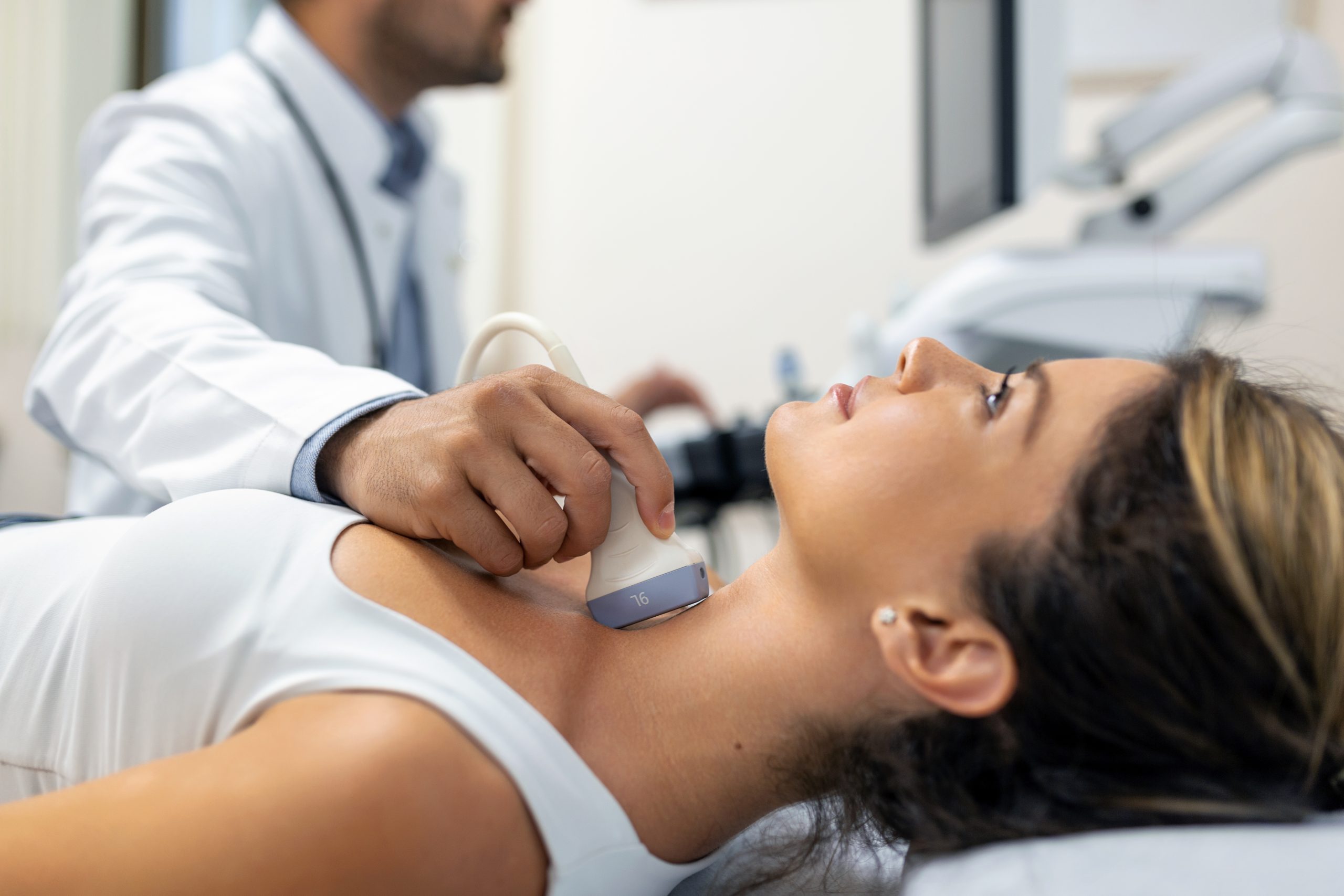
Ultrasound uses sound waves to make images of the inside of the body. It’s great for finding hernias. A device called a transducer sends out sound waves that bounce off organs and tissues.
These echoes are caught by the transducer and turned into images on a screen. This lets doctors see what’s going on inside.
Key components of ultrasound technology include:
- High-frequency sound waves
- A transducer to emit and capture sound waves
- Advanced software to convert sound waves into detailed images
Benefits of Ultrasound as a Non-Invasive Diagnostic Tool
Ultrasound is non-invasive, which means it doesn’t hurt and doesn’t use harmful radiation. It also shows what’s happening in real time. This is very helpful for checking on things like hernias.
The benefits of ultrasound include:
- Non-invasive and pain-free
- No exposure to ionizing radiation
- Real-time imaging for dynamic assessment
- Cost-effective compared to other imaging modalities like MRI or CT scans
Preparing for a Hernia Ultrasound Examination
Getting ready for a hernia ultrasound is easy. Just wear comfy clothes that let you move easily. You might need to change into a gown. Try not to eat too much before it, as it can make you uncomfortable.
To ensure a smooth examination process:
- Wear loose, comfortable clothing
- Follow any specific instructions provided by your healthcare provider
- Be prepared to answer questions about your medical history
Knowing how ultrasound works and what to expect helps patients feel more at ease. At Liv Hospital, we aim to give our patients the best care and support during their tests.
Can an Ultrasound Detect a Hernia? Accuracy Rates Explained
Ultrasound is a top choice for finding hernias because it’s very accurate. It helps doctors give the right treatment by finding the problem early.
Sensitivity Rates for Indirect Hernias
Ultrasound can spot indirect hernias very well, with a success rate of 95 to 100 percent. This is key for knowing who needs surgery.
Sensitivity Rates for Direct Hernias
For direct hernias, ultrasound is also very good, with a success rate of about 80 percent or more. This shows ultrasound is very effective, but sometimes more tests are needed.
Specificity in Hernia Detection
Ultrasound is also very specific in finding hernias, with a rate of up to 100 percent. This means if it says there’s a hernia, it’s usually right, cutting down on mistakes.
To show how well ultrasound works for finding hernias, look at this data:
| Hernia Type | Sensitivity Rate | Specificity Rate |
| Indirect Hernia | 95-100% | Up to 100% |
| Direct Hernia | 80% and higher | Up to 100% |
At Liv Hospital, we use ultrasound to make sure our patients get the right diagnosis. We’re committed to using the latest technology to give the best care possible.
The Ultrasound Examination Process for Hernias
When you get an ultrasound for a hernia, it’s a non-invasive and thorough test. At Liv Hospital, we make sure the process is smooth and effective.
What Happens During the Procedure
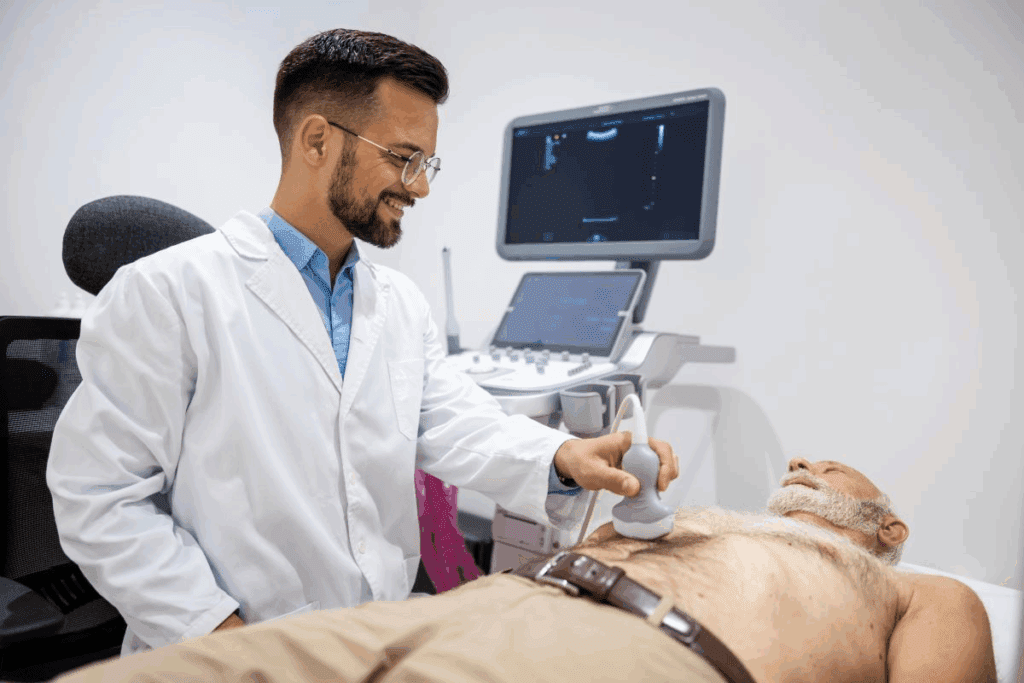
A healthcare professional will use a special device called a transducer during the ultrasound. This device captures detailed images of the abdominal wall. The whole process is designed to be comfortable and usually takes 15 to 30 minutes.
Preparation is minimal. You might need to wear comfy clothes and possibly a gown. We also ask you to arrive with a full bladder. This helps improve the ultrasound images.
Provocative Maneuvers to Enhance Detection
To better find hernias, healthcare professionals might use provocative maneuvers. One common method is the Valsalva maneuver. You’ll be asked to strain or cough. This increases intra-abdominal pressure, making hernias easier to spot.
Our team is skilled in using these maneuvers. We aim to get the most accurate images possible. This helps us give a precise diagnosis and plan the best treatment.
Interpreting Ultrasound Images of Hernias
Reading ultrasound images needs a lot of skill. Our team is trained to spot hernias by their size, location, and type. This info is key for planning treatment.
| Hernia Type | Characteristics | Ultrasound Findings |
| Indirect Inguinal Hernia | Occurs when tissue pushes through a weak spot in the abdominal wall | Visible as a bulge or mass near the inguinal canal |
| Direct Inguinal Hernia | Protrusion through a weak spot in the abdominal wall | Appears as a bulge or defect in the abdominal wall |
| Umbilical Hernia | Occurs around the belly button | Visible as a bulge or swelling near the umbilicus |
Knowing about the ultrasound process can make you feel more at ease. At Liv Hospital, we’re committed to top-notch healthcare and support for our patients.
When Ultrasounds Might Miss a Hernia
Ultrasound technology is very good but not perfect for finding hernias. Some conditions and factors can cause it to miss a diagnosis. It’s key to know these limits.
Size Limitations: Small and Micro Hernias
One big challenge in finding hernias with ultrasound is their size. Small and micro hernias are hard to spot because they don’t move much tissue. They might not show up, even with careful ultrasound checks.
Hernias under 1 cm are often missed. This is because the ultrasound image might not show them clearly. At Liv Hospital, we use top-notch ultrasound gear to catch these small hernias better.
Intermittent or Reducible Hernias
Intermittent or reducible hernias are tricky to find with ultrasound. They only show up in certain positions or actions. If the patient isn’t positioned right or the right actions aren’t done, the ultrasound might miss it.
Our team uses special ultrasound techniques to find these hernias. We ask patients to do certain actions, like the Valsalva maneuver. This helps us see the hernia as it happens, making diagnosis easier.
Operator Experience and Technical Factors
The skill of the person doing the ultrasound is very important. Technical factors, like the ultrasound machine’s quality and settings, also matter a lot.
At Liv Hospital, our radiologists are very skilled and keep learning. We also update our equipment often. This helps us avoid missing hernias.
It’s vital for doctors and patients to know ultrasound’s limits in finding hernias. While it’s a great tool, it’s not 100% reliable. Knowing this helps us use other ways to diagnose, like for small or intermittent hernias.
Differentiating Hernias from Other Conditions
It’s important to tell hernias apart from other conditions that look similar. At Liv Hospital, we know how key accurate diagnosis is. It helps make sure patients get the right care for their health issue.
Common Conditions That Mimic Hernia Symptoms
Many conditions can look like hernias, making it hard to tell them apart. These include:
- Muscle strains
- Lymphadenopathy
- Hip joint pathologies
- Other abdominal wall abnormalities
These can cause pain and discomfort like hernias. Getting the right diagnosis is essential for effective treatment.
How Ultrasound Helps Distinguish Between Conditions
Ultrasound is key in telling hernias from other conditions. It shows real-time images, helping doctors see what’s going on. When checking for a hernia, the technician can:
- See the hernia itself
- Check the size and what’s inside the hernia
- Look at the tissue around it for other possible problems
Ultrasound helps avoid wrong diagnoses and makes sure patients get the right treatment.
| Condition | Ultrasound Characteristics | Differential Diagnostic Clues |
| Hernia | Visible protrusion through a defect | Change in size with Valsalva maneuver |
| Muscle Strain | Fascial or muscle layer disruption | Pain on palpation, no protrusion |
| Lymphadenopathy | Enlarged lymph nodes | Nodes are typically tender and movable |
When Additional Diagnostic Tests Are Needed
Even with ultrasound, sometimes more tests are needed. This is true when:
- The diagnosis is not clear after ultrasound
- The size of the hernia needs more checking
- Other problems are thought to be present
In these cases, we might suggest tests like CT scans or MRI. They help us understand the situation better.
At Liv Hospital, we aim for accurate diagnoses and effective treatments. We use ultrasound and other tests to give our patients the best care.
Improving Hernia Detection with Advanced Techniques
We use the latest ultrasound methods to find hernias more accurately. At Liv Hospital, we lead in diagnostic technology. We use advanced techniques to improve patient care.
Dynamic Ultrasound Assessment
Dynamic ultrasound assessment is a big step forward in finding hernias. It uses real-time images when the patient moves, like standing or coughing. This shows hernias that might not be seen when the patient is not moving.
Healthcare experts can see the hernia’s size, location, and how serious it is. This helps them understand the problem better.
The Role of Valsalva and Other Maneuvers
The Valsalva maneuver is key in ultrasound tests for hernias. It’s when the patient breathes deeply and tries to exhale hard with their mouth closed. This makes the hernia more visible on the ultrasound.
Other actions, like coughing or straining, can also make the hernia show up better.
High-Resolution and 3D Ultrasound Applications
New ultrasound tech, like high-resolution and 3D, makes finding hernias more precise. High-resolution ultrasound shows detailed images of the belly and tissues. This helps spot even small hernias.
3D ultrasound gives a full view of the hernia and its area. It helps doctors plan surgery better.
Using these advanced methods, we can make ultrasound better at finding hernias. This leads to better care for patients. It makes treatment smoother and more effective.
Comparing Ultrasound to Other Hernia Diagnostic Methods
There are many ways to diagnose hernias, each with its own benefits. At Liv Hospital, we use various methods to find and treat hernias accurately.
Physical Examination vs. Ultrasound
A physical check is often the first step in finding a hernia. But, it might miss small or moving hernias. Ultrasound imaging gives a clearer view, spotting hernias that physical checks can’t see.
Ultrasound beats physical checks in many ways. It shows real-time images, helping us see how big a hernia is and if it moves. This info helps us decide the best treatment.
CT Scans and MRI for Hernia Detection
CT scans and MRI are also used to find hernias. CT scans give detailed pictures and are great for complex or recurring hernias. MRI shows soft tissues clearly, helping spot hernias in tricky spots.
| Diagnostic Method | Advantages | Limitations |
| Ultrasound | Non-invasive, real-time imaging, cost-effective | Operator-dependent, may not detect very small hernias |
| Physical Examination | Quick, simple, and low-cost | May not detect small or intermittent hernias |
| CT Scan | Detailed cross-sectional images, useful for complex cases | Involves radiation, higher cost |
| MRI | High-resolution soft tissue imaging | Higher cost, not always readily available |
Choosing the Right Diagnostic Approach for Different Hernia Types
The right method depends on the hernia type, patient needs, and the situation. For example, ultrasound is often first because it’s non-invasive and good at finding many hernias.
At Liv Hospital, we choose the best method for each patient. This ensures we get an accurate diagnosis.
By comparing methods, we find the best way to diagnose hernias. This helps us give top-notch care and the best results for our patients.
Conclusion: The Value and Limitations of Ultrasound in Hernia Diagnosis
Ultrasound is a trusted tool for finding hernias. Studies show it’s very good at spotting them. It can find hernias with an 80.7% accuracy, making it a key diagnostic tool. When looking at can an ultrasound detect a hernia, knowing its strengths and weaknesses is important.
Ultrasound works well for inguinal hernias, with a 98.4% success rate in obvious cases. But, it’s not perfect. For example, it sometimes mistakes lipomas for hernias, leading to 16 false positives. At Liv Hospital, we use ultrasound as part of a detailed diagnostic plan to help our patients get the best care.
Understanding what ultrasound can and can’t do helps doctors make better choices. We aim to give top-notch care with the latest tech. This ensures our patients get the best treatment for their needs.
FAQ
Can an ultrasound detect a hernia?
Yes, ultrasound can find hernias. Liv Hospital uses top-notch ultrasound tech for our patients.
How accurate is an ultrasound in detecting hernias?
Ultrasound’s accuracy for hernias depends on the type. For indirect hernias, it’s 95-100% accurate. For direct hernias, it’s about 80% or more. Specificity can hit 100%.
Can an ultrasound miss a hernia?
Yes, sometimes. It might miss small or micro hernias. Or if the hernia is intermittent or reducible. It also depends on the operator’s skill and tech factors.
What happens during a hernia ultrasound examination?
A healthcare pro uses a probe to get images. The patient might do the Valsalva maneuver to help find the hernia.
How does ultrasound distinguish between hernias and other conditions?
Ultrasound shows detailed images. This helps tell hernias apart from other symptoms. Liv Hospital aims for accurate diagnoses.
Can ultrasound be used to diagnose all types of hernias?
Ultrasound works for many hernias like inguinal, femoral, and umbilical. But, the best test depends on the hernia type and patient needs.
How does ultrasound compare to other diagnostic methods for hernias?
Ultrasound is non-invasive and accurate. It’s often the first choice. Other tests like CT scans and MRI might be used too.
Are there any advanced techniques used to improve hernia detection with ultrasound?
Yes, like dynamic ultrasound and high-resolution imaging. Liv Hospital uses the latest tech for better results.
Can a sonogram detect a hernia?
Yes, a sonogram can find hernias. Liv Hospital offers full care for hernia patients.
Will an ultrasound show a hernia?
Often, yes. But, it depends on the hernia type and the pro’s skill.
References
Park, S., et al. (2024). Associations of cholecystectomy with metabolic health: A large population-based retrospective cohort study. Scientific Reports, 14, 12345. Retrieved from https://www.nature.com/articles/s41598-024-53161-6