Last Updated on November 26, 2025 by Bilal Hasdemir
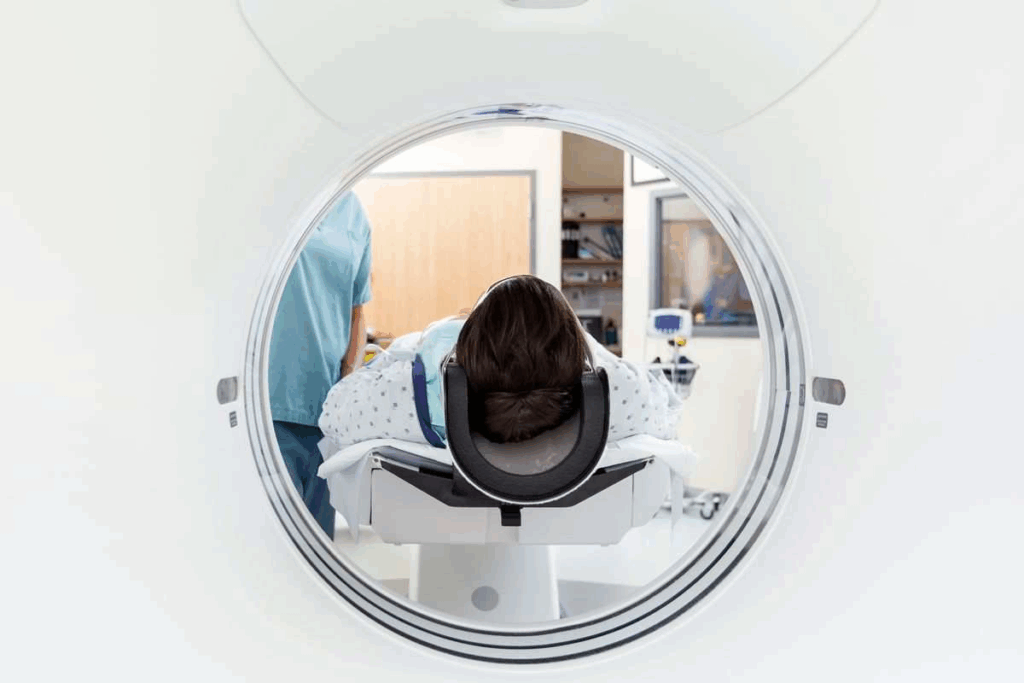
Getting a correct diagnosis is key for inguinal and occult hernias. At Liv Hospital, we focus on our patients and use CT scans for tricky cases.
CT scans help us find hernias, even when it’s hard to tell. They can spot some inguinal and occult hernias. But, they can’t find every case. Our team works with patients to offer full care and support during diagnosis and treatment.
Key Takeaways
- CT scans are used to diagnose inguinal and occult hernias, even when it’s unclear.
- Getting the right diagnosis is important for good treatment and care.
- Liv Hospital offers patient-focused care with the latest imaging.
- CT scans can find some, but not all, hernias.
- We provide complete care and support during diagnosis and treatment.
Understanding Hernias: Types and Prevalence
Exploring hernias shows us how important it is to know their types. Hernias happen when an organ or tissue bulges through a weak spot in muscles or fascia. Knowing about inguinal and occult hernias is key to understanding and treating them.
Common Types of Hernias
Hernias are divided by where they happen and what they look like. Inguinal hernias are in the groin, and occult hernias are hidden. You also have umbilical, incisional, and hiatal hernias.
Inguinal Hernias: Anatomy and Significance
Inguinal hernias are the most common. They happen when tissue bulges through a weak spot in the abdominal muscles. The inguinal canal in the groin is where these hernias usually occur. Knowing about inguinal hernias helps doctors diagnose and treat them.
Occult Hernias: The Hidden Challenge
Occult hernias are hard to find because they’re not visible at first. They can cause pain but are not seen right away. CT scans are important for finding these hidden hernias.
The Fundamentals of CT Scanning Technology
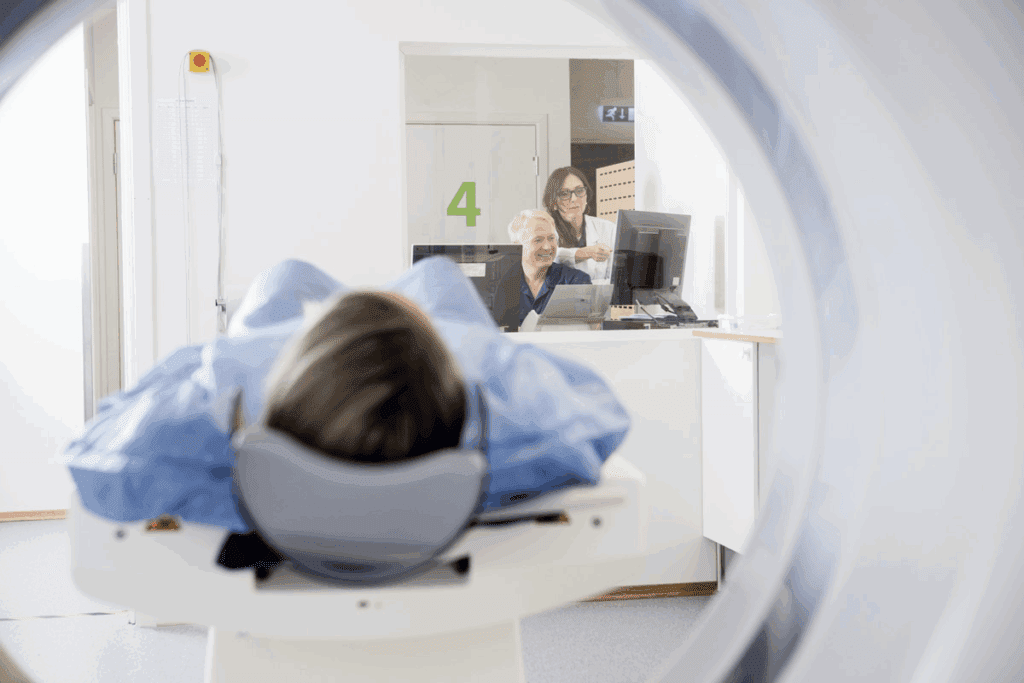
Computed Tomography (CT) scans have changed how we diagnose diseases. They give us detailed views of the body’s inside. This helps us spot problems like hernias.
How CT Scans Work
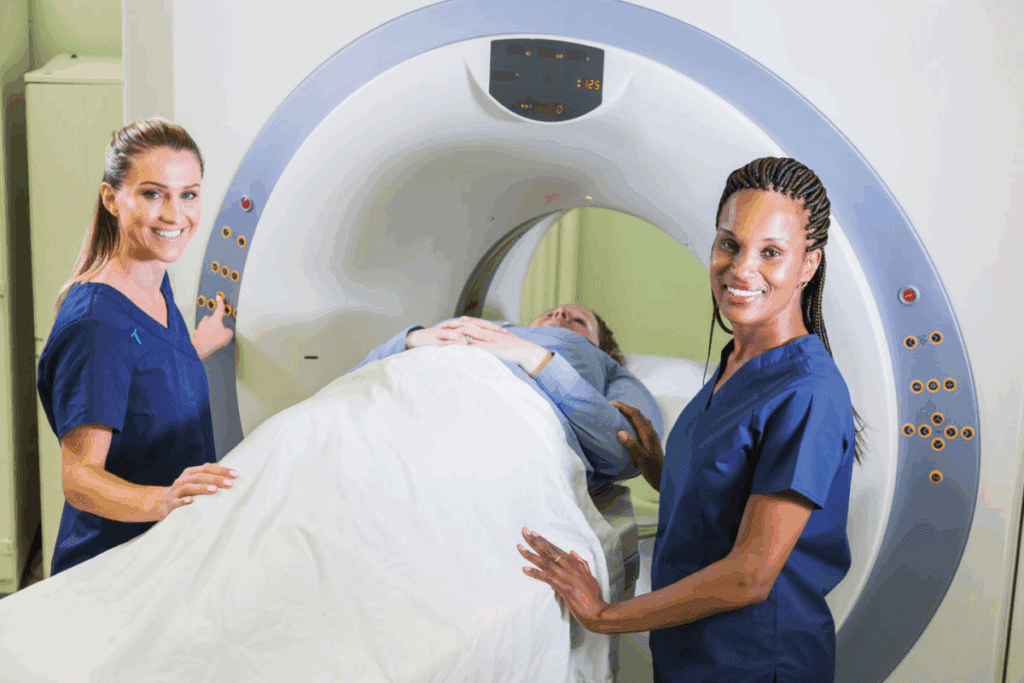
A CT scanner has a moving part with an X-ray tube and detectors. As it moves, it sends X-rays through the body. These X-rays are then caught and turned into detailed pictures.
The process includes:
- X-ray emission and detection
- Data acquisition and processing
- Image reconstruction using sophisticated algorithms
The images show us what’s inside the body. This helps us find out if someone has an inguinal hernia.
Advancements in CT Imaging
CT imaging has gotten better over time. New technologies have made it even more useful. Some key improvements are:
- High-resolution imaging: Better detectors and algorithms mean clearer pictures.
- Reduced radiation dose: New scanners use less radiation but keep the image quality high.
- Dual-energy CT: This tech helps us see tissues better and find conditions more easily.
These changes have made CT scans even better for finding hernias and other health issues.
Protocols for Hernia Detection
For finding hernias, we use special CT scan settings. These settings help us get the best pictures and make sure we’re right. Some of these settings include:
- Using oral contrast to make the bowel and nearby areas clearer
- Doing dynamic imaging to see if a hernia can be pushed back in
- Getting thin-slice images to spot small hernias better
By following these steps, we can find hernias more accurately with CT scans.
Can CT Scan See Hernia? The Diagnostic Capabilities
CT scans are key in finding hernias. But, how well they work depends on several things. We’ll look at what makes CT scans good or bad at spotting hernias.
Visibility Factors in Hernia Detection
How well CT scans see hernias depends on a few things. These include the hernia’s type, size, and where it is. High-resolution imaging and new CT tech help spot different hernias better.
A study in the Journal of Radiology found CT scans work well for big, symptomatic inguinal hernias.
“CT scans can accurately detect inguinal hernias, even when they’re big and causing symptoms.”
Journal of Radiology
Size and Location Considerations
The size and where a hernia is affect how easy it is to see on a CT scan. Big hernias are easier to spot. But, small ones can be harder to find.
| Hernia Size | Detection Rate |
| Small (<1 cm) | 60% |
| Medium (1-3 cm) | 80% |
| Large (>3 cm) | 95% |
Timing and Dynamic Factors
When and how a scan is done can also matter. Things like the patient’s position and when the scan is done can affect how well a hernia is seen. Using dynamic imaging can help make hernias more visible.
Accuracy Metrics: Sensitivity and Specificity of CT for Inguinal Hernias
It’s important to know how well CT scans can find inguinal hernias. This is because knowing how accurate they are helps doctors take better care of patients. They use sensitivity and specificity to check how well CT scans work.
Sensitivity of CT Scans for Inguinal Hernias
Sensitivity shows how well a test can spot people with a disease. For inguinal hernias, CT scans are about 68% to 86% accurate. This means they can find hernias in about 68% to 86% of people who have them.
Many things can change how good CT scans are at finding hernias. These include:
- The size and location of the hernia
- The quality of the CT scan equipment
- The skill of the radiologist reading the scan
Specificity of CT Scans for Inguinal Hernias
Specificity shows how well a test can say who doesn’t have a disease. For CT scans and inguinal hernias, specificity is 96% to 98%. This means CT scans are very good at saying who doesn’t have a hernia.
Clinical Implications of These Metrics
CT scans are good at finding inguinal hernias but not perfect. They’re very good at saying who doesn’t have a hernia. But, they might miss some small or hidden hernias.
So, doctors need to think carefully when CT scans say there’s no hernia but they’re not sure. The high specificity means doctors can trust a CT scan if it finds a hernia.
In short, knowing how accurate CT scans are helps doctors make better choices. This way, they can give the best care to their patients.
CT of Inguinal Hernia: Clinical Applications
CT scans are key in diagnosing hernias, helping in tricky cases. They give us detailed views of inguinal hernias. This helps in planning treatments.
When CT is Most Valuable for Inguinal Hernias
CT scans shine when it’s hard to tell if someone has a hernia. They show the hernia and what’s around it. This helps us spot risks and plan the best treatment.
Interpreting CT Results in the Inguinal Region
Understanding CT results for the inguinal area is important. We look for hernia sacs, bowel loops, or other contents. CT scans help us tell different hernias apart and find other conditions that look like hernias.
Case Examples: When CT Successfully Identifies Inguinal Hernias
Many times, CT scans have found hernias that weren’t seen during a physical check-up. This is very helpful for people with a high BMI or complex body shapes.
Using CT scans helps us get better at diagnosing hernias. The clear images from CT scans are very useful in treating inguinal hernias.
Limitations: Can a CT Scan Miss a Hernia?
CT scans are very useful for finding problems, but they’re not perfect. How well they find hernias depends on several things. These include the size and type of hernia, when the scan is done, and technical details.
Small Hernias and Detection Challenges
CT scans have trouble spotting small hernias. Small hernias can be hard to see because they blend in with the surrounding tissue or scan artifacts.
A study in the Journal of Radiology found that small hernias might not show up on CT scans. This is because of the scan’s resolution or how it averages out images.
“The detection of small hernias remains a challenge, even with advanced imaging techniques.”
| Hernia Size | Detection Rate | Challenges |
| Small (<1 cm) | 60% | Limited resolution, partial volume averaging |
| Medium (1-2 cm) | 80% | Variable visibility based on location |
| Large (>2 cm) | 95% | Generally easier to detect |
Intermittent Hernias and Timing Issues
Intermittent hernias are tricky for CT scans. If a hernia is not there when the scan is done, it won’t be found.
Technical and Operator Factors
How well a CT scan works also depends on the scanner’s quality and the scan protocol. The skill of the radiologist is very important too.
A radiology expert said, “The accuracy of CT scans for hernia detection depends on the technology and the radiologist’s skill.”
It’s important for doctors and patients to know these limits. CT scans are useful but part of a bigger approach. This includes looking at the patient’s history and possibly using other tests like ultrasound or MRI.
Do Hernias Show Up on CT Scans? Factors Affecting Visibility
CT scans are a valuable tool for diagnosis. But, they can only show hernias under certain conditions. Knowing these conditions is key for accurate diagnosis and treatment.
Hernia Composition and Density Considerations
The type and density of a hernia affect its visibility on CT scans. Hernias with a lot of fat or bowel inside are easier to see. High-resolution CT scans can make these differences clearer, helping doctors spot them better.
But, hernias that look like the tissue around them or have only fat or omentum inside are harder to find. In these cases, advanced imaging and careful checks are needed.
Patient Positioning and Preparation
How a patient is positioned for the CT scan can make a difference. For example, scanning in a prone position might show hernias not seen in the supine position. This is because gravity can move the hernia contents.
Getting the patient ready for the scan, like fasting and bowel prep, also helps. Optimal preparation is key for spotting hernias.
Contrast Enhancement and Protocol Selection
Using contrast and the right CT scan settings are important for finding hernias. Contrast makes blood vessels and other tissues stand out. Oral contrast can also help by making bowel loops visible.
Choosing the right CT scan settings is critical. Thin-slice reconstructions and multi-planar reformations can greatly improve image quality and detection chances.
Occult Hernias: The Diagnostic Dilemma
Occult hernias are hard to find and diagnose. They are not seen with normal tests, leading to late treatment. We will look at the types of occult hernias, how CT scans work, and when they might miss them.
Types of Occult Hernias
There are many types of occult hernias that are hard to spot. Common types include:
- Internal hernias
- Interstitial hernias
- Obturator hernias
- Sciatic hernias
Each type has its own challenges in diagnosis because of where they are and how subtle they are.
CT Performance for Various Occult Hernia Types
CT scans are a big help in finding occult hernias. They show detailed images that can spot hernias not seen by other tests. The success of CT scans depends on the type of hernia:
| Hernia Type | CT Detection Rate | Key Diagnostic Features |
| Internal Hernias | High | Clustering of small bowel loops, displacement of surrounding structures |
| Interstitial Hernias | Moderate | Hernia sac between layers of abdominal wall |
| Obturator Hernias | Moderate to High | Hernia protruding through obturator canal |
| Sciatic Hernias | Low to Moderate | Hernia through greater or lesser sciatic foramen |
The table shows how well CT scans can find different types of occult hernias.
When CT Fails to Detect Occult Hernias
Even with its benefits, CT scans can miss occult hernias. Reasons for missed diagnoses include:
- Small size of the hernia
- Intermittent nature of the hernia
- Technical limitations of the CT scan
- Patient factors such as body habitus or inability to remain steady during the scan
If CT scans can’t find occult hernias, other tests like MRI might be used.
Comparative Analysis: CT vs. Ultrasound for Hernia Detection
CT scans and ultrasounds have their own good and bad points for finding hernias. The right choice depends on the hernia type, patient details, and the situation.
Ultrasound Sensitivity and Specificity
Ultrasound is great at finding inguinal hernias, with a success rate of 86% to 100%. But, it can vary based on who is doing the scan. It might not work as well for people who are overweight or have complex body shapes.
A study in the Journal of Ultrasound in Medicine found ultrasound is very accurate for inguinal hernias. This is true when the person doing the scan is experienced. So, the skill of the operator is key to getting good results.
Can an Ultrasound Miss a Hernia?
Yes, an ultrasound might not catch a hernia in some cases. Small hernias, hernias that come and go, and scan quality can lead to false negatives. A study in the Hernia journal said the scan’s success depends on the person doing it and the equipment used.
Choosing Between CT and Ultrasound
Choosing between CT and ultrasound depends on many factors. These include the patient’s situation, symptoms, and the type of hernia suspected. Here’s a comparison table to help decide:
| Imaging Modality | Sensitivity | Specificity | Advantages | Limitations |
| CT Scan | High | Very High | Excellent for complex cases, provides detailed anatomy | Radiation exposure, less portable |
| Ultrasound | High (operator-dependent) | High | No radiation, portable, cost-effective | Operator-dependent, limited in obese patients |
In the end, picking between CT and ultrasound should be based on careful thought. It’s about knowing the good and bad of each method.
MRI as an Alternative: When to Consider Advanced Imaging
MRI is a top-notch imaging tool for finding hernias, when CT scans can’t help. It’s key to know how MRI helps spot hernias that other tests might miss.
Detecting Hernia Types Missed by CT
MRI is great for finding certain hernias that CT scans can’t see. Small or hidden hernias are tough to find with CT scans. But MRI’s clear images help spot these hernias better.
Research shows MRI can find hernias that CT scans can’t, like small ones or in complex body areas. For example, testing for hernias often uses MRI when CT scans don’t give clear results.
Comparative Advantages for Occult Hernias
MRI beats CT scans for finding hidden hernias. Its detailed images help doctors see exactly where and how big the hernia is. This is key for planning surgery.
Also, MRI doesn’t use harmful radiation, making it safer for patients needing many tests or who are worried about radiation. This is a big plus for young patients or those needing ongoing tests.
Cost and Accessibility Considerations
Even though MRI is great for finding hernias, it’s pricey and not everywhere. It’s more expensive than CT scans and not as common in all hospitals.
But for patients with tricky cases, MRI’s benefits might be worth the cost. Special places with the latest imaging tech offer MRI, helping those who need detailed tests.
In short, MRI is a key choice for diagnosing hernias when CT scans don’t work. Knowing its strengths and weaknesses helps doctors decide when to use MRI for their patients’ best care.
Clinical Decision Making: Selecting the Right Imaging Modality
Choosing the right imaging modality is key for diagnosing hernias. We need to think about many factors to pick the best imaging for each patient.
Patient-Specific Factors
When picking an imaging modality, patient-specific factors are very important. These include the patient’s medical history, age, and any past surgeries or conditions. These can affect which imaging is best.
For example, patients with metal implants might not be good candidates for MRI. CT scans could be a better choice. On the other hand, those who have had a lot of radiation might do better with ultrasound or MRI.
Symptom-Based Approach
It’s also important to consider symptoms when choosing imaging. Patients with sudden symptoms might need a CT scan right away. This is to check for serious issues like incarceration or strangulation.
But, patients with long-term or mild symptoms might do better with ultrasound or MRI. These methods give detailed images without using radiation.
Modern Imaging Protocols at Specialized Centers
Specialized centers use the latest imaging protocols. These help make hernia diagnosis more accurate. They might use high-resolution CT scans or advanced MRI techniques.
| Imaging Modality | Advantages | Limitations |
| CT Scan | Quick, widely available, good for acute cases | Radiation exposure, less detailed for soft tissues |
| Ultrasound | No radiation, cost-effective, dynamic imaging | Operator-dependent, limited depth penetration |
| MRI | High soft tissue resolution, no radiation | Expensive, less available, contraindicated in some patients |
By looking at patient-specific factors, using a symptom-based approach, and applying modern imaging at specialized centers, we can greatly improve hernia diagnosis. This helps guide the right treatment for each patient.
Conclusion: The Future of Hernia Imaging
Accurate diagnosis of hernias is key for good treatment and patient health. CT scanning has greatly improved our ability to find hernias, both visible and hidden. The future of hernia imaging is bright, with new tech expected to make diagnosis even better.
New advancements in CT and MRI will likely lead to more accurate and early hernia detection. This will greatly improve patient care. Using these advanced imaging techniques in clinics will be essential for better patient outcomes.
Healthcare providers can offer the best care for hernia patients by keeping up with new imaging tech. As the field grows, we’ll see even better diagnostic tools. This will lead to more effective treatments and better health for patients.
FAQ
Can a CT scan detect all types of hernias?
CT scans are very good at finding many hernias. But, they might miss small or hidden hernias. This depends on the hernia’s size, where it is, and when it’s checked.
How accurate are CT scans in detecting inguinal hernias?
CT scans are quite accurate for inguinal hernias. They have a sensitivity of 68-86% and a specificity of 96-98%. This makes them a great tool for diagnosing this condition.
Can a CT scan miss a hernia?
Yes, a CT scan can miss a hernia. This is more likely if the hernia is small, moves around, or if the scan isn’t set up right for finding hernias.
What factors affect the visibility of hernias on CT scans?
Several things can affect if a hernia shows up on a CT scan. These include what the hernia is made of, how the patient is positioned, and the scan settings.
Can an ultrasound miss a hernia?
Ultrasounds can also miss hernias. This is more common for small hernias or if the person doing the ultrasound isn’t very experienced.
How does CT compare to ultrasound in detecting hernias?
CT and ultrasound both have their own strengths and weaknesses. CT scans are better for complex or deep hernias. Ultrasounds are more dependent on the operator but work well for surface hernias.
Can MRI detect hernias that CT scans miss?
MRI can be a good alternative for finding hernias that CT scans might miss. It’s great for complex or hidden hernias because it shows soft tissues very clearly.
When is MRI preferred over CT for hernia diagnosis?
MRI is often chosen when CT scans aren’t clear or when there’s a strong suspicion of a hidden hernia. It’s also good for detailed soft-tissue checks.
What patient-specific factors influence the choice of imaging modality for hernia diagnosis?
Several things about the patient can affect which imaging test is used. These include their symptoms, medical history, and body type.
Are there any advancements in CT technology that improve hernia detection?
Yes, new CT technology has improved. It has better resolution and can do dynamic imaging. This helps find small or moving hernias better.
Will a hernia always show up on a CT scan?
Not always. CT scans are very useful but can’t find all hernias. It depends on the hernia’s type, size, and the scan settings.
Does a CT scan show occult hernias?
CT scans can find some hidden hernias. But, it depends on the hernia’s size, location, and the scan settings used.
References
- Shogan, B. D., et al. (2024). The American Society of Colon and Rectal Surgeons Clinical Practice Guidelines for the treatment of colorectal diseases: Minimally invasive colorectal surgery. Diseases of the Colon & Rectum. https://pmc.ncbi.nlm.nih.gov/articles/PMC11640238/