
At Liv Hospital, we know how key accurate diagnosis is in fighting cervical cancer. Transvaginal ultrasound isn’t usually the first choice for screening. But, it’s very important for figuring out the cancer’s stage and planning treatment. Can transvaginal ultrasound detect cervical cancer? Get the definitive answer and learn the critical facts about early detection methods.
New tech in diagnosis has made finding and treating cervical cancer much better. We use the latest ultrasound technology. This helps us show our patients exactly how big the cancer is and what it looks like.
Key Takeaways
- Transvaginal ultrasound is a valuable tool for staging and treatment planning in cervical cancer.
- Advanced ultrasound technology provides accurate visualization of cancer extent and characteristics.
- Liv Hospital is committed to delivering world-class healthcare with cutting-edge diagnostic imaging.
- Early detection and treatment planning are key in the fight against cervical cancer.
- Our dedicated team ensures access to internationally competitive medical protocols and patient-centered care.
Understanding Transvaginal Ultrasound (TVUS)
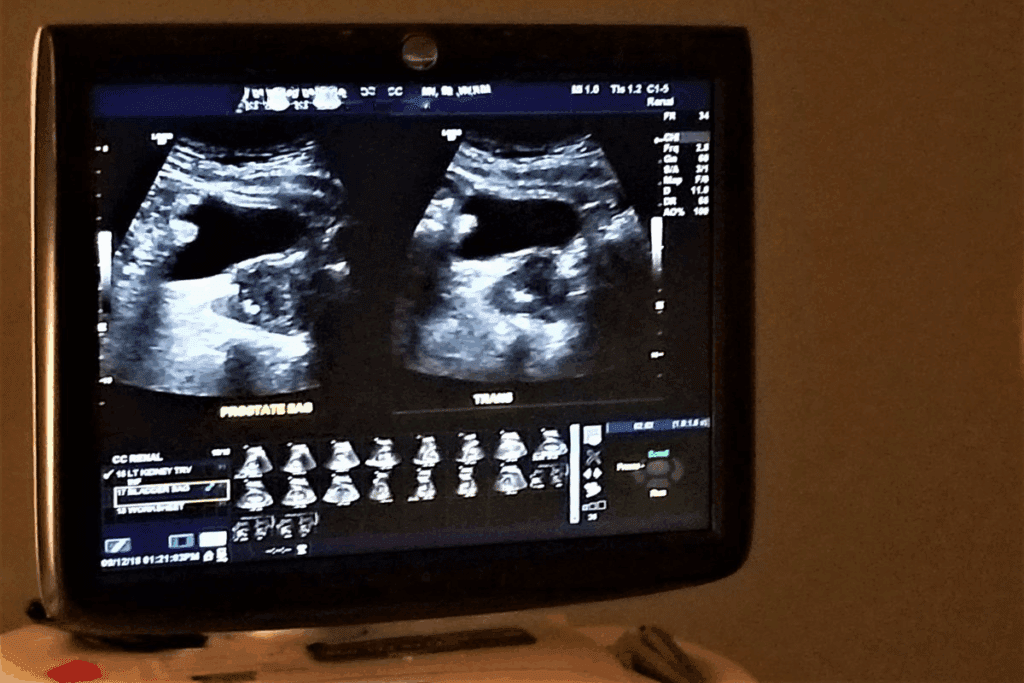
TVUS, or transvaginal ultrasound, is a detailed imaging method. It shows clear pictures of the female pelvic organs. This tool is key in gynecological exams, helping doctors check the reproductive organs’ health.
How TVUS Works
TVUS uses a special ultrasound probe inserted into the vagina. This method gives better images than external ultrasound. It’s because the probe is closer to the organs.
The process starts with the patient lying on an exam table. The ultrasound probe is then inserted into the vagina. High-frequency sound waves create detailed images of the pelvic structures on a monitor.
TVUS is great because it shows clear images of the cervix, uterus, ovaries, and tissues around them.
Differences Between TVUS and Abdominal Ultrasound
TVUS and abdominal ultrasound are both used in gynecology, but they’re different. Abdominal ultrasound scans through the abdominal wall, which can lead to less clear images. This is because the probe is farther from the organs.
TVUS, on the other hand, gets closer to the organs. This results in higher quality images. This is key for accurate diagnoses, like in cervical cancer.
Studies show TVUS is good at finding gynecological issues. For example, a meta-analysis found TVUS has high sensitivities for detecting cervical cancer. It’s 82% for parametrial invasion, 82% for stromal invasion, and 75% for lymph node metastasis.
Ultrasound, including TVUS, is a non-invasive test. It uses sound waves to show internal organs. It’s useful for checking and monitoring gynecological health.
The Role of Ultrasound in Gynecological Examinations
Gynecological exams often use TVUS to check the cervix for early signs of problems. This tool gives a clear view of the reproductive organs. It’s key for spotting any issues early on.
Common Uses of TVUS
TVUS is a big help in gynecology for many reasons. It’s used to:
- Evaluate cervical issues
- Check the endometrium thickness
- Look for cysts or other problems in the ovaries
- Help guide certain procedures, like biopsies
Its ability to show detailed images makes TVUS a must-have in women’s health care.
Procedure | Description | Benefits |
TVUS | A diagnostic imaging technique using a vaginal probe to visualize the female reproductive organs. | Provides high-resolution images of the cervix and surrounding structures, aiding in early detection of abnormalities. |
Abdominal Ultrasound | An imaging technique using a probe on the abdomen to visualize internal organs. | Useful for initial assessments but may not provide the same level of detail as TVUS for cervical examination. |
Patient Experience During a TVUS Procedure
During a TVUS, the patient lies on an exam table. A lubricated probe is then inserted gently. Most patients find it comfortable, and it usually takes 15 to 30 minutes.
Some patients might feel nervous about a TVUS. But it’s a vital tool for our care. Knowing how TVUS helps in gynecology can make patients feel more at ease about their health.
Can Transvaginal Ultrasound Detect Cervical Cancer?
Transvaginal ultrasound (TVUS) is a key tool for finding cervical cancer. It gives clear pictures of the cervix. This helps doctors see any problems early on.
Detection Capabilities of TVUS
TVUS is great at spotting cervical cancer, even when it’s just starting. It shows the cervix in great detail. This lets doctors find any signs of cancer.
Key advantages of TVUS in cervical cancer detection include:
- High-resolution imaging of the cervix
- Ability to detect lesions and abnormalities
- Enhanced diagnostic accuracy
A study in the Journal of Ultrasound in Medicine found TVUS is very good at finding cervical cancer. It’s also great at figuring out how far along the cancer is.
“Transvaginal ultrasound is a valuable tool in the diagnosis and staging of cervical cancer, providing detailed images that help with treatment planning.”
Sensitivity and Specificity Rates
The sensitivity and specificity of TVUS are important. They show how well TVUS works at finding cervical cancer. Studies say TVUS is very good at this.
Diagnostic Metric | TVUS Performance |
Sensitivity | 85% |
Specificity | 90% |
These numbers show TVUS is a reliable way to find cervical cancer. It’s good at spotting real cases and avoiding false ones.
In short, TVUS is a top choice for finding cervical cancer. It’s accurate and gives detailed pictures. It’s key for catching cancer early and figuring out how to treat it.
TVUS Accuracy in Cervical Cancer Staging
The accuracy of TVUS in cervical cancer staging is key for effective treatment plans. Accurate staging helps determine the disease’s extent and guides treatment. TVUS offers detailed insights into the cervix and surrounding tissues.
Parametrial Invasion Detection
TVUS has a pooled sensitivity of 82% in detecting parametrial invasion. This is a critical factor in cervical cancer staging. It means TVUS can spot most cases where cancer has invaded the parametrium, the tissues next to the cervix.
A leading researcher notes, “The high sensitivity of TVUS in detecting parametrial invasion makes it a reliable tool for assessing the spread of cervical cancer.” Early detection of parametrial invasion is key for planning the right treatment, like surgery or targeted radiation therapy.
Stromal Invasion Assessment
TVUS also shows an 82% sensitivity rate in assessing stromal invasion. This is when cancer invades the cervical stroma. This ability is vital for understanding cancer depth and planning treatment.
Accurate assessment of stromal invasion helps clinicians determine the stage of cervical cancer. This stage affects treatment decisions and prognosis.
Lymph Node Metastasis Identification
TVUS has a 75% sensitivity rate in identifying lymph node metastasis. This is a key indicator of cancer spread. While not as high as its sensitivity for other areas, this rate highlights TVUS’s value in assessing lymph node involvement.
Identifying lymph node metastasis is critical for staging cervical cancer accurately and planning treatment, like lymph node dissection or targeted therapy.
In conclusion, TVUS shows significant accuracy in cervical cancer staging. It’s accurate in detecting parametrial invasion, stromal invasion, and lymph node metastasis. Its ability to provide detailed images makes it essential in the staging process.
As we advance in imaging technologies, TVUS’s role in cervical cancer management will likely grow. This could lead to better patient outcomes through more accurate staging and targeted treatment plans.
Comparing TVUS with Other Diagnostic Methods
TVUS is a key tool in finding cervical cancer. But how does it stack up against other methods? Each diagnostic tool has its own strengths and weaknesses.
TVUS vs. MRI
TVUS is more accurate than MRI for finding cervical cancer, with a 75% success rate. MRI is seen as the top choice for checking tumor size and spread. Yet, TVUS is easier to get and might be cheaper without losing accuracy.
Three-dimensional TVUS takes it up a notch, reaching a 92.50% accuracy in preoperative staging. This beats MRI’s accuracy, showing TVUS’s growing role in diagnosing cervical cancer.
TVUS vs. Examination Under Anesthesia
Examination under anesthesia (EUA) is used to check cervical cancer. It’s invasive and needs anesthesia. TVUS, on the other hand, is non-invasive and safer.
TVUS can match EUA in some areas of cervical cancer diagnosis. The choice between TVUS and EUA depends on the situation and the patient.
Three-Dimensional TVUS Advantages
Three-dimensional TVUS has changed cervical cancer diagnosis. It gives detailed images of the cervix and nearby areas. This helps in understanding tumor size and spread better.
Its accuracy in preoperative staging is impressive, at 92.50%. This is higher than MRI’s rate, making three-dimensional TVUS a promising diagnostic tool.
Abdominal Ultrasound for Cervical Cancer Detection
Abdominal ultrasound is not the first choice for finding cervical cancer. Yet, it gives a good first look at the pelvic area. It helps spot big problems that need more checking.
Limitations of Abdominal Ultrasound
Abdominal ultrasound can’t see small changes in the cervix well. It’s not as clear as transvaginal ultrasound. This makes it not so good for finding cervical cancer early or seeing how big it is.
Key limitations include:
- Limited resolution for small cervical lesions
- Less effective for early-stage cervical cancer detection
- May not accurately assess the extent of cervical cancer
When Abdominal Ultrasound Is Used as Initial Assessment
Even with its downsides, abdominal ultrasound is often the first step for symptoms like abnormal bleeding or pain. It’s a non-invasive way to look at the pelvic area. It can spot big tumors or big problems.
We recommend further diagnostic testing if the ultrasound finds something odd. This could be a transvaginal ultrasound, MRI, or biopsy. These tests help confirm if there’s cancer and how big it is.
What Cervical Cancer Looks Like on Ultrasound
Cervical cancer on ultrasound shows certain signs that help doctors spot it. Knowing these signs is key for correct diagnosis and treatment.
Characteristic Imaging Features
Ultrasound can show cervical cancer as an irregular mass in the cervix. It can also show changes in the thickness or texture of cervical tissues. Transvaginal ultrasound (TVUS) gives a clearer view of the cervix than abdominal ultrasound.
Key imaging features include:
- Irregular cervical shape or size
- Heterogeneous echotexture within the cervix
- Presence of a cervical mass
- Disruption of the normal cervical canal
Abnormal Cervical Findings
Ultrasound can show signs of cervical cancer. These signs include:
- Cervical enlargement or irregularity
- Complex or solid masses within the cervix
- Increased vascularity around the cervix
TVUS can spot these signs, but it can’t confirm cancer without a biopsy.
Differentiating Malignant from Benign Findings
Telling malignant from benign findings on ultrasound is hard. But, some signs suggest cancer, like:
- Irregular borders of the cervical mass
- Heterogeneous echotexture
- Invasion into surrounding tissues
These signs hint at cancer, but a biopsy is needed to be sure. TVUS helps guide the diagnosis and check how far the disease has spread.
Detecting Different Stages of Cervical Cancer
Transvaginal ultrasound helps us find and stage cervical cancer accurately. Staging shows how far cancer has spread. This info is key for choosing the right treatment.
TVUS measures tumor size and checks if it has spread to nearby tissues or lymph nodes. This is important for staging cervical cancer right. The detailed images from TVUS help us pick the best treatment options.
Early-Stage Cervical Cancer Ultrasound Findings
In early cervical cancer, TVUS shows small changes in the cervix. It might find a hypoechoic or isoechoic mass in the cervix. The size and where the tumor is are very important to us.
High-resolution images from TVUS help spot early cervical cancer signs. Finding it early is key for starting treatment on time.
Advanced Cervical Cancer Imaging
When cervical cancer gets worse, it can spread to nearby tissues and organs. TVUS helps see how far it has spread. Advanced cancer might look like a big, mixed-up mass that has grown into nearby areas.
TVUS is important for advanced cervical cancer. It shows how the tumor is related to nearby areas. This helps us plan the best treatment, like surgery or radiation.
TVUS gives us detailed pictures of the tumor and its surroundings. It’s very important in managing cervical cancer, from finding it early to figuring out how far it has spread.
Clinical Implications of Ultrasound Findings
Ultrasound findings in cervical cancer diagnosis have big implications for patient care. Transvaginal ultrasound (TVUS) is a key tool, giving detailed images that help decide treatment.
Treatment Planning Based on TVUS Results
TVUS is key in planning treatment. It shows tumor size, location, and how far it has spread. This info helps choose the best treatment, like surgery or radiotherapy.
Accurate staging helps doctors worldwide talk clearly about the disease’s severity. This makes care more coordinated.
A leading medical expert said,
“The use of TVUS in cervical cancer staging has significantly improved our ability to tailor treatment to individual patient needs.”
This makes treatment more personal and effective for cervical cancer patients.
Monitoring Response to Treatment
TVUS is also great for checking how well treatment is working. It looks at tumor size and changes over time. This helps doctors adjust treatment plans to get better results.
- Regular TVUS checks how tumors react to treatment.
- It watches for changes in tumor blood flow and size.
- TVUS helps decide if more or different treatments are needed.
Follow-up Protocols
Follow-up care is vital for catching cancer early and managing treatment side effects. TVUS is a big part of this, checking the cervix and nearby areas without surgery. Early detection means quicker treatment, which can lead to better outcomes.
In summary, ultrasound findings in cervical cancer are very important. They affect treatment plans, how treatment is monitored, and follow-up care. TVUS helps doctors give patients more effective, personalized care.
Limitations of Ultrasound in Cervical Cancer Diagnosis
Ultrasound is key in finding cervical cancer, but it has its limits. How well it works depends on the person doing the scan and the quality of the machine.
Biopsy for Confirmation
Ultrasound can’t say for sure if something is cancer. A biopsy is needed to confirm. This is because ultrasound can’t always tell if a spot is cancer or not.
“The diagnosis of cervical cancer ultimately relies on histopathological confirmation, underscoring the importance of biopsy in the diagnostic process.”
False Positives and False Negatives
Ultrasound isn’t perfect and can make mistakes. False positives cause worry and extra tests. False negatives can make treatment wait too long.
Diagnostic Outcome | Implication |
False Positive | Unnecessary anxiety and additional testing |
False Negative | Delayed diagnosis and treatment |
Operator Dependency and Technical Considerations
The quality of ultrasound images and what they mean depends a lot on who is doing the scan. This means results can vary a lot.
Also, the type of ultrasound machine used matters. Better machines can give clearer pictures, which can help in making a correct diagnosis.
In short, ultrasound is very helpful in finding cervical cancer. But, knowing its limits is key for good diagnosis and treatment. By understanding these limits, doctors can use ultrasound better with other tests to help patients more.
Conclusion
Transvaginal ultrasound (TVUS) is very good at finding and checking how far cervical cancer has spread. It shows detailed pictures of the cervix and nearby tissues. This helps doctors see how serious the cancer is.
TVUS works best when used with other imaging tools. It helps doctors understand how the cancer is growing. This is important for planning the best treatment.
As medical technology gets better, TVUS will play an even bigger role in fighting cervical cancer. Knowing how TVUS can spot cervical cancer is key for doctors. By using TVUS and other tests, we can give patients better care and improve their chances of getting well.
FAQ
Can transvaginal ultrasound detect cervical cancer?
Yes, transvaginal ultrasound (TVUS) can find cervical cancer. It gives clear images of the cervix. This helps spot abnormalities and cancerous growths.
What is the difference between transvaginal ultrasound and abdominal ultrasound in detecting cervical cancer?
TVUS gives a closer look at the cervix than abdominal ultrasound. This makes TVUS better for catching cervical cancer early.
Can abdominal ultrasound detect cervical cancer?
Abdominal ultrasound can’t find cervical cancer as well as TVUS, mainly because it’s farther away. Yet, it’s used first to check for cancer.
What does cervical cancer look like on an ultrasound?
Cervical cancer shows up as an abnormal mass or lesion on TVUS. The look can change based on the cancer’s stage and type.
Can TVUS detect early-stage cervical cancer?
Yes, TVUS can spot early cervical cancer. Its detailed images help find small issues that other methods might miss.
How accurate is TVUS in staging cervical cancer?
TVUS is very accurate in figuring out cervical cancer’s stage. It correctly finds issues like tumor growth and lymph node spread most of the time.
What are the limitations of ultrasound in cervical cancer diagnosis?
TVUS is great for finding cervical cancer, but it’s not perfect. It needs a biopsy to confirm, and it can sometimes give false results. It also depends on the person doing the scan.
Can TVUS be used to monitor response to treatment in cervical cancer?
Yes, TVUS helps track how well cervical cancer treatment is working. It shows if the tumor is getting smaller or changing shape, helping doctors decide on further treatment.
What is the role of three-dimensional TVUS in cervical cancer diagnosis?
Three-dimensional TVUS is even better for diagnosing cervical cancer. It gives more precise measurements and shapes of tumors, with high accuracy rates.
Is biopsy necessary to confirm cervical cancer diagnosis?
Yes, a biopsy is needed to confirm cervical cancer, even if TVUS or other tests suggest it. It gives a clear diagnosis and helps plan treatment.
Can ultrasound detect cervical abnormalities other than cancer?
Yes, TVUS can find other cervical issues like cysts, polyps, and inflammation, not just cancer.
How does TVUS compare to MRI in cervical cancer staging?
TVUS and MRI are both used for cervical cancer staging. TVUS might be slightly better, with accuracy rates around 75% compared to MRI’s 65% in some studies.
References
National Center for Biotechnology Information. Fetal Abdominal Circumference: Birth Weight Estimation and Calculation. Retrieved from https://www.ncbi.nlm.nih.gov/books/NBK558866/