Last Updated on November 26, 2025 by Bilal Hasdemir
Gallstones are hardened deposits that form in the gallbladder. They can cause a lot of discomfort if they block the biliary system. Many people wonder if gallstones can be seen on an x-ray. The answer depends on their composition.
Only about 10 percent of gallstones are calcified enough to show up on a standard x-ray. At Liv Hospital, we focus on accurate imaging and care that puts you first. This ensures you get the right diagnosis and treatment for gallbladder issues while explaining can you see gallstones on x ray.
Most people with gallstones (about 80%) don’t show any symptoms. This makes it very important to know how well x-rays can diagnose gallstones.
Key Takeaways
- Gallstones are hardened deposits that form in the gallbladder.
- Only about 10% of gallstones are visible on a standard x-ray.
- Liv Hospital prioritizes accurate imaging and patient-centered care.
- Most people with gallstones are asymptomatic.
- Understanding x-ray diagnostic capabilities is key for gallbladder problems.
Understanding Gallstones: Types and Formation
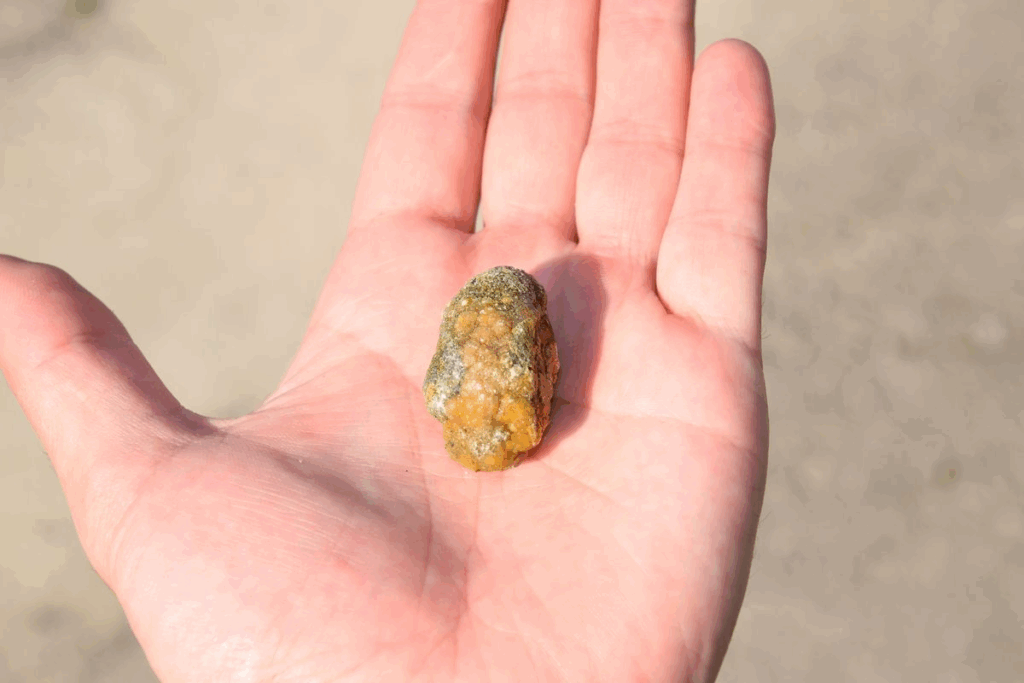
To understand gallstones, we need to know their types and how they form. Gallstones are hard deposits in the gallbladder. This small organ is under the liver and stores bile.
What Are Gallstones?
Gallstones are solid particles that block the bile ducts. This causes pain and can lead to serious problems. They can be as small as a grain of sand or as big as a golf ball.
“Gallstones are a common condition affecting millions of people worldwide.” Many things can make gallstones form, like diet, age, and ethnicity.
Types of Gallstones: Cholesterol, Pigment, and Mixed
There are three main types of gallstones: cholesterol stones, pigment stones, and mixed stones. Cholesterol stones are yellowish and mostly made of cholesterol. They are the most common type.
Pigment stones are smaller and darker. They are made of bilirubin, a pigment from broken-down red blood cells. Mixed stones have both cholesterol and pigment.
Risk Factors for Gallstone Development
Several factors can increase the risk of getting gallstones. These include:
- Age: Risk goes up after 40.
- Gender: Women are more likely to get gallstones than men.
- Obesity: Being overweight or obese raises the risk.
- Diet: Eating a lot of fat and not enough fiber can help gallstones form.
- Family History: If your family has gallstones, you’re more likely to get them too.
Knowing these risk factors can help prevent gallstones and manage symptoms better.
Symptoms and Complications of Gallstones
Many people with gallstones don’t show symptoms. But, some may feel pain or other issues that need a doctor’s check-up. It’s key to know the signs and risks of gallstones.
Common Symptoms of Gallstones
Gallstones can lead to several symptoms. The most common is biliary colic. This is sharp pain in the right upper belly that might spread to the right shoulder. Other signs include jaundice, fever, and nausea.
In some cases, people might feel intermittent pain. This can be mistaken for other problems, causing delays in finding out what’s wrong.
Silent Gallstones vs. Symptomatic Gallstones
Gallstones are divided into silent and symptomatic types. Silent gallstones don’t cause symptoms and are found by chance during tests. Symptomatic gallstones, on the other hand, cause noticeable pain like biliary colic. This can really affect a person’s life.
Complications That Require Immediate Attention
Untreated gallstones can cause serious problems. These include cholecystitis (inflammation of the gallbladder), pancreatitis (inflammation of the pancreas), and cholangitis (infection of the bile ducts). It’s important to know the signs of these issues. They need quick medical help to avoid serious problems.
| Complication | Description | Symptoms |
| Cholecystitis | Inflammation of the gallbladder | Severe abdominal pain, fever, jaundice |
| Pancreatitis | Inflammation of the pancreas | Severe abdominal pain, nausea, vomiting |
| Cholangitis | Infection of the bile ducts | Fever, jaundice, abdominal pain |
Knowing the symptoms and risks of gallstones is important. If you’re feeling symptoms or complications, get medical help fast. This can prevent serious health issues.
Can You See Gallstones on X-Ray?
X-rays are a common tool for diagnosing, but they can’t always spot gallstones. To understand why, we need to look at X-ray technology and how it works with gallstones.
X-Ray Technology Explained
X-rays use ionizing radiation to show the body’s internal structures. They work well for bones and some calcifications. But, soft tissues like gallstones are hard to see unless they have a lot of calcium.
The principle behind X-ray imaging is that different materials absorb X-rays differently. Dense materials like bone absorb more and show up white. Softer tissues, like gallstones, absorb less and appear gray or black.
Visibility of Different Gallstone Types on X-Rays
Gallstones come in three types: cholesterol, pigment, and mixed. Their visibility on X-rays depends on their makeup.
- Cholesterol stones are usually not seen on X-rays because they’re not calcified.
- Pigment stones might show up if they have enough calcium salts.
- Mixed stones can be visible on X-rays if they have enough calcium.
The 10% Rule: Why Most Gallstones Remain Hidden
Only about 10% of gallstones are calcified enough to show up on a standard X-ray. This means most gallstones are missed by X-rays. The 10% rule shows the limits of X-rays in finding gallstones.
The reasons for this include:
- Most gallstones are made of cholesterol and aren’t calcified.
- Gallstones are often as dense as the soft tissue around them.
In summary, while X-rays are useful for some diagnoses, they’re not the best for finding gallstones. Other methods, like ultrasound, are better for spotting gallbladder disease.
X-Ray of Gallbladder: Clinical Applications
Gallbladder X-rays are used to find calcified gallstones. They are not the main tool for diagnosing gallbladder disease. But, they can give important information in some cases.
When Gallbladder X-Rays Are Ordered
Gallbladder X-rays are ordered when gallstones or other gallbladder problems are suspected. Medical Expert, a gastroenterologist, says, “X-rays can spot calcified gallstones because they have calcium.” But, most gallstones don’t have calcium and can’t be seen on X-ray.
The choice to get a gallbladder X-ray depends on symptoms and the first check-up. Abdominal pain after eating fatty foods might lead to more tests. Sometimes, an X-ray is the first step if other tests are hard to get.
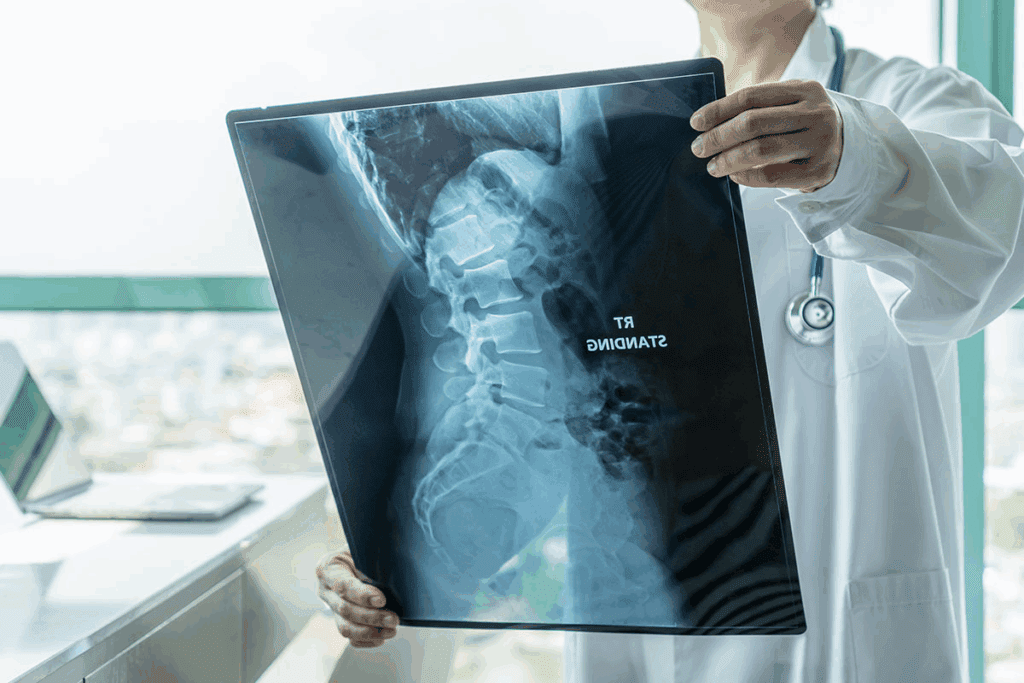
What Calcified Gallstones Look Like on X-Ray Images
Calcified gallstones show up as dark spots in the gallbladder on X-rays. They are visible because of their calcium. These stones can be small or big and dense.
Medical Expert, a radiologist, says, “How well calcified gallstones show up on X-rays depends on how much calcium they have.” They might look like one big stone or many small ones.
Limitations of Standard X-Ray for Gallbladder Assessment
Standard X-ray is good for finding calcified gallstones but has big limits. Most gallstones don’t have calcium and can’t be seen on X-ray. This makes X-ray less reliable than other tests like ultrasound for checking the gallbladder.
A medical journal recently said, “X-ray is not good at finding gallstones, so it’s not a reliable way to check for gallbladder disease.”
“Plain abdominal radiography is not recommended as a primary diagnostic tool for gallbladder disease due to its low sensitivity and specificity.” – American College of Radiology
In summary, gallbladder X-rays are useful for finding calcified gallstones. But, their limits must be known. Doctors need to think about the pros and cons of X-rays when dealing with gallbladder disease.
Ultrasound: The Gold Standard for Gallstone Detection
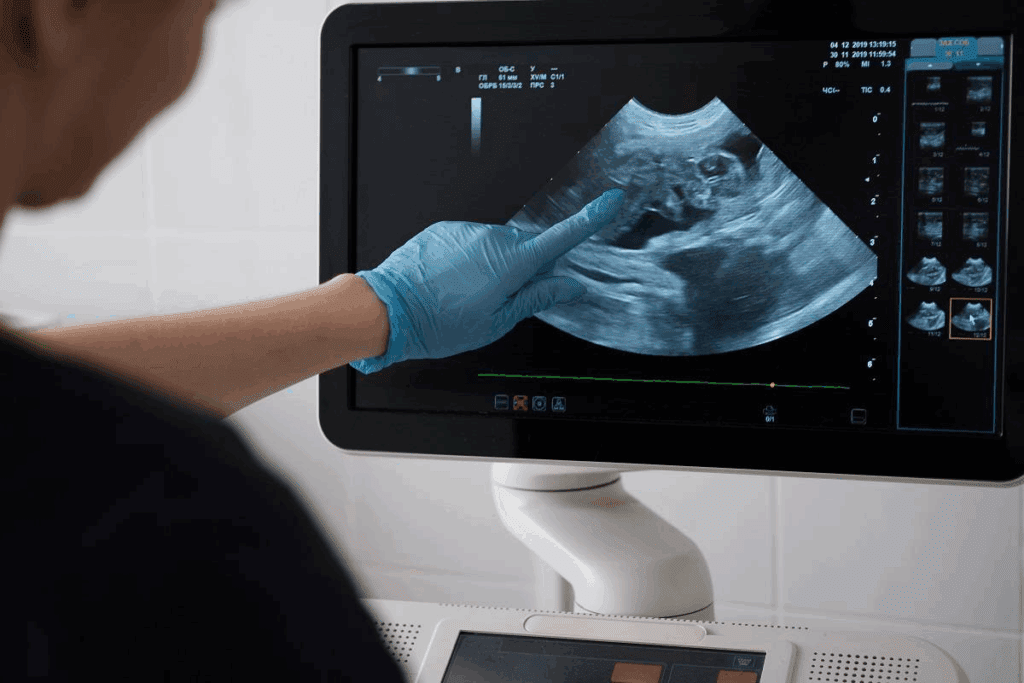
Ultrasound is now the top choice for finding gallstones. It’s very accurate and doesn’t hurt. This method uses sound waves to see inside the gallbladder, making it perfect for spotting gallstones.
How Ultrasound Visualizes Gallstones
Ultrasound sends sound waves that bounce off the gallbladder. These echoes are turned into images. A trained person looks at these images to find gallstones.
Gallstones show up as bright spots in the gallbladder. They also cast shadows. This makes them easy to spot with ultrasound.
Advantages of Ultrasound Over X-Ray
Ultrasound beats X-rays for finding gallstones. It can spot both hard and soft gallstones. Plus, it doesn’t use harmful radiation.
- No radiation exposure
- High sensitivity for detecting various types of gallstones
- Ability to visualize the gallbladder and surrounding structures
What to Expect During a Gallbladder Ultrasound
During the ultrasound, you’ll lie on a table. A gel is applied to your belly. Then, a probe is moved over your abdomen to get images.
The whole thing is painless and takes 15-30 minutes. You can go back to your day right after.
Accuracy and Limitations of Ultrasound
Ultrasound is very good at finding gallstones. It’s accurate most of the time. But, things like the sonographer’s skill and your body shape can affect it.
Ultrasound works well for most people. But, it might not work as well for those with thick bellies or a lot of gas in the bowel.
CT Scans for Gallstones: Capabilities and Limitations
CT scans are great for finding gallbladder issues. They use X-rays and computers to show detailed images. This helps doctors spot problems like gallstones.
How CT Scans Work for Gallbladder Imaging
CT scans take many X-ray pictures from different angles. A computer then makes a detailed view of the gallbladder. This lets doctors see the gallbladder’s shape and find issues like gallstones, inflammation, or wall thickening.
Will a CT Scan Show Gallbladder Problems?
CT scans can find some gallbladder problems, like inflammation and wall thickening. They can also spot some gallstones, mainly the calcified ones. But, not all gallstones show up on a CT scan, like the non-calcified ones.
When CT Is Preferred Over Other Imaging Methods
Doctors often choose CT scans for specific cases. This includes when they think there might be complications from gallstones, like pancreatitis. CT scans give detailed images that help doctors understand how serious the problem is and what treatment to use.
Patient Experience During a CT Scan
During a CT scan, patients lie on a table that moves into a big machine. The scan is quick and doesn’t hurt. Patients might need to hold their breath for a bit. The whole thing, from start to finish, takes about 30 minutes.
In summary, CT scans have their limits in finding gallstones. Yet, they are a key tool for diagnosing gallbladder issues. Their detailed images are very helpful in some cases.
Advanced Imaging Techniques for Gallstone Diagnosis
There are more ways to check the gallbladder than just X-rays and ultrasounds. New methods give us detailed views of gallbladder health. These advanced tools help spot gallstones and check the biliary system’s health.
MRCP (Magnetic Resonance Cholangiopancreatography)
MRCP is a special MRI for the bile and pancreatic ducts. It shows the biliary system in detail, spotting gallstones and blockages. MRCP is great because it’s safe and doesn’t use radiation.
ERCP (Endoscopic Retrograde Cholangiopancreatography)
ERCP mixes endoscopy and fluoroscopy for bile and pancreatic ducts. It’s more invasive than MRCP but lets doctors treat problems like removing stones or opening ducts.
HIDA Scan for Gallbladder Function
A HIDA scan checks the gallbladder and bile ducts with a nuclear medicine test. It uses a tiny bit of radioactive material. This test is great for finding issues like cholecystitis and checking bile ducts.
Comparing Sensitivity and Specificity of Different Imaging Methods
Each imaging method has its own strengths and weaknesses for finding gallstones.
| Imaging Method | Sensitivity | Specificity |
| Ultrasound | High | High |
| MRCP | Very High | Very High |
| ERCP | High | Very High |
| HIDA Scan | High | High |
Knowing what each method can do is key to picking the best one for diagnosis.
In summary, MRCP, ERCP, and HIDA scans are essential for diagnosing and treating gallbladder disease. The right imaging choice helps doctors make accurate diagnoses and effective treatment plans.
Diagnostic Process: From Symptoms to Treatment
To diagnose gallbladder disease, doctors look at symptoms, do a physical check, and use imaging tests. This detailed method helps patients get the right diagnosis and treatment.
Initial Assessment and Physical Examination
The first step is a detailed medical history and physical check. Doctors check for symptoms like stomach pain, nausea, and vomiting. They also look at risk factors for gallbladder disease.
A physical exam might show tenderness in the right upper abdomen. This could mean gallbladder inflammation or other problems.
Laboratory Tests for Gallbladder Disease
Laboratory tests are key in diagnosing gallbladder disease. Tests like liver function tests, complete blood counts, and pancreatic enzyme tests are common. They help find signs of inflammation, infection, or blockages in the biliary system.
| Laboratory Test | Purpose |
| Liver Function Tests | Check liver health and find bile duct blockages |
| Complete Blood Count (CBC) | Look for signs of infection or inflammation |
| Pancreatic Enzyme Tests | Check pancreatic function and spot pancreatitis |
Creating a Diagnostic Imaging Plan
After initial tests, a plan for imaging is made. The choice of imaging depends on the symptoms and suspected diagnosis.
Ultrasound is usually the first choice for gallbladder disease. It’s very good at finding gallstones and is non-invasive.
Treatment Options Based on Imaging Results
Treatment for gallbladder disease depends on the diagnosis and symptoms. For those with gallstones causing symptoms, surgical removal of the gallbladder (cholecystectomy) is often the best option.
In some cases, non-surgical treatments might be considered. This could include medicines to dissolve gallstones or manage symptoms.
The right treatment is chosen based on the patient’s health, any complications, and other factors.
Conclusion: Choosing the Right Imaging for Gallstone Detection
Getting a correct diagnosis for gallstones is key to treating them well. The right imaging choice depends on the situation and what the doctor suspects. There are many imaging options, each with its own good points and drawbacks.
Ultrasound is usually the first choice for finding gallstones because it’s very accurate. But, other methods like CT scans and MRCP might be used if there are complications or if more details are needed.
It’s important for doctors to know the strengths and weaknesses of each imaging method. This helps them pick the best one for each patient. By doing so, they can make sure gallstones are found correctly and plan the best treatment.
FAQ
Do gallstones show up on X-ray?
Only about 10% of gallstones are visible on X-ray. This is because they contain calcium salts, making them show up. Most gallstones are not visible on X-ray.
Can a CT scan detect gallstones?
Yes, a CT scan can find gallstones, mainly the calcified ones. But, it’s not the first choice for finding gallstones. This is because it costs more and uses more radiation than ultrasound.
What is the best imaging test for gallstones?
Ultrasound is the top choice for finding gallstones. It’s very sensitive, affordable, and doesn’t use radiation. It’s the first test doctors use when they think someone might have gallbladder disease.
Can X-ray show gallbladder problems?
X-ray can spot some gallbladder issues, like calcified gallstones or a porcelain gallbladder. But, it’s not good at finding most gallstones or checking how well the gallbladder works.
Will a CT scan show gallbladder problems?
Yes, a CT scan can find gallbladder problems like gallstones, inflammation, and tumors. It’s very useful in tricky cases or when other tests don’t give clear results.
How are gallstones diagnosed?
Doctors use a few ways to find gallstones. They look at symptoms, do lab tests, and use imaging studies. Ultrasound is usually the main imaging test.
Can gallstones be seen on a plain X-ray?
Only a small number of gallstones, the calcified ones, can be seen on a plain X-ray. Most gallstones can’t be seen because of their makeup.
What are the symptoms of gallstones?
Symptoms of gallstones include pain in the abdomen, often after eating fatty foods. You might also feel nauseous, vomit, or have a fever. Some people with gallstones don’t show any symptoms.
How are calcified gallstones visible on X-ray?
Calcified gallstones show up on X-ray because they have calcium in them. They look like dense, distinct objects in the gallbladder.
Is ultrasound more accurate than X-ray for gallstone detection?
Yes, ultrasound is much better at finding gallstones than X-ray. It can spot gallstones no matter what they’re made of. It’s very sensitive.
References
Internal Medicine Associates & Mathew, G. (2024). Acute Cholecystitis. In StatPearls. StatPearls Publishing. https://www.ncbi.nlm.nih.gov/books/NBK459171/