Last Updated on December 1, 2025 by Bilal Hasdemir
Did you know that nearly 40% of adults in the United States will be diagnosed with cancer at some point in their lives? Early detection is key for effective treatment. Cancer screening blood tests are vital in this process. These tests offer valuable insights into your health.
Blood-based cancer screening is a tool healthcare providers use to diagnose and stage malignancies. These tumor detection methods can spot issues before symptoms show up. This allows for early intervention.
Key Takeaways
- Early detection is key for effective cancer treatment.
- Cancer screening blood tests provide valuable health insights.
- Blood-based cancer screening aids in diagnosing malignancies.
- Tumor detection methods help identify issues early.
- Cancer risk assessment is vital for preventive care.
What Are Cancer Screening Blood Tests?
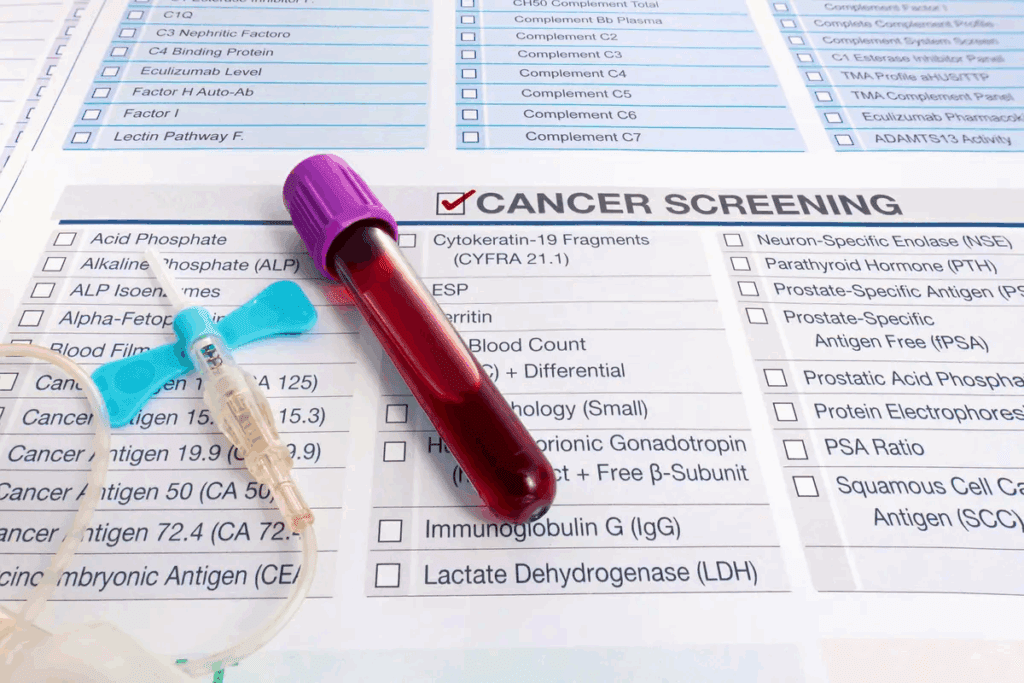
Cancer screening blood tests represent a significant advancement in the fight against cancer. They help doctors find cancer early. These tests look for special signs in the blood that might show cancer is present.
Definition and Purpose
Cancer screening blood tests are laboratory tests that check blood for cancer signs. They aim to find molecular cancer indicators and hematological cancer markers. This helps doctors catch cancer early, when it’s easier to treat.
These tests are part of a big change in how we find cancer. They’re great because they’re not too invasive. This makes them a key part of cancer diagnosis.
Importance of Early Detection
Finding cancer early is key to treating it well. Early detection means better treatment options and better results. Cancer screening blood tests are a big help in finding cancer early.
- Enable timely intervention
- Improve treatment outcomes
- Reduce the risk of cancer progression
These tests are vital in the fight against cancer. They give doctors the info they need to make treatment plans. This can save lives.
Types of Cancer Screening Blood Tests
Cancer screening blood tests are designed to find cancer early. They help us treat cancer better.
Complete Blood Count (CBC)
A Complete Blood Count (CBC) checks your blood cells. It looks at red, white blood cells, and platelets. It’s not just for cancer, but can spot blood cancers like leukemia.
Tumor Markers
Tumor marker tests find proteins from cancer cells. Tests like PSA for prostate and CA-125 for ovarian cancer are key. They help track cancer and its growth.
Circulating Tumor DNA (ctDNA)
Circulating Tumor DNA (ctDNA) tests find genetic material from cancer cells in blood. It’s a molecular cancer indicator. It helps find cancer early and plan treatment.
Other Emerging Tests
New tests are coming for blood-based cancer screening. They look at biomarker identification and other signs of cancer. These tests aim to find cancer early.
Research is making blood-based cancer screening better. We’re getting closer to more accurate tests. This means better cancer detection soon.
How Blood Tests Detect Cancer
Cancer screening blood tests find biomarkers like proteins or genetic material linked to cancer. They check a patient’s blood for substances that might show cancer cells are present.
Biomarkers and Their Role
Biomarkers are substances made by cancer cells or in response to them. They can be proteins, genetic material, or other molecules found in more or different amounts in people with cancer. For example, the prostate-specific antigen (PSA) is used to screen for prostate cancer.
Understanding biomarkers is key to seeing how blood tests can spot cancer early. Biomarkers act as signs of a cell’s or organism’s state. In cancer, some biomarkers show cancer cells are there, even before symptoms show up. Finding these biomarkers helps doctors diagnose cancer early, which can lead to better treatment results.
Mechanisms of Detection
How blood tests find cancer involves complex lab methods. These methods can spot and measure specific biomarkers in the blood. For instance, some tests use immunoassays to find proteins linked to certain cancers. Others use genetic sequencing to find mutations in circulating tumor DNA (ctDNA).
Modern tech, like next-generation sequencing (NGS), lets us deeply analyze blood genetic material. This helps find mutations or changes in genes linked to cancer. Knowing these methods shows the detailed and precise work of cancer screening blood tests.
The Role of Tumor Markers in Cancer Diagnosis
Tumor markers are substances found in higher amounts in people with certain cancers. They are key for cancer diagnostic protocols. They help us spot and track the disease.
We test blood samples for chemicals from cancer cells. For example, prostate-specific antigen (PSA) is a marker for prostate cancer. Cancer antigen 125 (CA125) is used for ovarian cancer. These markers are essential for early detection and tracking.
Common Tumor Markers
Several tumor markers are used in medical practice:
- PSA (Prostate-Specific Antigen): Used for prostate cancer screening.
- CA125 (Cancer Antigen 125): Primarily used for ovarian cancer.
- CEA (Carcinoembryonic Antigen): Often elevated in colorectal, lung, and breast cancers.
- AFP (Alpha-Fetoprotein): Used for liver cancer and certain germ cell tumors.
These markers are found through tumor marker detection tests. These tests analyze blood or other fluids for these substances.
Limitations of Tumor Markers
Though valuable, tumor markers have their limits. High levels don’t always mean cancer. For instance, PSA can be high due to non-cancerous conditions. So, cancer diagnostic protocols use a mix of tests, imaging, and clinical checks for accurate diagnosis.
It’s important to know how tumor markers work in blood protein analysis and their limits. By using tumor marker data with other diagnostic tools, we can better diagnose cancer. This helps us give our patients the best care.
When Should You Get Tested?
Figuring out when to get cancer screening blood tests depends on your risk and health. Your doctor will suggest screenings based on your risk profile. This includes your family history, age, and other health issues.
Recommended Screening Guidelines
Screening guidelines for cancer differ by type. For example, some tests are for specific cancers. Knowing these guidelines helps figure out when to get screened.
| Cancer Type | Recommended Screening Age | Risk Factors |
| Breast Cancer | 40+ | Family history, genetic mutations (BRCA1/2) |
| Colon Cancer | 50+ | Family history, personal history of polyps |
| Prostate Cancer | 55+ | Family history, African American descent |
Risk Factors for Cancer
Some risk factors mean you might need to get screened earlier or more often. These include:
- Family history of cancer
- Genetic predispositions (e.g., BRCA1/2 for breast and ovarian cancer)
- Personal history of cancer or certain benign conditions
- Exposure to carcinogens (e.g., tobacco, radiation)
A leading oncologist says, “Early detection through screening can greatly improve cancer treatment outcomes.”
“The key to effective cancer management is early detection, and risk assessment is the first step towards achieving this goal.”
By knowing your risk factors and following screening guidelines, you can help prevent and detect cancer early.
Interpreting Test Results
Understanding your health through diagnostic blood panels is key. When you get your test results, you might feel many emotions. We’re here to help you make sense of them and what they mean for your health.
Understanding Positive and Negative Results
A positive result on a cancer screening blood test doesn’t always mean you have cancer. It could show other issues that need more checking. A negative result is good news, but it doesn’t mean you’re completely cancer-free. We’ll break down both types of results to help you understand your health better.
Positive Results: A positive test means something unusual was found. This could be cancer or another condition. More tests, like imaging or biopsies, will be needed to figure out what it is.
Negative Results: A negative result means no abnormalities were found. But remember, no test is perfect. There’s a small chance of missing something that’s there.
Follow-Up Testing and Procedures
If your blood test shows something unexpected, you might need more tests to find out why. We’ll talk about what could happen next and what you can expect.
The Importance of Follow-Up: More tests are key to confirm or rule out cancer. This could include CT scans, MRI scans, or biopsies. We’ll help you understand and feel comfortable with what comes next.
- Additional imaging tests to visualize the suspected area
- Biopsy to examine tissue or cells for cancer
- Other laboratory tests to check for specific biomarkers or genetic mutations
Getting your test results is just the start. We’re here to support you every step of the way, from understanding your results to any follow-up tests you might need.
Advantages of Blood Tests Over Other Screening Methods
Blood tests are changing how we screen for cancer. They are non-invasive, unlike many other methods that can be invasive or use radiation. This makes blood tests a simple and comfortable choice.
Non-Invasive Nature
Blood tests are a big step forward in cancer screening because they are non-invasive. They only need a simple blood draw. This is much easier for patients than invasive procedures like biopsies or surgeries.
Also, blood tests don’t require a lot of preparation or recovery time. This makes it easier for people to fit screenings into their busy lives. It might even encourage more people to get screened.
Convenience and Accessibility
Blood tests are also convenient and accessible. They can be done in many places, like hospitals, clinics, or even mobile units. This makes it easier for people in different places to get screened.
Plus, blood tests can often be done during a regular doctor’s visit. This means you don’t need a separate appointment or procedure. It makes the screening process smoother and easier for patients.
In summary, blood tests have many benefits over other screening methods. They are non-invasive and convenient. As medical technology keeps improving, blood tests will likely become even more important for cancer screening and early detection.
Limitations of Cancer Blood Tests
Cancer screening blood tests have changed how we detect cancer early. But, they have their limits. It’s important to know what these limits are.
One big issue is false positives and false negatives. False positives mean a test says you have cancer when you don’t. This can cause a lot of worry and extra tests. False negatives, on the other hand, can make you think you’re okay when you’re not. This can delay getting the right treatment.
False Positives and False Negatives
Many things can cause false positives and negatives. For example, some tumor markers can be high in conditions other than cancer. This can lead to false positives.
- False Positives: Can lead to unnecessary anxiety and additional testing.
- False Negatives: Can delay diagnosis and treatment.
Conditions Mimicking Cancer Indicators
Some non-cancerous conditions can make tumor markers or biomarkers look like cancer. For instance, inflammation or benign diseases can raise biomarker levels. This can confuse test results.
Healthcare providers need to think about these things when they look at blood test results. Knowing the patient’s medical history and doing more tests can help fix these issues.
Knowing the limits of cancer blood tests helps us see their value. Even though they’re not perfect, they’re a key part of fighting cancer.
Future Directions in Cancer Screening Blood Tests
The world of cancer screening is about to change a lot. This is thanks to new advances in molecular oncology testing and personalized medicine. New technologies and methods are coming that will make cancer screening blood tests better. They will be more accurate, easier to get, and more effective.
Innovations in Technology
New tech is key to better cancer screening blood tests. Genetic analysis, biomarker detection, and data analysis are getting better. For example, molecular oncology testing can now find specific genetic mutations linked to cancer. This means we can spot cancer earlier and more accurately.
Artificial intelligence (AI) and machine learning (ML) are also playing a big role. They help find patterns in blood test data that humans might miss. This could lead to better diagnoses and treatment plans.
Personalized Medicine Approaches
Personalized medicine is changing how we treat cancer. It’s also making a big difference in cancer screening. By making tests fit an individual’s genetic profile and risk factors, we can make them more effective. This reduces the chance of getting false results.
Predictive medical screening is getting more important too. It helps find biomarkers and genetic signs that show a higher risk of cancer. This way, doctors can offer targeted screening and prevention to those who need it most.
| Technology/Approach | Description | Potential Impact |
| Molecular Oncology Testing | Advanced genetic analysis for cancer-specific mutations | Earlier and more precise cancer detection |
| Artificial Intelligence/Machine Learning | Analysis of complex data for pattern recognition | More accurate diagnoses and treatment recommendations |
| Personalized Medicine | Tailored screening based on individual genetic profiles and risk factors | Improved effectiveness of screening tests, reduced false results |
As we look ahead, combining these technologies and methods will be key. By innovating and personalizing cancer detection, we can improve patient care. We’re working towards a future where cancer is detected and treated better than ever.
Questions to Ask Your Doctor About Blood Tests
When you think about getting blood tests for cancer screening, it’s important to know what to ask your doctor. These tests can help find cancer early. Knowing what they do and what they mean is key to making good choices about your health.
Key Inquiries for Patients
Ask your doctor why you need the blood test, what the results mean, and what to do next. Knowing about cancer diagnostic protocols helps understand how well the test works.
- What is the purpose of this blood test?
- How will the results be interpreted?
- What are the next steps if the results are positive or negative?
- Are there any additional clinical diagnostic methods that should be considered?
Knowing these things helps you feel more in charge of your health. It prepares you for what’s ahead.
Understanding the Test Process
It’s important to understand how medical screening techniques work in blood tests. Ask your doctor to explain how the blood is tested and what it looks for.
| Test Component | Description | Significance |
| Complete Blood Count (CBC) | Measures various components of the blood | Helps in detecting abnormalities |
| Tumor Markers | Identifies specific proteins or biomarkers associated with cancer | Aids in diagnosing and monitoring cancer |
| Circulating Tumor DNA (ctDNA) | Detects DNA fragments released by tumors into the bloodstream | Provides insights into tumor genetics and behavior |
By asking the right questions and understanding the test process, you can take a more active role in your care. This can lead to better health and a treatment plan that’s just right for you.
Conclusion: Staying Informed About Cancer Screening
Knowing about cancer screening and detection is key. Cancer screening blood tests are important. They help find cancer early without surgery.
Empowering Patients Through Regular Screenings
Regular screenings are vital for fighting cancer. They help prevent and treat cancer well. Patients should know how these tests work.
The Value of Patient Education
Teaching patients about cancer screening is essential. Keeping up with new medical tests helps patients make smart choices. We urge patients to talk to their doctors about these tests.
FAQ
What are cancer screening blood tests, and how do they work?
Cancer screening blood tests check for cancer by looking at blood samples. They look for proteins or genetic material that might show cancer. These tests can find cancer early, when it’s easier to treat.
What types of cancer can be detected using blood tests?
Blood tests can find many cancers, like blood cancers and prostate cancer. They also find ovarian cancer and others that release biomarkers into the blood. Tests like CBC, tumor marker tests, and ctDNA tests are used for different cancers.
What is a tumor marker, and how is it used in cancer diagnosis?
Tumor markers are substances made by cancer cells or in response to cancer. They help diagnose and monitor cancer. For example, PSA is used for prostate cancer and CA125 for ovarian cancer. But, they can also be high in non-cancerous conditions.
How do I know if I should undergo cancer screening blood tests?
Deciding on blood tests depends on your age, family history, and health. Screening guidelines vary by cancer type. Knowing your risk factors helps decide when to get tested.
What does a positive or negative cancer screening blood test result mean?
A positive result might mean cancer or another condition. A negative result doesn’t mean you’re definitely cancer-free. It’s important to talk to your doctor about your results to know what to do next.
Are cancer screening blood tests reliable?
Blood tests are useful but have limits. False positives can worry you, and false negatives might give you false peace. Also, other conditions can raise tumor markers or biomarkers.
What are the advantages of blood tests over other cancer screening methods?
Blood tests are non-invasive and easy. They only need a simple blood draw. This makes them more accessible and less stressful than imaging tests or biopsies.
What should I ask my doctor about cancer screening blood tests?
Ask your doctor about the test’s purpose, what the results mean, and what to do next. Knowing about the test can help you feel less anxious and more involved in your care.
How are advancements in technology improving cancer screening blood tests?
New technology in genetic analysis and biomarker detection is making blood tests better. These advancements help find cancer earlier and more accurately. This can lead to better treatment options.
Can cancer screening blood tests be used for ongoing monitoring and risk assessment?
Yes, blood tests can monitor and assess cancer risk over time. They track biomarker levels, giving valuable info for managing risk and treatment.
References
- U.S. Food & Drug Administration. (2024). Cancer diagnostics: Blood tests. https://www.fda.gov/medical-devices/cancer-diagnostics