Last Updated on November 26, 2025 by Bilal Hasdemir

Cancer treatment and diagnosis rely on imaging, biopsy, and markers. Learn how doctors confirm malignancy.
Knowing if a tumor is cancerous is key for planning the right cancer treatment. It helps doctors pick the best treatment for each patient.
Key Takeaways
- Accurate diagnosis is critical for effective cancer treatment.
- Various tests and examinations are used to determine the presence and type of cancer.
- Doctors use imaging tests, biopsies, and laboratory tests to evaluate tumors.
- Understanding whether a tumor is malignant or benign is critical for treatment planning.
- Recent studies highlight the importance of cancer diagnosis in global health.
Understanding Tumors: Benign vs. Malignant
Tumors are abnormal cell growths that can be either benign or malignant. Knowing the difference is key for the right diagnosis and treatment. A tumor’s structure and behavior decide if it’s a threat to health.
What Defines a Tumor?
A tumor is a mass of tissue made from abnormal cells. These cells can be non-cancerous (benign) or cancerous (malignant). Benign tumors don’t spread or invade other tissues. Malignant tumors can spread and lead to cancer.
Key Differences Between Benign and Malignant Tumors
The main differences between benign and malignant tumors are in their characteristics and impact on the body. Key differences include:
- Growth Pattern: Benign tumors grow slowly and stay in one place. Malignant tumors grow fast and can spread.
- Invasion and Metastasis: Benign tumors don’t spread, but malignant tumors can move to other parts of the body.
- Cellular Characteristics: Malignant tumor cells have abnormal shapes and sizes. Benign tumors usually don’t.
“The distinction between benign and malignant tumors is fundamental to cancer diagnosis and treatment planning, as it directly influences the choice of therapeutic strategies and patient outcomes.”
Why Accurate Diagnosis Matters
Knowing if a tumor is benign or malignant is critical. It decides the treatment. Benign tumors might not need treatment unless they cause symptoms. Malignant tumors need treatment like surgery or chemotherapy to stop cancer from getting worse.
In conclusion, understanding the differences between benign and malignant tumors is vital for cancer diagnosis and treatment. Accurate diagnosis helps doctors plan the best treatment, which improves patient outcomes.
The Initial Assessment: Recognizing Cancer Signs
Spotting cancer early is key to better treatment. Doctors start by checking symptoms, doing a physical exam, and looking at your health history.
Common Warning Signs That Prompt Medical Evaluation
Some signs might mean you have cancer. These include unusual bleeding, changes in bowel or bladder habits, and unexplained weight loss. These symptoms could point to different cancers and need a doctor’s check.
Here are some common signs of cancer:
- Unusual bleeding or discharge
- Changes in bowel or bladder habits
- Unexplained weight loss
- Persistent pain or fatigue
- Skin changes or new moles
Physical Examination Techniques
A detailed physical exam is vital at first. Doctors use methods like feeling, looking, and listening to check for problems.
For example, a breast exam involves feeling for any unusual lumps. A skin check can spot new or odd-looking spots.
Medical History Considerations
Your medical history is important for diagnosing cancer. Doctors look at your family history, past cancers, and exposure to harmful substances.
| Medical History Factor | Relevance to Cancer Diagnosis |
| Family History | Increased risk of certain cancers (e.g., BRCA1/2 for breast cancer) |
| Previous Cancer Diagnoses | Increased risk of recurrence or secondary cancers |
| Exposure to Carcinogens | Increased risk of certain cancers (e.g., asbestos and mesothelioma) |
Doctors use this info to decide on more tests and diagnosis.
Medical Imaging: Visualizing Suspicious Growths
Seeing suspicious growths is key for accurate cancer diagnosis. Medical imaging leads the way in this area. It uses different techniques to show detailed images of inside the body. This helps find and diagnose cancerous tumors.
X-rays and Their Limitations
X-rays are old but common in medical imaging. They’re great for looking at bones and finding issues like fractures. But, they’re not good at showing soft tissues. This makes it hard to spot some tumors.
Key limitations of X-rays include:
- Limited soft tissue contrast
- Radiation exposure
- Lack of detailed information about tumor characteristics
CT Scans: Creating Detailed Cross-Sections
Computed Tomography (CT) scans are a big step up from X-rays. They give detailed images of the body in cross-sections. CT scans are great for finding tumors in places like the lungs, liver, and pancreas. They also help see how far tumors have spread.
The benefits of CT scans include:
- High-resolution images of internal structures
- Ability to detect small tumors
- Guiding biopsies and other interventional procedures
MRI Technology for Soft Tissue Evaluation
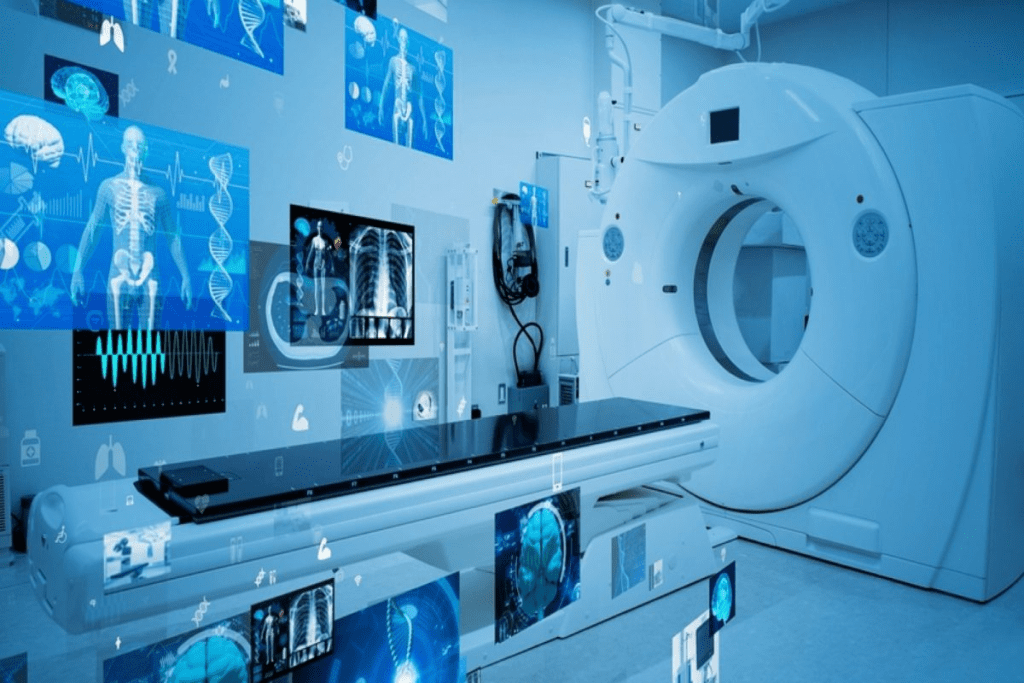
Magnetic Resonance Imaging (MRI) is top-notch for soft tissue images. It’s best for checking tumors in the brain, spine, and other soft areas. MRI can tell if a tumor is benign or malignant by looking at its details.
Advantages of MRI include:
- Excellent soft tissue contrast
- No radiation exposure
- Detailed information about tumor size and location
Ultrasound Applications in Tumor Detection
Ultrasound uses sound waves to see inside the body. It’s good for finding tumors in the thyroid, breast, and liver. It’s also used to guide biopsies and other procedures.
The benefits of ultrasound include:
- Non-invasive and safe
- Real-time imaging capabilities
- No radiation exposure
Medical imaging is key for catching cancer early. Knowing the good and bad of each imaging method helps doctors make better diagnoses. This leads to more effective treatments.
Advanced Imaging Techniques for Cancer Detection
Advanced imaging techniques are key in finding cancer early. They help spot and understand tumors better. This leads to more precise treatment plans.
PET Scans: Tracking Metabolic Activity
PET scans track how active cells are in the body. They’re great for finding cancer because they highlight active areas. This is done by using a radioactive sugar that cancer cells take up more of.
Nuclear Medicine Imaging
Nuclear medicine uses tiny amounts of radioactive materials to diagnose diseases. It’s good for many conditions, including cancer. It shows how the body works, helping doctors see how cancer spreads and if treatments are working.
Molecular Imaging Breakthroughs
Molecular imaging shows what’s happening at the molecular level. It’s super useful for finding cancer because it can spot specific markers. This opens doors for early detection and treatments tailored to each person.
| Imaging Technique | Application in Cancer Detection | Key Benefits |
| PET Scans | Tracking metabolic activity to identify malignant tumors | High sensitivity for detecting cancerous tissues |
| Nuclear Medicine Imaging | Diagnosing and staging cancer using radioactive tracers | Provides functional information about the body’s processes |
| Molecular Imaging | Visualizing biological processes at the molecular level | Enables early detection and personalized treatment planning |
Using advanced imaging in cancer diagnosis has changed the game. With tools like PET scans, nuclear medicine, and molecular imaging, doctors can catch cancer early. This leads to better treatment plans and outcomes for patients.
Biopsy Procedures: The Gold Standard for Diagnosis

Biopsy procedures are key in finding out if a tumor is cancerous. They involve taking tissue or cells from the body for a microscope check. This gives a clear diagnosis.
Types of Biopsy Techniques
There are many biopsy techniques, each for different tumor types and locations.
- Needle Biopsy: Uses a needle to collect tissue or fluid samples.
- Surgical Biopsy: Involves surgically removing a portion or all of the suspicious tissue.
- Endoscopic Biopsy: Uses an endoscope to collect tissue samples from within the body.
The Biopsy Process Explained
The biopsy starts with preparation, like imaging tests to guide the needle. The procedure is done under local anesthesia to reduce pain.
Minimally Invasive Biopsy Approaches
Needle biopsy is popular for being less risky and quick to recover from.
| Biopsy Type | Description | Advantages |
| Fine-needle aspiration biopsy | Uses a thin needle to collect cell samples. | Minimally invasive, quick recovery. |
| Core needle biopsy | Employs a larger needle to collect tissue samples. | Provides more tissue for analysis, relatively quick. |
| Surgical biopsy | Involves surgically removing tissue. | Highly accurate, allows for immediate examination. |
Potential Risks and Complications
Biopsy procedures are mostly safe but can have risks like infection, bleeding, and nerve damage. These risks are less with proper technique and care after the procedure.
Knowing about biopsy procedures is important for both patients and doctors. It helps in understanding cancer diagnosis and treatment planning better.
Laboratory Analysis: What Happens to Biopsy Samples
Laboratory analysis is key in checking biopsy samples for cancer. It uses advanced methods to help doctors diagnose cancer correctly.
Histopathological Examination
Histopathological examination is vital for cancer diagnosis. It looks at tissue samples under a microscope to find cell changes. Pathologists check the tissue’s structure and cells to see if they are cancerous.
The first step is preparing the biopsy sample. This includes fixing, dehydrating, embedding in paraffin, and cutting it into thin slices. These slices are stained with hematoxylin and eosin (H&E) to make cells stand out.
Cytology Studies
Cytology studies look at individual cells, not tissue structure. It’s great for checking cell shape and finding cancer cells. Samples can come from fine-needle aspiration.
Cells are checked for size, shape, and nuclear features. Any oddities can signal cancer. Cytology works with histopathology for a full diagnosis.
Immunohistochemistry Testing
Immunohistochemistry (IHC) testing uses antibodies to find proteins in tissues. It’s key for figuring out cancer type and origin. Different tumors have different proteins.
IHC testing applies antibodies to specific antigens in the sample. Then, a detection system shows where these antibodies are. This helps pathologists see the proteins’ presence and where they are.
Molecular and Genetic Testing of Tumors
Molecular and genetic testing of tumors is key in today’s cancer care. These tests let doctors look at tumors closely. They learn about the tumor’s genetic makeup.
These tests find specific DNA changes in tumors. This info helps doctors choose the best treatment. Knowing a tumor’s genetic details helps tailor treatments for better results.
DNA Sequencing and Mutation Analysis
DNA sequencing shows the DNA order in a tumor. It’s vital for finding genetic mutations. These mutations tell doctors how the tumor grows.
Mutation analysis looks at genetic changes in tumors. It helps doctors understand cancer growth and find treatment targets. This info guides treatment choices and predicts how well a patient will respond.
Key aspects of DNA sequencing and mutation analysis include:
- Identifying actionable mutations that can be targeted with specific therapies
- Understanding the genetic heterogeneity of tumors
- Monitoring tumor evolution and response to treatment
Biomarker Identification
Biomarkers are molecules in the body that show disease signs. In cancer, biomarkers help find the right treatments. They are found in blood, fluids, or tissues.
Identifying biomarkers means looking at tumor samples. This finds specific genetic or molecular traits. Biomarkers help predict treatment success, track disease, and find new treatments.
Genomic Profiling Techniques
Genomic profiling looks at a tumor’s genetic material. It helps find treatment targets and create personalized plans. This is done through next-generation sequencing (NGS) and other advanced methods.
These techniques give a detailed look at tumor genetics. They show how genes interact and affect tumor behavior. This helps in understanding and treating cancer better.
Blood Tests for Cancer Detection and Monitoring
Blood tests are now key in finding and managing cancer early. They help spot cancer early, check if treatments are working, and find any signs of cancer coming back.
Tumor Markers in Blood
Tumor markers are substances found in more than usual in some cancer patients. Blood tests can find these markers. For example, the PSA test looks for prostate cancer, and the CA-125 test checks for ovarian cancer.
Common Tumor Markers:
- PSA for prostate cancer
- CA-125 for ovarian cancer
- CEA for colorectal cancer
- AFP for liver cancer and germ cell tumors
Complete Blood Count Analysis
A complete blood count (CBC) checks different parts of the blood. It’s not a direct cancer test but can hint at cancer or how the body is fighting it.
| CBC Component | Normal Range | Potential Indication |
| White Blood Cell Count | 4,500 – 11,000 cells/μL | Infection, leukemia |
| Red Blood Cell Count | 4.32 – 5.72 million cells/μL (men) | Anemia, bone marrow disorders |
| Platelet Count | 150,000 – 450,000 platelets/μL | Bleeding disorders, bone marrow issues |
Liquid Biopsy Advancements
Liquid biopsy is a new way to find cancer by looking at DNA in the blood. It’s less invasive than regular biopsies and gives insights into tumor genetics.
Liquid biopsies are promising for better cancer diagnosis and treatment tracking. As research grows, their role in cancer care will likely get bigger.
Grading and Staging: Classifying Malignancies
Diagnosing cancer is more than just finding a tumor. It also means grading and staging to get the right classification. These systems help doctors decide on the best treatment, as shown in recent studies (Qiao Yang, Xiaoqing Zhou, Jiayu Li, et al., 2025).
The Tumor Grading System Explained
Tumor grading looks at cancer cells under a microscope. It shows how much they look like normal cells. This helps doctors understand how fast the tumor grows and if it might spread.
The most common grading system has three levels:
- Grade I: Tumors that look a lot like normal cells and grow slowly.
- Grade II: Tumors that are somewhat different from normal cells.
- Grade III: Tumors that look very different from normal cells and grow fast.
A study on esophageal cancer patients showed how different grading systems help check treatment success (Qiao Yang, Xiaoqing Zhou, Jiayu Li, et al., 2025).
Cancer Staging Frameworks
Cancer staging finds out how far cancer has spread in the body. The TNM system is the most used. It looks at:
| T (Tumor) | Describes the size of the original tumor and whether it has invaded nearby tissue |
| N (Node) | Indicates whether the cancer has spread to the nearby lymph nodes and the extent of the spread |
| M (Metastasis) | Shows whether the cancer has spread to other parts of the body |
Numbers or letters are added after T, N, and M to give more details.
How Classification Influences Treatment Decisions
The grade and stage of cancer are key in choosing the right treatment. Early-stage cancers might get surgery or radiation. But, advanced cancers might need chemotherapy or targeted therapy.
“The accurate classification of malignancies through grading and staging is essential for selecting the most effective treatment strategy and improving patient outcomes.”
Here’s how different cancer stages need different treatments:
| Cancer Stage | Typical Treatment Approaches |
| Stage I | Surgery, Localized Radiation Therapy |
| Stage III | Combination Therapy (Surgery, Chemotherapy, Radiation) |
| Stage IV | Systemic Treatments (Chemotherapy, Targeted Therapy) |
Multidisciplinary Tumor Boards: Collaborative Diagnosis
Multidisciplinary tumor boards gather experts from different fields. They discuss and plan treatments for cancer patients. This teamwork makes sure cancer care is thorough and fits each patient’s needs.
The Role of Different Specialists
These boards include oncologists, surgeons, radiologists, and pathologists. Each expert adds their knowledge. For example, oncologists share the latest in cancer treatments, and surgeons talk about surgery options.
Case Review Processes
They review patient data like medical history and imaging results. This team effort helps find the best treatment. Lepu Biopharma’s research shows better patient results from this teamwork.
“The integration of multiple disciplines in tumor boards has revolutionized cancer care by providing a holistic approach to diagnosis and treatment.”
Lepu Biopharma Research
Benefits of Collaborative Assessment
This teamwork improves diagnosis and treatment plans. It also keeps specialists up-to-date with new treatments. This leads to better care for patients.
| Specialist | Role | Contribution |
| Oncologist | Provides medical oncology expertise | Latest cancer treatments and chemotherapy protocols |
| Surgeon | Offers surgical insights | Feasibility of surgical interventions and post-operative care |
| Radiologist | Interprets imaging results | Accurate diagnosis through imaging techniques |
| Pathologist | Examines biopsy samples | Histopathological diagnosis and tumor grading |
The table shows the variety of experts in tumor boards. It shows how each one’s skills are important for cancer care.
Challenges in Tumor Diagnosis
Diagnosing tumors is not always easy. It’s key to find the right treatment. But, many things can make it hard.
Difficult-to-Access Tumors
Tumors in hard-to-reach places are a big problem. For example, tumors in the pancreas or brain are tough to get to. CT scans and MRI help a lot in these cases.
Rare Cancer Types
Rare cancers are not well understood. They can be hard to diagnose or diagnosed late. Molecular and genetic testing helps find these cancers by looking for specific signs.
Inconclusive Test Results
Sometimes, tests don’t give clear answers. This can cause stress and delay treatment. Liquid biopsy is being looked at to solve this problem.
Diagnosing tumors is complex. It needs a team effort. With new imaging, testing, and knowledge, doctors can get better at diagnosing and treating cancer.
Cancer Treatment Options and Approaches
Effective cancer treatment uses many therapies. Each one is chosen based on the patient’s needs.
Surgical Interventions
Surgery is key in fighting cancer. It aims to remove tumors and affected tissues. Minimally invasive surgical techniques are now common. They help patients recover faster and leave less scar.
- Tumor resection
- Lymph node removal
- Reconstructive surgery
Radiation Therapy Techniques
Radiation therapy is vital in cancer treatment. It uses high-energy particles or waves to kill cancer cells. Advanced radiation techniques like IMRT and proton therapy target tumors precisely. This reduces harm to healthy tissues.
- External beam radiation therapy
- Internal radiation therapy (brachytherapy)
- Stereotactic body radiation therapy
Chemotherapy Protocols
Chemotherapy uses drugs to kill cancer cells. Chemotherapy protocols change based on the cancer type, stage, and patient’s health.
- Adjuvant chemotherapy
- Neoadjuvant chemotherapy
- Palliative chemotherapy
Targeted and Immunotherapy Treatments
Targeted therapy and immunotherapy are new ways to fight cancer. Targeted therapy targets specific molecules in cancer cells. Immunotherapy uses the body’s immune system to fight cancer.
| Treatment Type | Description |
| Targeted Therapy | Focuses on specific cancer cell characteristics |
| Immunotherapy | Boosts the body’s immune response against cancer |
Cancer treatment is tailored to each patient. The best treatment often combines different therapies.
The Psychological Impact of Cancer Diagnosis
A cancer diagnosis affects not just the body but also the mind. It can bring on a mix of emotions like shock, denial, fear, and anxiety.
Coping with Uncertainty During Testing
The wait for test results can be tough. Patients often feel anxious, unsure of what’s to come.
Coping strategies might include talking to loved ones, practicing stress-reducing activities like meditation, or learning more about the testing process.
Processing a Cancer Diagnosis
When a patient gets a cancer diagnosis, they must start to understand and accept it. This means learning about the diagnosis, treatment options, and what the future might be like.
Having a support system is key. This could be family, friends, or support groups. Emotional support is vital in helping patients deal with their diagnosis.
Support Resources for Patients
There are many resources to help patients cope with a cancer diagnosis. These include:
- Counseling services
- Support groups
- Online resources and forums
- Hotlines
| Support Resource | Description | Benefits |
| Counseling Services | Professional guidance to cope with emotional challenges | Personalized support, coping strategies |
| Support Groups | Community of individuals with similar experiences | Shared understanding, emotional support |
| Online Resources | Information and forums available online | Accessibility, wealth of information |
By using these resources, patients can manage the emotional impact of a cancer diagnosis. They can find the courage to move forward.
Emerging Technologies in Cancer Detection
New technologies are changing how we find cancer early. They make finding cancer sooner and more accurate. This could lead to better health outcomes for patients.
Artificial Intelligence Applications
Artificial intelligence (AI) is now used to look at medical images and find patterns. AI algorithms can make diagnoses more accurate by spotting tiny details in images.
- Improved image analysis
- Enhanced pattern recognition
- Potential for earlier detection
Nanotechnology in Diagnostics
Nanotechnology uses tiny particles to find cancer markers in the body. Nanoparticles can be made to find specific cancer cells. This could lead to finding cancer sooner and treating it faster.
- Nanoparticle-based diagnostic tests
- Targeted detection of cancer biomarkers
- Potential for minimally invasive diagnostics
Multi-omics Approaches
Multi-omics combines different sciences like genomics and proteomics to understand cancer. This approach can find new biomarkers and treatments.
- Integration of genomic and proteomic data
- Identification of novel cancer biomarkers
- Personalized medicine approaches
These new technologies are changing cancer detection. They could lead to finding cancer sooner and treating it more effectively.
Conclusion: The Future of Malignancy Detection
The future of finding cancer is changing fast. New tech and understanding cancer better are leading the way. Accurate diagnosis is key for good cancer treatment. This includes medical images, biopsies, and lab tests.
New tools like artificial intelligence and nanotechnology are set to change how we find and treat cancer. They promise to catch cancer early and treat it more precisely. For example, research on esophageal cancer shows we’re getting better at diagnosing and treating it.
As we go forward, combining new tech and methods will make finding and treating cancer even better. The future looks bright for cancer detection and treatment. It could mean better health and life quality for patients.
FAQ
How can doctors tell if a tumor is malignant?
Doctors use tests like imaging and biopsies to check if a tumor is malignant. They look at how fast the tumor grows, its cell structure, and genetics.
What is the difference between a benign and malignant tumor?
Benign tumors are not cancerous and don’t spread. Malignant tumors are cancerous and can spread.
What are the common warning signs that may indicate the presence of cancer?
Warning signs include lumps, unexplained weight loss, pain, skin changes, and abnormal bleeding.
How is cancer diagnosed using medical imaging techniques?
Imaging like X-rays and CT scans help spot cancerous growths. Each method has its own strengths and weaknesses.
What is a biopsy, and how is it used to diagnose cancer?
A biopsy removes tissue for cancer cell checks. It’s the most reliable way to diagnose cancer.
What is molecular and genetic testing of tumors, and how is it used in cancer diagnosis?
This testing looks at cancer cell genetics to guide treatment. It helps predict how well a patient will do.
Can blood tests detect cancer?
Some blood tests can spot certain cancers or track treatment. But, a biopsy is usually needed for a definitive diagnosis.
What is tumor grading and staging, and how is it used in cancer treatment?
Grading and staging classify cancer based on its aggressiveness and spread. This helps decide treatment and predict outcomes.
What are the different cancer treatment options and approaches?
Treatments include surgery, radiation, chemotherapy, and more. The right treatment depends on the cancer type and the patient’s health.
How can patients cope with the psychological impact of a cancer diagnosis?
Patients can get support from family, friends, and mental health experts. Counseling and support groups help with treatment challenges.
What emerging technologies are being developed for cancer detection?
New tech like AI and nanotechnology aim to improve cancer detection. They could make diagnosis faster and more accurate.
Can cancer be detected in blood work?
Some cancers can be found in blood tests. But, not all can, and a biopsy is often needed for a sure diagnosis.
How is cancer diagnosed?
Doctors use imaging, biopsies, and lab tests to diagnose cancer. They look at the tumor’s growth, structure, and genetics.
What are the challenges in tumor diagnosis?
Diagnosing hard-to-reach tumors and rare cancers is tough. A team approach helps solve these problems.
How do doctors check for cancer?
Doctors use physical exams, medical history, and tests like imaging and biopsies to find cancer.
What is a full-body scan for cancer?
A full-body scan uses imaging to check the whole body for cancerous lesions.
Can a tumor show up on an X-ray?
Some tumors can be seen on X-rays, depending on their size and location. But, X-rays might miss small or soft tissue tumors.
References
- National Cancer Institute. (2023). Cancer diagnosis. National Institutes of Health. https://www.cancer.gov/about-cancer/diagnosis-staging
- World Health Organization. (2024). Cancer.
https://www.who.int/news-room/fact-sheets/detail/cancer - American Cancer Society. (2023). Imaging (radiology) tests for cancer. https://www.cancer.org/cancer/screening-prevention/tests-and-procedures/imaging-tests-for-cancer.html