Last Updated on November 25, 2025 by Ugurkan Demir
Recovering from a heart condition is more than just resting. It needs expert advice, proven therapies, and a caring team. At Liv Hospital, we have a detailed cardiac rehabilitation program. It’s made to help patients get better after heart issues or surgeries.
Our heart rehabilitation center offers a program that includes exercise, education, and counseling. By starting cardiopulmonary rehab at Liv Hospital, patients can take a big step. They can manage heart failure and get better physically, mentally, and socially.
Key Takeaways
- Cardiac rehab is a supervised program designed to improve heart health.
- A complete cardiac rehabilitation program includes physical activity, education, and counseling.
- Starting cardiopulmonary rehab can help manage heart failure and improve overall function.
- Our heart rehabilitation center provides a patient-centered approach to care.
- Evidence-based therapies support effective heart recovery.
Understanding Cardiovascular Rehabilitation and Its Importance
The journey to heart recovery often involves a cardiovascular rehabilitation program. It’s tailored to meet individual patient needs. This program is medically supervised and aims to improve heart health in patients with heart conditions.
What Is Cardiac Therapy and Rehabilitation?
Cardiac therapy and rehabilitation is a program that includes exercise, education, and counseling. It’s designed to help patients recover from heart conditions or surgeries. By focusing on cardiac physical therapy, these programs aim to improve heart function and quality of life.
“Cardiac rehabilitation is a vital component of the recovery process for patients with heart disease, providing a structured and supervised environment to improve cardiovascular health.”
Key Benefits for Heart Recovery
The benefits of cardiac rehab programs are many. They significantly improve heart health and patient well-being. Some key advantages include:
- Enhanced cardiovascular function
- Reduced symptoms and improved management of heart disease
- Increased strength and endurance through supervised exercise training
- Better stress management and mental health support
- Education on risk factor management and heart-healthy lifestyle choices
| Benefits | Description |
| Enhanced Cardiovascular Function | Improves heart health through exercise and lifestyle changes |
| Reduced Symptoms | Manages heart disease symptoms effectively |
| Increased Strength and Endurance | Supervised exercise training enhances physical capabilities |
The 25% Reduction in Hospital Readmissions
Participating in a cardiac rehabilitation program can lead to a 25% reduction in hospital readmissions. Studies show that patients in these programs have fewer hospital visits. This highlights the program’s effectiveness in managing heart disease and preventing complications.
Understanding the importance of cardiovascular rehabilitation helps patients take charge of their heart health. These programs can lead to better outcomes and an improved quality of life.
Who Qualifies for Cardiac Rehabilitation Programs?

Cardiac rehabilitation programs help people recover from heart disease or surgery. They offer a detailed plan to improve heart health. These programs cater to different heart conditions, aiming for full recovery and better health.
Common Heart Conditions That Warrant Rehab
People with heart failure and congenital heart disease often need rehab. These conditions can greatly affect daily life. Cardiac rehab offers a structured way to manage symptoms and boost heart health.
The American Heart Association says rehab improves heart failure outcomes. It cuts down on hospital visits and boosts survival rates.
“Cardiac rehabilitation is a medically supervised program designed to improve cardiovascular health in patients who have experienced heart conditions or procedures.”
Post-Surgical Recovery Candidates
Those who’ve had heart surgeries like CABG, heart transplant, or valve repair are good candidates. These programs aid in recovery, build strength, and lower future heart risks.
| Surgical Procedure | Rehabilitation Focus | Benefits |
| CABG | Improving cardiovascular health, managing risk factors | Enhanced recovery, reduced risk of future heart issues |
| Heart Transplant | Regaining strength, improving cardiovascular function | Better overall health, improved survival rates |
| Valve Repair/Replacement | Managing symptoms, improving heart function | Improved quality of life, reduced hospital readmissions |
Risk Factors That May Necessitate Early Intervention
High blood pressure, high cholesterol, diabetes, and a family history of heart disease may require early rehab. Cardiac rehab tackles these risk factors. It helps prevent future heart issues and boosts heart health.
Early intervention is key for heart health. Cardiac rehabilitation offers the support and guidance needed. It helps individuals make lifestyle changes for better heart health.
Getting Started: Obtaining a Referral for Heart Rehabilitation
To start cardiac rehab, you need a referral from your cardiologist. This is a simple but important step. It helps you join a heart rehabilitation program that fits your needs.
Speaking With Your Cardiologist
Start by talking to your cardiologist. You’ll learn about heart rehabilitation and how it helps after a cardiac event. Make sure to ask about the program and how it will be customized for you.
Before your meeting, write down your questions. This way, you won’t forget anything important to ask.
Insurance Coverage and Documentation
Most insurance plans cover cardiac rehab. But, check with your provider to be sure. You need to know about any costs or pre-approval needs.
Get all your insurance and medical records ready. This makes the process easier.
| Insurance Plan | Coverage Details | Out-of-Pocket Costs |
| Medicare | Covers cardiac rehab for eligible patients | 20% coinsurance |
| Private Insurance | Varies by plan; check your policy | Copays or coinsurance; deductible may apply |
Timing: When to Begin After a Cardiac Event
When to start heart rehabilitation depends on your health and the event. Usually, it’s soon after your doctor says it’s okay, often a few weeks.
Starting rehab early is key. It helps you get stronger and lowers the chance of future heart issues.
What to Expect During Your Initial Assessment
The initial assessment is a detailed check-up. It helps your healthcare team create a cardiac rehab plan just for you. This step is key to understanding your health and setting up a recovery plan that fits you.
Medical History Review
At the start, your medical history will be closely looked at. This includes your past health records, current meds, and any heart issues you’ve had. Your team will also ask about your lifestyle, like if you smoke, how active you are, and what you eat. This info helps spot risks and tailor your rehab plan.
Physical Examination Components
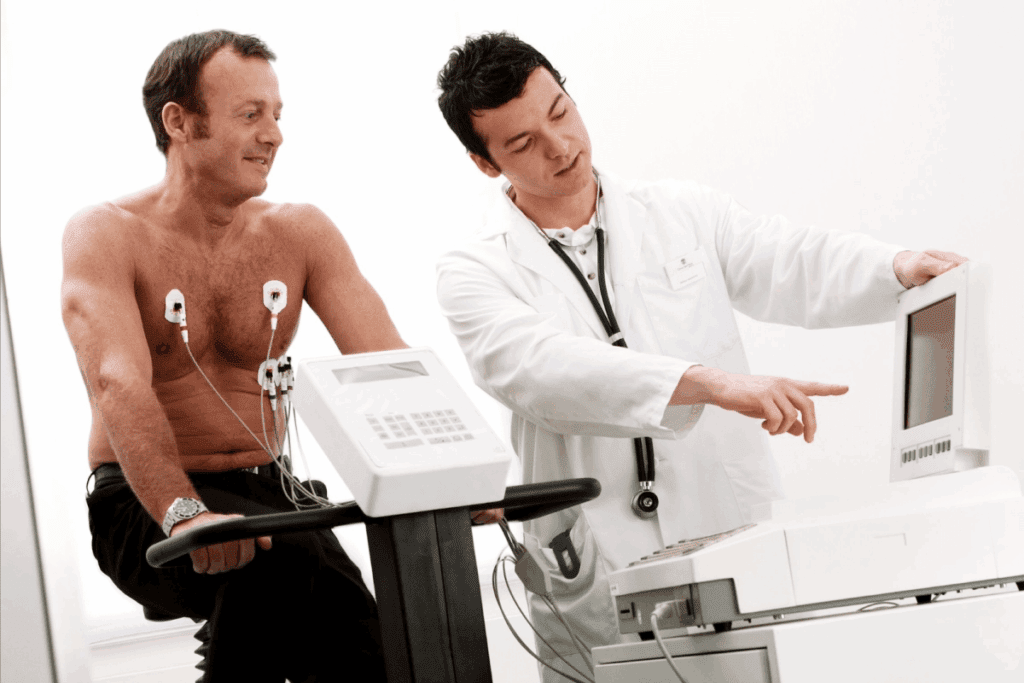
A physical check-up is a big part of the initial assessment. It might involve checking your blood pressure, heart rate, and BMI. Your team might also do an ECG to see how your heart works. They’ll look at your strength, flexibility, and endurance too. This helps figure out where you stand physically and where you can get better.
Setting Personalized Recovery Goals
After gathering all the info, your team will help you set goals. These goals are made just for you and might include better heart health, more strength, or lowering your heart risk. Having clear goals helps you stay focused and see how far you’ve come in your rehab.
Creating Your Individualized Heart Rehab Plan
The last step is making your heart rehab plan. This plan outlines how you’ll reach your goals. It might include exercise, nutrition advice, mental support, and learning about managing risks. Your team will make sure your plan is right for you and helps you get better.
The Core Components of Cardiopulmonary Rehab
Cardiopulmonary rehab has several key parts that help the heart. These parts aim to tackle heart disease in many ways. They help patients recover fully.
Supervised Exercise Training
Supervised exercise is a key part of rehab. It’s made for each person’s fitness and health level. It boosts heart function, stamina, and overall health.
Trained healthcare pros lead the exercise. They watch how patients do and change the plan if needed.
Nutritional Counseling
Nutritional counseling is also key. It teaches patients about healthy eating and lifestyle. This includes eating less salt, more fruits and veggies, and managing weight.
A dietitian or nutritionist helps create meal plans. They make sure the plans fit the patient’s needs and likes.
Psychological Support
Psychological support is vital for heart disease’s emotional side. It offers counseling, stress tips, and support groups.
This helps patients deal with their condition better. It lowers anxiety and depression, improving life quality.
Risk Factor Management Education
Risk factor education teaches patients to manage heart disease risks. It covers blood pressure, cholesterol, and quitting smoking.
Patients learn to make healthy choices. They adopt habits that support heart health for the long term.
| Component | Description | Benefits |
| Supervised Exercise Training | Tailored exercise programs under professional supervision | Improved cardiovascular function, increased stamina |
| Nutritional Counseling | Personalized dietary guidance | Heart-healthy eating habits, weight management |
| Psychological Support | Counseling, stress management, support groups | Reduced anxiety and depression, improved mental well-being |
| Risk Factor Management Education | Education on managing risk factors for heart disease | Empowered patients making informed health decisions |
Cardiopulmonary rehab programs offer a complete approach to heart recovery. They support patients in achieving the best heart health. This improves their life quality.
Exercise Training: The Foundation of Cardiac Physical Therapy
Cardiac physical therapy starts with exercise plans made just for each patient. Exercise physiologists oversee these plans to make sure they’re safe and work well.
Aerobic Exercise Protocols
Aerobic exercise is key in heart rehab. It boosts heart health and stamina. Aerobic exercise protocols include walking, cycling, or swimming, adjusted to fit each patient’s health and fitness.
We start with gentle exercises and slowly make them harder. This way, we improve heart function without overworking it.
Strength Training Guidelines
Strength training is also important in cardiac physical therapy. It helps build muscle strength and endurance. Strength training guidelines suggest using light weights or resistance bands. We focus on exercises that work many muscles at once.
- Start with lower body exercises like leg press or squats.
- Add upper body exercises like arm curls or shoulder presses.
- Slowly increase the weight or resistance as the patient gets stronger.
Flexibility and Balance Exercises
Flexibility and balance exercises are key for keeping joints moving and preventing falls. These include stretching and balance training. They’re very important for older adults or those with balance problems.
| Exercise Type | Benefits | Examples |
| Aerobic | Improves cardiovascular health | Walking, cycling, swimming |
| Strength Training | Enhances muscular strength | Leg press, arm curls, shoulder presses |
| Flexibility & Balance | Maintains range of motion, prevents falls | Stretching, balance training |
Monitoring Your Heart During Exercise
It’s vital to watch heart rate and blood pressure during workouts. We use ECG and heart rate monitors to keep an eye on the heart.
By watching the heart closely, we can adjust the workout to make it safer and more effective.
Choosing the Right Heart Rehabilitation Center
Choosing a heart rehabilitation center is key to your heart health. Cardiac rehab programs can be in hospitals or outpatient centers. Each has its own benefits.
Types of Facilities: Hospital-Based vs. Outpatient Centers
It’s important to know the difference between hospital-based and outpatient centers. Hospital-based programs offer a wide range of services. They are best for those needing close monitoring and complex care.
Outpatient centers are more flexible and less scary for some. They focus on specific parts of cardiac rehab, like exercise or nutrition.
| Facility Type | Services | Benefits |
| Hospital-Based | Comprehensive care, close monitoring | Ideal for complex medical needs |
| Outpatient Centers | Flexible scheduling, focused services | Less intimidating, more flexible |
Evaluating Staff Credentials and Equipment
Staff credentials and equipment quality are critical. Look for experienced cardiologists and certified cardiac rehabilitation specialists. Make sure the equipment is modern and well-kept.
Location and Scheduling Considerations
The center’s location and schedule are important. Pick a place that’s easy to get to and fits your schedule. Some offer sessions in the morning or evening.
Questions to Ask Before Enrolling
Before joining a program, ask the right questions. Find out about staff qualifications, services offered, and experience with similar patients.
- What are the qualifications of the cardiac rehabilitation team?
- What services are included in the program?
- How will my progress be monitored and adjusted?
- Are there any additional costs or fees?
By considering these factors, you can find a heart rehabilitation center that suits your needs. It will help you on your path to better heart health.
The Multidisciplinary Team in Cardiac Rehab Programs
A team of many healthcare professionals is key to a good cardiac rehab program. We think it’s important for different doctors and nurses to work together. This way, they can give patients the best care possible.
Cardiologists and Medical Oversight
Cardiologists lead the way in cardiac rehab. They make sure the rehab is safe and works for each patient. They watch how patients do and change plans if needed. Their knowledge helps manage heart problems and gives patients the care they need.
Cardiac Rehab Nursing Specialists
Cardiac rehab nurses have special training for heart care. They teach patients about their heart, help with symptoms, and teach healthy habits. They are very important in helping patients through rehab.
Exercise Physiologists and Physical Therapists
Exercise physiologists and physical therapists are also very important. They create exercise plans that fit each patient’s needs. They help patients get stronger and healthier. They make sure patients exercise safely and right.
Nutritionists and Mental Health Professionals
Nutritionists and mental health professionals are also key in rehab. Nutritionists help with healthy eating for heart health. Mental health professionals help with the emotional side of heart disease. Together, they help patients focus on their whole health.
In summary, the team in cardiac rehab is vital for caring for patients. By working together, they help patients recover well and stay healthy for a long time.
Tracking Progress and Advancing Through Your Cardiovascular Therapy
Knowing the phases of cardiovascular therapy helps you stay on track. As you move through your cardiovascular therapy program, watch your progress closely. Make changes as needed.
Typical Program Phases and Milestones
Cardiac rehab programs have phases with regular checks. These phases help increase your activity and watch your heart health.
- Phase 1: Initial assessment and introduction to exercise training.
- Phase 2: Outpatient program with supervised exercise and education.
- Phase 3: Maintenance phase where you continue to exercise independently.
Measuring Improvements in Heart Health
In your cardiopulmonary rehab program, your team will check your progress often. They watch your heart rate, blood pressure, and physical condition.
Tests like stress tests and echocardiograms show how well your heart is working. These tests help your team adjust your program as needed.
When and How Your Program Gets Adjusted
Your cardiovascular therapy program changes based on your progress. If you’re doing well, your program might get tougher to keep challenging your heart.
If you face any challenges, your program might be adjusted for your safety and comfort. Regular checks and talking with your team are key to these changes.
Transitioning to Independent Exercise
As you move forward in your cardiac rehab program, you’ll start exercising on your own. This is a big step in keeping your heart healthy and improving your well-being.
Your team will help you create a safe and effective workout plan. This plan will fit your needs and goals, helping you keep up the good work.
Conclusion: Long-Term Benefits and Life After Cardiopulmonary Rehab
Finishing a cardiac rehab program is a big step towards better heart health. We’ve learned that it improves heart function and quality of life. With lasting lifestyle changes, people can keep their heart healthy.
A cardiac rehab program helps people get better after heart issues. It includes exercise, nutrition advice, and mental support. This way, people see big improvements in their heart health. Staying healthy after rehab is hard, but it’s very rewarding.
Rehab programs lower the chance of more heart problems and boost life quality. Cardiac therapy is key, giving people the tools to manage their heart health. By focusing on heart health, people can live a healthier, more active life.
FAQ
What is cardiopulmonary rehab, and how can it help with heart recovery?
Cardiopulmonary rehab is a program that helps patients recover from heart issues or surgery. It includes exercise, education, and support. This can improve heart health and reduce hospital visits.
Who qualifies for cardiac rehabilitation programs?
People with heart conditions, those recovering from surgery, and those at risk may qualify. Our team checks each patient’s condition to see if they can join.
How do I obtain a referral for heart rehabilitation?
Talk to your cardiologist about cardiac rehab. Check your insurance and find the best time to start after a heart event.
What can I expect during my initial assessment for cardiac rehab?
We’ll review your medical history and do a physical exam. We’ll set goals and create a plan just for you.
What are the core components of cardiopulmonary rehab?
It includes exercise, nutrition advice, mental support, and learning to manage risks. These help improve heart health and overall well-being.
How important is exercise training in cardiac physical therapy?
Exercise is key in cardiac physical therapy. It includes aerobic and strength training, and helps monitor heart health during exercise.
How do I choose the right heart rehabilitation center?
Look at the facilities, staff, and equipment. Consider location and ask questions to find the best fit for you.
What role does the multidisciplinary team play in cardiac rehab programs?
Our team, including doctors and specialists, provides care and support. We work together to help you through your rehab journey.
How do you track progress and advance through cardiovascular therapy?
We track progress through phases and milestones. We adjust the program as needed and help you move to independent exercise.
What are the long-term benefits of cardiopulmonary rehab?
The benefits include lasting lifestyle changes and continued heart health. It improves your overall quality of life.
What is cardiovascular rehabilitation, and what are its key benefits?
Cardiovascular rehabilitation, or cardiac rehab, improves heart health in patients with heart conditions. It reduces hospital visits and enhances well-being.
What is cardiac therapy, and how does it support heart recovery?
Cardiac therapy supports heart recovery with exercise, education, and counseling. It helps manage heart conditions and improves heart health.
References:
- Lung, K., & Lui, F. (2023). Anatomy, Abdomen and Pelvis: Arteries. In StatPearls. National Center for Biotechnology Information. https://www.ncbi.nlm.nih.gov/books/NBK525959/