Last Updated on November 25, 2025 by Ugurkan Demir
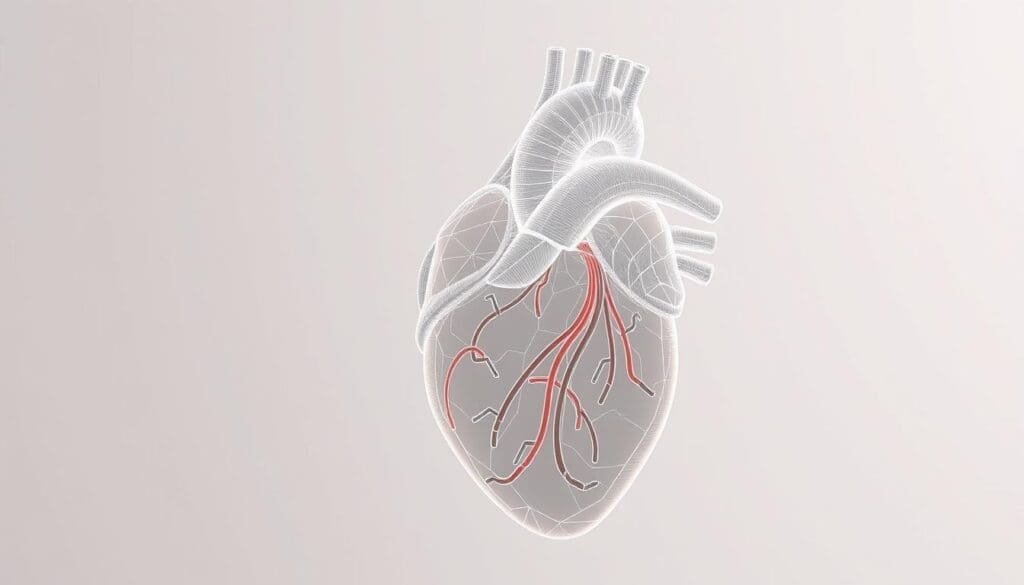
The heart’s ability to pump blood efficiently relies on a complex network called the cardiac conduction system. This system makes sure the heartbeat is coordinated. It allows for the proper circulation of blood throughout the body.
We will explore how this complex system works. We will focus on its 5 key components and their important roles. Knowing these elements is key to understanding how the heart keeps its rhythmic beats, adapting to the body’s needs.
Key Takeaways
- The cardiac conduction system is vital for a coordinated heartbeat.
- It consists of specialized cells and nodes generating electrical impulses.
- The system is key for efficient blood circulation.
- Five key parts work together to control the heartbeat.
- Understanding these components is essential for appreciating heart function.
The Fundamentals of Cardiac Electrical Activity
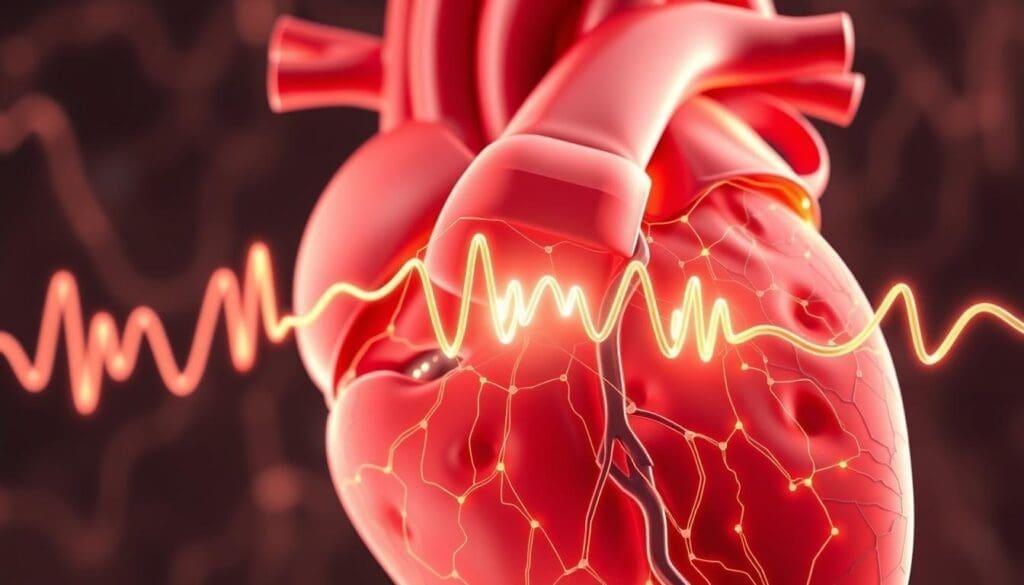
Understanding how the heart works is key. It pumps blood around the body thanks to an electrical system. This system controls the heart’s beats.Explore the cardiovascular conduction system and the 5 key parts that control heart rhythm.
How Electrical Signals Control Heart Contractions
The heart’s natural pacemaker, the sinoatrial (SA) node, starts the electrical impulses. These signals make the atria contract. Then, they go to the atrioventricular (AV) node.
The AV node delays the signal. This lets the ventricles fill with blood before they contract. This delay is key for a synchronized heartbeat.
The signals then move to the Bundle of His, then the bundle branches, and lastly to the Purkinje fibers. These fibers spread the impulses to the ventricles. This makes the heart beat efficiently and in sync.
The Importance of Coordinated Electrical Conduction
Coordinated electrical conduction is essential for the heart’s function. It makes sure the atria and ventricles contract together. This ensures the best blood flow.
Any problem in this coordination can cause arrhythmias or other heart issues. The heart’s ability to adapt to different needs shows the importance of this coordination. For example, during exercise, the heart rate goes up to meet muscle demands. This is thanks to changes in the electrical system.
| Component | Function | Importance |
| Sinoatrial (SA) Node | Generates electrical impulses | Initiates heartbeat |
| Atrioventricular (AV) Node | Delays electrical impulses | Ensures ventricles fill with blood |
| Bundle of His and Bundle Branches | Transmits impulses to ventricles | Coordinates ventricular contraction |
| Purkinje Fibers | Distributes impulses throughout ventricles | Ensures synchronized ventricular contraction |
The Cardiovascular Conduction System: Overview and Importance
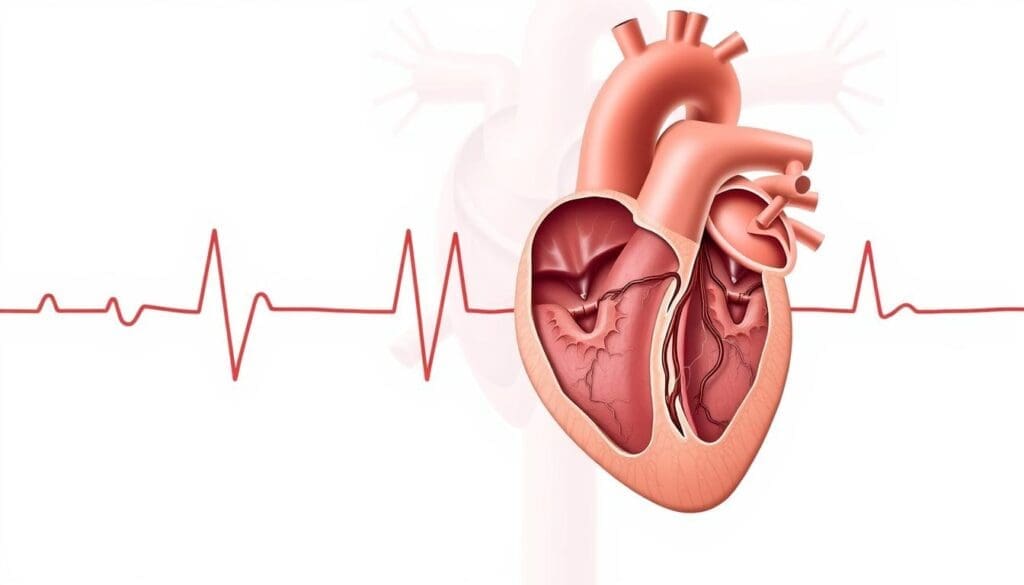
The cardiovascular conduction system controls the heartbeat by sending electrical impulses. It’s a complex network that keeps the heart rhythm normal. This ensures the heart contracts and relaxes properly.
Definition and Basic Functions
This system is made of special cells that send electrical signals. These signals make the heart muscle contract and relax. This helps the heart pump blood well across the body.
The main jobs of this system are:
- Generating electrical impulses
- Conducting these impulses to the heart muscle
- Coordinating the contraction and relaxation of the heart
A leading cardiologist says, “The cardiac conduction system is a remarkable example of biological engineering. It makes the heart work like a synchronized pump.”
“The cardiac conduction system is a complex network that is essential for maintaining a normal heart rhythm.”
The Relationship Between Electrical Signals and Mechanical Contractions
The electrical signals from the cardiovascular conduction system start the heart’s contractions. When an electrical impulse reaches the heart muscle, it makes the heart contract. This allows it to pump blood.
The link between electrical signals and heart contractions is shown in the table below:
| Electrical Signal | Mechanical Contraction |
| Generated by the SA node | Atrial contraction |
| Conducted through the AV node | Delayed to allow ventricular filling |
| Transmitted via the Bundle of His and Purkinje fibers | Ventricular contraction |
The heart works efficiently because of the coordinated electrical activity. In short, the cardiovascular conduction system is key to a normal heart rhythm. Any problems can cause heart rhythm issues.
Embryological Development of the Cardiac Conduction System
The heart’s electrical system starts to form early in a baby’s development. This process is key for the heart to work right.
Looking into how the heart’s electrical system develops is important. It starts early in a baby’s life. Many factors, like genes and the environment, play a role in this.
Formation of Specialized Conduction Tissues
Specialized conduction tissues are vital for the heart to beat in sync. These tissues send out electrical signals that control the heartbeat.
Creating these tissues is a complex process. It involves many steps at the cellular and molecular levels. Knowing about these steps helps us understand how the heart develops and works.
Developmental Abnormalities and Their Consequences
Problems in the heart’s electrical system can cause irregular heartbeats and other issues. Understanding these problems is key for finding and treating them.
| Developmental Stage | Key Events | Importance |
| Early Embryonic Development | Formation of cardiac progenitor cells | Establishes the foundation for the heart’s electrical system |
| Organogenesis | Development of the cardiac conduction system | Critical for coordinated heart contractions |
| Fetal Development | Maturation of conduction tissues | Ensures proper heart function after birth |
Studying how the heart’s electrical system develops gives us important insights. It helps us understand how the heart works and the effects of any problems.
The Sinoatrial (SA) Node: The Heart’s Natural Pacemaker
The sinoatrial node is key to controlling the heart’s rhythm. It’s a small group of cells in the right atrium. These cells send out electrical signals that make our heart beat.
Structure and Location
The SA node is found at the top of the right atrium. It’s made up of special cells and nerves. Its design helps start the heartbeat, keeping it steady.
Being in the right atrium is important for the SA node’s job. It sends out signals that make the heart contract. Its strategic positioning helps these signals move well through the heart.
Function: Initiating the Cardiac Cycle
The SA node starts the heart’s cycle with electrical impulses. These impulses control the heart rate and make sure it beats in sync. Its role is vital for a normal heartbeat.
- The SA node sends out impulses at a rate of 60-100 beats per minute in adults.
- These impulses make the atrial muscle contract.
- The signal then goes to the ventricles, allowing them to fill properly.
Autonomic Regulation of SA Node Activity
The autonomic nervous system controls the SA node. It has sympathetic and parasympathetic branches. This control lets the heart rate change based on what the body needs.
- The sympathetic system makes the SA node fire faster, increasing the heart rate.
- The parasympathetic system, through the vagus nerve, slows down the SA node, lowering the heart rate.
This complex system ensures the heart rate adjusts as needed. It shows how the SA node and the autonomic nervous system work together.
The Atrioventricular (AV) Node: The Electrical Gateway
The AV node is key for a well-coordinated heart rhythm. It’s a complex part of the heart’s electrical system.
Structure and Location of the AV Node
The AV node is in the right atrium, near the ventricles. It’s a small, oval shape made of special heart cells. These cells slow down electrical signals, making sure the heart beats right.
“The AV node is vital for the heart’s electrical system,” says its role in heart function.
Function: Delaying Impulse Transmission
The AV node’s main job is to slow down electrical signals from the atria to the ventricles. This delay lets the ventricles fill with blood before they contract. This is key for the heart’s efficiency.
Its unique cells make sure signals move slowly. This is important for a well-coordinated heart rhythm.
The AV Node’s Role in Protecting Ventricles from Rapid Atrial Rhythms
The AV node also protects the ventricles from fast heart rhythms. It filters out too many electrical signals during atrial fibrillation or flutter. This keeps the ventricles from beating too fast.
This protection is essential for the heart’s health. As Medical Expert, a cardiologist, notes, “The AV node’s protective role is vital for the heart’s function.”
In summary, the AV node is critical for the heart’s rhythm and protection. Its proper function is essential for a healthy heart.
The Bundle of His: The Electrical Highway
The Bundle of His is a special group of fibers. It helps electrical signals move quickly to the ventricles. This is key for the heart to pump blood well.
Structure and Location
The Bundle of His is found between the atrioventricular node and the ventricles. It’s part of the heart’s electrical system. It’s made of special fibers that help signals move fast.
Function: Rapid Conduction to Ventricles
The main job of the Bundle of His is to send electrical signals to the ventricles fast. This makes sure the heart pumps blood well. It’s vital for the heart to beat right.
“The Bundle of His is key for the heart’s electrical system,” say heart experts. It shows how important it is for heart health.
The Bundle of His as a Critical Junction Point
The Bundle of His is a key spot in the heart’s electrical system. It’s where signals from the atrioventricular node go to the ventricles. Problems here can cause serious heart issues.
Knowing about the Bundle of His helps us understand the heart better. It shows why keeping the heart healthy is so important. It helps us see why we need to take care of our heart.
Bundle Branches: Right and Left Pathways
The right and left bundle branches are key parts of the heart’s electrical system. They make sure the heart beats in sync. These fibers send electrical signals to the heart’s lower chambers, helping it pump blood efficiently.
Structure and Location
The bundle branches start from the Bundle of His. They split into the right and left branches. The right bundle branch is thinner and simpler. The left bundle branch is thicker and splits into smaller parts. Both are in the heart’s wall and reach the heart’s tip.
Function: Distributing Impulses Throughout Ventricles
The bundle branches’ main job is to send electrical signals to the heart’s muscle cells. This ensures the heart contracts in sync. The right branch goes to the right ventricle, and the left to the left ventricle. This teamwork is key for pumping blood well.
Differences Between Right and Left Bundle Branches
Even though they do the same job, the right and left bundle branches are different. The left branch is bigger and more complex, matching the left ventricle’s size. The right branch is thinner and more prone to damage.
| Characteristics | Right Bundle Branch | Left Bundle Branch |
| Size | Thinner | Thicker |
| Complexity | Less complex | More complex, often dividing into fascicles |
| Ventricular Supply | Supplies right ventricle | Supplies left ventricle |
Knowing the differences between the right and left bundle branches is important. Problems with either can cause heart rhythm issues and lower heart function.
Purkinje Fibers: The Terminal Network
Purkinje fibers are key to the heart’s electrical system. They help the ventricles contract in sync. We’ll look at their structure, where they are, and what they do. This will show how important they are for the heart’s rhythm.
Structure and Location
Purkinje fibers are bigger than regular heart cells. They are found in the ventricles, under the heart’s lining. They help the heart depolarize quickly.
These fibers have lots of special connections. This lets them send signals fast. Their design makes them better at moving electrical signals than other heart cells.
Function: Rapid Ventricular Depolarization
Purkinje fibers make the ventricles depolarize fast. This ensures the heart pumps blood well. It’s all about working together.
They help the heart beat in sync. This is key for pumping blood efficiently.
Ensuring Synchronized Ventricular Contraction
For the heart to work well, ventricles must contract together. Purkinje fibers make sure this happens. They spread the electrical signal evenly.
| Characteristics | Description |
| Structure | Specialized conducting fibers, larger in diameter |
| Location | Ventricular walls, beneath the endocardium |
| Function | Rapid ventricular depolarization, synchronized contraction |
In conclusion, Purkinje fibers are essential for the heart’s rhythm. They help the ventricles contract together. This makes the heart work efficiently.
The Complete Cardiac Conduction Pathway
Understanding the cardiac conduction pathway is key to knowing how the heart works. This pathway includes structures that control the heartbeat. It ensures the heart beats efficiently and in sync.
The pathway includes the SA node, AV node, Bundle of His, bundle branches, and Purkinje fibers. Each part is vital for sending electrical impulses that control the heartbeat.
Step-by-Step Progression of Electrical Impulses
The electrical impulses that control the heartbeat follow a specific pathway.
The process starts with the SA node, the heart’s natural pacemaker. It generates electrical impulses at a rate of about 60-100 beats per minute.
These impulses then go to the AV node, where they are delayed for a fraction of a second. This delay lets the atria fully contract before the ventricles start to contract.
The impulses then move down the Bundle of His. It divides into the left and right bundle branches. These branches send the impulses to the left and right ventricles, respectively.
Lastly, the impulses reach the Purkinje fibers. These specialized fibers quickly send the impulses to the ventricular muscle cells. This causes the ventricles to contract.
Timing and Coordination of the Conduction Sequence
The timing and coordination of the conduction sequence are critical for maintaining a normal heart rhythm.
The SA node generates impulses at a rate influenced by the autonomic nervous system. This system can adjust the heart rate based on the body’s needs.
The delay in the AV node ensures proper coordination between atrial and ventricular contractions. This ensures the heart functions efficiently.
As “The cardiac conduction system is a vital network that ensures the heart beats in a coordinated manner”, any disruptions can lead to arrhythmias or other cardiac problems.
According to medical experts,
“The proper functioning of the cardiac conduction pathway is essential for maintaining a normal heart rhythm and ensuring that the heart meets the body’s needs for oxygen and nutrients.”
The cardiac conduction pathway is a complex and essential system that controls the heartbeat. Understanding how it works is vital for appreciating the importance of maintaining a healthy heart.
Measuring Cardiac Conduction: The Electrocardiogram (ECG)
The electrocardiogram (ECG) is a key tool for checking the electrical activity of the heart. It records the electrical signals that control our heartbeat. This gives us important info about how the heart’s electrical system works.
How ECGs Record Electrical Activity
An ECG uses electrodes on the skin to pick up the heart’s electrical signals. These signals are then made bigger and shown on a graph. This shows us the heart’s electrical activity in a clear way.
The electrodes catch the small electrical changes on the skin during each heartbeat. These changes are seen as waves on the ECG. By looking at these waves, we can understand the heart’s rhythm and how it conducts electricity.
Interpreting ECG Waves and Intervals
Reading an ECG means looking at the different waves and intervals it shows. The main parts are the P wave, QRS complex, and T wave. Each part shows a different part of the heart’s electrical cycle. Knowing these is key for spotting arrhythmias and other heart problems.
- The P wave shows when the atria depolarize.
- The QRS complex marks when the ventricles depolarize.
- The T wave shows when the ventricles repolarize.
By looking at the waves and intervals, doctors can see how well the heart’s electrical system is working. For example, a long PR interval might mean signals from the atria to the ventricles are delayed.
Common Disorders of the Cardiovascular Conduction System
The heart’s electrical system can face many disorders. These issues can cause irregular heartbeats and lower heart function. In severe cases, they can be life-threatening.
Arrhythmias and Their Causes
Arrhythmias are abnormal heart rhythms. They happen when the heart’s electrical impulses get disrupted. Heart disease, electrolyte imbalances, and some medications can cause them.
There are different types of arrhythmias. Atrial fibrillation, ventricular tachycardia, and supraventricular tachycardia are common. Knowing the causes and types is key to managing and treating them.
Heart Blocks: Types and Implications
Heart blocks occur when electrical impulses are delayed or blocked in the heart. They are classified by the severity of the blockage.
There are first-degree, second-degree (divided into Mobitz Type I and Mobitz Type II), and third-degree heart blocks. Each type affects the heart differently.
| Type of Heart Block | Characteristics | Clinical Implications |
| First-degree | Delayed conduction, but all impulses reach the ventricles | Often asymptomatic, may require monitoring |
| Second-degree (Mobitz Type I) | Progressive delay until an impulse is blocked | May be symptomatic, requires observation |
| Second-degree (Mobitz Type II) | Intermittent blocking of impulses without prior delay | Higher risk of progression to third-degree block |
| Third-degree | Complete blockage of impulses to the ventricles | Often symptomatic, may require pacemaker implantation |
Sick Sinus Syndrome and Other Conduction Disorders
Sick sinus syndrome affects the sinoatrial node, leading to irregular heart rhythms. It can cause bradycardia, tachycardia, or both. Other disorders include bundle branch blocks and fascicular blocks, which affect the heart’s electrical pathways.
These conditions often require pacemaker therapy or other treatments. They help manage symptoms and prevent serious complications.
Conclusion: The Critical Importance of the Heart’s Electrical System
The cardiovascular conduction system is key to controlling the heartbeat. Its failure can lead to serious health issues. We’ve looked at its five main parts and how they work together.
This system is vital for a regular heartbeat. Any problems can cause irregular heartbeats or other heart issues. Knowing about this system helps us see its importance in heart health.
Healthcare experts can better find and treat heart problems by understanding this system. It shows how important it is to keep researching and improving heart care.
In short, the heart’s electrical system is essential for heart health. We must keep learning about and caring for it.
FAQ
What is the cardiac conduction system?
The cardiac conduction system is a complex network. It generates and conducts electrical impulses. These impulses control the heartbeat and ensure the heart contracts in sync.
What are the 5 key parts of the cardiovascular conduction system?
The 5 key parts are the SA node, AV node, Bundle of His, bundle branches, and Purkinje fibers. Each plays a vital role in controlling the heartbeat.
What is the function of the SA node?
The SA node starts the heartbeat by sending out electrical impulses. It acts as the heart’s natural pacemaker.
What is the role of the AV node in the cardiac conduction system?
The AV node delays the impulse, letting the ventricles fill with blood. This protects them from fast atrial rhythms.
How do electrical signals control heart contractions?
Electrical signals from the cardiac conduction system make the heart muscle contract. This ensures the heart beats in sync.
What is the importance of coordinated electrical conduction in the heart?
Coordinated electrical conduction is key for efficient heart function. It ensures the heart pumps blood effectively by beating in sync.
What is the function of the Bundle of His?
The Bundle of His quickly sends electrical impulses to the ventricles. This ensures the ventricles contract in sync.
What are the bundle branches, and what is their function?
The bundle branches are pathways that spread impulses to the ventricles. The right and left branches have different roles.
What is the role of Purkinje fibers in the cardiac conduction system?
Purkinje fibers quickly depolarize the ventricles. This ensures the ventricles contract in sync.
How do ECGs record electrical activity, and what do they measure?
ECGs record the heart’s electrical activity. They measure the timing and coordination of the conduction sequence.
What are common disorders of the cardiovascular conduction system?
Common disorders include arrhythmias, heart blocks, and sick sinus syndrome. These can affect the heart’s electrical system and function.
Why is understanding the cardiac conduction system important?
Understanding the cardiac conduction system is vital. It helps appreciate its role in maintaining cardiovascular health. It also aids in diagnosing and managing disorders.
References
- Lung, K., & Lui, F. (2023). Anatomy, Abdomen and Pelvis: Arteries. In StatPearls. National Center for Biotechnology Information. https://www.ncbi.nlm.nih.gov/books/NBK525959/