Last Updated on December 1, 2025 by Bilal Hasdemir
Rhabdomyosarcoma is a rare and aggressive cancer that affects muscle tissue. It’s a big challenge in diagnosis and treatment. Understanding its cause is key for effective management, says the Universitäre Centrum für Tumorerkrankungen (UCT) Mainz. This cancer mainly hits children and teens, making it a big area of research.
We dive into the complex causes of rhabdomyosarcoma. It involves genetic and environmental factors. Recent studies have given us new insights into its development.
Key Takeaways
- Rhabdomyosarcoma is a rare and aggressive cancer affecting muscle tissue.
- It mainly affects children and teens.
- The exact cause is complex and multifactorial.
- Genetic and environmental factors play a role in its causation.
- Understanding its cause is vital for effective treatment and management.
Understanding Rhabdomyosarcoma: An Overview
To tackle rhabdomyosarcoma, we must understand its basics. This includes its definition, how common it is, and its symptoms. It’s a rare and complex cancer that affects muscle tissue. Knowing this well is key for diagnosing and treating it effectively.
Definition and Classification of Rhabdomyosarcoma
Rhabdomyosarcoma is divided into several types based on how it looks under a microscope. The two main types are embryonal and alveolar rhabdomyosarcoma. Embryonal is more common in young kids, while alveolar is seen in older kids and teens.
Knowing the type of rhabdomyosarcoma is important for planning treatment. Doctors use imaging, biopsies, and genetic tests to make an accurate diagnosis.
Epidemiology and Incidence Rates
Rhabdomyosarcoma is a rare cancer, making up about 3% of all childhood cancers. Studies show it’s most common in kids under 10.
| Age Group | Incidence Rate per Million |
| 0-4 years | 5.3 |
| 5-9 years | 4.1 |
| 10-14 years | 2.7 |
Clinical Presentation and Symptoms
The symptoms of rhabdomyosarcoma depend on where the tumor is and how big it is. Common signs include a noticeable lump, pain, and swelling. Sometimes, it can also cause problems like trouble urinating or bowel blockages.
Spotting rhabdomyosarcoma early is vital for better treatment results. Doctors need to be extra careful with kids who have unusual lumps or symptoms.
The Cause of Rhabdomyosarcoma: A Multifactorial Disease
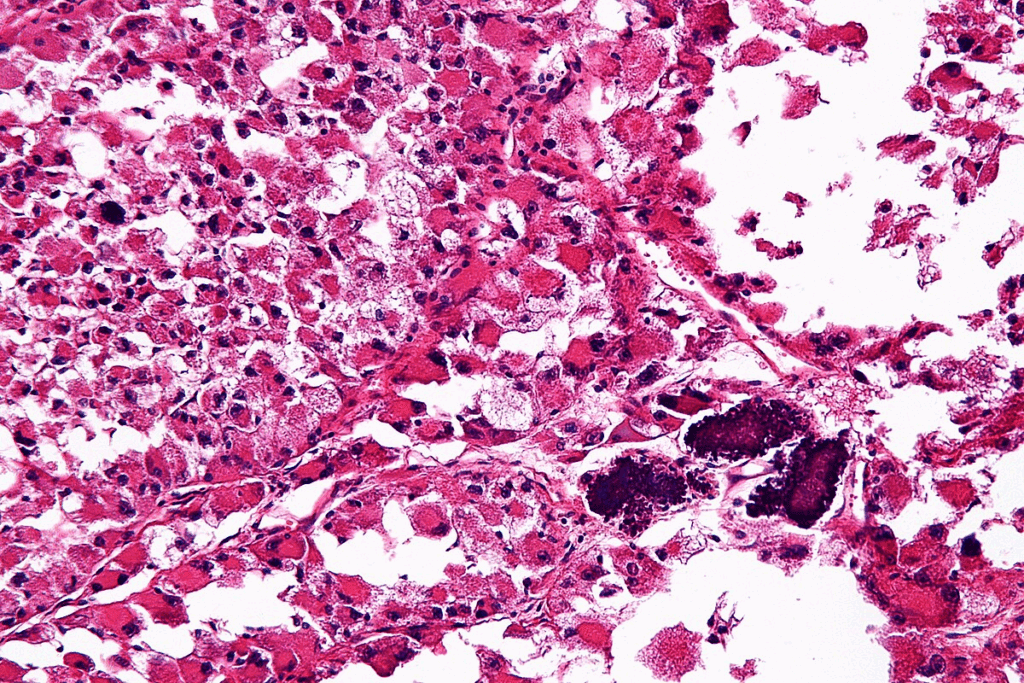
To understand rhabdomyosarcoma, we must look at its many causes. This disease is complex, with both genetic and environmental factors at play.
Complex Interplay of Genetic and Environmental Factors
Rhabdomyosarcoma develops from a mix of genetic and environmental factors. Genetic factors are key, with specific mutations making some people more likely to get it.
Environmental factors also play a role, like prenatal and perinatal exposures. Scientists are working to understand how these factors work together to cause the disease.
Challenges in Determining Exact Causation
Finding the exact cause of rhabdomyosarcoma is hard. The disease is diverse, and many factors could contribute to it. The UCT Mainz report shows how vital it is to study this complex mix.
We know rhabdomyosarcoma is caused by a mix of genetics and environment. But we need more research to fully understand how these factors interact.
Molecular Genetics of Rhabdomyosarcoma
Understanding the molecular genetics of rhabdomyosarcoma is key to finding effective treatments. This disease involves a complex mix of genetic changes that affect how cells grow and divide.
Key Genetic Alterations
Rhabdomyosarcoma has specific genetic changes, including mutations in oncogenes and tumor suppressor genes. These changes can cause cells to grow out of control and form tumors. Some major changes include:
- Mutations in the TP53 tumor suppressor gene
- Amplification of the MYCN oncogene
- Mutations in the NRAS and KRAS genes
Oncogenes and Their Role
Oncogenes, when mutated or overexpressed, can promote tumor development. For example, some oncogenes can make cancer cells grow more, helping rhabdomyosarcoma progress. Targeted therapies that block these oncogenes are very important.
Tumor Suppressor Gene Mutations
Tumor suppressor genes are vital in preventing cancer. They fix DNA mistakes or start apoptosis in cells with too much damage. When these genes mutate, their protective function is lost, raising the risk of rhabdomyosarcoma. Knowing about these mutations helps in finding ways to fix or replace them.
Chromosomal Translocations in Rhabdomyosarcoma
Rhabdomyosarcoma’s genetic makeup is shaped by chromosomal translocations. These changes are key to understanding the disease. Chromosomal translocations happen when chromosomes break and then join together, creating abnormal genes. These genetic changes are vital in the growth and spread of rhabdomyosarcoma.
PAX3-FOXO1 and PAX7-FOXO1 Fusions
Alveolar rhabdomyosarcoma, a type of the disease, is marked by specific chromosomal translocations. The most common ones are the PAX3 or PAX7 gene fusing with the FOXO1 gene. This creates PAX3-FOXO1 and PAX7-FOXO1 fusion genes. These genes are powerful oncogenes that drive tumor growth and spread.
- The PAX3-FOXO1 fusion is found in about 60-70% of alveolar rhabdomyosarcoma cases.
- The PAX7-FOXO1 fusion is seen in around 10-20% of cases.
- These fusions are used as diagnostic markers and have implications for prognosis and treatment.
Other Significant Chromosomal Abnormalities
While PAX3-FOXO1 and PAX7-FOXO1 fusions are typical of alveolar rhabdomyosarcoma, other chromosomal changes are also seen in the disease. These include genetic gains or losses, which can help tumors grow.
- Genetic gains or amplifications can lead to the overexpression of oncogenes.
- Genetic losses can result in the inactivation of tumor suppressor genes.
- These alterations contribute to the heterogeneity of rhabdomyosarcoma and impact treatment outcomes.
Impact on Prognosis and Treatment
The presence of specific chromosomal translocations, like PAX3-FOXO1 and PAX7-FOXO1 fusions, has big implications for prognosis and treatment. Patients with fusion-positive alveolar rhabdomyosarcoma often face a poorer prognosis than those without these fusions.
Understanding these genetic changes is key to developing targeted therapies and improving treatment results. We are moving towards a more personalized approach to treating rhabdomyosarcoma, based on the tumor’s genetic makeup.
Pathogenesis of Rhabdomyosarcoma
Rhabdomyosarcoma pathogenesis is complex. It involves many cellular and molecular changes. Knowing these changes is key to finding effective treatments.
Cellular Origin
Research has focused on where rhabdomyosarcoma comes from. It’s believed to start from muscle precursor cells with genetic changes. These cells stop growing at different stages, making rhabdomyosarcoma diverse.
A recent study found that the exact starting cell is debated. Some think it’s satellite cells or mesenchymal stem cells.
“The cellular origin of rhabdomyosarcoma is complex and likely involves multiple cell types.”
Progression to Malignancy
Turning normal cells into cancer in rhabdomyosarcoma involves many genetic and epigenetic changes. Key steps include turning on oncogenes and off tumor suppressor genes. These changes let cells grow and live without control.
This process is complex, with many pathways and interactions. “The development of rhabdomyosarcoma is a multistep process, requiring the accumulation of various genetic and epigenetic alterations.”
Tumor Microenvironment Contributions
The tumor microenvironment is vital in rhabdomyosarcoma’s growth and treatment response. It includes non-cancerous cells like fibroblasts, immune cells, and endothelial cells. These cells interact with tumor cells, affecting their behavior.
Studies show the microenvironment can modulate tumor growth and affect therapy efficacy. It’s important to understand these interactions for targeted treatments.
As we learn more about rhabdomyosarcoma, the role of the tumor microenvironment becomes clearer. A deep understanding of it is essential for better treatments.
Cellular Pathways Involved in Rhabdomyosarcoma Development
Understanding the cellular pathways in rhabdomyosarcoma is key to finding effective treatments. This cancer develops when normal cell processes, like myogenesis and cell cycle regulation, go wrong.
Disruption of Normal Myogenesis
Myogenesis is how muscle fibers grow. In rhabdomyosarcoma, this process fails, leading to cancer cells. The wrong use of myogenic transcription factors is a major cause. For example, some myogenic regulatory factors are not used right, helping tumors grow.
Cell Cycle Dysregulation
Cell cycle dysregulation is also key in rhabdomyosarcoma. The cell cycle is managed by proteins that help cells divide correctly. But in cancer, this control breaks down, causing cells to grow out of control. The wrong balance of cyclin-dependent kinases and their inhibitors is a big part of this.
| Cell Cycle Phase | Normal Regulation | Dysregulation in Rhabdomyosarcoma |
| G1 Phase | Cyclin D/CDK4,6 activity | Overexpression of Cyclin D |
| S Phase | CDK2/Cyclin E activity | Altered CDK2 activity |
| G2/M Phase | Cyclin B/CDK1 activity | Dysregulation of Cyclin B/CDK1 |
Altered Signaling Pathways
Altered signaling pathways also play a big role in rhabdomyosarcoma. These pathways, like PI3K/AKT and MAPK/ERK, are important for cell survival and growth. In rhabdomyosarcoma, these pathways get messed up, helping tumors grow and making them hard to treat.
- The PI3K/AKT pathway is involved in cell survival and proliferation.
- The MAPK/ERK pathway regulates cell proliferation and differentiation.
- Dysregulation of these pathways contributes to the malignant phenotype of rhabdomyosarcoma cells.
By understanding the cellular pathways in rhabdomyosarcoma, we can find new targets for treatment. This helps us develop better ways to fight this cancer.
Genetic Predisposition to Rhabdomyosarcoma
Genetic predisposition is key in rhabdomyosarcoma, a muscle tissue cancer. Some hereditary cancer syndromes raise the risk of this disease.
Hereditary Cancer Syndromes Associated with Rhabdomyosarcoma
Several hereditary cancer syndromes are linked to rhabdomyosarcoma. These include:
- Li-Fraumeni Syndrome: This syndrome, caused by TP53 gene mutations, increases cancer risk, including rhabdomyosarcoma.
- Neurofibromatosis Type 1: This genetic disorder raises the risk of tumors, including rhabdomyosarcoma.
- Beckwith-Wiedemann Syndrome: Genetic changes on chromosome 11 in this syndrome increase childhood cancer risk, including rhabdomyosarcoma.
- Noonan Syndrome: Certain genetic mutations in Noonan Syndrome are linked to rhabdomyosarcoma risk.
Families with these syndromes should know their higher risk of rhabdomyosarcoma.
Familial Patterns and Genetic Counseling
Familial patterns of rhabdomyosarcoma offer insights into its genetic roots. Genetic counseling is vital for families with rhabdomyosarcoma or related syndromes.
| Syndrome | Genetic Mutation | Cancer Risk |
| Li-Fraumeni Syndrome | TP53 mutation | High risk of multiple cancers, including rhabdomyosarcoma |
| Neurofibromatosis Type 1 | NF1 mutation | Increased risk of neurofibromas and certain cancers |
| Beckwith-Wiedemann Syndrome | Chromosome 11 alterations | Increased risk of childhood cancers, including rhabdomyosarcoma |
Genetic counseling helps families understand their risk. It aids in making health decisions. Families with rhabdomyosarcoma or related syndromes should seek genetic counseling.
Environmental Risk Factors
Environmental risk factors, like prenatal and perinatal exposures, can increase the risk of rhabdomyosarcoma. We will look into these factors, exploring the evidence and how they might contribute to the disease.
Prenatal and Perinatal Exposures
Prenatal and perinatal exposures affect the fetus or newborn. Research shows that certain exposures during these times may raise the risk of rhabdomyosarcoma.
Studies have looked at the impact of radiation and chemicals on pregnant women. For example, exposure to x-rays or ionizing radiation has been linked to a higher risk of childhood cancers, including rhabdomyosarcoma.
| Prenatal Exposure | Potential Risk |
| Ionizing Radiation | Increased risk of rhabdomyosarcoma |
| Chemical Exposures | Potential link to rhabdomyosarcoma |
Childhood Environmental Exposures
Childhood environmental exposures include many factors. These range from lifestyle and behavior to external pollutants. Some research suggests that certain chemicals and pollutants may increase the risk of rhabdomyosarcoma in children.
For instance, exposure to pesticides and agricultural chemicals has been studied. While the evidence is not yet solid, some studies hint at a possible link between these exposures and rhabdomyosarcoma.
Radiation and Chemical Exposures
Ionizing radiation is a known risk factor for many cancers, including rhabdomyosarcoma. This includes radiation therapy for other cancers and exposure from nuclear accidents or industrial sources.
Chemical exposures, tied to industrial activities or consumer products, have also been studied. For example, some organic solvents have been linked to an increased cancer risk.
Understanding environmental risk factors for rhabdomyosarcoma is key to preventing and reducing this disease. More research is needed to understand how genetic and environmental factors interact.
Embryonal vs. Alveolar Rhabdomyosarcoma: Different Causes
Embryonal and alveolar rhabdomyosarcoma are two types of soft tissue cancer. They have different genes and symptoms. Knowing these differences helps doctors find better treatments.
Genetic Distinctions Between Subtypes
Embryonal rhabdomyosarcoma often loses a part of its 11p15 gene. Alveolar rhabdomyosarcoma has specific gene changes, like the PAX3-FOXO1 fusion.
Genetic Alterations in Rhabdomyosarcoma Subtypes
| Subtype | Common Genetic Alterations |
| Embryonal | Loss of heterozygosity at 11p15 |
| Alveolar | PAX3-FOXO1 or PAX7-FOXO1 fusions |
Age-Related Differences in Causation
These two types of rhabdomyosarcoma start at different ages. Embryonal rhabdomyosarcoma is more common in young kids. Alveolar rhabdomyosarcoma happens more in teens and young adults.
“The age distribution of rhabdomyosarcoma subtypes suggests different underlying causal mechanisms, with embryonal tumors more likely related to prenatal or perinatal factors.”
Prognostic Implications of Different Causal Mechanisms
The genetic and age differences between these two types affect how well they do. Alveolar rhabdomyosarcoma tends to be more aggressive and has a worse outlook than embryonal.
Understanding these differences is vital. It helps doctors tailor treatments to each type. This could lead to better results for patients.
Epigenetic Mechanisms in Rhabdomyosarcoma Oncogenesis
Epigenetic changes, like DNA methylation and histone modifications, play a big role in rhabdomyosarcoma. These changes affect how genes work without changing the DNA itself. This helps the disease grow and spread.
DNA Methylation Patterns
DNA methylation adds a methyl group to DNA, usually at cytosine bases. It can turn off genes that stop tumors, helping them grow. In rhabdomyosarcoma, DNA methylation goes wrong, affecting genes that control cell growth and how cells become specialized.
“The wrong methylation of gene promoters is a common way to silence genes that stop cancer,” studies say. This shows how important epigenetics is in cancer.
Histone Modifications
Histone modifications change histone proteins around DNA. These changes can make DNA more or less accessible, affecting how genes are turned on or off. In rhabdomyosarcoma, certain histone changes help control genes that help tumors grow.
- Histone acetylation: Usually means genes are being turned on.
- Histone methylation: Can mean genes are being turned on or off, depending on the histone.
MicroRNA Regulation
MicroRNAs (miRNAs) are small RNAs that control gene expression after transcription. They can be good or bad, depending on what genes they target. In rhabdomyosarcoma, some miRNAs don’t work right, helping tumors grow by controlling cell growth, death, and specialization.
For example, some miRNAs target genes in the PI3K/AKT signaling pathway. This pathway is key for cell survival and growth. If these miRNAs don’t work right, tumors can grow faster and not respond to treatments.
Current Research and Future Directions
We are getting closer to finding new treatments for rhabdomyosarcoma. Our knowledge of this disease is growing fast. This is thanks to new discoveries in genetics, molecular biology, and clinical studies.
Recent Discoveries and Breakthroughs
New studies have found important genetic changes and pathways in rhabdomyosarcoma. For example, research on PAX3-FOXO1 and PAX7-FOXO1 fusions in alveolar rhabdomyosarcoma has shed light on how the disease works. These findings are key for creating better treatments.
Key findings include:
- The role of specific genetic mutations in disease progression
- The identification of novel molecular targets for therapy
- Advances in understanding the tumor microenvironment’s contribution to rhabdomyosarcoma development
Emerging Theories and Hypotheses
New ideas are coming up to explain rhabdomyosarcoma. One idea is that it starts from mesenchymal stem cells that turn cancerous. Knowing where the disease comes from and how it starts is important for finding ways to stop it.
Translational Research Implications
Translational research is key to turning scientific discoveries into treatments. By applying what we know about rhabdomyosarcoma to patients, we can make treatments better. This means creating new medicines and treatments that fit each patient’s needs.
The future of treating rhabdomyosarcoma is in personalized medicine. Treatments will be made just for each patient, based on their tumor’s genetic makeup. Ongoing and future clinical trials will help prove these new methods and make them available to patients.
Implications for Prevention and Treatment
Understanding rhabdomyosarcoma’s cause is key to better prevention and treatment. A mix of strategies is needed to tackle this disease.
Risk Reduction Strategies
Prevention of rhabdomyosarcoma focuses on avoiding known risks. Research points to prenatal and perinatal exposures as possible causes. So, a healthy lifestyle during pregnancy is recommended.
Knowing about familial cancer syndromes helps spot high-risk individuals. Early monitoring and genetic counseling are vital for families with a history of rhabdomyosarcoma.
Targeted Therapies Based on Causal Mechanisms
Understanding rhabdomyosarcoma’s molecular genetics has led to new treatments. Therapies target specific genetic changes, like the PAX3-FOXO1 fusion in alveolar rhabdomyosarcoma.
- Targeted therapies offer a promising avenue for improving treatment outcomes.
- These therapies are designed to be more selective, potentially reducing side effects.
- Ongoing research is focused on identifying new targets and developing corresponding treatments.
Personalized Medicine Approaches
Personalized medicine is changing how we treat rhabdomyosarcoma. Treatments are tailored to each patient’s tumor. This approach aims to improve outcomes.
Advanced diagnostics and therapies are key to managing rhabdomyosarcoma. As research advances, we’re getting closer to better prevention and treatment.
Conclusion
We’ve looked into the causes of rhabdomyosarcoma, a complex disease. It involves genetics, environment, and epigenetics. Knowing these factors helps us find better ways to prevent and treat it.
The study of rhabdomyosarcoma shows how important genetics and environment are. Chromosomal changes and cell pathways also play a big role. These elements all contribute to the disease’s start.
Understanding rhabdomyosarcoma better means we need a full approach to manage it. This includes reducing risks, using targeted treatments, and tailoring care to each patient. This way, we can improve how we fight this disease.
As we learn more about rhabdomyosarcoma, we can help patients and their families more. Our study shows we must keep researching and working together. This is key to beating this tough disease.
FAQ
What is rhabdomyosarcoma and how is it classified?
Rhabdomyosarcoma is a type of cancer that mainly affects kids and teens. It’s divided into types based on how it looks under a microscope. The two main types are embryonal and alveolar rhabdomyosarcoma.
What are the known risk factors for developing rhabdomyosarcoma?
Rhabdomyosarcoma can be caused by a mix of genes and the environment. Some genetic conditions, things that happen before birth, and exposure to radiation or chemicals can increase the risk.
How do genetic alterations contribute to the development of rhabdomyosarcoma?
Changes in genes play a big role in rhabdomyosarcoma. Mutations in genes that help cells grow can lead to cancer. Genes that stop cancer from growing are also important.
What is the significance of chromosomal translocations in rhabdomyosarcoma?
Chromosomal translocations, like PAX3-FOXO1 and PAX7-FOXO1 fusions, are linked to certain types of rhabdomyosarcoma. They can tell doctors how serious the cancer might be.
How do epigenetic mechanisms contribute to rhabdomyosarcoma oncogenesis?
Epigenetic changes, such as DNA methylation and histone modifications, help rhabdomyosarcoma grow. They change how genes work without changing the DNA itself.
Are there different causal mechanisms between embryonal and alveolar rhabdomyosarcoma?
Yes, embryonal and alveolar rhabdomyosarcoma have different causes and affect people at different ages. Knowing these differences helps doctors find better treatments.
What is the current focus of research in rhabdomyosarcoma?
Researchers are trying to understand what causes rhabdomyosarcoma and find new treatments. They aim to use this knowledge to help patients.
How can knowledge of the causal mechanisms underlying rhabdomyosarcoma inform prevention and treatment strategies?
Knowing how rhabdomyosarcoma starts helps doctors find ways to prevent and treat it. New treatments and personalized care are promising ways to help patients.
References:
- Wang, L., et al. (2019). Current and future treatment strategies for rhabdomyosarcoma. Frontiers in Oncology.https://www.frontiersin.org/journals/oncology/articles/10.3389/fonc.2019.01458/full