Last Updated on November 27, 2025 by Bilal Hasdemir
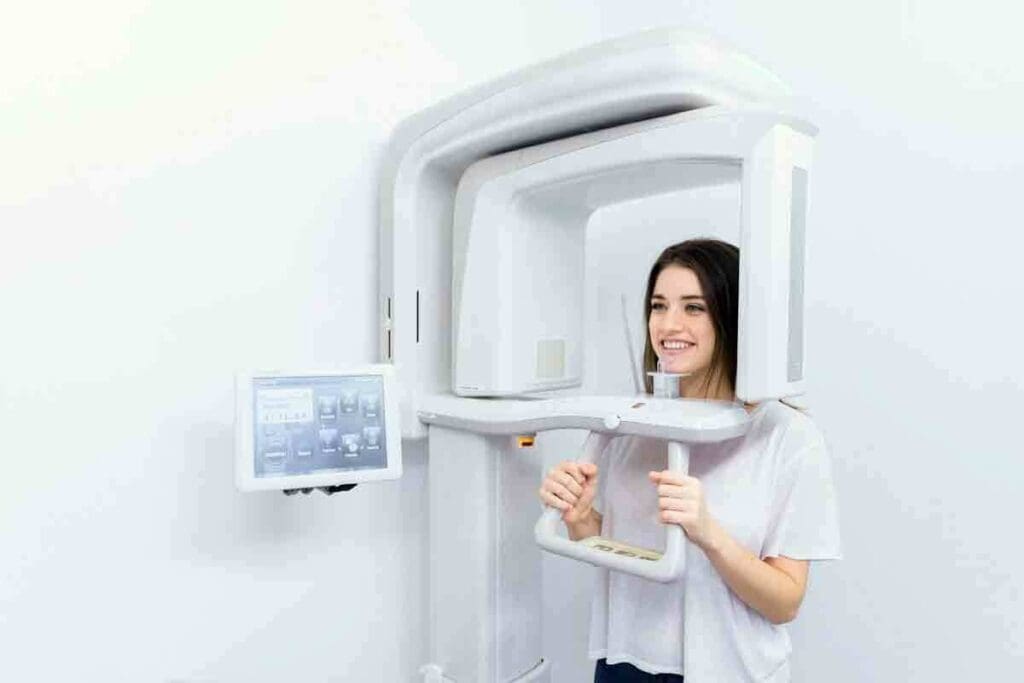
What is a Nuclear Radiation Test for the Heart?Dental cone beam CT (CBCT) scans have changed how we diagnose in dentistry. It’s important to know about the CBCT radiation dose, which is generally higher than conventional dental X-rays but much lower than medical CT scans. The effective radiation dose from CBCT scans can vary widely depending on the scan parameters but is typically between 19 to 1073 microsieverts, tied closely to the field of view and exposure settings used. Proper protection and choosing appropriate scanning protocols are essential for safe care.
CBCT scans give off more radiation than regular X-rays but less than medical CT scans. The amount of radiation ranges from 11 to 674 μSv. This depends on the scan’s settings and the patient’s body.
Liv Hospital focuses on patient care and follows global safety rules. This shows how key it is to find the right balance between getting accurate diagnoses and keeping radiation low.
Key Takeaways
- CBCT scans provide detailed 3D images for accurate dental diagnoses.
- The radiation dose from CBCT scans is higher than traditional X-rays.
- Dose levels vary from 11 to 674 μSv based on scan parameters.
- Liv Hospital prioritizes patient safety and adheres to international standards.
- Balancing diagnostic accuracy and radiation exposure is important.
Understanding Cone Beam CT Technology in Dental Imaging
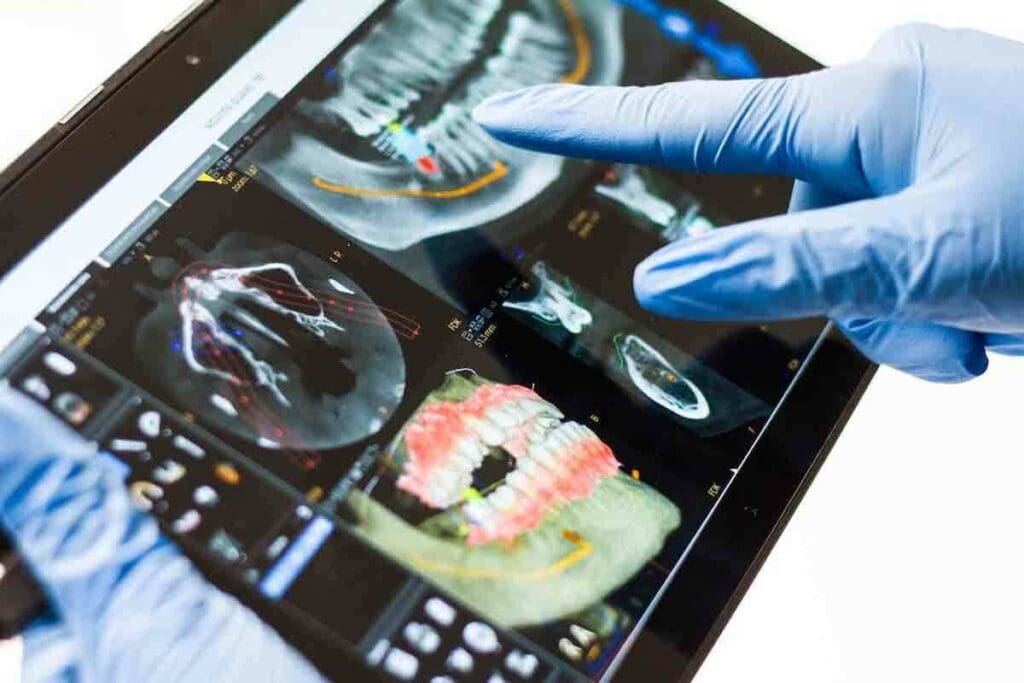
Cone Beam CT (CBCT) technology has changed dental imaging a lot. It’s now key in dentistry, giving detailed 3D images. These images help in diagnosing and planning treatments.
What is CBCT and How Does It Work?
CBCT uses a cone-shaped X-ray beam to capture data in one rotation around the patient’s head. This gives a 3D dataset. A study on the National Center for Biotechnology Information (NCBI) website says CBCT is very useful for dental implant planning and other complex dental work.
Applications of CBCT in Modern Dentistry
CBCT is used for many things, like planning dental implants and seeing abnormal teeth. It also helps in endodontic diagnoses. The 3D images help dentists understand complex cases better.
| Application | Benefits |
| Dental Implant Planning | Accurate assessment of bone density and volume |
| Endodontic Diagnoses | Detailed visualization of root canal anatomy |
| Orthodontic Treatment Planning | Precise evaluation of dental and skeletal structures |
CBCT technology has greatly improved dental imaging. It offers unparalleled diagnostic capabilities. As it keeps getting better, it will help even more in dentistry, improving patient care.
Measuring CBCT Radiation Dose: Units and Terminology
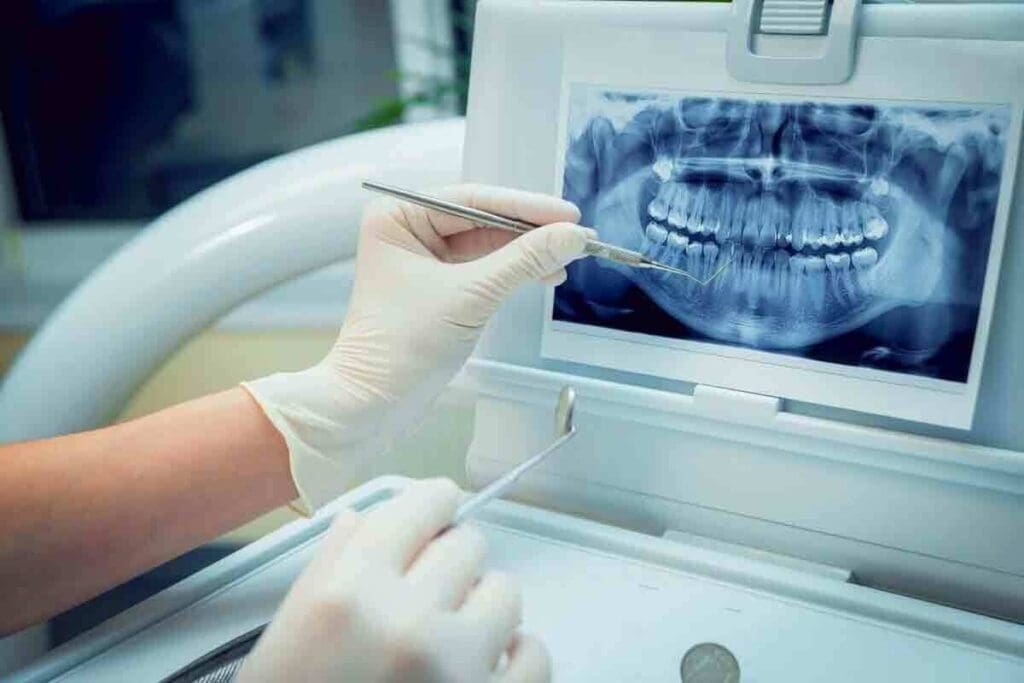
CBCT scans measure radiation exposure using specific units and terms. It’s key to know these to ensure CBCT imaging in dentistry is safe and effective.
Defining Microsieverts (μSv) and Effective Dose
CBCT scans’ radiation is measured in microsieverts (μSv). The effective dose, also in μSv, considers how different body parts react to radiation. It helps gauge the total radiation risk to the patient.
How Radiation Exposure is Quantified in Dental Imaging
In dental imaging, radiation is measured with terms like dose-area product (DAP) and effective dose. The effective dose is figured out by the DAP and conversion factors for the body part exposed.
| Dosimetry Term | Description | Unit |
| Dose-Area Product (DAP) | Measures radiation exposure | Gycm² |
| Effective Dose | Assesses overall radiation risk | μSv |
CBCT radiation doses vary from 11 to 674 μSv. This depends on the device, the imaging protocol, and the patient. Knowing these measurements helps in making imaging protocols better and reducing radiation exposure.
Typical CBCT Radiation Dose Ranges in Dental Applications
The radiation dose from Cone Beam CT (CBCT) scans in dental use varies a lot. This change comes from different factors like the scan area, device type, and how it’s used.
It’s important for dental professionals and patients to know about the typical doses for CBCT scans. These doses are usually measured in microsieverts (μSv).
Standard Dose Ranges
Research shows that the effective dose from CBCT scans can be between 11 to 674 μSv. This wide range shows why picking the right scan settings is key to lower radiation.
Comparing Low, Medium, and High Dose CBCT Protocols
CBCT scans have different protocols based on how much radiation they use. Low-dose protocols are for simple checks, and high-dose protocols are for detailed, complex exams.
Here’s a look at these protocols:
- Low-dose protocols: 11-50 μSv, good for basic exams.
- Medium-dose protocols: 50-200 μSv, for regular diagnostic tasks.
- High-dose protocols: 200-674 μSv, for detailed, complex cases.
Choosing the right CBCT protocol is key to getting good images while keeping radiation low. By picking the right one, dentists can protect patients from too much radiation while getting the needed info.
Factors Influencing CBCT Radiation Dose
The radiation dose from Cone Beam CT (CBCT) scans in dentistry depends on several key factors. These factors greatly affect how much radiation a patient gets during a scan. Knowing these variables is key to making imaging protocols better and reducing patient dose.
Field of View (FOV) Impact on Radiation Exposure
The Field of View (FOV) is a big factor in CBCT radiation dose. A bigger FOV means more radiation because it needs more X-rays to cover the area. By making the FOV as small as needed for diagnosis, we can lower radiation exposure.
- Small FOV: Lower dose, focused on specific areas
- Medium FOV: Moderate dose, for larger areas or jaws
- Large FOV: Higher dose, for full craniofacial imaging
Device Model and Technology Variations
Different CBCT devices and technologies can change radiation dose a lot. Newer models often have technologies to lower dose like better collimation and detector sensitivity. When picking a CBCT device, think about both image quality and dose efficiency.
Exposure Parameters and Their Effects
Exposure parameters like kVp, mA, and time affect the CBCT radiation dose. Adjusting these for the diagnostic task can lower dose without losing image quality. For instance, lowering mA or kVp can cut dose but might change image quality.
Dental professionals can lower CBCT radiation dose while getting useful images by understanding and adjusting these factors.
Comparing CBCT Radiation Dose to Conventional Dental X-rays
When we talk about dental imaging, it’s key to know about the radiation from Cone Beam CT (CBCT) scans. These scans give more radiation than regular X-rays but show more detailed images.
CBCT vs. Panoramic Radiographs
Panoramic radiographs are a common tool in dentistry, showing a two-dimensional view of teeth. CBCT scans, on the other hand, give a three-dimensional image, improving diagnosis. CBCT scans usually have a higher radiation dose than panoramic radiographs, but the dose can change based on the device and settings.
CBCT vs. Periapical and Bitewing X-rays
Periapical and bitewing X-rays are intraoral X-rays that focus on specific teeth or areas. They have a lower radiation dose than CBCT scans but don’t offer the full view that CBCT does. The choice between these imaging options depends on the diagnostic need and the case’s complexity.
Diagnostic Benefits Relative to Dose Increase
The benefits of CBCT scans, like accurate measurements and detailed 3D images, often make up for the higher radiation dose. As one study pointed out,
“The benefits of CBCT imaging in complex dental cases justify the increased radiation exposure, given its significant impact on treatment planning and outcomes.”
This shows the importance of balancing the diagnostic benefits against the radiation dose when picking an imaging method.
In summary, while CBCT scans have a higher radiation dose than regular dental X-rays, their benefits in complex dental cases make them very valuable.
CBCT vs. Medical CT: Radiation Dose Comparison
CBCT scans and medical CT scans have different radiation doses. Both are useful for diagnosis but have unique radiation levels.
CBCT scans offer high-resolution 3D images with less radiation than medical CT scans. Research shows CBCT scans give about 28-30% less radiation for the same diagnostic needs.
Technological Differences Affecting Radiation Output
CBCT and medical CT scans differ in technology, affecting their radiation levels. CBCT uses a cone-shaped X-ray beam for better data and less radiation. Medical CT scans use a fan-shaped beam, needing more X-rays for similar image quality.
Clinical Applications and Dose Justification
The choice between CBCT and medical CT scans depends on the clinical need. CBCT is great for dental and maxillofacial imaging. It offers lower radiation and high-quality 3D images.
It’s important for doctors to understand these differences. This helps them choose CBCT scans wisely. It ensures less radiation for patients and better diagnostic results.
Understanding CBCT Radiation Dose and Patient Safety
When it comes to CBCT radiation dose and patient safety, there are important things to consider. Cone Beam Computed Tomography (CBCT) is used more in dentistry because it gives detailed 3D images. But, the radiation dose from CBCT scans is a big deal for patient safety.
Lifetime Attributable Cancer Risk Assessment
One big worry about CBCT radiation dose is the risk of cancer over a lifetime. Research shows that ionizing radiation can raise cancer risk. The National Cancer Institute has studied these risks, giving us important info about CBCT scans.
This risk assessment looks at the chance of getting cancer from CBCT scans. It considers the radiation dose, age, and gender.
Age and Gender Considerations in Radiation Sensitivity
Age and gender play big roles in how sensitive someone is to radiation. Younger people are more sensitive because their bodies are growing and they have more years ahead of them. Women are also at higher risk because of the radiosensitive organs like the breast and thyroid.
Knowing these factors helps make CBCT scans safer, mainly for kids and young adults.
Contextualizing CBCT Radiation with Natural Background Exposure
To understand CBCT radiation risks better, compare them to natural background radiation. The average yearly background radiation is about 3.1 millisieverts (mSv). CBCT scans give doses from 0.011 to 0.674 mSv, depending on the device and how it’s used.
Seeing CBCT radiation doses in relation to natural background helps patients and doctors understand the risks and benefits of CBCT imaging.
Clinical Justification and CBCT Radiation Dose Optimization
Dental professionals are using CBCT technology more often. It’s important to lower radiation dose without losing image quality. CBCT scans give detailed 3D images that help in diagnosis. But, the radiation dose is a big concern.
The ALARA Principle: “As Low As Reasonably Achievable”
The ALARA principle is key in radiology. It aims to keep radiation exposure low while getting the needed diagnostic info. This is very important in CBCT imaging, where doses can vary a lot.
Key strategies for implementing ALARA in CBCT include:
- Optimizing exposure parameters such as kVp and mA
- Using appropriate collimation to limit the field of view
- Employing pulsed exposure modes when available
- Selecting protocols that balance image quality with dose requirements
When is CBCT Imaging Clinically Justified?
CBCT imaging is justified when it offers info not available in 2D radiography. This includes complex implant planning, impacted teeth evaluation, and certain pathology assessment.
A thorough clinical justification process involves weighing the benefits of CBCT against the radiation dose.
Protocol Optimization Strategies for Dose Reduction
Optimizing CBCT protocols is key for lowering radiation dose. This can be done by:
- Using the lowest necessary resolution for the diagnostic task
- Limiting the field of view to the area of interest
- Adjusting exposure factors based on patient size and density
By using these strategies and following the ALARA principle, dental professionals can lower CBCT radiation dose. This ensures high-quality images while keeping patient radiation exposure low.
Special Considerations for Pediatric Patients and High-Risk Groups
CBCT scans are carefully used in kids and people at high risk. This is because they are more likely to be harmed by radiation. Kids are more sensitive because their bodies are growing and they live longer, which raises the risk of harm from radiation.
Increased Radiation Sensitivity in Children
Children are very sensitive to radiation because their bodies are growing. They have a longer life, which means they are at risk for more harm from radiation. Radiation exposure in children should be minimized to lower the risk of future problems.
Modified Protocols for Pediatric CBCT Imaging
To protect kids, special CBCT scans are used. These scans use less radiation by adjusting the settings. These changes help reduce radiation while keeping the images clear.
Pregnancy and Other Special Population Considerations
Pregnant women need extra care because of the risks to the baby. While CBCT is not usually recommended during pregnancy, if it’s needed, strict protocols are followed to reduce exposure. Other groups, like those with certain health issues, may also need special imaging plans.
| Population Group | Special Considerations |
| Pediatric Patients | Reduced radiation dose protocols, adjusted exposure parameters |
| Pregnant Patients | Avoidance of CBCT unless necessary, strict dose minimization |
Conclusion: Balancing Diagnostic Benefits and Radiation Risks in Dental CBCT
Dental Cone Beam CT (CBCT) scans have changed how we diagnose dental problems. They give detailed 3D images that help plan treatments better. But, the cbct radiation dose is a big concern for patient safety.
The radiation dose of cbct scans changes a lot. It depends on the scan area, the device, and how it’s set up. Knowing these details helps make scans safer and more effective.
It’s important to balance the good of CBCT scans with their risks. Following the ALARA principle and using less radiation helps. This way, dental care stays safe and effective.
When using CBCT scans, we must think about the risks, like for kids and others at high risk. By carefully using CBCT, dental experts can help patients more while keeping them safe.
FAQ
What is the typical radiation dose range for a CBCT scan in dentistry?
CBCT scans in dentistry usually have a dose between 11-674 μSv. This depends on the device, field of view, and exposure settings.
How does the radiation dose of a CBCT scan compare to conventional dental X-rays?
CBCT scans have a higher dose than dental X-rays like panoramic and periapical X-rays. But, the benefits of CBCT scans often make the extra dose worth it.
What factors influence the radiation dose of a CBCT scan?
Several things affect the dose of a CBCT scan. These include the field of view, the device model, and the exposure settings. Adjusting these can lower the dose while keeping image quality high.
How does the radiation dose of a CBCT scan compare to a medical CT scan?
CBCT scans give 28-30% less radiation than medical CT scans. This is because of tech differences that affect how much radiation is used.
What is the lifetime attributable cancer risk associated with CBCT radiation dose?
The risk of cancer from CBCT scans is a concern for safety. Age and gender affect how sensitive you are to radiation. Understanding this risk with natural background exposure helps grasp the dangers.
How can CBCT radiation dose be minimized?
To lower the dose of CBCT scans, follow the ALARA principle. Also, only use CBCT when necessary and adjust protocols to cut down on radiation.
Are there special considerations for pediatric patients and high-risk groups?
Yes, kids and high-risk groups like pregnant women need extra care. Special protocols for kids and other groups ensure safe and effective scans.
What is the effective dose of a CBCT scan?
The effective dose of a CBCT scan measures the dose considering tissue and organ sensitivity. It’s usually in microsieverts (μSv).
How much radiation is in a dental cone beam CT scan?
The radiation in a dental cone beam CT scan varies. It depends on the device, field of view, and settings. But, doses are usually between 11-674 μSv.
References
- Ibrahim, N., Parsa, A., Hassan, B., van der Stelt, P., & Aartman, I. H. (2019). The effect of scan parameters on the radiation dose of cone beam computed tomography: a systematic review. Clinical Oral Investigations, *23*(2), 521-532. https://pubmed.ncbi.nlm.nih.gov/30511273/