Last Updated on November 20, 2025 by Ugurkan Demir

Getting a leukemia diagnosis in kids can change their life. But, thanks to better treatments, more kids are surviving. Over the years, the death rate from leukemia in kids has gone down a lot.
The childhood leukemia mortality rate worldwide fell from about 3.35 per 100,000 in 1990 to 1.38 per 100,000 in 2021. This shows a big jump in survival chances. Better medical care and treatments are the main reasons for this improvement.
It’s important to know how survival rates for leukemia in kids are changing. The chances of surviving depend on the child’s age and the type of leukemia. Some groups have better chances than others.
Key Takeaways
- The mortality rate for leukemia in children has declined significantly over the past few decades.
- Advances in medical care and treatment options have contributed to improved survival rates.
- Survival rates vary by age and type of leukemia.
- Understanding these trends is important for families and healthcare providers.
- Centers like Liv Hospital are providing expert, patient-focused care.
The Nature of Childhood Leukemia

Leukemia in children is a cancer that starts in the bone marrow’s blood-making cells. It messes up the normal blood cell production. This leads to too many bad white blood cells that make it hard to fight off infections.
Definition and Basic Characteristics
Childhood leukemia means too many bad white blood cells in the bone marrow. This can cause anemia, infections, and bleeding because of missing normal blood cells. We don’t know all the reasons why kids get leukemia, but it’s likely a mix of genes and environment.
Symptoms can vary but often include tiredness, pale skin, frequent infections, and easy bruising. It’s very important to catch it early for the best treatment.
Common Types in Children
There are two main types of leukemia in kids: Acute Lymphoblastic Leukemia (ALL) and Acute Myeloid Leukemia (AML). ALL is the most common, making up about 80% of cases. It’s marked by fast growth of immature lymphocytes.
- Acute Lymphoblastic Leukemia (ALL): The most common type, with a peak incidence between 2 and 5 years of age.
- Acute Myeloid Leukemia (AML): A more aggressive form that requires intensive treatment.
Knowing the exact type of leukemia is key to finding the right treatment and understanding the child’s chances of recovery.
Childhood Leukemia Mortality Rate: Global Perspective
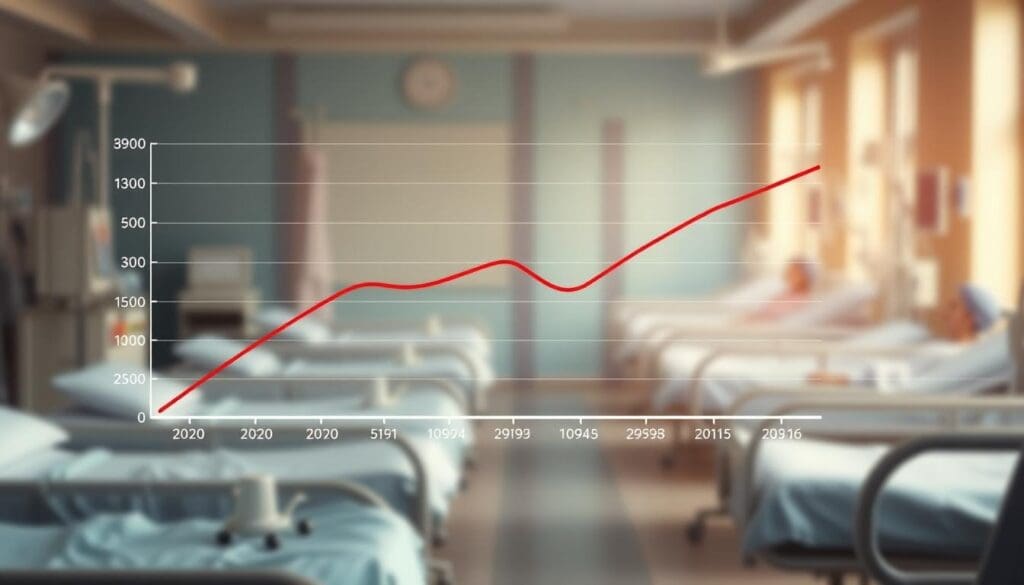
From 1990 to now, the death rate from childhood leukemia has dropped worldwide. This change shows big steps forward in how we treat kids with leukemia.
Decline from 1990 to 2021
The death rate from childhood leukemia has gone down a lot in 30 years. It fell from 3.35 per 100,000 in 1990 to 1.38 per 100,000 in 2021. This is a 58.8% drop in deaths.
Healthcare has gotten better, leading to fewer deaths. Early detection and new treatments have helped a lot. These changes have made it easier for kids to survive leukemia.
Regional Variations in Mortality
Even though death rates are falling, they vary by region. This is due to differences in healthcare, money, and access to special treatments.
| Region | 1990 Mortality Rate (per 100,000) | 2021 Mortality Rate (per 100,000) | Percentage Change |
| North America | 2.8 | 0.9 | -67.9% |
| Europe | 3.1 | 1.2 | -61.3% |
| Africa | 4.2 | 2.5 | -40.5% |
| Asia | 3.5 | 1.5 | -57.1% |
| South America | 3.8 | 2.1 | -44.7% |
The table shows how death rates vary by region. While all areas have seen a drop, Africa and South America have higher rates. This shows we need to keep working on healthcare and treatments worldwide.
In summary, the death rate from childhood leukemia has dropped a lot globally. But, there are big differences in death rates between regions. We must keep trying to make treatments better and reduce these differences.
Current Childhood Leukemia Mortality Rate in the United States
The current childhood leukemia mortality rate in the United States is about 0.5 per 100,000 children per year. This is a big drop from earlier years. It shows how far medical research and treatments have come.
US Death Rate Statistics
Recent data shows a big drop in childhood leukemia deaths in the US. The death rate is now about 0.5 per 100,000 children each year. This drop is thanks to better treatments and care.
Improvements Over Recent Decades
In the last few decades, the US has seen a big drop in childhood leukemia deaths. This is because of better chemotherapy, new treatments, and better stem cell transplants. So, more kids with leukemia are now surviving.
Comparison to Global Averages
When we look at the US childhood leukemia death rate compared to the world, we see big progress. Rates vary worldwide because of different healthcare and treatment access. The US rate of 0.5 per 100,000 is among the lowest globally. This shows how well the US healthcare system handles childhood leukemia.
| Region | Childhood Leukemia Mortality Rate (per 100,000) |
| United States | 0.5 |
| Global Average | 1.2 |
| Developed Countries | 0.8 |
| Developing Countries | 1.5 |
This comparison shows the US’s progress and where the world can improve to lower childhood leukemia deaths even more.
Overall Survival Rate for Childhood Leukemia
Recent statistics show a big jump in the survival rate for kids with leukemia. This is thanks to better medical research and treatment plans. Now, more than 85% of kids in high-resource countries survive leukemia, a big win in the fight against this disease.
Current Five-Year Survival Statistics
The five-year survival rate for kids with leukemia has greatly improved. For acute lymphoblastic leukemia (ALL), the most common type, it’s over 90% in many developed countries.
This better survival rate comes from new treatments and care. The overall survival rate has gone up over the years, giving hope to families dealing with this disease.
Historical Improvements in Outcomes
Years ago, the outlook for kids with leukemia was very bad. But, in the last few decades, things have gotten much better. New medical tech, better treatments, and understanding the disease have all helped.
New therapies and better treatments have been key. For example, targeted therapies help treat the disease more precisely, harming fewer healthy cells and leading to better results.
Factors Contributing to Improved Survival
Several things have helped kids with leukemia live longer. These include:
- Advances in chemotherapy protocols
- Improved supportive care
- The development of targeted therapies
- Better understanding of the genetic factors influencing leukemia
- Enhanced diagnostic techniques
These changes have all added up to a big increase in survival rates for kids with leukemia. More research and investment in medical science are needed to keep improving outcomes for these kids.
How Age Affects Leukemia Survival Rates
Age is a big factor in how well kids with leukemia do. The chances of survival change a lot with age. This is true for infants, toddlers, school-age kids, and teens.
Infant Leukemia Survival Rate
Infants with leukemia face big challenges. Their infant leukemia survival rate is often lower than older kids. This is because the disease is very aggressive in babies, and it’s hard to treat them.
Infants with leukemia often have special genes that make the disease hard to fight. So, doctors use very strong treatments to help them.
Toddlers and School-Age Children
Kids who get leukemia when they’re toddlers or in school have better chances. Thanks to better treatments, like chemotherapy, their survival rates have gone up.
Children between 1 and 9 years old usually do the best. They have high leukemia survival rates. This is because treatments work well for them, and they don’t often have the worst kinds of leukemia.
Adolescent Outcomes
Teens with leukemia have their own set of problems. They might have more aggressive leukemia and face mental health issues because of their age.
But, thanks to better treatments and care, adolescent outcomes are getting better. It’s important to make sure teens stick to their treatment plans and get the support they need.
| Age Group | 5-Year Survival Rate |
| Infants (<1 year) | 60% |
| Toddlers (1-4 years) | 85% |
| School-age Children (5-9 years) | 90% |
| Adolescents (10-19 years) | 80% |
The table shows how leukemia survival rates change with age. It’s clear that kids between 1 and 9 years old have the best chances.
Acute Lymphoblastic Leukemia Child Survival Rate
The survival rate for kids with Acute Lymphoblastic Leukemia (ALL) has greatly improved. This is thanks to better treatments and a deeper understanding of the disease.
Overall ALL Five-Year Survival
Recently, the five-year survival rate for kids with ALL has hit nearly 90%. This big jump is thanks to better chemotherapy and care. Now, kids with ALL have a much better chance of beating the disease.
Key factors contributing to this improved survival rate include:
- Early and accurate diagnosis
- Personalized treatment plans
- Advancements in chemotherapy and targeted therapies
- Improved supportive care for patients
B-Cell ALL Leukemia in Child Survival
B-cell ALL is the most common type of ALL in kids. The survival rate for B-cell ALL has also seen a big jump, with some studies showing a five-year survival rate over 90%. Treatment for B-cell ALL has been fine-tuned to lower the risk of relapse and improve long-term results.
T-Cell ALL Outcomes
T-cell ALL has a slightly lower survival rate than B-cell ALL. But, thanks to modern treatments, the five-year survival rate for T-cell ALL has risen to about 80-85%. Researchers are working hard to make outcomes even better for this type.
Factors Affecting ALL Prognosis
Several things can affect how well a child with ALL will do, including:
- Age at diagnosis: Kids between 1 and 9 tend to do better.
- Initial white blood cell count: Higher counts at diagnosis can mean a poorer outlook.
- Response to initial treatment: Kids who respond well to first treatment usually do better.
- Genetic characteristics of the leukemia cells: Some genetic issues can affect how well a child will do.
Knowing these factors helps doctors create treatment plans that are just right for each child.
Childhood Acute Myeloid Leukemia Prognosis
The outlook for kids with Acute Myeloid Leukemia (AML) has gotten much better. New treatments and a deeper understanding of the disease have led to higher survival rates.
Historical AML Survival Rates
Back in the day, survival chances for kids with AML were slim. But, thanks to medical breakthroughs, the five-year survival rate has skyrocketed.
Historical Survival Rate Improvements
| Time Period | Five-Year Survival Rate |
| 1975-1984 | 20% |
| 1985-1994 | 35% |
| 1995-2004 | 50% |
| 2005-2014 | 60% |
Current Acute Myeloid Leukemia Child Survival Rate
Today, the five-year survival rate for kids with AML is about 65-70%. This jump is thanks to better chemotherapy, targeted therapies, and care support.
Current Survival Statistics
- Overall five-year survival rate: 65-70%
- Survival rate for children under 2 years: 70-75%
- Survival rate for children between 2-19 years: 60-65%
Prognostic Factors in Childhood AML
Several factors affect how well kids with AML do. These include:
- Cytogenetic abnormalities
- Response to initial treatment
- Presence of minimal residual disease
- Age at diagnosis
Knowing these factors helps doctors create better treatment plans for each child.
Prognostic Factor Impact
| Prognostic Factor | Favorable Outcome | Unfavorable Outcome |
| Cytogenetic Abnormalities | t(8;21), inv(16) | Complex karyotype, -5, -7 |
| Response to Initial Treatment | Complete remission within first cycle | No remission after first cycle |
Rare Subtypes and Special Considerations
Childhood leukemia comes in many forms, but some are quite rare. These rare types need special treatments and careful decisions. They present unique challenges for doctors and families.
Juvenile Myelomonocytic Leukemia
Juvenile myelomonocytic leukemia (JMML) is a rare and aggressive leukemia in young kids. It causes too many myelomonocytic cells, leading to problems in organs. About 2-3% of childhood leukemia cases are JMML.
Doctors diagnose JMML by looking at symptoms, lab results, and genetics. Treatment usually includes chemotherapy and a stem cell transplant. A study in the Journal of Clinical Oncology found stem cell transplants help kids with JMML live longer.
Key features of JMML include:
- Splenomegaly and hepatomegaly
- Monocytosis and granulocytosis
- Genetic mutations, such as those affecting the RAS/MAPK pathway
Chronic Myeloid Leukemia in Children
Chronic myeloid leukemia (CML) is rare in kids, making up less than 1% of pediatric leukemia. It’s marked by the Philadelphia chromosome, from a chromosome 9 and 22 swap.
Many kids with CML don’t show symptoms when they’re diagnosed. But some might feel tired, lose weight, or have a big spleen. Thanks to new drugs, CML treatment has greatly improved, helping patients live better lives.
“The introduction of tyrosine kinase inhibitors has revolutionized the treatment of CML, improving outcomes and quality of life for patients.” -Pediatric Oncologist
Mixed Phenotype Acute Leukemia
Mixed phenotype acute leukemia (MPAL) is rare and has both myeloid and lymphoid cell traits. It’s hard to diagnose and treat because of its mixed nature and lack of standard treatments.
Doctors use a mix of AML and ALL treatments for MPAL, based on each patient’s needs. Scientists are studying MPAL’s genetics and biology to find better ways to diagnose and treat it.
Current research focuses on:
- Identifying genetic markers for MPAL
- Developing targeted therapies
- Improving treatment protocols for this rare subtype
Treatment Advances Improving Survival Rates
Advances in treatment have greatly improved survival rates for kids with leukemia. Over time, we’ve learned more about the disease. This has led to better and more focused treatments.
Evolution of Chemotherapy Protocols
Chemotherapy is key in treating childhood leukemia. New research has improved how we use it. For example, minimal residual disease (MRD) monitoring helps tailor treatments better.
| Treatment Era | Typical Chemotherapy Agents | Survival Rate |
| 1980s | Vincristine, Prednisone | 50% |
| 2000s | Addition of Anthracyclines, Alkylating agents | 80% |
| 2020s | Targeted therapies, Immunotherapy | 90% |
Targeted Therapies
Targeted therapies are a big part of modern leukemia treatment. They aim to kill cancer cells without harming healthy ones. Tyrosine kinase inhibitors (TKIs) are a good example.
Immunotherapy Approaches
Immunotherapy uses the body’s immune system to fight cancer. It’s shown great promise in treating childhood leukemia. CAR-T cell therapy has been very effective, even when other treatments fail.
Stem Cell Transplantation Improvements
Stem cell transplantation has become safer and more effective. Haploidentical transplantation has opened up more donor options for patients.
These advances have greatly increased the cure rate for childhood leukemia. Ongoing research aims to keep improving survival rates and quality of life for these young patients.
Is Childhood Leukemia Curable?
Childhood leukemia’s curability depends on the type and how well the child responds to treatment. The main types are Acute Lymphoblastic Leukemia (ALL) and Acute Myeloid Leukemia (AML).
Definition of “Cure” in Childhood Leukemia
A “cure” means the disease is gone, and the child can live a normal life. But, there’s a chance of late effects from treatment.
Current Cure Rates by Leukemia Type
Cure rates differ by leukemia type. For ALL, cure rates have risen to 90% or more in some studies.
- ALL cure rates: 85-90%
- AML cure rates: 50-60%
Factors Affecting Curability
Many things affect leukemia’s curability. These include the leukemia’s genetic characteristics, the child’s age at diagnosis, and how well it responds to initial treatment.
- Genetic characteristics of the leukemia
- Age of the child at diagnosis
- Response to initial treatment
Long-Term Outlook and Survivorship
More children are surviving leukemia, making it key to understand treatment’s late effects. The long-term outlook for survivors is complex. It depends on the leukemia type, treatment, and the patient’s health.
Late Effects of Treatment
Childhood leukemia survivors may face late treatment effects. These can affect their quality of life. Late effects include:
- Cardiac issues: Chemotherapy and radiation can harm the heart.
- Secondary cancers: Survivors may get new cancers from old treatments.
- Cognitive and developmental delays: Some treatments can slow down brain and growth development.
- Emotional and psychological challenges: Survivors might deal with anxiety, depression, and other mental health issues.
A study in the Journal of Clinical Oncology found that survivors of childhood cancer face a higher risk of late death and illness.
Quality of Life for Survivors
The quality of life for survivors varies. Several factors affect it, including:
- Intensity of treatment: More intense treatments can cause more severe late effects.
- Age at diagnosis: Younger patients might have different outcomes than older children.
- Access to follow-up care: Regular check-ups are key to managing late effects.
Studies show that comprehensive care models can greatly improve survivors’ quality of life. These models include long-term follow-up care.
Ongoing Research and Future Directions
Research aims to reduce late effects and improve survivors’ quality of life. It focuses on:
- Personalized medicine: Tailoring treatments to reduce side effects.
- Advanced imaging techniques: Better diagnostic tools to avoid invasive tests.
- Supportive care: Better services to meet survivors’ emotional and psychological needs.
A top researcher in pediatric oncology, says,
“The future of childhood leukemia treatment is about finding effective treatments with fewer long-term side effects.”
By improving treatments and supportive care, the outlook for survivors will keep getting better.
Conclusion
The rate of childhood leukemia deaths has dropped a lot over time. This is good news for kids with leukemia. It shows we’re getting better at treating this disease.
Survival rates for kids with leukemia have gone up a lot. This change depends on the type of leukemia and the child’s age. New treatments like chemotherapy and targeted therapies are helping a lot.
More kids with leukemia are living longer because of new research and treatments. As we learn more, we can expect even better results for kids with this disease.
Even though there’s more to do, the news on leukemia survival rates is hopeful. We need to keep working on research and healthcare to help even more kids. This will help lower the number of leukemia deaths in children.
FAQ
What is the current survival rate for childhood leukemia?
Childhood leukemia survival rates have greatly improved. This is true for Acute Lymphoblastic Leukemia (ALL) in particular.
How does age affect leukemia survival rates in children?
Age is a big factor in leukemia survival rates. Infants and teens often have lower rates than younger kids. Different ages face different challenges in treatment and survival.
What is the survival rate for Acute Lymphoblastic Leukemia (ALL) in children?
Children with ALL have a high five-year survival rate. B-cell ALL has the best outlook. T-cell ALL outcomes have also gotten better with new treatments.
What is the prognosis for childhood Acute Myeloid Leukemia (AML)?
AML survival rates in kids have improved. But, AML is tough to treat. Genetic factors are key in determining how well a child will do.
Are there any rare subtypes of leukemia in children, and how are they treated?
Yes, there are rare types like Juvenile Myelomonocytic Leukemia and Chronic Myeloid Leukemia in kids. They need special care because they’re not common.
How have treatment advances improved survival rates in childhood leukemia?
New treatments have made a big difference. These include better chemotherapy, targeted therapies, and stem cell transplants. All these have helped more kids survive.
Is childhood leukemia curable?
Many kids with leukemia can be cured, mainly those with ALL. Cure rates vary by type of leukemia. Treatment response and genetics also play a part.
What are the long-term effects of treatment for childhood leukemia survivors?
Survivors may face late effects from treatment. These can affect their quality of life. Research aims to reduce these effects and improve survivorship.
What is the infant leukemia survival rate?
Infant leukemia survival rates are lower. This is because leukemia in infants is different and treatment is harder.
What is the childhood AML leukemia survival rate?
AML survival rates in kids have improved. But, they’re not as high as for ALL. Advances in treatment and understanding of the disease are key to better outcomes.
How does the US compare to global averages in terms of childhood leukemia mortality rates?
The US has seen a drop in childhood leukemia deaths. This puts us below global averages.
References:
- GBD 2019 Childhood Cancer Collaborators. (2025). A cross-sectional analysis of the global burden of childhood leukemia and its trends from 1990 to 2021. BMC Medicine, 23, 145. https://pmc.ncbi.nlm.nih.gov/articles/PMC12532785/