Last Updated on December 2, 2025 by Bilal Hasdemir

Clicking Sound After Craniotomy
Many people wonder if they can go back to their normal lives after brain surgery. A craniotomy is a surgery where part of the skull is removed temporarily. Studies show that many patients can get back to their daily routines after recovery. But, how much they recover can vary.
Having a craniotomy can be scary, with worries about long term side effects and life expectancy. But, thanks to new medical tech and surgery methods, more patients are doing well. We’ll look into what it means to live normally after such a surgery. We’ll also talk about the challenges and the help available.
Key Takeaways
- Many patients can resume daily activities after a craniotomy.
- The extent of recovery varies from person to person.
- Understanding the potential long-term side effects is crucial.
- Life expectancy can be influenced by various factors post-surgery.
- Advances in medical technology improve patient outcomes.
- Support systems play a vital role in recovery.
Understanding Craniotomy: A Comprehensive Overview

a detailed medical illustration of a craniotomy procedure, shown from an angled perspective with a view of the surgeon’s hands, the patient’s skull, and the surgical instruments used. the scene is illuminated by bright, directional lighting that casts dramatic shadows, creating a sense of depth and visual interest. the background is neutral and muted, allowing the primary focus to be on the precise, intricate surgical steps. the overall mood is one of clinical precision and the gravity of the medical intervention, conveying the complexity and importance of the craniotomy procedure.
A craniotomy is a surgery where part of the skull is taken off. This lets surgeons work on the brain. It’s done for many serious reasons, like removing tumors or fixing aneurysms.
Definition and Purpose of Craniotomy
A craniotomy means removing a bone flap from the skull to see the brain. It lets neurosurgeons do operations that can’t be done otherwise. This way, they can treat many conditions more effectively.
“Craniotomy is a cornerstone of neurosurgery, enabling us to treat life-threatening conditions with precision,” says a renowned neurosurgeon. This shows how important craniotomy is in medicine.
Common Reasons for Craniotomy Procedures
Craniotomies are done for many reasons, including:
- Removing brain tumors or cysts
- Repairing aneurysms or arteriovenous malformations (AVMs)
- Relieving pressure on the brain due to trauma or swelling
- Draining abscesses or other infected areas
- Treating epilepsy by removing the seizure focus
Each reason needs careful thought and precise surgery. This shows how complex and vital craniotomy procedures are.
Different Types of Craniotomy Surgeries
There are many types of craniotomy surgeries, each for different conditions and brain areas. These include:
- Frontal Craniotomy: Accesses the frontal lobe, often for tumors or injuries there.
- Temporal Craniotomy: Works on the temporal lobe, often for epilepsy.
- Occipital Craniotomy: Targets the occipital lobe, usually for tumors or lesions.
- Bifrontal Craniotomy: A bigger procedure for both frontal lobes, used for trauma or tumors.
Knowing about the different craniotomy surgeries is key. It helps doctors and patients plan the best treatment.
The Craniotomy Procedure Explained
A detailed surgical scene of a craniotomy procedure. In the foreground, the patient’s head is carefully exposed, the scalp incision visible. Surgeons in scrubs and masks lean over the operating table, their skilled hands wielding precision instruments. The middle ground reveals the intricate workings of the cranium, the bone flap carefully removed to expose the delicate brain tissue. Bright surgical lights illuminate the scene, casting a clinical glow. The background is blurred, the focus solely on the intense concentration of the medical team as they perform this critical operation. The atmosphere is one of professionalism and gravity, underscoring the gravity of the procedure.
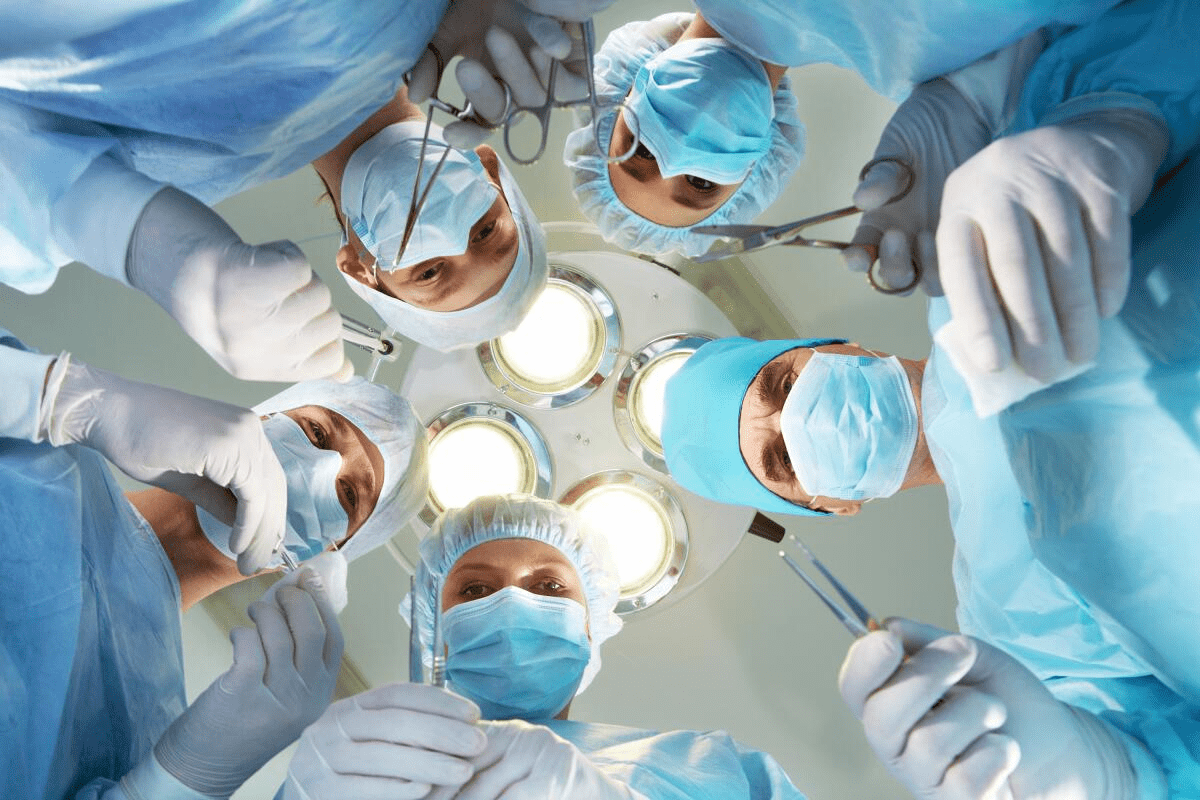
Understanding what a craniotomy involves is essential for patients preparing for the procedure. It’s a procedure where the skull is temporarily opened to reach the brain. It’s done for many reasons, like removing tumors or relieving pressure.
Preoperative Preparation
Before a craniotomy, patients undergo tests and evaluations. These steps ensure they’re ready for surgery. Tests include:
- Blood tests to check for infections or blood disorders
- Imaging tests like MRI or CT scans to see the brain
- Electrocardiogram (ECG) to check the heart
- Meetings with the surgical team to talk about the surgery and risks
Patients also get instructions on what to do before surgery. This includes fasting, managing medications, and making plans for after the surgery.
What Happens During Surgery
During a craniotomy, patients are under general anesthesia. This keeps them asleep and pain-free. The surgical team then:
- Makes an incision in the scalp to expose the skull
- Removes a part of the skull to access the brain
- Does the needed work, like removing a tumor
- Replaces the skull section and secures it
- Closes the incision with sutures or staples
“The key to a successful craniotomy lies in meticulous preoperative planning and precise surgical technique.”
How Long Does a Craniotomy Take?
The time a craniotomy takes varies. It can last from 3 to 6 hours. Several things affect how long it takes, including:
Factor | Description | Impact on Duration |
Complexity of the condition | The type and severity of the neurological condition being treated | More complex conditions require longer surgery times |
Surgical team’s experience | The skill and experience of the neurosurgeons and surgical team | More experienced teams can often complete the surgery more efficiently |
Patient’s overall health | The patient’s general health and presence of any comorbidities | Patients with significant health issues may require more time for anesthesia and monitoring |
Knowing these factors helps patients prepare for surgery. It also helps them understand the surgery’s length and recovery.
Immediate Post-Operative Recovery
A patient resting comfortably in a hospital bed, post-craniotomy recovery. Their head is bandaged, but their expression is calm and serene. The room is well-lit with soft, natural light streaming in through large windows, creating a warm and soothing atmosphere. Medical equipment and monitors surround the bed, but they are subtly integrated into the scene, not dominating the frame. The focus is on the patient’s tranquil recovery, conveying a sense of hope and healing. The overall tone is one of reassurance and the possibility of returning to a normal life after this medical procedure.
After a craniotomy, the recovery phase is key for a good outcome. It involves watching for complications and managing them. This time is tough for patients and their families, but we’re here to help.
Hospital Stay Duration
The time in the hospital after a craniotomy varies. It depends on the patient’s health and the surgery’s complexity. Usually, patients stay for up to a week.
During this time, we keep a close eye on their brain function, manage pain, and look for any complications. Our aim is to make the transition from the ICU to the general ward smooth and then to discharge.
Managing Pain and Discomfort
Managing pain is crucial after a craniotomy. We use medicines and other methods to reduce discomfort. Patients might feel headaches, pain at the incision site, or discomfort from the surgery.
Our team works with patients to find the best pain management plan. This ensures they stay comfortable during their recovery.
Effective pain management improves comfort and reduces stress. It helps with overall recovery. We use different pain relief medicines and sometimes other methods to manage pain well.
Initial Mobility and Care Requirements
At first, patients may not be able to move much and need help with daily tasks. We encourage them to move early to prevent problems like blood clots. But, we also stress the need for rest and avoiding hard activities.
Patients and their caregivers get advice on safe movement and daily tasks. This helps avoid harming the surgical site.
Caregiver support is crucial during this time. Patients may need help with bathing, dressing, and managing medicines. We offer education and resources to help caregivers support their loved ones well.
Short-Term Recovery Timeline
Craniotomy recovery timeline: a photorealistic illustration showcasing the gradual healing process after a craniotomy surgery. In the foreground, a close-up view of a patient’s scalp with a neat surgical scar, gradually diminishing in redness over time. In the middle ground, a series of three smaller images depicting the patient’s progress – from the initial post-operative bandages, to the gradual removal of staples, and finally the fully healed scar. The background features a clean, clinical environment with neutral tones, conveying a sense of medical professionalism and care. Warm, natural lighting illuminates the scene, creating a reassuring atmosphere. Captured with a high-resolution camera, the image aims to educate and inform readers about the typical short-term recovery timeline following a craniotomy procedure.
Knowing the short-term recovery timeline is key for craniotomy patients. The early recovery phase is vital. Knowing what to expect can greatly help the healing process.
First Week After Surgery
The first week after surgery is usually in the hospital. Medical staff watch over the patient closely. They handle any immediate issues that might arise.
Patients often feel some pain, like headaches and swelling. These are managed with medicine.
Key aspects to focus on during the first week include:
- Managing pain effectively
- Monitoring for signs of infection or other complications
- Gradually increasing mobility
First Month of Recovery
The first month sees gradual improvement. Most patients leave the hospital within a week. They must rest and avoid hard activities.
During this month, patients can expect:
- A gradual reduction in pain and discomfort
- Slow improvement in physical strength and mobility
- Potential emotional changes, such as mood swings
Physical Therapy and Rehabilitation
Physical therapy and rehabilitation are crucial after a craniotomy. They help patients regain strength and mobility. The plan is made for each patient’s needs.
Following the rehabilitation plan is key. Attending follow-up appointments is important for the best results. With the right care, many patients fully recover and get back to their lives.
Common Physical Side Effects After Craniotomy
A detailed medical illustration depicting the common physical side effects of a craniotomy procedure. The foreground shows a close-up view of a patient’s head, revealing a surgical incision and swelling around the scalp. The middle ground showcases various neurological symptoms like numbness, tingling, and muscle weakness in the face and limbs. The background features a subtle, anatomical rendering of the brain and skull, highlighting the impact of the craniotomy on the underlying structures. The lighting is soft and diffused, creating a clinical, informative atmosphere. The angle is slightly angled to provide a clear, accessible view of the subject matter.
After a craniotomy, patients face many physical side effects. These can affect their recovery. Knowing about these effects helps manage them better.
Headaches and Pain Management
Headaches are common after craniotomy surgery. The pain’s severity and how long it lasts can differ for each person. It’s important to manage pain well to feel better.
Doctors often suggest a mix of medicine and rest to handle headaches. For mild pain, over-the-counter pain relievers might work. But for more severe pain, prescription medications might be needed. Always follow your doctor’s advice to avoid problems.
- Keep an eye on how bad and often your headaches are
- Stick to your pain management plan
- Drink plenty of water and eat well
Swelling and Fluid Accumulation
Swelling at the surgery site is common too. It can happen because of fluid buildup or the body’s reaction to surgery.
Elevating your head while resting can help with swelling. It helps fluid drain better. Also, avoid doing too much that could make swelling worse.
- Keep your head up while resting
- Don’t do heavy lifting or bending
- Use cold compresses as your doctor tells you to
Incision Site Healing and Care
It’s crucial to take good care of the incision site. This helps prevent infection and aids in healing. Keep the area clean and follow any instructions from your healthcare team.
Watch for signs of trouble like redness, swelling, or discharge at the incision site. If you see these, reach out to your healthcare provider right away.
Understanding and managing these side effects helps patients recover better. It’s key to talk often with your healthcare team about any issues or worries.
Neurological Effects and Cognitive Changes
A detailed cross-section of the human brain, showcasing the intricate neural pathways and structures affected by a craniotomy procedure. The image should display a vibrant, anatomically accurate representation, with a soft, muted color palette to convey the delicate and sensitive nature of the subject matter. Subtle lighting should highlight the intricate folds and contours of the brain tissue, emphasizing the complex neurological changes that can occur post-surgery. The composition should be balanced, with a focus on the central nervous system structures, while providing enough context to situate the image within the broader context of the cranial cavity and surrounding anatomy. Technical accuracy and scientific realism should be the primary objectives, creating an educational and informative visual aid.
It’s important to know about the neurological effects and cognitive changes after a craniotomy. This surgery is lifesaving for many but can affect brain health and thinking skills.
Memory and Concentration Issues
Some people may have trouble with memory and focus after a craniotomy. These problems can be mild or severe and might last a while or not go away. Memory loss and trouble focusing can make everyday tasks hard and affect life quality. We help patients find ways to deal with these issues.
Speech and Language Challenges
Craniotomy can also lead to speech and language problems. Patients might struggle with speaking clearly, finding the right words, or understanding others. Speech therapy can help improve these skills and make communication easier.
Emotional and Personality Changes
Emotional and personality changes are common after a craniotomy. Patients might feel moody, irritable, or depressed. These changes can be tough for the patient and their family. We stress the need for emotional support and counseling to cope with these changes.
In summary, craniotomy can cause various neurological effects and changes in thinking. Knowing about these possible issues helps manage them better. Patients and their families can prepare for recovery by understanding these challenges.
Clicking Sound After Craniotomy: Causes and Management
A close-up view of a patient’s head after a craniotomy surgery, with a focus on the surgical site. The skin is neatly closed, but a subtle clicking sound can be heard as the patient moves their head. The lighting is soft and natural, highlighting the texture of the skin and the slight indentation where the bone flap was replaced. The background is blurred, creating a sense of depth and drawing the viewer’s attention to the area of interest. The overall mood is one of contemplation and medical curiosity, inviting the viewer to consider the potential causes and management of this post-operative phenomenon.
After a craniotomy, some patients hear a clicking or snapping sound. This can be scary and needs to be checked out. It’s not rare and can happen for several reasons related to the surgery.
Why Clicking Sounds Occur
The sound often comes from the bone flap being replaced during surgery. If the bone flap doesn’t fit perfectly or heal evenly, it can click or snap.
Other reasons include:
- Swelling or fluid around the surgery area can make tissues move and click.
- Muscle or nerve irritation can cause spasms or twitching, leading to clicks.
- Hardware like plates or screws can sometimes cause clicking as they move or settle.
When to Be Concerned About Clicking Noises
Clicking sounds are usually part of healing, but sometimes they mean you need to see a doctor. If you have:
- More pain or discomfort
- Swelling or redness at the surgery site
- Fever or signs of infection
- Changes in how you move, feel, or speak
you should talk to your doctor right away.
Treatment Options for Persistent Clicking
Most of the time, clicking sounds go away as you heal. But if they don’t or if you have other symptoms, you might need more tests.
Treatment Approach | Description |
Conservative Management | Watching the condition and treating symptoms with pain meds or physical therapy. |
Surgical Revision | In some cases, you might need another surgery to fix problems like hardware issues or bone flap not fitting right. |
It’s important to keep up with your doctor’s appointments to figure out the best way to handle clicking sounds after a craniotomy.
Long-Term Side Effects of Craniotomy
It’s important for patients and their caregivers to know about the long-term side effects of craniotomy. This surgery can save lives, but it’s key to understand the possible long-term effects. This way, we can manage them better.
Potential Permanent Changes
Some people may face permanent changes after a craniotomy. These can include:
- Cognitive Impairments: Trouble with memory, focus, or processing info.
- Seizures: Some might get seizure disorders after surgery.
- Physical Limitations: Weakness, numbness, or paralysis in some body parts.
It’s important for patients to talk to their healthcare provider about these possible changes. This way, they can know what to expect.
Managing Chronic Symptoms
Managing chronic symptoms is key after a craniotomy. Patients may need to:
- Monitor Their Condition: Regular check-ups with their healthcare provider to keep an eye on their condition and adjust treatments as needed.
- Adhere to Medication: Take prescribed meds to manage symptoms like seizures or pain.
- Engage in Rehabilitation: Do physical, occupational, or speech therapy to regain lost functions or adapt to new limitations.
By actively managing their condition, patients can improve their quality of life.
When Side Effects Require Medical Attention
It’s crucial to know when side effects need immediate medical attention. Patients should seek help if they experience:
- Worsening Symptoms: If headaches, seizures, or other neurological symptoms get worse.
- New Symptoms: If they suddenly start feeling confused, weak, or have trouble speaking.
- Infection Signs: Fever, redness, swelling, or discharge from the surgical site.
Returning to Daily Activities
After a craniotomy, it’s key to know how to safely get back to daily life. Everyone recovers differently. It’s important to take a slow and careful approach to safely return to normal activities.
Resuming Household Responsibilities
As you get better, you can start doing light household chores again. At first, stay away from heavy lifting, bending, or hard work. Start with light chores and get approval from your doctor first.
Driving After Craniotomy
Don’t drive until your doctor says it’s okay. How long you wait depends on how well you’re recovering and any brain issues. Usually, you’re told not to drive for a few weeks after surgery.
Safe Physical Activities and Exercise
It’s important to do safe exercises to fully recover. Start with gentle exercises and slowly add more as your doctor suggests. Make sure to avoid anything that could hurt your head or cause too much strain.
Going Back to Work After Craniotomy
Going back to work after a craniotomy is a big step in recovery. It means you’re getting back to normal and can handle daily tasks again. But, how long it takes to go back to work varies a lot. It depends on your job, how fast you recover, and if you need special work arrangements.
Typical Timeframes for Return to Employment
The time to go back to work after a craniotomy can be weeks or months. People with jobs that don’t need much physical effort might go back sooner. It’s very important to listen to your doctor about when you can start working again.
Things that affect how long it takes to go back to work include:
- The surgery type and the health issue it treated
- Your overall health and how fast you recover
- The physical and mental needs of your job
Workplace Accommodations
Some people might need workplace accommodations to safely do their job again. These can be changes to tasks, the work area, or flexible hours for rest. Employers must make reasonable changes under the law.
Examples of workplace accommodations are:
- Adjustments to the workspace for better ergonomics
- Reducing work hours or tasks temporarily
- More breaks to manage tiredness
Career Adjustments and Considerations
After a craniotomy, some might need to change careers. This is especially true if their old job was too hard or risky. They might switch roles in the same company or look for a new job that fits their abilities better.
When thinking about career changes, remember to:
- Know your physical and mental limits
- Look into jobs that are less demanding
- Get help from vocational services if needed
Going back to work after a craniotomy is a personal and complex journey. Understanding the usual timeframes, looking into work adjustments, and considering career changes can help you succeed in this transition.
Life Expectancy and Survival Rates
The outcome after a craniotomy varies based on several factors. These include the reason for the surgery. Knowing these factors helps patients and their families plan for the future.
Factors Affecting Prognosis
Several key factors influence life expectancy and survival rates after a craniotomy. These include:
- The underlying condition: The reason for the craniotomy, such as a tumor, aneurysm, or traumatic injury, significantly impacts prognosis.
- Age and overall health: Older patients or those with pre-existing health conditions may face different outcomes compared to younger, healthier individuals.
- Surgical complications: Complications during or after surgery can affect recovery and long-term survival.
Statistics Based on Underlying Conditions
Survival rates after craniotomy vary widely based on the underlying condition. For instance:
Underlying Condition | 1-Year Survival Rate | 5-Year Survival Rate |
Brain Tumor | 60% | 30% |
Aneurysm | 90% | 85% |
Traumatic Injury | 70% | 50% |
Quality of Life Considerations
While survival rates are a critical concern, quality of life after craniotomy is equally important. Many patients experience significant improvements in their condition. This allows them to return to daily activities and enjoy a good quality of life.
Factors influencing quality of life include:
- Cognitive function: The extent of any cognitive impairment or improvement post-surgery.
- Physical capabilities: The ability to perform daily tasks and engage in physical activities.
- Emotional well-being: Psychological support and the patient’s mental health status.
By understanding these aspects, patients and their families can better navigate the complexities of life after a craniotomy. They can make informed decisions about their care.
Craniotomy vs. Craniectomy: Key Differences
Understanding the differences between craniotomy and craniectomy is key when it comes to skull surgeries. Both are used to access the brain but differ in procedure, recovery, and purpose.
Procedural Distinctions
A craniotomy removes a part of the skull temporarily. This lets surgeons get to the brain. Afterward, the bone flap is put back, making the skull whole again.
A craniectomy removes a part of the skull but doesn’t put it back right away. This is often done to ease pressure on the brain from swelling or injury.
- Craniotomy: Bone flap is replaced after surgery.
- Craniectomy: Bone flap is not immediately replaced.
Recovery Comparison
Recovery times differ between the two. Craniotomy patients usually have a shorter stay and recovery because the bone flap is put back. This makes healing easier.
Craniectomy patients might need a longer stay and recovery. The bone removed might be stored or put back later, making recovery more complex.
Key recovery differences include:
- Hospital stay duration
- Rehabilitation needs
- Possibility of more surgeries
When Each Procedure Is Recommended
Choosing between craniotomy and craniectomy depends on many factors. These include the condition, the patient’s health, and the surgeon’s opinion.
Craniotomy is often chosen for:
- Tumor removal
- Arteriovenous malformation (AVM) treatment
- Certain aneurysm clipping
Craniectomy is usually for:
- Decompressive surgery for traumatic brain injury or stroke
- Severe brain swelling
- Infections or conditions causing high pressure
Knowing these differences helps patients and families make better choices about their care.
Patient Stories: Living Normally After Craniotomy
Many patients can live normally after a craniotomy, thanks to their stories. These tales inspire hope and offer insights into recovery.
Success Stories and Positive Outcomes
Many have recovered well from craniotomy and returned to their lives. They’ve gone back to work, started exercising, and spent time with loved ones. These stories show that full recovery is possible.
Key factors for success include a good care team, support from family and friends, and following doctor’s orders. Those who have recovered well stress the value of these things.
Challenges Overcome
Recovering from craniotomy is tough, but many have overcome big challenges. They’ve managed pain, dealt with temporary brain effects, and adjusted to physical changes. Despite these obstacles, many have succeeded.
The resilience and determination of those who have had craniotomy are inspiring. Their stories show how strong the human spirit can be in the face of adversity.
Lessons Learned from Real Experiences
Patients who have had craniotomy surgery share important lessons. They talk about the need for patience, self-care, and a supportive network. Their stories offer advice and encouragement to others facing similar challenges.
One big takeaway from patient stories is the importance of staying positive and being proactive in recovery. This approach can help patients achieve a successful outcome and live normally again.
Supporting a Loved One Through Craniotomy Recovery
The journey to recovery after a craniotomy is not just about the patient; it’s also about the loved ones who care for them. As a caregiver or family member, understanding the needs of the patient is key. Knowing how to provide effective support can significantly impact their recovery process.
Caregiver Responsibilities
Caregivers play a vital role in the patient’s recovery. They handle responsibilities like managing medications and assisting with daily activities. It’s crucial to ensure the patient follows their post-operative instructions and maintains a healthy lifestyle.
Key Responsibilities Include:
- Monitoring the patient’s condition and reporting any concerns to healthcare providers
- Assisting with physical therapy and rehabilitation exercises
- Managing the patient’s medication schedule
- Providing emotional support and companionship
Emotional Support Strategies
Emotional support is a critical component of the recovery process. Patients often experience a range of emotions, from anxiety and frustration to depression. Caregivers can provide emotional support by being present, listening, and encouraging the patient.
Effective emotional support strategies include:
- Active listening to the patient’s concerns and feelings
- Encouraging the patient to express their emotions
- Providing reassurance and positive reinforcement
- Helping the patient stay connected with friends and family
Resources for Families and Caregivers
Caregivers do not have to navigate the recovery process alone. There are numerous resources available to support both the patient and their loved ones. These include support groups, counseling services, and educational materials.
Available Resources:
- Support groups for patients and caregivers
- Counseling services to address emotional and psychological needs
- Educational materials on craniotomy aftercare and rehabilitation
- Online forums and communities for sharing experiences and advice
By understanding the responsibilities of caregivers, employing effective emotional support strategies, and utilizing available resources, families can provide comprehensive support to their loved ones recovering from a craniotomy.
Conclusion: Embracing Life After Craniotomy
Understanding life after a craniotomy is key. It involves knowing the challenges and chances ahead. With the right care and support, many can live fulfilling lives again.
Recovering from a craniotomy is a journey. It means managing long-term effects and adapting to new situations. We urge patients to stay active in their recovery. Seek help from doctors, family, and friends when needed.
Knowing how to navigate life after a craniotomy is crucial. It’s about healing and getting back to normal. This includes physical, emotional, and social aspects for a full recovery.
Craniotomy is a big medical step that needs careful thought and support. We hope this article has been useful in your journey to embrace life after surgery.
FAQ
What is a craniotomy?
A craniotomy is a surgery where part of the skull is removed. This lets doctors access the brain. They might remove tumors, aneurysms, or blood clots.
How long does a craniotomy take?
The time for a craniotomy varies. It can take from a few hours to several hours. Usually, it’s between 3 to 6 hours or more.
What are the common reasons for undergoing a craniotomy?
Craniotomies are done for many reasons. They include removing brain tumors, treating aneurysms, and relieving brain pressure. They also address certain neurological conditions.
What can I expect during the recovery period after a craniotomy?
After a craniotomy, you’ll need to stay in the hospital. You’ll get pain management and initial care. Then, you’ll slowly get back to normal activities. You might face physical and neurological side effects that need managing.
How long does it take to recover from a craniotomy?
Recovery time for a craniotomy varies. Generally, it takes several weeks to a few months. The first week and month are crucial for healing and rehab.
What are the potential long-term side effects of a craniotomy?
Long-term side effects can include headaches and cognitive changes. You might also experience emotional shifts and clicking sounds. These may need ongoing management and medical attention.
Can I return to work after a craniotomy?
Yes, many can go back to work after a craniotomy. The time frame depends on your condition, job, and any needed work adjustments.
What is the difference between a craniotomy and a craniectomy?
A craniotomy temporarily removes part of the skull, which is then replaced. A craniectomy removes part of the skull without replacing it. This is often to relieve brain pressure.
How does a craniotomy affect life expectancy?
Life expectancy after a craniotomy varies. It depends on your condition, health, and surgery success. Some fully recover, while others face ongoing health issues.
What are the survival rates for patients undergoing craniotomy?
Survival rates vary widely. They depend on your condition. Some studies show a good outcome for many, but results vary based on the condition treated.
How can I manage clicking sounds after a craniotomy?
Clicking sounds can be treated with physical therapy, medication, or surgery. The treatment depends on the cause and severity of the clicking.
What kind of support is available for families and caregivers after a craniotomy?
Families and caregivers can find many resources. These include emotional support, guidance on responsibilities, and medical support. They help navigate the recovery and provide care.
Can I live a normal life after a craniotomy?
Many can live a normal life after a craniotomy. However, recovery and ongoing challenges vary. They depend on individual circumstances and the condition treated.
References
National Center for Biotechnology Information. Evidence-Based Medical Insight. Retrieved from https://pubmed.ncbi.nlm.nih.gov/32697486/