Last Updated on November 4, 2025 by mcelik
Did you know that nearly 20% of adults will get bursitis at some point? Bursitis is a painful condition. It happens when the bursae, fluid-filled sacs, get inflamed. These sacs cushion bones, tendons, and muscles near joints.Learn about common bursitis locations such as hips, shoulders, and knees, and how to protect these joints.
It often affects people who do the same motion over and over. Or those who get hit hard in the affected area.
Bursitis can happen in different parts of the body, mainly in the joints. Knowing where bursitis usually shows up is key to avoiding it and treating it. We’ll look at the most common bursitis locations and how to lower your risk.
Key Takeaways
- Bursitis affects nearly 20% of adults at some point.
- It is caused by inflammation of the bursae.
- Repetitive motion and direct blows are common causes.
- Bursitis can occur in various joints throughout the body.
- Understanding common locations can aid in prevention and treatment.
What Is Bursitis and How Does It Develop?
To understand bursitis, we must first know about bursae. Bursae are small, fluid-filled sacs that cushion our joints. They reduce friction between bones, tendons, and muscles, making movement smooth.
The Function of Bursae in Your Body
Bursae are essential for our joints, as they provide a cushioning effect that reduces friction and allows for smooth, pain-free movements. They are found in areas where tendons, muscles, and bones meet closely.
By minimizing friction, bursae help prevent wear and tear on our joints. This supports our mobility and comfort.
How Inflammation Affects Bursae
When bursae become inflamed, it’s called bursitis. Inflammation can come from repetitive motion, direct trauma, infection, or conditions like arthritis. This leads to swelling, pain, and reduced mobility in the affected joint.
Understanding bursitis causes is key to prevention and treatment. It can greatly impact our quality of life by limiting movement and causing discomfort.
Inflammation of bursae can be caused by many factors, including repetitive movements, trauma, or infection. When a bursa inflames, it can cause pain, swelling, and reduced mobility in the affected area.
For example, bursa inflammation in joints can severely impair joint function. This makes everyday activities hard. An inflamed bursa in the knee can also cause a lot of pain and limit mobility.
Common Bursitis Locations: Where It Typically Occurs
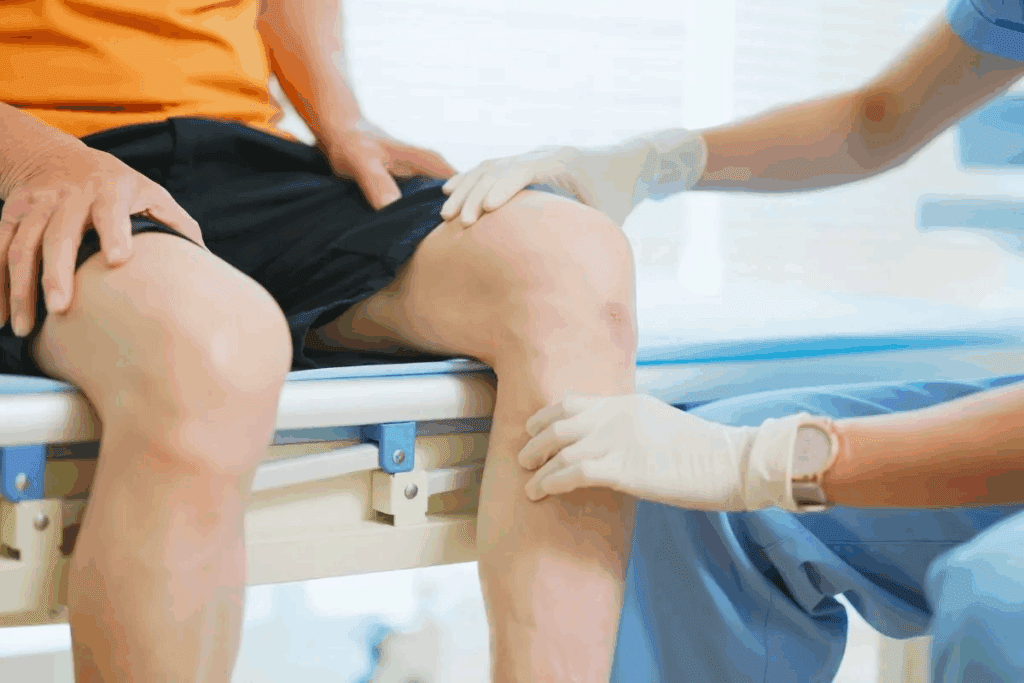
Knowing where bursitis often happens is key to stopping it and treating it. Some joints are more likely to get this inflammation. This is because they often move a lot and get stressed.
Why Certain Joints Are More Vulnerable
Some joints are more at risk for bursitis. This is because of how they are built and how they work. For example, the shoulder, hip, knee, and elbow are often affected. They get used a lot and can get hurt easily.
The shoulder is very mobile and does lots of movements. This makes it prone to bursitis. The bursa in the shoulder is at high risk. The hip and knee also bear a lot of weight, making them more likely to get bursitis.
“The repetitive strain on joints like the shoulder, hip, and knee makes them more susceptible to bursitis. Understanding the anatomy and function of these joints is key to preventing and treating bursitis effectively.”
Medical Expert
Risk Factors That Increase Your Chances
Several things can make you more likely to get bursitis. Getting older, doing the same thing over and over, and having certain health issues are some of them. Also, suddenly starting to do more exercise can increase your risk.
| Risk Factor | Description |
| Age | More common in adults over 40 |
| Occupation/Activity | Jobs or activities involving repetitive motions |
| Medical Conditions | Arthritis, gout, and other inflammatory conditions |
| Physical Activity Changes | Sudden increases in intensity or frequency of exercise |
By knowing these risk factors and taking steps to prevent them, you can lower your chance of getting bursitis. It’s important to know where bursitis often happens and how to protect those areas.
Shoulder Bursitis: A Leading Cause of Shoulder Pain
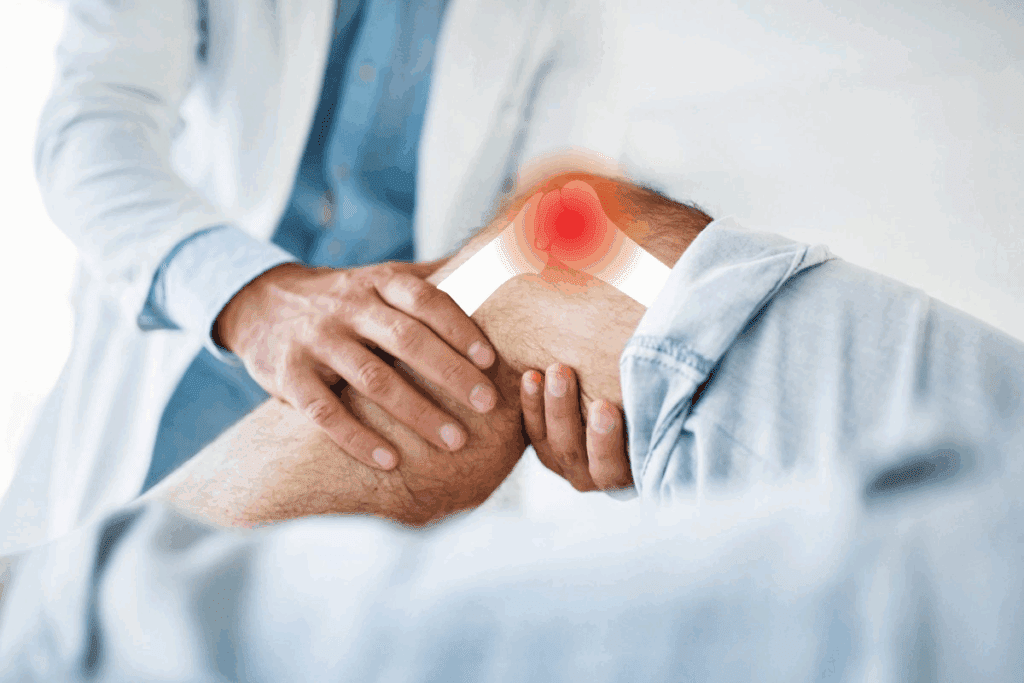
Bursitis is a major cause of shoulder pain, affecting daily life. It happens when the bursae, fluid-filled sacs, get inflamed. These sacs cushion joints and reduce friction between bones and soft tissues.
Subacromial and Subdeltoid Bursitis
The shoulder has several bursae, but the subacromial and subdeltoid are the most common. Subacromial bursitis affects the bursa between the acromion and rotator cuff. Subdeltoid bursitis affects the bursa between the deltoid muscle and the rotator cuff. Both can cause a lot of pain and limit movement.
Shoulder bursitis often results from repetitive arm movements, direct blows, or conditions like rheumatoid arthritis. Knowing the causes and symptoms is key to managing it well.
Symptoms Specific to Shoulder Bursitis
Pain when moving the shoulder, swelling, and tenderness are symptoms of bursitis. The pain can be worse at night or when lying on the shoulder. Sometimes, it can also reduce the range of motion, making daily tasks hard.
Common Causes and Triggers
Several factors can lead to shoulder bursitis. These include repetitive movements, direct trauma, infection, and conditions like rheumatoid arthritis or gout. Activities that involve overhead motions, like throwing or lifting, can raise the risk.
| Cause/Trigger | Description |
| Repetitive Movements | Activities involving repeated arm movements, such as throwing or lifting. |
| Direct Trauma | A fall or direct blow to the shoulder can cause bursitis. |
| Infection | Bacterial infection of the bursa can lead to septic bursitis. |
| Underlying Conditions | Conditions like rheumatoid arthritis or gout can increase the risk. |
Hip Bursitis: Trochanteric and Ischial Forms
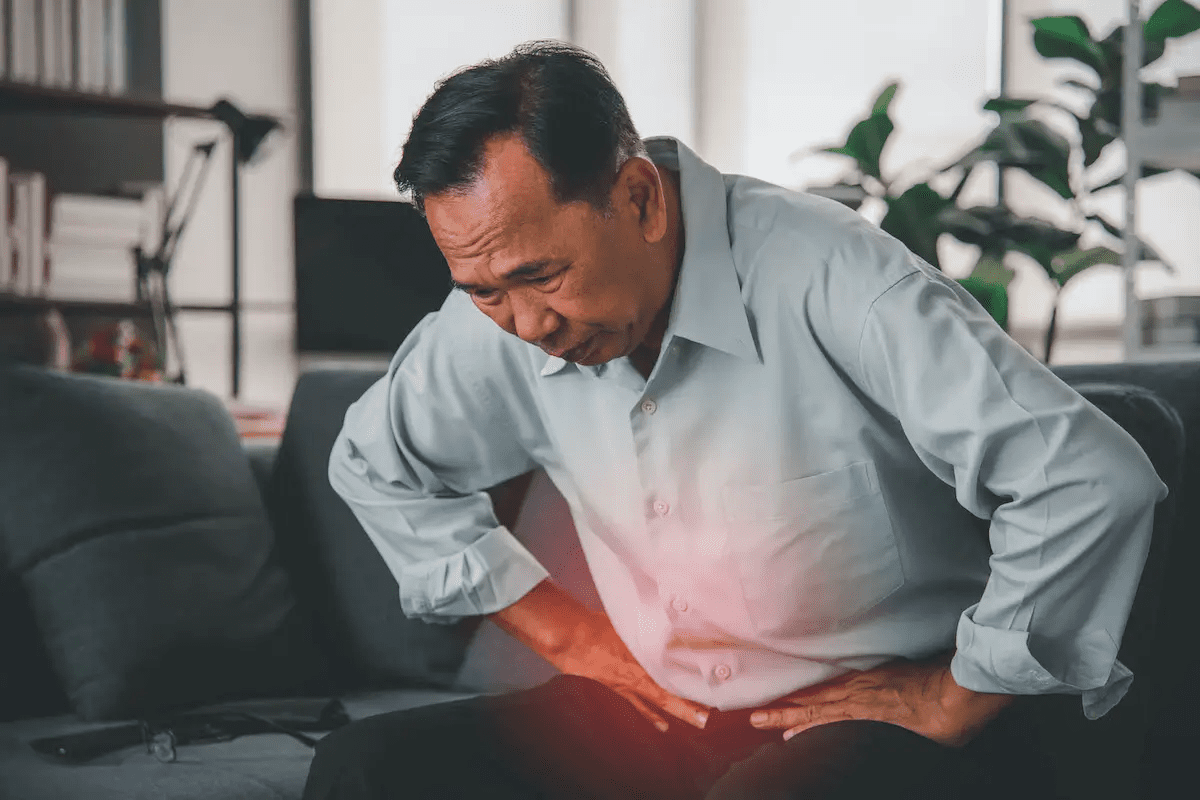
Hip bursitis is a painful condition caused by inflammation of the bursae. These are fluid-filled sacs that reduce friction and cushion joints. The hip joint has many bursae, which can get inflamed, causing a lot of pain and trouble.
Anatomy of Hip Bursae
The hip has several bursae that help the joint move smoothly. The trochanteric bursa is on the outer hip, near the femur’s greater trochanter. The ischial bursa is near the ischial tuberosity, where you sit.
Recognizing Hip Bursitis Symptoms
Symptoms of hip bursitis vary based on the bursa affected. Common signs include:
- Pain in the outer hip or in the groin area
- Tenderness to the touch
- Swelling or redness around the affected bursa
- Pain when lying on the affected side or when getting up from a seated position
Trochanteric bursitis pain is usually on the outer hip. It gets worse with walking or climbing stairs. Ischial bursitis pain is worse when sitting on hard surfaces.
“Understanding the specific symptoms and causes of hip bursitis is key to effective management and treatment.”
Medical Expert
Activities That Contribute to Hip Inflammation
Many activities and factors can lead to hip bursitis. These include:
- Repetitive motion or overuse, in sports like running or cycling
- Direct blows to the hip
- Poor posture or biomechanics
- Previous injuries or conditions that affect the hip
| Activity | Risk Level | Prevention Tips |
| Running | High | Wear proper footwear, run on softer surfaces |
| Cycling | Moderate | Adjust bike seat height, take regular breaks |
| Climbing Stairs | High | Use handrails, take stairs one at a time |
Knowing the causes and symptoms of hip bursitis helps prevent it. It also helps find the right treatment when needed.
Knee Bursitis: Prepatellar and Infrapatellar Types
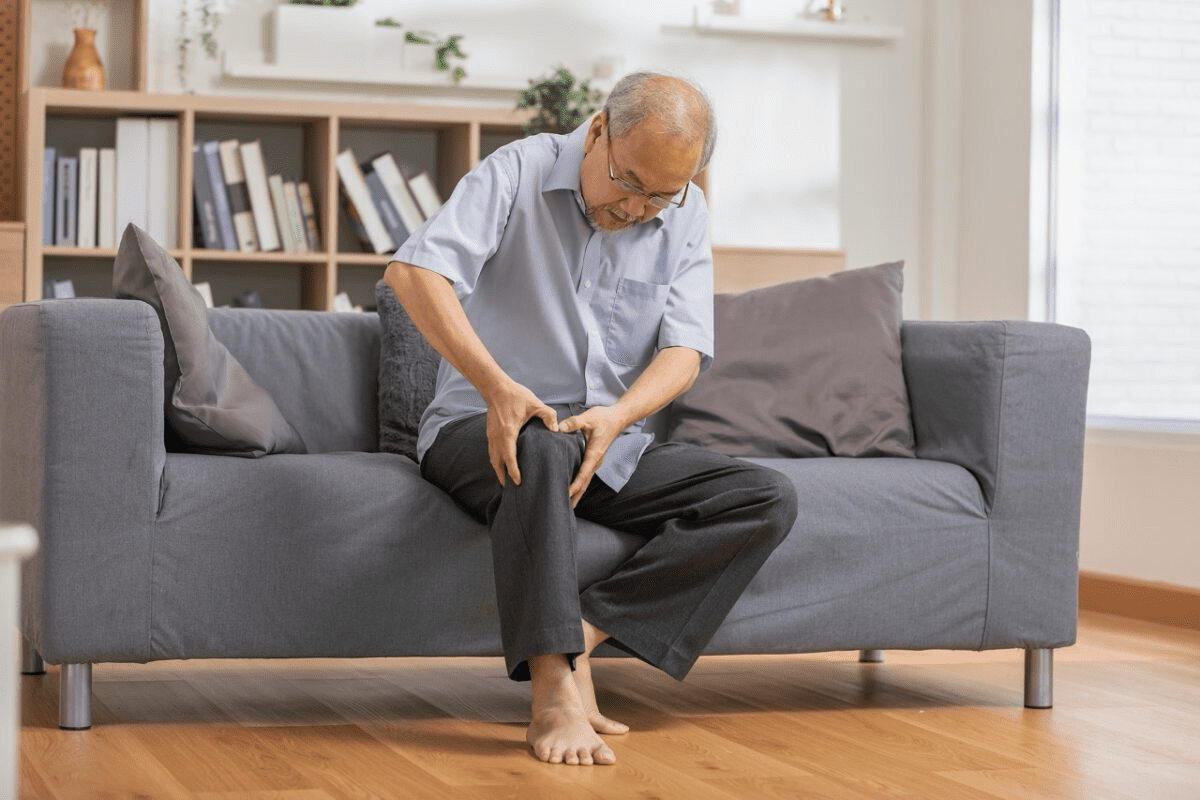
The knee joint is prone to bursitis, including prepatellar and infrapatellar types. This happens when the bursae in the knee get inflamed. This can be due to repetitive motion, direct trauma, or infection. Knowing the different types of knee bursitis is key to the right diagnosis and treatment.
The Multiple Bursae of the Knee
The knee has many bursae that help reduce friction between bones, tendons, and skin. The prepatellar bursa is in front of the kneecap, and the infrapatellar bursa is below it. Prepatellar bursitis, or “housemaid’s knee,” often comes from kneeling a lot. Infrapatellar bursitis is linked to jumping or bending the knee a lot.
Identifying Different Forms of Knee Bursitis
Symptoms of knee bursitis can differ based on where and how bad the inflammation is. Common signs include swelling, redness, warmth, and pain. Prepatellar bursitis might show swelling at the front of the knee. Infrapatellar bursitis can cause pain and swelling below the kneecap.
We usually diagnose knee bursitis by looking at physical signs, medical history, and imaging tests.
Occupational and Activity-Related Causes
Some jobs and activities raise the risk of knee bursitis. People who kneel a lot, like plumbers or gardeners, are more likely to get prepatellar bursitis. Athletes in sports that require jumping or bending the knee, like basketball or volleyball, face a higher risk of infrapatellar bursitis. Knowing these risks helps prevent and treat knee bursitis early.
Elbow Bursitis: Olecranon Inflammation
Olecranon bursitis, also known as ‘student’s elbow,’ is a painful condition. It happens when the bursa at the elbow gets inflamed. We will look at what causes it, its symptoms, and risk factors.
Understanding “Student’s Elbow”
The term “student’s elbow” comes from students leaning on their elbows for hours. This can cause the olecranon bursa to get inflamed, leading to pain and swelling. The olecranon bursa is a fluid-filled sac that helps reduce friction at the back of the elbow.
Symptoms and Appearance of Elbow Bursitis
The main symptom of olecranon bursitis is swelling at the back of the elbow. This swelling can be red and warm. In some cases, the swelling can make the elbow look bigger. People may also feel pain when leaning on the elbow or moving it.
The swelling can look different. It might be soft and fluid-filled or firm if there’s a lot of inflammation or infection. If the swelling is severe, red, or if you’ve hurt the area, see a doctor right away.
Common Triggers and Risk Factors
Several things can lead to olecranon bursitis. Repetitive motion or long-term pressure on the elbow is a big cause. This is common in people who lean on their elbows a lot, like students, desk workers, or athletes in certain sports.
- Direct trauma to the elbow
- Infection
- Arthritis or other inflammatory conditions
- Repetitive motion or overuse
Knowing these risk factors can help prevent the condition. It’s a good idea to take breaks and not lean on your elbows for too long.
By understanding the causes and taking steps to prevent it, you can lower your risk of getting olecranon bursitis. If you keep feeling symptoms, it’s important to see a doctor for the right diagnosis and treatment.
Heel and Foot Bursitis: Pain With Every Step
It’s important to know about heel and foot bursitis to manage pain. Foot bursitis, mainly in the heel, can really limit how you move and enjoy life.
Retrocalcaneal and Intermetatarsal Bursitis
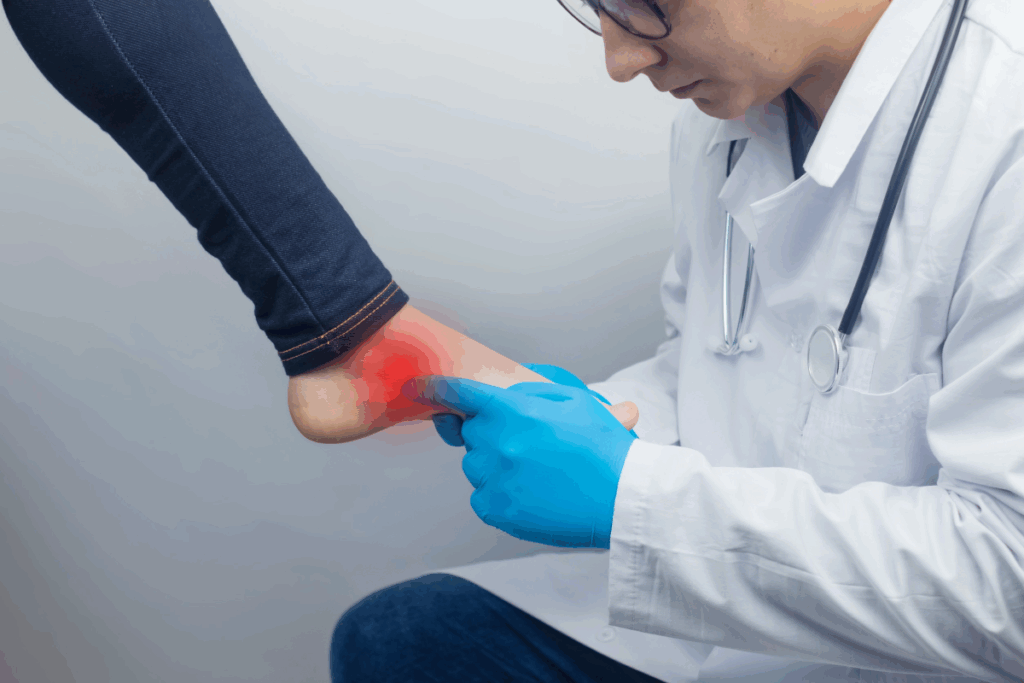
There are different types of bursitis in the foot. Retrocalcaneal bursitis occurs when the bursa between the Achilles tendon and the heel bone gets inflamed. This causes pain in the back of the heel. Intermetatarsal bursitis happens between the metatarsal bones, leading to pain in the ball of the foot.
Both conditions happen when the bursae, which are fluid-filled sacs, get inflamed. These sacs help reduce friction between bones, tendons, and skin. When they’re inflamed, it can be very painful.
Recognizing Foot Bursitis Symptoms
Symptoms of foot bursitis can vary. They depend on where and how bad the inflammation is. Common signs include:
- Pain or tenderness in the affected area
- Swelling or redness around the bursa
- Warmth or tenderness to the touch
- Pain that gets worse with activity or pressure
Spotting these symptoms early can help you get the right treatment. This can prevent things from getting worse.
Footwear Choices and Their Impact
What you wear can affect your risk of foot bursitis. Poorly fitting shoes can put extra pressure on the bursae, causing inflammation. For example, tight shoes or high heels can make retrocalcaneal bursitis worse by pressing the bursa between the Achilles tendon and the heel bone.
To avoid foot bursitis or manage its symptoms, wear shoes that fit well and support your feet. Look for comfortable shoes, have enough cushioning and don’t have high heels or cause friction.
By understanding the causes and making smart choices about your shoes, you can lower your risk of heel and foot bursitis.
Wrist and Hand Bursitis: Including Thumb Inflammation
Wrist and hand bursitis can really mess up your day, causing pain and discomfort. Bursae are small sacs filled with fluid that cushion bones, tendons, and muscles. They help reduce friction and allow for smooth movement. In the wrist and hand, bursitis can happen from repetitive strain, direct blows, or inflammatory conditions.
Anatomy of Wrist and Hand Bursae
The wrist and hand have several bursae that can get inflamed. The most common spots are around the joints and tendons. The radial and ulnar bursae are key because they’re near the wrist joint and can get hurt from repetitive actions.
Symptoms in Different Hand Locations
Symptoms of wrist and hand bursitis can differ based on where the bursa is inflamed. Common signs include:
- Pain and tenderness in the affected area
- Swelling and redness around the bursa
- Warmth to the touch
- Limited mobility due to pain or stiffness
In the thumb, bursitis can cause pain at the base, affecting grip strength and thumb movement. In the wrist, it can make flexion or extension uncomfortable.
Repetitive Movements and Occupational Causes
Repetitive movements are a big risk for wrist and hand bursitis. Activities like typing, assembly line work, or sports like tennis or golf can cause bursae inflammation. Certain jobs are more prone to bursitis due to their nature.
Medical experts say, “Repetitive strain injuries are a leading cause of bursitis in the wrist and hand. This shows how important it is to prevent these injuries and have good workplace ergonomics.”
“Repetitive strain injuries are a leading cause of bursitis in the wrist and hand, highlighting the importance of preventive measures and proper workplace ergonomics.”
Medical Professionals
To lower the risk, people can use ergonomic practices, take breaks, and do exercises to strengthen their hands and wrists.
Ankle Bursitis: When Walking Becomes Painful
Many patients face ankle pain due to bursitis. This condition needs the right diagnosis and treatment. Ankle bursitis can really hurt your ability to move and enjoy life.
Types of Ankle Bursitis
Different types of bursitis can hit the ankle. Retrocalcaneal bursitis happens between the heel and the Achilles tendon. Subcutaneous calcaneal bursitis is between the skin and the heel.
Distinguishing Symptoms and Signs
The signs of ankle bursitis can change based on the type and how bad it is. You might feel pain, swelling, and redness. Sometimes, the pain is so bad that it makes walking or doing physical stuff hard.
Activities That Increase Ankle Bursitis Risk
Some activities raise the risk of getting ankle bursitis. Running, cycling, or dancing are examples. Repetitive motion and too much use can irritate and swell the bursae, leading to bursitis.
Spine and Ischial Bursitis: Sitting Pain and Discomfort
The spine and ischial areas are often affected by bursitis. This condition causes pain and discomfort, mainly when sitting. It’s hard to deal with because of the constant pressure and friction from daily activities.
Bursae Around the Spine and Pelvis
The spine and pelvis have bursae that help reduce friction. Inflammation of these bursae can lead to spinal and ischial bursitis. Knowing the anatomy of these areas is key to diagnosing and treating bursitis.
Symptoms of “Weaver’s Bottom” and Spinal Bursitis
“Weaver’s Bottom,” or ischial bursitis, causes pain in the buttocks that can spread to the thigh. Spinal bursitis leads to back pain and stiffness, affecting mobility. Recognizing these symptoms early is important for effective management and prevention.
Risk Factors and Common Causes
Prolonged sitting, repetitive motion, and direct trauma often cause bursitis in these areas. People with jobs or activities that involve heavy lifting, bending, or sitting for long periods are at higher risk. Identifying and mitigating these risk factors can help prevent bursitis.
Understanding the causes, symptoms, and risk factors of spine and ischial bursitis helps individuals manage their condition. This improves their quality of life.
Bursitis in Athletes: Sport-Specific Vulnerabilities
Many sports lead to bursitis due to repetitive strain and injuries. This inflammation of the bursae can harm an athlete’s performance and career.
High-Risk Sports and Activities
Some sports and activities raise the risk of bursitis. This is because of repetitive motion, direct trauma, or strain on joints. For example:
- Contact Sports: Football, rugby, and hockey can cause joint injuries leading to bursitis.
- Endurance Sports: Long-distance running or cycling can strain joints like the hip, knee, and ankle, raising bursitis risk.
- Racquet Sports: Tennis, squash, and badminton players often get shoulder and elbow bursitis from repetitive motion.
Prevention Strategies for Active Individuals
To prevent bursitis, focus on proper training, equipment, and technique. Here are some tips:
- Gradual Increase in Training Intensity: Steadily increase training to avoid overuse injuries.
- Proper Equipment: Use the right gear, like knee pads or elbow supports, to lower bursitis risk.
- Strengthening Exercises: Strengthening muscles around joints can offer support and reduce bursitis risk.
Recovery and Return to Sport
Recovering from bursitis needs a careful approach to avoid re-injury. Here’s what we suggest:
- Rest and Rehabilitation: Start with rest, then a rehabilitation program for full recovery.
- Modified Activities: Adjust activities to lessen strain on the affected area for a smoother return.
- Professional Guidance: Get help from healthcare professionals to create a return-to-play plan. This ensures the athlete is fully recovered and ready for competition.
Bursitis Due to Arthritis and Related Conditions
Arthritis and bursitis often go hand in hand. Some arthritis types raise the risk of bursitis. Knowing this link is key to proper diagnosis and treatment.
How Arthritis Contributes to Bursitis
Arthritis can lead to bursitis in a few ways. First, arthritis inflammation can spread to bursae, causing them to swell. Second, arthritis damage can change how joints work, stressing the bursae more.
Key factors that increase the risk of bursitis in arthritis patients include:
- Severity of arthritis
- Duration of arthritis
- Presence of other inflammatory conditions
Rheumatoid Arthritis and Bursa Inflammation
Rheumatoid arthritis (RA) is a chronic autoimmune disorder. It causes significant joint inflammation and damage. This inflammation can reach the bursae, causing bursitis. Studies show RA patients are more likely to get bursitis, often in the shoulders and hips.
Managing Both Conditions Simultaneously
Dealing with bursitis in arthritis patients needs a full plan. This plan should tackle both conditions. Treatment might include:
| Treatment Approach | Description |
| Medications | Anti-inflammatory drugs, corticosteroids, and DMARDs can manage both arthritis and bursitis. |
| Physical Therapy | Gentle exercises and stretches help keep joints moving and lower bursitis risk. |
| Lifestyle Modifications | Staying healthy, avoiding repetitive actions, and using protective gear can ease symptoms. |
Understanding the link between arthritis and bursitis helps healthcare providers create better treatment plans. These plans improve patient outcomes by addressing both conditions.
Work-Related Bursitis: Occupational Hazards
Work-related bursitis is a big problem for many workers. It affects their loyalty and work output. Jobs that need a lot of physical effort and repetitive actions are more likely to cause this issue.
High-Risk Professions and Tasks
Jobs like construction work, sports, and tasks that involve a lot of kneeling, lifting, or throwing are risky. For example, construction workers often get knee bursitis from kneeling a lot. Athletes might get bursitis in their shoulders or elbows from throwing a lot.
Here are some tasks that often lead to bursitis at work:
- Repetitive kneeling or crawling
- Lifting heavy objects
- Throwing or overhead reaching
- Direct pressure on joints
Ergonomic Considerations and Modifications
Making the workplace more ergonomic can help prevent bursitis. Adjusting the work environment to fit the worker’s needs can reduce joint strain. This includes using ergonomic furniture, taking breaks, and lifting correctly.
For instance, a study showed that using ergonomic tools lowered bursitis cases in factory workers. Simple changes, like adjusting workstation heights or using knee pads, can help a lot.
| Ergonomic Modification | Benefit |
| Ergonomic furniture | Reduces strain on joints |
| Regular breaks | Prevents repetitive strain |
| Proper lifting techniques | Minimizes joint impact |
Workplace Prevention Strategies
To prevent bursitis at work, we need a few strategies. Here are some:
“Prevention is key. By educating workers on proper techniques and providing a safe working environment, we can significantly reduce the risk of bursitis.” – Occupational Health Expert
- Training programs on proper lifting and movement techniques
- Regular workplace assessments to identify hazards
- Encouraging workers to report early symptoms
By being proactive, we can make workplaces healthier and lower bursitis cases.
Diagnosing Bursitis: Medical Evaluation Process
To find out if you have bursitis, doctors use a few steps. They do a physical check and some tests to see how bad it is.
Physical Examination Techniques
First, a doctor will check you physically. They look for signs like swelling, redness, and warmth in the affected area. They also check how well you can move and try to make you feel pain.
For shoulder bursitis, they might do the Neer test or the Hawkins-Kennedy test. These tests check for problems that could be causing the pain.
Imaging and Laboratory Tests
Next, doctors might use imaging to confirm the diagnosis. X-rays can spot bone spurs or calcifications that might be causing the bursitis. Ultrasound is great for looking at soft tissues, like bursae, and can help with treatments.
Magnetic Resonance Imaging (MRI) gives detailed pictures of bones and soft tissues. It’s very helpful for diagnosing bursitis, even in tricky spots like the hip or shoulder.
| Imaging Test | Use in Diagnosing Bursitis |
| X-ray | Identifies bone spurs or calcifications |
| Ultrasound | Visualizes soft tissue structures, guides injections/aspirations |
| MRI | Detailed images of bone and soft tissue |
Differentiating Bursitis from Similar Conditions
It can be hard to tell if you have bursitis or something else, like tendinitis or arthritis. Doctors need to listen to your history, do a physical exam, and use imaging tests to get it right.
If it’s not clear, they might take fluid from the bursa. This helps them check for infection or inflammation.
By using all these methods, doctors can figure out if you have bursitis. Then, they can create a treatment plan just for you.
Treatment Approaches for Different Bursitis Locations
Treating bursitis depends on where it is and how bad it is. Knowing the exact spot and how severe it is helps a lot.
Conservative Treatment Methods
First, we try not to use too much force. Rest, ice, compression, and elevation (RICE) help a lot. Physical therapy also helps by making joints move better and muscles stronger. Sometimes, nonsteroidal anti-inflammatory drugs (NSAIDs) are used to ease pain and swelling.
Changing how you live can also help. For example, if you have hip bursitis, avoid putting pressure on it. Doing exercises that make your hip muscles stronger is good too.
Medical Interventions and Procedures
If simple steps don’t work, we might need to do more. Corticosteroid injections are often used to cut down inflammation and pain. These are put right into the bursa. Sometimes, aspirating the bursa (using a needle to take out fluid) is done to make it less swollen and less painful.
“Corticosteroid injections can provide significant relief for patients with bursitis when used with physical therapy and lifestyle changes.
Surgical Options for Persistent Bursitis
If bursitis keeps coming back, we might need to think about surgery. Bursectomy, or removing the inflamed bursa, is one option. It’s usually for very bad cases that haven’t gotten better with other treatments. Arthroscopic surgery can also be used to take out the inflamed bursa or fix damaged tissues around the joint.
Talking to your doctor about surgery is very important. They can help decide if it’s the right choice for you.
Preventing Bursitis: Proactive Strategies
To prevent bursitis, we need to use the right techniques, wear protective gear, and do exercises that target the problem areas. These steps can help lower the risk of getting bursitis and keep our joints healthy and pain-free.
Proper Technique and Form
It’s important to use the right technique and form when we’re active. This means learning and sticking to the correct ways of moving and exercising. For example, athletes and people who do the same motion over and over should learn how to do it right to avoid hurting their bursae.
Working with a coach or trainer is a good idea, even if you’re just starting. They can teach you the proper techniques. Also, paying attention to how your body is aligned and making adjustments can help prevent bursitis.
Protective Equipment and Padding
Wearing protective gear and padding is another way to prevent bursitis. This includes things like knee pads, elbow pads, and other gear made for specific sports or activities. This extra layer of cushioning and support can help lower the chance of bursae getting inflamed.
For people who kneel a lot, like construction workers or gardeners, knee pads can really help. They reduce the pressure on the bursae around the knee. Athletes in contact sports also benefit from wearing the right protective gear to avoid injuries that could lead to bursitis.
Strengthening and Flexibility Exercises
Doing regular exercises to strengthen and stretch is key to keeping joints healthy and preventing bursitis. Strengthening the muscles around a joint can give it more support and reduce the strain on the bursae. Stretching exercises can improve how well you move and make it less likely for bursae to get inflamed.
We suggest doing exercises that focus on the joints and areas most at risk for bursitis. For example, exercises for the shoulder can help prevent shoulder bursitis, while stretches for the hip flexor can help avoid hip bursitis. Start slowly and gradually increase the intensity and duration of your exercises to avoid injuries.
Conclusion: Living Well Despite Bursitis Risk
Knowing the risks and taking steps early can lessen the impact. Being aware of common bursitis spots like the shoulder, hip, knee, and elbow helps. This way, you can lower your risk.
Managing bursitis means more than just treating it. It’s about changing your lifestyle too. Use the right techniques, wear protective gear, and do exercises to stay strong and flexible. This helps a lot.
We’ve looked at bursitis from many angles. We’ve talked about what causes it, its symptoms, how to diagnose it, and treatment options. With this knowledge, you can handle bursitis better and keep living an active, healthy life.
Keeping bursitis at bay is a continuous effort. It’s about being careful with activities and conditions that might make it worse. By being proactive, you can lower your chances of getting bursitis. This improves your quality a lot.
FAQ
What is bursitis, and how does it develop?
Bursitis is when the bursae, fluid-filled sacs, get inflamed. These sacs cushion bones, tendons, and muscles near joints. It can happen from repetitive motion, direct blows, or infection.
Where does bursitis typically occur?
Bursitis often hits joints like the shoulder, hip, knee, elbow, heel, foot, wrist, and ankle. This is because these areas are used a lot and can get strained easily.
What are the symptoms of shoulder bursitis?
Shoulder bursitis causes pain, swelling, and less mobility in the shoulder. It often comes from repetitive arm movements, direct blows, or conditions like rheumatoid arthritis.
How is hip bursitis diagnosed?
Doctors diagnose hip bursitis by checking the body, looking at medical history, and using X-rays or MRI scans. These tests help see how the bursae and surrounding tissues are doing.
What activities contribute to knee bursitis?
Knee bursitis can come from activities or jobs that make you kneel a lot, put pressure on the knee, or move the knee a lot. This leads to inflammation of the prepatellar or infrapatellar bursae.
How is elbow bursitis treated?
Elbow bursitis, like olecranon bursitis, is treated with rest, ice, compression, and elevation (RICE). In severe cases, doctors might use aspiration or corticosteroid injections.
Can footwear choices affect foot bursitis?
Yes, wearing the wrong shoes can make foot bursitis worse. It puts extra pressure on the bursae, causing more pain and discomfort, mainly when walking.
How does arthritis contribute to bursitis?
Arthritis, like rheumatoid arthritis, can lead to bursitis by causing inflammation in the bursae. It’s important to treat both conditions together for the best results.
What are the prevention strategies for bursitis in athletes?
Athletes can prevent bursitis by using proper training techniques, wearing protective gear, and doing exercises to strengthen and improve flexibility. This helps lower the risk of getting bursitis.
How can work-related bursitis be prevented?
To prevent work-related bursitis, make ergonomic changes, use prevention strategies at work, and train on tasks that involve repetitive movements or direct pressure on joints.
What are the treatment approaches for different bursitis locations?
Treatment for bursitis varies based on where it is and how bad it is. It can range from using the RICE method to medical treatments and surgery for cases that don’t get better.
Can bursitis be cured?
Bursitis can be managed and treated well, but getting completely cured depends on the cause, how severe it is, and how well it responds to treatment. Some cases need ongoing care.
References
- Aaron, D. L., Patel, A., Kayiaros, S., & Calfee, R. (2011). Four common types of bursitis: diagnosis and management. Journal of the American Academy of Orthopaedic Surgeons, 19(6), 359-367. https://pubmed.ncbi.nlm.nih.gov/21628647/