Last Updated on November 25, 2025 by
Getting ready for a CT urogram is key for getting accurate results and keeping patients safe. Many patients feel nervous about getting a computed tomography scan. Yes, specific preparation is required for a CT urogram, including fasting, hydration rules, and potential medication adjustments to ensure image quality.
To get ready, patients usually need to not eat for 4-6 hours. They also need to drink 500-1,000 mL of water to fill their bladder. It’s best to stay away from coffee and cigarettes before the scan.
By following these steps, patients help make the CT urography process go well. This leads to better health care results.
Key Takeaways
- Patients are required to fast for 4-6 hours before a CT urogram.
- Drinking 500-1,000 mL of water is necessary to distend the bladder.
- Avoiding coffee and cigarettes before the scan is recommended.
- Proper preparation ensures diagnostic accuracy and patient safety.
- Patient compliance is key for successful outcomes.
What Is a CT Urogram and Why Is It Performed?
Learning about CT urograms helps patients get ready for their tests. A CT urogram, or CT scan IVP, shows the urinary tract in detail. It looks at the kidneys, ureters, and bladder.

Definition and Purpose of CT Urography
CT urography checks the urinary tract for problems. It uses a CT scanner and contrast to show the urinary system. This tool is key for finding tumors, stones, and other issues.
We do CT urograms for patients with blood in their urine, infections, or other problems. The test’s clear images help us find and treat conditions accurately.
Common Urinary Tract Conditions Diagnosed
CT urograms help find many urinary tract issues, like:
- Kidney stones
- Tumors in the kidneys, ureters, or bladder
- Structural abnormalities
- Blockages or narrowing in the urinary tract
These images help doctors create the best treatment plans for each patient.
Advantages Over Traditional Imaging Methods
CT urography gives clearer images than ultrasound or X-rays. It’s great for complex cases or when a precise diagnosis is needed.
Its benefits include spotting many urinary tract disorders, being non-invasive, and quick results. These make it a key tool in today’s medicine.
5 Essential Preparation Steps for Your CT Urogram
Getting ready for a CT urogram involves several important steps. These steps make sure the procedure is safe and works well. We’ll walk you through what you need to do for a successful scan.
Fasting for 4-6 Hours Before the Procedure
Fasting for 4-6 hours before your CT urogram is a first step. It lowers the risk of problems and helps your body absorb the contrast medium better. Fasting doesn’t mean you should be dehydrated; we’ll talk about staying hydrated next.
Drinking 500-1,000 mL of Water for Bladder Distention
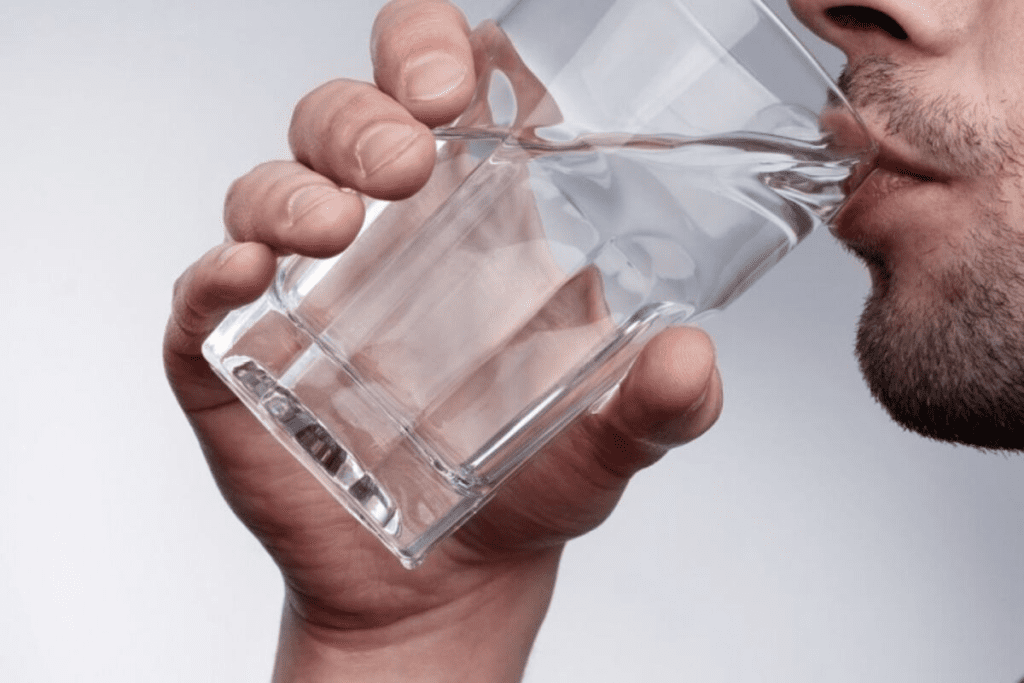
Drinking water is key to expanding your bladder. This is important for clear images during the CT urogram. We suggest drinking 500-1,000 mL of water before the scan. This easy step can really improve the scan’s quality.
Avoiding Coffee and Cigarettes
It’s best to avoid coffee and cigarettes before the scan. They can mess with the procedure or how your body reacts to the contrast medium. Staying away from these substances can reduce risks and make the experience smoother.
Medication Management Before the Scan
Managing your medications is critical before a CT urogram. Our healthcare provider will tell you how to adjust or stop certain meds. This is to avoid bad reactions with the contrast medium and ensure the scan goes well.
By following these 5 key steps, you can help make your CT urogram safe and effective. This will give your healthcare provider the best possible results for your care.
Required Medical Assessments Before a CT Urogram
Before a CT urogram, we need to check your health. This is to make sure you’re safe and the scan works well. We look at your overall health and any risks the scan might have.
Blood Tests to Evaluate Kidney Function
Blood tests are key before a CT urogram. We check your kidney function to make sure it’s safe to do the scan. These tests help us see if there are any problems that could affect the scan or your health.
Medical History Review for Risk Factors
We review your medical history to find any risk factors for the CT urogram. We look at any past health issues, allergies, or surgeries. These can affect the procedure or how we read the results.
Special Considerations for Patients Over 50
For patients over 50, we take extra steps to keep them safe. We do a deeper health check and look at age-related issues. We also check how any medicines might react with the contrast media, if used.
By looking at your medical history and doing blood tests, we can make the CT urogram safe and effective for you.
Contrast Medium Used in CT Urogram: What You Need to Know
Contrast medium is key in CT urography, helping to see the urinary system clearly. Knowing how it works is important when you have a CT urogram with contrast. It helps in spotting problems in the urinary tract.
Types and Purpose of Contrast Agents
There are different contrast agents for CT urograms, each with its own job. The most common is iodine-based contrast, given through a vein. It makes the urinary tract stand out, helping find any issues.
- Iodine-based contrast: Makes blood vessels and urinary tract parts more visible.
- Gadololinium-based contrast: Used for those who can’t take iodine-based contrast.
We use contrast medium to make CT urograms clearer. The agent is given through a vein in the arm. Its effects are short-lived.
Preparation for Patients with Contrast Allergies
If you have a contrast allergy, special steps are needed to avoid allergic reactions. Here’s what to do:
- Tell your healthcare provider about your allergy.
- Get a pre-medication, which might include antihistamines and corticosteroids.
- Be ready for close monitoring during and after the test.
Talking to your healthcare provider about your medical history is important. They can figure out the best plan for you.
Post-Contrast Administration Guidelines
After getting the contrast medium, follow these guidelines for your safety and comfort:
- Drink lots of water to get rid of the contrast agent.
- Watch how your body reacts to the contrast medium. Tell your healthcare provider if you notice anything odd.
- Follow any specific care instructions from your healthcare team after the procedure.
Understanding contrast medium in CT urograms and following guidelines ensures a safe procedure. If you have concerns or questions, talk to your healthcare provider.
The CT Urogram Procedure: Step-by-Step Experience
A CT urogram is a special CT scan for the urinary system. Knowing what to expect can make it easier. We’ll walk you through each step to help you feel more at ease.
Before Entering the Scanning Room
First, you’ll change into a hospital gown and take off any metal items or jewelry. Our team will explain the procedure and answer your questions. They’ll make sure you’re comfortable and ready for the scan.
Positioning and Duration (Up to 30 Minutes)
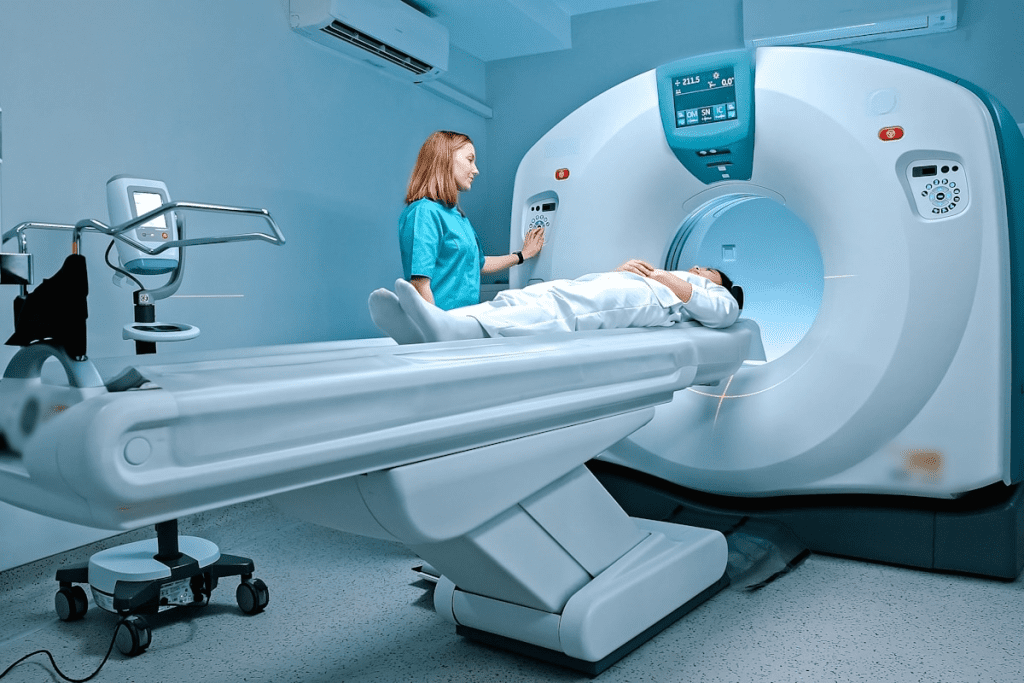
You’ll lie on a table that slides into the CT scanner. The whole process usually takes up to 30 minutes. You’ll need to stay very quiet and might have to hold your breath briefly for clear images.
The scan has different phases, like a non-contrast phase and contrast-enhanced phases.
What Happens During Each Phase of Imaging
The CT urogram has several imaging phases:
- Non-contrast phase: Initial scans are taken without contrast to provide a baseline.
- Contrast-enhanced phases: Contrast medium is administered, and subsequent scans capture the contrast as it moves through your urinary system.
These phases help our radiologists to thoroughly assess your urinary tract and identify any issues.
Potential Sensations During Contrast Administration
When the contrast medium is given, some people might feel a warm sensation or a metallic taste. These feelings are usually short-lived and go away after the contrast is given. If you’re worried about the contrast or feel uncomfortable, our team is here to help.
Understanding the CT urogram procedure and what to expect can help you feel more confident. Our team is committed to making sure you’re comfortable and safe during the process.
Conclusion: Ensuring Safety and Accuracy in Your CT Urogram
Keeping patients safe and getting accurate results is key in a CT urogram. We highlight the need for proper preparation and following guidelines for the best outcomes. Patients can help by following the steps we provide for a safe and effective CT urogram.
Getting accurate results from a CT urogram depends on its quality. Proper preparation, like fasting and staying hydrated, is vital. We also focus on keeping patients safe during the procedure, including using contrast agents and watching for risks.
By focusing on safety and accuracy in CT urograms, we ensure top-notch care for patients. This approach helps healthcare providers make better decisions and offer effective treatments. We aim to provide the best healthcare, supporting patients every step of the way.
FAQ
What is a CT urogram and how does it differ from a standard CT scan?
A CT urogram is a special CT scan for the urinary system. It uses contrast medium to show the kidneys, ureters, and bladder in detail. Unlike a standard CT scan, it focuses on the urinary tract.
Why is preparation important for a CT urogram?
Preparation is key for a CT urogram. It makes sure the results are accurate and safe for the patient. This includes fasting, staying hydrated, avoiding certain substances, and managing medications.
What are the essential preparation steps for a CT urogram?
Important steps include fasting for 4-6 hours and drinking 500-1,000 mL of water. Avoid coffee and cigarettes. Also, manage your medications before the scan.
What medical assessments are required before a CT urogram?
Before a CT urogram, you’ll need blood tests for kidney function. Your medical history will also be reviewed. This is to identify any risks, with extra care for patients over 50.
What is the role of contrast medium in a CT urogram?
Contrast medium is used to see the urinary system clearly. It’s given during the scan to highlight the kidneys, ureters, and bladder.
How do I prepare if I have a contrast allergy?
If you have a contrast allergy, you’ll need to take precautions. This might include antihistamines or corticosteroids to reduce the risk of an allergic reaction.
What happens during a CT urogram procedure?
During a CT urogram, you’ll lie on a scanning table. Contrast medium will be given. The scan will take images of your urinary system in different phases.
How long does a CT urogram procedure take?
A CT urogram usually takes up to 30 minutes.
What are the possible sensations during contrast administration?
You might feel a warm or cold sensation, a metallic taste, or nausea during contrast administration. These feelings are usually mild and temporary.
What is CT urography used to diagnose?
CT urography is used to find various urinary tract issues. This includes kidney stones, tumors, and other problems.
What are the advantages of CT urograms over traditional imaging methods?
CT urograms give detailed images of the urinary system. This leads to more accurate diagnoses and treatment plans than traditional methods.
Do I need to be hydrated for a CT urogram?
Yes, drinking 500-1,000 mL of water before the scan is recommended. It helps distend the bladder and improves image quality.
Can I take my medications before a CT urogram?
You should talk to your doctor about your medications before the scan. Some might need to be adjusted or stopped temporarily.
References
- Myers, K. P., et al. (2023). Pediatric Hematology-Oncology Workforce and Training Trends: Challenges and Opportunities. Pediatric Blood & Cancer, e32070. https://pubmed.ncbi.nlm.nih.gov/40985499/