Last Updated on November 4, 2025 by mcelik

Did you know that nearly 70% of patients thought to have a herniated disc might actually have another spinal problem? This fact shows how tricky it can be to figure out spinal issues. Discover which Conditions Mistaken for Herniated Disc can mimic its symptoms and how doctors tell them apart.
Many patients are misdiagnosed or unsure about their condition. Herniated disc symptoms can look a lot like other spinal problems. This makes it important to get a correct diagnosis for the right treatment.
It’s key for both doctors and patients to know the differences between herniated disc symptoms and other spinal issues. Getting the right diagnosis is the first step to proper care.
Key Takeaways
- Many lumbar spine conditions can mimic herniated disc symptoms.
- Differential diagnoses are critical for accurate diagnosis.
- Understanding lumbar spine conditions helps in providing effective treatment.
- Patients should seek a thorough evaluation for a precise diagnosis.
- Healthcare providers must consider various spinal issues when diagnosing.
Understanding Herniated Discs and Their Characteristic Symptoms
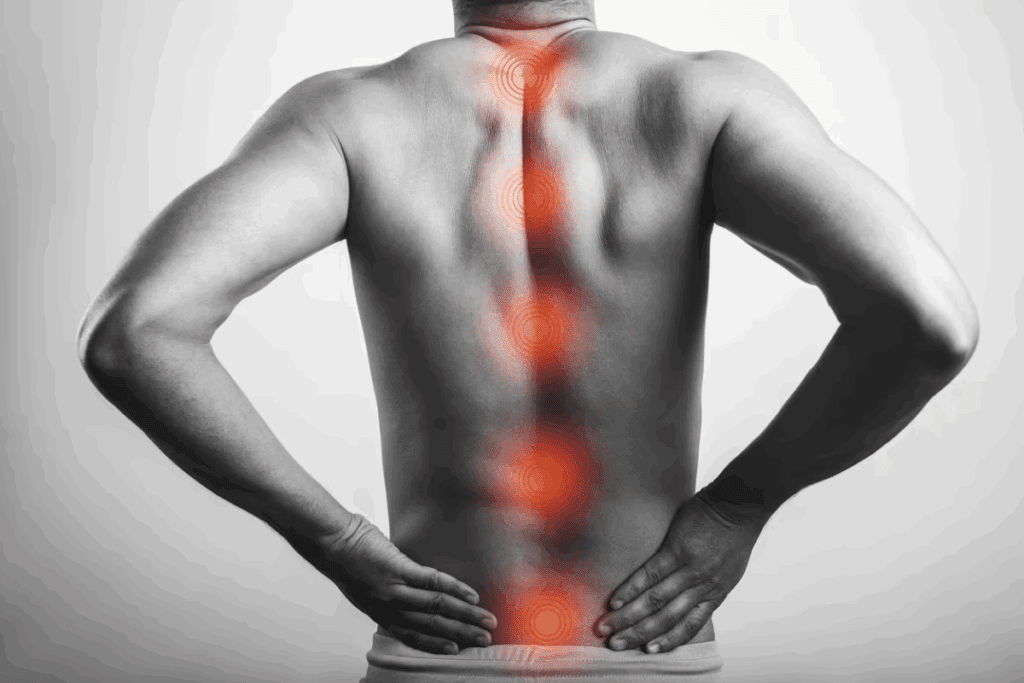
A herniated disc can cause pain, numbness, and weakness. This depends on where and how severe it is. We’ll look at the symptoms of herniated discs. These symptoms help tell this condition apart from others.
Typical Symptoms and Pain Patterns of Disc Herniation
The symptoms of a herniated disc vary. This is based on where the herniation is and which nerves it affects. Common symptoms include:
- Localized Pain: Pain in the area of the herniated disc, which can be sharp or dull.
- Radicular Pain: Pain that radiates along the nerve pathway, often referred to as sciatica when it affects the lower back.
- Numbness or Tingling: Sensations that occur when the herniated disc compresses or irritates nearby nerves.
- Muscle Weakness: Weakness in the muscles supplied by the affected nerve, potentially leading to difficulties in walking or standing.
Anatomical Basis of Herniated Disc Pain
The pain from a herniated disc comes from compressing or irritating spinal nerves. The spine has vertebrae and discs that act as shock absorbers. When a disc herniates, its gel-like center bulges out. This can press on nearby nerves, causing pain and other symptoms.
Common Locations and Their Specific Symptoms
Herniated discs most often happen in the lumbar spine (lower back). But they can also happen in the cervical spine (neck). The symptoms depend on the location:
- Lumbar Herniated Disc: Often causes sciatica, with pain radiating down one leg.
- Cervical Herniated Disc: Can cause pain or numbness in the neck, shoulder, or arm.
Knowing these symptoms and their causes is key. It helps doctors accurately diagnose herniated discs. This way, they can tell them apart from other spinal problems.
Why Misdiagnosis Occurs in Spinal Conditions

Spinal conditions often have complex symptoms that make diagnosis hard. The lumbar spine is a common pain source, with many conditions looking similar.
Overlapping Symptoms Among Different Back Problems
Different spinal conditions can show the same symptoms, making diagnosis tough. For example, herniated discs and spinal stenosis can both cause leg pain and numbness. We need to carefully check these symptoms to find the real cause.
The table below shows some common spinal conditions and their similar symptoms:
| Condition | Common Symptoms |
| Herniated Disc | Radiculopathy, back pain, leg pain |
| Spinal Stenosis | Radiculopathy, neurogenic claudication, leg pain |
| Piriformis Syndrome | Sciatica, buttock pain, leg pain |
Limitations of Diagnostic Imaging in Spinal Assessment
Diagnostic imaging is key in checking spinal conditions, but it has limits. MRI and CT scans can show structural issues, but these don’t always match the patient’s symptoms.
The Challenge of Correlating Imaging Findings with Symptoms
Linking imaging results with symptoms is a big challenge in spinal diagnosis. We must look at the patient’s history, physical exam, and imaging to get a correct diagnosis.
By understanding why misdiagnosis happens and using a detailed diagnostic method, we can get better at diagnosing spinal conditions. This helps us treat patients more effectively.
Muscle Strain and Spasm: Common Herniated Disc Mimickers
Many patients have muscle strain and spasm that look like a herniated disc. This makes it hard to tell what’s really going on. Muscle issues can hurt a lot and feel like a herniated disc. It’s important to know the difference to treat it right.
Distinguishing Muscular Pain from Disc-Related Pain
Muscle pain comes from specific muscles and gets worse with certain movements. Disc pain follows a pattern based on the nerve affected. Clinical examination is key to telling these pains apart. Muscle pain can be felt with touch or movement, while disc pain causes numbness or weakness.
Trigger Points vs. Radicular Symptoms
Trigger points are painful spots in muscles that can hurt nearby areas. They don’t follow a nerve pattern like disc pain does. Trigger point pain feels deep and aching, and touching it can make it worse. Radicular symptoms, like numbness, come from nerve issues and don’t match muscle pain.
Recovery Timeline and Response to Treatment
How fast you get better and how you react to treatment can tell you what’s wrong. Muscle strain gets better with simple treatments like physical therapy. It usually heals quickly, in a few weeks. Herniated discs might need more serious treatments and take longer to heal. Watching how you react to treatment can help figure out the cause.
Sciatica: A Symptom with Multiple Causes Beyond Disc Herniation
Sciatica is more than just a disc herniation issue. It’s a pain that spreads from the lower back to the legs. Other conditions can also cause similar pain, making it hard to diagnose.
Understanding Sciatica as a Symptom Complex
Sciatica is not a single diagnosis but a mix of symptoms. The sciatic nerve, the biggest in the body, can be affected in many ways. This leads to different types of pain.
Causes of sciatica include both disc-related and non-disc issues. While herniated discs are common, other problems like piriformis syndrome can also cause sciatica.
Non-Disc Related Causes of Sciatic Pain
Many conditions can lead to sciatic pain without disc problems. For example, piriformis syndrome can irritate the sciatic nerve. Other causes include:
- Spinal stenosis: Narrowing of the spinal canal that can compress nerves.
- Piriformis syndrome: Compression of the sciatic nerve by the piriformis muscle.
- Sacroiliac joint dysfunction: Pain referred from the sacroiliac joint.
- Peripheral nerve entrapment: Compression of nerves outside the spinal canal.
| Cause | Characteristics | Diagnostic Clues |
| Piriformis Syndrome | Pain on palpation of the piriformis, exacerbated by hip rotation | Pain on Freiberg’s test, Pace test positive |
| Spinal Stenosis | Neurogenic claudication, pain in the legs when walking | Relieved by flexion, MRI showing canal narrowing |
| Sacroiliac Joint Dysfunction | Pain localized to the SI joint area, referred pain patterns | Positive FABER test, pain on SI joint palpation |
Differentiating Sciatic Pain Sources Through Clinical Examination
Finding the cause of sciatica needs a detailed check-up. This includes a thorough history, physical exam, and tests. Tests like the straight leg raise and Freiberg’s test help pinpoint the cause.
Age, activity level, and other health issues also play a role. A full evaluation helps get the right diagnosis and treatment.
Spinal Stenosis: Often Misinterpreted as Disc Herniation
Spinal stenosis is often mistaken for a disc herniation because their symptoms can be similar. This mistake can lead to the wrong treatment, which might make things worse. We’ll look at the differences between central and foraminal stenosis and their symptoms to help doctors make the right call.
Central vs. Foraminal Stenosis Symptoms
Spinal stenosis can be either central or foraminal, depending on where the narrowing happens. Central stenosis affects the middle part of the spine, which can press on the spinal cord or nerves. This can cause back pain, numbness, and weakness in the legs, affecting both sides.
Foraminal stenosis happens when the neural foramina narrow, pressing on specific nerves. This usually causes pain, numbness, or weakness on one side, matching the nerve affected.
Neurogenic Claudication vs. Radiculopathy
Neurogenic claudication and radiculopathy are two different conditions linked to spinal stenosis. Neurogenic claudication causes pain, weakness, or tiredness in the legs and buttocks when standing or walking. It gets better when you bend forward or sit down. This is often seen in central spinal stenosis.
Radiculopathy is pain, numbness, or weakness that follows a specific nerve path. It’s caused by nerve root compression, common in foraminal stenosis.
Age-Related Considerations in Diagnosis
Spinal stenosis is more common in older adults due to spinal degeneration. When diagnosing it in seniors, age-related factors like reduced mobility and other spinal issues are important. A thorough medical history and imaging are key to a correct diagnosis and treatment.
Piriformis Syndrome: The Great Imitator of Lumbar Radiculopathy
Piriformis syndrome often looks like lumbar radiculopathy, making it hard to diagnose. This condition happens when the piriformis muscle in the buttocks irritates or presses on the sciatic nerve.
Anatomical Relationship Between Piriformis and Sciatic Nerve
The piriformis muscle and the sciatic nerve are very close. In most people, the sciatic nerve goes under the piriformis muscle. But some people’s nerves might go through or over the muscle. This closeness can cause the sciatic nerve to get irritated or compressed, leading to symptoms like those of lumbar radiculopathy.
Specific Tests to Differentiate from Disc Herniation
To tell piriformis syndrome apart from disc herniation, special tests are used. The Freiberg test and the FAIR test (Flexion, Adduction, and Internal Rotation) are key. These tests check if stretching or touching the piriformis muscle makes pain worse. A detailed neurological exam also helps figure out if pain comes from a herniated disc or piriformis syndrome.
Treatment Approaches for Piriformis Syndrome
Treating piriformis syndrome involves several steps. Physical therapy is very important, focusing on stretching and strengthening to ease muscle tightness and improve hip movement. Anti-inflammatory medications can also help by reducing pain and swelling. Sometimes, steroid injections or botulinum toxin injections into the piriformis muscle are used to help with pain.
Understanding the anatomy and using specific tests helps doctors accurately diagnose and treat piriformis syndrome. This way, they can tell it apart from other sciatica-like symptoms.
Facet Joint Dysfunction and Spinal Arthritis
It’s important to understand facet joint dysfunction and spinal arthritis for proper diagnosis and treatment. These conditions can cause a lot of pain and stiffness, affecting a person’s quality of life.
Facet-Mediated Pain Characteristics
Pain from facet joints, located between vertebrae, is a common issue. It often feels like localized pain in the lower back or neck. This pain can spread to the buttocks or thighs and gets worse with certain movements.
Facet joints can get inflamed or irritated due to various reasons. This includes degenerative changes, trauma, or repetitive strain. The pain can be either short-term or long-lasting, depending on the cause and damage level.
Osteoarthritis in the Spine: Symptoms and Progression
Osteoarthritis in the spine, or spondylosis, happens when facet joints and discs degenerate. This can cause pain, stiffness, and limited mobility. Symptoms usually get worse over time, with ups and downs.
As osteoarthritis gets worse, facet joints can become more inflamed. This leads to bone spurs and thicker ligaments. Eventually, it can cause spinal stenosis, where the spinal canal narrows, pressing on nerves.
Diagnostic Approaches for Facet Syndrome
Diagnosing facet joint dysfunction and spinal arthritis involves several steps. A detailed medical history and physical exam are key to identifying symptoms and signs.
Imaging like X-rays, CT scans, or MRI can show the facet joints and degenerative changes. Diagnostic injections, such as facet joint injections or medial branch blocks, help confirm pain sources and guide treatment.
Sacroiliac Joint Dysfunction: A Common Source of Misdiagnosis
Sacroiliac joint dysfunction can look like other spinal issues, making it hard to diagnose. Many patients are wrongly told they have other problems. This shows how important it is to really understand sacroiliac joint dysfunction.
SI Joint Pain Patterns and Referral Areas
The sacroiliac joint is a big cause of lower back pain. Pain patterns vary a lot from person to person. Usually, pain is in the lower back and buttocks but can also go to the thigh or groin.
Provocative Tests for SI Joint Dysfunction
There are tests like the FABER test and the Gaenslen maneuver to find SI joint dysfunction. These tests help doctors figure out where the pain is coming from and confirm the diagnosis.
Treatment Differences Between SI Joint and Disc Problems
Treatment for SI joint dysfunction is different from disc problems. While disc issues might need surgery, SI joint problems are often treated with physical therapy, injections, or radiofrequency ablation.
Degenerative Disc Disease vs. Acute Disc Herniation
Knowing the difference between degenerative disc disease and acute disc herniation is key. Both affect the spinal discs but in different ways. Their causes, symptoms, and treatments are quite different.
Chronic vs. Acute Symptom Presentation
Degenerative disc disease causes long-term symptoms. Back pain starts slowly and gets worse with activity. On the other hand, acute disc herniation brings sudden, severe pain. It can also cause nerve compression symptoms.
Key differences in symptom presentation include:
- Onset: Gradual for degenerative disc disease vs. sudden for acute disc herniation
- Duration: Chronic for degenerative disc disease vs. acute for disc herniation
- Severity: Often less severe for degenerative disc disease compared to the potentially severe pain of acute disc herniation
Discogenic Pain Without Neural Compression
Discogenic pain comes from the disc itself, without nerve compression. It’s common in degenerative disc disease. This pain is usually in the back and gets worse with certain movements.
It’s important to tell discogenic pain apart from other back pain causes. Tests like discography can help find the source of pain.
Management Approaches for Degenerative Disc Disease
Treating degenerative disc disease aims to ease symptoms and improve function. Treatment includes physical therapy, pain management, and lifestyle changes.
| Treatment Approach | Description | Benefits |
| Physical Therapy | Targeted exercises to strengthen supporting muscles and improve flexibility | Reduces pain, improves function |
| Pain Management | Use of medications to control pain and inflammation | Enhances quality of life, facilitates participation in rehabilitation |
| Lifestyle Modifications | Changes in daily activities, posture, and body mechanics | Reduces strain on the spine, slows disease progression |
In conclusion, degenerative disc disease and acute disc herniation both cause back pain. But they have different symptoms and treatments. Accurate diagnosis is key for effective care.
Conditions Mistaken for Herniated Disc: Non-Spinal Causes
Many non-spinal conditions can mimic a herniated disc. It’s important to look at these to give the right treatment.
Hip Pathologies Including Labral Tears and Arthritis
Hip problems like labral tears and arthritis can cause a lot of pain. This pain can feel like it’s coming from the lower back and legs. It’s often mistaken for a herniated disc.
Labral tears damage the cartilage around the hip, causing pain in the groin or hip. This pain can spread to the knee. Arthritis in the hip leads to chronic pain and stiffness, making it hard to move.
Kidney Stones and Retroperitoneal Conditions
Kidney stones can also be mistaken for herniated discs. The pain from kidney stones can feel like it’s coming from the flank and lower abdomen. It can feel like radicular pain.
Retroperitoneal conditions, like tumors or hematomas, can also cause back pain. They can irritate nerves or put pressure on nearby structures. These need to be diagnosed and treated quickly.
Pelvic Floor Dysfunction and Gynecological Issues
Pelvic floor dysfunction can cause chronic pain in the pelvic area. This pain can sometimes spread to the lower back. It involves the muscles and tissues that support the pelvic organs.
Gynecological problems, like endometriosis or pelvic inflammatory disease, can also cause lower back pain. These should be considered when diagnosing back pain, mainly in women.
Serious Spinal Conditions Requiring Immediate Attention
Some spinal problems can look like simple back pain. But, they need quick attention to avoid serious harm. We’ll look at four serious conditions: spinal tumors, cauda equina syndrome, spinal infections, and compression fractures.
Spinal Tumors: Primary and Metastatic
Spinal tumors are a big risk to your spine. Primary spinal tumors start in the spine. Metastatic tumors come from other parts of the body. They can cause pain, nerve problems, or make the spine unstable.
To find out what kind of tumor you have, doctors use MRI or CT scans. Treatment depends on the tumor type. It might include surgery, radiation, or chemotherapy.
Cauda Equina Syndrome: Recognition and Emergency Management
Cauda equina syndrome is a serious emergency. It happens when nerves in the lower spine get compressed. Symptoms include sharp back pain, sciatica, numbness in the saddle area, and problems with the bladder or bowel.
It’s very important to get help fast and have surgery to avoid lasting nerve damage. Doctors use MRI to confirm the diagnosis.
Spinal Infections: Discitis and Osteomyelitis
Spinal infections like discitis and osteomyelitis can be very dangerous if not treated quickly. Discitis is inflammation of the disc between vertebrae. Osteomyelitis is an infection of the bone.
Symptoms include back pain, fever, and nerve problems. Doctors use imaging and lab tests to diagnose. Treatment usually includes antibiotics and sometimes surgery.
Compression Fractures: Traumatic and Pathologic
Compression fractures can happen from injury or conditions like osteoporosis. Traumatic fractures are caused by a big force. Pathologic fractures occur when bones are weak and break.
Symptoms include sudden back pain and nerve problems if the spine is involved. Treatment can be non-surgical with bracing and pain relief. Or, it might need surgery like vertebroplasty or kyphoplasty.
Systemic Diseases That Can Present as Back Pain
Back pain can be a sign of many diseases, not just spinal problems. Conditions like fibromyalgia, inflammatory diseases, and metabolic bone diseases can also cause back pain. This makes diagnosing spinal issues more complex.
Fibromyalgia and Widespread Pain Syndromes
Fibromyalgia is a long-term condition with widespread pain and fatigue. It can be mistaken for spinal problems. A leading rheumatologist notes, “Fibromyalgia is often misunderstood and misdiagnosed because its symptoms overlap with those of other conditions.”
To diagnose fibromyalgia, we look at a patient’s medical history and physical exam. We use specific criteria to make the diagnosis.
Inflammatory Arthropathies: Rheumatoid Arthritis and Ankylosing Spondylitis
Inflammatory diseases like rheumatoid arthritis and ankylosing spondylitis can cause back pain. Rheumatoid arthritisaffects joints, while ankylosing spondylitis mainly affects the spine.
- Rheumatoid arthritis can cause back pain through cervical spine involvement.
- Ankylosing spondylitis leads to chronic back pain and stiffness due to inflammation of the spinal joints.
Early diagnosis and treatment are key to preventing long-term damage.
Metabolic Bone Diseases Affecting the Spine
Metabolic bone diseases, such as osteoporosis and Paget’s disease, can harm the spine. Osteoporosis weakens bones, making them prone to fractures.
“Osteoporosis is a silent disease until a fracture occurs, often in the spine, highlighting the importance of early detection and management.”
We treat metabolic bone diseases with lifestyle changes, medications, and monitoring for complications.
Spondylolisthesis and Other Structural Spinal Abnormalities
Spondylolisthesis is a spinal issue that can feel like a herniated disc. It happens when one vertebra slides over another. This can cause different symptoms.
Isthmic vs. Degenerative Spondylolisthesis
Spondylolisthesis has different types based on its cause. Isthmic spondylolisthesis is due to a defect in the spine, common in young people and athletes. Degenerative spondylolisthesis is caused by age-related spine changes, seen in older adults.
Knowing the difference is key for treatment. Isthmic spondylolisthesis might need to fix the spine defect. Degenerative spondylolisthesis needs to address the overall spine wear.
Symptoms of Vertebral Slippage vs. Disc Herniation
Spondylolisthesis and disc herniation share similar symptoms, making diagnosis hard. But there are clues to tell them apart. Spondylolisthesis often causes lower back pain that spreads to the legs, like a disc herniation. But the pain from spondylolisthesis can be more widespread.
Both can cause numbness, tingling, or weakness in the legs. But the severity and where it happens can differ.
Management Options for Spondylolisthesis
Managing spondylolisthesis depends on the symptoms, how much the vertebra has slipped, and if nerves are affected. Conservative management is often first, with physical therapy, pain control, and lifestyle changes.
- Physical therapy strengthens the core and improves flexibility.
- Pain management includes medicines and injections.
- Lifestyle changes include losing weight and changing activities.
If these steps don’t work or if nerves are badly affected, surgical intervention might be needed. Surgery can help stabilize the spine and relieve nerve symptoms.
It’s important for doctors to understand spondylolisthesis well. This helps them create a treatment plan that fits the patient’s needs.
Diagnostic Approaches to Differentiate Spinal Conditions
To figure out what’s wrong with the spine, we use many methods. We check each patient carefully to find the real cause of their pain.
Comprehensive Physical Examination Techniques
First, we do a detailed check-up. We look at muscle strength, reflexes, and how well you move. Tests like the straight leg raise help tell if pain comes from a disc or not. We also check how you walk and stand to see if that’s causing your pain.
A good check-up is key to finding out what’s wrong with your spine,
Appropriate Use of Imaging Studies
Imaging, like X-rays, MRI, and CT scans, shows us what’s going on inside the spine. They help us see herniated discs, spinal stenosis, and other problems. But we always match what we see with what you’re feeling to make sure we get it right.
Electrodiagnostic Testing: EMG and Nerve Conduction Studies
Tests like EMG and NCS check how nerves work. They’re great for figuring out if pain comes from a nerve problem or not.
- EMG looks at muscle electrical activity
- NCS checks nerve signal speed and strength
The Role of Diagnostic Injections in Clarifying Diagnosis
Diagnostic injections, like facet joint or nerve root blocks, help pinpoint pain sources. They temporarily ease pain, helping us confirm what’s wrong and plan treatment.
As we’ve shown, a detailed approach is vital for diagnosing spinal issues. By using physical checks, imaging, nerve tests, and injections, we create a treatment plan that fits each patient’s needs.
Conclusion: Ensuring Accurate Diagnosis for Effective Treatment
Getting the right diagnosis is key to treating spinal problems well. We’ve looked at how other conditions can be mistaken for herniated discs. This shows how tricky diagnosing spinal issues can be.
It’s vital to use a detailed diagnostic approach. This means doing thorough physical checks, using the right imaging, and doing electrodiagnostic tests. This way, doctors can tell the real cause of the problem.
Knowing the exact cause of a problem is the first step to effective treatment. This lets doctors create treatment plans that really work for each patient. This leads to better health and a better life for patients.
As medical knowledge and technology grow, doctors need to keep up. They must know about all the conditions that can look like herniated discs. This ensures patients get the best care they can.
FAQ
What are some common conditions mistaken for a herniated disc?
Many conditions can be mistaken for a herniated disc. These include muscle strain, piriformis syndrome, and spinal stenosis. Facet joint dysfunction, sacroiliac joint dysfunction, and degenerative disc disease are also common mistakes. Non-spinal causes like hip pathologies and kidney stones can also be mistaken.
How can muscle strain be differentiated from a herniated disc?
Muscle strain usually causes pain in one spot. A herniated disc, on the other hand, causes pain that spreads along a nerve path. Tests and imaging can help tell them apart.
What is piriformis syndrome, and how is it different from a herniated disc?
Piriformis syndrome happens when the piriformis muscle presses on the sciatic nerve. This can feel like a herniated disc. Tests like the Freiberg and Pace tests can help tell the two apart.
How does spinal stenosis differ from a herniated disc in terms of symptoms?
Spinal stenosis causes pain, numbness, or weakness in the legs. This pain gets worse when standing or walking and feels better when sitting. A herniated disc causes pain that spreads along a nerve root.
Can degenerative disc disease be mistaken for a herniated disc?
Yes, degenerative disc disease can be mistaken for a herniated disc. Both can cause back pain. But degenerative disc disease is a long-term condition, while a herniated disc is more sudden.
What are some non-spinal causes that can be mistaken for a herniated disc?
Non-spinal causes like hip problems, kidney stones, and pelvic floor issues can be mistaken for a herniated disc. A detailed check-up and imaging can help find these issues.
How can facet joint dysfunction be diagnosed?
Facet joint dysfunction is diagnosed with a mix of exams, imaging, and injections. Tests like the facet loading test can confirm it.
What is the role of electrodiagnostic testing in diagnosing spinal conditions?
Electrodiagnostic tests, like EMG, check nerve function. They help tell if pain is from a herniated disc or something else.
Can spondylolisthesis be mistaken for a herniated disc?
Yes, spondylolisthesis can be mistaken for a herniated disc. Both can cause back pain and nerve issues. X-rays and MRI can tell them apart.
How can a healthcare provider ensure an accurate diagnosis for spinal conditions?
A healthcare provider needs to take a detailed medical history and do a thorough exam. They should use imaging and tests wisely. It’s also important to consider all possible causes of symptoms and know about conditions that can look like a herniated disc.
Reference
- Dydyk, A. M., et al. (2023). Disk Herniation. In StatPearls. National Center for Biotechnology Information. https://www.ncbi.nlm.nih.gov/books/NBK441822/