Last Updated on October 31, 2025 by
When your doctor talks about crystals in urine, it might worry you. But, these tiny mineral deposits don’t always mean trouble. Crystalluria, the term for crystals in urine, happens when there’s too much minerals and not enough water.
We’ll look into what crystals in your urine mean, how they’re found through urinalysis testing, and when you should see a doctor. Knowing the reasons and what they mean is key to figuring out if you should worry about your health.
Crystals in urine symptoms: Learn what symptoms (if any) are associated with urinary crystals and when they indicate a serious problem.
Key Takeaways
- Crystals in urine can be normal or a sign of a problem.
- Crystalluria is common and found through urinalysis.
- Not drinking enough water and what you eat can cause urine crystals.
- In some cases, crystals in urine might mean kidney stones, gout, or a UTI.
- Knowing why you have crystals in urine is important for what to do next.
Understanding Crystalluria: What Are Crystals in Urine?

Urine crystals, or crystalluria, are quite common. They can have many causes. We’ll look into what these crystals are, how they form, and their role in urinary health.
The Formation Process of Urinary Crystals
Crystals form in urine when there’s too much minerals and not enough liquid. This causes tiny mineral deposits to gather and form masses. Certain minerals in urine may clump together with other substances and form solid crystals. This happens based on the minerals in the urine and if there’s enough liquid.
“The presence of crystals in urine can be an indicator of the body’s mineral balance and hydration status,” as noted by medical professionals. Knowing these factors helps us understand what crystalluria means.
Prevalence and General Significance
Crystalluria is not rare. It’s influenced by diet, hydration levels, and health conditions. The general significance of crystals in urine depends on their composition and the context in which they occur. For example, some crystals might lead to kidney stones or metabolic disorders.
It’s key to know that while some crystals are harmless, others might signal a health problem. We’ll explore the different types of crystals and their health implications.
Crystals in Urine Symptoms: What You Might Experience

Crystals in urine might not always cause symptoms. But when they do, the effects can be quite noticeable. Many people with this condition don’t show symptoms and are found during routine tests. Yet, some may notice symptoms that suggest urinary crystals or other issues.
Common Physical Symptoms
Symptoms can vary based on the cause and type of crystals. Common signs include:
- Cloudy or hazy urine
- Foamy urine
- Pain or discomfort while urinating
- Frequent urination
- Blood in the urine (in some cases)
Some people might see their urine looks “sandy” due to crystals. These signs can be worrying. It’s important to see a doctor for a proper check-up and diagnosis.
When Symptoms May Indicate Kidney Stones
Crystals in urine can sometimes lead to kidney stones. Signs that might mean you have kidney stones include:
Key Symptoms of Kidney Stones
Symptom | Description |
Severe Pain | Pain in the back, side, or lower abdomen that can be intense and may radiate to the groin |
Nausea and Vomiting | Feeling queasy or vomiting, often accompanying the pain |
Fever and Chills | Presence of infection, indicated by elevated body temperature and chills |
Hematuria | Blood in the urine, which can be microscopic or visible |
If you have these symptoms, get medical help right away. Kidney stones can hurt a lot. But, seeing a doctor quickly can help find the best treatment and avoid worse problems.
Types of Crystals Found in Urinalysis
Crystals in urine, known as crystalluria, can be categorized into different types based on their composition. Understanding these types is key to figuring out their health impact.
Calcium-Based Crystals
Calcium oxalate crystals are very common in urine tests. They often point to kidney stones and can show up due to diet or metabolic issues. Calcium phosphate crystals can also appear, linked to some meds or calcium metabolism problems.
Uric Acid Crystals
Uric acid crystals are common too and linked to gout or high purine diet. They also raise the risk of kidney stones.
Struvite Crystals
Struvite crystals, made of magnesium ammonium phosphate, are linked to UTIs, mainly from urease-producing bacteria. These crystals can form hard-to-treat stones.
Cystine Crystals
Cystine crystals are rare and linked to cystinuria, a genetic disorder. It affects how the kidneys handle certain amino acids, leading to cystine stones.
The table below lists the main types of crystals in urine, their characteristics, and what they mean for health:
Crystal Type | Characteristics | Clinical Significance |
Calcium Oxalate | Common, often associated with dietary factors | Kidney stones, metabolic conditions |
Uric Acid | Linked to high purine intake, gout | Gout, kidney stones |
Struvite | Associated with UTIs, urease-producing bacteria | Urinary tract infections, stone formation |
Cystine | Rare, genetic disorder (cystinuria) | Cystine stones, genetic counseling |
Spotting the type of crystal in urine is vital for diagnosing and treating health issues. Knowing the characteristics and health impacts of these crystals helps doctors create better treatment plans.
Causes of Crystal Formation in Urine
Crystals in urine can come from many sources. These range from simple diet choices to serious health issues. Knowing what causes them is key to managing and stopping them.
Dietary Factors
What we eat affects our urine crystals. Eating too much of certain foods can raise the risk. For example:
- Eating a lot of animal protein can make uric acid levels in urine go up, leading to uric acid crystals.
- High salt diets can increase calcium in urine, which might cause calcium crystals.
- Foods high in oxalate, like spinach and beets, can lead to calcium oxalate crystals.
It’s not just about avoiding some foods. Eating a balanced diet is also important. Talking to a healthcare provider or nutritionist can help create a good diet plan.
Dehydration and Fluid Balance
Not drinking enough water is a big factor in urine crystals. When we don’t drink enough, our urine gets more concentrated. This makes crystals more likely to form.
Drinking enough water is vital to stop crystals. We should drink lots of water all day to keep our urine diluted.
Medication-Induced Crystalluria
Some medicines can also cause urine crystals. These include:
- Diuretics, which can cause dehydration if we don’t drink enough water.
- Certain antibiotics, like sulfonamides, can crystallize in urine under certain conditions.
- Indinavir, a protease inhibitor for HIV, can cause crystals in some patients.
If you’re on medication and worry about crystals, talk to your doctor.
Metabolic Conditions
Some health conditions can also lead to urine crystals. These include:
- Gout, which can cause uric acid crystals.
- Hyperparathyroidism, which can increase calcium in urine.
- Cystinuria, a genetic disorder that causes cystine stones.
These conditions need medical care to prevent problems like crystals.
In summary, many things can cause crystals in urine. These include diet, how much we drink, medicines, and health conditions. By understanding and dealing with these causes, we can manage and prevent crystals.
The Connection Between Urinary Crystals and Kidney Stones
It’s important to know how urinary crystals and kidney stones are linked. Crystals in urine can signal a problem that might lead to kidney stones. This is why it’s key to understand the connection.
How Crystals Develop Into Stones
Kidney stones form when urine has too many substances that crystals can form from. When there’s a lot of these substances, they can clump together and grow into stones. This happens based on several factors, like how concentrated the urine is, what’s in it, and its pH level.
Factors Influencing Stone Formation:
- Concentration of urine
- Presence of promoters or inhibitors
- Urine pH
Not all crystals turn into stones, but some are more likely to. It’s important to know which ones are at risk.
Risk Assessment for Stone Formation
To figure out the risk of getting stones, we look at diet, how much we drink, and any health issues. For example, eating a lot of animal protein, sodium, and oxalate can raise the risk of certain stones.
Risk Factor | Description |
Dietary Habits | High intake of animal protein, sodium, and oxalate |
Dehydration | Inadequate fluid intake leading to concentrated urine |
Medical Conditions | Conditions like hyperparathyroidism, renal tubular acidosis |
A medical expert says, “Seeing crystals in urine means we should check why they’re there and what might lead to stones.”
“The presence of crystals in urine should prompt an evaluation of the underlying causes and risk factors for stone formation.”
A medical expert
Knowing how urinary crystals and kidney stones are connected helps us prevent stones and manage related health issues better.
Diagnosing Crystals in Urine Through Testing
Figuring out if you have crystals in your urine is key to managing it. We use a special lab test to find these crystals. This test helps us decide how to treat you.
The Urinalysis Process
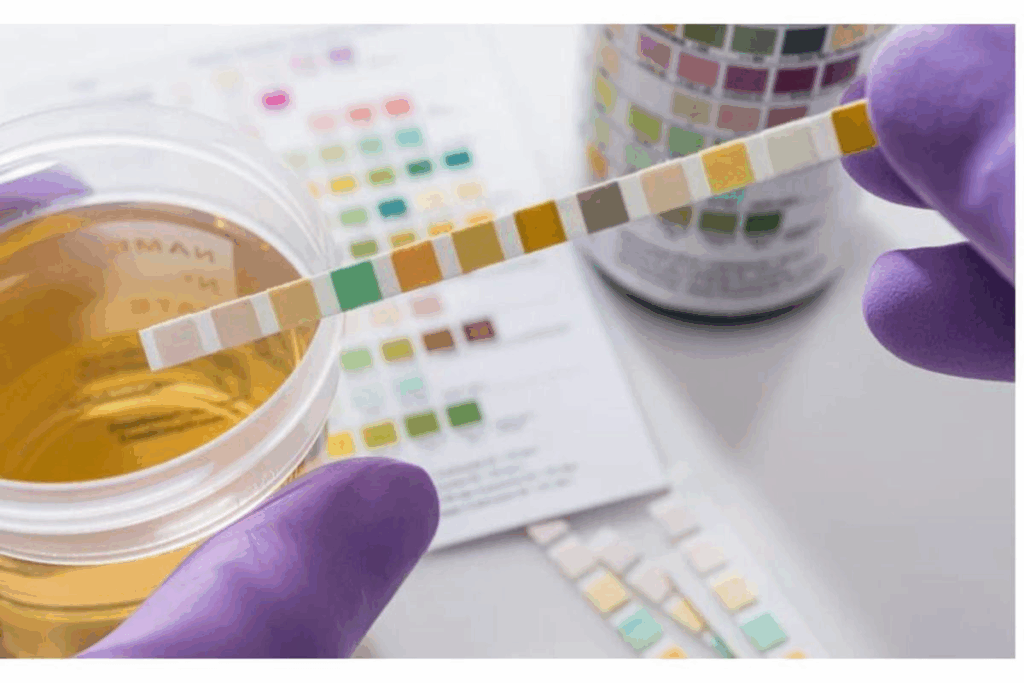
Urinalysis is the main way to spot crystals in your urine. It’s a test that looks at your urine for oddities, like crystals. To do this, we take a urine sample and send it to a lab. The urinalysis is simple yet effective for finding crystals.
Microscopic Examination
The microscopic examination is a big part of urinalysis. It lets us see the urine under a microscope to find crystals and other stuff. This close look helps doctors figure out what kind of crystals you have and how many. It’s vital for finding out why you have crystals.
Additional Diagnostic Tests
Sometimes, we need more tests to get to the bottom of why you have crystals. These might include imaging like ultrasound or CT scans to look for kidney stones. Blood tests can also check for metabolic issues or other reasons for crystals.
By looking at urinalysis results and other tests, doctors can really understand what’s going on. Then, they can make a treatment plan that works for you.
Normal vs. Abnormal Crystal Levels in Urinalysis
Crystals in urine can be normal, but some types or amounts might mean there’s a problem. When we look at urine under a microscope, we see different crystals. Some are harmless, while others could mean you need to see a doctor.
What’s Considered Normal
A few small crystals in urine are usually okay, as long as you don’t have other symptoms. Diet, how much you drink, and other things can affect crystal formation. For example, eating foods like spinach or beets can cause calcium oxalate crystals. But, having these crystals doesn’t always mean you need treatment.
Crystal Type | Common Causes | Clinical Significance |
Calcium Oxalate | Diet high in oxalate, dehydration | Generally harmless, but may indicate risk for kidney stones |
Uric Acid | Diet high in purines, dehydration, gout | May indicate risk for kidney stones or gout |
Struvite | Urinary tract infections (UTIs) | Often associated with UTIs, may require medical attention |
When Crystal Presence Indicates a Problem
While some crystals are normal, large amounts or certain types of crystals can mean there’s a health issue. For instance, cystine crystals might suggest cystinuria, a genetic kidney problem. Also, a lot of uric acid crystals could mean you have gout or are at risk for kidney stones.
It’s important to know the difference between normal and abnormal crystals in urine. If you’re worried about crystals, talk to a doctor. They can help figure out what’s going on with your health.
When to Seek Medical Attention for Urinary Crystals
Knowing when to get medical help for urinary crystals is key to avoiding serious problems. Some crystals might not be a big deal, but certain signs can mean a bigger issue.
Warning Signs and Symptoms
If you have severe pain in your back, side, or lower abdomen, vomiting, fever, or chills, get medical help. These could mean a kidney stone or a urinary tract infection.
Blood in your urine or difficulty urinating are also warning signs. Crystals in urine can sometimes point to metabolic disorders or other health problems that need quick attention.
Emergency Situations
Some situations need immediate medical care. If you have any of these, go to the emergency room right away:
- Severe pain that doesn’t subside
- Vomiting blood or having persistent vomiting
- High fever or chills
- Inability to urinate
- Blood in your urine
These symptoms can mean a serious problem like a kidney stone blockage or a severe infection. Quick medical help can ease your symptoms, prevent worse problems, and find any hidden issues.
Understanding crystal urine meaning and knowing when to see a doctor is important for your health. If you’re not sure about your urine crystals or have concerning symptoms, talk to a healthcare expert for advice.
Treatment Approaches for Managing Crystalluria
Treating crystalluria involves several steps. These include changing your diet, taking medicine, and fixing any health problems. The right treatment depends on why you have crystalluria and what kind of crystals are in your urine.
Dietary Modifications
Changing what you eat is very important. Drinking lots of water helps. It makes your urine less concentrated and lowers mineral levels that can cause crystals. Try to drink 8-10 glasses of water every day.
Also, cutting down on sodium can help stop crystals from forming. Eating a diet that’s low in animal protein and oxalate is good too, if you have calcium oxalate stones.
- Increase fluid intake to at least 8-10 glasses of water per day
- Reduce sodium intake to minimize mineral concentration in urine
- Eat a balanced diet low in animal protein and oxalate (if applicable)
Medication Options
Sometimes, you might need medicine to manage crystalluria. Thiazide diuretics can lower calcium in your urine. Potassium citrate makes your urine less acidic, which helps prevent some kidney stones. We might also give you medicine for conditions like gout or urinary tract infections that can cause crystalluria.
- Thiazide diuretics to reduce urinary calcium
- Potassium citrate to prevent certain kidney stones
- Medications to control underlying conditions like gout or UTIs
Addressing Underlying Medical Conditions
It’s important to find and treat any health problems that might be causing crystalluria. Issues like hyperparathyroidism, gout, or urinary tract infections can make crystals more likely. Fixing these problems can help solve the crystalluria issue.
Treatment Based on Crystal Type
The type of crystal in your urine affects how you should be treated. For example, calcium oxalate crystals need a different plan than uric acid crystals. Knowing what kind of crystal you have is key to finding the right treatment.
By making treatment plans that fit your specific needs and the cause of your crystalluria, we can manage it well. This helps lower the chance of serious problems like kidney stones.
Prevention Strategies for Reducing Crystal Formation
To prevent crystalluria, we need to drink enough water and eat wisely. Knowing what causes crystals helps us avoid them. This way, we can lower the chance of getting crystalluria and its problems.
Hydration Guidelines
Drinking enough water is key to stop crystals from forming. Water dilutes urine, making it less likely for crystals to form. We suggest drinking 8-10 glasses of water daily. But, how much you need can change based on your climate, activity level, and health.
Dietary Recommendations
What we eat affects our risk of getting crystals. Eating less food high in oxalate, like spinach and beets, can lower the risk of calcium oxalate stones. Also, eating less sodium and animal protein helps prevent crystals.
- Eat more fruits and veggies low in oxalate.
- Choose lean proteins and eat less animal protein.
- Avoid foods high in salt and sugar.
Lifestyle Adjustments
Changing our lifestyle can also help prevent crystals. Regular exercise improves urinary health. Staying at a healthy weight and managing stress also helps.
By following these tips, we can greatly lower our risk of getting crystals in urine and other urinary problems.
Conclusion: Maintaining Urinary Health and Managing Concerns
Understanding crystals in urine is key to keeping your urinary system healthy. By managing these crystals and treating the root cause, you can lower your risk of kidney stones. This is important for your overall health.
The meaning of crystals in urine depends on their type and cause. To manage them, you can try changing your diet, drinking more water, and taking medication if needed. These steps can help reduce the risks of crystalluria.
Keeping your urinary system healthy means being proactive. Regular health check-ups and knowing the signs of trouble are essential. By staying informed and managing crystalluria, you can protect your urinary health and well-being.
FAQ
What are crystals in urine?
Crystals in urine, also known as crystalluria, are solid particles found in urine. They can be seen through urinalysis testing. These particles are made of minerals and salts.
What does it mean to have crystals in my urine?
Crystals in urine can be harmless but might show a health issue. This could be kidney stones or a metabolic disorder. The seriousness depends on the type of crystal and other factors.
What are the common types of crystals found in urinalysis?
Common crystals include calcium-based, uric acid, struvite, and cystine crystals. Each type has its own meaning and significance.
What causes crystals to form in urine?
Crystals form due to diet, dehydration, some medications, and metabolic conditions. Knowing why they form helps in managing and preventing them.
Can crystals in urine develop into kidney stones?
Yes, crystals can turn into kidney stones if they grow. The risk depends on the crystal type and your health.
How is crystalluria diagnosed?
Urinalysis tests for crystals in urine. A microscope checks for them. More tests might be needed to find the cause.
What are the symptoms of crystals in urine?
Some people with crystals don’t show symptoms. Others might feel pain, have painful urination, or notice urine color changes. Severe symptoms could mean kidney stones or other issues.
When should I seek medical attention for urinary crystals?
See a doctor for severe pain, trouble urinating, or infection signs. It’s also key to follow up with your doctor to find the cause and get treatment.
How can I prevent crystal formation in urine?
Prevent crystals by drinking enough water, eating well, and making lifestyle changes. Your doctor can give you advice to lower your risk.
What are the treatment options for managing crystalluria?
Treatment varies based on the cause and crystal type. It might include diet changes, medications, or treating underlying conditions. Your doctor will help create a treatment plan.
Are there any specific dietary recommendations for preventing crystal formation?
Yes, drink more water, avoid certain foods, and eat a balanced diet. A doctor or dietitian can give you specific advice.
Can certain medications cause crystals to form in urine?
Yes, some medicines can lead to crystals in urine. Talk to your doctor if you’re taking medications and worried about crystals.
How can I manage my risk of developing kidney stones if I have crystals in my urine?
Understand your risk, drink plenty of water, and follow your doctor’s plan. Regular check-ups help monitor your condition and prevent problems.
References
National Center for Biotechnology Information. (2025). What Do Crystals in Urine Mean and Should. Retrieved from https://www.ncbi.nlm.nih.gov/books/NBK606103/