Last Updated on November 26, 2025 by Bilal Hasdemir
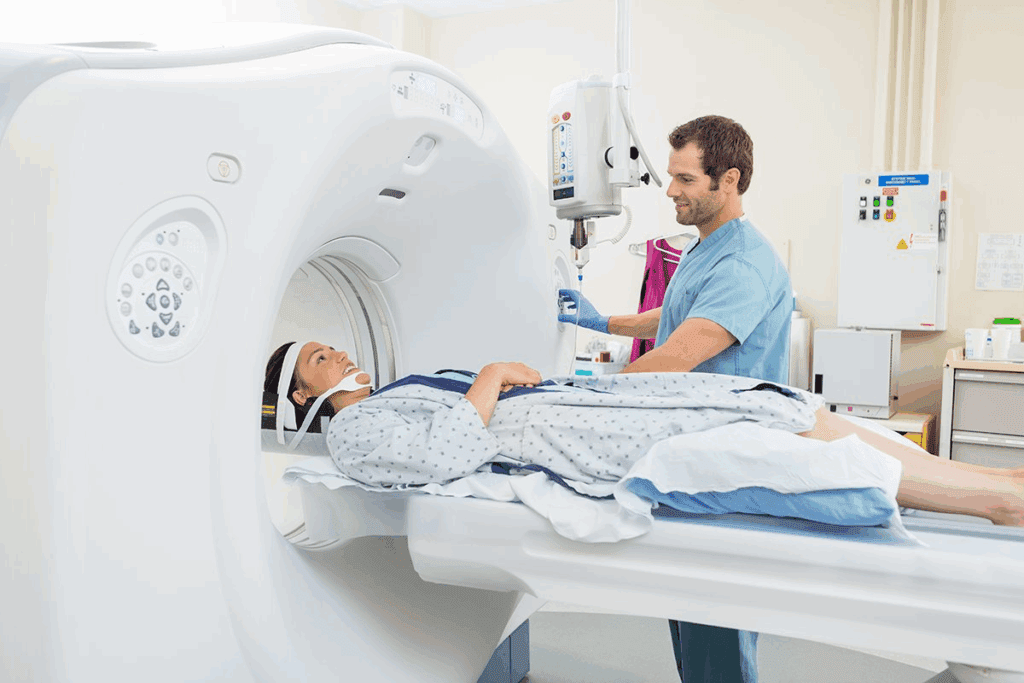
Getting ready for a CT-guided lung biopsy might seem scary. But knowing what it is and why it’s important can really help.
A CT needle biopsy of the lung is a small, non-invasive test. It has changed how doctors diagnose lung problems a lot. This technique was first introduced in 1976 by Haaga and Alfidi.
This test is very accurate, over 90 percent. CT lung biopsy is now the main way to check lung issues. It’s a trusted method for finding out what’s wrong in the lungs.
Key Takeaways
- Understand the step-by-step process of a CT-guided lung biopsy.
- Learn about the importance of accurate diagnosis in lung health.
- Discover the measures taken to ensure patient safety during the procedure.
- Find out how CT-guided lung biopsy has become the standard of care.
- Explore the benefits of a minimally invasive diagnostic procedure.
Understanding CT Scan Guided Lung Biopsy
The CT scan-guided lung biopsy is very accurate. It targets small or deep lung nodules with precision. This makes it a key tool for doctors.
CT scan-guided lung biopsy uses CT imaging to guide a needle into lung lesions. It’s great for diagnosing hard-to-reach or sensitive areas.
What is a CT Guided Lung Biopsy?
A CT-guided lung biopsy is a minimally invasive procedure. A doctor uses CT imaging to guide a biopsy needle into a lung lesion. This method is precise, reducing risks.
How CT Imaging Enhances Biopsy Accuracy
CT imaging greatly improves lung biopsy accuracy. It provides real-time images, helping doctors locate lesions and guide the needle. This leads to more successful biopsies.
The use of CT imaging in lung biopsies has boosted diagnostic accuracy. It lets doctors see the lesion and surrounding areas. This makes sampling more precise and safer.
Types of Lung Lesions Requiring Biopsy
Many lung lesions need a biopsy, like indeterminate nodules or masses. These can be benign or cancerous. CT guided lung biopsy is key for precise sampling and safety.
Lung lesions that are deep or small are hard to diagnose without CT scan guided lung biopsy. This procedure is vital in pulmonary medicine. It helps doctors get accurate diagnoses and plan treatments.
Why Doctors Recommend CT Needle Biopsy
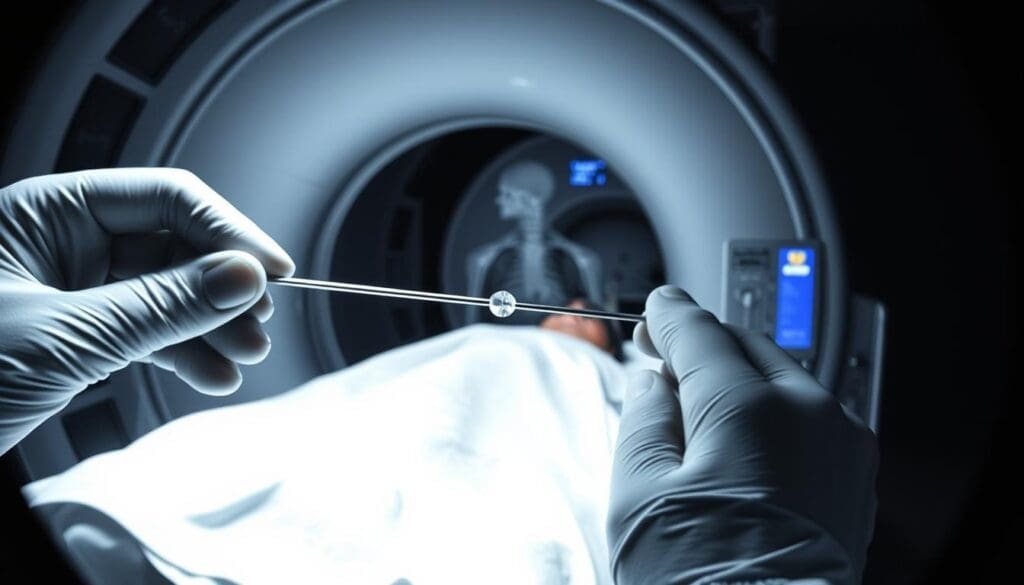
Healthcare providers often choose CT needle biopsy for its accuracy in diagnosing lung conditions. It’s a key tool in pulmonary diagnostics because it’s precise and minimally invasive.
Diagnostic Benefits Over Other Procedures
The CT guided lung biopsy has many advantages over other methods. It uses real-time imaging to target lung nodules accurately. This is true even for small or hard-to-reach nodules.
CT needle biopsy can get tissue samples from areas other methods can’t. This is very helpful for patients with unclear lung lesions or those who might have lung cancer.
Accuracy Rates Exceeding 90 Percent
Studies show that CT guided lung biopsy is over 90 percent accurate. This high accuracy is key for making effective treatment plans. It helps doctors know the exact lung problem and its stage.
The CT needle biopsy is so accurate because of the advanced imaging technology. It shows detailed, real-time images of lung nodules. This allows for precise needle placement, lowering the chance of errors.
Ideal Candidates for the Procedure
Ideal candidates for CT needle biopsy are those with unclear lung lesions or suspected lung cancer. It’s great for patients who need a clear diagnosis to decide on treatment.
Also, patients with small or deep lung nodules that can’t be safely biopsied other ways might get CT guided percutaneous lung biopsy. This method is safe and accurate, even in tough cases.
Medical Preparations Before Your Procedure
To make sure a CT guided lung biopsy is safe and effective, you need to prepare well. This includes doing tests before the procedure. These tests help find any risks and take steps to avoid them.
Required Pre-Procedural Testing
Before the biopsy, you’ll need to do some tests. These tests check if you’re healthy enough for the procedure. You might need to do:
- Coagulation checks: To see if your blood can clot well and avoid bleeding.
- Blood work: This includes tests like platelet count and INR, done a month before.
- Imaging tests: To get clear pictures of the lung lesion and the area around it.
A study in the Journal of Thoracic Imaging says, “coagulation problems can make bleeding more likely”
“Fixing coagulation issues before the procedure can help avoid bleeding problems.”
| Test | Purpose | Timing |
| Platelet Count | Check if you might bleed a lot | Within 1 month |
| Prothrombin Time/INR | Check how well your blood clots | Within 1 month |
| Activated Partial Thromboplastin Time | See how long it takes for your blood to clot | Within 1 month |
Medication Adjustments and Restrictions
Some medicines might need to be changed or stopped before the procedure. This is to lower the risk of bleeding or other problems. Tell your doctor about all the medicines you’re taking, like:
- Anticoagulants (blood thinners)
- Antiplatelet agents
- Nonsteroidal anti-inflammatory drugs (NSAIDs)
Changing your medicines should always be done with your doctor’s help to stay safe.
Coagulation Checks and Blood Work
Coagulation tests and blood work are key before the procedure. They help find out if you might bleed a lot. This lets doctors take the right steps to keep you safe.
By getting ready well, you can lower the risks of CT guided lung biopsy. This helps make sure the procedure goes well.
Day-Before Preparations for Your CT Lung Biopsy
Getting ready for your CT lung biopsy is key. Knowing what to do the day before helps make the process smoother. These steps are to keep you safe and ensure the biopsy goes well.
Dietary Restrictions and Fasting Requirements
First, you’ll need to follow dietary rules. You’ll be asked to fast for six to eight hours before the biopsy. This means no eating or drinking, except for small amounts of water if your doctor says it’s okay. Fasting helps lower the risk of problems during the biopsy.
Avoid eating heavy meals the day before. Instead, choose light, easy-to-digest meals. For more tips, check out https://myhealth.alberta.ca/Health/aftercareinformation/pages/conditions.aspx?hwid=ud2219 for advice on what to eat before your procedure.
What to Wear and Bring to Your Appointment
Wear comfortable, loose-fitting clothes on biopsy day. You might need to change into a hospital gown, so pick clothes that are easy to take off.
Don’t forget to bring important documents like your insurance cards and ID. Also, bring a list of your medications and any questions for your doctor.
- Comfortable clothing
- Insurance cards and identification
- Relevant medical records
- List of medications
Mental Preparation and Anxiety Management
Mental prep is as important as physical prep. To handle anxiety, try relaxation techniques like deep breathing, meditation, or yoga. These can help you relax and feel less stressed.
Having a support person with you can also help. They can offer emotional support and help you through the process. If you’re feeling anxious, talk to your doctor. They can give you advice and reassurance to make you feel better.
Step-by-Step Biopsy with CT Scan Procedure
To find out what’s causing lung lesions, doctors might suggest a CT scan guided biopsy. This method involves several important steps. It aims to get a precise diagnosis and keep the patient as comfortable as possible.
Initial Positioning and CT Scanning
The first step is to get the patient set up on the CT scanner table. They are placed in a way that makes it easy to reach the lung lesion. CT scanning then helps pinpoint the lesion’s exact location. This makes planning the biopsy easier.
Local Anesthesia Administration
To reduce pain during the biopsy, local anesthesia is given. It numbs the area where the needle will go. This keeps the patient comfortable during the whole procedure.
Needle Insertion and Sample Collection Technique
With the CT scan guiding them, a biopsy needle is carefully put into the lung lesion. The CT scan shows real-time images, helping the doctor adjust the needle’s position. After the needle is in the right spot, a sample of the lesion is taken for further study.
- The needle is inserted under CT guidance to ensure accuracy.
- Real-time imaging helps in adjusting the needle’s position.
- A sample is collected for pathological examination.
Breath-Holding and Controlled Breathing Techniques
During the biopsy, patients might need to hold their breath or use controlled breathing techniques. This helps keep the biopsy sample accurate. It’s key for a correct diagnosis.
- The patient is instructed on when to hold their breath.
- Controlled breathing helps in reducing movement.
- This technique ensures the accuracy of the biopsy sample.
CT Scan Guided Biopsy Technology and Equipment
The CT scan guided biopsy uses advanced tech and special tools for accuracy and safety. This mix of tech and medical skills boosts the procedure’s ability to diagnose.
Advanced CT Imaging Systems
At the heart of CT scan guided biopsy is the advanced CT imaging. These systems give high-resolution images for precise needle placement. CT fluoroscopy lets doctors see the needle’s position in real-time. This cuts down the time and risks of the procedure.
Specialized Biopsy Needles and Instruments
The biopsy’s accuracy and safety get a boost from specialized needles and tools. These are made to move through the lung’s complex paths carefully. The right needle is picked based on the lesion’s size and the patient’s health.
Computer-Assisted Navigation Technology
Computer-assisted navigation is becoming key in CT scan guided biopsy. It uses algorithms to guide the needle to the right spot, based on CT images. This makes the procedure more precise and safer.
The use of these advanced tools in CT scan guided biopsy marks a big step forward in medical diagnosis. It offers patients a safer and more precise way to get diagnosed.
Post-Biopsy Monitoring and Immediate Care
Right after a CT needle biopsy, it’s key to watch over patients closely. They go to the recovery room for this. It’s to keep them safe and handle any side effects.
Recovery Room Observation Period
In the recovery room, doctors keep a close eye on patients. They look for any problems right away. This is important for catching and fixing issues quickly.
Post-Procedural Imaging to Check for Complications
Post-procedural imaging is a big part of care after a biopsy. It uses tests to see if there are problems like air in the lungs or bleeding. This helps find any issues that need quick help.
Vital Signs Monitoring Protocol
Watching vital signs is a big part of care after a biopsy. Doctors check blood pressure, heart rate, and oxygen levels often. This makes sure patients are getting better as they should.
| Vital Sign | Normal Range | Monitoring Frequency |
| Blood Pressure | 90/60 mmHg – 120/80 mmHg | Every 15 minutes |
| Heart Rate | 60-100 bpm | Every 15 minutes |
| Oxygen Saturation | 95-100% | Continuous |
By watching these signs and doing imaging tests, doctors can spot and fix problems fast. This helps patients get the best results.
Recovery at Home After a Cat Scan Guided Lung Biopsy
Recovering at home after a CT-guided lung biopsy is key. It’s important to know how to manage it. After leaving the hospital, following certain guidelines is vital for a safe recovery.
Activity Restrictions and Limitations
Patients should avoid hard work for a while after the procedure. This means no heavy lifting, bending, or intense exercise. Rest for at least 24 to 48 hours after, or as your doctor says.
Start doing normal things slowly. Listen to your body and don’t overdo it. Your doctor will tell you what’s best for you.
Pain Management and Comfort Measures
Managing pain is a big part of recovery. Doctors usually give pain meds to help with any discomfort. Make sure to take the right amount of medicine.
There are other ways to feel better too. A cold pack on the area can help with pain and swelling. Also, rest well and wear loose clothes for comfort.
When to Contact Your Healthcare Provider
It’s important to know when to call your doctor. If you have bad pain, trouble breathing, or signs of infection, get help right away.
Don’t forget to keep your follow-up appointments. Any worries or questions should be talked about with your doctor.
By following these tips, you can recover at home safely. This helps avoid problems and ensures a good outcome.
Potential Complications and Risk Management
CT-guided lung biopsy is generally safe but comes with risks. Knowing these risks is key to keeping patients safe. The risks associated with CT-guided lung biopsy are significant, and being aware of them can help in managing and mitigating these risks.
Understanding Pneumothorax Risk
Pneumothorax, or lung collapse, is a risk of CT-guided lung biopsy. The risk depends on the lesion’s location and size, and the patient’s lung health.
To lower pneumothorax risk, the biopsy route is carefully planned. The shortest and safest path is chosen. Monitoring closely during and after the procedure is key to catch and manage any pneumothorax.
Bleeding and Hemorrhage Concerns
Bleeding is a possible complication of CT-guided lung biopsy. While usually minor, it can be severe in some cases. Patients with bleeding disorders or on anticoagulants are at higher risk and need careful management.
To reduce bleeding risks, coagulation checks are done before the procedure. Medications that increase bleeding risk are adjusted or stopped. Fine needles and precise technique are used during the biopsy to minimize lung tissue trauma.
Infection Prevention and Monitoring
Infection after CT-guided lung biopsy is rare but can happen. In some cases, prophylactic antibiotics are given to lower this risk, mainly for those at higher risk of infection.
It’s important to watch for signs of infection, like fever or cough, after the biopsy. Patients should seek medical help if they notice any concerning symptoms.
Rare Complications to Be Aware Of
Less common complications include air embolism, tumor seeding, and reaction to local anesthetic. Knowing about these complications helps in quick recognition and management.
It’s good to know that serious complications are rare. Most patients have a CT-guided lung biopsy without major issues. But understanding and managing risks is essential for the best outcomes.
Conclusion: Navigating Your CT Needle Biopsy Journey
Understanding a CT needle biopsy is key. It involves knowing the procedure, getting ready, and following after-care steps. Being informed helps patients feel less anxious and ensures a smoother experience.
Proper preparation and care can help patients avoid risks and get good results. Knowing what to expect during the biopsy is important for a positive outcome.
By following the advice in this article, patients can feel confident throughout their CT needle biopsy journey. From start to finish, they can ensure the best results for their health.
FAQ
What is a CT-guided lung biopsy?
A CT-guided lung biopsy is a procedure. It uses CT imaging to guide a needle into the lung for a sample. This helps doctors accurately diagnose lung lesions.
Why is CT-guided lung biopsy recommended?
It’s recommended because it’s very accurate, over 90 percent. It’s also not very invasive. This makes it a reliable way to diagnose lung lesions.
What are the benefits of CT-guided lung biopsy over other diagnostic methods?
Its benefits include high accuracy and the ability to target small or deep lung nodules. It’s also less invasive. This reduces the risk of complications.
What preparations are required before a CT-guided lung biopsy?
Before the procedure, you’ll need to have some tests. These include coagulation checks and blood work. You might also need to adjust your medication and follow dietary restrictions. It’s also important to mentally prepare for the procedure to manage any anxiety.
What is the procedure for a CT-guided lung biopsy?
The procedure starts with positioning and a CT scan. Then, local anesthesia is given, and the needle is inserted. You’ll need to hold your breath or use controlled breathing during this part.
What technology and equipment are used in CT-guided lung biopsy?
Advanced CT imaging systems and specialized needles are used. Computer-assisted navigation technology also helps. These tools improve the procedure’s accuracy and safety.
What are the possible complications of CT-guided lung biopsy?
Possible complications include pneumothorax, bleeding, and infection. Rare complications can also happen. But, with proper care and monitoring, these risks can be managed.
What is the recovery process like after a CT-guided lung biopsy?
After the procedure, you’ll need to be monitored closely. You’ll have to follow activity restrictions and manage any pain. Follow-up care is also important to ensure a smooth recovery.
How is pneumothorax risk managed during CT-guided lung biopsy?
Pneumothorax risk is managed by careful planning and precise needle placement. Post-procedure imaging is also done to check for any complications.
What are the signs of complications after a CT-guided lung biopsy?
Signs of complications include severe chest pain and difficulty breathing. Fever and chills are also signs of infection. If you experience any of these, you should seek immediate medical attention.
When should I contact my healthcare provider after a CT-guided lung biopsy?
If you have any concerning symptoms, like severe pain or difficulty breathing, contact your healthcare provider. Also, reach out if you have any questions or concerns about your recovery.
Reference
- Balbi, M. (2025). CT-guided transthoracic needle biopsy: How we do it. ScienceDirect, https://www.sciencedirect.com/science/article/pii/S0720048X25000804