
When you’re getting ready for a CT scan, knowing about ct scan and metal is key. At LivHospital, we focus on keeping you safe and getting clear images by ensuring all metal objects like jewelry are removed before the scan.
Wearing jewelry or metal can mess up your CT scan. It might cause streaks or blur important details. Our rules say you must take off all metal before your scan for the best images.
At Liv Hospital, we help you get ready for your CT scan. Taking off jewelry and metal is a big part of this. It helps make sure your scan is accurate and reliable.
Key Takeaways
- Remove all jewelry and metal objects before a CT scan.
- Metal can cause artifacts or distortions in CT scan images.
- High-quality imaging is key for accurate diagnosis.
- Liv Hospital follows strict guidelines to ensure patient safety.
- Proper preparation is key to a successful CT scan.
The Critical Role of CT Scans in Modern Diagnostics
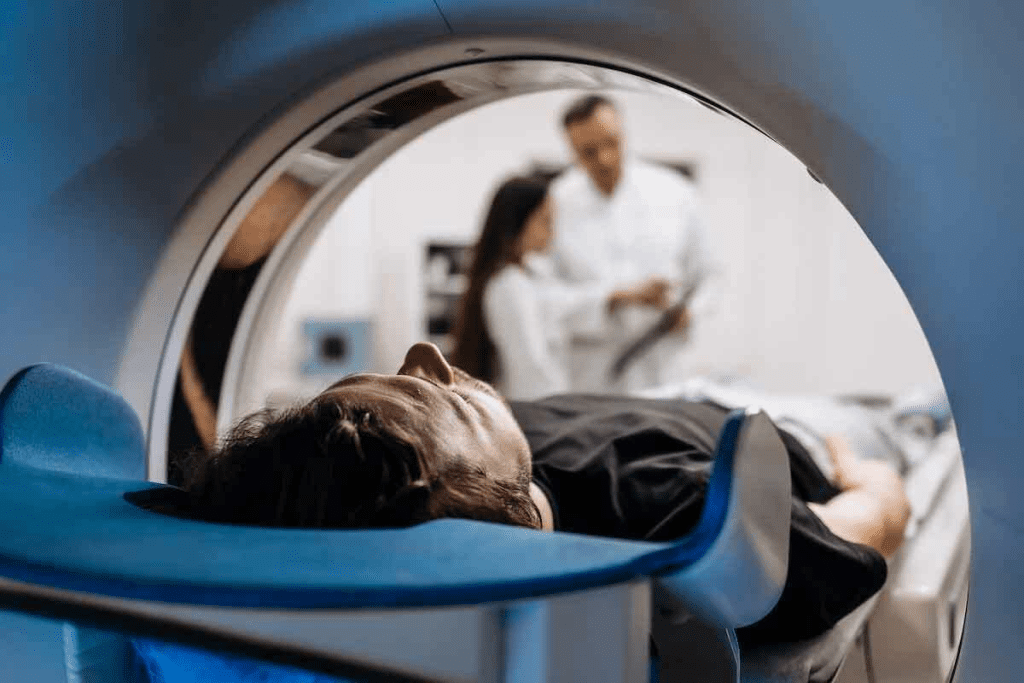
Computed Tomography (CT) scans are key in today’s medical world. They help doctors see inside the body clearly. We follow the latest radiology advice to keep images top-notch and safe for patients.
How Computed Tomography Technology Works
CT scans use X-rays to take pictures of the body’s inside parts. This method is noninvasive. It takes X-rays from various angles and turns them into detailed images.
The technology has improved a lot. Now, it gives high-resolution images that doctors need for accurate diagnoses.
The CT scanner is a big, doughnut-shaped machine. The patient lies on a table that moves into the scanner. The machine spins around the body, taking pictures from many sides. Then, a computer puts these images together to show detailed cross-sections.
Diagnostic Applications and Benefits
CT scans help find many health issues, like injuries, cancers, and blood vessel problems. They show important details about these problems. This info is key for making good treatment plans.
CT scans are great because they give quick and accurate diagnoses. They help with procedures and check if treatments are working. They’re very useful in emergencies when fast diagnosis is needed.
Why Image Quality Matters for Accurate Diagnosis
Good image quality is essential for correct diagnoses. Clear images help doctors spot small problems and make accurate diagnoses. Any image problems, like those from metal, can mess up the diagnosis.
We focus a lot on image quality. We make sure to remove metal objects that can mess with the scan. We also use the latest tech to reduce image problems and make them clearer.
CT Scan and Metal: Understanding the Problematic Interaction
The interaction between metal and X-rays in CT scans is a big concern. Almost 70-80% of radiology centers ask patients to remove all metal before a CT scan. This shows how important it is.
How X-rays Interact with Different Metals
X-rays in CT scans react differently with metals. Dense metals like titanium and stainless steel block more X-rays, causing image problems. The metal’s atomic number and thickness also play a role.
Metals like lead, gold, and silver absorb more X-rays. This makes parts of the CT images darker or streaked. It can make it hard for doctors to see what’s going on.
The Physics Behind Metal Artifacts in Images
Metal artifacts in CT images come from two main causes: beam hardening and scatter. Beam hardening makes the X-ray beam more penetrating, causing dark streaks. Scatter deflects X-rays, making images unclear and causing artifacts.
- Beam hardening: Results in dark streaks or bands due to the increased penetration of the X-ray beam.
- Scatter: Causes a loss of image clarity and the appearance of artifacts due to the deflection of X-rays.
Technical Explanation of Beam Hardening and Scatter
Beam hardening happens when lower energy X-rays are absorbed by metal. This leaves behind more penetrating X-rays. This can cause cupping artifacts or dark streaks between metal objects. Scatter is affected by the metal’s size, shape, and composition, as well as the X-ray beam’s energy.
Knowing about beam hardening and scatter is key to reducing metal artifacts in CT images. By understanding these, radiologists can make images clearer and more accurate.
Types of Jewelry and Metal Objects That Interfere with CT Imaging
It’s important to know what jewelry and metal objects can mess up CT scans. We tell patients to take off all jewelry and metal before the scan. This helps avoid image problems and gets better results.
Everyday Jewelry Items
Items like rings, necklaces, earrings, and bracelets must go. They can mess up CT images, hiding important details.
Even a simple wedding ring can cause problems. Necklaces can also mess up the image quality.
Piercings and Body Jewelry
Piercings and body jewelry are big no-nos for CT scans. This includes tongue studs, navel rings, and more. Not taking them off can ruin the image and lead to wrong diagnoses.
It’s not just what you see that’s a problem. Internal piercings can also mess with the scan.
Clothing with Metal Components
Clothing with metal parts like zippers, underwire bras, and metal buttons can also cause issues. Wear clothes without metal or change into a gown from the radiology department.
Underwire bras can mess up chest CT scans. They might look like or hide real problems.
Eyeglasses, Hairpins, and Other Accessories
Accessories like eyeglasses, hairpins, and certain hair ties can also cause problems. Patients usually have to take these off before the scan.
Talking to the radiology staff about metal items is key. This includes jewelry and other metal things you might not think of.
Knowing what can mess up CT scans helps patients get ready. It ensures they get the best possible results from their scans.
Diagnostic Consequences: How Metal Affects Image Quality and Interpretation
Metal in a CT scan can really mess up the results. It can cause artifacts that hide important details. This makes it hard to get a clear diagnosis.
Visual Artifacts and Their Appearance in Scans
Metal in CT scans shows up as streaks, shadows, or bright spots. These distortions happen because X-rays act differently with metal. This makes the scan quality poor, making it tough for doctors to read the images right.
- Streak artifacts: These are dark or light streaks from the metal.
- Beam hardening: The X-ray beam gets harder as it goes through metal, causing a cupping artifact.
- Scatter: Metal scatters X-rays, making the image unclear.
Obscured Anatomical Structures and Details
Metal artifacts can hide important parts of the body. For example, they can hide spine fractures or disc problems. In the belly, they can hide tumors or other issues.
To fix this, doctors use special imaging and algorithms. But the best thing is to remove metal before the scan.
Impact on Diagnostic Accuracy
In 70-80% of cases with metal in CT scans, the diagnosis is off. Metal artifacts can confuse images, delay diagnoses, or require more tests. This costs more and makes patients wait longer and worry more.
Real-World Examples of Compromised Diagnoses
Many times, metal in CT scans messes up diagnoses. For instance, a hip replacement can hide pelvic problems. Patients with metal implants also face image quality issues.
To avoid these problems, patients should follow what to wear to a CT scan. They should also tell their doctors about any metal objects or implants. This helps get clear images for better diagnoses and treatment.
Patient Safety Protocols in Modern Radiology Centers
Radiology centers around the world have set up strong safety rules for CT scans. They focus on removing metal objects and other steps. We know keeping patients safe is key, and our rules help get the best images while cutting down risks.
Current Statistics on Metal Removal Requirements
About 70-80% of radiology centers ask patients to take off all metal before a CT scan. This shows how important it is to remove metal for accurate scans and safety. TheCenters for Disease Control and Prevention says getting ready right is key for good CT scan results.
| Radiology Center Requirement | Percentage |
| Remove all metallic objects | 70-80% |
| Remove jewelry and piercings | 90% |
| Wear metal-free clothing | 85% |
Standard Operating Procedures Before CT Scans
Before a CT scan, patients must follow certain rules for safety and quality images. They need to take off all jewelry, piercings, and clothes with metal. We also suggest wearing easy, metal-free clothes for the process.
Recommended attire for a CT scan includes:
- Loose, comfortable clothing without metal fasteners
- No jewelry or piercings
- No glasses or other metal accessories
Documentation and Patient Screening Processes
Our radiology centers use detailed records and checks to find any metal risks. We ask lots of questions and conduct interviews to find out about any metal items or implants.
How Leading Institutions Handle Metal Objects
Top radiology places have special ways to deal with patients who have metal. Some use special tools to reduce metal effects. We keep our rules up to date with new research, making sure our patients get the best care.
By following strict safety rules, we make sure CT scans are safe and useful for our patients. Our focus on safety and quality shows our commitment to top-notch healthcare.
Distinguishing Between CT Scans and MRIs Regarding Metal Safety
It’s important to know the differences between CT scans and MRIs, mainly for those with metal implants. Both are used in medical imaging but work in different ways. This affects how safe they are for people with metal in their bodies.
Different Technologies, Different Concerns
CT scans use X-rays to see inside the body. Metal can make CT images unclear. MRIs, on the other hand, use magnetic fields and radio waves. Metal can be drawn to the MRI’s magnetic field, which can be dangerous.
Liv Hospital follows the latest in radiology to keep patients safe. Knowing how CT scans and MRIs work helps us choose the best test for patients with metal implants.
Comparative Risks Between Imaging Modalities
CT scans and MRIs have different metal-related risks. CT scans can have metal artifacts that make images unclear. MRIs are worried about metal being moved or heated by the magnetic field.
| Imaging Modality | Metal-Related Risks | Primary Concerns |
| CT Scan | Metal artifacts | Image distortion, obscured details |
| MRI | Ferromagnetic object displacement or heating | Patient safety, image quality |
When CT Is Preferred Over MRI for Patients with Metal
For patients with metal implants not safe for MRI, CT scans are often better. This is true for those with certain implants or devices that could be harmed by MRI’s magnetic field.
Understanding CT scans and MRIs helps doctors choose the safest and most accurate test for patients with metal. This ensures both safety and good results.
Preparing for Your CT Scan: Complete Guide
Getting ready for a CT scan is key to getting good images and staying safe. We know it can feel scary, but with the right steps, you’ll do great.
Recommended Clothing and Appearance Preparation
Wear comfy clothes without metal parts for your CT scan. Loose-fitting clothes help us get you in the right spot. Avoid clothes with zippers, underwire, or buttons to avoid problems.
Complete Checklist of Items to Remove
Take off all jewelry and metal things before your scan. Here’s what to remove:
- Jewelry (rings, necklaces, earrings, bracelets)
- Piercings and body jewelry
- Clothing with metal parts (zippers, underwire, buttons)
- Eyeglasses, hairpins, and other accessories
What to Do with Valuables During Your Scan
You’ll need to take off all metal things during your scan. Leave things you don’t need at home. If you bring them, our team will help you store them safely.
Communication with Radiology Staff About Metal Items
Tell our radiology team about any metal items or implants you have. This includes implants, prosthetics, dental work, or other metal objects. Open communication helps us prepare and make sure you’re comfortable.
By following these steps and talking with our staff, we’ll make sure your CT scan goes smoothly.
Special Considerations for Permanent or Non-Removable Metal
Non-removable metal in patients creates unique challenges for CT scans. CT scans are vital for diagnosis, but metal can cause image problems. We must balance patient safety and image quality carefully.
Surgical Implants and Prosthetics
Patients with implants or prosthetics need special care during CT scans. These metals can hide important details. We must tell the radiology team about these to adjust the scan.
Hip replacements, for example, can distort images. By tweaking the scan settings and using new techniques, we can get clear images.
Dental Work and Orthodontic Appliances
Dental work, like fillings and crowns, can also affect CT scans. Metal in teeth can create streaks in images. Removing dental work helps, but isn’t always possible.
When removal isn’t an option, we use special techniques to improve images. This includes angling the scanner or using algorithms to reduce artifacts.
Pacemakers and Internal Medical Devices
Patients with pacemakers or other devices need careful CT scans. These devices can cause image issues, even if they’re made for CT scans. It’s important to tell the radiology team about these devices.
Modern scanners and protocols help reduce these issues. Sometimes, we need to adjust settings or use special algorithms.
Advanced Imaging Techniques for Patients with Permanent Metal
Advanced imaging techniques help with permanent metal. These include sequences and dual-energy CT scanning to improve image quality.
| Technique | Description | Benefit |
| Metal Artifact Reduction Sequences | Specialized algorithms designed to minimize metal artifacts | Improved image quality around metal implants |
| Dual-Energy CT Scanning | Uses two different X-ray energy levels to scan the patient | Enhanced differentiation between metal and surrounding tissue |
| Iterative Reconstruction Techniques | Advanced image reconstruction methods that reduce noise and artifacts | Better visualization of anatomical structures near metal |
These advanced techniques improve CT scans for patients with permanent metal. They help ensure accurate diagnoses and care.
Conclusion: Ensuring Optimal Diagnostic Results and Patient Safety
Getting the best results from CT scans means we must think about metal objects. We always follow the latest in radiology to keep images clear and patients safe. It’s key to remove metal before scanning to avoid blurry images and get accurate diagnoses.
Knowing what to wear and what to take off is important before a CT scan. Patients should not wear clothes with metal parts, like zippers. They should also remove all jewelry, like rings and necklaces. By doing this and talking to the radiology team, patients help make the scan safe and smooth.
The way metal and CT scans interact can affect image quality. Patients can avoid problems by understanding the impact of jewelry or metal during a scan. We suggest following the guidelines from radiology centers to get the best results.
Together, we can achieve top-notch imaging and care for patients. Our dedication to advanced imaging and following best practices ensures accurate diagnoses and effective treatments. This teamwork is key to patient safety and success.
FAQ
Can you wear jewelry during a CT scan?
It’s best to remove jewelry and metal objects before a CT scan. This helps avoid image artifacts and ensures accurate results.
What happens if you wear metal in a CT scan?
Metal can cause streaks or shadows in CT scan images. This can make the images poor quality and lead to wrong diagnoses.
Can I wear jewelry in a CT scan?
No, it’s best to avoid wearing jewelry or metal items during a CT scan. They can interfere with the imaging process.
What types of metal objects should be removed before a CT scan?
Remove everyday jewelry, piercings, and clothing with metal. Also, take off eyeglasses, hairpins, and other accessories to avoid image artifacts.
How do I prepare for a CT scan?
Wear loose, comfortable clothes without metal. Remove all jewelry and metal objects. Tell the radiology staff about any metal implants or devices.
Can you wear metal in a CT scanner?
No, wearing metal in a CT scanner is not recommended. It can cause image artifacts and affect diagnostic accuracy.
What should I wear for a CT scan?
Wear loose, comfortable clothes without metal, like zippers or underwire. This ensures high-quality imaging.
Can I wear jewellery in a CT scan?
No, it’s best to remove all jewelry before a CT scan. This prevents image artifacts.
What to do with valuables during a CT scan?
Leave valuables at home or secure them in a safe place provided by the radiology center during the scan.
How does metal affect CT scan images?
Metal can cause streaks or shadows in CT scan images. This is because X-rays interact with metal, potentially affecting diagnostic accuracy.
Are there special considerations for patients with permanent metal?
Yes, patients with permanent metal, like surgical implants or dental work, need special care. Advanced imaging techniques may be used to reduce metal artifacts’ effects.
What’s the difference between CT scans and MRIs regarding metal safety?
CT scans use X-rays and are affected by metal artifacts. MRIs use magnetic fields and can be impacted by ferromagnetic materials. Each requires different considerations for metal safety.
References
- Selles, M., van der Ven, S., Heye, T., Zhang, Y., & Gijsen, F. (2024). Advances in metal artifact reduction in CT images: A review. European Journal of Radiology.https://www.ejradiology.com/article/S0720-048X(23)00590-9/fulltext



 Departments
 Related Videos
 Our Doctors
 News
News