Last Updated on November 25, 2025 by
Diagnosing bladder cancer needs accurate and reliable imaging. Ultrasound is often the first choice because it’s non-invasive and easy to find. However, CT scan cancer detection plays a crucial role by providing detailed images that help confirm the diagnosis, assess tumor size, and guide treatment planning.
But, it can’t find small or shallow tumors well. We’ll look at how ultrasound stacks up against CT scans and MRI in spotting and grading bladder tumors.
Getting the right diagnosis is key for good treatment plans. We’ll talk about what each imaging method does well and what it can’t do. This will help us understand their roles in finding bladder cancer.
Key Takeaways
- Ultrasound is commonly used for initial bladder cancer assessment.
- Its effectiveness is limited for small or superficial tumors.
- CT scans and MRI offer alternative diagnostic approaches.
- Accurate diagnosis is critical for treatment planning.
- Different imaging techniques have varying strengths and limitations.
The Role of Ultrasound in Bladder Cancer Detection
Ultrasound has greatly improved bladder cancer detection. It’s a non-invasive method that helps doctors see the bladder and find tumors early. This makes it a safe and effective tool for initial checks.
How Bladder Sonography Works
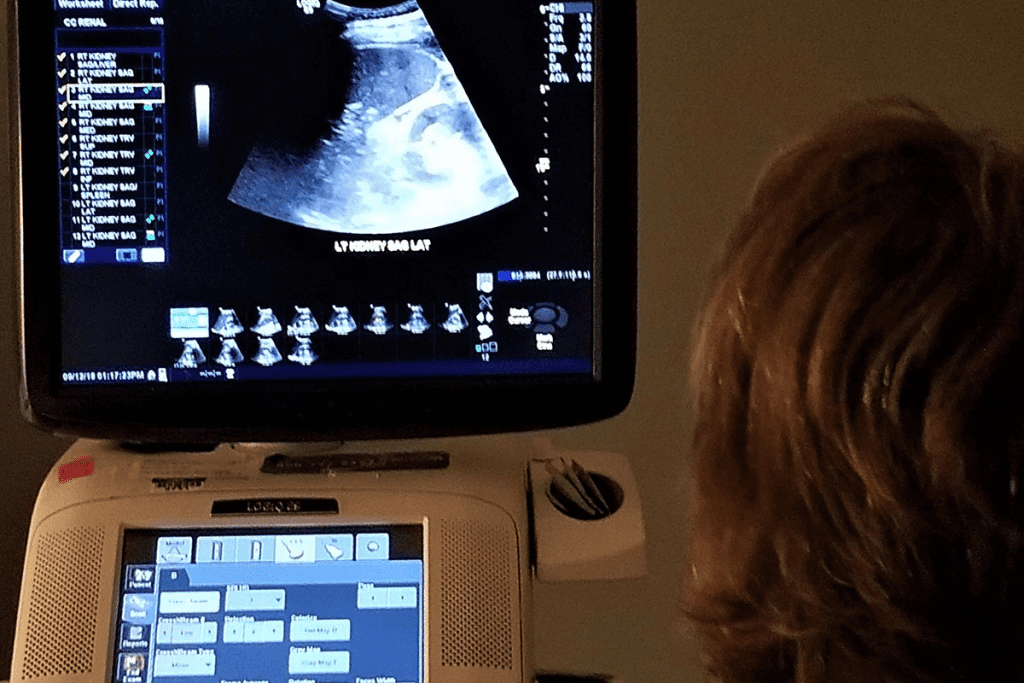
Ultrasound uses sound waves to create detailed images of the bladder. A technician applies gel and uses a transducer to send sound waves. These waves bounce back, showing images of the bladder and any tumors.
Doctors say ultrasound is key because it’s safe and doesn’t use radiation. It’s great for first checks, helping avoid radiation and making it easier for patients.
Advantages of Ultrasound as a First-line Assessment
Ultrasound is quick and shows images in real-time. This helps doctors make fast decisions about what to do next. It’s also a cost-effective option compared to other scans.
- Non-invasive and painless procedure
- No radiation exposure
- Quick and real-time imaging
- Cost-effective compared to other imaging modalities like MRI or CT scans
Ultrasound has its limits, like missing small tumors. But it’s a vital first step. By using ultrasound with other tests, doctors can find cancer more accurately and plan better treatments.
Effectiveness of Ultrasound Technology for Bladder Cancer
Detecting bladder cancer is key, and ultrasound is a big help. We look at how well ultrasound works in finding bladder cancer. We focus on its success rates and how it’s getting better at spotting cancer.
Standard Ultrasound Detection Rates
Ultrasound is often the first tool used to check for bladder cancer. It’s easy to use and doesn’t cost much. But, how well it finds cancer can vary. It depends on the tumor’s size, where it is, and the person using the ultrasound.
But, there’s a way to make ultrasound better. Contrast-Enhanced Ultrasound (CEUS) uses special agents to see blood flow better. This has really helped in spotting bladder cancer.
Contrast-Enhanced Ultrasound (CEUS) Advancements
CEUS uses contrast agents to see blood flow and tissue better. It’s very good at figuring out how deep the cancer is. This helps doctors decide the best treatment.
Using CEUS has made a big difference in finding bladder cancer. It helps doctors make better choices for patients. This shows how important new tech in medical imaging is.
Does CT Scan Diagnose Cancer More Effectively Than Ultrasound?
When it comes to finding bladder cancer, knowing which imaging method works best is key. We’ll look at how CT scans and ultrasound compare in spotting bladder cancer.
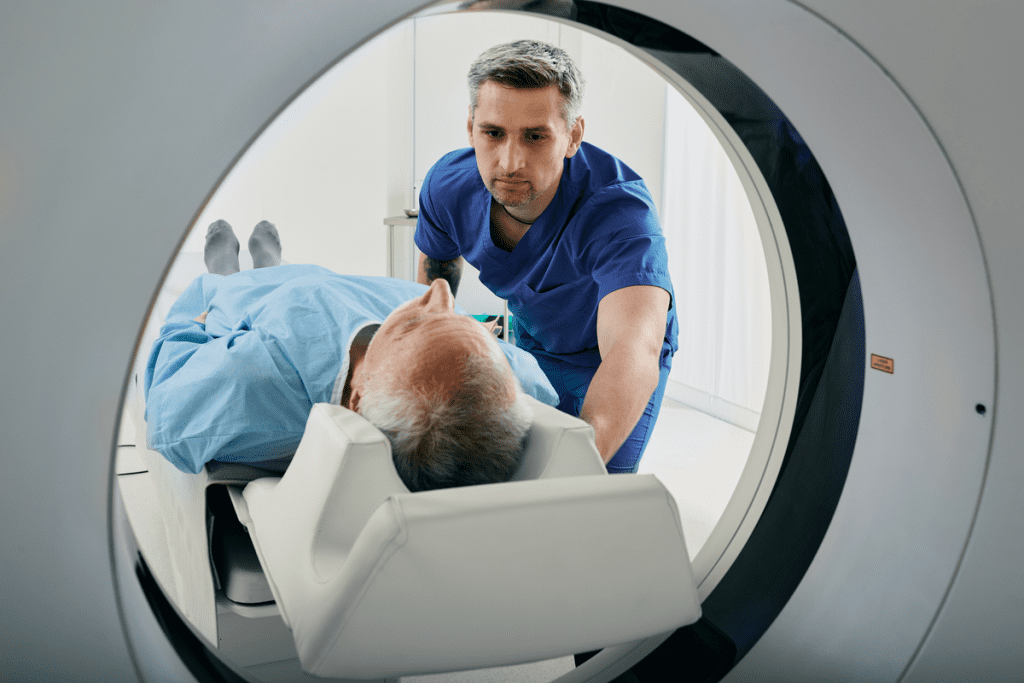
CT Scan Technology for Bladder Cancer Visualization
CT scans use X-rays to show detailed pictures of the body. They help see tumors and their details. CT scans give a full view that helps in knowing the cancer’s stage.
A big step in CT scans for bladder cancer is the CT urogram. This special CT scan looks closely at the urinary system. It shows clear pictures of the bladder and ureters.
CT Urogram Procedure and Patient Experience
The CT urogram uses a contrast dye to light up the urinary system. Patients might feel a cold sensation when the dye is given. But, most people find the procedure okay. The detailed images from a CT urogram help a lot in finding bladder cancer and planning treatment.
CT Versus Ultrasound: Comparative Strengths
Ultrasound is good for a first check because it’s safe and doesn’t use radiation. But, CT scans give more detailed info about the tumor and its area. CT scans are best for seeing how far the disease has spread and if it has gone to other places. Yet, they use radiation and might not be right for everyone.
In short, both CT scans and ultrasound are useful for finding bladder cancer. The right choice depends on the patient’s situation, the cancer’s stage, and what’s needed for a diagnosis.
Alternative Diagnostic Methods for Bladder Cancer
There are many ways to find and treat bladder cancer. Ultrasound and CT scans are common, but other methods can give more insight. They help doctors get a clearer picture of what’s going on.
Cystoscopy: The Gold Standard
Cystoscopy is the top choice for finding bladder cancer. It uses a thin, flexible tube with a camera to look inside the bladder. This method can spot bladder cancer with up to 97% accuracy.
Key benefits of cystoscopy include:
- Direct visualization of bladder tumors
- Ability to take biopsies for histological examination
- High sensitivity for detecting bladder cancer
MRI Capabilities in Bladder Cancer Diagnosis
MRI is becoming a key tool for bladder cancer diagnosis. It gives detailed pictures of the bladder and nearby tissues. This helps doctors see how far the cancer has spread.
Advantages of MRI in bladder cancer diagnosis include:
- High-resolution imaging of soft tissues
- Ability to assess tumor invasion and spread
- Non-invasive nature of the procedure
Research shows MRI can find bladder cancer and tell how far it has spread. It also checks the whole pelvic area for cancer.
Urine-Based Tests and Molecular Diagnostics
Urine tests and molecular diagnostics are new ways to find bladder cancer. They look for special markers or genetic changes in urine samples.
Potential benefits of urine-based tests include:
- Non-invasive nature of the test
- Potential for early detection
- Possibility of monitoring disease recurrence
These methods are getting better and could help find and manage bladder cancer better. Scientists are working to make them even more accurate and useful.
5 Key Factors When Choosing Between Diagnostic Methods
Diagnosing bladder cancer involves many approaches. Each one has its own set of considerations. When picking the best method, several key factors are important.
We must think about each patient’s unique needs and situation. Patient-specific considerations are key in making this decision.
Patient-Specific Considerations
Factors like overall health, medical history, and personal preferences matter. For example, some patients can’t handle certain tests because of their health. We also look at if they can handle invasive tests like cystoscopy.
Age and overall health status are also big factors. Older patients or those with serious health issues might need gentler tests.
Disease Stage and Follow-up Protocol Selection
The stage of bladder cancer is very important in choosing a test. Early cancer might need simpler tests, while advanced cancer might need more detailed ones.
The follow-up protocol is also key. Patients with bladder cancer history need regular checks. The test chosen should work well for these checks. We think about how often these checks are needed and how reliable the results should be.
- The choice of diagnostic method should be tailored to the individual patient’s needs and circumstances.
- Disease stage and follow-up protocol requirements should guide the selection of diagnostic approaches.
- A combination of diagnostic methods may be necessary for accurate diagnosis and effective monitoring.
By carefully considering these factors, we can make sure patients get the right diagnostic care for their situation.
Conclusion: Advancing Bladder Cancer Detection Technology
We’ve looked at how to find bladder cancer, like with ultrasound, CT scans, and cystoscopy. Top healthcare groups focus on the latest methods to catch bladder cancer early and treat it better.
New tech has made finding bladder cancer sooner easier. Now, we use special ultrasound and CT scans to spot it more accurately.
As we keep improving how we find bladder cancer, staying current with new tech is key. This helps us give patients the best care and better results.
FAQ
Can sonography detect cancer?
Yes, sonography, or ultrasound, can find cancer, including bladder cancer. But, it might miss small or surface tumors.
Can an MRI detect cancer?
Yes, MRI can spot cancer, including bladder cancer. It’s great for seeing how far tumors have spread.
What can a CT scan show that an MRI cannot?
CT scans and MRI scans are good at different things. CT scans are better at finding calcifications and work with metal implants. MRI is better at showing soft tissues.
Does a CT scan diagnose cancer?
A CT scan can help find cancer, like bladder cancer, by showing detailed images. But, a biopsy is needed for a sure diagnosis.
Is a CT urogram painful?
The CT urogram is usually not painful. But, you might feel some discomfort from the contrast dye and staying very quiet during the scan.
Can ultrasound detect bladder cancer?
Yes, ultrasound can find bladder cancer. It’s a non-invasive and common tool, but it might miss small tumors.
What is a CT urogram?
A CT urogram is a special CT scan. It uses contrast dye to show the urinary system, like the bladder, ureters, and kidneys.
How does CT compare to ultrasound in bladder cancer diagnosis?
CT scans and ultrasound are good at different things in bladder cancer diagnosis. CT scans are better at finding tumors and seeing how far they’ve spread. Ultrasound is non-invasive and doesn’t use radiation.
What is the role of cystoscopy in bladder cancer diagnosis?
Cystoscopy is the top choice for bladder cancer diagnosis. It lets doctors see inside the bladder and take biopsies of any suspicious areas.
Are urine-based tests used in bladder cancer diagnosis?
Yes, urine tests and molecular diagnostics are new ways to find bladder cancer. They’re non-invasive and offer a different way to detect the disease.
What factors influence the choice of diagnostic method for bladder cancer?
The choice of diagnostic method for bladder cancer depends on many things. These include the patient’s situation, the stage of the disease, and what’s needed for follow-up care. This shows the importance of a personalized approach.
References
- Ou, C., Zhang, L., Wang, J., Zhang, Y., Yang, J., Yang, H., ¦ Li, M. (2025). Contrastenhanced ultrasound enables precision diagnosis of preoperative muscle invasion in bladder cancer: A prospective study. MedComm, Wiley. ” This study reports that contrast-enhanced ultrasound (CEUS) has high sensitivity (~83%) and specificity (~92%) for detecting muscle invasion in bladder cancer. Wiley Online Library