

Urography is a special imaging procedure that shows the urinary tract”kidneys, ureters, and bladder”and helps detect problems early without surgery, and a ct urogram is a common modern approach that uses contrast to produce detailed images for accurate evaluation.
Also called a urogram, this test provides clear pictures that help doctors quickly identify stones, tumors, strictures, or infections and decide on timely treatment, with a ct urogram offering enhanced visibility of the urinary system for precise assessment.
Because urography has become central to urology practice, clinicians often choose a ct urogram to visualize both anatomy and function, supporting earlier diagnosis and better care planning across the urinary tract.
Key Takeaways
- Urography is a diagnostic imaging test used to examine the urinary tract.
- It helps detect various urinary tract issues, including kidney and bladder problems.
- The test is non-invasive, making it a comfortable option for patients.
- Urography provides detailed images that aid in accurate diagnosis.
- It is a crucial tool in modern urological care.
Understanding Urography: An Overview of Urinary Tract Imaging
Urography is key in diagnosing urinary tract issues. It uses X-rays, CT scans, and MRI to show the urinary system. This helps doctors find and treat problems in the kidneys, ureters, and bladder.
Definition and Purpose of Urography
Urography looks at the upper urinary tract, like the kidneys and bladder. It helps doctors find and track problems in these areas. Intravenous urography (IVU) or intravenous pyelography (IVP) uses a contrast material to make these areas visible on X-rays or CT scans.
This method helps doctors spot issues like kidney stones or tumors. It’s vital for planning the right treatment.
Evolution of Urinary Tract Imaging Techniques
Urography has changed a lot, moving from old X-ray methods to newer ones like CT and MR urography. CT urography is now the top choice because it’s very accurate.
These new methods let doctors see the urinary tract better without surgery. The field keeps getting better, aiming for clearer images and safer contrast materials.
When Doctors Recommend Urography Tests
Doctors suggest urography for many reasons. This includes checking for blood in the urine, frequent infections, or kidney stones. It’s also used for congenital issues and to track known problems.
The choice to do a urography depends on the patient’s symptoms and medical history. Urography gives doctors the detailed images they need to care for their patients.
Types of Urography Tests
Urography tests have changed a lot, helping doctors see the urinary system better. They help find problems and plan treatments.
Conventional Urography (Intravenous Urography/IVP)
Conventional urography, or IVP, uses a dye injected into a vein. The dye shows up in the urine, letting X-rays take clear pictures of the urinary tract. It’s been around for years to spot issues like kidney stones.
IVP’s main benefits are: it gives a full view of the urinary tract and is cheaper than newer methods.
CT Urography
CT urography is a big step up in imaging the urinary system. It combines Computed Tomography (CT) with dye for detailed images. It’s great for finding complex problems like tumors and stones.
Today, CT urography is seen as the gold standard

- High-resolution images of the urinary tract
- Ability to detect a wide range of urinary tract disorders
- Effective for both stone disease and tumor detection
MR Urography
MR urography uses MRI to see the urinary tract without radiation. It’s good for people who need many scans or are worried about radiation.
MR urography’s benefits are: it shows soft tissues well and is safe for pregnant women and kids.
The CT Urogram: Gold Standard in Urinary Tract Imaging
Computed Tomography (CT) urography is a top choice for seeing the urinary tract. It gives clear, 3D pictures of the urinary system. This helps doctors find and treat problems better.
How CT Urography Works
CT urography uses a CT scanner to take pictures of the urinary tract. First, a contrast material is given to make the tract stand out. Then, the CT scanner takes many images. These images are turned into detailed 3D pictures.
Key steps in the CT urography process include:
- Preparation: Patients get ready for the scan, which might mean fasting or following other instructions.
- Contrast administration: A contrast material is given to make the urinary tract structures more visible.
- Scanning: The CT scanner takes many images of the urinary tract.
- Image reconstruction: The images are turned into 3D pictures for detailed analysis.
Advantages Over Traditional Methods
CT urography has many benefits over older imaging methods. These benefits include:
- Higher diagnostic accuracy: It gives clearer images, helping find urinary tract problems better.
- Comprehensive visualization: The 3D images show the urinary tract’s anatomy and any issues clearly.
- Non-invasive: It’s a non-invasive test, which means less risk of complications.
For example, CT urography with contrast is great for spotting kidney stones or tumors. It can show things that other methods can’t.
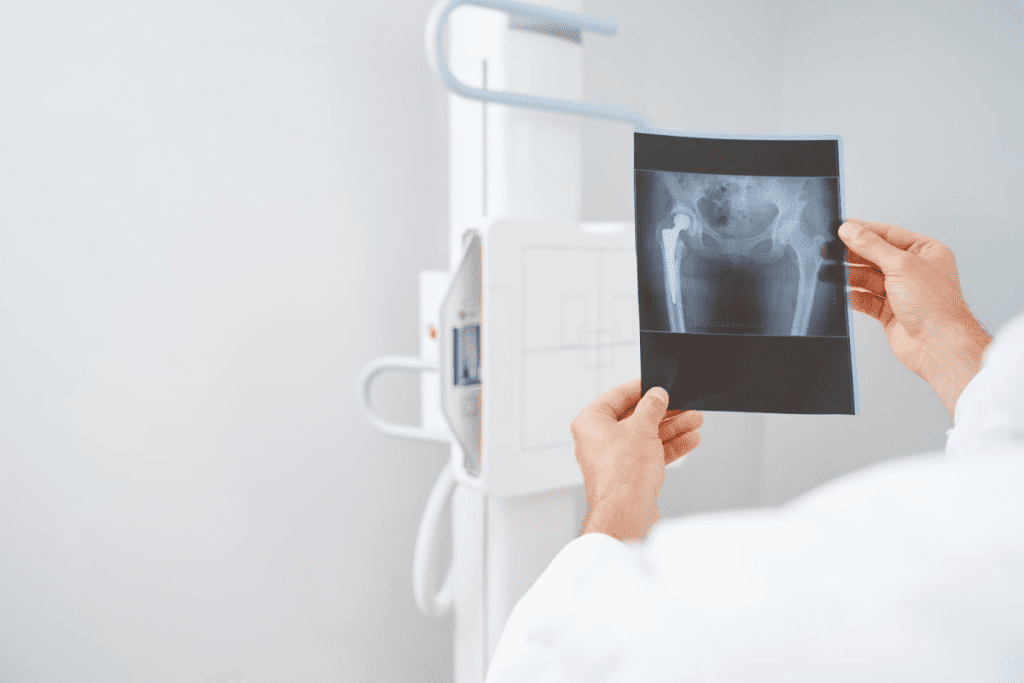
Diagnostic Accuracy Rates and Clinical Studies
Studies show CT urography is very accurate. It has a sensitivity rate over 95% for upper tract cancers. This makes it a key tool for diagnosing and managing urinary tract issues.
Clinical studies have highlighted the benefits of CT urography, including:
- Improved detection of urinary tract cancers
- Accurate diagnosis of kidney stones and other obstructions
- Enhanced visualization of congenital anomalies
As urology advances, CT urography keeps being a crucial part of diagnosis. It beats ct ivp and other methods in accuracy and comfort for patients.
Clinical Applications of Urography
Urography is key in finding problems with the urinary system. It helps us see how the kidneys, ureters, bladder, and urethra work. This is important for spotting many issues with these organs.
Diagnosing Kidney Stones and Obstructions
Urography is mainly used to find kidney stones and blockages. With intravenous urography, we can see how contrast moves through the system. This helps us find stones or blockages that cause pain or blood in the urine.
Detecting Urinary Tract Tumors and Malignancies
Urography is also key in finding tumors in the urinary tract. CT urography gives us clear images of the system. This lets us spot tumors or growths that need more tests or biopsies. Finding these early is crucial for better treatment and results.
Identifying Congenital Anomalies
Urography helps find birth defects in the urinary tract early. Issues like horseshoe kidneys or ureteral duplication can be seen with MR urography. This helps us understand the problem and plan the right treatment.
Investigating Recurrent Infections and Hematuria
Urography is also used for UTIs and blood in the urine. It lets us see the urinary tract in detail. This helps us find the cause, like stones or tumors, and plan the best treatment.
Preparing for a Urography Test
Getting ready for a urography test is important. We’ll help you get ready for your visit.
Pre-Test Instructions and Dietary Restrictions
We might give you special instructions before your test. This could include what to eat or not eat, or changes to your medicine. It’s very important to follow these instructions to make sure the test goes well.
You might need to not eat for a while before the test. Or, you might need to avoid certain foods and drinks. We’ll tell you what you need to do when you make your appointment.
Contrast Material Considerations and Allergies
If your test uses contrast material, tell us about any allergies you have. This is especially important if you’re allergic to iodine or other contrast agents. Telling us about your allergies is very important to keep you safe during the test.
We’ll also ask about your health history, like if you have kidney problems. This helps us know if the contrast material is safe for you.
What to Bring to Your Appointment
Bring these things to make your visit go smoothly:
- Any previous imaging studies or medical records related to your urinary tract
- A list of your current medications and dosages
- Insurance cards and identification
- Comfortable clothing
Being prepared and informed helps make your urography test a success. It also helps us get the right information to help you.
What to Expect During the Procedure
When you arrive for your urography test, we’ll guide you through every step. A urography test, including a CT scan IVP (Intravenous Pyelogram), gives detailed images of your urinary tract. This helps us diagnose and treat various conditions.
Step-by-Step Process of Different Urography Tests
The steps for your urography test depend on the type. For a CT IVP, you’ll wear a comfortable gown and remove metal objects. Then, you’ll lie on a table that slides into a CT scanner.
A contrast dye is given through an IV line to highlight the urinary tract. For other types of urography, like conventional or MR urography, the process might be a bit different. Our team will give you detailed instructions and answer your questions to ensure your comfort.
Duration and Comfort Considerations
A CT IVP usually takes 30 to 60 minutes. We know it can be hard to stay still for a long time. So, we’ll try to make you as comfortable as possible.
You might need to hold your breath for short periods during the scan. This is to get clear images.
Post-Procedure Care and Recovery
After your test, you’ll be watched for a short time to see if you have any reactions to the dye. Usually, you can go back to your normal activities right away. But if you had sedation, you’ll need someone to drive you home.
We’ll give you detailed instructions on what to do after your test. If you have any questions, please ask us.
Our team is dedicated to making your urography experience smooth and stress-free. If you have any concerns or questions before or after your test, please don’t hesitate to reach out to us.
Insurance Coverage and CPT Codes for Urography
Knowing about insurance for urography helps patients manage their healthcare costs. Urography is a key tool for diagnosing urinary tract problems. It includes different tests, each with its own billing codes and insurance rules.
Understanding CT Urogram CPT Codes
The Current Procedural Terminology (CPT) code for a CT urogram is important. It helps standardize billing for medical services. For CT urography, the CPT code is usually 74178 or 74174, based on the procedure and contrast use.
“Accurate coding is essential for ensuring that healthcare providers are reimbursed correctly for their services,” as noted by medical billing experts.
Insurance Coverage for Different Types of Urography
Insurance for urography tests can change a lot, depending on the type and the patient’s plan. Most plans cover CT urography when it’s needed. But, how much they cover can vary.
- Conventional urography (intravenous urography/IVP) is often covered for diagnosing kidney stones and other obstructions.
- CT urography is typically covered for a broader range of urinary tract issues, including tumors and congenital anomalies.
- MR urography, while less common, may be covered in specific cases where it’s deemed necessary by a healthcare provider.
Typical Costs and Financial Considerations
The cost of urography tests can be high, and understanding the costs is key for patients. The cost depends on the type of urography, the facility, and the patient’s insurance.
For example, the cost of a CT urogram can vary a lot. But with insurance, the patient usually pays less. Patients should talk to their healthcare provider and insurance to know their coverage and costs.
By knowing the CPT codes and insurance for urography, patients can better handle the financial side of their care. It’s wise to check with healthcare providers and insurance to be clear and prepared.
Conclusion
Urography tests, like ct urography and urogram, are key in finding urinary tract problems. At Liv Hospital, we aim to give top-notch healthcare. We also offer full support and guidance to international patients.
Our modern facilities and skilled team help us give precise diagnoses and treatment plans. We know how important ct urography is in spotting urinary tract issues and cancers.
Choosing Liv Hospital means getting care tailored just for you. We work hard to make your diagnostic process smooth and quick. Our goal is to help you get the best results possible.
FAQ
What is a urogram, and how is it used in diagnosing urinary tract issues?
A urogram, or urography, is a test that shows the urinary tract. This includes the kidneys, ureters, and bladder. It helps find problems like kidney stones, tumors, and birth defects.
What is the difference between a CT urogram and a traditional urogram?
A CT urogram uses CT scans for detailed images of the urinary tract. A traditional urogram uses X-rays. CT urography is better for finding certain problems, like bleeding in the urine.
How do I prepare for a CT urography test?
To get ready for a CT urography test, follow certain steps. You might need to eat differently and tell your doctor about any allergies. Bring your medical records and a list of your medicines when you arrive.
What happens during a CT urography procedure?
During the test, you’ll get a contrast material to see the urinary tract. You’ll lie on a CT scanner table. The scan is quick, and you might need to hold your breath for a bit.
What are the CPT codes for a CT urogram, and how do I understand my insurance coverage?
The CPT codes for a CT urogram depend on the procedure and location. Check with your insurance to see what’s covered and what you’ll pay. Our staff can help with costs and financial options.
Are there any risks or complications associated with urography tests?
Urography tests might have risks, like allergic reactions or radiation. But these are rare. Our team will make sure you’re safe during the test.
How long does it take to get the results of a urography test?
Getting your test results can take a few hours or days. It depends on the case and the radiologist’s work. Our staff will let you know what to expect next.
References
- Koh, H., & Ryu, J. (2007). “Prospective comparison of unenhanced spiral computed tomography and intravenous urography in evaluation of acute renal colic. Radiology, 245(3), 945‘952.