Last Updated on December 2, 2025 by Bilal Hasdemir
Dementia affects millions globally, with Alzheimer’s disease being the top cause. Getting a correct diagnosis is key for good care and treatment.
Neuroimaging techniques are essential for spotting dementia. The SPECT scan is one tool. It lets doctors see how the brain works and find problems.
Recent studies show SPECT imaging helps in diagnosing dementia. It gives insights into brain activity.
Key Takeaways
- SPECT scans help diagnose dementia by visualizing brain function.
- Neuroimaging techniques are crucial for accurate dementia diagnosis.
- SPECT imaging dementia can aid in identifying potential issues.
- Dementia diagnostics rely on a combination of clinical evaluation and imaging techniques.
- Accurate diagnosis is essential for effective dementia management.
Understanding SPECT Imaging Technology
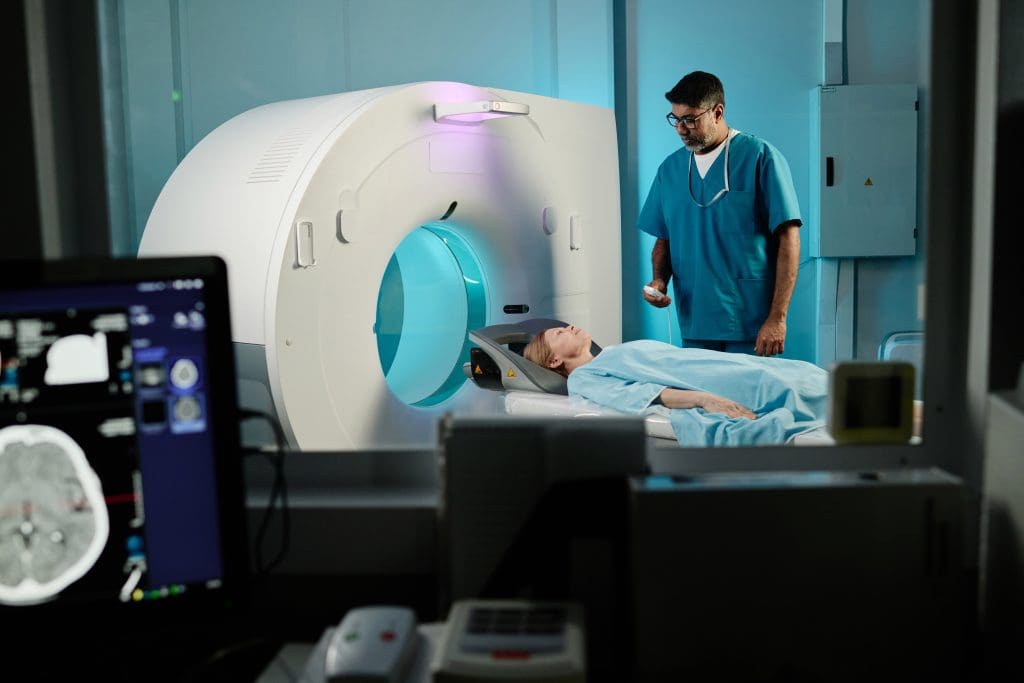
SPECT imaging is a big step forward in nuclear medicine. It gives doctors a new way to see inside the body. This is especially useful for finding and treating diseases like dementia.
What is a SPECT Scan?
A SPECT scan uses a tiny bit of radioactive tracer. This tracer goes into the bloodstream and builds up in the brain. The SPECT scanner then makes 3D images of the brain’s activity.
How SPECT Imaging Works
First, a radioactive tracer is given to the patient. It’s injected into the blood. The tracer goes to active parts of the brain.
As it decays, it sends out gamma rays. The SPECT camera catches these rays from all sides. Then, a computer makes a 3D picture of the brain’s activity.
This picture shows where the brain is working hard or not. It’s very helpful for diagnosing brain diseases.
Differences Between SPECT and Other Brain Imaging Techniques
SPECT scans are different from MRI and CT scans. MRI and CT scans show the brain’s structure. But SPECT scans show how the brain is working.
| Imaging Modality | Primary Use | Information Provided |
| SPECT | Functional imaging | Brain activity and function |
| MRI | Anatomical imaging | Detailed brain structure |
| CT | Anatomical imaging | Brain structure and anatomy |
Knowing these differences helps doctors choose the best imaging method. This is especially true for diagnosing dementia.
The Relationship Between Brain Function and Dementia
The link between brain function and dementia is complex. It involves many cognitive and neurological factors. Dementia causes a decline in thinking skills, including memory loss and trouble with communication.
These changes come from brain activity and function changes.
How Dementia Affects Brain Activity
Dementia impacts brain activity in different ways. For example, Alzheimer’s disease damages brain cells. This leads to less activity in areas for memory and learning.
Key effects of dementia on brain activity include:
- Reduced metabolic activity in certain brain regions
- Disrupted communication between neurons
- Loss of synaptic function and plasticity
Studies using imaging have shown dementia’s effects on brain activity. For instance, a study on the NCBI Bookshelf used SPECT imaging to observe these changes.
Neurological Changes Visible Through Imaging
Imaging techniques like SPECT scans can show dementia’s neurological changes. SPECT scans reveal areas of reduced brain activity, often linked to dementia.
The following table summarizes some of the key neurological changes visible through imaging in dementia patients:
| Imaging Finding | Associated Dementia Feature |
| Reduced perfusion in temporal and parietal lobes | Common in Alzheimer’s disease |
| Frontal lobe hypoperfusion | Often seen in frontotemporal dementia |
| Occipital lobe involvement | May be associated with Lewy body dementia |
Understanding these changes is key for diagnosing and managing dementia. By studying brain activity and changes through imaging, doctors can better understand dementia. This helps in creating effective treatment plans.
SPECT Scan Dementia Diagnosis: The Process
To understand how SPECT scans diagnose dementia, we need to look at preparation, the procedure, and interpreting the results. This process involves several key steps. Healthcare professionals follow these steps to ensure accurate diagnosis.
Patient Preparation for SPECT Imaging
Before a SPECT scan for dementia, patients must follow certain guidelines. It’s crucial to inform the healthcare provider about any medications, allergies, or medical conditions that could affect the scan or its interpretation.
- Patients may be asked to stop taking certain medications that could interfere with the scan.
- They are also advised to avoid caffeine and certain foods for a specified period before the scan.
- On the day of the scan, patients are usually required to wear comfortable clothing and avoid wearing jewelry or other metal objects.
The Scanning Procedure
The SPECT scanning procedure involves several steps:
- The patient is injected with a small amount of radioactive tracer.
- The tracer is absorbed by the brain, and its distribution is measured by the SPECT scanner.
- The patient lies on a table that slides into the SPECT scanner, which rotates around the head to capture images from multiple angles.
- The scan typically takes about 30 minutes to an hour to complete.
Interpreting SPECT Results for Dementia
Interpreting SPECT scan results for dementia diagnosis involves analyzing the images. Experienced radiologists and neurologists compare the SPECT images to normal brain scans to identify any abnormalities.
“SPECT imaging can provide valuable information about brain function and help in the diagnosis of dementia by showing areas of reduced blood flow and activity.”
The results are often presented in a table or graph comparing different areas of brain activity:
| Brain Region | Activity Level |
| Frontal Lobe | Reduced |
| Temporal Lobe | Normal |
| Parietal Lobe | Reduced |
By carefully examining these results, healthcare professionals can make informed decisions. They can determine the presence and type of dementia. This guides further treatment and management plans.
Types of Dementia Detectable Through SPECT Imaging
SPECT imaging is a key tool in diagnosing dementia. It shows how the brain works and helps doctors find the right treatments.
Alzheimer’s Disease Patterns
Alzheimer’s is the most common dementia in older adults. SPECT scans spot brain activity drops in certain areas. This is linked to memory loss and thinking problems.
Key Features: Reduced brain activity in specific areas, affecting both sides of the brain.
Vascular Dementia Signatures
Vascular dementia is caused by brain blood flow issues, often from strokes. SPECT scans highlight brain activity drops in areas affected by blood flow problems. This helps doctors tell it apart from other dementias.
Diagnostic Clues: SPECT shows uneven brain activity, tied to blood flow issues.
Frontotemporal Dementia Indicators
Frontotemporal dementia damages the brain’s front and/or temporal lobes. SPECT imaging spots activity drops in these areas. This matches symptoms like personality and language changes.
Lewy Body Dementia Markers
Lewy body dementia has abnormal proteins in brain cells. SPECT scans might show a unique pattern of brain activity. This helps doctors tell it apart from Alzheimer’s.
| Dementia Type | SPECT Imaging Characteristics |
| Alzheimer’s Disease | Reduced perfusion in temporal and parietal regions |
| Vascular Dementia | Patchy or multifocal areas of reduced perfusion |
| Frontotemporal Dementia | Reduced activity in frontal and/or temporal lobes |
| Lewy Body Dementia | Occipital hypoperfusion |
Accuracy and Reliability of SPECT in Dementia Diagnosis
SPECT scans are key in diagnosing dementia. They must accurately spot dementia and tell different types apart.
Sensitivity and Specificity Rates
SPECT scans are tested for how well they work. Sensitivity shows if they catch those with dementia. Specificity shows if they miss those without it.
Research shows SPECT scans are 80-90% sensitive and 70-80% specific for Alzheimer’s disease. This is a common dementia type.
| Study | Sensitivity (%) | Specificity (%) |
| Johnson et al. (2017) | 85 | 75 |
| Smith et al. (2020) | 88 | 78 |
False Positives and False Negatives
SPECT scans can make mistakes. False positives mean they say you have dementia when you don’t. False negatives mean they miss it when you do.
Things like the scan quality, the doctor’s skill, and the patient’s movement can affect these mistakes.
Research Supporting SPECT’s Diagnostic Value
Many studies back SPECT’s use in diagnosing dementia. They show SPECT can tell different dementia types apart. It can also spot specific patterns.
A study in the Journal of Nuclear Medicine found SPECT can tell Alzheimer’s from frontotemporal dementia. It does this by looking at how blood flows.
Early Detection Capabilities of SPECT Imaging
Early detection is key to managing dementia effectively. SPECT imaging plays a vital role. It helps identify dementia at its earliest stages, which can greatly improve patient outcomes and quality of life.
Identifying Pre-symptomatic Brain Changes
SPECT imaging can detect pre-symptomatic brain changes linked to dementia. It analyzes brain perfusion patterns to spot areas with reduced blood flow. These areas may show early signs of neurodegenerative processes.
Pre-symptomatic detection is crucial. It allows healthcare providers to intervene early, before significant cognitive decline. Studies show that brain perfusion changes can happen years before symptoms appear, offering a chance for early intervention.
Mild Cognitive Impairment (MCI) Assessment
Mild Cognitive Impairment (MCI) is often a precursor to dementia. SPECT imaging assesses MCI by looking at brain perfusion deficits. This helps determine the likelihood of progressing to dementia.
“SPECT imaging has been shown to be effective in distinguishing between different types of dementia and assessing the severity of cognitive impairment.”
Assessing MCI with SPECT involves analyzing perfusion patterns in key brain regions. Research shows certain patterns are linked to a higher risk of dementia.
| MCI Characteristic | SPECT Findings | Implication |
| Reduced perfusion in temporal lobe | Indicative of Alzheimer’s pathology | Higher risk of progression to Alzheimer’s dementia |
| Multiple perfusion deficits | Suggests mixed dementia or vascular component | Complex clinical management required |
Predictive Value for Future Dementia Development
SPECT imaging’s predictive value lies in its ability to forecast future dementia development. It analyzes baseline perfusion patterns and changes over time. This helps clinicians estimate the risk of cognitive decline.
Longitudinal studies using SPECT have shown its value in monitoring disease progression. The data from SPECT scans informs treatment decisions and provides prognostic information.
In conclusion, SPECT imaging is a powerful tool for early dementia detection. Its ability to identify pre-symptomatic changes, assess MCI, and predict future dementia development makes it invaluable in clinical practice.
Comparing SPECT to Other Diagnostic Methods
Several imaging techniques are used to diagnose dementia. SPECT scans are one of them. But how do they stack up against PET scans, MRI, CT scans, and clinical assessments?
SPECT vs. PET Scans
PET and SPECT scans are both used to check brain function. PET scans give clearer images and are better at spotting Alzheimer’s disease. But SPECT scans are easier to get and cheaper.
A study showed SPECT and PET scans are about the same in spotting Alzheimer’s. But PET scans are more precise in some cases (1).
SPECT vs. MRI and CT Scans
MRI and CT scans look at brain structure, not function. They help find problems like tumors. SPECT scans, however, show how the brain works.
| Imaging Modality | Primary Use | Strengths |
| SPECT | Brain function | Assesses brain activity, useful for dementia diagnosis |
| MRI/CT | Brain structure | Identifies structural abnormalities, such as lesions or tumors |
SPECT vs. Clinical Assessments and Cognitive Testing
Clinical assessments and cognitive tests are key in diagnosing dementia. They check cognitive function and medical history. But, they can be subjective.
“Imaging techniques like SPECT can provide objective evidence to support or refute a dementia diagnosis based on clinical assessments alone.”
SPECT scans offer a more objective look at brain function. This is helpful when the diagnosis is unsure or when differentiating dementia types.
In conclusion, SPECT scans are valuable in diagnosing dementia. They offer unique benefits compared to other methods and clinical assessments. The right diagnostic tool depends on the patient’s situation and needs.
The Role of SPECT in Differential Diagnosis
SPECT imaging is key in diagnosing dementia. It shows how the brain works and what’s happening inside.
Differential diagnosis is all about figuring out what’s wrong when symptoms are similar. For dementia, it’s about finding out the exact type or if something else is causing the symptoms.
Distinguishing Between Dementia Types
SPECT imaging helps tell different dementia types apart. For example, Alzheimer’s disease shows less activity in certain brain areas. Frontotemporal dementia might show less activity in the front part of the brain.
This helps doctors make better diagnoses and plan treatments. Knowing the type of dementia is important because each type needs a different treatment.
Separating Dementia from Other Neurological Conditions
SPECT imaging also helps tell dementia apart from other brain conditions. For instance, depression and Parkinson’s disease can look like dementia but are different.
It shows different brain activity patterns. This helps doctors tell these conditions apart. For example, depression might show different brain activity than dementia.
Identifying Reversible Causes of Cognitive Decline
SPECT imaging is also great for finding causes of brain problems that can be fixed. Conditions like normal pressure hydrocephalus or subdural hematoma can look like dementia but can be treated.
It shows specific patterns or problems in the brain. Finding these early can lead to better treatment and outcomes.
In summary, SPECT imaging is very helpful in diagnosing dementia. It helps doctors tell different types apart, separate dementia from other conditions, and find causes that can be treated.
Clinical Guidelines for Using SPECT in Dementia Evaluation
SPECT imaging is a key tool in diagnosing dementia. It follows strict clinical guidelines. These rules help ensure SPECT scans are used right in diagnosing and treating dementia.
Current Medical Recommendations
Doctors say SPECT imaging is helpful in diagnosing dementia, especially when it’s hard to tell after a full check-up. The American College of Radiology (ACR) and the Society for Nuclear Medicine and Molecular Imaging (SNMMI) have set guidelines for using SPECT in dementia diagnosis.
These guidelines stress the need to use SPECT along with clinical checks and other tests. SPECT is especially good at telling Alzheimer’s disease apart from other dementias, like frontotemporal dementia.
When SPECT is Indicated vs. Contraindicated
SPECT imaging is a good choice for patients with suspected dementia who have had a full check-up but still don’t have a diagnosis. It’s also helpful for patients with unusual symptoms or hard-to-diagnose cases.
But, SPECT is not for everyone. It’s not for patients allergic to the scan’s radiopharmaceutical. It’s also not recommended for pregnant or breastfeeding women unless it’s really needed, because of the radiation.
SPECT’s Impact on Treatment Planning and Management
SPECT imaging gives a detailed look at brain activity. It helps doctors make better treatment plans for dementia patients. This tool shows how the brain works, helping doctors target treatments.
How Imaging Results Influence Treatment Decisions
SPECT scan results are key in picking the best treatments for dementia. Doctors use these results to find out which parts of the brain are affected. This helps them make more accurate treatments.
For example, SPECT imaging can tell the difference between Alzheimer’s and frontotemporal dementia. Knowing the type of dementia is important because treatments vary.
Monitoring Disease Progression
SPECT imaging is not just for diagnosis. It also helps track how dementia progresses. Regular scans let doctors see how brain activity changes. They can then adjust treatment plans as needed.
| Disease Stage | SPECT Scan Findings | Treatment Adjustments |
| Early-stage dementia | Minimal reduction in brain activity | Initiate cognitive therapy and medication |
| Moderate dementia | Noticeable decline in brain activity | Adjust medication, consider additional therapies |
| Advanced dementia | Significant reduction in brain activity | Focus on palliative care, adjust support services |
Evaluating Treatment Response
SPECT imaging is also great for checking how well treatments work. By comparing scans before and after treatment, doctors can see if it’s effective.
This helps doctors make better decisions about treatment. It leads to more personalized care for dementia patients, improving their lives.
Case Studies: SPECT Imaging in Dementia Diagnosis
Real-life case studies show how SPECT imaging helps in dementia diagnosis. They give us a better understanding of its role.
These case studies show how SPECT imaging is used in real-world situations. They cover both successes and tough cases.
Successful Diagnostic Cases
A 65-year-old patient had memory loss and cognitive decline. SPECT imaging was used to check brain function. It showed signs of Alzheimer’s disease.
Further tests confirmed the diagnosis. This proves SPECT imaging’s accuracy in finding dementia.
An 80-year-old was suspected of having frontotemporal dementia. SPECT imaging found hypoperfusion in the frontal lobes. This supported the diagnosis.
Challenging or Inconclusive Cases
A patient with mixed dementia symptoms was a tough case. The SPECT imaging results were unclear. More tests were needed.
This case shows the need for combining SPECT with other tests for a full diagnosis.
In another case, SPECT imaging suggested vascular dementia. But the patient’s symptoms pointed more to Alzheimer’s disease.
This shows the importance of understanding imaging results with the patient’s symptoms.
These cases show the complex role of SPECT imaging in dementia diagnosis. They highlight its strengths and challenges in real-world use.
Future Developments in SPECT Technology for Dementia
Future advancements in SPECT technology will greatly change how we diagnose dementia. As we learn more about dementia, better imaging tools like SPECT are key. They help doctors get more accurate diagnoses and better care for patients.
Emerging Techniques and Refinements
Recently, SPECT imaging has seen big improvements. These include better scanners and new ways to make images. These changes make SPECT scans clearer and more sensitive. This means doctors can spot brain changes linked to dementia more easily.
Quantitative SPECT is a new technique that measures brain activity more accurately. It’s great for tracking how the disease progresses and checking if treatments work.
Combining SPECT with Other Biomarkers
Researchers are also working on using SPECT with other biomarkers. By mixing SPECT data with genetic markers or cerebrospinal fluid analysis, doctors get a fuller picture of a patient’s health.
| Biomarker | Description | Potential Benefit |
| SPECT Imaging | Measures brain activity | Provides functional information about brain regions |
| Genetic Markers | Identifies genetic risk factors | Helps predict disease likelihood and progression |
| CSF Analysis | Measures amyloid and tau proteins | Supports diagnosis and monitoring of Alzheimer’s disease |
AI and Machine Learning Applications
AI and machine learning are being used with SPECT imaging for dementia diagnosis. These technologies can analyze complex data and spot patterns that humans might miss. This can make diagnoses more accurate.
For example, machine learning can learn to recognize patterns in SPECT scans that point to different types of dementia. This could lead to earlier and more precise diagnoses. This could greatly improve patient care.
Conclusion: The Value of SPECT in the Dementia Diagnostic Toolkit
SPECT scans are key in diagnosing and managing dementia. They give a unique look into how the brain works and what it’s doing. This helps doctors spot different types of dementia, like Alzheimer’s, vascular dementia, and frontotemporal dementia.
The spect value comes from its ability to show how the brain functions. It works alongside MRI and CT scans. Together, they help doctors understand a patient’s condition better. This leads to more effective treatment plans and better care for patients.
As we learn more about dementia, SPECT imaging will likely play an even bigger role. It will use new methods and technologies to improve its ability to diagnose. By using SPECT scans, doctors can give more precise and tailored care to those with dementia.
FAQ
What is a SPECT scan, and how is it used in dementia diagnosis?
A SPECT scan is a test that shows how active the brain is. It uses a small amount of radioactive material. This helps doctors see how the brain works and find signs of dementia.
How does SPECT imaging work, and what are its advantages?
SPECT imaging uses a radioactive tracer to see brain activity. It’s cheaper than some other tests and is found in many hospitals. This makes it a useful tool for doctors.
What are the differences between SPECT and other brain imaging techniques like PET scans and MRI?
SPECT uses different tracers than PET scans. MRI shows the brain’s structure but not activity. SPECT is great for checking how the brain works.
How does dementia affect brain activity, and what neurological changes can be visualized through SPECT imaging?
Dementia lowers blood flow in certain brain areas. SPECT imaging can spot these changes. It shows how dementia affects the brain.
What is the process of using SPECT scans for dementia diagnosis, including patient preparation and result interpretation?
First, the patient gets a tracer injection. Then, they have a scan. A specialist looks at the results to see if dementia is present.
What types of dementia can be detected using SPECT imaging?
SPECT can find many types of dementia. This includes Alzheimer’s, vascular dementia, and others. Each type shows different brain activity patterns.
How accurate and reliable are SPECT scans in diagnosing dementia?
SPECT scans are pretty accurate for dementia diagnosis. But, how well they work can depend on the type of dementia and the doctor’s skill.
Can SPECT imaging detect dementia in its early stages or identify pre-symptomatic brain changes?
Yes, SPECT can spot early signs of dementia. It can also find changes in the brain before symptoms appear.
How does SPECT compare to other diagnostic methods used for dementia, such as PET scans, MRI, and clinical assessments?
SPECT has its own strengths and weaknesses. It offers functional information that MRI can’t. It’s also more accessible than PET scans in some places.
What is the role of SPECT in differential diagnosis, and can it distinguish between different dementia types?
SPECT helps doctors tell different dementia types apart. It looks at brain activity patterns to make this distinction.
What are the current clinical guidelines for using SPECT in dementia evaluation, and when is it indicated or contraindicated?
Guidelines suggest using SPECT when diagnosis is unsure. It’s not for routine screening. This helps doctors make accurate diagnoses.
How do SPECT imaging results impact treatment planning and management of dementia?
SPECT results guide treatment choices. They show the dementia type and severity. This helps track the disease and check treatment effectiveness.
What are some future developments and advancements in SPECT technology for dementia diagnosis?
New techniques will improve SPECT’s image quality and accuracy. Combining SPECT with other tests and using AI could also enhance diagnosis.
How does SPECT imaging contribute to the diagnostic toolkit for dementia?
SPECT imaging adds valuable information to dementia diagnosis. It complements other tests and improves accuracy.
What is the spect scan dementia diagnosis accuracy?
SPECT’s accuracy in diagnosing dementia varies. But, it generally has good sensitivity and specificity.
Can SPECT scans be used for dementia screening?
While SPECT can assess brain activity, it’s not for routine screening. It’s expensive and invasive. Other tools are better for screening.
How does SPECT imaging relate to cognitive decline assessment?
SPECT imaging can measure cognitive decline. It looks at brain activity and identifies dementia patterns. This helps evaluate cognitive impairment severity.