Last Updated on November 4, 2025 by mcelik
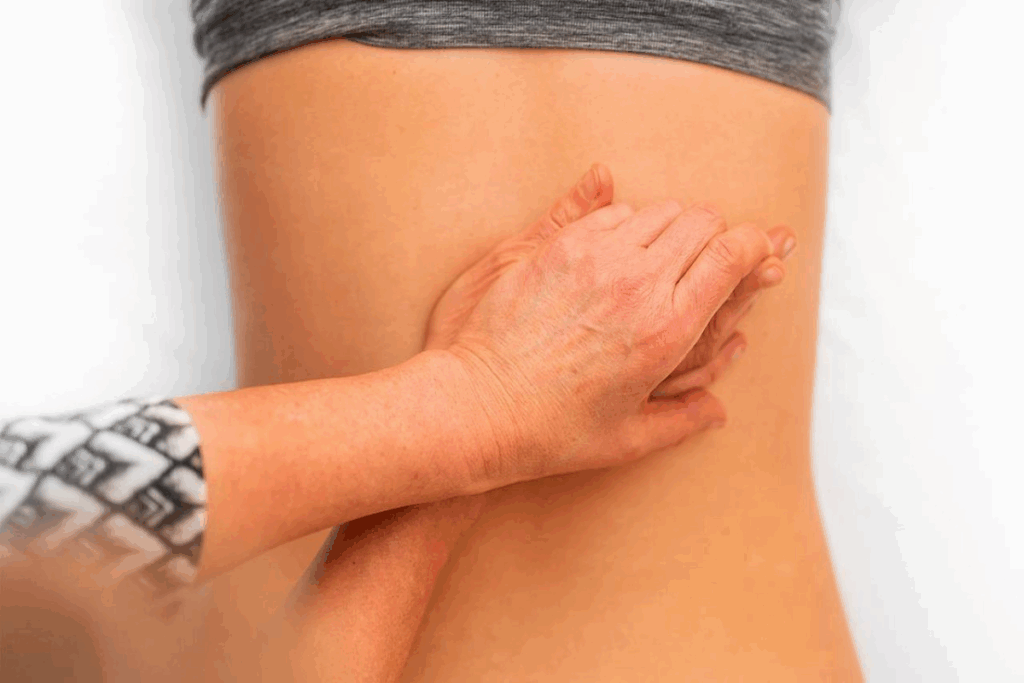
Did you know many people with hip pain might actually have spinal disc issues? Studies show a strong link between some spinal discs and hip pain. We dive into this connection to see how lumbar disc issues can cause hip pain. Learn which Disc Causing Hip Pain affects movement and the best treatment options for lasting relief.
A herniated disc in the lower back can irritate nerves, leading to hip pain. This shows how the spine and hip are connected. Problems in one area can affect the other.
Key Takeaways
- The lumbar discs play a key role in hip pain.
- A herniated disc can cause hip pain by irritating nearby nerves.
- Understanding the disc-hip connection is vital for effective treatment.
- Spinal issues can radiate pain to other areas, including the hip.
- Proper diagnosis is essential to address hip pain related to spinal discs.
The Anatomy of Spinal Discs and Their Relation to Hip Pain
Spinal discs are key in hip pain. Knowing how they work is vital for fixing this problem. The spine has vertebrae, discs, and nerves. They all work together to support and move our body.
Structure and Function of Spinal Discs
Spinal discs are like soft cushions between the vertebrae. They absorb shock and let the spine bend. Each disc has a tough outer layer and a soft center.
The annulus fibrosus keeps the disc in shape. The nucleus pulposus soaks up pressure. Healthy discs spread pressure evenly and help us move smoothly.
How Spinal Discs Connect to Hip Function
Spinal discs and hip function are linked through nerves. The sciatic nerve starts in the lower back and goes to the legs. When a disc presses on these nerves, it can cause hip pain.
This pain is hard to diagnose. You need to know about spinal anatomy and how it affects the hips.
The Nerve Pathways Between Spine and Hips
The nerves between the spine and hips are complex. The sciatic nerve is a big part of this. When a disc hurts, it can press on these nerves.
This can cause pain in the hips and legs. Knowing about these nerve paths helps diagnose and treat hip pain.
| Nerve Root | Function | Associated Pain Area |
| L4 | Controls muscles involved in hip flexion | Front of the thigh |
| L5 | Controls muscles involved in ankle dorsiflexion | Side of the leg, top of the foot |
| S1 | Controls muscles involved in ankle plantarflexion | Back of the leg, bottom of the foot |
Understanding these nerve paths is key to treating hip pain from spinal disc problems.
Common Disc Problems That Cause Hip Pain

Hip pain often starts with spinal disc issues. Spinal discs cushion our vertebrae. Damage or wear can lead to hip pain. Let’s look at common disc problems that cause hip pain.
Herniated Discs and Their Effects
A herniated disc happens when the soft center leaks through a tear. This irritates nerves, causing pain that spreads to the hip. Herniated discs are a common cause of hip discomfort, mainly in the lower back.
Symptoms include sharp pains in the lower back and hip. Sometimes, the pain is so bad it limits movement.
- Sharp, shooting pains in the lower back and hip
- Numbness or tingling sensations in the legs
- Weakness in the muscles of the lower extremities
Bulging Discs vs. Herniated Discs
Bulging and herniated discs are different. A bulging disc bulges out but doesn’t rupture. A herniated disc ruptures and leaks.
Bulging discs can also cause hip pain by pressing on nerves. Symptoms are similar but less severe.
Degenerative Disc Disease Progression
Degenerative disc disease makes discs lose function over time. This can cause hip pain as discs fail to absorb shock.
This condition progresses slowly, taking years. Age, genetics, and lifestyle affect how fast it develops.
- Initial degeneration: Loss of disc height and hydration
- Moderate degeneration: Disc bulging and possible herniation
- Advanced degeneration: Significant loss of disc structure and function
Disc Inflammation and Irritation
Disc inflammation and irritation can also cause hip pain. Inflammation irritates nerves, leading to hip pain.
Inflammation can come from injury, infection, or degeneration. Reducing inflammation is key to alleviating hip pain caused by disc issues.
The L4-L5 Disc: A Major Culprit in Hip Discomfort
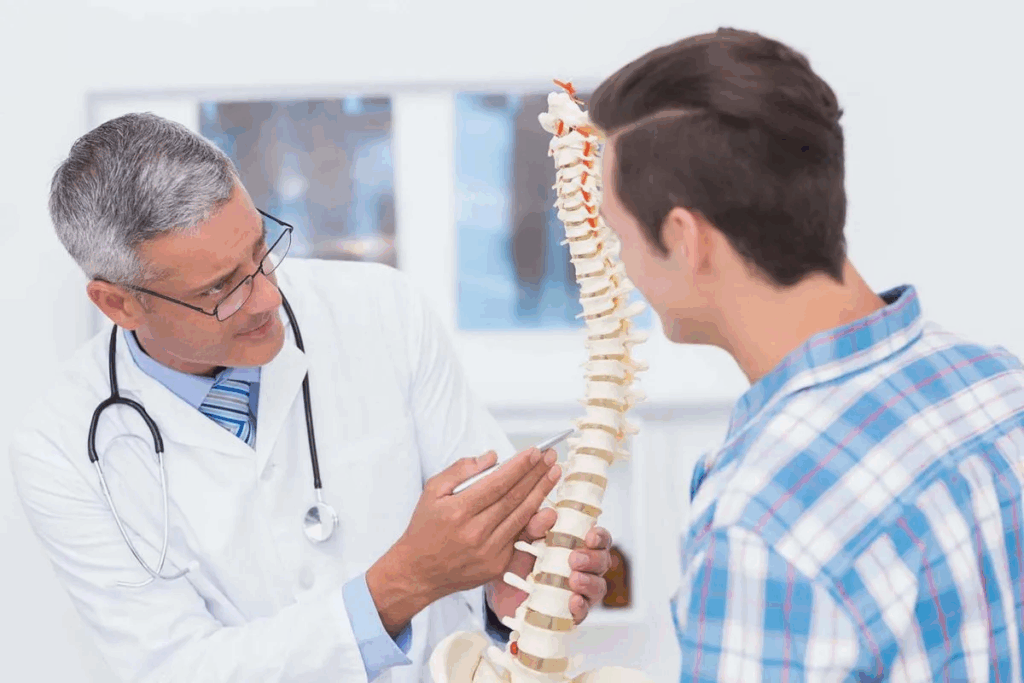
The L4-L5 disc is between the fourth and fifth lumbar vertebrae. It’s key for lower back movement and often linked to hip pain. This disc faces many stresses, making it likely to get injured and cause hip pain.
Anatomy of the L4-L5 Region
The L4-L5 area is a major part of the lower back. It carries a lot of weight and helps with movement. The disc here is like a shock absorber, and keeping it healthy is important to avoid pain in the lower back and hip.
How L4-L5 Disc Injuries Manifest as Hip Pain
When the L4-L5 disc gets injured, like a herniation, it can bother nearby nerves. This can cause pain that feels like it’s coming from the hip. This kind of pain is a common sign of problems with the lumbar discs.
A study in the Journal of Orthopaedic & Sports Physical Therapy found that “Lumbar disc herniation is a common cause of hip pain, when the herniation presses on or irritates the sciatic nerve.”
“Lumbar disc herniation is a common cause of hip pain, when the herniation presses on or irritates the sciatic nerve.”
Journal of Orthopaedic & Sports Physical Therapy
Common Symptoms of L4-L5 Disc Problems
Symptoms of L4-L5 disc problems can vary. They often include hip pain, numbness or tingling in the legs, and muscle weakness. Spotting these symptoms early is key for the right diagnosis and treatment.
| Symptom | Description |
| Hip Pain | Pain radiating to the hip due to nerve irritation |
| Numbness/Tingling | Sensory disturbances in the legs due to nerve compression |
| Muscle Weakness | Weakness in the muscles supplied by the affected nerves |
Knowing how the L4-L5 disc affects hip pain is vital for managing it well. By tackling the source of the problem, people can ease their discomfort and live better lives.
L5-S1 Disc Problems and Their Impact on Hip Function
The L5-S1 disc is key to our lower back and hip health. It’s prone to wear and tear, leading to disc problems. These issues can greatly affect how our hips function.
The Lumbosacral Junction Explained
The lumbosacral junction is where the lumbar spine meets the sacrum. It’s vital for weight-bearing and mobility. The L5-S1 disc is at the bottom of the lumbar spine, between L5 and S1. It faces a lot of stress due to its location and the forces on it.
This junction is made to absorb shock, help with movement, and keep the lower back stable. But, its complex design makes it prone to problems like disc degeneration, herniation, and inflammation.
Typical L5-S1 Disc Issues
L5-S1 disc problems can show up in different ways, including:
- Disc Herniation: When the soft inner gel leaks out through a tear in the outer disc, irritating nearby nerves.
- Degenerative Disc Disease: Gradual wear and tear on the disc, causing pain and stiffness.
- Disc Inflammation: Inflammation of the disc, often due to injury or infection, leading to pain and discomfort.
These problems can irritate the sacral nerve, causing pain that spreads to the hip and lower legs.
Distinguishing L5-S1 Hip Pain from Other Causes
Figuring out if hip pain comes from the L5-S1 disc can be tough. The lumbosacral junction is complex, and there are many possible pain sources. Healthcare professionals need to look at the patient’s history, symptoms, and imaging results to make an accurate diagnosis.
Signs of L5-S1 disc-related hip pain include:
- Pain that starts in the lower back and goes to the hip and leg.
- Numbness, tingling, or weakness in the leg or foot.
- Pain that gets worse with certain movements or activities.
Understanding L5-S1 disc problems and their effect on hip function helps us diagnose and treat hip pain better.
Disc Causing Hip Pain: Mechanisms of Referred Pain
It’s important to understand how spinal discs and hip pain are connected. This connection can make it hard to find the source of hip pain. Disc problems can cause pain in the hip, leading to confusion in diagnosis.
Neural Pathways Between Spine and Hip
The spine and hip are linked by a complex network of nerves. The lumbar spine, in particular, shares nerve roots with the hips. This can cause pain to spread to the hip when a disc problem occurs.
The neural pathways between the spine and hip are key in referred pain. The L4-L5 and L5-S1 disc levels are often affected. These areas can lead to hip pain due to disc problems.
Why Disc Problems Radiate to the Hip
Disc problems can cause hip pain because of shared nerve supply. A herniated or inflamed disc can compress or irritate nerves. This leads to pain in the hip, which can be sharp, dull, or aching.
Differentiating Between Direct and Referred Hip Pain
Telling direct hip pain from referred pain is key for treatment. A detailed examination, including imaging and physical tests, helps find the pain’s source.
| Characteristics | Direct Hip Pain | Referred Hip Pain |
| Origin | Hip joint or surrounding structures | Spine or other distant structures |
| Nature of Pain | Typically localized, can be sharp or dull | Can be diffuse, often radiates from the lower back |
| Triggers | Movement of the hip joint | Movement or pressure on the spine |
Sacroiliac Joint Dysfunction and Disc Problems
The sacroiliac (SI) joint can also cause hip pain. SI joint dysfunction and disc problems can both affect the lower back and hip. Treating SI joint dysfunction often requires addressing both the SI joint and any disc issues.
Getting a thorough diagnosis is vital to find the cause of hip pain. This includes disc problems, SI joint dysfunction, or other causes. Understanding referred pain and the connections between structures helps healthcare providers create effective treatment plans.
Sciatica: When Disc Problems Cause Radiating Hip Pain
Sciatica is a painful condition that affects millions. It causes pain from the lower back to the legs. We’ll look into sciatica, its link to disc problems, and how it leads to hip pain.
The Sciatic Nerve Pathway
The sciatic nerve is the longest in the human body. It starts in the lower back and goes down to the foot. The sciatic nerve pathway is key to understanding how disc problems cause pain. When irritated, it can lead to pain, numbness, and weakness in the legs.
How Disc Herniation Triggers Sciatica
Disc herniation happens when the soft inner gel leaks out. This can press on the sciatic nerve, causing sciatica. The severity and location of the herniation affect the symptoms. We’ll see how different herniations impact the sciatic nerve and pain.
Characteristic Symptoms of Sciatic Hip Pain
Sciatica often feels like sharp, shooting pain from the back to the leg. It can also cause numbness, tingling, and weakness. Knowing these symptoms helps diagnose sciatica and distinguish it from other hip pain causes.
| Symptom | Description |
| Pain | Sharp, shooting pain radiating from lower back to leg |
| Numbness | Sensation loss in areas supplied by the sciatic nerve |
| Weakness | Muscle weakness in the affected leg |
Piriformis Syndrome vs. Disc-Related Sciatica
Piriformis syndrome irritates the sciatic nerve, causing similar symptoms to disc-related sciatica. But the causes are different. We’ll explore the unique features of each condition to help you find the source of your pain.
“Accurate diagnosis is the cornerstone of effective treatment for sciatica. Understanding whether your symptoms stem from disc-related issues or piriformis syndrome is key for targeted therapy.”
Differential Diagnosis: Is It Really a Disc Causing Your Hip Pain?
Hip pain can come from many sources. It’s important to do a detailed differential diagnosis. Patients often wonder if their hip pain is from a spinal disc or something else. We’ll look at the different causes of hip pain and how to tell them apart.
Hip Joint Problems vs. Disc Issues
Hip joint problems and disc issues can have similar symptoms. This makes it key to figure out the cause. Hip joint issues, like osteoarthritis, can cause pain in the hip, groin, or thigh. On the other hand, disc problems usually cause pain that starts in the lower back and goes to the hip and leg.
We need to look at the patient’s symptoms and medical history to find the cause.
A detailed physical exam and imaging, like X-rays or MRI scans, can help tell the difference. Hip joint problems often show limited movement and pain with certain actions. Disc issues might cause pain with specific postures or activities.
Sacroiliac Joint Dysfunction
Sacroiliac joint dysfunction is another cause of hip pain. It happens when the sacroiliac joint gets inflamed or irritated. This can cause pain in the lower back, hip, or buttock. We can diagnose it with physical exams, like the FABER test, and imaging studies.
Treatment for sacroiliac joint dysfunction includes physical therapy, pain management, and sometimes injections or other procedures.
Muscle Strains and Imbalances
Muscle strains and imbalances are common causes of hip pain. They can be mistaken for disc-related issues. Weak or tight muscles in the hip and lower back can cause pain and stiffness, mainly with activity. We can find muscle strains and imbalances through a detailed physical exam, checking muscle strength, flexibility, and posture.
Treatment for muscle strains and imbalances usually involves physical therapy. It focuses on strengthening weak muscles, stretching tight ones, and improving posture and movement.
Systemic Conditions That Mimic Disc-Related Hip Pain
Certain systemic conditions, like rheumatoid arthritis or infections, can cause hip pain that looks like disc-related issues. We must think about these conditions when diagnosing, mainly in patients with a history of systemic disease or symptoms like fever or weight loss.
A full evaluation, including lab tests and imaging, can spot systemic conditions causing hip pain. Treatment depends on the condition and might involve a team effort.
Diagnosing Disc-Related Hip Pain
To diagnose disc-related hip pain, we use a mix of clinical checks and advanced tests. Our goal is to find the root cause of the pain and plan the best treatment.
Physical Examination Techniques
A detailed physical check is key in finding the cause of hip pain. We use several methods, including:
- Range of motion assessment to check flexibility and movement
- Palpation to find tender spots
- Neurological examination to check nerve function and look for any issues
These methods help us see how serious the problem is and guide us to more tests.
Imaging Studies: MRI, CT Scans, and X-rays
Imaging tests are important to confirm the diagnosis of hip pain. We use:
- MRI to see soft tissues like discs and nerves
- CT scans to check bones and find any problems
- X-rays to look at spinal alignment and find degenerative changes
These tests give us important details about the discs and surrounding areas.
Diagnostic Injections and Nerve Tests
At times, we use special injections and nerve tests to get a clearer picture. These include:
- Selective nerve root blocks to find the nerve causing pain
- Diagnostic injections into the sacroiliac joint or other possible pain sources
- Electromyography (EMG) and nerve conduction studies (NCS) to check nerve function
These tests help us find the exact pain source and rule out other causes.
The Importance of Complete Assessment
A complete assessment is vital for accurate diagnosis of hip pain. By combining physical checks, imaging, and tests, we get a clear picture of the pain’s cause. This lets us create a treatment plan that meets the individual’s needs.
Non-Surgical Treatments for Disc-Related Hip Pain
There are many ways to treat disc-related hip pain without surgery. These methods help reduce pain and improve how well you can move. They also make life better for those with this pain.
Physical Therapy Approaches
Physical therapy is key in treating disc-related hip pain. It includes exercises to make muscles stronger and more flexible. It also helps improve your posture.
Manual therapy, like massage and joint mobilization, is also helpful. Core strengthening exercises are great because they help keep the spine stable and reduce disc strain.
Medication Options for Pain Management
There are many medicines to help with disc-related hip pain. You can try ibuprofen and acetaminophen without a prescription. For more severe pain, doctors might suggest stronger medicines.
It’s important to take these medicines only as your doctor tells you to. This helps avoid unwanted side effects.
Injection Therapies and Nerve Blocks
Injection therapies, like corticosteroid shots and nerve blocks, can really help. They put medicine right where it’s needed, which can cut down on pain and swelling. Nerve blocks target specific nerves to help manage pain more precisely.
Alternative and Complementary Treatments
There are also other ways to help with disc-related hip pain. Acupuncture, chiropractic care, and yoga are examples. These methods aim to heal the whole person and can be used along with other treatments.
Exploring these non-surgical options can help people with disc-related hip pain find relief. It can also make their lives better.
Surgical Interventions for Severe Disc Problems Affecting the Hip
Severe disc problems in the lower back can cause hip pain and limit movement. Surgery might be needed to fix this. It’s a big decision, so it’s important to know the options and what to expect.
Microdiscectomy Procedures
A microdiscectomy is a small surgery to remove a part of a disc that’s pressing on a nerve. It’s used for sciatica and other nerve issues. This surgery can greatly reduce hip pain and help you move better.
Benefits of Microdiscectomy:
- It’s a small surgery, so it causes less damage
- It has fewer risks than bigger surgeries
- You can get back to normal faster
Laminectomy and Decompression
Laminectomy, or decompression surgery, removes part of a bony plate to relieve nerve pressure. It’s for spinal stenosis, when the spinal canal narrows. This surgery can ease hip pain and improve how you move.
| Procedure | Purpose | Benefits |
| Laminectomy | Relieve pressure on spinal cord or nerves | Reduces pain, improves mobility |
| Microdiscectomy | Remove herniated disc material pressing on nerves | Minimally invasive, faster recovery |
Spinal Fusion Techniques
Spinal fusion joins two or more vertebrae together with bone grafts or rods. It’s for conditions like degenerative disc disease. This surgery can reduce hip pain and make the spine more stable.
Artificial Disc Replacement Options
Artificial disc replacement puts a new disc in place of a damaged one. It aims to keep the spine moving and reduce pain. This method helps keep the spine flexible and may prevent future problems.
We hope this info helps you understand the surgical options for severe disc problems. Always talk to a healthcare professional to find the best treatment for you.
Exercises to Relieve Hip Pain Caused by Disc Issues
When disc issues cause hip pain, a targeted exercise program can help a lot. Always talk to a healthcare professional before starting any new exercise, even if it’s for disc-related hip pain.
Core Strengthening Exercises
Core strengthening exercises are key for easing hip pain from disc issues. A strong core supports the spine better, which lessens strain on discs and muscles.
- Plank: Hold a plank for 30-60 seconds, rest for 30 seconds, and do 3-5 sets.
- Bridges: Lie on your back with knees bent, lift your hips up, and hold for 2-3 seconds. Do 10-15 reps.
- Bird Dog: Start on hands and knees, lift your right arm and left leg together, and hold for a few seconds. Do 10-15 reps on each side.
Stretches for Sciatic Relief
Stretching can ease sciatica symptoms linked to disc-related hip pain. Gentle stretches can loosen tight muscles and boost flexibility.
- Piriformis Stretch: Sit on the floor with the affected leg crossed over the other. Pull the crossed knee toward your opposite shoulder. Hold for 30 seconds.
- Knee to Opposite Shoulder: Lie on your back, bring one knee toward the opposite shoulder, and hold for 30 seconds. Do on the other side too.
Low-Impact Activities for Recovery
Low-impact activities help keep you moving and aid in recovery without making hip pain worse.
- Swimming: Try gentle swimming or water aerobics to boost circulation and strengthen muscles without stress.
- Cycling: Use a stationary bike or cycle on a flat surface to keep legs moving and heart healthy.
- Walking: Take short walks on flat surfaces to stay mobile and reduce stiffness.
Proper Form and Technique
It’s important to keep proper form and technique to avoid injury and make exercises work better.
- Engage Your Core: Always use your core muscles to support your lower back during exercises.
- Move Slowly: Do exercises slowly and in control to avoid sudden movements or strains.
- Listen to Your Body: Stop right away if you feel pain or discomfort, and talk to a healthcare professional.
By adding these exercises and stretches to your routine, you can manage hip pain from disc issues and enhance your life quality.
Preventing Disc Problems That Lead to Hip Pain
To prevent disc problems that cause hip pain, we need to use a few key strategies. These include using proper body mechanics, following ergonomic practices, and making lifestyle changes. By doing these things, we can lower our chances of getting hip pain from disc issues.
Proper Body Mechanics
Keeping the right body mechanics is key to avoiding disc problems. This means lifting things correctly, bending at the knees, and not twisting or turning too much. These actions help avoid putting too much strain on the spine.
- Lift objects with your legs, not your back
- Maintain good posture when standing or sitting
- Avoid bending or twisting movements
Ergonomic Considerations at Work and Home
Having an ergonomic environment at work and home can also help. This means adjusting chair heights, using supportive cushions, and setting computer monitors at eye level. These small changes can make a big difference in preventing disc problems.
By making these adjustments, we can lower our risk of getting hip pain from disc issues.
Lifestyle Modifications for Spine Health
Changing our lifestyle can also help keep our spine healthy and prevent disc problems. This includes staying at a healthy weight, quitting smoking, and exercising regularly. A healthy lifestyle can help prevent disc degeneration and keep our spine in good shape.
Regular Exercise Routines for Prevention
Doing regular exercise routines can also help. Activities like yoga, Pilates, and low-impact aerobics can strengthen the muscles that support our spine. This can help prevent disc problems and reduce the risk of hip pain.
By adding these exercises to our daily routine, we can keep our spine healthy and lower our risk of hip pain from disc issues.
Conclusion
It’s important to know how spinal discs and hip pain are connected. This article has shown how spinal discs affect hip function. We’ve seen how different disc problems can cause hip pain.
Herniated, bulging discs, and degenerative disc disease can lead to hip pain. This pain often spreads through the sciatic nerve. Getting a proper diagnosis is key to finding the cause of hip pain from discs.
Prevention and treatment need a mix of non-surgical and surgical methods. Non-surgical options include physical therapy and medication. Surgery is needed for severe cases. Keeping a healthy lifestyle and exercising regularly can help prevent disc problems.
Understanding the link between discs and hips helps manage pain. By taking action, we can improve our quality of life. Our goal is to address hip pain from discs with a complete approach, focusing on prevention and treatment.
FAQ
What is the connection between spinal discs and hip pain?
Spinal discs can lead to hip pain if they get damaged or inflamed. This puts pressure on nerves that go to the hip.
How do herniated discs affect the hip?
Herniated discs can press on or irritate nearby nerves. This causes pain that goes to the hip, often with sciatica symptoms.
What is the difference between a bulging disc and a herniated disc?
A bulging disc is when the disc pushes out of its space. A herniated disc is when the disc ruptures, releasing its center. This can put pressure on nerves.
Can degenerative disc disease cause hip pain?
Yes, degenerative disc disease can cause hip pain. As the discs wear down, they can lead to inflammation, nerve compression, and pain in the hip.
How do L4-L5 and L5-S1 disc problems affect the hip?
Problems with the L4-L5 and L5-S1 discs can cause hip pain. This is because these discs are close to nerves that go to the hip, often causing sciatica symptoms.
What is the role of the sciatic nerve in hip pain?
The sciatic nerve goes from the lower back to the legs. When compressed or irritated by disc problems, it can cause pain in the hip.
How is disc-related hip pain diagnosed?
To diagnose disc-related hip pain, doctors use physical exams, imaging like MRI or CT scans, and diagnostic injections. These help find the pain’s source.
What are the treatment options for disc-related hip pain?
Treatments range from physical therapy and medication to injection therapies. For severe cases, surgery like microdiscectomy or spinal fusion may be needed.
Can exercises help relieve hip pain caused by disc issues?
Yes, exercises like core strengthening and stretches can help. Low-impact activities also help ease hip pain from disc problems.
How can I prevent disc problems that lead to hip pain?
To prevent disc problems, keep good body mechanics and use ergonomic practices. Regular exercise and lifestyle changes also support spine health.
What is the difference between piriformis syndrome and disc-related sciatica?
Piriformis syndrome is when the piriformis muscle presses on the sciatic nerve. Disc-related sciatica is when disc problems irritate the sciatic nerve.
Can sacroiliac joint dysfunction cause hip pain similar to disc problems?
Yes, sacroiliac joint dysfunction can cause hip pain like disc problems. It’s important to figure out the exact cause.
How do I differentiate between direct and referred hip pain?
To tell direct from referred hip pain, know where the pain comes from. Referred pain usually comes from the spine and goes to the hip.
Are there alternative treatments for disc-related hip pain?
Yes, treatments like acupuncture, chiropractic care, and massage therapy can help some people with disc-related hip pain.
Reference
- Soar, H., Comer, C., Wilby, M. J., & Baranidharan, G. (2022). Lumbar radicular pain. BJA Education, 22(9), 343–349. https://www.ncbi.nlm.nih.gov/pmc/articles/PMC9402780/