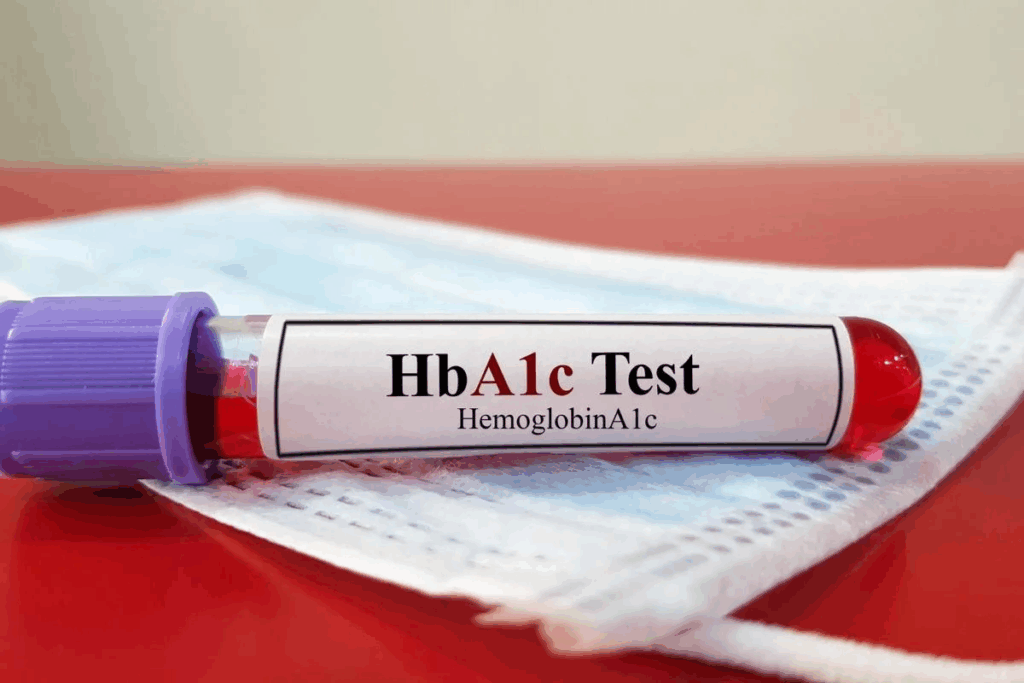
The A1C test is a simple blood test that shows your average blood sugar level over two to three months. It’s key for managing diabetes. Unlike other tests, you don’t need to fast before an A1C test. You can eat and drink as you normally would on test day.
We’ll look into why the A1C test is important for diabetes care. We’ll also see if fasting is needed before the test. Knowing about the A1C test is vital for people with diabetes or those at risk.
Key Takeaways
- The A1C test measures average blood glucose levels over the past 2-3 months.
- No fasting is required before an A1C test.
- The test is a key tool for diabetes care.
- A1C levels show how much sugar is attached to hemoglobin.
- Higher A1C levels mean worse blood sugar control.
Understanding the A1C Test: A Complete Overview

The A1C test shows your blood sugar levels over the last two to three months. It’s key for checking how well diabetes is managed over time.
What Is Hemoglobin A1C?
Hemoglobin A1C (HbA1c) is a type of hemoglobin that holds onto glucose. Hemoglobin is a protein in red blood cells that carries oxygen. When it binds with glucose, it becomes glycated. The A1C test measures how much glycated hemoglobin there is, showing your average blood sugar levels over three months.
This test is important because it gives a long-term view of your blood sugar control. Unlike daily glucose monitoring, which shows just a moment in time, the A1C test is a long-term tool for checking if your diabetes management plan is working.
How the A1C Test Works
The A1C test measures glycated hemoglobin in your blood. Here’s how it works:
- A blood sample is taken from a vein in your arm.
- The sample is sent to a lab for analysis.
- The lab checks the percentage of glycated hemoglobin.
- The result is compared to standard ranges to see how well your blood sugar is controlled.
This test is easy and doesn’t need any special preparation, like fasting. It’s convenient for patients.
Why A1C Tests Are Important for Diabetes Management
A1C tests are vital for managing diabetes because they show your blood sugar control over time. This is important for several reasons:
- Assessing Diabetes Control: A1C tests show if your diabetes is being managed well, helping you know if your treatments are working.
- Guiding Treatment Decisions: The results of A1C tests help doctors and patients decide if treatment plans need to be changed, like adjusting medication or diet.
- Predicting Complications: High A1C levels mean a higher risk of diabetes-related problems. Regular A1C tests are important for catching these risks early.
By understanding and using A1C test results, healthcare providers and people with diabetes can work together. They can aim for better blood sugar control and lower the risk of complications.
Do You Need to Fast for an A1C Test?

The A1C test is special because you don’t need to fast. This makes it easy to use for checking diabetes levels.
The Simple Answer: No Fasting Required
The A1C test looks at your blood sugar levels over 2 to 3 months. It checks how much glucose is attached to hemoglobin in red blood cells. Because it shows long-term sugar levels, you don’t need to fast or prepare before the test.
This is great for people who find fasting hard or need tests often.
Comparing A1C to Other Diabetes Tests That Require Fasting
Other tests, like the Fasting Plasma Glucose (FPG) and the Oral Glucose Tolerance Test (OGTT), need fasting. For example:
- The FPG test needs an 8-hour fast overnight.
- The OGTT test involves fasting overnight, then drinking a glucose drink, and checking blood sugar after 1 or 2 hours.
But the A1C test can be done anytime, without any special prep or diet rules. This makes it easier and less stressful for patients.
Why A1C Tests Don’t Require Dietary Restrictions
The A1C test doesn’t need fasting because it looks at long-term sugar levels. It’s not affected by short-term changes in blood sugar from food.
Some important points to remember:
- The A1C test shows your long-term blood sugar control.
- It’s less affected by daily changes in diet or blood sugar.
- This makes it a good way to check how well diabetes is being managed over time.
What to Expect During an A1C Test
If you’re set for an A1C test, you might wonder what it’s like. Knowing what to expect can ease your nerves and make the test go smoothly.
The Testing Procedure
The A1C test is a simple blood draw from your arm. A healthcare pro will clean the area and use a sterile needle to get a blood sample. It’s all over in a few minutes.
Potential Discomfort and Side Effects
You might feel a bit of pain or bruising where the needle was. This is usually short-lived and goes away by itself. Some people might feel dizzy or have other minor side effects.
How Long It Takes to Get Results
How long it takes to get your A1C test results varies. It’s usually a few hours to a few days. Your doctor will talk to you about the results and what to do next.
Test Component | Description | Typical Duration |
Blood Draw | Collection of blood sample | A few minutes |
Laboratory Analysis | Analysis of blood sample | A few hours to a few days |
Result Discussion | Healthcare provider discusses results with patient | Varies |
Understanding Your A1C Results: Normal, Prediabetes, and Diabetes Ranges
Your A1C test shows your average blood sugar levels over three months. Knowing what your results mean can help you take better care of your health.
Normal A1C Range
An A1C under 5.7% is in the normal range. This means your blood sugar is well-managed. You’re at lower risk for diabetes problems.
Prediabetes A1C Range
Between 5.7% and 6.4%, you have prediabetes. Your blood sugar is higher than normal but not diabetes level. This condition increases your risk of getting type 2 diabetes. But, it’s a chance to change your lifestyle and avoid diabetes.
Diabetes A1C Range
An A1C of 6.5% or more shows diabetes. Your blood sugar is too high. You’ll need to work with your doctor to manage it.
Target A1C Levels for People Managing Diabetes
People with diabetes aim for an A1C under 7%. But, this can change based on your age, health, and risk of low blood sugar. Your healthcare team can help find the best target for you.
Knowing your A1C results and aiming for your target can greatly improve your diabetes care and health.
Is an A1C of 5.4 Good? Understanding Specific A1C Values
Knowing your A1C test results is key to managing your blood sugar. An A1C of 5.4% is in the normal range, showing good blood sugar control. But what does this mean for your health, and how does it compare to other A1C values?
What a 5.4 A1C Result Means
An A1C level of 5.4% means your blood glucose levels are in the target range. The American Diabetes Association says an A1C below 5.7% is normal. So, a 5.4% A1C is indicative of good glucose control, lowering the risk of diabetes and its complications.
“Maintaining an A1C level below 5.7% is associated with a significantly lower risk of developing diabetes-related complications,” as noted by diabetes care guidelines.
Other Common A1C Values and Their Significance
A1C values range from normal to prediabetes and diabetes. Here’s a breakdown:
- Normal A1C: Below 5.7%
- Prediabetes A1C: 5.7% to 6.4%
- Diabetes A1C: 6.5% or higher
For those with diabetes, the target A1C level can vary. It depends on age, other health conditions, and the risk of hypoglycemia. The goal is to keep A1C as close to normal as possible without causing hypoglycemia.
Factors That Can Affect Your A1C Reading
While A1C is a valuable tool, several factors can affect the result. These include:
- Certain medical conditions, such as anemia or kidney disease
- Medications that affect red blood cell turnover or glucose metabolism
- Lifestyle factors, including diet and physical activity levels
It’s important to consider these factors when looking at your A1C results. If you have concerns about your A1C level or its implications for your health, talk to your healthcare provider.
By understanding your A1C results and the factors that influence them, you can make informed decisions about your diabetes management or prevention strategy.
How Often Should You Get an A1C Test?
The frequency of A1C tests varies based on your diabetes status. Knowing when to get tested is key for managing diabetes well.
Recommended Testing Frequency for People Without Diabetes
People without diabetes usually don’t need A1C tests unless they have risk factors. The American Diabetes Association says adults should be tested at least once starting at 45. If the test is normal, you should get tested again every three years.
If you’re under 45 and have risk factors like being overweight or having a family history of diabetes, your doctor might suggest more frequent tests.
Testing Schedule for Prediabetes
If you have prediabetes, your doctor will likely want you to get tested more often. This is usually every year, but it can change based on your health and risk factors.
Changing your lifestyle is important for managing prediabetes. Regular A1C tests help see if these changes are working to control your blood sugar.
Testing Frequency for Diagnosed Diabetes
If you have diabetes, how often you get tested depends on your treatment plan. Generally, you should:
- Get tested at least twice a year if you’re meeting your treatment goals and have stable blood glucose levels.
- Get tested every three months if you’re changing your treatment plan or not meeting your glucose targets.
You might need to get tested more often if you’re on intensive insulin therapy or have changing health conditions.
Special Considerations for Testing Frequency
Some situations might need more frequent A1C tests. For example, if you’re pregnant and have diabetes, your doctor might want you to get tested more often to keep your blood sugar in check.
Also, if you’re taking medications that can affect your blood sugar or have other health conditions, your testing schedule might need to change.
Diabetes Status | Recommended A1C Testing Frequency |
No Diabetes | At least once starting at age 45, then every 3 years if normal |
Prediabetes | Typically every year |
Diagnosed Diabetes | At least twice a year if stable, quarterly if changing treatment or not meeting targets |
Factors That Can Affect A1C Test Results
Knowing what can change A1C test results is key for managing diabetes well. The A1C test is great for checking blood sugar, but it has its limits. Medical conditions, medicines, and lifestyle choices can change A1C readings. It’s important to think about these when looking at test results.
Medical Conditions That Impact A1C Readings
Some health issues can really change A1C test results. For example, conditions that change how red blood cells work or their structure can make A1C readings not accurate.
- Anemia: This condition, with low red blood cells or hemoglobin, can make A1C readings too high or too low.
- Kidney Disease: Kidney disease can change how long red blood cells last, affecting A1C accuracy.
- Hemoglobin Variants: Genetic conditions like sickle cell trait or thalassemia can mess with A1C test accuracy.
Medical Condition | Effect on A1C Reading |
Anemia | Falsely high or low |
Kidney Disease | Variable effect |
Hemoglobin Variants | Inaccurate results |
Medications That May Interfere With Results
Some medicines can change A1C test results. They might affect how long red blood cells last or work in other ways.
- Certain Antidepressants: Some antidepressants can change how the body handles glucose, affecting A1C levels.
- Steroids: Corticosteroids can raise blood sugar, which might change A1C readings.
- Certain Supplements: Taking too much vitamins C and E can mess with some A1C tests.
Lifestyle Factors That Influence A1C Levels
Lifestyle choices can also affect A1C test results. Some things we can control, others we can’t.
- Diet: What we eat can affect blood sugar control and A1C levels, even if we don’t need to fast for the test.
- Exercise: Being active can make insulin work better and lower A1C levels.
- Stress: Ongoing stress can raise blood sugar and possibly change A1C readings.
Understanding these factors helps doctors and patients make better sense of A1C test results. This way, they can manage diabetes more effectively.
How to Check Your A1C: Testing Options
Checking your A1C is key for managing diabetes. There are many ways to do this, like lab tests, at-home kits, and glucose monitors. We’ll look at each method to help you find what works best for you.
Laboratory Blood Tests
Laboratory blood tests are the most common way to check A1C. They take a blood sample from your arm vein. This sample is then analyzed in a lab. These tests are very accurate and are often seen as the best way to measure A1C.
At-Home A1C Test Kits
At-home A1C test kits are a handy option. They use a fingerstick blood sample. This sample can be sent to a lab or checked with a portable device. These kits are great for those who need to check their A1C often.
Continuous Glucose Monitoring and A1C Estimation
Continuous glucose monitoring (CGM) systems track your glucose all day. They can estimate your A1C based on this data. While they don’t directly measure A1C, they offer insights into glucose trends. This helps in managing diabetes better.
Accuracy Comparison of Different Testing Methods
The accuracy of A1C tests can differ. Lab tests are usually the most accurate. At-home kits can be very accurate if used right, but their precision can vary. CGM systems give A1C estimates based on glucose data. They’re good for tracking trends, not for a direct A1C measurement.
Testing Method | Accuracy Level | Convenience |
Laboratory Blood Tests | High | Moderate |
At-Home A1C Test Kits | High (if used correctly) | High |
Continuous Glucose Monitoring | Estimated (based on glucose trends) | High |
In conclusion, there are many ways to check your A1C, each with its own benefits and considerations. Knowing these options can help you pick the best one for your needs and preferences.
A1C vs. Other Diabetes Tests: Pros and Cons
It’s important to know the differences between A1C and other diabetes tests. These tests help doctors understand your blood sugar levels. They help create a plan to manage your diabetes.
Fasting Plasma Glucose: A Snapshot of Blood Glucose
The Fasting Plasma Glucose (FPG) test checks your blood sugar after not eating for a few hours. It shows your blood sugar at one moment. But, it doesn’t show how well you control your blood sugar over time.
Pros: It’s quick and easy; good for diagnosing diabetes.
Cons: You need to fast; it only shows your blood sugar at that moment.
Oral Glucose Tolerance Test: Assessing Glucose Response
The Oral Glucose Tolerance Test (OGTT) checks how well your body uses sugar after drinking a sweet drink. It’s often used to find gestational diabetes and other issues with sugar use.
Pros: It shows how your body handles sugar; good for finding gestational diabetes.
Cons: You need to give blood several times; it takes a while.
Random Blood Glucose Test: Convenience at the Cost of Context
The Random Blood Glucose test checks your blood sugar at any time, without waiting to eat. It’s easy but doesn’t give full information without more details.
Pros: It’s easy; you don’t need to fast.
Cons: Your results can be affected by what you’ve eaten; it might not show your true blood sugar control.
Choosing the Right Test
Each diabetes test has its own role in managing the disease. The A1C test is convenient and shows long-term blood sugar levels. Tests like FPG and OGTT give specific views of your blood sugar or how it responds to sugar.
Doctors pick a test based on your health, if you need to fast, and what it shows about your blood sugar. Knowing the good and bad of each test helps in caring for diabetes well.
Lowering Your A1C: Strategies for Better Blood Sugar Control
To lower your A1C, you need to make changes in your diet, exercise regularly, and sometimes take medication. These steps help control your blood sugar and lower the risk of diabetes problems.
Dietary Changes That Impact A1C Levels
Your diet is key to managing blood sugar. Choose a balanced diet with less added sugar and refined carbs. Focus on whole foods like veggies, fruits, whole grains, lean proteins, and healthy fats.
Here are some diet changes to lower A1C:
- Reduce carbs, mainly the refined kind
- Eat more fiber from fruits, veggies, and whole grains
- Pick foods with a low glycemic index
- Stay away from sugary drinks and foods with lots of added sugar
Exercise and Physical Activity Benefits
Exercise is vital for A1C management. It boosts insulin sensitivity, which lowers blood sugar. Aim for 150 minutes of moderate exercise, 75 minutes of vigorous exercise, or a mix of both each week.
Exercise Type | Benefits for A1C | Examples |
Aerobic Exercise | Improves insulin sensitivity, lowers blood sugar | Brisk walking, cycling, swimming |
Resistance Training | Builds muscle, improves glucose uptake | Weightlifting, resistance band exercises |
High-Intensity Interval Training (HIIT) | Enhances insulin sensitivity, improves glucose metabolism | Sprints, burpees, jump squats |
Medication Options for A1C Reduction
For many with diabetes, medication is needed to control blood sugar. Medications can lower A1C by helping with insulin, improving sensitivity, or reducing liver glucose production.
Common medications include:
- Metformin
- Sulfonylureas
- DPP-4 inhibitors
- GLP-1 receptor agonists
- SGLT2 inhibitors
Lifestyle Modifications for Long-Term A1C Management
Other than diet, exercise, and meds, lifestyle changes help too. Manage stress with meditation or yoga, get enough sleep, and check your blood sugar often.
By using these strategies, you can lower your A1C and keep your blood sugar in check over time.
Conclusion
Managing diabetes well depends on knowing about the A1C test. This test shows average blood sugar levels over two to three months. It’s key for diagnosing and managing diabetes.
Understanding the A1C test helps people with diabetes take action. They can make better choices about what they eat, how much they exercise, and their medication. Regular tests also help doctors adjust treatment plans for better care.
We’ve looked closely at the A1C test, its importance, how it’s done, and what the results mean. This knowledge helps people with diabetes manage their condition better. The A1C test is essential for diabetes care. It lets people control their blood sugar and improve their health.
FAQ
What is an A1C test, and why is it important for diabetes management?
An A1C test shows your blood sugar levels over 2-3 months. It’s key for managing diabetes because it gives a full view of your blood sugar control.
Do I need to fast for an A1C test?
No, fasting is not needed for an A1C test. This makes it easier to use, unlike fasting plasma glucose tests.
What is considered a normal A1C range?
A normal A1C is below 5.7%. Levels between 5.7% and 6.4% mean you might have prediabetes. Anything 6.5% or higher suggests diabetes.
Is an A1C of 5.4 good?
Yes, an A1C of 5.4 is good. It shows your blood sugar is well-managed.
How often should I get an A1C test if I have diabetes?
If you have diabetes, get an A1C test at least twice a year. Your doctor might suggest more tests based on your needs.
What factors can affect A1C test results?
Many things can change your A1C results. This includes medical conditions, medications, and lifestyle choices. Knowing these can help you understand your results better.
Can I check my A1C at home?
Yes, you can use at-home A1C test kits. But, make sure to compare them with lab tests for accurate results.
How does A1C compare to other diabetes tests?
A1C is one of several tests for diabetes. It shows blood sugar control over time, unlike tests like fasting plasma glucose.
What are some strategies for lowering my A1C?
To lower your A1C, change your diet, exercise regularly, take the right medication, and make lifestyle changes. These steps can improve your blood sugar control.
What is the hemoglobin A1C range for prediabetes?
The A1C range for prediabetes is 5.7% to 6.4%. This range means you’re at risk for diabetes.
Are there any medical conditions that can impact A1C readings?
Yes, some medical conditions can change your A1C results. For example, conditions that affect red blood cell turnover can influence your A1C levels.
References
National Center for Biotechnology Information. Fasting Unnecessary for A1C Testing in Diabetes Management. Retrieved from https://www.ncbi.nlm.nih.gov/pmc/articles/PMC4940158/