Last Updated on November 25, 2025 by
Bladder cancer is a serious health issue that affects thousands each year. Early detection is key to better treatment results. We use CT scans to find and understand bladder cancer, showing tumor size and spread. A common question is, does a CT scan detect tumors? The answer is yes; CT scans, especially CT urography, are highly effective in detecting bladder tumors and assessing their stage, helping guide treatment decisions.
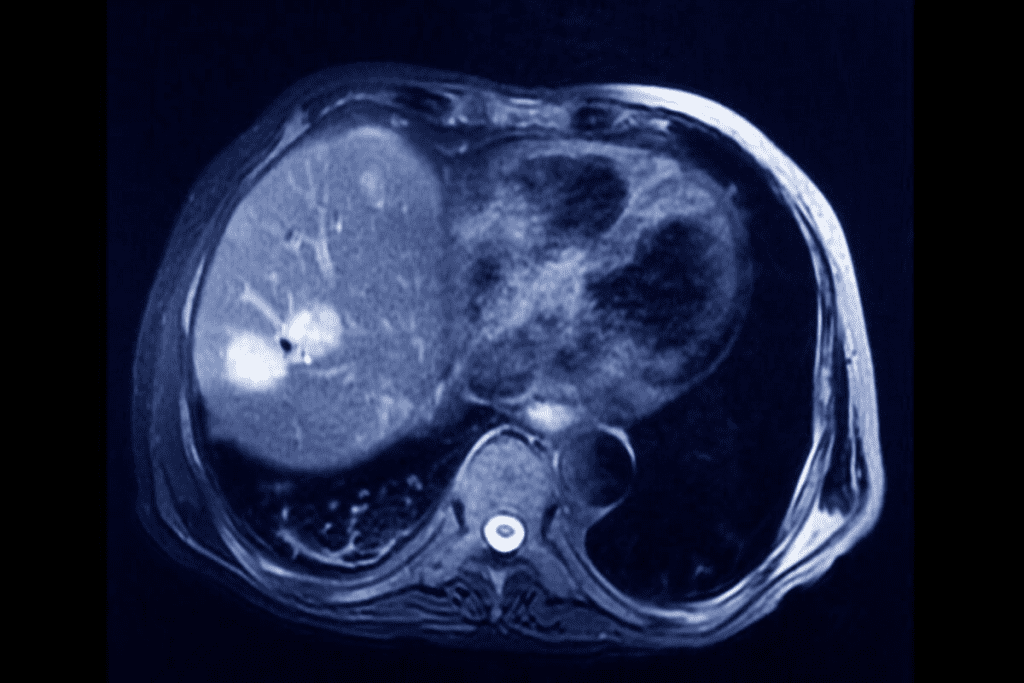
A CT urogram checks for urinary tract issues and cancer in lymph nodes. CT urography is very accurate, making it a key tool in diagnosis. With CT scans, we can find and plan treatment for bladder cancer well.
Key Takeaways
- CT scans are important for finding and understanding bladder cancer.
- A CT urogram spots urinary tract problems and cancer in lymph nodes.
- Early bladder cancer detection leads to better treatment results.
- CT urography is very accurate in diagnosing bladder cancer.
- Knowing the exact diagnosis helps plan treatment effectively.
Understanding CT Scans for Bladder Cancer Detection
Computed Tomography (CT) scans are key in finding and diagnosing bladder cancer. At Liv Hospital, we use the latest methods and team up with experts for top-notch results. A CT scan uses x-rays to show detailed images of the body. This helps us see if there’s bladder cancer and how big it is.
What is a CT Scan and How Does It Work?
A CT scan is a safe test that helps find and track many health issues, like bladder cancer. It combines x-rays and computer tech to show the body’s inside. A patient lies on a table that moves into a big machine. The machine takes pictures from all sides.
CT scans have made finding bladder cancer more accurate. They show the bladder and nearby areas clearly. Doctors can spot tumors and see how big they are.
CT Urography: Specialized Imaging for the Urinary System
A CT urogram is a special CT scan for the urinary system. It uses dye to make the system clearer. It’s great for spotting problems like tumors and blockages.
We use CT urography at our hospital for bladder cancer checks. It gives us detailed info about the urinary system. This helps us plan better treatments.
Contrast vs. Non-Contrast CT Scans for Bladder Examination
Choosing between contrast and non-contrast CT scans depends on the patient and the test needed. Contrast scans use dye to highlight areas, while non-contrast scans don’t.
“The use of contrast agents in CT scans can significantly enhance the visibility of tumors and other abnormalities in the bladder.”
Our radiologists decide on contrast agents based on each patient’s needs. This ensures the best test for everyone.

Does a CT Scan Detect Tumors in the Bladder Effectively?
CT scans are key in finding bladder cancer. They use advanced imaging to spot tumors well. This makes them very good at this job.

Detection Rates and Accuracy Statistics
Research shows CT urography is very accurate in finding bladder cancer. It has sensitivity rates from 79% to 93% and specificity up to 99%. This makes it a top choice for doctors.
Its high sensitivity and specificity help find bladder cancer early. We use it to make sure our diagnoses are right. This helps us plan the best treatments.
Dynamic Contrast-Enhanced Multidetector CT Performance
Dynamic contrast-enhanced multidetector CT is very good at finding tumors. It has a per-tumor sensitivity of 90%. This includes 79% for tumors ≤1 cm and 58% for those ≤5 mm. This is important for spotting small tumors.
Using contrast dye makes tumors easier to see. This helps us make more accurate diagnoses. We use this method to give our patients the best care possible.
Factors Affecting CT Scan Accuracy in Bladder Cancer
Even though CT scans are very good, some things can make them less accurate. Tumor size and location are big factors. Smaller tumors or those in hard-to-reach spots can be harder to find.
We take these factors into account when looking at CT scans. We combine the scan results with our medical knowledge. Our skilled radiologists work with our team to give our patients the best care and treatment plans.
Limitations of CT Scans in Bladder Cancer Diagnosis
CT scans are useful in finding bladder cancer, but they have limits. At our place, we know these limits well. This helps us give our patients the best care.
Detecting Small Tumors is hard with CT scans. The size of the tumor affects how well a CT scan can find it.
Size Matters: Challenges in Detecting Small Tumors
Small tumors are tough for CT scans to spot. This can cause delays in finding and treating the cancer. We use special CT scan methods to help find more tumors. But, finding small tumors is always a challenge.
Early-Stage Cancer Detection Challenges
Finding bladder cancer early is key to treating it well. But, CT scans might miss early cancer. This shows we need more than just CT scans to find cancer early.
We think it’s important to use CT scans with other tests like cystoscopy and biopsy. This helps us find cancer early and accurately.
False Positives and False Negatives in Bladder CT Imaging
CT scans can sometimes say there’s cancer when there isn’t (false positive) or miss it when there is (false negative). False positives can worry people and lead to more tests. False negatives can make people think they’re safe when they’re not. Blood clots or inflammation can make these mistakes happen.
To avoid these mistakes, we follow strict rules and use the newest technology. This helps us reduce false positives and false negatives in bladder CT scans.
In short, CT scans are great for finding bladder cancer, but we must know their limits. By using CT scans with other tests, we can give our patients the right diagnosis quickly.
The Complete Diagnostic Process for Bladder Cancer
We use the latest medical tech to diagnose bladder cancer. This detailed process helps us give patients accurate and timely diagnoses. These are key for planning treatment.
From Symptoms to Diagnosis: The Typical Pathway
The journey to diagnosing bladder cancer starts with checking symptoms and medical history. Symptoms like blood in the urine often lead to more tests.
Our tests include urine cytology, CT scans, and endoscopic exams. Each test gives us important info about the disease.
Cystoscopy and Biopsy: The Definitive Diagnostic Tools
Cystoscopy lets us see inside the bladder. A cystoscope is inserted through the urethra into the bladder. This gives a clear view of the bladder’s inside.
A biopsy is often done during cystoscopy. It takes a tissue sample from the bladder. The tissue is then checked for cancer cells under a microscope. This confirms bladder cancer.
Urine Tests and Biomarkers in Bladder Cancer Detection
Urine tests, like cytology and biomarker tests, are key in diagnosis. Cytology checks for cancer cells in urine. Biomarker tests look for proteins or genetic markers linked to bladder cancer.
These tests can show early signs of bladder cancer. They help guide further tests. Biomarkers help improve diagnosis and track disease progress.
By using all these diagnostic methods, we get a full picture of bladder cancer. This lets us create a treatment plan that fits each patient’s needs.
When Doctors Recommend CT Scans for Bladder Cancer
CT scans are key in diagnosing and managing bladder cancer. We use them at different stages to provide complete care.
Initial Evaluation and Cancer Staging
CT scans are vital for the first look and staging of bladder cancer. They help us see how far the disease has spread. This is important for choosing the right treatment.
The process includes:
- Checking the tumor’s size and location
- Looking for cancer in nearby lymph nodes or distant organs
- Examining the health of the urinary system
For more info on bladder cancer diagnosis, visit Bladder Cancer Advocacy Network.
Monitoring Treatment Response and Detecting Recurrence
CT scans are also used to monitor treatment response and find any cancer that comes back. By comparing scans before, during, and after treatment, we see how well the cancer is responding.
Key benefits include:
- Seeing how well treatment is working early on
- Finding any changes in the tumor size or spread
- Acting fast if the cancer comes back
CT Scans vs. Other Imaging Methods (MRI, Ultrasound)
While CT scans are essential, MRI and ultrasound have their own benefits. MRI is great for soft tissue details, and ultrasound is good for initial checks and bladder wall thickness.
Here’s a comparison:
- CT scans: Best for overall staging and finding distant metastases
- MRI: Superior for detailed soft tissue evaluation
- Ultrasound: Useful for initial assessment and non-invasive monitoring
We pick the best imaging method for each patient. This ensures the best care for bladder cancer.
Conclusion: The Role of CT Scans in Bladder Cancer Management
At Liv Hospital, we understand how important CT scans are for bladder cancer. They help us find tumors, know how far the cancer has spread, and check if treatments are working. This makes CT scans key in managing bladder cancer.
We aim for international excellence in our care. We use the latest CT scan technology and work together as a team. This means patients get the best care possible, leading to better treatment plans.
Using CT scans, we tailor care to each patient’s needs. This makes CT scans essential in treating bladder cancer. They help us give personalized care that really makes a difference.
FAQ
Can a CT scan detect bladder cancer?
Yes, CT scans are key in finding bladder cancer. They work best with contrast dye. CT urography gives detailed views of the urinary system.
What is the difference between a CT scan with contrast and without contrast for bladder cancer detection?
A CT scan with contrast dye shows internal structures better. This makes it more accurate for finding bladder tumors.
How accurate are CT scans in detecting bladder cancer?
CT scans are very good at spotting bladder tumors. But, size and location can affect their accuracy. Newer CT tech and skilled radiologists help get better results.
Can small bladder tumors be detected using a CT scan?
Small or early tumors might not show up on CT scans alone. This is why we use other tests like cystoscopy and biopsy too.
Why is a cystoscopy performed for bladder cancer diagnosis?
Cystoscopy and biopsy are key for bladder cancer diagnosis. They let doctors see the bladder directly and take tissue samples for tests.
Can a urine test detect bladder cancer?
Urine tests can give clues about bladder cancer. But, they’re not enough to confirm it. Cystoscopy and biopsy are the best ways to diagnose.
How is bladder cancer staged using CT scans?
CT scans help stage bladder cancer at first. They show the tumor’s size and spread. This info helps choose the right treatment.
Are CT scans used to monitor treatment response in bladder cancer?
Yes, CT scans track how bladder cancer treatment is going. They also watch for any signs of cancer coming back.
How do CT scans compare to other imaging methods like MRI and ultrasound for bladder cancer?
MRI and ultrasound have their own benefits. But, CT scans are a mainstay in bladder cancer care. They’re very accurate and show the urinary system well.
Will a CT scan without contrast show bladder cancer?
A CT scan without contrast might not be as clear as one with contrast. Contrast dye is usually needed for bladder cancer diagnosis.
References
- Trinh, T. W., Glazer, D. I., Sadow, C. A., Sahni, V. A., Geller, N. L., & Silverman, S. G. (2018). Bladder cancer diagnosis with CT urography: test characteristics and reasons for false-positive and false-negative results. Abdominal Radiology (NY), 43(3), 663-671.